grapheneos users duress
| |

GrapheneOS user’s ‘duress code’ case raises data privacy concerns

An activist from Atlanta faces a number of federal charges after a 2025 airport interrogation in which he gave border agents a duress passcode which wiped the data from his phone.

In January 2025, an Atlanta resident named Samuel Tunick was on a nature trip with his friends when a homeland security agent started circulating emails about investigating him for “suspected terrorism activities.” Tunick had no idea that he had already been on a watch list and plans about detaining him upon his return to Atlanta were already discussed by authorities. 

Thinking he was simply returning home, Tunick was shocked when agents met him at the airport and immediately escorted him to a room for what was described as a “secondary inspection.” 

He was then asked about certain child sexual abuse images, followed by a request to surrender his phone for data collection. He agreed after hearing that they would confiscate it if he didn’t.

Tunick, however, used a feature in GrapheneOS, a mobile operating system which can clear a phone’s data after entering a duress passcode. 

For providing the duress code instead of the actual passcode, he now faces several federal charges from the US Department of Justice. 

An unprecedented case

The case had its first hearing on July 20, where testimonies were given after Tunick’s public federal defenders filed a motion. The Guardian reported that they urged the court to throw out all evidence obtained by the agents, including the erasure of his phone contents, arguing that this was a violation of his constitutional rights. They also added that asking Tunick about the sexual abuse images was  “a pretext for a fishing expedition to Mr. Tunick’s connections.”  

Tunick claimed he was denied several times after asking to speak with a lawyer and be read his constitutional rights. A justice department attorney and the airport agents, however, said the data collection was just a normal everyday interrogation at an international airport, where they were simply “looking for anything that’s prohibited.”

Meanwhile, experts have expressed that this may be the first time an operating system was targeted by the law — which poses concerns on privacy and security being used to criminalize protesters.

What are duress codes?

Ars Technica, in its report, explained that Google Pixel phones running GrapheneOS like Tunick’s support user privacy with features like memory protection, memory reboot, and duress codes. 

The duress code that Tunick used during the airport investigation is an optional feature of GrapheneOS that allows users to set a passcode that is different from the unlock code. This aims to protect a user’s phone through irreversibly deleting all data and eSIMs stored in the device — a tool Tunick used when authorities unexpectedly interrogated him. 

Defending Tunick 

In a tweet, the GrapheneOS developer defended Tunick saying that the Android version is “completely legal”.

“We have no obligation to weaken any of the security protections it provides. Creating and using GrapheneOS is strongly protected by the US constitution.,” said the developer, adding that laws that attempt to make it illegal would be “unconstitutional”.

Speaking with The Guardian, French cybersecurity and surveillance expert Christophe Boutry said this case was just another example of authorities attempting to access phones of journalists, lawyers, and political leaders, only to be thwarted.

In Catalonia, Spain, for example, police have already been profiling people with Google Pixel phones, especially if they use GrapheneOS. 

Boutry added, “They’re our phones and the state can’t tell us to use them.” 

Meanwhile, Marlon Kautz, a member of the Atlanta Solidarity Fund, also defended Tunick saying: “We all have a right to secure our private data against unconstitutional searches. And we should — especially in a time of rising authoritarianism.”

Following these events, the GrapheneOS Foundation reminded people that while the features are aimed at data privacy and protection, users must still “carefully consider how to use it in an actual duress situation where there can be physical or legal consequences for wiping the device.” 

Tunick’s case can last until the end of October, when the judge is expected to decide on the motion. If convicted, he will face up to five years in prison.  – Rappler.com

Charley Dueñas is a Rappler intern and a fourth year AB Communications student from the Ateneo de Manila University. 
Similar Posts

  • |

    British firm begins salvage of grounded shadow fleet tanker leaking oil off Oman coast

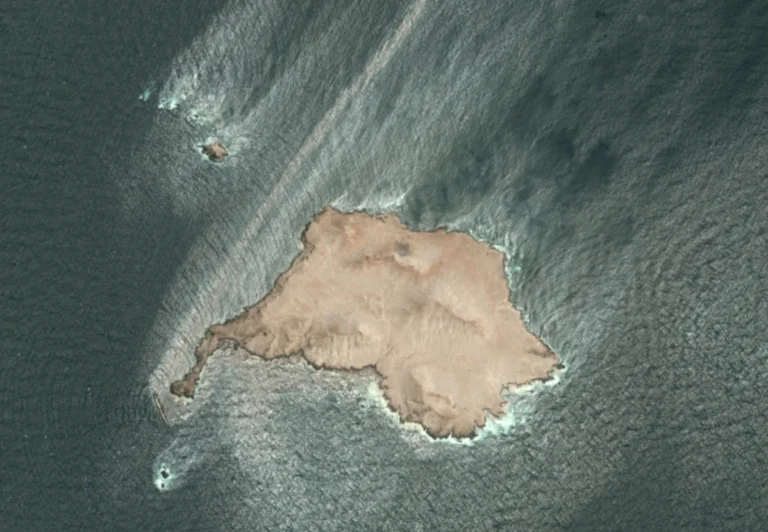
    British maritime response firm Ambrey has launched an emergency operation to contain an expanding oil spill from the grounded Russian shadow fleet tanker Caroline Bezengi off the coast of Oman, following weeks of worsening environmental damage. Specialist crews boarded the vessel with assistance from the Royal Air Force of Oman to evaluate its structural integrity and begin stabilization procedures. The 25-year-old vessel, carrying an estimated 800,000 barrels of sanctioned Russian crude, ran aground at Qabiliyah Island on 30 June after experiencing an unexplained explosion off Yemen earlier in the month. Severe weather conditions from the regional Khareef monsoon season have accelerated the spread of the slick, which has expanded across more than 2,000 square kilometers of sea. Oman’s Environment Authority confirmed that crude pollution has reached shoreline sediments in the Ras Madrakah area, more than 200 kilometers north of the grounding site, and warned that the slick threatens sensitive habitats including the protected Hallaniyat Archipelago reserve. Environmental advocates and maritime experts have warned that the disaster could worsen dramatically if the increasingly submerged hull breaks open completely, potentially releasing tens of millions of gallons of crude into the Arabian Sea. Recovery efforts remain hindered by monsoon conditions and the vessel’s lack of recognized Western insurance coverage.

  • |

    Australian court rejects Hanson’s racial appeal

    An Australian court has rejected far-right politician Pauline Hanson’s appeal against a racial vilification ruling. The case relates to comments Hanson made about Pakistan-born Australian Senator Mehreen Faruqi in 2022. Faruqi had criticised the British Empire after the death of Queen Elizabeth II. She said she could not mourn the former monarch because of the empire’s history of colonisation. Hanson responded with a social media post directed at Faruqi. She criticised Faruqi for living in Australia and told her to return to Pakistan. Faruqi later filed a complaint over the remarks. The Federal Court ruled in 2024 that Hanson’s comments amounted to racial vilification. The court said the remarks were reasonably likely to offend, insult, humiliate or intimidate Faruqi. The court also said the comments could affect Muslim Australians and other people from migrant backgrounds. Hanson challenged the ruling. She argued that her comments did not violate Australia’s racial discrimination laws. She also argued that the relevant legislation was constitutionally invalid. The court rejected her appeal on Monday. The earlier finding against Hanson therefore remains in place. Hanson defended her position after the decision. She said she was angry about Faruqi’s comments concerning the late queen. She maintained that she had wanted to criticise what she considered disrespectful remarks. The case has renewed debate over political speech and racial discrimination in Australia. It also highlights the legal restrictions surrounding comments about race, religion and migrant backgrounds. Faruqi is a senator representing the Greens. She has been active on issues including human rights, immigration and racial equality. Hanson leads One Nation. The party has built its political support around strict immigration policies and stronger measures against illegal migration. Hanson has also called for major reductions in government spending. She has promoted proposals aimed at cutting public expenditure. The politician has further urged Australia to reconsider its membership of some international organisations. The court decision comes as One Nation continues to attract significant political support. Hanson remains one of Australia’s most recognisable figures on the political right. The ruling could add to the wider national discussion over the balance between freedom of expression and protection against racial discrimination. It also reinforces the legal risks politicians can face when public statements target people based on their race, religion or migrant background.

  • | |

    US, Iran tensions rise over new sanctions

    The United States and Iran have stepped up their hostile rhetoric as Washington prepares to announce a new package of economic sanctions targeting Tehran and potentially countries that continue doing business with it. US Treasury Secretary Scott Bessent is expected to outline the measures on Monday, with Washington describing them as among the toughest sanctions imposed on Iran. The measures could also affect major trading partners, including China, which remains a key buyer of Iranian oil. Iran has rejected the planned sanctions, calling them an unlawful attempt by the United States to impose its authority beyond its borders. Iranian Foreign Ministry spokesperson Esmaeil Baghaei said secondary sanctions had no basis in international law. US President Donald Trump has warned countries providing economic support to Iran that they could face consequences. He said Tehran wanted an agreement but had not yet accepted what Washington considers acceptable terms. The confrontation comes as the war approaches its sixth month. Although the United States and Iran are not currently exchanging fire, diplomatic efforts to end the conflict remain stalled. The situation has also severely disrupted shipping through the Strait of Hormuz, a critical route for global energy supplies. Ship-tracking data showed that only a handful of commercial vessels crossed the waterway on Thursday, while major crude oil and liquefied natural gas carriers remained largely absent. Iran has nevertheless allowed several Iraqi oil tankers to pass through the strait after requests from Baghdad. The permission was reportedly discussed during the recent visit of Iranian Parliament Speaker Mohammad Bagher Ghalibaf to Iraq. Oil flows through the waterway have fallen sharply from pre-war levels. US officials said an average of around 8 million barrels of oil a day was moving through the strait, compared with more than 20 million barrels before the conflict. The disruption has contributed to higher oil prices and raised concerns about wider effects on the global economy. US military operations have inflicted heavy damage on Iran’s military capabilities and economy, but Tehran still retains missile and drone capabilities that could threaten shipping and regional targets. Washington has also yet to achieve some of its stated objectives, including fully determining the status of Iran’s nuclear programme and creating conditions for political change in Tehran. International nuclear inspectors have been unable to access Iran since 2025. Iranian military officials have continued to threaten a strong response to any further attacks. However, President Masoud Pezeshkian has called for a diplomatic solution and an end to the conflict. Iranian officials have also acknowledged the growing economic pressure. Ghalibaf warned that military strength alone would not be enough to sustain the country if economic activity, production and financial circulation continued to suffer.

  • |

    Escalating clashes in northern Ethiopia spark mass displacement across Sudanese border

    Hundreds of displaced Ethiopian citizens from the Tigray region have fled into neighboring Sudan following intense military engagements between regional forces and the Ethiopian national army, raising international concerns over a potential resurgence of full-scale civil war. The recent outbreak of violence centered around Shererina, a strategically sensitive locality near the border with Sudan, marking the most severe military confrontation in the region since the conclusion of the 2020–2022 conflict. Eyewitnesses and regional representatives reported sustained exchanges involving heavy artillery shelling and aerial drone strikes across the weekend. The renewed hostilites follow growing instability surrounding the incomplete execution of the 2022 African Union-mediated peace agreement, alongside the Tigray People’s Liberation Front (TPLF) regaining control over regional administrative institutions. Regional analysts have also expressed concern that the border area could become entangled in the wider Sudanese conflict through external proxy alignments. Both sides have traded blame for initiating the offensive. Officials representing the Tigray regional administration accused federal forces of launching an unprovoked military assault aimed at suppressing the region. Conversely, federal minister Abraham Belay accused TPLF leadership of instigating the skirmishes, warning of severe repercussions while urging both parties to seek a negotiated diplomatic resolution to prevent further devastation. While formal casualty figures remain unconfirmed, Sudanese medical teams and local authorities verified that civilians alongside wounded combatants continue to seek asylum across the border.

  • | | |

    Syria sentences former President Bashar al-Assad to death

    A Syrian court has sentenced former President Bashar al-Assad to death over allegations of premeditated and deliberate killings. The sentence was issued in absentia. Assad was not present in court when the ruling was announced. The court also sentenced Atef Najib, a former security official who served during Assad’s rule, to death. According to the court, the charges against Assad relate to allegations of killings that were deliberately planned and carried out. The ruling marks a major development in the legal proceedings against the former Syrian president. Assad was removed from power before the court issued the sentence. The court proceeded with the case in his absence. It reached its decision based on the charges brought against him. Atef Najib was also named in the proceedings. He served as a security official during the Assad era and was handed the same punishment. The court described the alleged crimes as involving premeditation and deliberate killing. These allegations formed the basis of the death sentences. The development comes amid continued legal and political efforts concerning officials associated with the former Syrian government. The ruling against Assad could become an important part of the legal record surrounding his years in power. The former president has faced allegations related to serious abuses during the conflict in Syria. The latest court decision focuses specifically on charges of premeditated and deliberate murder. The sentence was announced without Assad appearing before the court. The court also issued its decision against Najib in connection with the same proceedings. Further legal developments could determine how the sentences are handled and whether additional proceedings follow. According to the reported ruling, the former Syrian leader was convicted on charges described as war crimes and crimes against humanity. The decision marks a significant development in legal proceedings against senior figures from Assad’s former government. Assad ruled Syria for nearly 24 years after succeeding his father, Hafez al-Assad, in 2000. His government faced years of armed opposition after protests erupted across the country in 2011. The conflict developed into a prolonged civil war involving Syrian government forces, opposition groups and several foreign powers. The war caused widespread destruction and a major humanitarian crisis. Millions of Syrians were forced to leave their homes, while large numbers sought refuge in neighbouring countries and beyond. Assad remained in power throughout most of the conflict. His government was accused by international organisations and rights groups of carrying out serious abuses against civilians. The former government repeatedly rejected many of the allegations. Assad’s rule eventually came to an end in December 2024. Opposition-led forces advanced towards Damascus, forcing him to leave the country with members of his family. He subsequently travelled to Moscow, where Russia provided him with protection. The latest verdict is the first death sentence against Assad under Syria’s transitional authorities. The new authorities have begun legal proceedings against officials and figures associated with the former government. Some defendants have appeared before the courts in person, while proceedings against others have been conducted in absentia. The case against Assad is therefore being closely watched as part of broader efforts to address alleged crimes committed during the conflict. The death sentence also represents a dramatic reversal for a leader who remained at the centre of Syrian politics for decades.

  • | |

    California Senate unanimously honors Pakistani com…

    The Pakistani-American community has received a major recognition in California, with the state Senate unanimously approving a resolution honoring its contributions to the state’s economy, culture and social life. The resolution also highlights the long-standing relationship between Pakistan and the United States, placing particular emphasis on the role Pakistani-Americans have played in strengthening ties between the two countries. Introduced by State Senator Melissa Hurtado, the resolution recognises the achievements of Pakistani-Americans across different fields and acknowledges their contribution to California’s continued development. A similar resolution reported by California authorities and Pakistani diplomatic sources was unanimously approved by the Senate, underscoring the community’s growing presence and influence in the state. Pakistan’s Ambassador to the United States, Rizwan Saeed Sheikh, welcomed the unanimous approval and expressed gratitude to Senator Hurtado for her leadership and efforts in recognising the Pakistani-American community. The ambassador also reaffirmed Pakistan’s commitment to strengthening people-to-people contacts and building on positive developments in Pakistan-US relations. The resolution also recognises the role of Pakistani-American entrepreneurs, investors and business leaders in promoting economic cooperation. Their involvement in business and investment, particularly in technology and other emerging sectors, has helped create opportunities for stronger commercial links between Pakistan and the United States. Sheikh’s engagement with California comes as Pakistani officials seek to expand economic, political and community-level ties with the state. During his visit, he met with state lawmakers and discussed ways to further strengthen bilateral relations and cooperation. The recognition carries significance beyond the Pakistani-American community itself. California is one of the world’s largest economic centres and home to a diverse population, making acknowledgement by its legislature an important symbol of the community’s growing role. The resolution also praised Ambassador Sheikh’s efforts to promote Pakistan-US relations. For Pakistani-Americans, the Senate’s recognition represents more than a ceremonial gesture. It highlights decades of community participation, professional success and cultural engagement while offering a fresh opportunity to deepen connections between California and Pakistan. The development is expected to further encourage people-to-people, economic and cultural exchanges between the two sides.

Leave a Reply

Your email address will not be published. Required fields are marked *