irans president its
|

Iran’s president: It’s up to US to choose if it wants to end war

WASHINGTON, USA – Iranian President Masoud Pezeshkian says it is up to the United States to choose when the Iran war will end, when he is asked if the conflict could end by the end of the year.

“It’s America that must choose whether it wants to end this or not,” Pezeshkian says, responding to the question in an interview aired on Thursday evening, September 24, on Fox News’ “Special Report with Bret Baier” show.

Russian Foreign Minister Sergei Lavrov and his Iranian counterpart agree that only a diplomatic settlement could end tension in the Middle East sparked by the US-Israeli war against Iran.

“Current regional and international issues were discussed with emphasis on the situation around Iran,” Russia’s Foreign Ministry says in a statement after Lavrov and Iran’s Abbas Araqchi meet in New York on the sidelines of the UN General Assembly.

“It was stressed that there is no alternative to a diplomatic settlement of the crisis provoked by the illegal actions of the United States and Israel.”

Russian President Vladimir Putin and Pezeshkian signed a strategic cooperation partnership in 2025 which provides for a deepening of bilateral ties and closer defense cooperation, but includes no mutual defense clause.

Each side has provided the other with military know-how and equipment.

Pezeshkian thanked Putin earlier this month for Moscow’s position on the Iran war and said together, Moscow and Tehran can resist what he called US “unilateralism”.

Pezeshkian says in an interview published on Thursday that it is up to the US to choose when the Iran war will end, when asked if the conflict could end by the end of the year. – Rappler.com

Similar Posts

  • |

    Houthis claim strike on Saudi oil tanker

    Yemen’s Houthi movement, Ansar Allah, has claimed responsibility for a missile attack on a Saudi oil tanker in the Red Sea, marking another escalation in regional maritime tensions. Houthi military spokesperson Yahya Saree said the group targeted the tanker with ballistic missiles near the Saudi coastal city of Yanbu. However, he did not specify the exact time of the attack or provide details about the extent of the damage or any casualties. Saree also claimed that Houthi forces have attacked eight vessels accused of violating the Saudi naval blockade imposed on July 22. According to him, the operations forced 29 other ships to alter their routes to avoid Houthi-controlled waters. The spokesperson vowed that the group would continue enforcing what it described as a naval blockade against Saudi Arabia, warning that vessels breaching the restrictions could face further attacks. The latest claim comes as security concerns continue to grow in the Red Sea, a vital international shipping route that has witnessed repeated attacks on commercial and energy-related vessels in recent months. Independent verification of the Houthi claims was not immediately available.

  • |

    Use of Pellet guns in Delhi protests revive Kashmi…

    Cockroach Janta Party protests in Delhi has sparked a nationwide debate while reopening old wounds in occupied Kashmir, where the weapon has been used extensively against peaceful protesters for years. The incidents in the capital have drawn attention to the long-standing suffering of Kashmiris, who have borne the brunt of pellet gun injuries, with many left blinded or permanently disabled. The Delhi protests, led by students demanding education reforms, ended successfully with the resignation of Education Minister Dharmendra Pradhan. However, the use of pellet guns against demonstrators has overshadowed the victory, raising concerns about the government’s approach to handling dissent. Critics have questioned why such force was used against peaceful protesters in the capital, drawing parallels to the devastation caused in occupied Jammu and Kashmir. Rahul Gandhi, a prominent opposition leader, expressed deep sorrow over the use of pellet guns, highlighting the tragic toll they have taken in Kashmir. Human rights organizations have repeatedly condemned pellet guns as a “cruel weapon” that causes disproportionate harm, and the international community has raised concerns about their use in the region. The Delhi incident has reignited calls for a ban on pellet guns, with activists urging the Indian government to adopt less lethal methods of crowd control. The controversy has also drawn attention to the broader issue of human rights violations in occupied Kashmir, where the use of such weapons has been a persistent concern. Hospital records from the region highlight the devastating impact of pellet gun injuries, with countless young Kashmiris left with permanent disabilities. The use of pellet guns in Delhi has not only sparked outrage but has also brought the Kashmir issue back to the forefront of national and international discourse. Human rights groups have called for a thorough investigation into the incidents and for the government to ensure that such weapons are no longer used against citizens exercising their fundamental rights. As the debate continues, the victims of pellet gun injuries in both Delhi and Kashmir await justice and accountability. The incident serves as a reminder of the urgent need for reforms in crowd control measures and the importance of protecting the rights of all citizens. The international community continues to monitor the situation closely, urging India to uphold its human rights obligations. The time for change is now. The government must act decisively to ensure that the rights of all citizens are protected and that such incidents are never repeated. The victims of pellet gun injuries, both in Delhi and Kashmir, deserve justice, and the government must take concrete steps to ensure that their voices are heard and their grievances addressed. The fight for justice continues, and the nation must stand united in its commitment to upholding the rights and dignity of all citizens. The use of pellet guns in Delhi has once again exposed the harsh realities of India’s approach to law and order, and the need for meaningful reform has never been more urgent.

  • EU Charges TikTok over child safety failures under digital rules

    The European Commission has issued preliminary findings accusing TikTok of breaching the EU’s Digital Services Act over how it protects children online. Regulators say TikTok’s account settings fall short of DSA safety standards, letting children make their accounts public and potentially exposing them to cyberbullying or contact from predators. The charges mark the fourth set of allegations against TikTok in two years, brought under a law that requires major tech platforms to do more to tackle illegal and harmful content. This latest finding zeroes in specifically on minors’ account settings. The Commission’s concerns do not stop at public accounts. Even private accounts are not fully safe, regulators say, since children can still be easily located through other users’ “following” and “followers” lists, visible even to people without a TikTok account. Investigators found that teens aged 13 to 15 could switch from private to public with little friction, while accounts belonging to 16 and 17-year-olds stayed visible to anyone online by default. TikTok has pushed back on the findings. The company said teen accounts come with more than 50 preset privacy and safety features, shaped by outside experts from the moment an account is created. It added that under-18 accounts are private by default, and that TikTok is among the only platforms where younger teens can not use direct messaging or have their posts surface in others’ feeds. The Commission wants stricter defaults going forward. It believes TikTok should adjust settings so that minors’ content is visible only to users the minor has specifically approved, rather than being public by default. TikTok now has a chance to respond before any final decision is made. The findings are preliminary, giving the company an opportunity to answer the allegations before the Commission issues a final ruling. If confirmed, TikTok could face fines of up to 6% of its global annual turnover. EU tech chief Henna Virkkunen framed the case as part of a broader principle. She said the Digital Services Act requires platforms to build protections for minors directly into how their services are designed, and holds them accountable when they fail to do so. A high level of protection, she added, should not be something users opt into, it should simply be the default. This is not TikTok’s only regulatory headache in Brussels. The platform is also facing separate EU scrutiny over allegedly addictive design features like infinite scroll and autoplay.

  • |

    Russian missile attack kills nine in Kyiv

    KYIV: At least nine people were killed and 28 others injured after Russian ballistic missile strikes hit Ukraine’s capital, Kyiv, on Saturday morning, Ukrainian officials said. The attack caused heavy damage in several areas of the city. Multiple explosions were reported as missiles struck residential areas and other locations. Emergency teams rushed to the affected sites to rescue people and control fires. Kyiv Mayor Vitali Klitschko said the capital came under a major missile attack. He said several explosions were heard across the city, while fires broke out and some areas faced power disruptions. Officials said the Darnytskyi district was among the worst-hit areas. At least seven people were killed there, while 14 others were injured. Two children were among those wounded in the strike. Another missile strike hit the Solomyanskyi district, killing two people and injuring eight others. A five-storey residential building was partially destroyed, trapping some residents inside. Rescue workers carried out operations to search for survivors and clear the damaged structure. The attack also affected the area around the Lithuanian embassy. Lithuania’s Foreign Ministry said a missile landed nearby, damaging windows and spreading debris inside the embassy compound. No casualties were reported among diplomatic staff. The latest strikes are part of an increase in Russian missile attacks on Kyiv in recent weeks. Ukrainian officials say Moscow has intensified the use of ballistic missiles, creating greater pressure on the country’s air defence systems. President Volodymyr Zelensky has repeatedly called for additional air defence support, especially Patriot missile interceptors, which Ukraine says are essential for stopping ballistic missile attacks. Zelensky raised the issue during his recent meeting with US President Donald Trump in Washington. He urged greater support for Ukraine’s air defence capabilities as Russian attacks continue. Trump said discussions over Ukraine’s request to produce Patriot interceptors are still ongoing. However, he expressed concerns about sharing advanced US military technology and said such decisions require careful consideration. Ukraine has faced shortages of Patriot systems as Russian air attacks have increased. Kyiv says these systems remain among the few weapons capable of intercepting high-speed ballistic missiles. Meanwhile, Ukraine has continued launching retaliatory strikes against Russian targets. Ukrainian officials say their operations are aimed at disrupting military supply routes and damaging facilities linked to Russia’s war efforts.

  • | | | |

    Pakistan, Saudi Arabia and Türkiye sign Makkah jo…

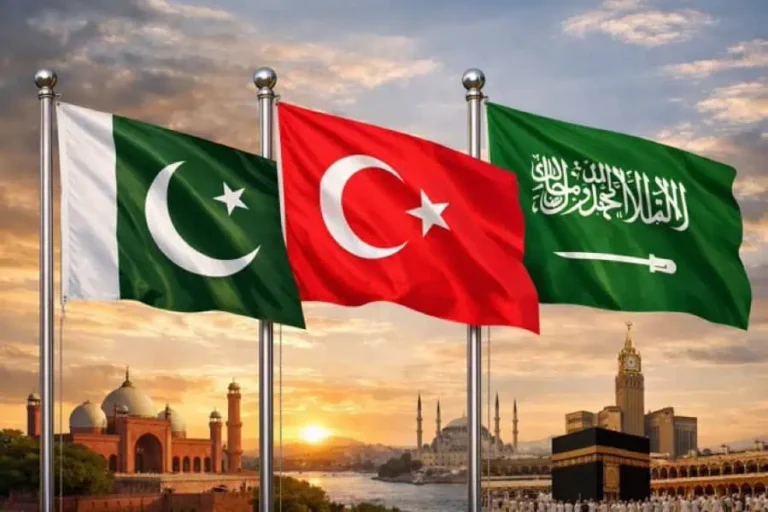
    MAKKAH: Pakistan, Saudi Arabia and Türkiye have signed the Makkah Joint Defence Agreement, pledging to strengthen collective security and defence cooperation among the three countries. The agreement was signed on Friday during a high-level summit at Al-Safa Palace in Makkah, where Saudi Crown Prince and Prime Minister Mohammed bin Salman received Pakistani Prime Minister Shehbaz Sharif and Turkish President Recep Tayyip Erdogan. According to the agreement, the three countries reaffirmed their commitment to strengthening collective security and promoting peace, stability and security in the region and beyond. The agreement is based on the longstanding relations and shared strategic interests of Pakistan, Saudi Arabia and Türkiye. It also highlights their continued defence cooperation and commitment to closer coordination on security matters. Any attack to be treated as an attack on all three A key provision of the agreement states that an armed attack against any one of the three countries will be regarded as an attack against all three. The pact is intended to enhance collective deterrence against acts of aggression and expand cooperation across various areas of defence. The agreement also seeks to strengthen military and security coordination among the three states and build a framework for closer cooperation in the face of regional security challenges. The summit brought together the leaders at a time of heightened tensions and instability across the Middle East. Recent reporting had indicated that the three countries were preparing to deepen defence coordination through a joint pact. Prime Minister Shehbaz Sharif was accompanied by Deputy Prime Minister and Foreign Minister Ishaq Dar, Chief of Army Staff and Chief of Defence Forces Field Marshal Syed Asim Munir, and Defence Minister Khawaja Asif. The leaders also reviewed bilateral and regional matters of mutual interest and discussed ways to further strengthen cooperation. The Makkah agreement marks a significant development in defence ties among Pakistan, Saudi Arabia and Türkiye, establishing a stronger trilateral framework for collective security and defence cooperation.

Leave a Reply

Your email address will not be published. Required fields are marked *