philippine pesos historic
| | |

Philippine peso’s historic slide continues, hitting record low P64.17 per dollar

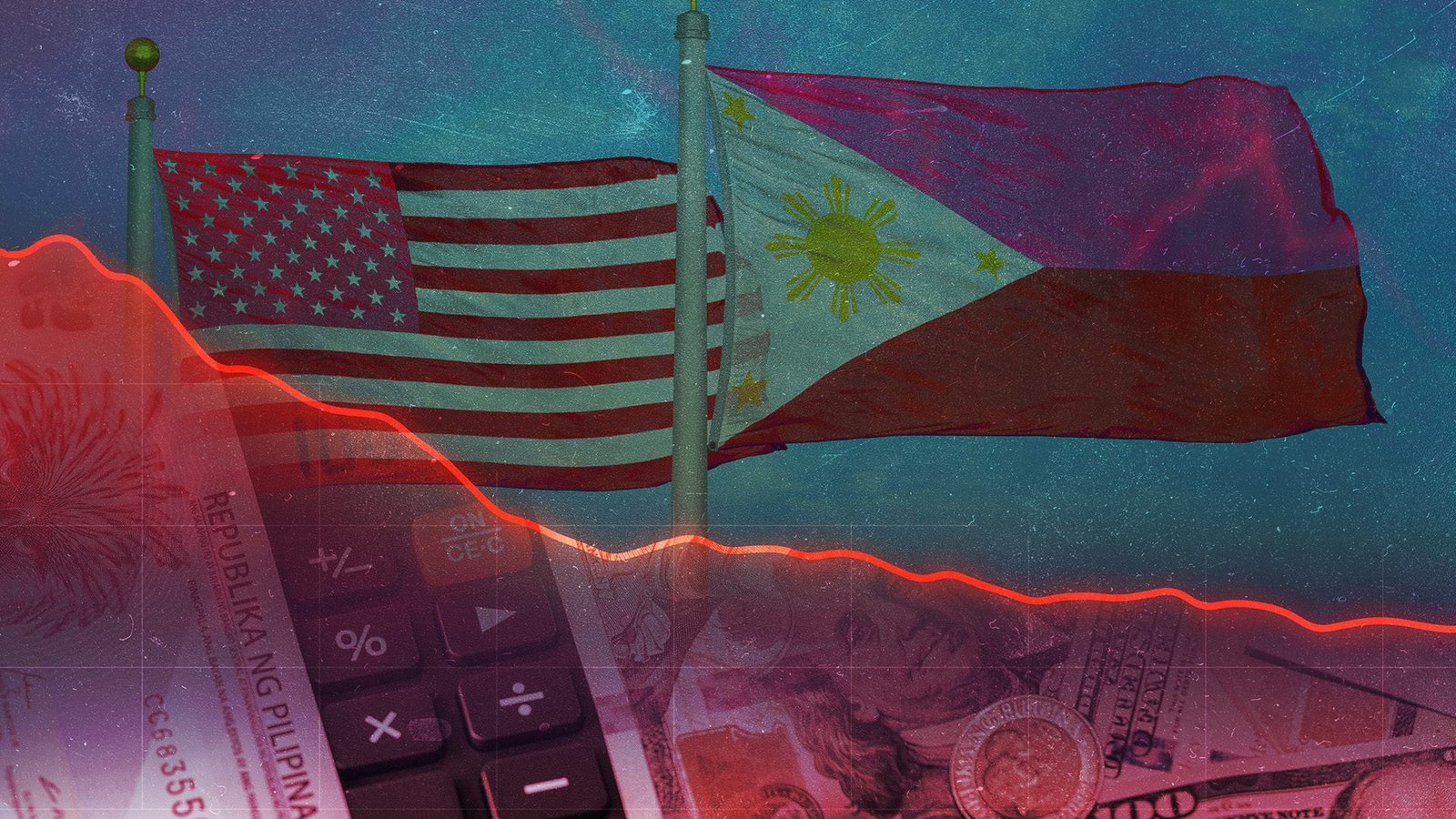
MANILA, Philippines – The Philippine peso breached the P64-per-dollar level for the first time in history on Tuesday, October 27, sinking to another record low as the local currency continued its losing streak despite the Bangko Sentral ng Pilipinas’ (BSP) aggressive interest rate hikes.

The peso closed at P64.17 against the US dollar, weakening by 22 centavos from its previous record-low finish of P63.95 a day before on Monday, October 26, according to data from the Bankers Association of the Philippines.


Philippine peso’s historic slide continues, hitting record low P64.17 per dollar

The local currency opened trading at P63.95 before weakening to an intraday low of P64.20. 

The historic depreciation comes just days after the BSP delivered a “jumbo,” larger-than-expected 50-basis point rate hike on October 22, bringing its key policy rate to 5.50% as inflationary pressures continued to mount.

Despite the peso’s continued slide, BSP Governor Eli Remolona Jr. has maintained that the central bank will not defend the currency at any particular level.

“We’re not hiking the policy rate to defend the peso,” Remolona said during a briefing on October 22. “We have estimates of how much the peso has to move before it becomes inflationary, and that’s when we tend to intervene.”

Remolona did not disclose the level of depreciation that would trigger intervention, saying it could give currency speculators an advantage.

“But there is a threshold. Not every depreciation is inflationary. It has to be significant enough,” he said.

The BSP governor explained that intervention would only cushion excessive currency movements rather than stop the peso from weakening altogether.

“We don’t end up preventing the peso from depreciating,” Remolona said.

The central bank governor said that the BSP’s model does not put any specific significant on psychological thresholds such as the P63:$1 or P64:$1. The peso closed at P63.52 to the dollar on October 23, the day that BSP announced its latest rate hike.

Former BSP deputy governor Diwa Guinigundo likewise said the BSP’s rate hikes were done primarily to prevent second round effects of inflation, not to halt the slide of the peso, which is being affected by separate factors.

In a DZBB radio interview on Tuesday, Guinigundo pointed to the country’s weak capital flows, balance of payments deficit, and low levels of foreign investment as the fundamental factors behind the peso’s falls. Another non-fundamental shock affecting the peso-dollar exchange rate is what he calls the “cloud of uncertainty” that hangs over investors amid the corruption allegations and political troubles afflicting the Philippines.

The former deputy governor said the government should strive to restore investor confidence by tackling corruption, improving rule of law, and speeding up the impeachment trial of Vice President Sara Duterte.

A weaker peso makes dollar-denominated imports, such as oil, more expensive for Filipino consumers and businesses, potentially adding to already elevated inflation. For OFW families, a weaker peso may seem like a boon since they get more pesos for every dollar sent home, but that gain is partly eroded if the same currency weakness pushes up the cost of fuel, food, transport, and other everyday expenses anyway. – Rappler.com

Must Read

Flood control corruption cleanup spooks investors, drags PH growth – World Bank


Flood control corruption cleanup spooks investors, drags PH growth – World Bank

Similar Posts

  • |

    Pakistan, US move closer to finalising reciprocal trade framework

    Pakistan and the United States have reaffirmed their commitment to finalising a reciprocal trade framework at the earliest, signalling significant progress in negotiations aimed at strengthening bilateral trade, investment, and long-term economic cooperation. The renewed commitment was expressed during a virtual meeting held on Wednesday between Pakistan’s Finance Minister Muhammad Aurangzeb and United States Trade Representative (USTR) Ambassador Jamieson Greer. The two sides reviewed the progress made by their negotiating teams and discussed the remaining steps required to conclude the proposed agreement. According to an official statement, both countries acknowledged that negotiations have advanced substantially in recent months and reiterated their shared determination to complete the reciprocal trade framework as soon as possible. During the meeting, Finance Minister Muhammad Aurangzeb referred to the recent discussions held in Washington, D.C., and appreciated the constructive approach adopted by both negotiating teams. He said the steady progress reflects the mutual commitment of Pakistan and the United States to deepen economic ties and expand commercial cooperation. The finance minister stressed that maintaining the current momentum in negotiations is crucial for Pakistan’s broader economic agenda. He noted that a stronger trade and investment partnership with the United States would support Pakistan’s export-led growth strategy, improve economic resilience, attract foreign investment, and create new business opportunities for companies in both countries. Aurangzeb also highlighted the importance of continued collaboration with the US Export-Import Bank (EXIM Bank), saying enhanced financial cooperation could facilitate trade, encourage investment, and strengthen business-to-business engagement between the two countries. On the US side, Ambassador Jamieson Greer acknowledged Pakistan’s consistent engagement throughout the negotiation process and appreciated the progress achieved on key labour and regulatory reforms. He particularly welcomed Pakistan’s efforts to strengthen compliance with international labour standards, including measures related to preventing forced labour. The US trade representative reaffirmed Washington’s commitment to advancing bilateral trade discussions and expressed confidence that the remaining issues could be resolved through continued technical-level consultations between the two sides. Finance Minister Aurangzeb emphasised the need for close coordination between officials from both countries and called for accelerated technical discussions to build on the progress already achieved. He said timely completion of the agreement would open new avenues for economic cooperation and strengthen long-term bilateral relations. Both delegations expressed satisfaction over the pace of negotiations and agreed to continue regular engagement to finalise the outstanding elements of the reciprocal trade framework. The officials reaffirmed their shared objective of concluding the agreement in the near future, paving the way for stronger trade, investment, and economic collaboration between Pakistan and the United States.

  • | | |

    Petrol, Diesel prices rise as govt announces fresh…

    ISLAMABAD: The federal government has increased prices of both petrol and high-speed diesel (HSD), citing adjustments under the country’s petroleum pricing mechanism. According to a notification issued by the Petroleum Division of the Ministry of Energy, the price of petrol has gone up by 45 paisa per litre, while high-speed diesel has become Rs1.16 more expensive per litre. Following the latest revision, petrol will now cost Rs325.43 per litre, compared with the previous rate of Rs324.98. The price of high-speed diesel has risen from Rs382.79 to Rs383.95 per litre. The revised rates were determined after the Oil and Gas Regulatory Authority (OGRA) reviewed petroleum product prices in line with the government’s pricing framework, which takes international oil market movements and other relevant costs into account. The latest increase comes shortly after the previous price review, when the government raised the HSD rate by 54 paisa per litre while reducing petrol prices by 94 paisa per litre. The new prices will apply from Friday, August 14, as the government continues its periodic adjustments to petroleum rates in response to changes in global energy markets and domestic cost factors.

  • Thailand’s Domestic Gas Production Remains Key to Long-Term Energy Security

    BANGKOK – Thailand still depends on natural gas as a primary feedstock for electricity generation, industry, and transport, including compressed natural gas (CNG), while aging offshore fields no longer produce enough to meet national demand. Domestic output has fallen from its earlier peak, leaving the country more dependent on LNG and pipeline gas from abroad, […]

  • | | |

    Punjab fixes wheat release price at Rs3,800 per ma…

    The Punjab government has fixed the new wheat release price at Rs3,800 per maund following approval from the provincial cabinet. According to a spokesperson for the Punjab Food Safety and Consumer Protection Department, a formal notification has been issued to implement the decision. The spokesperson said the federal government has directed Punjab to immediately procure wheat from the Pakistan Agricultural Storage and Services Corporation (PASSCO). The province has been approved to receive 300,000 metric tons of wheat under the arrangement. The department has already received 200,000 metric tons of wheat, while PASSCO has set its wheat price at Rs4,150 per maund. Officials said the move aims to ensure an uninterrupted supply of wheat and flour across the province while maintaining price stability in the market. The Punjab government also reiterated its commitment to ensuring that bread (roti) remains available to the public at Rs15 per piece. According to the spokesperson, Punjab had requested 800,000 metric tons of wheat, but only 533,440 metric tons have been allocated. Meanwhile, the Ministry of National Food Security has instructed the Punjab government to promptly submit its wheat procurement schedule along with the required advance payment to complete the purchase process.

  • | | | | | |

    [OPINION] Will Pax Silica be another proverbial fish that got away for the Philippines?

    Pax Silica cannot be treated as a leisurely long-term development masterplan. It must lock in binding corporate commitments, sign multilateral joint ventures, and physically break ground while it possesses maximum geopolitical value to its Western allies.

Leave a Reply

Your email address will not be published. Required fields are marked *