
philippine pesos historic
| | |

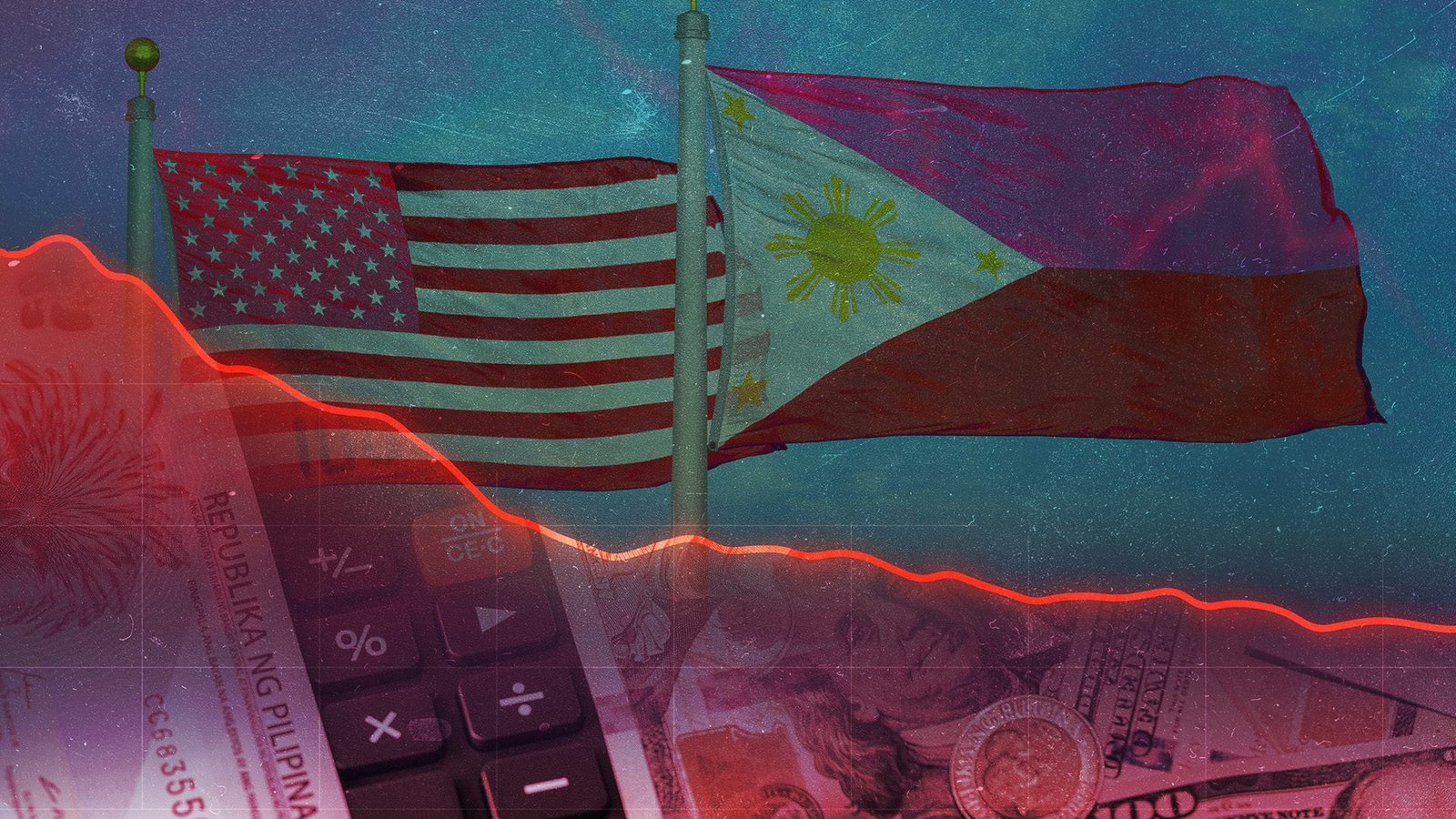
Philippine peso’s historic slide continues, hitting record low P64.17 per dollar

MANILA, Philippines – The Philippine peso breached the P64-per-dollar level for the first time in history on Tuesday, October 27, sinking to another record low as the local currency continued its losing streak despite the Bangko Sentral ng Pilipinas’ (BSP) aggressive interest rate hikes.

The peso closed at P64.17 against the US dollar, weakening by 22 centavos from its previous record-low finish of P63.95 a day before on Monday, October 26, according to data from the Bankers Association of the Philippines.


Philippine peso’s historic slide continues, hitting record low P64.17 per dollar

The local currency opened trading at P63.95 before weakening to an intraday low of P64.20. 

The historic depreciation comes just days after the BSP delivered a “jumbo,” larger-than-expected 50-basis point rate hike on October 22, bringing its key policy rate to 5.50% as inflationary pressures continued to mount.

Despite the peso’s continued slide, BSP Governor Eli Remolona Jr. has maintained that the central bank will not defend the currency at any particular level.

“We’re not hiking the policy rate to defend the peso,” Remolona said during a briefing on October 22. “We have estimates of how much the peso has to move before it becomes inflationary, and that’s when we tend to intervene.”

Remolona did not disclose the level of depreciation that would trigger intervention, saying it could give currency speculators an advantage.

“But there is a threshold. Not every depreciation is inflationary. It has to be significant enough,” he said.

The BSP governor explained that intervention would only cushion excessive currency movements rather than stop the peso from weakening altogether.

“We don’t end up preventing the peso from depreciating,” Remolona said.

The central bank governor said that the BSP’s model does not put any specific significant on psychological thresholds such as the P63:$1 or P64:$1. The peso closed at P63.52 to the dollar on October 23, the day that BSP announced its latest rate hike.

Former BSP deputy governor Diwa Guinigundo likewise said the BSP’s rate hikes were done primarily to prevent second round effects of inflation, not to halt the slide of the peso, which is being affected by separate factors.

In a DZBB radio interview on Tuesday, Guinigundo pointed to the country’s weak capital flows, balance of payments deficit, and low levels of foreign investment as the fundamental factors behind the peso’s falls. Another non-fundamental shock affecting the peso-dollar exchange rate is what he calls the “cloud of uncertainty” that hangs over investors amid the corruption allegations and political troubles afflicting the Philippines.

The former deputy governor said the government should strive to restore investor confidence by tackling corruption, improving rule of law, and speeding up the impeachment trial of Vice President Sara Duterte.

A weaker peso makes dollar-denominated imports, such as oil, more expensive for Filipino consumers and businesses, potentially adding to already elevated inflation. For OFW families, a weaker peso may seem like a boon since they get more pesos for every dollar sent home, but that gain is partly eroded if the same currency weakness pushes up the cost of fuel, food, transport, and other everyday expenses anyway. – Rappler.com

Must Read

Flood control corruption cleanup spooks investors, drags PH growth – World Bank


Flood control corruption cleanup spooks investors, drags PH growth – World Bank

Similar Posts

  • | |

    PH, EU on ‘clear path’ to free trade agreement. How close is a deal, really?

    European Commission President Ursula von der Leyen declares that the EU and the Philippines have ‘just agreed’ on a free trade deal that could eventually make nearly all bilateral goods trade tariff-free, with signing targeted for 2027

  • | | |

    Gold surges past Rs427,000 mark

    Gold prices moved higher in Pakistan on Thursday, tracking gains in the international bullion market. According to the latest market rates, the price of 24-karat gold per tola increased by Rs1,000, reaching Rs427,436. Meanwhile, the price of 10 grams of gold rose by Rs857 to Rs366,457. The upward trend followed a rise in global gold prices, where the precious metal gained $10 to trade at $4,050 per ounce, including the prevailing premium. In contrast, silver prices declined in the local market. The price of silver per tola fell by Rs76, settling at Rs6,215. Bullion traders said fluctuations in international prices continue to influence domestic gold rates, with local prices largely reflecting movements in the global market.

  • |

    Goods transporters’ strike enters sixth day as talks With government fail

    The nationwide strike by goods transporters has entered its sixth consecutive day after negotiations with the federal and provincial governments failed to produce a breakthrough. President of the Goods Transporters Association Nabil Mahmood Tariq said the talks had reached a deadlock, with no agreement reached on the key demands of the transport sector. He warned that the strike would continue indefinitely unless the government addressed the concerns raised by transporters. Speaking to Geo News by telephone, Nabil Mahmood Tariq said the negotiations failed because of what he described as the government’s rigid stance. According to him, transporters are particularly concerned about frequent changes in diesel prices, which they say make it difficult to manage transportation costs and business operations. He said the government had also refused to reduce toll taxes or guarantee that existing toll rates would remain unchanged for at least one year. Transporters have maintained that rising operating expenses, including fuel and toll charges, are putting increasing pressure on the sector. The association president said the government had offered limited concessions on customs-related matters and axle-load restrictions, but the proposals were not sufficient to end the strike. He further alleged that authorities had not yet fully assessed the economic consequences of the ongoing shutdown. According to him, the impact would become more visible in the coming days if the dispute remained unresolved. The strike has already begun affecting the movement and supply of essential commodities in several parts of the country. Disruptions in the transportation of fruits and vegetables have raised concerns about shortages and further increases in prices. In Balochistan, the strike has reportedly contributed to higher prices of several food items. In Quetta, for instance, the price of chicken meat has increased from around Rs500 to Rs550 per kilogram amid supply disruptions. Meanwhile, efforts are continuing in Karachi to maintain the supply of vegetables through smaller vehicles. However, transport-sector representatives warn that such arrangements may not be sufficient to meet normal market demand if the strike continues for an extended period. The prolonged protest has raised concerns among traders, consumers and businesses that rely heavily on road transportation. Any further delay in resolving the dispute could increase pressure on supply chains and potentially push up the prices of essential goods.

  • Top Energy Firms Line Up Bids for BP’s Prized Egypt Gas Portfolio

    LONDON – Major energy companies are preparing to submit bids this week for BP’s offshore natural gas assets in Egypt. The British oil giant is selling parts of its West Nile Delta operations to reduce debt and simplify its global business under new leadership. This high-stakes sale happens right as Egypt faces a tough energy […]

  • | |

    Pakistan seeks $10b in US backstop facility

    Pakistan has formally requested a 10 billion dollar exchange stabilisation facility from the United States to boost its foreign exchange reserves and stabilise its economy, according to a source familiar with the development. The request, addressed to US Treasury Secretary Scott Bessent, seeks a Bilateral Exchange Stabilisation Support Facility with a maturity period of up to five years. This move follows Pakistan’s involvement in facilitating negotiations regarding the Iran war, an effort that elevated the country’s diplomatic standing and fueled expectations of economic support from Washington and international partners. If approved, the 10 billion dollar facility would help replenish Pakistan’s central bank reserves, reduce downward pressure on the rupee, and decrease dependency on multilateral lenders. It would also provide financial flexibility as Islamabad continues implementing strict fiscal and monetary measures mandated under its 7 billion dollar International Monetary Fund programme. These IMF-guided measures have required politically challenging tax hikes, spending cuts, and structural reforms to ensure fiscal discipline. Neither the Pakistani Ministry of Finance nor the US Treasury immediately responded to requests for comment regarding the proposal. US Exchange Stabilisation Facilities, typically administered through the Exchange Stabilisation Fund, are rare financial mechanisms that provide foreign governments with dollars, currency swaps, or guarantees. These backstops differ from the Federal Reserve’s permanent standing swap lines with major foreign central banks. A 2025 financial package provided to Argentina represented the first new exchange stabilisation facility granted to a foreign government since Uruguay in 2002, alongside Mexico’s long-standing swap agreement dating back to the 1940s. Pakistan narrowly avoided a debt default in 2023 by securing a 3 billion dollar IMF standby arrangement, which was later succeeded by the current 7 billion dollar Extended Fund Facility. However, its foreign reserves remain heavily dependent on official loans, debt rollovers, and financial deposits from bilateral partners like Saudi Arabia and China. This reliance leaves the country vulnerable to delays in IMF disbursements and shifts in bilateral support, as demonstrated in April when Pakistan repaid approximately 3.5 billion dollars to the United Arab Emirates, representing a fifth of its reserves, while receiving 3 billion dollars in fresh backing from Saudi Arabia. Despite these vulnerabilities, Pakistan’s central bank projected in January that its foreign exchange reserves could approach their 2021 historical high, reaching 20 billion dollars by the close of 2026. In April, rating agency Fitch noted that compliance with the IMF programme has enhanced Pakistan’s funding capacity, while rebuilt foreign exchange buffers offer a cushion against economic shocks stemming from Middle East instability. However, Fitch cautioned that escalating global energy costs and potential supply disruptions could rapidly erode these reserve buffers. Furthermore, foreign direct investment in Pakistan remains constrained due to recurring external account crises, policy shifts, security concerns, historical restrictions on profit repatriation, and a narrow export base. The nation’s credit rating remains firmly in speculative-grade territory, limiting access to international capital markets and keeping borrowing costs high. To navigate these economic pressures, Islamabad has sought deeper engagement with the Trump administration through various commercial and investment initiatives. These efforts include signing a stablecoin agreement for cross-border transactions with an affiliate of World Liberty Financial, advancing a memorandum of understanding to redevelop the Pakistan International Airlines-owned Roosevelt Hotel in New York with the US government, and encouraging US investment in the domestic mining sector, where the US Export-Import Bank announced 1.2 billion dollars in financing for the Reko Diq project.

  • |

    Oil prices rise as Hormuz tensions escalate

    Oil prices climbed on Monday as uncertainty over a possible diplomatic breakthrough between the United States and Iran increased, while a sharp slowdown in tanker movements through the Strait of Hormuz heightened concerns about disruptions to global crude supplies. Brent crude futures gained as much as 1% during early trading to reach $89.40 per barrel. The benchmark was later up 72 cents, or about 0.8%, at $89.20 a barrel by 0229 GMT. US West Texas Intermediate (WTI) crude also moved higher, rising 44 cents to $82.83 per barrel. Both international benchmarks posted gains of more than 5% last week after a series of attacks involving energy and shipping assets in and around the strategically important Strait of Hormuz. The incidents have intensified fears that further escalation could affect one of the world’s most important oil transit routes. Market sentiment was further affected by developments over the weekend, when Iranian Foreign Minister Abbas Araqchi said Tehran had yet to decide whether it would resume negotiations with Washington. US President Donald Trump, meanwhile, told Americans to prepare for somewhat higher gasoline prices as the conflict continues. Analysts said the renewed uncertainty had brought geopolitical risk back into crude markets after oil prices had previously come under pressure on expectations that diplomatic efforts could ease tensions. “Oil prices have now rebounded almost completely from the lows seen in early August, as hopes for a more permanent resolution between the US and Iran have faded and geopolitical risk premiums have returned to the market,” said Priyanka Sachdeva, head of market insights at Phillip Nova in Singapore. Sachdeva cautioned, however, that the rally could lose momentum unless there is evidence of a further deterioration in the situation. She said the market would need to see renewed aggression in the Strait of Hormuz, particularly significant damage to oil tankers or energy infrastructure, before prices were likely to move substantially higher. Hormuz shipping activity slows Concerns over physical supply disruptions increased after ship-tracking data showed a marked decline in vessel traffic through the Strait of Hormuz over the weekend. According to data from Kpler, only five commodity vessels crossed the strategic waterway on Saturday, while no such transits were recorded on Sunday. This compared with 31 commodity vessel crossings during the previous weekend. The slowdown is significant because the Strait of Hormuz is a critical route for international energy shipments. Any prolonged disruption could increase transportation risks, raise insurance costs and place additional upward pressure on crude prices. The United Arab Emirates also accused Iran of attacking another vessel operated by Abu Dhabi National Oil Company (ADNOC) while it was passing through the strait on Friday, according to the Emirati state news agency WAM. The UAE had earlier blamed Iran for two separate incidents involving ADNOC-operated vessels on Thursday evening. The latest incidents have added to concerns among traders that the conflict could increasingly affect commercial shipping and energy infrastructure, rather than remaining confined to military and diplomatic confrontation. Markets remain focused on escalation risks The Strait of Hormuz remains particularly important to global oil markets because a substantial volume of crude and petroleum products moves through the waterway. Any sustained interruption could therefore have consequences well beyond the region. For now, traders are closely monitoring developments involving US-Iran diplomatic contacts, attacks on shipping and the movement of tankers through the strait. While the latest price gains reflect a higher geopolitical risk premium, analysts remain cautious about predicting a prolonged rally. If shipping activity resumes and diplomatic channels reopen, some of the premium built into crude prices could quickly unwind. Conversely, additional attacks on tankers, oil facilities or other critical infrastructure could trigger a stronger market reaction and push prices higher as traders reassess the security of regional supplies.

Leave a Reply

Your email address will not be published. Required fields are marked *