lower kohistan marks
| |

Lower Kohistan marks Youm-e-Istehsal Kashmir with …

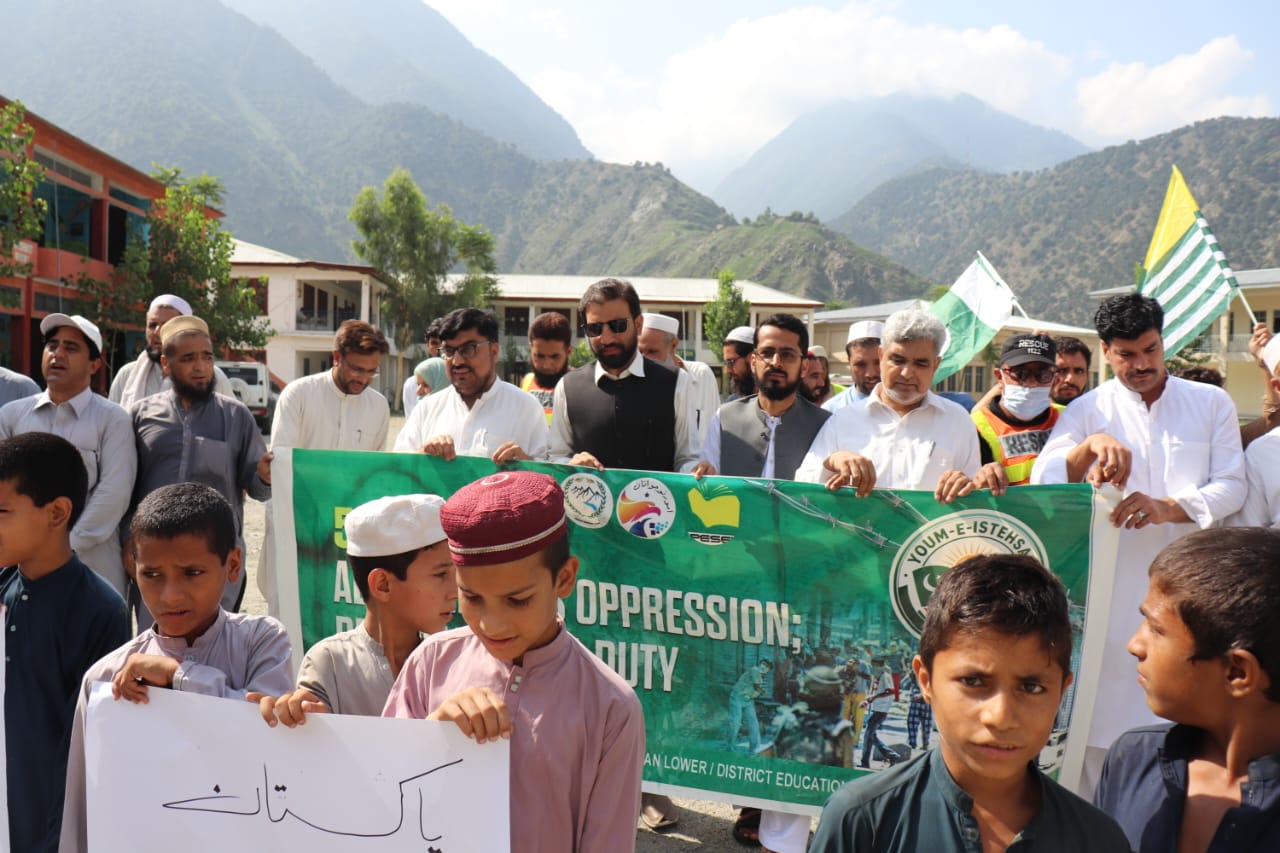
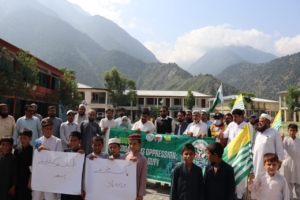
LOWER KOHISTAN: The District Youth Office Lower Kohistan, in collaboration with the district administration and the education department, organised a ceremony at Government Model Girls High School (GMGHS), Pattan, on Wednesday to observe Youm-e-Istehsal Kashmir and reaffirm solidarity with the people of Indian Illegally Occupied Jammu and Kashmir (IIOJK).

The event was attended by district administration officials, education department representatives, teachers, students, youth, and members of the local community. Participants paid tribute to the courage and resilience of the Kashmiri people and reiterated Pakistan’s continued support for their internationally recognised right to self-determination.
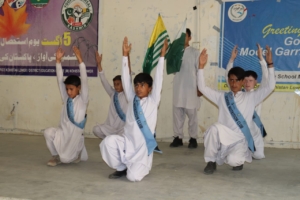
Students presented speeches highlighting the historical significance of Youm-e-Istehsal Kashmir and staged thought-provoking tableau performances portraying the sacrifices, determination, and ongoing struggle of the people of Kashmir. The performances received appreciation from the audience for effectively conveying the message of peace, resilience, and national solidarity.
Director Youth Affairs Khyber Pakhtunkhwa Abbas Khan Afridi said that the youth of the province had an important role in promoting awareness about the Kashmir issue and strengthening the values of unity, peace, and justice. He said the observance of Youm-e-Istehsal Kashmir reflected the nation’s unwavering commitment to standing with the people of Kashmir and supporting their legitimate right to self-determination. He urged young people to remain informed, responsible, and actively engaged in promoting truth, human rights, and national cohesion.

The organisers said the event formed part of the Directorate of Youth Affairs Khyber Pakhtunkhwa’s continued efforts to engage young people in constructive civic activities while fostering patriotism, national unity, and awareness of issues of national importance.

Similar Posts

  • |

    Italy faces growing childhood obesity crisis as diets change

    Italy is confronting a growing childhood obesity problem as traditional Mediterranean eating habits are increasingly replaced by calorie-heavy and highly processed foods. The issue is particularly serious in southern Italy. In parts of the Campania region, more than 40% of children aged eight and nine are reported to be overweight. Naples and surrounding communities have become major areas of concern for health professionals. Doctors say they are seeing increasingly younger patients with severe obesity. At a hospital in Naples, specialists who once mainly treated adults are now treating teenagers with serious weight-related problems. In severe cases, patients may require bariatric surgery to reduce the size of the stomach. However, doctors say some teenagers are now arriving at weights that make such procedures too risky. Some are first given medical treatment to help control appetite and lose enough weight to undergo surgery safely. Health experts point to major changes in Italian eating habits as one factor behind the trend. The traditional Mediterranean diet, built around vegetables, legumes, whole grains, olive oil and fish, is becoming less common. Instead, children are increasingly exposed to processed snacks, sugary drinks, refined carbohydrates and calorie-dense foods. Experts say the problem is not necessarily one particular meal but the cumulative effect of frequent snacking and poor diet quality. Doctors also say many parents struggle to recognise when their children are overweight. In some communities, a heavier child may traditionally be viewed as healthy or well-fed, making it harder for families to identify a potential health problem early. Physical activity can also be difficult for some children. Many schools operate in historic buildings that were not designed to provide adequate space for modern sports and exercise. Authorities are now attempting to address the problem through schools and community programmes. A regional initiative in Campania plans to involve more than 17,000 students across 25 schools in nutrition education and healthy lifestyle programmes, with families also receiving guidance. Italy has also taken a broader approach to obesity. In 2025, it became the first country to introduce a national law recognising obesity as a chronic, progressive and relapsing disease. Campania is also being used to test new approaches, including a controlled “fast-mimicking” diet for overweight adolescents. Researchers hope the programme could improve metabolic health, although some paediatric specialists have raised concerns about the limited evidence and possible psychological effects of restrictive diets on young people. Health experts stress that tackling childhood obesity will require more than simply telling children to eat less or exercise more. Families, schools, healthcare providers and policymakers all have a role in changing the environment around young people.

  • | |

    US lawmakers hold key talks with Field Marshal Asi…

    Two US lawmakers met Pakistan’s Chief of Army Staff and Chief of Defence Forces Field Marshal Syed Asim Munir at General Headquarters (GHQ) in Rawalpindi on Monday. Ryan Keith Zinke, a member of the US House of Representatives from Montana, and Michael James, a member of the House of Representatives from Washington state, held talks with the military leadership. The meeting covered several areas of mutual interest. Regional security, defence cooperation and economic ties between Pakistan and the United States were also discussed. The talks focused on ways to strengthen bilateral relations. Both sides explored opportunities for closer cooperation in the defence and economic sectors. Field Marshal Asim Munir highlighted Pakistan’s economic potential during the meeting. He said long-term regional stability depends heavily on economic growth, increased trade and stronger regional connectivity. The army chief also briefed the visiting lawmakers on Pakistan’s ongoing economic reforms. He said the reforms are aimed at creating a business-friendly environment and encouraging foreign investment. The Pakistani military leadership also stressed the importance of expanding economic cooperation. Greater trade and stronger links between the private sectors of both countries were discussed as potential areas for future collaboration. The US delegation acknowledged Pakistan’s importance in maintaining regional stability. The lawmakers also recognised the country’s role in promoting economic resilience in the region. Both sides discussed opportunities for increasing bilateral trade. They also considered greater private-sector partnerships and broader economic engagement between Pakistan and the United States. The visiting lawmakers thanked Pakistan’s military leadership for the hospitality extended to them during their visit. The meeting concluded with a shared emphasis on strengthening relations between the two countries. Both sides expressed interest in developing deeper economic, commercial and institutional links. The discussions come as Pakistan continues efforts to attract foreign investment and expand international trade. Strengthening economic cooperation with the United States could provide further opportunities for businesses and investors in both countries

  • | | | | |

    Hlun Solo’s Death Devastates Fans, We Explain Why He Was The Exact Opposite of Most Influencers and YouTubers and Why He Was So Beloved by Thais

    Thailand/Georgia His real name was Bowornthat Pengsuk, born in 1999 in Kalasin province in northeastern Thailand, he grew up in modest circumstances. After his father died, he was raised primarily by his grandmother, who focused on education and practical values. He attended local schools that offered scholarships and support, then worked factory jobs in Bangkok, […]

  • | | |

    Gulf conflict pushes oil above $100

    Global oil prices continued their sharp upward trend on Friday as escalating conflict in the Gulf region raised fresh concerns about energy supplies and the outlook for the world economy. The sustained rise in crude prices has increased fears of renewed inflation, unsettled financial markets and strengthened expectations that central banks may keep interest rates higher for a longer period. Brent crude was trading at around $100 per barrel after briefly crossing $102, its highest level in nearly two months. Oil prices have climbed by almost 40% during the month, driven by growing concerns that the conflict could disrupt major shipping routes used for transporting crude oil. The latest increase comes as military tensions involving the United States, Iran and the Iran-backed Houthi movement continue to intensify. Attacks on commercial vessels in the Red Sea have heightened concerns about the safety of one of the world’s busiest maritime trade routes. At the same time, uncertainty surrounding shipping through the Strait of Hormuz has added to worries over global oil supplies. Analysts say the combination of risks to both the Red Sea and the Strait of Hormuz has significantly increased market uncertainty. Any prolonged disruption in these waterways could reduce oil exports from the Middle East and place additional pressure on global energy markets. The rise in crude prices has also revived concerns about inflation. Higher oil prices generally increase transportation, manufacturing and production costs, which can eventually lead to higher prices for goods and services. Economists warn that this could slow progress in reducing inflation across many countries. Global financial markets reacted cautiously to the latest developments. Major Asian stock markets recorded notable losses as investors worried about the combined impact of geopolitical tensions, rising energy costs and uncertainty over future economic growth. Investors increasingly shifted towards safer assets amid concerns that market volatility could continue. The outlook for monetary policy has also changed. Financial markets now expect that major central banks, including the US Federal Reserve, could delay planned interest rate cuts or even consider further rate increases if higher energy prices continue to fuel inflation.

  • |

    Pakistan eyes PNSC ships to boost GCC trade amid shipping crisis

    ISLAMABAD: The government is considering a range of emergency measures, including the deployment of Pakistan National Shipping Corporation (PNSC) vessels, to keep Pakistan’s trade links with Gulf Cooperation Council (GCC) countries operational amid severe disruption to maritime traffic. The move comes as Pakistan’s exports to the GCC region declined significantly in July 2026, while imports also recorded a sharp fall compared with the same month last year, according to data shared by the Ministry of Commerce. The ministry’s figures show that exports to GCC countries dropped by around 12% year-on-year in July, reflecting the impact of heightened maritime security concerns and disruptions to established shipping routes. Exports to major Gulf markets decline Pakistan’s exports to the United Arab Emirates (UAE), its largest GCC trading partner, fell 9.5% in July 2026, reaching $144.6 million compared with $159.8 million recorded in July 2025. Exports to Saudi Arabia witnessed a steeper decline of 20.5%, falling to $42 million from $52.8 million a year earlier. Shipments to Oman decreased 3.7% to $15.8 million from $16.4 million. Pakistan’s exports to Bahrain suffered the sharpest percentage decline among the GCC markets, dropping 50.8% to $2.3 million from $4.2 million. Exports to Kuwait declined 7.4% to $7.4 million, while shipments to Qatar fell 4.2% to $8.7 million from $9 million in the corresponding month of 2025. The decline has raised concerns over the ability of Pakistani exporters to maintain regular deliveries to Gulf markets, particularly for goods that depend heavily on maritime transportation. GCC imports also fall sharply Pakistan’s imports from GCC countries also recorded a substantial decline during July. The Commerce Ministry reported that imports fell 32.5% year-on-year to $1.0009 billion from $1.4825 billion in July 2025. Imports from the UAE decreased 34.2%, falling to $380.7 million from $576.5 million. Imports from Saudi Arabia declined 4.7% to $295.3 million from $310 million, while purchases from Bahrain dropped 44.4% to $15.1 million from $27.2 million. The most significant declines were recorded in imports from Kuwait and Qatar. Imports from Kuwait plunged 92.8% to $9.5 million from $132.1 million, while those from Qatar fell 96.1% to $10.2 million from $261.8 million. Oman was the exception, with Pakistani imports from the country increasing 67.7% to $290.2 million from $173 million a year earlier. Month-on-month trade also weakens The trade slowdown was also visible on a month-on-month basis. Pakistan’s exports in July were 2.7% lower than in June 2026. However, the performance varied considerably across GCC destinations. Exports to the UAE increased 15.7%, while shipments to Kuwait and Qatar rose 19.4% and 88%, respectively. In contrast, exports to Saudi Arabia declined 34.5% during the month. Shipments to Oman fell 34.6%, while exports to Bahrain decreased 18.2%. Imports recorded an even sharper monthly decline, falling 32.5% in July compared with June. Imports from the UAE decreased 17.9%, while those from Saudi Arabia fell 41.4%. Imports from Oman declined 49.9%, and purchases from Qatar plunged 93.2%. Imports from Bahrain and Kuwait, however, increased during the month, rising 295.8% and 72%, respectively. Maritime security disrupts Gulf trade The Commerce Ministry linked the deterioration in trade flows to the worsening maritime security situation following the breakdown of an interim truce between the United States and Iran in July 2026. According to the ministry, the resulting security concerns severely affected international shipping movements through key maritime routes and created uncertainty for commercial vessels operating in and around the Gulf. The ministry said the waterway normally accommodates between 70 and 80 commercial vessel crossings each day. However, traffic reportedly dropped to as few as six vessels a day during the disruption, leaving hundreds of ships waiting outside the Strait of Hormuz. The ministry also referred to statements attributed to Iran’s Islamic Revolutionary Guard Corps (IRGC), according to which vessels were required to obtain permission to pass through the strategic waterway. Such developments, coupled with threats against shipping, significantly increased the risks and costs associated with maritime trade. Red Sea tensions add to shipping risks The Commerce Ministry also highlighted the impact of attacks attributed to Houthi militants on Saudi oil facilities and areas along the Red Sea coast. The resulting security threats to Saudi-linked vessels have increased concerns surrounding shipping through the Bab al-Mandab Strait, another critical maritime gateway connecting the Red Sea with the Gulf of Aden. With shipping operators facing heightened security risks, commercial maritime movement between Pakistan and GCC markets has been severely disrupted. The ministry said some Pakistani exports had consequently been shifted to air freight to ensure the delivery of goods to Gulf customers. However, air transport is considerably more expensive than sea freight, creating additional pressure on exporters and potentially reducing the competitiveness of Pakistani products in GCC markets. Government considers alternative shipping routes To reduce the impact of the disruption, the Commerce Ministry has proposed establishing dedicated feeder links between Karachi and safer maritime nodes outside the immediate Hormuz chokepoint. The proposed connections include Fujairah and Khor Fakkan in the UAE, as well as suitable Omani ports located outside the affected maritime corridor. Such routes could provide Pakistani exporters with alternative channels for moving cargo to the Gulf while reducing their exposure to disruptions around the Strait of Hormuz. The ministry has also recommended accelerating the operationalisation of multi-purpose passenger and cargo ferry services between Gwadar and GCC ports. The proposed ferry network is intended to provide another avenue for transporting commercial goods and passengers while strengthening Gwadar’s role as an alternative regional logistics hub. PNSC vessels under consideration Another option being examined by the government is the use of vessels operated by the Pakistan National Shipping Corporation to maintain trade connectivity with GCC destinations. The deployment of national-flag shipping capacity could provide greater control over cargo movement at a time when private commercial operators are facing security and logistical constraints. Officials believe that maintaining reliable access to Gulf markets is important because GCC countries remain a major destination for Pakistani exports and a key source of energy and other imported commodities. The proposed measures are therefore aimed

  • | |

    Hafiz Naeem calls rising levies ‘petrol bombs’…

    Jamaat-e-Islami Pakistan Ameer Hafiz Naeem-ur-Rehman has strongly criticized the government’s taxation and energy policies, accusing authorities of placing an unbearable financial burden on ordinary citizens. Addressing participants at a sit-in in Lahore, Hafiz Naeem said people were being economically crushed in the name of petroleum levies, describing the frequent increases in fuel costs as “petrol bombs” being dropped on the public. He said the government attributed rising petroleum prices to higher rates in the international market and argued that importing refined petroleum products had become increasingly expensive. However, he maintained that the resulting burden was ultimately transferred to consumers. The JI chief also criticized the condition of Pakistan’s oil-refining sector, saying successive governments had failed to modernize and upgrade refineries. He pointed out that motorcycle users and other ordinary consumers were also paying petroleum levies, while higher petrol prices eventually pushed up the cost of everyday goods. Hafiz Naeem described the petroleum levy as a form of taxation and argued that the existing system had little connection with the welfare of ordinary people. He also criticized the country’s electricity pricing structure, claiming that consumers were being charged heavily despite relatively low generation costs. He further warned that once an effective judicial system was established, those responsible for governance and financial decisions would face scrutiny. He said audits and trials would reveal the assets and financial dealings of those involved. Hafiz Naeem emphasized that the ongoing sit-in was not aimed at advancing the interests of any individual or political personality. He said the movement was being organized to raise the grievances of the public and demand relief from mounting economic pressures.

Leave a Reply

Your email address will not be published. Required fields are marked *