solar boom needs
|

Solar boom needs battery storage, grid reforms to sustain momentum

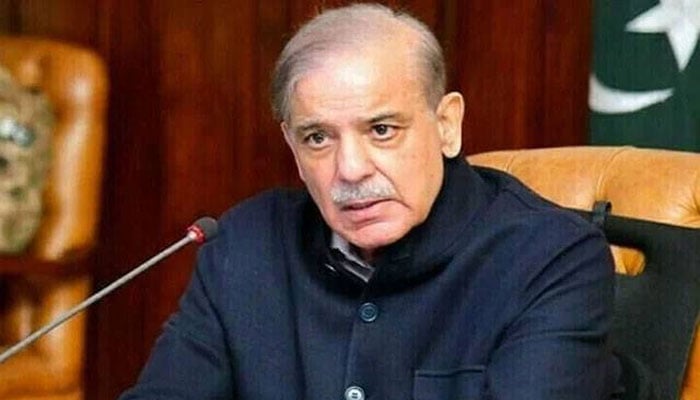
Islamabad: Pakistan’s rapid expansion of solar energy has already generated billions of dollars in savings, but experts and policymakers on Tuesday warned that battery storage, grid modernization and supportive policies are now essential to sustain the country’s clean energy transition.

Speaking at the Solar, Storage and Flexibility 2026 Conference, Federal Minister for Power Awais Leghari said Pakistan’s energy mix is already 50% clean and is targeted to reach 90% by 2035.

He stressed that local manufacturing of battery storage systems and the introduction of a daytime Time-of-Use (ToU) tariff would be key to integrating growing solar generation into the national grid.

Addressing the conference, PPP Vice President Senator Sherry Rehman said solar energy has already saved Pakistan US$12 billion, with another US$6.3 billion in savings expected this year.

She said the country now faces an energy management challenge rather than a generation shortfall, calling for major investments in battery storage, smart grids and modern transmission infrastructure.

Rehman said one in every five Pakistani households now uses solar energy and urged international climate finance to prioritize distributed renewable energy, battery storage and affordable financing for households and small businesses instead of focusing mainly on large utility-scale projects.

She also opposed the proposed 18% GST on solar equipment, saying it would have slowed Pakistan’s clean energy transition, and called for targeted subsidies, microfinance and supportive regulations to expand access to renewable energy, particularly in underserved and off-grid communities.

Renewable energy experts noted that Pakistan has installed an estimated 38 gigawatts of distributed solar capacity, while imports of lithium-ion Battery Energy Storage Systems (BESS) surged 220% in 2025, signalling rapidly growing demand for energy storage.

Global renewable energy leaders, including Global Solar Council CEO Sonia Dunlop and Renewable Energy Council Asia Pacific representative John Grimes, described Pakistan’s consumer-led solar revolution as a model for other countries but stressed that a comprehensive battery storage policy and modern electricity grid are now critical to maintaining the momentum.

Similar Posts

  • | |

    PMDC issues advisory for Afghan medical students

    The Pakistan Medical and Dental Council (PMDC) has issued an advisory for Pakistani students pursuing or planning to pursue medical and dental education in Afghanistan, warning that graduates from Afghan institutions will not be eligible to practise medicine in Pakistan. According to the advisory, medical and dental graduates from Afghanistan will not be able to obtain registration with the PMDC, making them ineligible to work as licensed healthcare professionals in the country. The council stated that medical institutions in Afghanistan are not included in the recognised list of the Educational Commission for Foreign Medical Graduates (ECFMG). As a result, graduates from these institutions will also be barred from appearing in Pakistan’s National Registration Examination (NRE), a mandatory requirement for obtaining a medical licence. PMDC advised Pakistani students to carefully verify whether a foreign medical institution is recognised by the ECFMG before seeking admission. The council stressed that enrolling in an unrecognised institution could prevent graduates from securing professional registration and practising medicine in Pakistan. The advisory aims to help students make informed decisions about pursuing medical education abroad and to avoid academic and professional complications after graduation. PMDC urged aspiring medical students to ensure that any foreign institution they choose meets internationally recognised accreditation standards before finalising their admissions.

  • | |

    MQM-P groups resume talks after Bahadurabad clash

    Differences between two groups within the Muttahida Qaumi Movement-Pakistan (MQM-P) have led to renewed contacts and negotiations between the rival factions, according to party sources. The dispute reportedly surfaced after a party meeting at the MQM-P headquarters in Bahadurabad, Karachi. Tensions escalated during the incident, with members of one group allegedly engaging in a physical confrontation with MPA Ijazul Haq, party leader Zakir, and their supporters. MQM-P leader Aminul Haq claimed that members of the opposing group also resorted to intense aerial firing during the confrontation. He said one party worker sustained injuries in the firing, while several others were hurt as a result of stone-pelting. Following the escalation, senior leaders from both sides have started communicating with each other in an effort to ease tensions and resolve their differences through dialogue. Party sources said the two groups are currently holding discussions and exploring ways to settle the dispute. The sources added that the two factions may hold a joint press conference within the next 48 hours. During the press conference, the leadership is expected to outline the party’s future course of action and announce decisions aimed at addressing the internal differences. The developments come as the party seeks to prevent further escalation and restore unity among its ranks following the clash at the Bahadurabad headquarters.

  • | | |

    Constitutional provisions fuel referendum debate

    Debate over the possibility of holding a national referendum has resurfaced in Pakistan, prompting discussions among political observers and constitutional experts about the legal framework governing such a move. Although the government has made no official announcement regarding a referendum, speculation in political circles has raised questions about when and how a nationwide vote can be conducted under the Constitution. Constitutional experts say Articles 48(6) and 48(7) of the Constitution empower the prime minister to propose a referendum on a matter of national importance. Under Article 48(6), the prime minister may refer such a proposal to a joint sitting of Parliament. If approved by the joint session, the matter can be presented to the public through a referendum in the form of a “Yes” or “No” question. Article 48(7) further provides that Parliament may legislate the procedure for conducting a referendum and determining its results. Legal experts note that, unlike a constitutional amendment, such legislation does not require a two-thirds majority and can be passed through a simple majority of members present, provided the quorum is complete. The renewed debate has also revived interest in the history of referendums in Pakistan. The concept first gained prominence during the political crisis that followed the March 7, 1977 general elections. Opposition parties, united under the Pakistan National Alliance (PNA), rejected the election results, alleging widespread rigging. They later boycotted provincial assembly elections and launched a nationwide protest movement demanding fresh elections, dissolution of assemblies and the resignation of then-prime minister Zulfikar Ali Bhutto. Despite mediation efforts by Saudi Arabia, negotiations between the government and the opposition failed, and the political deadlock culminated in the imposition of martial law by General Muhammad Zia-ul-Haq on July 5, 1977. Following these developments, constitutional provisions allowing referendums were introduced through the Seventh Constitutional Amendment. Pakistan’s first referendum was held on December 19, 1984, during General Zia-ul-Haq’s rule. While the public was asked to vote on the continuation of the Islamization process, a “Yes” vote effectively extended Zia’s presidency for another five years. Official results declared overwhelming support for the proposal, though opposition parties questioned both the process and the outcome. A second nationwide referendum was held in April 2002 under General Pervez Musharraf. The exercise enabled him to secure another five-year presidential term before the general elections later that year. After the 2002 elections, Musharraf was formally elected president by an electoral college comprising Parliament and the four provincial assemblies under the framework established through the Seventeenth Constitutional Amendment. Political analysts say recent discussions intensified after comments made during a media briefing by the Director General of Inter-Services Public Relations (ISPR), whose carefully worded responses to questions on constitutional matters drew public attention.

  • | |

    Lahore police bar women from stations after sunset

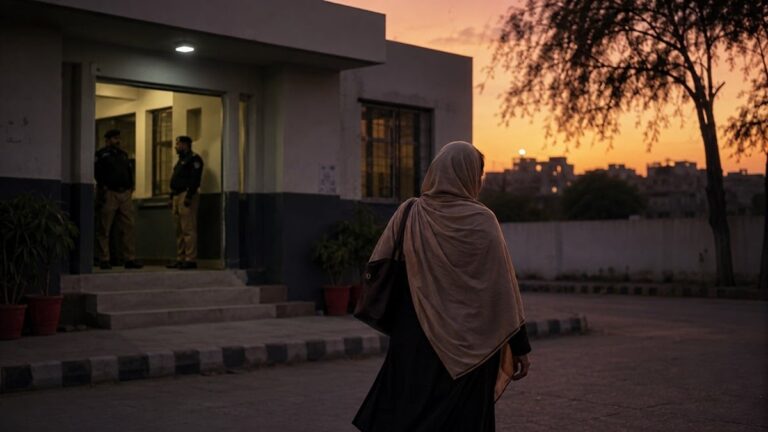
    Lahore Police have directed that no woman should remain at any police station after sunset, introducing a new measure that officials say is aimed at ensuring the safety and dignity of women. The directive was issued by Deputy Inspector General (DIG) Operations Muhammad Faisal Kamran during a crime review meeting with officers of the City Division. He instructed police personnel to treat women with respect and ensure that female complainants as well as women taken into custody are not kept at police stations after Maghrib. According to the directive, police officers must adopt procedures that protect women’s privacy and dignity while dealing with complaints or investigations. The decision comes in the wake of growing concerns over crimes against women and follows the arrest of a Lahore police Assistant Sub-Inspector (ASI) accused of sexually assaulting a 19-year-old woman with a mental health condition. According to police, the woman had left her home and did not return for several hours. Her family later learned from a local resident that a plain-clothes police officer had taken her away on a motorcycle. The victim later alleged that the officer took her to another location and sexually assaulted her. Following the allegations, police registered a case against the accused officer. DIG Investigation Syed Zeeshan Raza ordered an immediate and transparent investigation, directing investigators to proceed strictly on merit. The incident also led to disciplinary action within the police department, with 78 police officials reportedly suspended as authorities launched an internal review of the case. While police officials say the new directive is intended to safeguard women, some critics argue that restricting women’s presence at police stations does not address the root problem. They contend that law enforcement agencies should instead focus on ensuring police stations remain safe and accessible for women at all hours.

  • | |

    Lahore declares August 4 public holiday

    The Lahore district administration has declared Tuesday, August 4, as a public holiday across the district to facilitate devotees attending the annual Urs celebrations of the revered Sufi saint Hazrat Data Ganj Bakhsh. According to an official notification, the holiday will remain effective only within the limits of Lahore district, allowing worshippers to participate in the religious events without disruption. The 983rd annual Urs officially commenced with a traditional chadar-laying ceremony and the inauguration of a milk sabeel at the shrine. The opening ceremony was attended by Deputy Prime Minister Senator Ishaq Dar, who paid tribute to the great Sufi saint and highlighted his enduring message of peace, tolerance, and unity. The Urs is observed over three days and attracts thousands of devotees from across Pakistan. Religious scholars, spiritual leaders, and followers gather at the shrine to offer prayers, recite the Holy Quran, and take part in various religious and spiritual activities held throughout the celebrations. Hazrat Data Ganj Bakhsh, also known as Hazrat Ali Hajveri, was an 11th-century Persian Sufi scholar born in Ghazni. He later settled in Lahore, where he dedicated his life to spreading the teachings of Islam, compassion, and brotherhood through Sufism. His shrine has since become one of the most significant spiritual landmarks in the region. Data Darbar is widely regarded as South Asia’s largest Sufi shrine and receives millions of visitors every year.

  • | |

    West Indies post 344 in first innings as Pakistan …

    West Indies were dismissed for 344 runs in their first innings against Pakistan in the second Test match being played in Port of Spain. Pakistan’s off-spinner Sajid Khan delivered an impressive bowling performance, taking four crucial wickets to help restrict the home side. West Indies won the toss and elected to bat first, looking to take advantage of favorable conditions. Their innings was built around important contributions from Justin Greaves and captain Roston Chase, who played responsible knocks to strengthen the team’s total. Greaves scored 73 runs, while Roston Chase added 70 runs to lead the West Indies batting effort. Brandon King contributed 46 runs, while Shai Hope and Amir Jangoo scored 29 and 26 runs respectively as the hosts attempted to build a competitive first-innings score. Pakistan’s bowling attack responded strongly, with Sajid Khan emerging as the standout performer. The experienced off-spinner troubled the West Indies batters with his accuracy and variations, finishing with four wickets. His spell played a key role in preventing the hosts from gaining further momentum. Fast bowlers and other bowling options also supported Sajid Khan effectively. Ubaid Shah, Mohammad Ali, and Ali Usman claimed two wickets each, ensuring that West Indies were unable to extend their innings beyond 344 runs. At the toss, Pakistan captain Babar Azam said that his team would also have preferred to bat first if they had won the toss. He expressed confidence in the squad and said Pakistan aimed to play positive and attacking cricket throughout the match. West Indies captain Roston Chase said his team wanted to make their home conditions a strength and decided to maintain the same playing XI for the second Test. The hosts entered the match with confidence after taking a 1-0 lead in the two-match series. Pakistan now face the challenge of responding strongly with the bat as they look to level the series. A victory in the second Test is essential for Pakistan to avoid a series defeat, while West Indies will aim to maintain their advantage and secure a historic series win. With both teams fighting for crucial championship points and momentum, the second Test is expected to produce an exciting contest as the match progresses.

Leave a Reply

Your email address will not be published. Required fields are marked *