israel wont leave
| | | | |

Israel won’t leave Gaza until Hamas disarms, Pea…

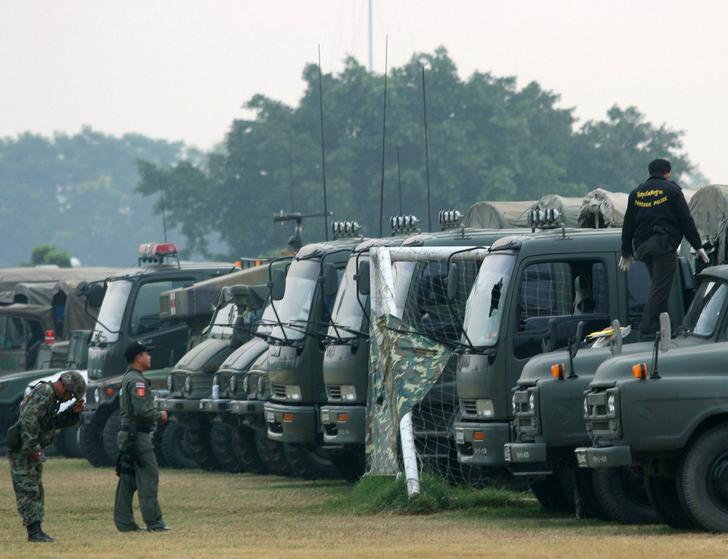
JERUSALEM: Israeli forces will not withdraw from the Gaza Strip until Hamas is fully disarmed, according to Nikolay Mladenov, following high-level talks with Israeli Prime Minister Benjamin Netanyahu.

The remarks came after a meeting in West Jerusalem between Mladenov, who heads the US-backed Board of Peace, and Netanyahu, where the two sides discussed the future of Gaza, regional security and the implementation of a proposed peace framework.

According to a statement issued by the Board of Peace, reports suggesting that Israel had agreed to withdraw from Gaza before Hamas is disarmed are inaccurate. The organization stressed that the Israeli military’s withdrawal would only take place once Hamas had surrendered all of its weapons, including both light and heavy arms, and dismantled its network of underground tunnels.

“The objective is clear and leaves no room for ambiguity,” the Board of Peace said in a statement shared on social media. It added that the long-term goal is the complete removal of weapons from the Gaza Strip and the transition toward civilian governance capable of maintaining stability and security.

The meeting also highlighted concerns raised by Israeli political leaders regarding the peace initiative recently announced by the US president. While details of the proposal have not been fully disclosed, Israeli officials reportedly voiced reservations about aspects of the plan during discussions with Mladenov.

Meanwhile, Hamas rejected the latest position, insisting that implementation of any agreement would remain impossible unless Israel fulfills its own obligations under the proposed framework. The group argued that both parties must comply with agreed commitments for any lasting ceasefire or political settlement to succeed.

According to a news agency report citing two people familiar with the discussions, Mladenov also urged Netanyahu to halt Israeli military operations in Gaza, emphasizing the importance of reducing violence and creating conditions for diplomatic progress.

Despite a ceasefire announced in October 2025, Israeli military operations in Gaza have continued, with both sides accusing each other of violating understandings reached under previous agreements. The continued fighting has complicated international efforts to revive negotiations and address the humanitarian situation in the territory.

The latest statements underscore the deep divisions that continue to hinder peace efforts, with disarmament, security guarantees and governance remaining among the most contentious issues in negotiations over Gaza’s future.
Similar Posts

  • | |

    Lavrov’s ‘nice hairstyle’ reply …

    Russian Foreign Minister Sergey Lavrov has gone viral on social media after responding to a journalist’s tough foreign policy questions with an unexpected compliment instead of an answer. The unusual moment took place during the ASEAN Regional Forum in Manila, Philippines, where Lavrov was approached by reporters following official meetings. A female journalist pressed the veteran diplomat with a series of sensitive questions covering Russia’s alleged support for Iran and Moscow’s position on ending the war in Ukraine. The reporter first asked whether Russia was helping Iran target American troops amid escalating tensions in the Middle East. She then followed up by asking if Moscow was prepared to agree to a ceasefire and peace negotiations with Ukraine. Rather than addressing either question, Lavrov continued walking calmly toward an elevator without breaking stride. As he reached the elevator doors, he briefly turned toward the journalist, smiled, and delivered a single unexpected remark. “Your hairstyle looks great,” he said before stepping into the elevator, leaving the reporter’s questions unanswered. The brief exchange was captured on camera and quickly spread across social media platforms, where it attracted millions of views and sparked widespread debate. Many users described Lavrov’s response as a classic example of diplomatic deflection, arguing that the seasoned foreign minister deliberately avoided commenting on politically sensitive issues without appearing confrontational. Others found the moment humorous, praising his composure and quick wit under pressure. Some social media users, however, criticized the response, saying it sidestepped important questions about international security and ongoing conflicts. The clip generated mixed reactions, with supporters calling it a clever diplomatic maneuver while critics argued that public officials should provide direct answers on major global issues. Lavrov, one of Russia’s longest-serving diplomats, is well known for his measured public appearances and his ability to navigate challenging media interactions. Throughout his career, he has frequently faced difficult questions from international journalists on issues ranging from the Ukraine conflict to Russia’s broader foreign policy. The latest viral moment once again highlighted how even a few unexpected words from a senior world leader can dominate online conversations. Whether viewed as a calculated diplomatic tactic, a light-hearted joke, or simply an attempt to avoid controversy, Lavrov’s short reply transformed an ordinary media encounter into one of the most talked-about moments of the ASEAN Regional Forum, proving that sometimes a single sentence can make bigger headlines than a lengthy press conference.

  • | |

    NYC mayor Zohran Mamdani puts Shamoon Ismail on his playlist

    New York City Mayor Zohran Mamdani is not your average politician, and the playlist he shared with Rolling Stone makes that abundantly clear. In a candid and wide-ranging interview with the magazine, the newly elected mayor opened up about his love of music, name-dropping artists from Uganda, Pakistan and the United States in a conversation that has since generated considerable excitement, particularly in Pakistan. The moment that caught Pakistani audiences off guard was Mamdani’s mention of Shamoon Ismail, the Pakistani rapper and singer who has built a substantial following through his distinctive blend of pop, R&B and Urdu and English lyrics. “I’ve also been listening to a Pakistani rapper named Shamoon Ismail, who I’ve listened to for a few years, but I’m also listening to a little bit more of his music,” Mamdani said. The acknowledgement from the mayor of one of the world’s most powerful cities landed with particular warmth among Pakistani fans, who were clearly delighted to see a homegrown artist reach the playlist of such a prominent international figure. Mamdani was candid about what music means to him beyond casual listening. “It’s part of how I understand the world and how I understand my place in the world,” he said, framing music not as entertainment but as a tool for making sense of life and identity. The interview also offered a window into how his relationship with music began, rooted in the particular atmosphere of early 2000s New York. “I used to love going to Tower Records. They would have just floors of an incredible number of CDs, and for some reason, I loved The Offspring at the time,” he recalled, describing the kind of music discovery that now feels like it belongs to a different era entirely. His memories of finding music in the city carried the texture of street-level New York. “There were three to four albums. The first version I was given was the clean version of Jay-Z’s The Blueprint. The funny thing was that they used to sell bootleg CDs right outside of Tower Records, and that’s where I bought Eiffel 65’s Europop,” he said, the detail of the bootleg seller outside Tower Records painting a vivid picture of the city he grew up in. His Ugandan roots also appeared in his playlist. “I’ve been listening to a lot of Radio & Weasel, who are a duo from Uganda, who were running the charts for a long, long time,” he said. And for quieter, more reflective moments, he reached for country music. “And, you know, if I’m feeling reflective, throw on some Kacey Musgraves,” he added. Mamdani, who is of South Asian and East African descent, became a cultural talking point when he wrapped up his 2025 electoral victory speech to the Bollywood track Dhoom Machale as his family walked onto the stage. That moment went viral and signalled from the very beginning that this was a politician with a different kind of cultural identity from those typically associated with New York’s highest office. In a previous interview, he had also spoken warmly about Indian-American rapper Himanshu Suri, known as Heems, describing him as one of his favourite artists well before he entered politics. For Shamoon Ismail, the mention by a sitting mayor is the kind of international visibility that cannot be manufactured or bought. For Pakistani music more broadly, it is a reminder that the country’s artists are being heard in places and by people that might surprise even their most devoted local fans.

  • | |

    Islamabad Bar raises alarm over Imaan Mazari’s h…

    ISLAMABAD: The Islamabad Bar Association has expressed concern over the reported deterioration in the health of human rights lawyer Imaan Mazari and her husband, Hadi Ali Chattha, while they remain in custody. The association has urged the chief justices of the Islamabad High Court and the Supreme Court to take immediate notice of their reported medical condition. IBA Acting President Iram Rashid and Secretary Raja Khawar Dhaniyal conveyed the concerns in a letter addressed to the chief justices of both courts. The bar association said Mazari was facing serious health problems in jail and required regular medical care. It also raised concerns about Chattha’s condition and called for appropriate medical attention for him. The IBA stressed that access to timely and adequate healthcare is a fundamental right of every prisoner. It said authorities responsible for detainees must ensure that inmates receive necessary medical treatment and facilities. The association called for urgent attention to the matter, particularly in view of the reported health concerns of the two detainees. The IBA maintained that a person’s detention should not prevent them from receiving essential medical care. It urged the relevant authorities to take appropriate steps to protect their health and wellbeing.

  • Thailand Releases 18 Cambodian Soldiers Held Since July

    BANGKOK – Thailand on Wednesday released 18 Cambodian soldiers who had been detained since July, fulfilling a key condition of the ceasefire agreement signed over the weekend. The handover took place at 10 a.m. at the Ban Phak Khat permanent border checkpoint in Chanthaburi province, which remains closed to the general public. Thai Army Detains […]

  • |

    Pakistan reports major gas discovery in Sarani block

    ISLAMABAD: Pakistan has recorded a significant milestone in its hydrocarbon exploration sector with the discovery of high-quality gas from an exploration well in Sindh, marking the country’s first reported hydrocarbon find from the Jurassic-era Chiltan Formation of the Lower Indus Basin. Pakistan Petroleum Limited (PPL) announced that its exploration well Dolphin, drilled in the company-operated Sarani Block in District Sujawal, Sindh, has encountered a potentially commercially important gas accumulation. The company described the discovery as unique and strategically significant for Pakistan’s future exploration activities. According to PPL, the discovery confirms the existence of an active petroleum system in an area that had previously presented considerable exploration challenges. The find is particularly important because it demonstrates the hydrocarbon potential of the Jurassic-age Chiltan Formation, opening up new possibilities for further exploration in the region. The company said the Dolphin well has provided valuable geological evidence that could help redefine exploration prospects in the onshore swampy areas of the Lower Indus Basin, as well as their possible extensions into shallow marine zones. The discovery is being viewed as an important development for Pakistan, which continues to face a growing gap between domestic energy demand and local oil and gas production. New indigenous gas reserves could help reduce reliance on imported energy resources, although the commercial scale and recoverable reserves associated with the discovery would depend on further evaluation and development work. PPL’s latest find also highlights the potential of relatively underexplored geological formations in the country. The identification of hydrocarbons in the Chiltan Formation could encourage exploration companies to reassess nearby acreage and investigate similar geological structures. The Dolphin discovery is therefore significant not only because of the gas encountered but also because it may establish a new exploration play in the Lower Indus Basin. Further appraisal and technical studies will be required to determine the size, quality, production potential and commercial viability of the discovery. Industry experts have long emphasized the need for increased domestic exploration to strengthen Pakistan’s energy security. Successful discoveries such as Dolphin could support that objective by expanding the country’s indigenous resource base and creating opportunities for additional exploration and investment. PPL said the discovery has effectively opened a new exploration frontier, particularly in the swampy onshore terrain and potentially adjoining shallow marine areas. The company is expected to undertake further technical assessment to establish the full potential of the newly identified gas-bearing formation.

  • | |

    Jibran Nasir says No hope from Sindh government in…

      Jibran Nasir, lawyer for Raza Mir, the father of young businessman Mir Raza who was found dead in Karachi’s Gulistan-e-Johar area, has said that he has no expectations from the Sindh government led by the Pakistan Peoples Party (PPP), urging police officials to perform their duties and calling on the provincial government not to adopt a “double policy” in the case. Speaking to the media after the first meeting of the investigation committee formed to probe Mir Raza’s death, Nasir said the family had made a mistake by identifying an honest police officer who had tried to bring facts to light. “We made the mistake of finding an honest officer,” Nasir said, referring to an officer who had written a letter to the authorities on August 3, informing them about alleged mistakes made by officials working under him. The lawyer alleged that those attempting to bring the facts of the Mir Raza case before the public were being targeted. He said the medical board had been constituted on the orders of the court and criticised what he described as unfair criticism of officials who had performed their duties during the past 11 days. Nasir also defended Dr Samia, saying that targeting her with criticism was unjustified. He maintained that the Sindh government had corrected its earlier mistakes and had moved the investigation in the right direction. According to the lawyer, certain individuals had attempted to quickly portray the case as suicide. He said the government itself had not failed, but rather those who had adopted an incorrect position regarding the case had been proven wrong. Nasir said that after new facts emerged, evidence indicating that Mir Raza had been murdered was acknowledged. He added that those who had initially insisted that the death was a suicide had been proven wrong and that officers who helped move the investigation in the correct direction should be encouraged. Speaking on the occasion, Mir Raza’s father said that if these steps had been taken earlier, there would have been no need for the exhumation of his son’s body. He said the family had provided investigators with all the information they had and only wanted justice for their son. Earlier, Jibran Nasir had written to the Sindh government, stating that Mir Raza’s parents did not want a judicial inquiry. He said the family had complete confidence in the judiciary but believed that the government wanted to make the case controversial under the name of a judicial commission. He also maintained that, under the law, the police had the authority to conduct the investigation. Later, Sindh Home Minister Zia Lanjar said that the decision to establish a judicial commission had been postponed for the time being following a request from Mir Raza’s parents. Mir Raza’s body was recovered from Gulistan-e-Johar on July 29. Following the exhumation of his body, a second post-mortem examination was conducted on August 8. The examination reportedly revealed traces of acid in Mir Raza’s stomach. His lungs were also found to have been severely affected by acid, while signs of acid exposure were reportedly detected on his shirt, hands and feet. Police have sealed a guesthouse near the location where Mir Raza’s body was recovered. Six people working at the guesthouse have reportedly been taken into custody. So far, 21 people, including Mir Raza’s friends and business partners, have been detained for questioning, and their statements have been recorded. Meanwhile, a five-member investigation committee headed by DIG Crime Branch Amir Farooqi held a meeting to review the case. Authorities said Section 201 of the Pakistan Penal Code has also been added to the case, in addition to Sections 365 and 302. Section 201 relates to causing evidence of an offence to disappear or giving false information with the intention of screening an offender. The investigation is continuing as authorities examine the emerging evidence and statements from people connected to the case.

Leave a Reply

Your email address will not be published. Required fields are marked *