thai citizens use

Thai Citizens Use Shoes To Reserve Places In Bank Queues

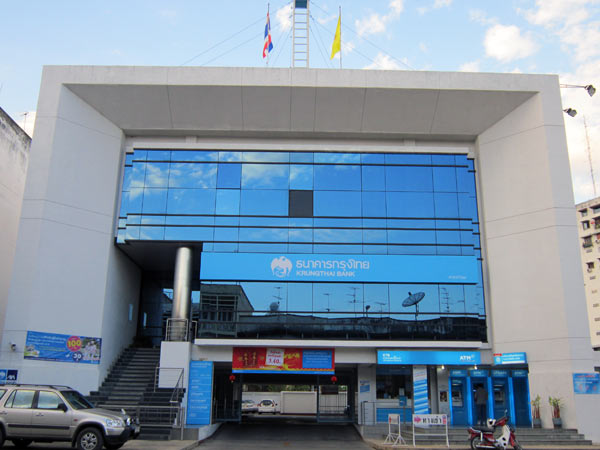
BANGKOK, Thailand — Thai citizens in multiple provinces have adopted an unconventional approach to securing their place in line at Krung Thai Bank branches, placing their footwear in queues stretching from bank entrances as they wait to register for the government’s ‘Thai Chuay Thai Plus’ welfare scheme, according to social media reports and local media accounts.

Thai Cabinet Approves 10,000 Baht Cash Payment

The scenes, which quickly gained attention on social media platforms, showed applicants standing or walking barefoot outside bank branches after using their shoes to mark their positions in lines that formed well before opening hours. The practice was reported in several provinces including Nakhon Ratchasima and Kamphaeng Phet, where large crowds gathered to seek assistance with registration difficulties linked to the ‘Pao Tang’ mobile application.

The government has acknowledged that many applicants have encountered technical challenges when attempting to register for the scheme, including difficulties updating phone numbers, recovering forgotten passwords, or completing identity verification procedures. These issues have required in-person assistance at Krung Thai Bank branches, contributing to the high demand for early queue positions.

Registration for the ‘Thai Chuay Thai Plus’ scheme opened recently and will continue through May 29. Under the co-payment arrangement, the government will subsidize 60% of expenditures made by each eligible recipient on goods and services purchased from participating retailers. Approximately 30 million Thai citizens aged 18 and over qualify for the financial support, which will be distributed at a rate of 1,000 baht per month for four months beginning June 1. Daily spending under the scheme is capped at 200 baht.

The initiative forms part of broader government efforts to provide targeted economic support to households while stimulating domestic consumption through designated retail channels. Officials have emphasized that the program is designed to assist citizens with essential purchases while encouraging participation in the formal economy.

Banking authorities have indicated that Krung Thai Bank branches are implementing measures to manage crowd volumes and ensure orderly processing of registration requests. Staff have been deployed to assist applicants with technical issues, and extended service hours have been introduced at selected locations to accommodate demand.

For citizens experiencing difficulties with the registration process, government agencies have provided guidance through official websites, call centers, and social media channels. Applicants are encouraged to prepare required documentation in advance, including national identification cards and registered mobile phone numbers, to facilitate efficient processing.

The use of personal items to reserve queue positions reflects a practical adaptation to high-demand public services in Thailand, where similar practices have occasionally been observed during periods of elevated demand for government programs, document processing, or limited-availability services. Authorities have generally tolerated such arrangements provided they do not disrupt public order or exclude vulnerable individuals from accessing services.

Thai Government to Roll Out 10,000 Baht Cash Payments in Digital Wallet Scheme

As the registration period continues, officials have appealed to applicants to exercise patience and follow instructions from bank staff to ensure smooth operations.

-Thailand News (TN)

Similar Posts

  • |

    Government will complete constitutional term, says…

    Prime Minister Shehbaz Sharif’s Special Assistant, Huzaifa Rehman, has dismissed speculation about political instability, insisting that the federal government will complete its constitutional term and that comments made by individual ministers do not determine the future of an administration. Speaking during a television interview, Rehman said Interior Minister Mohsin Naqvi had already clarified his recent remarks, adding that the issue should now be considered settled. He also noted that Naqvi shares a close personal relationship with Prime Minister Shehbaz Sharif, suggesting there was no reason to read more into the controversy. Commenting on recent political statements, Rehman said he had not expected such remarks from Pakistan Peoples Party (PPP) Chairman Bilawal Bhutto Zardari. However, he described Bilawal’s comments as emotional and declined to engage in further criticism. Rehman emphasized that the PPP remains a valued coalition partner of the Pakistan Muslim League-Nawaz (PML-N). At the same time, he asserted that the ruling party has enough parliamentary support to continue governing even without the PPP’s backing. He also responded to political rhetoric about the government’s future, saying that any political “countdown” would not be limited to the PML-N. According to him, the same pressure could also apply to the provincial governments in Sindh and Balochistan. Addressing another claim, Rehman said he did not agree with the suggestion that the government had achieved 30 years’ worth of progress in just three years. He maintained that performance should be judged on measurable results rather than exaggerated comparisons. The prime minister’s aide further revealed that Prime Minister Shehbaz Sharif directed all federal ministries about a month ago to submit detailed performance reports. He said the initiative reflects the government’s focus on reviewing progress, improving governance, and ensuring accountability across ministries.

  • | |

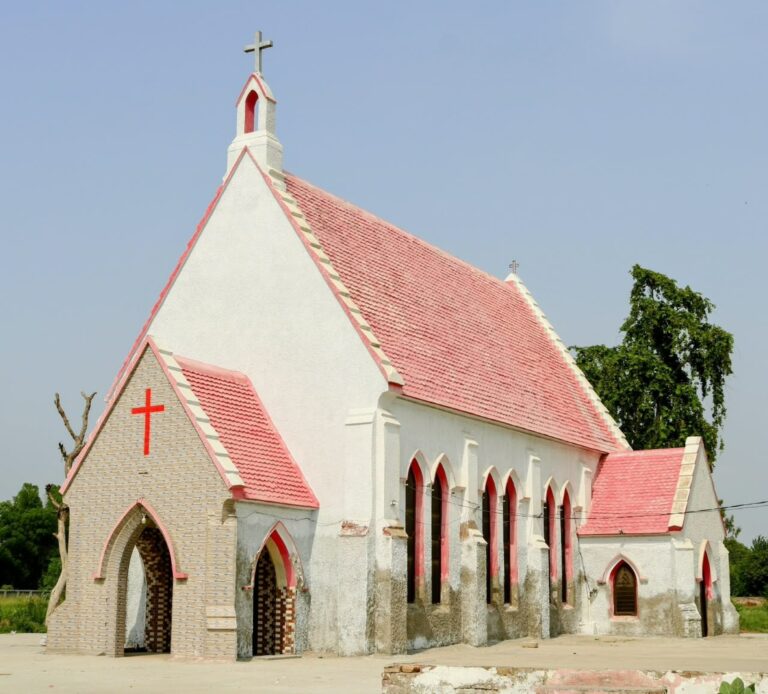
    DI Khan church still guards colonial memories

    There are some places we pass every day without realising how much history they hold. They remain untapped until some visitors put their eyes on them. During summer vacations, I travelled to Dera Ismail Khan, a district situated in southern Khyber Pakhtunkhwa. It takes six hours from Lahore to arrive in this historic city. During my stay there, I came across one such place that immediately captured my attention, and I thought to write about it. It was St Thomas Church, sacred place of worship for Christian community. A large cross standing at the entrance, old rusty walls, and an ambience of spiritualism. But the Church showcased more than that. Its walls contain historical accounts of colonial past, the military campaigns led by British soldiers in this area and a grave of one Lieutenant Governor of Punjab.   St Thomas Church was built in 1856 during British rule in the Indian subcontinent. It is one of the oldest churches in present-day Pakistan. It has survived political changes, the Partition of 1947, and the passing of time. Even today it stands as a symbol of the rich and diverse heritage of Dera Ismail Khan. The church is not only a place of worship but also a reminder that different faiths and communities have long been part of the history of this region. As we walked inside, we met the old priest and caretaker of the church named Chand. He welcomed us warmly and narrated the remarkable history of this place. There are memorials of British soldiers who lost their lives in this region during military campaigns. The priest stood in front of each tablet inscribed on the church wall and briefed about it. One memorial narrates the names, ranks and units of one hundred and 69 British military officers and other ranks who were killed or died due to injuries or disease in Waziristan military campaigns launched between 1919 to 1921.     Another memorial lists details of sixty-eight officers and other ranks who met a similar fate during the 1936-1938 Waziristan military campaigns. Similarly, one tablet erected by friends and fellow officers mourns the death of Herbert Walter Gee, ICS, deputy commissioner of Dera Ismail Khan, who died in 1901. There are other memorials as well, erected by colleagues in memory of the fallen officers. I thought that these names contain historical accounts year by year about what happened in this part of the world at that time. Every sentence of the Priest carried a new story, such as how the church has witnessed a lot of happenings through generations and that it still serves the small Christian community living in Dera Ismail Khan. As we stepped outside, believing our visit had come to an end, the priest said, “Wait. I have to show you one more thing.” He took me to the back of the building, where I saw a large white grave standing quietly among the dusty bushes. Here rests Lieutenant General Sir Henry Marion Durand (1812-1871). Durdand – a quite familiar name for the people of Pakistan and Afghanistan. Sir Durand was a career British military officer, diplomat, and administrator. He served in the East India Company Army, took part in several military campaigns, and later became the Lieutenant Governor of Punjab from 1870 to 1871. His son Sir Mortimer Durand is the one who drew the contours of the border between British India and Afghanistan in 1893. A man who once held such an important position now lies in silence behind an old church, while many people living nearby are unaware that his grave even exists. Henry Marion Durand died in 1871 at the age of 58 from a tragic accident. He was visiting Nawab of Tank Shahnawaz Khan along with his daughter when he fell from an elephant. The elephant was passing through the gateway by the town of Tank with the Nawab on the same elephant and an official (Chaprassy). The gate was too low to cross an elephant with howdah. The howdah struck the walls of crossing and the elephant got frightened resulting in the fall of Durand. He remained unconscious for a few days and never recovered. He was buried beside St. Thomas’ Church in Dera Ismail Khan. The British suspected some conspiracy into this incident. One of descendent of Nawab Shahnawaz Khan says that The British launched an enquiry into it. But the daughter of Durand gave testimony in favour of the Nawab that it was just an accident and there was no fault on his part. However, as a punishment, the British authorities stripped the powers of Nawab Shahnawaz Khan in 1875 and sent him to Lahore under strict watch. He passed away in 1881 while under surveillance. Standing beside the grave of Sir Henry Durand, I felt as if I had stepped into a forgotten chapter of history. The name engraved on the stone reminded me that many important events and personalities of the past remain connected to places that we often overlook. How easily history can fade from people’s memories, even when it is standing right in front of us. As I left St Thomas Church, I felt that I had walked through a chapter of history that few people ever get to read. Sir Henry Durand ruled Punjab from this soil, and his son later sat across a table in Kabul and drew the line that still separates Afghanistan and Pakistan today. That line appears in newspapers and political debates all the time. Yet the grave of the man whose name it carries lies quietly behind a church in Dera Ismail Khan.

  • Election Commission Chief Targets February 8 for General Election

    BANGKOK – Narong Klunwarin, the newly appointed chairman of the Election Commission (EC), has affirmed the agency’s readiness to organize a general election following the dissolution of the House of Representatives, suggesting February 8, 2026, as a possible poll date. Thai Prime Minister Anutin Dissolves House, Calls Snap Election Speaking after a ceremony at the […]

  • | |

    Three accused in doctor Akash murder case eliminat…

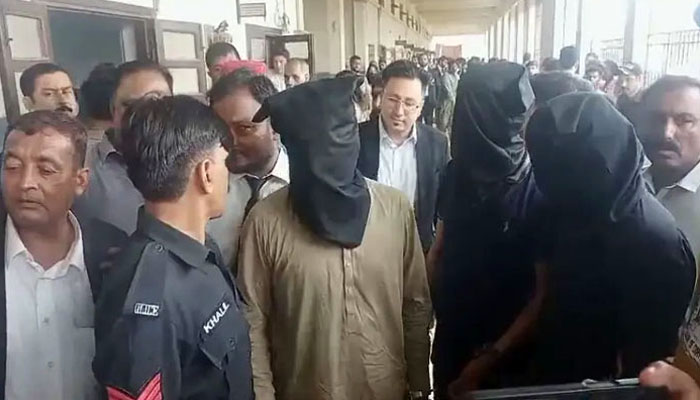
    Three suspects arrested in the murder case of young doctor Akash were killed during a police operation in Karachi after an alleged exchange of fire between law enforcement officials and criminal suspects. According to the Special Investigation Unit (SIU), the incident took place in Umar Brohi Goth area of Gulshan-e-Maymar. Police officials said the arrested suspects had provided information about their escaped accomplices, following which a raid was carried out to arrest the remaining members of the group. During the operation, the alleged criminals opened fire on police teams. Officials said a police officer was also injured in the firing. The SIU claimed that the three suspects already arrested in connection with Dr Akash’s murder were killed after being hit by bullets fired by their own accomplices during the clash. The case relates to a robbery incident in Karachi’s Clifton area on July 13. Dr Akash was killed when armed suspects opened fire outside a bank during a cash-snatching attempt. Police said the suspects had targeted people carrying large amounts of cash. During the incident, the criminals allegedly took away Rs25 million from a total amount of Rs50 million withdrawn from the bank. Investigators later found that the suspects arrested in the case were allegedly involved in other criminal activities, including robberies outside banks and attacks on traders in Karachi. The police investigation also revealed the possible involvement of an unidentified woman in the robbery case. Officials said further investigation was being carried out to determine her role and identify other members of the criminal network. Authorities said efforts are continuing to trace the remaining suspects linked to the gang. The police have vowed to take action against individuals involved in organised street crimes and cash robbery incidents across the city.

  • | |

    Sewage flood damages SBCA property records

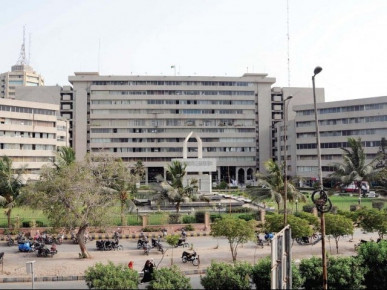
    KARACHI: Sewage water has flooded the record room at the headquarters of the Sindh Building Control Authority (SBCA), damaging hundreds of land and building-related files and raising concerns over the safety of vital property records. The affected room at the SBCA Civic Centre headquarters contains thousands of documents submitted by citizens, including approved building plans, structural drawings and other records used to verify property details. Officials retain copies of approved residential and commercial building plans in the record room for future reference. However, sewage water reportedly entered the facility after poor maintenance and alleged negligence, submerging hundreds of files and damaging important documents. Another important SBCA department, formerly known as Town Planning and now called Structure Planning, operates next to the affected record room. Sources said the flooding also damaged records dating back several years. According to sources, sewage had been accumulating in the area for several days, but the maintenance department failed to resolve the issue in time, resulting in damage to critical official records. Following a report by Express News, Additional Director General Farhan Qaiser took notice of the incident and ordered an inquiry against three officials. He directed authorities to submit a report within 24 hours and warned that officials found responsible for negligence would face suspension. The incident has also raised questions about oversight, as the SBCA Director General’s office is located only a short distance from the affected record room. However, no immediate directives reportedly came from the DG’s office. An SBCA spokesperson said the Director General was attending a meeting with Sindh Local Government Minister Nasir Hussain Shah regarding improvements to the authority’s one-window operation. Citizens have expressed serious concern over the damage, saying the incident could undermine public confidence in the protection of property records. They have called on the Sindh government to take immediate steps to ensure the safety and proper preservation of such documents.

  • | |

    Court awards Ahsan Iqbal Rs2.5m in defamation case

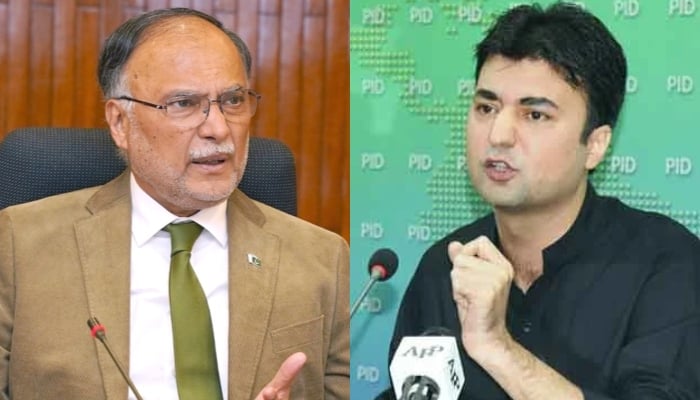
    An Islamabad District and Sessions Court has ruled in favour of Federal Minister Ahsan Iqbal in a long-running defamation case against PTI leader Murad Saeed. The court ordered Murad Saeed to pay Rs2.5 million in damages for making allegations that were not proven during the proceedings. Additional Sessions Judge Hakim Khan announced the verdict after hearing the case. The court held that Murad Saeed’s statements had damaged Ahsan Iqbal’s reputation and public image. It directed the PTI leader to compensate the federal minister with Rs2.5 million. According to the judgment, Murad Saeed accused Ahsan Iqbal of being involved in corruption worth Rs70 billion. However, the court found that he failed to provide any evidence to support the allegations. The court ruled that the accusations of corruption, misuse of authority, and receiving illegal commissions were defamatory because they remained unsubstantiated. The judgment stated that Ahsan Iqbal had initially sought Rs10 billion in damages for the alleged harm caused to his reputation. However, the court observed that the amount claimed was excessive in view of the evidence presented during the trial. It therefore awarded Rs2.5 million as reasonable compensation. The court further observed that Murad Saeed’s controversial statements had harmed Ahsan Iqbal’s reputation, dignity, and credibility. It said the allegations created a negative impression of the minister among the public and directly targeted his honesty, integrity, and professional standing. The judgment also noted that Murad Saeed neither appeared before the court during the proceedings nor submitted evidence to substantiate the corruption claims. The absence of supporting material, the court said, weakened his defence and left the allegations unproven. The case originated from statements made by Murad Saeed in 2019 regarding the Multan-Sukkur Motorway project. At the time, he alleged that Ahsan Iqbal had committed corruption in connection with the project. After reviewing the evidence and hearing the arguments, the court concluded that the accusations were not established and therefore amounted to defamation. The verdict marks the conclusion of the defamation proceedings, with the court reaffirming that public allegations of corruption must be backed by credible evidence.

Leave a Reply

Your email address will not be published. Required fields are marked *