

pakistan cuts petrol
| |

Pakistan cuts petrol price by Rs. 4.08 per litre, …

The federal government has announced a reduction in petroleum prices, lowering the cost of petrol by Rs. 4.08 per litre and high-speed diesel (HSD) by Rs. 2.45 per litre. The revised prices will come into effect from August 4, providing some relief to consumers amid easing international oil prices.

According to a notification issued by the Petroleum Division, the new price of petrol has been fixed at Rs. 331.95 per litre, while high-speed diesel will now be available at Rs. 389.93 per litre. The latest revision follows a decline in global crude oil prices after geopolitical tensions in the Middle East showed signs of easing.

Despite the reduction, the government continues to impose substantial taxes and duties on petroleum products. Petrol carries approximately Rs. 110 per litre in taxes and levies, while diesel is subject to Rs. 96 per litre in government charges.

Fuel prices had surged sharply earlier this year following heightened tensions between the United States and Iran, which raised concerns about potential disruptions to global oil supplies. High-speed diesel reached a record Rs. 520.35 per litre on April 3 after climbing from Rs. 281 per litre in late February. During the same period, petrol rose from Rs. 266 per litre to a peak of Rs. 458.41 per litre.

Earlier, Petroleum Minister Ali Pervaiz Malik announced that fuel prices would now be reviewed daily instead of weekly in response to increased volatility in international energy markets. Under the new mechanism, the Oil and Gas Regulatory Authority (OGRA) has been tasked with determining petroleum prices based on prevailing global market trends.

The decision to introduce daily pricing has, however, faced criticism from the All Pakistan Petroleum Dealers Association, which has opposed the move and indicated that it may consider launching protests against the policy.

Petrol remains the primary fuel used by private vehicles, motorcycles, rickshaws, and small transport, making its price particularly important for middle- and lower-income households. Meanwhile, high-speed diesel is widely consumed by the heavy transport sector, agriculture, industries, power plants, and commercial generators, meaning changes in diesel prices have a broader impact on transportation costs, supply chains, and inflation.

The latest reduction is expected to provide modest financial relief to consumers and businesses. However, future fuel prices will largely depend on international crude oil trends, exchange rate movements, and developments in the Middle East, all of which continue to influence Pakistan’s petroleum pricing policy.
Similar Posts

  • | | |

    Why are thousands protesting Sindh’s major civil…

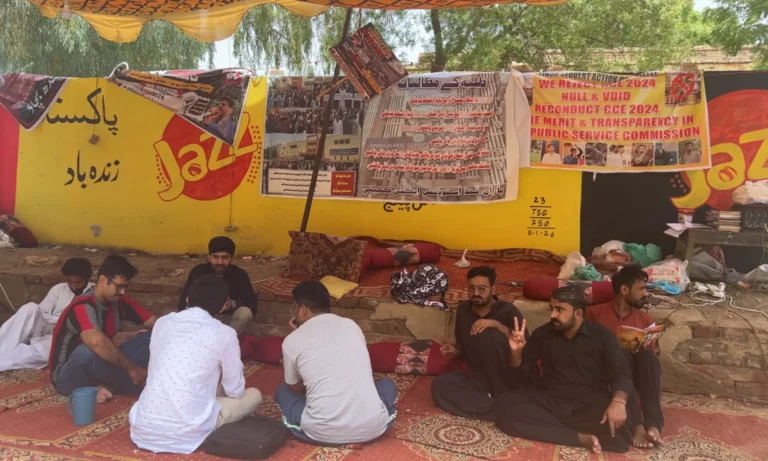
    HYDERABAD: A civil service examination meant to open the door to prestigious government jobs in Sindh has instead triggered months of protests, legal battles and allegations of irregularities, with unsuccessful candidates demanding that the entire process be scrapped and conducted again. The controversy centres on the Combined Competitive Examination 2024 (CCE-24) conducted by the Sindh Public Service Commission (SPSC). More than 4,300 candidates appeared in the written examination, which consisted of 10 papers. Yet when the results were announced on May 6, only 70 candidates were declared successful. The examination is particularly important because successful candidates can be appointed to Grade 16 and 17 positions, including assistant commissioners, assistant directors and section officers. For many candidates, the unusually low pass rate immediately raised questions. Why did the results trigger protests? The protesters’ concerns intensified when detailed marks certificates were uploaded following the announcement. Candidates noticed what they described as apparent inconsistencies in the marks sheets. One example involved Criminology, an optional subject carrying 100 marks in a single paper, which appeared in some detailed certificates as two papers carrying 200 marks. Candidates said a similar issue was visible in Environmental Science. Farman Ali, one of the campaign leaders, said candidates initially believed the discrepancy could simply be a technical mistake. However, after finding similar problems in other subjects, they began demanding an explanation from the commission. The SPSC, meanwhile, has maintained that the examination was conducted according to the applicable rules. Its spokesperson, Hifzullah Kaka, declined to comment on the disputed issues while the matter remained before the courts. Protests spread across Sindh Following the results, social media quickly filled with allegations that the examination process had been manipulated to benefit selected candidates. The Sindh Students Action Committee subsequently organised protests, while candidates began a sit-in outside the SPSC headquarters on Hyderabad’s Thandi Sarak. A larger rally was held on May 13, drawing students from different parts of Sindh. The following day, MQM-P lawmaker Maaz Mahboob submitted a resolution in the Sindh Assembly, expressing concern over alleged irregularities, merit violations and a lack of transparency. Protesters later launched the Movement for Restoration of Meritocracy, demanding broader reforms in public recruitment. The campaign has since spread beyond Hyderabad, with protests reported in Nawabshah, Ghotki, Qambar, Umerkot, Islamkot and Gambat. How did the controversy reach the courts? The dispute soon moved into the courtroom. The Sindh High Court suspended the CCE-24 results and directed the SPSC to produce the complete examination record. The court also halted further appointments and proceedings based on the disputed results. The SPSC challenged the Sindh High Court’s interim orders before the newly established Federal Constitutional Court, arguing that the examination had been conducted fairly, transparently and under the Sindh Public Service Commission Act, 2022, and Recruitment Management Regulations, 2023. On July 16, the federal court suspended the Sindh High Court’s interim orders concerning the inquiry, interviews and rechecking of failed candidates. The development allowed the SPSC to proceed with interviews of the 70 successful candidates. Protesters refuse to back down Despite the legal developments, unsuccessful candidates say their concerns remain unresolved. They are demanding that CCE-24 be cancelled and a fresh examination conducted. They are also calling for the resignation of SPSC Chairman Muhammad Rizwan and commission members, along with an independent judicial inquiry into SPSC examinations and recruitments for Grade 16 and 17 posts over the past five years. At the heart of the dispute is a question that extends beyond one examination: can young candidates trust the system responsible for deciding who gets a government career? For thousands of applicants who spent years preparing for the competitive examination, the answer remains uncertain. As the court proceedings continue, protesters remain camped outside the SPSC headquarters, insisting that their campaign will continue until they receive what they consider a transparent and credible resolution.

  • |

    Police martyrs are nation’s true heroes: Mohsin …

    Federal Interior Minister Mohsin Naqvi has paid tribute to the police personnel who sacrificed their lives in the line of duty, saying their courage and sacrifices represent a proud and unforgettable chapter in Pakistan’s national history. In a statement, the interior minister described the martyrs of the police force as the nation’s true heroes, saying the people of Pakistan will always remember their services and sacrifices. He highlighted the crucial role police officers and personnel have played in maintaining peace and protecting citizens across the country. Naqvi said the police force has shown remarkable courage and determination in the fight against terrorism and crime. He praised the officers and जवान who continue to perform their duties under challenging and dangerous circumstances to protect lives and maintain law and order. The interior minister added that the sacrifices of police martyrs have made a lasting contribution to the country’s peace, security and stability. He said the nation remains deeply grateful to the brave officers and personnel who gave their lives while serving the country. Mohsin Naqvi further said Pakistanis salute the courage and dedication of the police martyrs and their families, whose sacrifices continue to inspire the nation. He stressed that the services of those who laid down their lives for peace and security will remain a source of pride for the country.

  • | |

    Pakistan envoy Saadia Altaf Qazi honors Sahara Wel…

    OSLO: In a heartfelt ceremony marking the end of her diplomatic tenure in Norway, Pakistan’s Ambassador to Norway, Saadia Altaf Qazi presented a certificate of appreciation to Hafiz Muhammad Aslam Haq, chairman of the Sahara Welfare Foundation, in recognition of his longstanding humanitarian services and commitment to social welfare. The ambassador acknowledged Hafiz Aslam Haq’s contributions to supporting underprivileged communities across Pakistan, including assistance for poor families, orphans, widows and victims of devastating floods. She praised the foundation’s welfare initiatives, describing them as a valuable example of community service and compassion that reflects the true spirit of humanity. During the ceremony, Hafiz Aslam Haq paid tribute to Ambassador Saadia Altaf Qazi for her dedicated service to the Pakistani community in Norway and her efforts to strengthen diplomatic, cultural and people-to-people ties between Pakistan and Norway. He commended her leadership throughout her diplomatic assignment and wished her continued success in her future responsibilities. Expressing his gratitude for the recognition, Hafiz Aslam Haq thanked the ambassador for honoring his organization’s humanitarian work. He also extended his best wishes and prayers for her health, prosperity and continued achievements in representing Pakistan abroad. The event came as Ambassador Saadia Altaf Qazi concluded her diplomatic mission in Norway. Following the completion of her tenure, she is departing Oslo to assume her new assignment as Pakistan’s ambassador to Thailand. Her tenure in Norway has been widely recognized for promoting stronger bilateral relations, engaging with the Pakistani diaspora and enhancing cooperation between the two countries. The farewell recognition ceremony served not only as a tribute to humanitarian service but also as a celebration of the enduring partnership between Pakistan and Norway, highlighting the important role played by both diplomats and community leaders in strengthening international goodwill and supporting those most in need.

  • |

    Progressive outsider Abdul El-Sayed claims victory in Michigan Senate primary

    In a dramatic outcome that has sent shockwaves through the Democratic establishment, progressive public health advocate Dr Abdul El-Sayed has secured the Democratic nomination for the United States Senate in Michigan, narrowly defeating establishment-backed Representative Haley Stevens. The contest to replace retiring Democratic Senator Gary Peters had emerged as a central battleground between the party’s moderate and progressive factions. Stevens, a four-term congresswoman with deep ties to Washington leadership, had entered the primary with formidable institutional backing and substantial financial support, including over $30 million (£23.5 million) spent on her behalf by political action committees affiliated with the American Israel Public Affairs Committee (AIPAC). Despite being outspent by a margin of roughly nine to one, El-Sayed built a coalition anchored by strong turnout among young voters, working-class communities, and urban centres such as Detroit and Ann Arbor. Backed by prominent progressive figures including Senator Bernie Sanders and Representative Alexandria Ocasio-Cortez, El-Sayed campaigned on a platform of universal healthcare, campaign finance reform, higher taxes on wealthy corporations, and an immediate end to foreign military aid. “We built this campaign brick by brick”, El-Sayed told cheering supporters at his election night watch party in Detroit, emphasising that grassroots engagement ultimately proved more powerful than dark-money political action committees. The progressive momentum extended down-ballot across the state. In Michigan’s 13th Congressional District, Democratic Socialist Donavan McKinney unseated incumbent Representative Shri Thanedar, an outspoken supporter of military aid to Israel, while progressive activist William Lawrence clinched the nomination in another competitive congressional district. The primary result sets up a high-stakes November general election against Republican nominee Mike Rogers, a former congressman who ran unopposed. Rogers and national Republican strategists have already signalled plans to paint El-Sayed’s left-wing platform as out of touch with Midwestern swing-state voters. For Democrats, the contest will serve as an ultimate test of whether a bold progressive message can unite the party base and retain a seat vital to determining control of the US Senate.

  • | | |

    No date finalised for renewed US-Iran talks, sources say

    Efforts to revive direct negotiations between the United States and Iran are continuing through diplomatic channels, but no date or venue has been finalised for the next round of talks, according to informed sources. The sources said discussions are ongoing with the help of mediators from Pakistan and Qatar, who are working with both Washington and Tehran to arrange a fresh round of negotiations aimed at reducing tensions and restoring dialogue after months of conflict. Officials familiar with the process said there is currently no scheduled meeting between American and Iranian negotiators in Islamabad. They added that both Islamabad and Doha remain possible venues for future talks, although no final decision has been made. According to the sources, Pakistan’s Interior Minister Mohsin Naqvi is expected to visit Tehran in the coming days to discuss diplomatic efforts and explore ways to help restart negotiations between the two countries. Diplomatic contacts between the two sides have reportedly continued despite recent hostilities, with mediators exchanging messages in an effort to revive dialogue under the Islamabad Memorandum of Understanding signed earlier this year. The sources said both countries are expected to begin with indirect discussions through mediators before moving to direct negotiations. The initial phase is likely to focus on maintaining the current reduction in hostilities and building mutual confidence rather than addressing Iran’s nuclear programme. One of the main issues expected to dominate future discussions is the Strait of Hormuz, a strategically important waterway through which a significant share of the world’s oil supply passes. Mediators are reportedly working on proposals to ensure safe maritime navigation and reduce tensions in the Gulf. Meanwhile, Iran’s Foreign Ministry said there are currently no direct negotiations taking place with the United States. Iranian officials confirmed that Tehran is engaged in discussions with Oman regarding a temporary maritime route through the Strait of Hormuz but stressed that these talks should not be interpreted as an agreement to fully reopen the strategic waterway. Iran also maintained that any broader agreement would depend on changes in the regional security situation and an end to what it described as continued US pressure. Regional tensions remained high as Iranian media reported that the country’s Revolutionary Guard had shot down a US MQ-9 Reaper drone over the Strait of Hormuz. Separately, several oil tankers reportedly changed their shipping routes to avoid potential security threats near the Bab al-Mandab Strait, increasing transportation costs for energy shipments. At the same time, Israel launched military exercises involving naval and ground forces, saying the drills had been planned in advance. Israeli forces also continued military operations in southern Lebanon, while cross-border tensions remained elevated despite an existing ceasefire. US President Donald Trump recently said he had postponed a planned military strike against Iran after receiving requests from regional countries to allow more time for diplomacy. He expressed hope that negotiations could eventually lead to agreements on the Strait of Hormuz and broader regional security issues.

  • |

    South Korea beats NASA to first photos of SpaceX Moon crash

    A spent SpaceX rocket stage slammed into the Moon on August 5, travelling at roughly 8,700 kilometres per hour. South Korea’s Danuri orbiter was perfectly positioned to capture the moment. The Korea Aerospace Administration released the images on August 6, beating NASA’s own Lunar Reconnaissance Orbiter to the first confirmed photos of the impact site. KASA had adjusted Danuri’s orbital path specifically for this event. The manoeuvre let the probe fly around 340 to 350 kilometres above the impact zone near Einstein Crater, capturing images just before and after the collision. Using its high-resolution Lunar Terrain Imager, the satellite photographed the site at an estimated resolution of five metres per pixel. A separate instrument measured changes in surface reflectivity to help gauge how much debris the impact had thrown up. KASA compared the difficulty of the shot to photographing a car crash in Busan from an aircraft flying above Seoul. The comparison highlighted just how precise the timing and positioning needed to be. The rocket stage originally launched in January 2025, carrying Firefly Aerospace’s Blue Ghost lander and ispace’s RESILIENCE spacecraft toward the Moon. Both spacecraft were part of separate lunar missions at the time. Falcon 9 upper stages are typically destroyed by burning up in Earth’s atmosphere after their missions end. This particular stage, however, had used up nearly all its fuel reaching lunar orbit, leaving it drifting as space debris. Gravitational and solar forces eventually pulled the stage back down, resulting in the lunar impact. SpaceX confirmed it had coordinated with NASA on the disposal process for the spent stage. The company noted that controlled descents are not always possible for upper stages following this kind of trajectory. NASA administrator Jared Isaacman downplayed the event’s significance afterward. Isaacman pointed out that meteoroids strike the lunar surface roughly every hour. He noted that impacts of this scale happen approximately every six days, framing the incident as fairly routine rather than dramatic.

Leave a Reply

Your email address will not be published. Required fields are marked *