
better tomorrow starts

A Better Tomorrow Starts Today

By Nazaink Majid

Everyone dreams of a better future, but dreams only come true when we take action today. Every good choice we make, every lesson, and every small effort we put in helps build a brighter tomorrow. Instead of waiting for the perfect time we should start making positive changes today. “A Better Tomorrow Starts Today” reminds us that if we want to change our future, we must begin in the present. Every small step taken today brings us closer to the life we aspire to achieve.

Every day presents us with countless choices. Some may seem small, such as waking up early, completing our work on time, reading a book, or helping someone in need. However, these small decisions gradually shape our character and determine our future. Success is not the result of one extraordinary action but of many ordinary actions repeated consistently. Those who use today wisely are the ones who enjoy a better tomorrow.

A healthy future begins with healthy choices. Eating nutritious foods, exercising regularly, maintaining good hygiene, and getting enough sleep improve both physical and mental well-being. Likewise, avoiding harmful habits such as procrastination, laziness, and excessive screen time helps individuals become more productive. Small healthy routines practiced everyday lead to long-term benefits.

Creating a better tomorrow is not only a personal responsibility but also a social one. Every individual can contribute to society by showing kindness, respecting others, and helping people in need. At the same time, protecting the environment is essential for future generations. Planting trees, keeping our surrounding clean, reducing plastic waste, conserving water, are simple action that have a lasting impact. A sustainable future begins with responsible actions taken today.

Life is filled with challenges and setbacks, but challenges should not discourage us. Instead, they should inspire us to grow stronger and wiser. Every failure teaches valuable lessons, and every difficulty provides an opportunity to improve. Successful people are not those who never fail but those who continue moving forward despite failure. Determination, patience, and resilience transform today’s struggles into tomorrow’s achievements.

A better tomorrow is built not only through success but also through strong values. Kindness, honesty, responsibility create trust and strengthen relationships. Positive values practiced daily create lasting change.

A better tomorrow is not a distant dream – it is the result of what we choose today. Every positive action, every lesson learned, every kind word spoken, and every responsible decision contributes to a brighter future. Instead of waiting for the perfect moment, we should begin now. By working hard, caring for others, protecting our environment and believing in our ability to improve, we can recreate a future filled with hope and opportunity. The journey toward a better tomorrow begin with a single step taken today.
Similar Posts

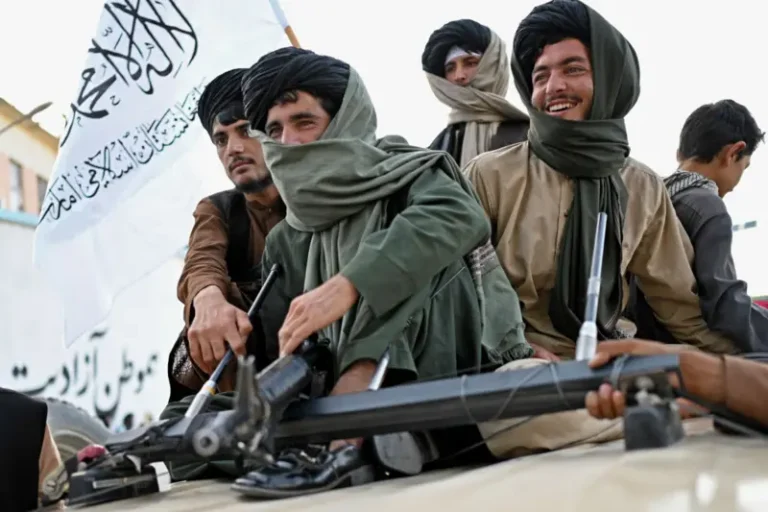
  • Afghanistan lost peace under the Taliban

    By Kulsoom Amanullah When Taliban entered Kabul in Augusta 2021,the loss of peace in Afghanistan and the role of the Taliban in the country’s long and difficult history. Afghanistan has suffered from decades of war, political conflict, and instability. The Taliban have been an important part of this history, and their return to power in 2021 changed the lives of millions of Afghan people. The Taliban first emerged in Afghanistan in the 1990s and controlled most of the country by 1996. Their rule was known for strict religious policies and restrictions on many aspects of daily life. After the attacks of September 11, 2001, the United States and its allies invaded Afghanistan, and the Taliban government was removed from power. However, the conflict continued for many years. During this period, Afghan civilians experienced violence, displacement, poverty, and insecurity. In August 2021, the Taliban returned to power after the withdrawal of United States and allied forces. Since then, Afghanistan has faced many serious challenges. Although the level of large-scale fighting has decreased compared with some earlier years, peace is more than simply the absence of war. True peace requires safety, freedom, economic stability, education, and respect for the rights and dignity of all people. One of the most serious concerns under the Taliban has been restrictions on women’s and girls’ education and participation in society. Girls have faced severe restrictions on secondary and higher education, while women have also faced limitations on employment and public life. These policies have created deep concern both inside and outside Afghanistan. Education is essential for the development of any country, and denying opportunities to a large part of the population can make it harder for Afghanistan to achieve long-term progress. The Afghan people also face economic and humanitarian difficulties. Many families struggle with poverty and limited access to basic services. Years of war have weakened the country’s infrastructure and economy. The international community has provided humanitarian assistance, but Afghanistan still needs long-term solutions that can help its people live with dignity and hope. At the same time, it is important to remember that ordinary Afghan people are not responsible for the conflicts that have affected their country. They are the ones who have suffered the most from decades of violence and instability. Afghan families deserve the opportunity to live peacefully, earn a living, educate their children, and build a secure future. Afghanistan needs a peaceful and inclusive future. The Taliban, as the current rulers of the country, have a major responsibility to create conditions in which all citizens can live safely and with dignity. The rights of women and girls, access to education, economic development, and humanitarian needs should be given serious attention. The story of Afghanistan teaches us that lasting peace cannot be achieved through force alone. It requires dialogue, justice, education, cooperation, and respect for human rights. I hope that one day Afghanistan will move beyond its painful past and become a peaceful country where every citizen can live without fear and every child can dream of a better future.

  • Death Certificate

    By Waseem Hasil Every family eventually faces the quiet, overwhelming pain of losing someone they love. In those raw moments of grief, the last thing anyone should have to worry about is whether they can afford the paperwork required to officially honor their loss and settle their loved one’s affairs. I am writing to you today not just as a citizen raising a policy issue, but as someone deeply concerned about how our current administrative system treats grieving families during their most vulnerable hours. While government policies often announce free registration, the human reality at the ground level tells a very different story. Citizens arriving at local union council offices or municipal counters are frequently met with unexpected charges, costly attestation fees, and confusing legal hurdles. For a family that has just lost its primary earner, coming up with extra money for delayed registration fines, stamp papers, or succession documentation is an agonizing extra weight to carry. It feels deeply unfair that obtaining a basic legal paper, something essential for pension claims and family inheritance, becomes a financial negotiation. Official procedures should reflect compassion and empathy, serving as a support system rather than an added obstacle. When we allow indirect fees and procedural delays to mount, we make an already heartbreaking situation needlessly harder for ordinary people who are simply trying to do what is right. I sincerely appeal to your office to step into the shoes of those waiting at municipal desks across the country. Please establish strict oversight to clear away hidden fees, simplify the paperwork, and ensure that every family, regardless of their financial status, can obtain a death certificate with dignity and ease.

  • Brain Drain: A Growing Challenge for Pakistan

    By Asma Qayyum Brain drain refers to the migration of highly educated and skilled professionals to other countries in search of better employment opportunities, higher salaries, quality education, advanced research facilities, and improved living conditions. This phenomenon has become one of Pakistan’s most serious development challenges, affecting the country’s economic growth and human capital. According to the World Bank, Pakistan is among the countries experiencing a significant outflow of skilled workers. Furthermore, official data from the Bureau of Emigration and Overseas Employment (BEOE) show that hundreds of thousands of Pakistanis leave the country each year for overseas employment, including a large number of educated professionals. This growing migration places additional pressure on vital sectors such as healthcare, engineering, education, and information technology. Several factors contribute to brain drain, including unemployment, low salaries, limited research opportunities, political instability, economic uncertainty, and poor working conditions. As a result, many talented individuals believe they can achieve greater professional success and a better quality of life abroad. The consequences of brain drain are far-reaching. Pakistan loses experienced doctors, engineers, teachers, researchers, scientists, and IT specialists whose knowledge and expertise are essential for national development. The departure of these professionals weakens public services, reduces innovation, and slows economic progress. According to the Bureau of Emigration and Overseas Employment, 762,499 Pakistanis officially left the country for overseas employment in 2025. Since 1971, more than 15 million Pakistanis have been registered for overseas employment through the bureau. These figures highlight the scale of the issue and the urgent need for effective policy measures. To reduce brain drain, the government should create more employment opportunities, improve salaries and working conditions, invest in research, innovation, and higher education, and provide incentives that encourage skilled professionals to remain in or return to Pakistan. A stable economy, merit-based opportunities, and professional growth are essential to retaining the country’s talented workforce. Pakistan’s greatest asset is its people. By investing in its skilled professionals and creating an environment where they can thrive, the country can transform brain drain into brain gain and build a stronger, more prosperous future.

  • Save Jamia Masjid Lakhi Dar, Shikarpur

    Jamia Masjid Lakhi Dar is one of the few surviving ancient buildings in Shikarpur and a masterpiece of historical architecture. Located in the city’s famous Lakhi Dar area, it is popularly known by that very name. This noble mosque stands as an unparalleled testament to the architectural, artistic, and cultural heritage of Sindh, and of Shikarpur in particular. Today, though, it awaits the attention needed to ensure its very survival. The mosque has two entrances. The main one faces east, towards the Clock Tower (Ghanta Ghar), while the second lies on the north side. Passing through the eastern door leads into a spacious courtyard, followed by a veranda with a wooden ceiling. From this veranda, three doorways open into the mosque’s inner sanctum. In earlier times, the mosque’s interior was adorned with beautiful fresco work. Over the years, however, haphazard and amateur renovation and repainting have nearly erased this original ornamentation. Fortunately, traces of the exquisite artwork survive on the ceiling of the central dome, rendered in soft, pastel tones. The mosque comprises three domes, the central one larger than the other two. Handsome turrets rise from its corners, while two smaller minarets stand on the front parapet wall facing the central dome — a further showcase of its architectural mastery. Its most distinctive feature is the ornamental lantern crowning the central dome, a fine example of Sindh’s Islamic architectural artistry. It was arguably the first mosque in Shikarpur to feature such a decorative lantern atop its dome. But alas — today, this history is breathing its last. To look upon Jamia Masjid Lakhi Dar now is to feel the eyes fill with tears and the heart sink with sorrow. Centuries of history, this rare architectural specimen, its exquisite frescoes, the beauty of its domes, and its ornamental lantern are all slowly decaying under the weight of time, weathering, and sheer neglect. If this monument is not preserved on scientific principles today, future generations may know it only through the pages of history books. We strongly appeal to the Culture, Tourism, Antiquities & Archives Department of the Government of Sindh, archaeology experts, the district administration of Shikarpur, elected representatives, and all responsible authorities to take these measures without fail. First, immediately conduct a technical survey of Jamia Masjid Lakhi Dar. Second, carry out scientific restoration that preserves its original architectural beauty. Third, conserve the remaining fresco work and intricate motifs. Four, take emergency measures to protect the ornamental lantern, domes, and minarets. And last but not least, manage the mosque more effectively as a protected cultural heritage site of Sindh. Jamia Masjid Lakhi Dar is not merely a structure of brick, mortar, and lime — it is a living document of Shikarpur’s civilization, history, religious legacy, and the artistic grandeur of Sindh. If we fail to save it today, history will never forgive us.

  • Criminals on Pak Sar Zameen

    We call Pakistan Pak Sar Zameen, “the Land of the Pure.” But pure for whom? Tell me, honestly… pure for whom? For the criminals? For the rapists? For the child abusers? For the killers who walk our streets untouched by iron shackles or jail cells? Because it certainly does not feel pure for our children. The entire country is busy discussing India’s Jantar Mantar, an issue that we have no business obsessing over. Everyone knows what India should do, but everyone forgets what Pakistan must do. On that very same day, while the nation was distracted by a controversy across the border, six-year-old Dua was murdered in Karachi. Where was the collective scream? Where was the demand for change? And where were the changemakers? We have time to argue about borders, about politics, about things that do not touch our homes. But when a child is murdered in our own city, we scroll past, we sigh, we say “Inna Lillahi wa inna ilayhi raji’un,” and we move on. We move on! And Dua is not alone. In 2026, it feels like every other day another child loses their life. Six-year-old Muhammad Wali from Lea Market. Three-year-old Kulsoom from Quaidabad. Tomorrow, another child will be slaughtered. Another name will join the cemetery’s roll call. How many more parents will decorate graves instead of hearing the pitter-patter of their tiny feet? This is the lullaby that replaces safety in our children’s souls. Our children fall into open manholes because nobody bothers to close them. They are thrown from rooftops. They are abused until they cry, raped until they are wounded, murdered until their funerals become routine. Yet we choke on the same bitter question. Why are the murderers not swinging from ropes? Why are the rapists not rotting in cells? Why are the abusers not dragged through the streets until they beg for death? A nation is not judged by how boldly it sings the national anthem. It is not judged by the scale of its army or the height of its flags. It is judged by the number of tiny coffins that leave its homes. So I ask again: if this is truly the Land of the Pure, why are the purest souls in this country the ones who cry alone, die alone, and are forgotten alone?

  • Safe Playgrounds, Safer Communities

    Due to the lack of proper playgrounds, children and young people often use the grounds of nearby government schools for recreation and physical activity. There is nothing inherently wrong with this. In fact, physical activity is essential for children’s physical and mental health, fitness, and overall development. However, the absence of caretakers and other Class-IV staff in schools during the evening raises serious concerns about safety, discipline, and the protection of school property. Children and young people of different ages regularly gather in these playgrounds. To prevent any untoward incidents, the presence of responsible adults is essential. Having Class-IV staff or other designated personnel available during evening hours would not only reassure children and their parents, but also help to maintain discipline and safeguard school buildings, furniture, and other educational resources. A practical solution can be introduced to address this. The school administration should establish a sports committee comprising responsible members of the local community. The names, designations, and contact details of committee members should be properly recorded at the school, with a copy shared with the local police station. This would enable prompt communication with responsible committee members in the event of an emergency or any untoward situation. The matter requires immediate attention from both the district administration and the education department. Rather than discouraging children from using school playgrounds, the authorities should put in place a proper system of evening supervision at government schools. Such an arrangement would allow children to take part in healthy physical activities in a safe and disciplined environment, while also ensuring the protection of public property. Government school playgrounds are valuable community assets. With a modest and well-organised supervisory system, they can serve not only as spaces for physical activity but also as safe and constructive environments for the younger generation. Protecting these spaces and ensuring their safe use should therefore be a shared responsibility of the administration, schools, and the local community. Muhammad Iqbal Awan (Namal) Mianwali, Punjab (Educationist, Writer, Motivational Speaker)

Leave a Reply

Your email address will not be published. Required fields are marked *