shehbaz sharif proven

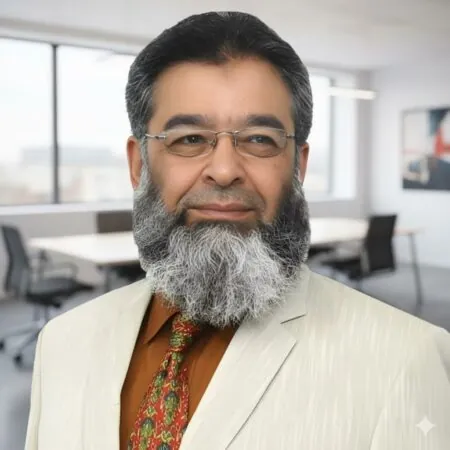
Shehbaz Sharif: A proven troubleshooter steering P…

Every political leader is eventually defined not by promises but by performance under pressure. Pakistan has faced repeated political, economic and administrative challenges over the decades, and each crisis has demanded leadership with experience, patience and the ability to find solutions.

In my view, Prime Minister Muhammad Shehbaz Sharif has established himself as a leader who understands governance, negotiation and crisis management. His journey from grassroots politics to becoming Chief Minister of Punjab and later Prime Minister of Pakistan has given him decades of experience in dealing with the practical realities of administration and public service.

His reputation as a hands-on administrator comes from his approach to governance. During his tenure as Chief Minister of Punjab, he focused on reforms in education, healthcare, infrastructure and public service delivery. His fast-paced working style earned him the title “Shehbaz Speed”, reflecting his emphasis on implementation and results.

I first met Shehbaz Sharif in 2005 at his flat in Avenfield House, London. Over the past twenty-one years, I have had the opportunity to observe his political journey closely. While journalism requires independence and critical analysis, personal observation also provides a unique perspective. Throughout this period, his commitment to Pakistan and his passion for public service have remained evident.

During his years as Chief Minister of Punjab, I witnessed his determination to create opportunities for young Pakistanis, particularly through education reforms. Initiatives such as the Punjab Education Endowment Fund, Danish Schools, merit-based scholarships, laptop schemes for students and stipends for high achievers aimed to expand access to quality education.

The policy of sending high-performing students abroad, including to the United Kingdom and other European countries, was designed to broaden their vision and expose them to international standards. These initiatives reflected a belief that education is the foundation for long-term national development.

His reforms in healthcare and infrastructure also became a significant part of his governance record. Supporters believe that his focus on improving public services in Punjab provided a model of administrative delivery that he later brought to the national level.

As Prime Minister, Shehbaz Sharif has faced one of the most challenging periods in Pakistan’s recent history. His supporters credit his government with helping stabilise the economy, restoring international engagement and steering Pakistan away from the risk of a deeper financial crisis. Although major economic challenges remain, they argue that difficult decisions have helped create a more stable foundation.

One of the notable features of the current political landscape has been cooperation between state institutions. Supporters view the working relationship between Prime Minister Shehbaz Sharif and Field Marshal Syed Asim Munir as an example of institutional coordination aimed at achieving national stability and economic progress.

Pakistan has also sought a more active role on the international stage. Supporters point to its diplomatic engagement, including efforts to promote dialogue during periods of international tension, as evidence that Pakistan continues to play an important role in regional and global affairs.

In my view, Prime Minister Shehbaz Sharif has repeatedly demonstrated the ability to steer Pakistan through difficult circumstances. Based on my observations over more than two decades, I believe he has faced major challenges before and has the experience and determination to overcome them again.

His strength lies in his understanding of governance, his ability to negotiate with different stakeholders and his focus on delivery. Whether dealing with political partners, institutions or international partners, his supporters believe his experience gives him an advantage in managing complex situations.

However, Pakistan’s journey towards prosperity requires continued reforms. Economic pressures, inflation, unemployment and governance challenges remain serious concerns. The next phase must focus on ensuring that national progress translates into improvements in the daily lives of ordinary citizens.

In my opinion, Pakistan also needs stronger administrative decentralisation. Whether through new provinces or more empowered administrative units, decision-making should be brought closer to the people. More effective local governance can improve accountability, strengthen public services and accelerate development across the country.

Pakistan now needs consistency, stability and a collective commitment from all stakeholders. Political differences are part of democracy, but national progress requires institutions to work together and focus on the common goal of prosperity.

Prime Minister Shehbaz Sharif has built his political career around crisis management and public administration. His greatest challenge now is to convert stability into sustainable growth and lasting development.

History will ultimately judge every leader by the impact they leave behind. For Shehbaz Sharif, the opportunity remains to transform difficult times into a period of economic recovery, institutional strength and a stronger Pakistan for future generations.

Similar Posts

  • Debtocracy & bankruptcy of ideas   

    Pakistan’s debt problem has entered a new phase. The headline figure is alarming: total debt and liabilities reached Rs. 99.59 trillion by the end of fiscal year (FY) 2025-26. The deeper concern, however, lies in the composition of this debt, the burden of servicing it and the channels through which public borrowing now affects every productive sector of the economy. According to the latest State Bank of Pakistan data, total debt stood at Rs. 97.88 trillion. Gross government domestic debt reached Rs. 59.44 trillion, while external debt amounted to Rs. 36.20 trillion. Central government debt increased by 7.39% over the preceding year to Rs. 83.64 trillion. External debt and liabilities stood at US$138.85 billion. These numbers confirm the central argument developed in the a ten-part series published in these columns [‘Bankruptcy of ideas—X: Debt, Taxes & Democracy’, Minute Mirror, June 21, 2026]. Pakistan has not merely borrowed against its future. It has increasingly borrowed to service earlier borrowing, while failing to create sufficient productive capacity from the accumulated debt.   ‏The external debt-servicing profile for FY2026 makes this particularly clear. Pakistan serviced US$21.59 billion of external debt during the year. An extraordinary US$10.14 billion—nearly half of the annual amount—fell in the final quarter alone. Quarterly servicing was 2.63 times the amount paid in the preceding quarter, mainly because principal repayments jumped from US$2.70 billion in the third quarter to US$8.81 billion in the fourth. This concentration of repayments is as important as the overall debt stock. A country may carry a large debt if its economy generates sufficient revenue, exports and foreign exchange to service it. Pakistan’s difficulty is that debt obligations have expanded much faster than the productive and export capacities needed to meet them. The debt accumulated over decades cannot be attributed to one government or one fiscal year. Persistent fiscal deficits, a narrow and inequitable tax base, losses of state-owned enterprises, the energy-sector circular debt, excessive recurrent expenditure, exchange-rate depreciation and repeated balance-of-payments crises have all contributed to it. Borrowing became the preferred substitute for reform.  Governments borrowed because they could not tax influential sectors, restructure loss-making enterprises, reduce wasteful expenditure or build a competitive export economy. External lenders financed temporary stability, while domestic banks financed the fiscal deficit. Each arrangement postponed difficult decisions without removing the causes of the crisis. The Ministry of Finance reported public debt at 70.7% of GDP by June 2025. The ratio may improve when nominal GDP grows faster than debt, especially during periods of inflation, fiscal consolidation and lower interest rates. A declining debt-to-GDP ratio, however, does not necessarily mean that the debt burden has become harmless. Pakistan’s debt stock is still increasing. What has improved is the immediate cost of servicing parts of it. Total debt and liabilities servicing declined from Rs. 13.16 trillion in FY2025 to Rs. 11.97 trillion in FY2026. Interest payments on debt fell by more than 23%, from Rs. 9.47 trillion to Rs. 7.27 trillion, largely because lower policy rates reduced the cost of servicing domestic government debt. Interest payments on gross government domestic debt consequently fell from Rs. 8.08 trillion to Rs5.99 trillion. This is welcome relief. It should not be presented as the end of the debt crisis. Lower interest rates reduce the flow cost of debt; they do not extinguish the stock. Principal repayments on external debt and liabilities increased from Rs. 3.47 trillion to Rs. 4.47 trillion during FY2026. Pakistan therefore obtained relief on domestic interest payments while facing a substantially heavier external repayment burden. The distinction is between debt management and economic transformation. Pakistan may be moving from an acute debt-accumulation crisis towards a more manageable financing position. It has not escaped debtocracy—the system in which fiscal policy, taxation, banking, foreign relations and development priorities become subordinate to the requirements of borrowing and repayment. Debtocracy does not remain confined to the accounts of the Ministry of Finance. It is transmitted throughout the economy. The first channel is the banking system. Government securities offer banks sovereign backing, liquidity and attractive risk-adjusted returns. Lending to the government is easier than evaluating businesses, financing innovation or supporting small and medium enterprises. A large domestic borrowing requirement therefore creates continuous competition for available liquidity. The result is crowding out. The State obtains the funds it requires, banks earn relatively secure returns and the private sector bears the adjustment. Productive businesses face limited access to credit, higher risk premiums and shorter financing horizons. Smaller enterprises suffer the most because they cannot compete with the sovereign for bank liquidity. This creates a financial system that can remain profitable while the productive economy remains weak. Deposits are mobilised from citizens and businesses, channelled into government securities, and then used substantially to meet recurrent expenditure and service earlier debt. Banking expands without an equivalent expansion in productive capacity. The second channel operates through foreign exchange. External debt repayment creates demand for dollars. That demand places pressure on reserves and the current account. Any resulting exchange-rate depreciation increases the rupee value of external liabilities and raises the domestic price of imported fuel, machinery, raw materials and intermediate goods.  The chain is direct: External repayment creates foreign-exchange demand; reserve pressure increases exchange-rate sensitivity; depreciation generates imported inflation; and inflation raises working-capital requirements and production costs. Debt consequently becomes a corporate balance-sheet issue. An industrial enterprise may have no external loan, yet still bear the effects of sovereign external debt through a weaker rupee, costlier imports, higher energy prices and restricted access to domestic credit. Consumers ultimately pay through inflation, reduced employment and lower real incomes. The third channel is fiscal. Every rupee allocated to debt servicing is a rupee unavailable for education, health, water, climate resilience and productive infrastructure—unless the State raises additional revenue or borrows again. Pakistan then enters a circular arrangement: borrowing creates servicing obligations, servicing compresses development expenditure, weak development limits growth and revenue, and insufficient revenue necessitates further borrowing. This is why a primary surplus, though necessary, is not sufficient. It can stabilise debt dynamics, but

  • Shocks and Aftershocks

    In the autumn of 2005, the earth rose in wrath against the ancient hills of Kashmir. On the eighth day of October, a violent convulsion of 7.6 magnitude tore through the region, its epicentre lying a mere 19 kms northeast of Muzaffarabad. The tremor was felt far beyond Pakistan’s borders, reverberating through Afghanistan and Tajikistan, across the valleys of India, and even into the remote expanses of Xinjiang. It proved one of the deadliest natural disasters of that decade, claiming thousands of lives and reducing entire villages to rubble. For months the ground refused to rest; careful records later counted no fewer than 497 aftershocks between October and the following March. During such uncertainty a sobering lesson emerged; buildings erected with care and strength stood firm against the repeated tremors, while those raised hastily or without conscience crumbled into dust and despair. A parallel drama of sudden upheaval and lingering aftershocks has unfolded more recently, though this time the forces at work have been those of human conflict rather than nature’s blind fury. Late in February 2026, long-simmering tensions between Iran and USA erupted into open warfare, with Israel joining the fray in decisive fashion. Large-scale aerial and missile assaults struck hundreds of targets across Iran, homing in upon military bases, nuclear facilities, and centres of leadership. The loss of Iran’s Supreme Leader, Ayatollah Ali Khamenei, in the opening strikes sent shockwaves through the region and beyond. Tehran responded with barrages of missiles and swarms of drones that lit the night skies and struck at targets across several countries. For several weeks in March and April the fighting intensified, leaving thousands dead—most of them in Iran and Lebanon—and threatening to engulf wider circles of involvement involving Hezbollah and other actors. Shipping in the Strait of Hormuz, that vital artery of global energy, faced grave peril, and the world watched anxiously as oil supplies trembled on the edge of disruption. A measure of relief arrived around the middle of June when a MOU was concluded between the United States and Iran. The accord promised a halt to major combat operations, the reopening of the strait to peaceful navigation, and the beginning of serious negotiations concerning Iran’s nuclear program. For a brief season hope flickered that reason might yet prevail. Yet by the seventh and eighth of July the ceasefire had fractured. Iranian forces struck at merchant vessels in the Hormuz passage; the United States answered with fresh waves of airstrikes and the reimposition of a naval blockade. Iran, in turn, launched retaliatory attacks upon American and coalition positions in Bahrain, Kuwait, Jordan, and elsewhere. As July draws toward its close, the pattern of nocturnal American strikes and Iranian counterblows continues, holding the Gulf in a state of restless tension. Though the principal theatre of war lies distant from our frontiers, its aftershocks have travelled with merciless swiftness to the streets and bazaars of Pakistan. The initial convulsion in global oil markets followed hard upon the early phase of hostilities. Petrol prices in Pakistan surged to an unprecedented four hundred and fifty-eight rupees and forty-one paise per litre on the third of April—a record born of disrupted supplies and fevered speculation. Diesel climbed still higher, touching five hundred and twenty rupees and thirty-five paise. The consequences touched every corner of national life; transporters raised their fares, farmers faced higher costs for machinery and transport, and ordinary households tightened their belts as inflation rippled outward. For a time, as diplomatic channels—including Pakistan’s own quiet mediation efforts—bore fruit and the strait began to function once more, prices eased and a measure of stability returned. Yet the renewed outbreak of fighting in July has shattered that fragile calm. Oil prices have again become uncontrollable, climbing under the pressure of uncertainty and fresh speculation. The government, its options narrowed by heavy reliance on international loans and a vulnerable economy, has found itself compelled to adjust domestic fuel rates almost daily, basing decisions as much upon forecasts of future trouble as upon present realities. Thus, the nation has endured a great initial shock followed by persistent aftershocks, much like the Kashmir earthquake two decades earlier. Each fresh tremor in the Gulf sends another wave through our foreign exchange reserves, our transport sector, and the fragile purchasing power of the common citizen. Industries dependent upon steady fuel supplies have curtailed operations; the cost of everyday commodities has risen in sympathy; and the burden has fallen most heavily upon those least able to bear it. Pakistan’s economy, long accustomed to navigating external storms while standing upon borrowed foundations, feels these disturbances with particular acuity. Even in these challenging times, the dry wit of everyday Pakistanis remains unshaken. One recalls an incident from the days when the Daily Pakistan newspaper was under the ownership of Akbar Bhatti. A reporter rushed into the newsroom one afternoon declaring that Bhatti Sahib’s car had met with an accident. Before concern could fully form, another veteran journalist remarked with a knowing smile that this surely meant salaries would not arrive on time that month. The quip, though light, spoke volumes about the precariousness of life and livelihood when those at the helm encounter misfortune. Pakistan has passed through many such seasons of trial—political upheavals, economic tempests, and natural calamities alike. Each time the nation has gathered its scattered strength, mended what could be mended, and pressed onward. The present difficulties arising from the conflict in the Gulf, with their daily toll upon fuel prices and economic confidence, constitute yet another test of our collective endurance. The strong institutions and resilient spirit of the people have served as anchors in the past; they remain our surest hope today. God willing, this too shall pass, and Pakistan shall emerge from these aftershocks steadier and more united, its foundations reinforced by hardship and its future secured by the unyielding will of its citizens.

  • More Than “Just a Joke”

    Walk into any classroom and everything seems perfectly normal. Students are taking notes, chatting before class, and waiting for the lecture to begin. No one is arguing, no one is fighting, and everything appears calm on the surface. Yet for many students, there is a side of campus life that often goes unnoticed: bullying. For years, bullying has been treated as just a normal part of growing up, and honestly, many people will still argue that it is. Plenty still see it as harmless teasing, or worse, some rite of passage every student is simply expected to survive. The common response is often, “ignore it,” or “everyone deals with it, get over it,” as if that settles the matter. But ask the person actually on the receiving end, and it rarely feels harmless at all. What one student brushes off as a joke can leave another feeling embarrassed, isolated, and like they don’t belong anywhere in that room. The moment passes, but the hurt from it usually doesn’t, it lingers quietly while everyone else has already moved on. A student who gets mocked enough times eventually just stops raising his hand, or talking at all. Someone left out again and again stops trying to be included and stops showing up for activities.  Confidence is often the first thing to suffer, and academic performance also follows, when a student’s energy goes into avoiding attention rather than engaging in the class. By the time anyone notices, the damage is usually already done. Many would agree that this is because it does not appear all at once, it builds gradually and people mistake it for a bad mood, a phase, or anything but what it really is. As a student myself, this isn’t just something I’ve read about, I’ve seen how it feels to watch someone go quiet, to sit in a room that should feel safe and doesn’t. What I believe makes bullying so difficult to address is that it does not always look the way people expect. When people hear the word “bullying,” they often imagine physical confrontations. That’s not always how it turns out, though. In many cases, it is far less obvious and therefore much easier to overlook. It can take the form of repeated jokes at someone’s expense, hurtful nicknames, deliberate exclusion from social groups, or rumours spread behind a person’s back, things many of us have seen or experienced at some point. These behaviours are often considered as “just joking,” so a student ends up laughing along anyway, just to avoid seeming too sensitive, even when the comment is genuinely hurtful.  Emotional bullying is another common form including constant criticism, manipulation, or certain behaviours that slowly damages a person’s confidence and sense of belonging. This is probably the one most of us have gone through at some point in our student life, quietly, without ever really talking about it. And these days, it doesn’t even need a classroom to happen in. Social media, group chats, and anonymous messages have given it a whole new stage, extending its reach far beyond the campus walls. There is also a less-discussed form of bullying that affects some students whose parents work at the same school or college. These students are assumed to receive special treatment regardless of their actual performance. Their achievements may be dismissed as favouritism, and their hard work can be unfairly questioned. I admit it sounds strange, but it is a reality many students live with. While this may not involve insults or physical intimidation, constantly feeling judged for something beyond your control can be frustrating and humiliating. So why does bullying continue? Part of the answer is that mostly people underestimate its impact. A comment that seems minor to one person may stay with someone else for days or weeks. When unkind behaviour is overlooked, it can become normalized. What starts as a joke can slowly turn into a pattern. Worth asking too, is what drives a bully. Often, it is not insecurity but the confidence that comes from believing there will be no consequences. When nobody challenges the actions, it becomes a way of gaining attention, influence, or social status. That does not excuse the harm, but it helps explain why simply telling victims to ignore it doesn’t solve the problem. Now, the good part is that bullying is not inevitable. Small actions can make a meaningful difference. Teachers who recognize warning signs and students who choose to speak up when they witness unfair treatment all help create a better environment. Educational institutions should also make it easier for students to report problems without fear of embarrassment or retaliation. Perhaps most importantly, students themselves have more influence than they realize. A kind word, an invitation to join a group, or simply refusing to laugh at someone can change the atmosphere of a classroom.  Creating a respectful environment isn’t really about rules on a wall. It just needs one person willing to say something when everyone else stays quiet.

  • Celebrating freedom through zero poverty

    On August 14, 2026 the independence day was celebrated with great fanfare. This year a Norwegian team was also here to foster business opportunities. Norway is one of the five Nordic Welfare states (Norway, Finland, Sweden, Denmark, Iceland). Foreign Minister Espen Barth Eide arrived in Islamabad on August 13, 2026 on a commercial flight. He carried his own luggage. The embassy staff received him and drove him to his hotel. He then held meetings with the foreign minister, prime minister and the chief of defense forces. Being a welfare state, every citizen there is covered from cradle to grave, with no worries. No one is left out to rot in the cold. The Government Pension Fund Global of Norway is valued at $2.39 trillion. Surplus oil and gas revenues are invested to support public services and pensions. During my days at the Literacy Commission, we received a telephone call from the Embassy of Norway. A visiting delegation wanted to meet the Director of the Punjab office. As adviser I was present in the meeting. We were surprised by their agenda. About 40,000 Pakistanis reside in Norway who get married to girls of their own village. These brides then join their husbands to live in the new land. The embassy was very keen to open a school in their home town to educate and train them to assimilate with the Nordic way of life. The purpose was total inclusion with no exclusion. It reminded me of Allama Iqbal’s verse, ‘Har Fard Hai Millat Kay Muqadar Ka Sitara’ (Every individual is the rising star of the nation). No one can be left behind to drag down the nation. While freed colonial states like India and Pakistan have failed to overcome the menace of poverty, China has succeeded. It calls for major soul searching. While the People’s Republic of China (PRC) is on track to dominate the world, we lag behind. Human development is at the core of the Chinese development model. Education and health are taken very seriously. The state acts like a mother; it facilitates its citizens. Resources are protected and spent on the welfare of the people. The PRC has a single party system that focuses primarily on the economic emancipation of the entire nation, not only of a selected few. In recent years India has advanced economically, but poverty persists mainly because of the uneven sharing of resources and opportunities. Norway presents a model of harmony where human freedom and economic growth have been balanced. In the original Pakistan Peoples Party manifesto, it was termed Mixed Economy or Islamic Socialism. While some basic industrialization was needed in the country, for which SOEs (State Owned Enterprises) were created, the nationalization of running industries did not sit well. Perhaps the loss of C.M. Latif’s BECO was the biggest loss, which should have been reversed through de-nationalization. Dr Muhammad Amjad Saqib of the Akhuwat Foundation believes that poverty can be overcome through freedom of mind and easy access to financing. His foundation provides interest-free loans while running a residential university with no fee. The Indus Hospital has a similar model of providing medical coverage free of cost. Despite these private efforts, poverty remains a major challenge for Pakistan. Equitable distribution of resources requires a major reduction in state expenses. Like time, public money has to be carefully handled, as it is always in short supply. Flamboyance, fanfare and protocol consume resources which could be put to better use. Freedom for all comes through sharing and hand holding, not sloganeering. I am not sure if the visiting foreign minister was impressed or concerned by our style of celebrating our independence. Norwegian investments will be a test of the success of his visit. But the poor fellow had to carry his own luggage on the way back and take a taxi upon arrival to reach his residence unnoticed.

  • A Soldier, a Mechanic, and the Cold Arithmetic of …

    By General Ghulam Mustafa (Served in different staff and command assignments, commanded a Corps, raised and commanded Army Strategic Force Command) & Engineer Arshad H Abbasi, Co-founder, Energy Excellence Centres at NUST and Engineering University Peshawar, International Transboundary Water Expert We are not screenwriters, and this is not the plot of some Hollywood picture about killer robots. We write this together as two men who came to the same conclusion from two different directions — one of us a soldier who has stood post and commanded troops, the other a mechanic and engineer who has spent his life with his hands inside machines, the kind who can tell you what’s wrong with an engine by the sound it makes before it ever fails. Between us, we have spent the last two years doing the same thing every serious military professional on earth has been doing: watching. Watching Russia and Ukraine grind through the third year of a war that has quietly buried the twentieth century. Watching the United States and Israel fight Iran through the spring and summer of 2026 in a conflict that opened with a strike on a supreme leader and closed, for now, with tankers stacked outside a blockaded Strait of Hormuz. We have not been watching for drama. We have been watching for the future, because the future is what these two wars have been showing us, in plain daylight, for anyone willing to look. In these two wars, our role has not been that of commentators cheering for one flag or another. It has been closer to that of historians standing over wreckage — the unglamorous, unsleeping work of the crash investigator rather than the war correspondent. Every video of an intercepted missile over the Gulf, every geolocated frame of a naval drone striking a Russian hull, every leaked spec sheet of a downed quadcopter over the Black Sea or a jammed loitering munition over the Iranian coast, has to be logged, timestamped, and cross-checked against the next one. That is what wreckage analysis actually is: not excitement, but discipline — recording what a piece of equipment was asked to do, and what it actually did, until the pattern becomes undeniable. Two years of that discipline, applied to two very different wars fought six thousand kilometres apart, keeps returning the same verdict. Here is what we have seen. The age of the tank column, the massed infantry advance, the fighter squadron duel, and even the aircraft carrier as the ultimate expression of national power — that age is closing. Not because these machines have become useless overnight, but because a battlefield now watched by satellites, saturated with cheap sensors, and swarmed by thousands of low-cost drones has no room left for anything large, slow, or expensive to hide in. Ukraine, a country with no serious blue-water navy, used naval drones costing a fraction of a warship to cripple roughly 40 percent of Russia’s Black Sea Fleet and force the rest to retreat from Crimea’s shores. In the Iran war, American carrier strike groups sat further offshore than doctrine once assumed necessary, and the campaign’s real damage was done by long-range strike, electronic warfare, and a naval blockade — not by tank divisions crossing a border, because there was no border to cross. The lesson repeats itself in both theatres: mass a large, valuable, human-crewed asset in the open, and you have built an expensive target. The war has moved to the phone in a soldier’s hand and the joystick on a folding table a hundred kilometres from the front. That is the second thing the two of us keep coming back to, and we believe it is right: future wars will be fought on mobile phones, controlling drones and robots. A robotic aircraft or ground vehicle can turn harder, dive faster, and sit still for longer than any pilot or driver, because it carries no pulse, no fear, no fatigue, and no family waiting at home. It needs no food. It needs no rest. It bleeds nothing when it dies except budget. Robots are already taking on the jobs that used to cost human lives — clearing minefields, hauling ammunition across exposed ground, flying reconnaissance into airspace too dangerous for a manned cockpit, making split-second targeting decisions with artificial intelligence faster than any human crew ever could. Armed drones and robotic ground vehicles now engage targets without risking a single pilot or driver. And because production, not stockpiling, decides who wins a prolonged war, the country that can build the most machines the fastest — not the country with the largest inherited arsenal — will hold the advantage. That is why the truest weapon in this new age is not a missile or a jet. It is the strength of a nation’s economy: its factories, its chip supply, its ability to iterate a drone design in weeks instead of years. Nowhere is this arithmetic more urgent than on the roof of the world, along the disputed frontier between India and China. China is not merely testing drones there; it is one of the most important production engines in the world for both, and it has been pouring resources into robotic ground systems, sensors, and autonomous platforms specifically postured along the Line of Actual Control, at altitudes where a human soldier struggles simply to breathe, let alone fight. Every one of those machines can be commanded from a warm room in Beijing, thousands of kilometres from the mountain. It needs no oxygen tent, no field ration, no medical evacuation. It can occupy a ridge and simply wait there, indefinitely, with a precision no human sentry can match, and it costs Beijing nothing but electricity and silicon when it is destroyed. Against that, India fields one of the largest land armies on the planet — an active strength of roughly 1.25 million soldiers, organized into seven operational commands and fourteen corps of holding and strike formations, built on a tradition of sacrifice, discipline, and sheer human

  • Cultivating Peace, Instead of Controlling Violence

    Pakistan today stands at a defining moment where acts of intolerance, hate speech, mob violence, sectarian divisions and ideological polarisation are increasingly visible across both physical and digital spaces. While not every expression of intolerance translates into terrorism, history demonstrates that violent extremism rarely appears overnight; it gradually develops through unchecked prejudice, manipulated narratives and the normalisation of hatred. Every incident of mob lynching, religious intolerance, political violence or online radicalisation serves as a reminder that extremism is fundamentally a societal challenge before it becomes a security challenge. This reality demands a fundamental shift in national thinking from merely controlling violent behaviour after it erupts to cultivating a culture of peace, critical thinking, social cohesion and democratic values that prevents extremism from taking root in the first place. The controlling approach has historically dominated Pakistan’s national security doctrine. Following the Army Public School tragedy in December 2014, the National Action Plan (NAP) became the country’s principal counterterrorism framework. Security operations such as Zarb-e-Azb and Radd-ul-Fasaad significantly weakened organised terrorist networks and restored the writ of the state in several conflict-affected regions. These achievements cannot be underestimated. However, extremism is not merely a security problem; it is a social, psychological, educational and communication challenge. Arresting militants may eliminate immediate threats, but it does not necessarily eliminate the narratives, grievances and social environments that produce future extremists. Modern countering violent extremism (CVE) literature increasingly supports prevention over reaction. International experience from countries such as Indonesia, Singapore, Denmark and Morocco demonstrates that sustainable peace emerges through education reforms, community engagement, youth empowerment, digital literacy, responsible religious discourse and economic inclusion. Pakistan itself has gradually begun recognising this shift. The recently approved National Prevention of Violent Extremism (NPVE) Policy reflects an important transition from exclusively kinetic responses towards prevention, rehabilitation and resilience-building. The policy introduces a comprehensive prevention framework emphasising community participation, education, strategic communication, rehabilitation and institutional coordination. At the federal level, the National Counter Terrorism Authority (NACTA) remains Pakistan’s principal coordinating institution for counterterrorism and counter-extremism policies. Established under the NACTA Act 2013, its mandate extends beyond intelligence coordination to include research, policy development, monitoring the National Action Plan, public awareness, strategic communication and prevention of violent extremism. During the past two years, NACTA has expanded partnerships with universities, international organisations and civil society. It has launched the National Prevention of Violent Extremism Policy, strengthened monitoring mechanisms, promoted research through the Pakistan Journal of Terrorism Research, signed academic partnerships and introduced public engagement initiatives such as peace festivals and youth outreach programmes. Despite these encouraging developments, NACTA continues to face structural limitations that reduce its overall effectiveness. Institutional coordination between federal and provincial stakeholders remains inconsistent. Budgetary constraints, staffing shortages and overlapping mandates with provincial Counter Terrorism Departments often weaken implementation. Many of its policy recommendations remain stronger on paper than in practice because execution depends upon provincial governments. Furthermore, public visibility of NACTA remains limited. Most Pakistani citizens know little about its preventive work, despite the fact that ideological resilience requires continuous public engagement rather than bureaucratic coordination alone. Independent researchers have similarly concluded that Pakistan’s transition towards non-kinetic counter-extremism is promising but still constrained by implementation deficits and institutional fragmentation. Punjab has taken a significant institutional step by establishing the Punjab Centre of Excellence on Countering Violent Extremism (CoE-CVE), which recently received autonomous legal status through provincial legislation. The decision reflects an important understanding that violent extremism cannot be addressed solely through policing. The Centre has been designed to function as a policy, research, training and coordination platform supporting prevention, community resilience and strategic communication. Its transformation into an autonomous institution is expected to strengthen institutional continuity, inter-agency coordination and evidence-based policymaking. The Centre represents one of Pakistan’s most important experiments in moving from control towards cultivation. Instead of focusing exclusively on arrests and surveillance, it aims to understand why individuals become vulnerable to extremist narratives in the first place. Universities, educational institutions, media organisations, religious scholars, psychologists and community leaders are increasingly recognised as partners in prevention rather than passive observers. This multidisciplinary philosophy aligns with global best practices, where prevention begins in classrooms, families, workplaces and digital platforms long before security agencies become involved. Nevertheless, the Punjab Centre of Excellence also faces considerable challenges. Being a relatively new institution, measurable outcomes remain limited. Much of its work has concentrated on institutional development, stakeholder engagement and policy formulation rather than long-term behavioural impact. Evaluating prevention programmes presents an inherent methodological challenge because successful prevention often means that negative events never occur. Unlike policing statistics, cultivation outcomes such as increased social cohesion, reduced intolerance or strengthened democratic resilience require longitudinal research and sophisticated impact measurement. Pakistan’s educational system presents another critical weakness. Schools continue to prioritise examination performance while giving limited attention to civic education, media literacy, conflict resolution, emotional intelligence and critical thinking. Extremist organisations thrive where young people lack analytical skills and become vulnerable to simplified narratives dividing society into absolute categories of believers and enemies. A cultivation approach therefore requires curriculum reforms encouraging dialogue, diversity, constitutional values and peaceful disagreement. The digital environment further complicates Pakistan’s counter-extremism landscape. Radicalisation increasingly occurs through encrypted messaging applications, algorithm-driven social media platforms and transnational online networks. Traditional security institutions cannot effectively monitor every digital interaction. Instead, digital resilience must be cultivated among citizens themselves. Media literacy programmes teaching young people to identify misinformation, hate speech, manipulation and extremist propaganda should become integral components of educational policy. Economic marginalisation also deserves attention. Poverty alone does not create terrorists, but unemployment, social exclusion and limited upward mobility increase vulnerability to recruitment by extremist organisations offering identity, purpose and financial incentives. Pakistan’s youth bulge therefore represents both an opportunity and a risk. If properly educated, employed and politically included, young Pakistanis can become the country’s greatest peacebuilders. If neglected, the same demographic may remain susceptible to polarisation and radical narratives. Political polarisation constitutes another growing concern. Public discourse increasingly rewards confrontation over consensus. Television debates, social media campaigns and partisan rhetoric often

Leave a Reply

Your email address will not be published. Required fields are marked *