rising fuel costs

Rising Fuel Costs in Thailand Threaten to Push Grocery Prices Higher

BANGKOK – Rising fuel and transport costs are threatening to drive up prices of essential goods across Thailand, with consumer staples already showing signs of inflationary pressure as the Commerce Ministry works to stabilise retail prices until at least April.

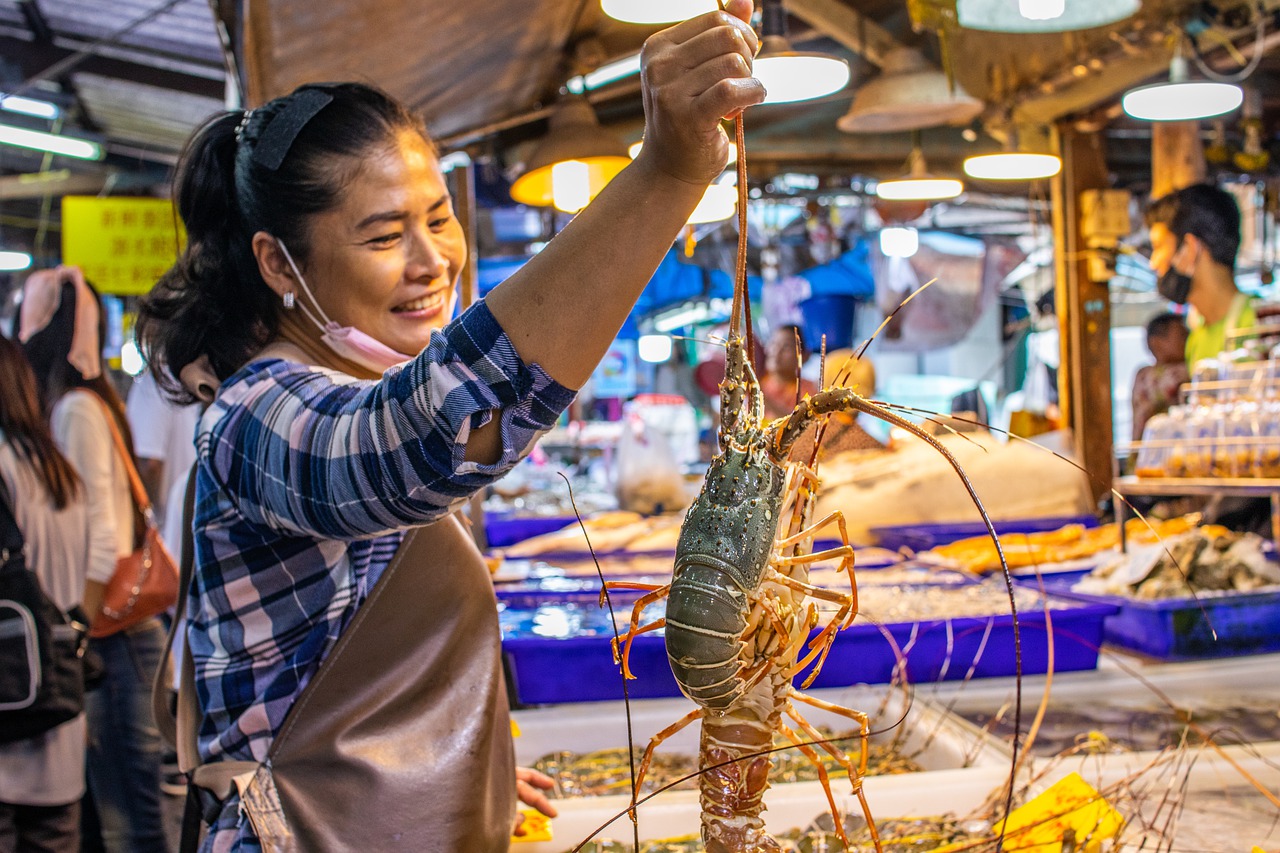
Rising Fuel Costs Force Fishing Fleets Across Thailand to Dock

Somchai Pornrattanajaroen, honorary adviser to the Thai Wholesale and Retail Trade Association, said consumer goods were already being affected by higher energy costs and the government’s clearer energy policies, which have created ripple effects throughout supply chains.

Palm Oil Prices Climb

Bottled palm oil has been among the first items to see noticeable price increases, with one-litre bottles rising by five to eight baht depending on the brand. Wholesale prices have climbed from 41–42 baht to 48–49 baht per bottle, pushing retail prices in small shops to between 50 and 53 baht.

According to Mr Somchai, manufacturers have not notified customers in advance of these changes. Instead, they have signalled upcoming price adjustments by withdrawing promotional campaigns and suspending orders before announcing higher prices.

Two main factors are driving the increase in palm oil prices. Government policies promoting biodiesel have diverted significant volumes of crude palm oil into fuel production, reducing the supply available for household consumption. Additionally, rising packaging costs, particularly for plastic bottles, have contributed to the upward pressure, though industry estimates suggest this accounts for no more than one baht per bottle.

Wider Impact on Consumer Goods

Other essential items are also being affected. Bottled drinking water has seen wholesale price increases, with low-cost 500-millilitre packs rising from 20 baht to 25 baht due to higher plastic resin costs linked to oil prices and increased transport expenses.

Meanwhile, manufacturers of low-priced snack products have begun discontinuing items priced at five baht per pack, citing production costs that are no longer economically viable at that price point.

Government Response

Wittayakorn Maneenetr, director-general of the Department of Internal Trade, offered a more measured assessment of the situation, stating that retail prices for palm oil currently range between 42 and 50 baht depending on the brand, with no price hikes officially confirmed by producers or retailers.

“As a controlled product under the Price of Goods and Services Act, bottled palm oil remains subject to regulatory oversight,” he said. Authorities have asked businesses not to raise prices without justification and have urged consumers to remain calm.

The government maintains that Thailand holds approximately 350,000 tonnes of crude palm oil reserves, which is sufficient to meet domestic demand. Additional seasonal output is expected between April and July, which will help supply both household consumption and energy requirements.

Following consultations with nine major consumer goods producers, including Unilever, Procter & Gamble, Nestlé and other leading companies, the Commerce Ministry reported that inventories remain adequate and manufacturers have agreed to hold prices steady until at least April.

Supply Chain Vulnerabilities

However, ongoing instability in the Middle East could disrupt supply chains, particularly for plastic packaging materials, potentially affecting prices in the months ahead. To ease cost pressures, the government is coordinating with state agencies to secure raw materials such as plastic resin and solvents, including negotiations with South Korea to relax export restrictions.

The government is also considering stricter controls on six essential product categories, including detergents, personal care items and sanitary products, which would require prior approval before any price increases could be implemented.

Enforcement Measures

Enforcement measures are being strengthened across the country. Mr Wittayakorn said authorities would intensify inspections to prevent profiteering, ensure accurate product quantities, and monitor stock levels to deter hoarding. Officials are working to balance the need for market stability with the realities of rising global energy costs and supply chain disruptions.

Thailand Allows 24-Hour Fuel Deliveries to Ease Nationwide Shortages

For consumers and businesses alike, the coming weeks will determine whether these measures can successfully hold prices steady or whether the pressure from rising fuel costs will ultimately be passed on to household budgets across Thailand.

-Thailand News (TN)
Similar Posts

  • | |

    Customs seize $55,000 from Dubai-bound family

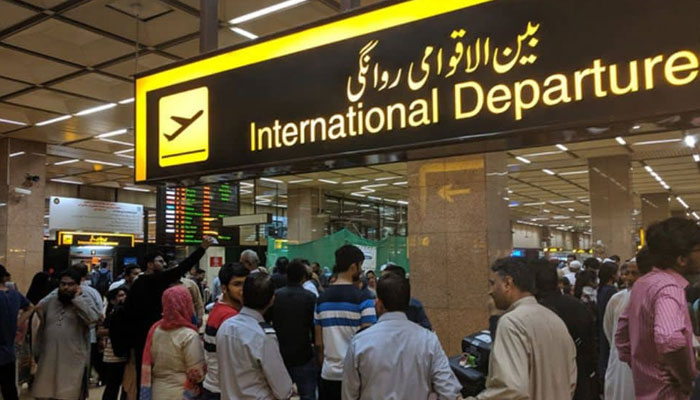
    KARACHI: Customs authorities have recovered a large amount of foreign currency from six passengers travelling from Karachi to Dubai. According to officials, the passengers belonged to the same family. Authorities recovered $55,000 in US currency and Rs950,000 in Pakistani cash from them. Officials said the passengers were carrying foreign currency above the limit permitted by the State Bank of Pakistan. The currency had also not been properly declared before their travel. The authorities took action under the Customs Act 1969 after the undeclared currency was discovered. Customs officials said the case involved six members of one family. The recovery was made during checks at the airport before the passengers could leave the country. Officials said the passengers had exceeded the permissible limit for carrying foreign currency abroad. They also failed to meet the required declaration procedures. Customs authorities stressed that travellers must comply with regulations governing the movement of foreign currency. Passengers carrying amounts above the permitted limits are required to follow the applicable declaration procedures. The incident has once again highlighted the importance of checks at international airports. Customs officials regularly monitor passengers and baggage to detect undeclared currency and other restricted items. Authorities said preventing currency smuggling remains a priority. They are maintaining strict checks to identify attempts to move large amounts of undeclared foreign currency out of Pakistan. Customs officials said they are following a zero-tolerance policy against currency smuggling. They added that action would be taken against anyone found violating the relevant laws. The recovered amount included both US dollars and Pakistani rupees. The officials did not provide further details about the intended use of the money or the identities of the passengers. The case also highlights the need for travellers to understand currency rules before leaving Pakistan. Failure to declare currency or carrying amounts beyond the permitted limits can lead to legal action under the applicable laws. Authorities are continuing proceedings in the case under the Customs Act 1969. The recovery is among the latest incidents showing the role of airport customs checks in preventing the illegal movement of currency. Officials said such measures are necessary to protect Pakistan’s financial system and enforce foreign exchange regulations. Customs authorities reiterated that passengers travelling abroad must comply with all currency declaration requirements. They said strict action would continue against attempts to move undeclared currency across Pakistan’s international borders.

  • | |

    Farooq Sattar calls for more provinces in Pakistan

    Muttahida Qaumi Movement-Pakistan (MQM-P) senior leader Dr Farooq Sattar has called for the creation of more provinces, saying Pakistan cannot be effectively governed through the existing four provinces or by the influence of a few political families. Speaking after arriving at the party’s Bahadurabad headquarters in Karachi, Sattar said the country needs a more inclusive and participatory federal structure with additional provinces to ensure balanced governance and fair representation. He said the movement for administrative reforms would continue until the establishment of more provinces across the country. According to Sattar, creating new provinces is essential for improving governance, strengthening the federation and addressing regional disparities. The MQM-P leader also praised the country’s leadership for demonstrating resilience during challenging times. He commended Field Marshal Syed Asim Munir, Prime Minister Shehbaz Sharif and the nation for showing determination and courage. Sattar reiterated that constitutional and administrative reforms are necessary to build a stronger and more representative Pakistan, adding that decentralisation would help improve public service delivery and promote national unity.

  • Thai Police Hunt Canadian and Cambodian Fugitives in Major Romance Scam Case

    BANGKOK – Thai police are searching for two foreign suspects after dismantling a transnational romance scam network that allegedly defrauded a Thai single mother of nearly 22 million baht over more than two years. The Central Investigation Bureau (CIB) announced that 13 suspects have been arrested, while a Canadian and a Cambodian national remain at […]

  • | |

    Hayden Panettiere’s hidden health battle during …

    Hayden Panettiere’s death at just 36 has left fans mourning a star whose life was marked by remarkable success as well as deeply personal struggles. The actress, best known for Heroes and Nashville, died on August 16, 2026, and new reports have drawn attention to the serious health problems she experienced during the months before her passing. Panettiere’s final period was reportedly far more difficult than many fans realized. Reports have described severe health issues that affected her ability to move comfortably and left her struggling physically. Her health concerns have now become an important part of the conversation surrounding her sudden death. (Page Six⁠) The actress had been open throughout her life about some of her personal battles, particularly her struggles with addiction and the emotional challenges she experienced. However, she did not publicly reveal every detail of what she was going through physically in the months leading up to her death. Panettiere’s career began when she was a child, eventually leading to major roles that made her a household name. She gained widespread recognition as Claire Bennet on Heroes before taking on the role of country singer Juliette Barnes on Nashville. Her performance on the musical drama earned her critical attention and a devoted following. Away from television, Panettiere also appeared in the Scream franchise and several other films. Her career demonstrated her versatility as both an actress and performer. Her personal life, however, was frequently the subject of public attention. Panettiere spoke honestly about addiction, motherhood, relationships and trauma in her memoir, This Is Me: A Reckoning. She also discussed how difficult experiences had affected her physical and emotional wellbeing. Following her death, reports have emphasized that there were no immediate indications of foul play. Authorities are continuing to establish the precise circumstances surrounding her passing, meaning claims about a specific medical cause should be treated carefully until official findings are released. The renewed focus on Panettiere’s health also highlights how little the public can know about what celebrities experience privately. Even while appearing at public events and communicating with fans, she may have been dealing with serious difficulties away from the cameras. For those who grew up watching Heroes or followed Juliette Barnes’ journey on Nashville, Panettiere’s passing represents the loss of a familiar face who had been part of popular culture for decades. Her final months may have been difficult, but her legacy is much larger than her struggles. Panettiere leaves behind memorable performances, a powerful story of survival a countless fans who will remember the energy and vulnerability she brought to the screen.

  • Body of Thai Travel Vlogger ‘Hlun Solo’ Arrives in Thailand, Sent for Autopsy

    BANGKOK, Thailand – The remains of popular Thai travel vlogger Bowornthat Pengsuk, widely known online as “Hlun Solo,” have officially arrived in Thailand from Georgia and were immediately transferred for a secondary autopsy. The repatriation follows his mysterious death in a Tbilisi hotel room last month, which prompted an international search by his family after […]

  • |

    Myanmar offensive clears path for Russia-backed po…

    DAWEI, Myanmar: Myanmar’s military has deployed hundreds of troops into the country’s southern Tanintharyi region in an offensive aimed at clearing areas earmarked for a Russia-backed special economic zone, according to resistance fighters and a local activist familiar with developments in the area. The campaign around the Dawei Special Economic Zone (SEZ), which includes plans for a deep-sea port and power plant on the Andaman Sea, represents one of the clearest signs yet that Myanmar’s military-backed government is prepared to use force to revive a long-delayed project seen as a potential alternative trade route to the Strait of Malacca. The offensive also comes as Myanmar’s leadership intensifies diplomatic efforts to attract foreign investment. Junta chief-turned-President Min Aung Hlaing promoted the Dawei project during a recent visit to Thailand and discussed its prospects again this week during talks with Russian President Vladimir Putin in Moscow. Villages Caught in Military Push Since July, hundreds of soldiers have reportedly moved into Tanintharyi, a region bordering Thailand where the Dawei project is located. Their advance has triggered repeated clashes with local resistance groups, according to two sources. “The military is advancing its columns and conducting area-clearance operations. Some villages and homes have been burned down,” Saw Dah Ko of the Tanintharyi Region People’s Defence Force told Reuters. A second resistance fighter, operating with the Dawei District No.1 battalion under the shadow National Unity Government, said troops had burned homes in at least three villages and killed three aid workers helping displaced communities. The civil society group MAGGA Initiative said the three aid workers were detained and killed after encountering a military column in Yebyu Township on July 9. Reuters was unable to independently verify the accounts. Myanmar’s government and Russia’s embassy in Myanmar did not respond to requests for comment. Conflict monitor ACLED said the offensive had involved a column of about 700 soldiers advancing into surrounding areas, with raids on villages and reports of civilian deaths. The military’s campaign has reportedly been supported by air and naval attacks, according to local sources, putting pressure on loosely organised resistance groups. “They enter the region, and once reinforced by the navy, they launch offensives into the villages situated within the deep sea port project area,” said Min Lwin Oo of the Democracy Movement Strike Committee. A Strategic Project The push around Dawei is part of the military’s wider effort to regain territory and strategic border areas lost to opposition groups following the 2021 coup that plunged Myanmar into civil war. The conflict has killed an estimated 100,000 people and displaced more than 3.5 million, according to humanitarian and conflict assessments. The military-backed government has sought to strengthen its control while pursuing projects that could bring investment and strategic partnerships. The Dawei SEZ is among the most ambitious. Originally launched in 2008 as a joint venture with Thailand, the project was intended to create a major industrial and transport hub linking Southeast Asia with markets in East and West Asia. However, construction stalled in 2013 amid local opposition and funding difficulties. In early 2021, shortly before the military takeover, authorities moved to terminate agreements covering nine projects in the initial construction phase and said they would seek new partners. Russia has now emerged as a key potential supporter. Russia Sees Gateway to Asia At a business forum in Moscow this week, Tanintharyi Chief Minister Zaw Naing Oo promoted Dawei as a faster route for regional trade. State media quoted him as saying cargo could reach its destinations four to six days faster through Dawei than by travelling through the Strait of Malacca. The proposed port is also around 45 kilometres from Myanmar’s major offshore gas fields, adding to its strategic appeal. Russian Prime Minister Mikhail Mishustin said Russian companies were interested in working with the Dawei SEZ, potentially expanding trade and creating employment opportunities for small and medium-sized businesses. For Moscow, the project could offer more than commercial returns. A person familiar with Russian thinking said the port could provide Russia with greater access to Southeast Asian markets and a foothold in the Indian Ocean region. But the source cautioned that Myanmar remains a high-risk investment destination. “The risk in Myanmar is still very high,” the source said, adding that Russian investment would need strong connectivity with Thailand for the project to make economic sense. A Project With High Stakes The Dawei development could reshape trade routes across the region if it is successfully revived. Its location on the Andaman Sea offers a potential route that could reduce reliance on the heavily used Strait of Malacca. For Myanmar’s military leadership, restoring control over the surrounding territory is therefore closely linked to its ambitions for the project. For local communities, however, the military advance has brought renewed fear and displacement. The fate of Dawei now rests on a difficult balance between geopolitics, investment and security — with the proposed port’s future increasingly tied to the outcome of Myanmar’s continuing civil war.

Leave a Reply

Your email address will not be published. Required fields are marked *