thailand denies false

Thailand denies false reports about visa-free entry limits

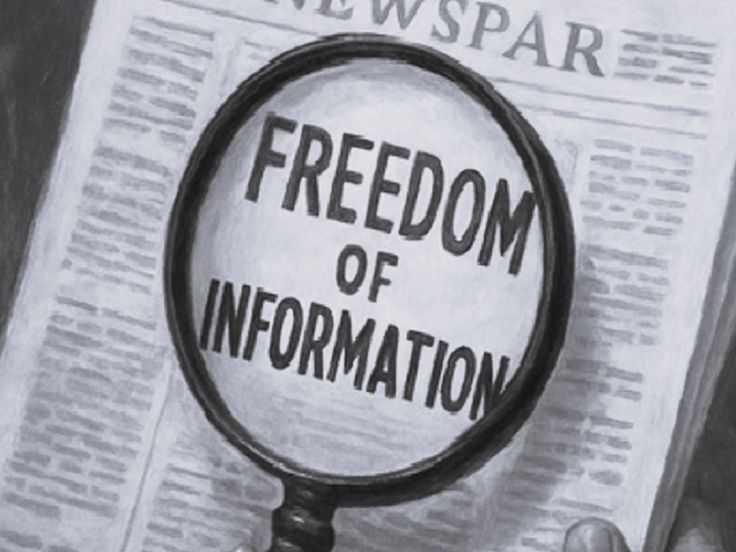
BANGKOK – The Ministry of Digital Economy and Society has issued a strong warning regarding false information circulating online about a supposed cap on visa-free entry into Thailand. The fake announcement claimed foreigners would be limited to just two visa-free entries per year.

Thailand Launches National Crackdown on Foreigners Abusing Visa-Free Entries

In a statement, the ministry clarified that the Immigration Bureau has confirmed there has been no change to existing visa-free entry regulations. The bureau continues to enforce current rules and monitor frequent border crossings, but there is no such limit of twice per year.

The misinformation was identified through the Anti-Fake News Centre, which processed 157,300 online messages on January 15, 2026, verifying 4,815 items. Most false content was spread via social media, with a smaller portion coming from Line Official channels.

Other examples of fake news recently debunked include misleading health claims, false election-related financial reports, and inaccurate information about online lotteries and overseas recruitment.

Thai Officials Assess 60-Day Visa-Free Policy’s Economic and Security Impacts

The ministry urged the public to verify information through official government channels before sharing it online and emphasized the importance of digital literacy in combating misinformation that threatens social stability and public trust.

-Thailand News (TN)

Similar Posts

  • | |

    Delay in NOC stalls NADRA counter at Pakistan Emba…

    A proposed NADRA counter at the Pakistan Embassy in Tokyo, expected to benefit nearly 30,000 to 35,000 Pakistanis living in Japan, has remained stalled for the past three to four months due to delays in the issuance of a No Objection Certificate (NOC), despite receiving formal approval from NADRA. According to official documents, NADRA granted in-principle approval for the establishment of the counter on April 22, 2026, and requested the relevant authorities to issue the required NOC without delay. The documents stated that the counter would become operational immediately after the NOC is issued. The delay has prevented the project from moving forward, leaving thousands of overseas Pakistanis in Japan facing continued difficulties in accessing essential identity and registration services. Sources said the initiative was made possible through the persistent efforts of Overseas Pakistanis Foundation (OPF) Chairman Syed Qamar Raza Shah. During his visit to Japan in April, he met members of the Pakistani community, listened to their concerns, and identified the absence of NADRA services as one of their most pressing issues. After returning to Pakistan, Shah reportedly pursued the matter with the relevant departments and raised it at senior government levels, resulting in NADRA’s formal approval for establishing the counter at the embassy. Under the approved plan, NADRA agreed to provide biometric machines, fingerprint devices, cameras, technical support, and staff training. The Pakistan Embassy in Tokyo is responsible for providing office space, computers, internet connectivity, furniture, and other administrative facilities. Officials said all technical and administrative arrangements have already been finalised. However, the project remains on hold because the required NOC has yet to be issued by the concerned ministry. As a result, Pakistani nationals living in Japan continue to face significant challenges in obtaining or renewing national identity cards, completing family registration, biometric verification, and accessing other NADRA-related services. Members of the Pakistani community in Japan have praised Syed Qamar Raza Shah for his efforts, saying the project would likely not have reached the approval stage without his personal involvement. They urged the relevant authorities to demonstrate the same commitment by removing the remaining administrative hurdles and ensuring that the approved project is implemented without further delay. The community has also appealed to Prime Minister Shehbaz Sharif and Deputy Prime Minister Senator Ishaq Dar to personally intervene and direct the concerned authorities to issue the pending NOC so that the NADRA counter can be established at the Pakistan Embassy in Tokyo as soon as possible, providing long-awaited relief to thousands of overseas Pakistanis.

  • | | |

    Pakistan imposes new restrictions on foreign media

    Pakistani authorities have exposed regulatory measures governing foreign media operations in the country. The strategy has triggered an alarm among press freedom advocates, legal observers, and media personnel. Under the newly issued Foreign Media Facilitation Guidelines, journalists representing international organizations will no longer be permitted to travel or cover news events outside three major metropolitan hubs without explicit prior authorization from the government. The regulations come at a delicate juncture marked by escalating political instability, public demonstrations, and security crackdowns across key regions including recent demonstrations connected to heightened tensions in Kashmir and subsequent enforcement actions in urban centers like Lahore. Critics argue that by constraining the scope of international newsgathering precisely when accurate coverage is most vital, the state risks deepening information voids and exacerbating the spread of unverified claims. Key Requirements of the New Media Framework Administered through the External Publicity Wing of Pakistan’s Ministry of Information, the updated regulatory policy establishes procedural hurdles for international news agencies. Foreign correspondents, local staff, contributors, and freelance journalists working for international outlets must secure an official No Objection Certificate (NOC) before traveling to conduct reporting assignments outside Islamabad, Karachi, and Lahore. Regions requiring prior approval now explicitly cover all provincial territories, sensitive border zones, and Pakistan-administered Kashmir. The framework provides no defined processing timeframe for NOC applications, leaving reporting teams facing unpredictable delays and potential administrative holds. The Ministry reserves the authority to suspend or revoke official media accreditation if reporting is judged to run counter to the country’s national sovereignty, ideology, or public safety phrasing that legal analysts describe as intentionally open-ended. Backlash from Analysts and Rights Groups The enactment of these guidelines has drawn sharp rebuke from political commentators, civil society organizations, and international press watchdogs, who view the move as part of a systematic contraction of independent journalism within the country. Former senator and political commentator Mustafa Nawaz Khokhar highlighted the grave consequences of curtailing foreign news organizations, warning that restricting legitimate press operations ultimately undermines public trust. These guidelines are tantamount to choking international media in an increasingly shrinking space, Khokhar noted, emphasizing the vital role global news outlets play when local media environments face structural pressure. The public looks at the international media for independent reporting. Placing restrictions simply creates more room for disinformation and the spread of fake news.   Rights groups including the Pakistan Federal Union of Journalists (PFUJ) and international watchdogs have echoed these concerns. They’re pointing out that advance the requirement of government permission for routine reporting effectively grants authorities veto power over what news reaches the global audience. Broader Context of Press Freedom in Pakistan Pakistan’s media environment has historically operated in a complex space balancing constitutional guarantees of free speech against national security laws. However, media analysts note that state oversight of both traditional print/broadcast journalism and online digital spaces has tightened significantly in recent years. The introduction of the new foreign media guidelines coincides with broader legislative shifts aimed at regulating online speech and social media platforms. Observers express concern that administrative barriers, combined with strict digital laws, could leave remote or politically sensitive areas completely cut off from independent news coverage. By limiting foreign journalists’ mobility primarily to the capital and two largest economic centers, field reporting from rural regions, border zones, and conflict-affected territories will become exceptionally difficult to conduct legally. Implications for International Coverage As international newsrooms adapt to the new framework, news gathering strategies across South Asia are likely to face operational friction. Bureau chiefs and correspondents report that unpredictable NOC processing times make time-sensitive breaking news coverage outside major cities nearly impossible to guarantee.   Without direct on-the-ground access for independent journalists, global news consumers may increasingly have to rely on official statements or unverified social media updates during crises. For a country navigating complex domestic politics and delicate international relations, press freedom advocates warn that restricting the lens through which the world views Pakistan could backfire, isolating the nation’s political discourse and fostering an environment where misinformation thrives unchecked.

  • | | |

    Pakistan seeks to revive Iran-US mediation efforts

    ISLAMABAD: Pakistan is making fresh diplomatic efforts to revive its role as a mediator between Iran and the United States. Interior Minister Mohsin Naqvi travelled to Tehran on Tuesday for talks with senior Iranian officials. During his visit, he met Iranian Foreign Minister Abbas Araghchi and President Masoud Pezeshkian. The visit is aimed at keeping Pakistan’s mediation channel active. Islamabad is seeking progress on the Islamabad Memorandum of Understanding (MoU), which emerged from earlier efforts to ease tensions between Iran and the United States. Naqvi was received in Tehran by Iranian Interior Minister Eskandar Momeni. He later held discussions with Araghchi on bilateral relations and regional developments. Pakistan’s diplomatic efforts had slowed after Oman became more directly involved in talks concerning arrangements for navigation through the Strait of Hormuz. However, recent contacts between Oman and Iran appear to have created an opportunity for Islamabad to renew its broader mediation initiative. A diplomatic source said Pakistan wants to follow up on the Islamabad MoU and encourage both sides to return to a wider diplomatic process. The situation around the Strait of Hormuz remains particularly sensitive. The waterway is vital for international energy and trade routes. Iran has maintained that the Islamabad MoU remains the key framework for resolving the wider dispute. Tehran has also linked the full reopening of the Strait of Hormuz to implementation of the commitments contained in the agreement. Iran and Oman have been discussing arrangements for safer passage through the strategic waterway. Their discussions include possible shipping routes and mechanisms for managing navigation. However, Tehran has indicated that any understanding with Oman would initially address technical matters. It would not necessarily represent a complete resolution of the wider dispute. Iran has also called for concrete assurances from Washington before moving towards the next stage of negotiations. Tehran wants guarantees that can be verified rather than verbal commitments. Pakistan has continued to encourage dialogue between the two sides. Defence Minister Khawaja Asif also indicated that Washington and Tehran could be moving closer to an understanding. He said recent signals suggested that the two countries were again moving towards a possible peace arrangement or deal. Meanwhile, Pakistan has invited Iranian Foreign Minister Araghchi and Iranian Parliament Speaker Bagher Ghalibaf to visit Islamabad. Iranian officials have said the visit would take place at an appropriate time. Naqvi’s trip to Tehran is therefore significant because Islamabad is maintaining direct engagement instead of waiting for the Iranian delegation to visit Pakistan. During his meeting with President Pezeshkian, Naqvi described Pakistan-Iran relations as strong and longstanding. He conveyed Islamabad’s intention to further strengthen ties with Tehran. Pezeshkian also stressed the importance of bilateral relations. He said stronger cooperation between Pakistan and Iran could serve their national interests and contribute to regional stability. The discussions come amid broader diplomatic and security developments in the region. Pakistan recently signed a trilateral defence agreement with Saudi Arabia and Turkiye. Islamabad has maintained that the arrangement is defensive and is not directed against any country. Deputy Prime Minister and Foreign Minister Ishaq Dar also discussed the agreement with his Iranian counterpart. He briefed Araghchi on its objectives and stressed its focus on strategic cooperation and regional peace. At the same time, US President Donald Trump has adopted a tougher tone towards Iran’s negotiating team. Trump described Iranian negotiators as difficult and accused them of making commitments privately and later presenting them differently in public. He also warned that Iran’s economic problems and inflation were becoming increasingly difficult to sustain. Trump said Washington could continue applying economic pressure on Tehran. He also suggested that the United States could take stronger measures if necessary. The contrasting positions underline the difficulties facing diplomatic efforts. Pakistan is now attempting to keep communication channels open with Tehran while encouraging a broader political process involving Iran and the United States.

  • Thailand has enough oil for local consumption, but prices will rise: Government

    BANGKOK — The government has confirmed there are adequate supplies of oil for local consumption but warned that local prices will still rise in line with global prices, even with the use of subsidies to offset the increase. Thailand’s Current Oil Reserves Will Last 61 Days, Energy Ministry Confirms Speaking after a meeting on the […]

  • Phuket Airport Debuts International Arrivals Autogates

    PHUKET, Thailand — Phuket International Airport has officially launched its first automated immigration gates for arriving international passengers, marking a significant technological upgrade aimed at streamlining the arrival process and reducing wait times. The new service, which began operation on Saturday, addresses persistent traveler complaints regarding long queues and processing delays at the busy tourist […]

  • | | |

    President Zardari hails Police martyrs’ sacr…

    ISLAMABAD: President Asif Ali Zardari has paid glowing tribute to Pakistan’s police martyrs, describing their courage, unwavering commitment and ultimate sacrifices as a source of immense pride for the nation. In his message on Police Martyrs’ Day, the president praised law enforcement personnel for standing on the front lines against terrorism and organized crime, saying their bravery has played a vital role in safeguarding the country’s peace and stability. President Zardari said the sacrifices made by police officers in the fight against terrorists and their foreign-backed supporters would always be remembered. He noted that countless officers had laid down their lives while protecting citizens, defending the rule of law and ensuring national security. Highlighting the force’s professional achievements, the president said police departments across Pakistan had successfully disrupted terrorist plots and dismantled criminal networks through intelligence-based operations, dedication and professional expertise. He added that their services continue to strengthen public confidence in the country’s security institutions. The president reserved special praise for the police forces of Khyber Pakhtunkhwa and Balochistan, acknowledging their exceptional courage in confronting terrorism under extremely challenging conditions. He said officers in both provinces have consistently demonstrated resilience and extraordinary commitment despite facing significant risks. President Zardari also expressed solidarity with the families of fallen police personnel, saying the nation salutes their patience, perseverance and strength. He stressed that supporting the families of police martyrs is a shared responsibility of both the state and society, adding that their welfare and well-being must remain a national priority. Emphasizing the need for stronger law enforcement institutions, the president said the government would continue efforts to modernize the police through improved training, advanced technology and better operational resources. He noted that equipping officers with modern tools and professional skills is essential for effectively responding to evolving security challenges. The message comes as Pakistan continues to face security threats in several regions, where police personnel remain actively engaged in counterterrorism operations alongside other security agencies. The president said the bravery and sacrifices of police officers serve as a lasting reminder of their dedication to protecting the nation. Police Martyrs’ Day is observed across Pakistan each year to honor officers who lost their lives in the line of duty and to recognize the invaluable contributions of law enforcement personnel in maintaining peace, public safety and the rule of law.

Leave a Reply

Your email address will not be published. Required fields are marked *