former mpa sadia
| |

Former MPA Sadia Sohail Rana escapes attack in Lah…

Former Member of the Provincial Assembly (MPA) Sadia Sohail Rana remained safe after unidentified individuals allegedly attacked her vehicle in Lahore, police said.

According to police officials, the incident occurred when unknown suspects targeted her vehicle and pelted it with stones. The attack caused damage to the vehicle, but the former lawmaker was not injured.

Police said Sadia Sohail Rana safely escaped the incident and immediately informed the authorities. Officers reached the scene soon after receiving the report and began collecting evidence.

The former MPA has submitted an application requesting the registration of a criminal case against the unidentified attackers. Police said legal proceedings are being initiated in light of her complaint.

Investigators have launched an inquiry to determine the motive behind the attack. Officials are examining all available evidence and questioning witnesses who may have seen the incident.

Police are also reviewing CCTV footage from cameras installed in the surrounding area to identify the suspects and trace their movements before and after the attack.

Authorities said efforts are underway to arrest those responsible. They added that action will be taken in accordance with the law once the attackers are identified.

Similar Posts

  • US Incursion Into Venezuela Fuels Thai Baht Rally

    The Thai baht strengthened significantly this week, trading between 31.00 to 31.85 against the US dollar, as global markets reacted to geopolitical tensions following a US military incursion into Venezuela. The move triggered a surge in gold prices and spurred capital inflows into Thailand’s financial markets, the Bangkok Post reported. Thailand Tightens Reporting on Non-Resident […]

  • |

    Japan earthquake disrupts auto and chip production as death toll rises to 34

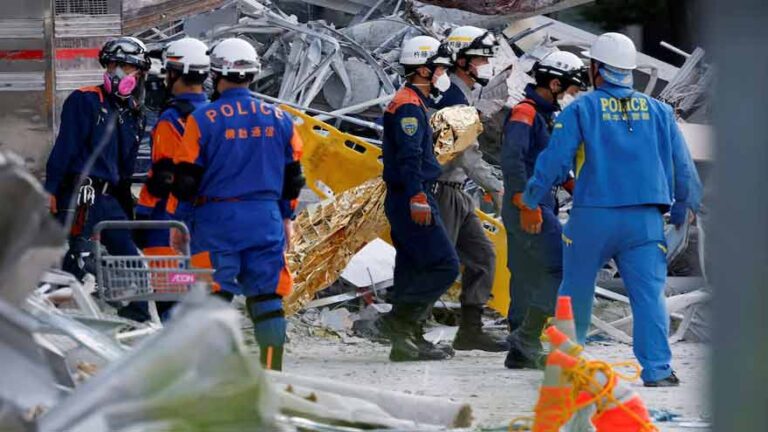
    A powerful earthquake that struck Japan’s Kumamoto region has killed at least 34 people and disrupted major manufacturing operations, exposing the continued vulnerability of the country’s industrial supply chains. The 7.1 magnitude quake damaged roads, interrupted essential services and forced several automobile and semiconductor companies to suspend production, raising concerns about delays across global supply networks. The earthquake struck on Tuesday, causing widespread destruction in southern Japan. Thousands of households were left without basic utilities while damaged roads and transport links made it difficult for businesses to continue normal operations. Kumamoto is one of Japan’s most important manufacturing regions and plays a key role in producing vehicles, auto parts and semiconductors used around the world. Toyota has temporarily suspended production at three factories in Fukuoka until August 5 because of concerns about employee safety and disruptions affecting suppliers and transport companies. The company has also decided to halt operations at one of its plants in Aichi, located more than 600 kilometres from the disaster zone, showing how shortages of essential components can quickly affect factories far from the earthquake’s epicentre. One of Toyota’s major suppliers, Aisin, also suffered disruptions at its factory near the hardest hit area. The company manufactures engines, doors and other vehicle parts for Toyota, Nissan and Daihatsu. Aisin said it plans to restart production gradually after confirming that facilities are safe and product quality can be maintained. However, it has not announced when full operations will resume. Trucks carrying supplies, including portable toilets, were seen entering the factory as recovery work continued. Local businesses reported that water services had been interrupted although electricity remained available. The latest disaster has revived memories of the 2016 Kumamoto earthquake, which caused severe damage to the same Aisin plant and forced Toyota to suspend production across Japan because of shortages of a critical door component. Industry officials said smaller suppliers further down the supply chain may also have been affected this time, increasing the risk of continued production delays. Auto parts manufacturer Denso said one of its suppliers had already reported damage while several others were still assessing conditions. Nissan has suspended some production at its two vehicle plants in Kyushu because of delays in receiving parts. Mitsubishi Motors has also halted certain production lines at its factory in Okayama as the effects of the earthquake continue to spread through the manufacturing sector. Kumamoto has also become one of Japan’s leading centres for semiconductor production in recent years. The region is often referred to as the country’s Silicon Valley because of its concentration of advanced chip manufacturers. Taiwan Semiconductor Manufacturing Company, the world’s largest contract chipmaker, evacuated workers from its Kumamoto plant immediately after the earthquake. The company later confirmed that operations had started to resume within a few hours. Other semiconductor companies are expected to take longer to recover. Renesas said damage at one of its facilities included fallen ceiling panels, cracked walls and water leaks. The company plans to restart production in stages beginning on August 5. Tokyo Electron announced that it expects to resume production next week, while Sony said efforts are continuing to restore operations at its semiconductor factory in Kumamoto. Although the number of deaths is lower than the more than 260 people killed in the 2016 earthquake, this disaster has still caused significant human and economic losses. Nearly half of the fatalities occurred inside commercial buildings. Nine people died when severe structural damage struck a Nippon Paper Industries mill near the epicentre. Another seven people lost their lives at an Aeon shopping mall where authorities believe a gas explosion occurred more than an hour after the initial earthquake. The disaster has once again highlighted the challenge Japan faces in protecting both its population and its globally important manufacturing industry from natural disasters.

  • Pakistan discovers lithium in underground brine

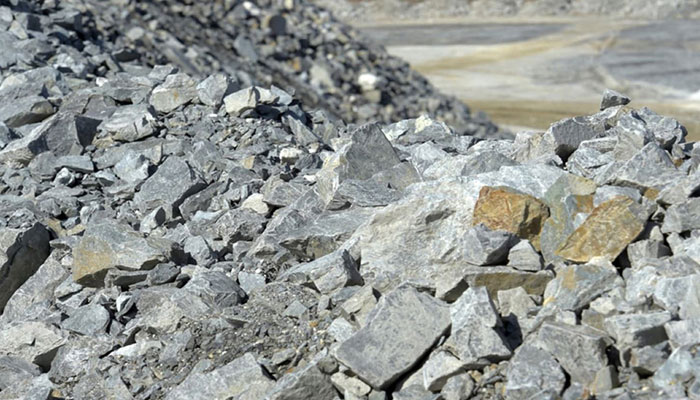
    Islamabad – Oil and Gas Development Company Limited (OGDCL) has achieved a major scientific milestone by confirming the presence of lithium in underground formation water (brine) in Pakistan for the first time. The concentration is reported to be comparable to that found in some of the world’s well-known lithium-bearing geothermal brines. According to sources, the discovery was made during advanced geochemical analysis of formation water obtained from a successfully tested high-temperature geothermal well under OGDCL’s pilot geothermal program. Senior OGDCL officials told The News that this is the first discovery of its kind in Pakistan. With this achievement, Pakistan has joined the list of countries exploring geothermal brine as a potential source of lithium. Lithium is considered a critical mineral in the global transition to clean energy. It is an essential component in electric vehicle (EV) batteries, large-scale energy storage systems and a wide range of advanced technologies.

  • | | |

    Constitutional provisions fuel referendum debate

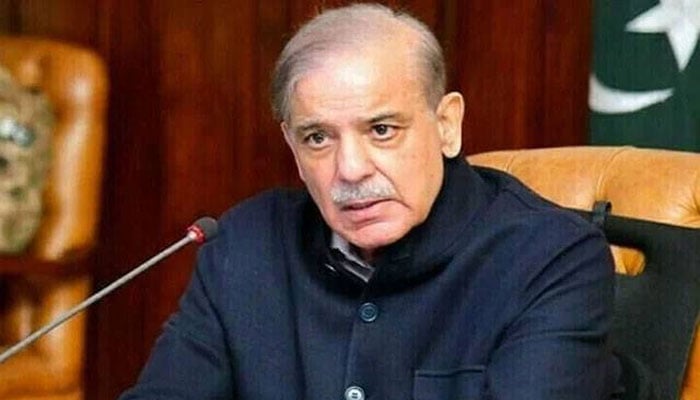
    Debate over the possibility of holding a national referendum has resurfaced in Pakistan, prompting discussions among political observers and constitutional experts about the legal framework governing such a move. Although the government has made no official announcement regarding a referendum, speculation in political circles has raised questions about when and how a nationwide vote can be conducted under the Constitution. Constitutional experts say Articles 48(6) and 48(7) of the Constitution empower the prime minister to propose a referendum on a matter of national importance. Under Article 48(6), the prime minister may refer such a proposal to a joint sitting of Parliament. If approved by the joint session, the matter can be presented to the public through a referendum in the form of a “Yes” or “No” question. Article 48(7) further provides that Parliament may legislate the procedure for conducting a referendum and determining its results. Legal experts note that, unlike a constitutional amendment, such legislation does not require a two-thirds majority and can be passed through a simple majority of members present, provided the quorum is complete. The renewed debate has also revived interest in the history of referendums in Pakistan. The concept first gained prominence during the political crisis that followed the March 7, 1977 general elections. Opposition parties, united under the Pakistan National Alliance (PNA), rejected the election results, alleging widespread rigging. They later boycotted provincial assembly elections and launched a nationwide protest movement demanding fresh elections, dissolution of assemblies and the resignation of then-prime minister Zulfikar Ali Bhutto. Despite mediation efforts by Saudi Arabia, negotiations between the government and the opposition failed, and the political deadlock culminated in the imposition of martial law by General Muhammad Zia-ul-Haq on July 5, 1977. Following these developments, constitutional provisions allowing referendums were introduced through the Seventh Constitutional Amendment. Pakistan’s first referendum was held on December 19, 1984, during General Zia-ul-Haq’s rule. While the public was asked to vote on the continuation of the Islamization process, a “Yes” vote effectively extended Zia’s presidency for another five years. Official results declared overwhelming support for the proposal, though opposition parties questioned both the process and the outcome. A second nationwide referendum was held in April 2002 under General Pervez Musharraf. The exercise enabled him to secure another five-year presidential term before the general elections later that year. After the 2002 elections, Musharraf was formally elected president by an electoral college comprising Parliament and the four provincial assemblies under the framework established through the Seventeenth Constitutional Amendment. Political analysts say recent discussions intensified after comments made during a media briefing by the Director General of Inter-Services Public Relations (ISPR), whose carefully worded responses to questions on constitutional matters drew public attention.


  • |

    South African court pauses impeachment proceedings against Cyril Ramaphosa

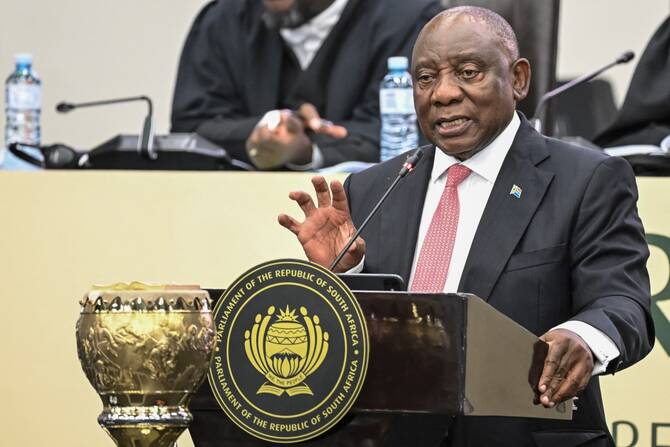
    South Africa’s Western Cape High Court has granted President Cyril Ramaphosa a temporary order halting parliamentary impeachment proceedings against him. The interdict pauses the work of a parliamentary impeachment committee until the court reviews a November 2022 panel report in September, which concluded that Ramaphosa “may have committed” serious violations regarding the Phala Phala farm scandal. The controversy stems from a 2020 break-in at Ramaphosa’s luxury farmhouse in Limpopo, where $580,000 in undeclared foreign currency hidden inside a sofa was stolen. While a former spy chief alleged the stolen sum reached $4 million and accused the president of concealing the robbery from tax and police authorities, Ramaphosa has maintained his innocence, stating the cash came from a legitimate sale of 20 buffaloes. Although the ruling African National Congress (ANC) initially quashed impeachment efforts in Parliament in 2022 and prosecutors dropped criminal charges in 2024, a Constitutional Court ruling in May 2026 reinstated the impeachment process. Ramaphosa welcomed Friday’s court decision, affirming his respect for judicial independence while awaiting the full review hearing in September.

  • Thailand Raises Diesel Price by Another 3.50 Baht per Liter

    BANGKOK — Diesel prices will rise another 3.50 baht per litre to 44.24 baht at service stations across Thailand on Thursday morning, marking a 48 percent increase from just one month ago as the government continues to scale back fuel subsidies. Thai Government to Promote B20 Biodiesel as Cheaper Alternative PTT and Bangchak subsequently announced […]

Leave a Reply

Your email address will not be published. Required fields are marked *