thai honors fallen

Thai PM Honors Fallen Soldier, Reaffirms Support for Troops and Border Stability

BANGKOK – Prime Minister Anutin Charnvirakul presided over the royal cremation ceremony for Private Thanaphat Nanthawong at Wat Chuak Nok in Amnat Charoen province on Tuesday, honoring the soldier who was killed while serving along the Thai-Cambodian border. The ceremony was attended by senior government and defense officials, civil servants, and members of the public.

Three Thai Soldiers Killed Reclaiming Border Villages in Sa Kaeo

Private Thanaphat served with the 3rd Infantry Battalion, 2nd Infantry Regiment, King’s Guard, and lost his life during security operations in the Ban Nong Chan area of Sa Kaeo province. Following the rites, the Prime Minister met with the soldier’s family to express condolences and pay tribute to his sacrifice, acknowledging the profound risks faced by troops stationed along the volatile frontier.

In remarks after the ceremony, Anutin addressed the current border situation, noting that a ceasefire agreement has been signed and conditions remain calm with no unusual developments. He referenced his recent visits to frontline positions at Ta Kwai Prasat and Hill 350, where he spoke directly with troops and observed that morale remains high despite the challenges.

Cambodian Artillery Shells Hit Thai Homes in Border Clashes, Soldier Killed

The Prime Minister reaffirmed the government’s commitment to supporting military personnel through enhanced welfare and care measures. He also addressed material damages in border areas, stating that restoration efforts will be coordinated through relevant agencies, while emphasizing that the recovery and protection of Thailand’s territorial integrity remain top priorities.

-Thailand News (TN)

Similar Posts

  • | |

    Information Ministry accuses Al Jazeera of biased …

    The Ministry of Information and Broadcasting has accused international broadcaster Al Jazeera of presenting a misleading picture of the recently held Azad Jammu and Kashmir (AJK) Legislative Assembly elections, alleging that its coverage selectively portrayed the electoral process. In an official statement, the ministry said the broadcaster reported from selected polling stations in Muzaffarabad and relied on carefully chosen interviews and timings that did not accurately reflect the overall conduct of the elections. It claimed the reporting created a distorted impression of the voting process and failed to represent the broader electoral environment. The ministry further alleged that such coverage appeared aimed at undermining the credibility of the elections and ignoring what it described as the democratic will expressed by voters across the region. It maintained that the people of AJK had exercised their right to vote despite political tensions. Alongside its criticism of the coverage, the ministry reminded foreign media organisations operating in Pakistan that reporting assignments outside Islamabad, Lahore and Karachi require prior approval under the country’s External Publicity Guidelines. It urged all foreign correspondents to comply with the regulations governing reporting in other parts of the country. The AJK elections, however, remained under intense scrutiny after allegations of irregularities and isolated incidents of violence emerged during polling. Opposition parties accused authorities of interfering in the electoral process, while the ruling coalition exchanged allegations of rigging and misuse of state resources. Human rights organisations also expressed concern over reports of deaths and injuries linked to election-related unrest. They called for transparent and independent investigations into the incidents and stressed that maintaining public order should not come at the expense of fundamental rights, including peaceful assembly and freedom of expression. The elections were held against the backdrop of political unrest that has continued in AJK since last year’s protests over governance reforms and constitutional issues. The controversy surrounding reserved refugee seats in the AJK Legislative Assembly also remained a major political issue during the campaign.

  • |

    Court pauses construction of $400 Million White Ho…

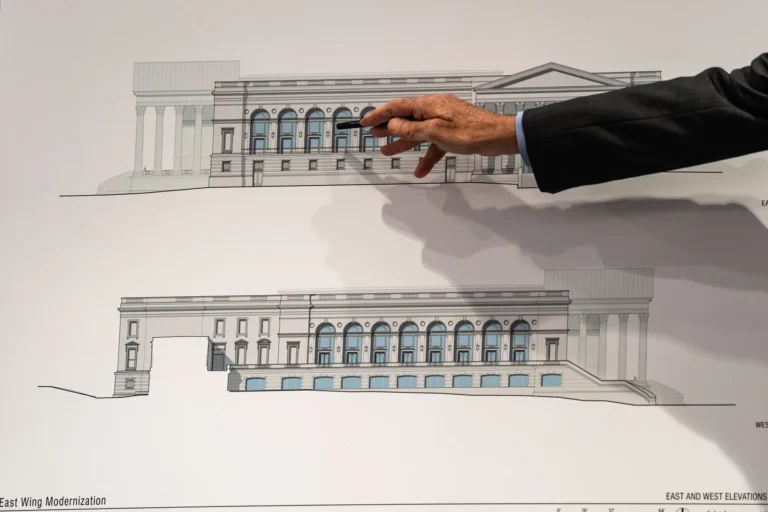
    A U.S. federal appeals court issued a ruling to halt construction on the ambitious $400 million White House ballroom project. The decision by the U.S. Court of Appeals for the District of Columbia Circuit upholds a preliminary injunction that brings above-ground work on the massive 90,000-square-foot facility to a standstill. The legal challenge was originally brought by the National Trust for Historic Preservation. The timing was right after the administration demolished the historic East Wing to clear space for the new addition. This project was devised without receiving formal authorization from the United States Congress or regulatory historic preservation bodies. The Core Legal and Historic Dispute The dispute began after the historic East Wing was razed to make way for a grand event space capable of hosting hundreds of guests. Preservationists quickly filed suit. Their argument was that the administration overstepped its legal boundaries by destroying part of the historic executive mansion without proper congressional oversight. In earlier lower court proceedings, the federal judge sided with the preservation group. The judge concluded that the executive branch could not bypass legislative authorization to construct such a massive structure. The administration argued that the ballroom itself would be funded primarily through private contributions rather than taxpayer dollars. Critics maintained that private funding does not grant an administration the right to alter iconic federal heritage sites at will. Security Exceptions vs. Architectural Expansion A major focal point of the ongoing litigation involves the distinction between above-ground construction and essential subterranean infrastructure. Lower court decisions made allowances for below-ground work to proceed. The allowed spots were specifically underground bunkers, military installations and updated security infrastructure meant to replace outdated Cold War-era facilities. Justice Department attorneys representing the administration argued that halting any portion of the project could jeopardize executive branch safety. The new complex integrates crucial defensive elements against modern airborne and ballistic threats. However, judges questioned whether national security arguments could be applied to justify an entire 90,000-square-foot ballroom built above those installations. The appellate court’s latest order reinforces the restriction on above-ground structural work. However, the order allows government a temporary 14-day emergency intervention from the U.S. Supreme Court. Broader Presidential Power Implications The ruling marks on significant constitutional questions regarding the limits of executive power over federal property. Government lawyers previously asserted to the court that judges lacked the authority to intervene in executive branch building decisions once work was underway. The judiciary’s willingness to block the project highlights a sharp pushback against the idea that rapid demolition creates a fait accompli immune to judicial review.   As the 14-day stay ticks down, all eyes are on the Supreme Court whether the nation’s highest tribunal will step in to allow construction or leave the high-stakes project frozen.

  • | | |

    91 trade exhibitions, 11 foreign delegations but n…

    Islamabad:Pakistan has preferential trade arrangements with 93 countries. Its trade promotion authority participated in 91 international exhibitions and sent 11 trade delegations abroad in the last financial year, yet the country still has no registered Pakistani trade representative organisation or joint chamber in China. The absence of a formal Pakistani commercial organisation in China became a major point of concern before the Senate Standing Committee on Commerce, as senators questioned why Pakistan has not established a stronger private sector trade presence in one of its most important international markets. The committee, chaired by Senator Anusha Rahman, was told that no Pakistani joint chamber is currently registered in China and no Pakistani trade representative organisation is operating there. The Secretary Commerce said a Pakistani chamber could be established in China either as a joint chamber or as a branch, but it would have to meet the requirements set by Chinese authorities. He further explained that only one joint chamber from Pakistan could register itself in China under the relevant arrangements. Senators questioned why such an organisation had not been established despite the large scale business relationship between Pakistan and China. The Secretary Commerce said the reason could best be explained by the trade organisations themselves. The issue became more important when senators asked what real benefit Pakistan would gain from establishing a joint chamber or representative office. The Secretary Commerce said the Ministry of Commerce could not give a clear position on the matter and suggested that the Federation of Pakistan Chambers of Commerce and Industry and other chambers should provide their views. He said Pakistani private sector organisations could establish a chamber in major Chinese commercial centres such as Beijing or Shanghai, while the Ministry of Commerce would provide full support to interested chambers if they fulfilled Chinese requirements. Senator Anusha Rahman said a chamber could help Pakistani companies follow up more effectively on commercial opportunities in China. The discussion exposed a gap between Pakistan’s growing trade ambitions and its physical commercial presence in an important foreign market. The committee also examined the performance of the Trade Development Authority of Pakistan and its efforts to increase exports. The Chief Executive of TDAP said the authority was often blamed whenever Pakistan’s exports failed to grow, but export performance depended on several factors beyond the authority’s direct control. He pointed to production costs, electricity prices and the cost of financing as major factors affecting the ability of Pakistani businesses to compete in international markets. This means that simply sending trade delegations or participating in international exhibitions cannot guarantee higher exports if Pakistani products remain expensive to produce. The Commerce Minister, Jam Kamal Khan, told the committee that the Ministry of Commerce regularly sends policy proposals and recommendations to the government to improve the country’s trade environment. He said he had also proposed to the Prime Minister that reciprocal incentives should be pursued to increase exports. The minister said the Ministry of Commerce was working on new proposals to improve international marketing and increase Pakistani exports. He stressed that Pakistan could not become more competitive in international markets without dealing with the underlying costs faced by businesses and improving the investment environment. The figures presented by TDAP showed that the authority remained active in promoting Pakistani products abroad. During the last financial year, TDAP participated in 91 international exhibitions. The authority also organised or supported 11 trade delegations to foreign countries to search for new markets and strengthen business connections. Pakistan currently has preferential trade arrangements with 93 countries, giving Pakistani businesses access to special trade opportunities in international markets. However, the Senate committee stressed that trade agreements and international relationships must produce visible economic results. Members said Pakistan’s trade agreements should not remain only on paper. They should lead to higher exports, more investment and greater access for Pakistani businesses in foreign markets. The Chief Executive TDAP also clarified an important point about the authority’s financing. TDAP does not receive funding from the Export Development Fund. Instead, it receives government financing for specific projects. The committee also discussed the importance of stronger cooperation between Pakistani and Chinese institutions and private sector organisations. Senator Saleem Mandviwalla highlighted the role that Chinese international cooperation and trade specialists could play in developing stronger business and investment links. The discussion suggested that Pakistan needs to connect several areas of economic policy instead of treating export promotion as a separate activity. Lower production costs, cheaper and reliable electricity, easier access to finance, stronger investment policies, better international marketing and effective trade representation are all important if Pakistani companies are to compete successfully abroad. TDAP’s participation in 91 international exhibitions and 11 foreign trade delegations shows that the authority is actively trying to open doors for Pakistani exporters. But the Senate discussion also made clear that opening doors is only the first step. Pakistan must ensure that its businesses are able to walk through those doors with competitive products, attractive prices and the capacity to supply international buyers. The committee appreciated TDAP’s efforts but stressed the need for a coordinated national strategy linking trade policy, investment, industrial competitiveness, export promotion and overseas market representation.

  • | |

    Three injured as rival MQM-P groups clash at party…

    KARACHI: Internal differences within Muttahida Qaumi Movement-Pakistan (MQM-P) intensified on Sunday after supporters of two rival factions allegedly clashed outside the party’s Bahadurabad headquarters in Karachi, leaving at least three people injured. According to reports, tensions between supporters of the groups associated with MQM-P Chairman Khalid Maqbool Siddiqui and senior leader Mustafa Kamal escalated following a party meeting. The confrontation turned violent as workers allegedly exchanged slogans, engaged in physical fighting, and pelted stones at each other. Witnesses also reported aerial firing near the Bahadurabad headquarters during the unrest, creating panic in the area. Three people sustained injuries during the clashes. Senior MQM-P leader Dr Farooq Sattar said the dispute erupted after a meeting of party leaders at the Bahadurabad office. Speaking to the media, he alleged that supporters of one faction assaulted MPA Ejaz-ul-Haq and party leader Zakir. He further claimed that party leaders Mangla Sharma and Sabeen Ghori were also mistreated during the incident. MQM-P leader Amin Ul Haque alleged that one party worker was injured in the firing, while several others suffered injuries due to stone-pelting. He also claimed that extensive vandalism took place inside the party office and that the office’s DVR recording system was taken away. Amin Ul Haque said the matter had reached a point where it could no longer be ignored and called the incident deeply concerning for the party. Meanwhile, Dr Farooq Sattar later arrived at the Bahadurabad headquarters following the clashes as senior party leaders attempted to assess the situation and address the growing internal crisis.

  • | |

    CJP Yahya Afridi begins two-day hearing at Karachi…

    Chief Justice of Pakistan Justice Yahya Afridi arrived in Karachi on Monday to preside over a two-day sitting of the Supreme Court’s Karachi Registry. Following his arrival, the Supreme Court issued the official cause list outlining the benches that will hear a wide range of civil and criminal cases during the proceedings. According to the cause list, Bench No. 1 will be headed by Chief Justice Yahya Afridi and include Justice Musarrat Hilali. The bench will hear several important civil and criminal matters listed before the Karachi Registry over the next two days. Bench No. 2 will comprise Justice Muneeb Akhtar and Justice Jamal Khan Mandokhail. The judges will hear cases assigned to them under the published schedule and dispose of pending matters brought before the court. Bench No. 3 will consist of Justice Muhammad Ali Mazhar, Justice Irfan Saadat Khan and Justice Aqeel Ahmed Abbasi. The three-member bench is also expected to hear a number of civil and constitutional cases during the two-day session. The Karachi Registry is scheduled to hear a variety of petitions and appeals filed by individuals, government departments and private parties. The hearings are part of the Supreme Court’s regular judicial work aimed at ensuring timely disposal of pending cases across the country. Lawyers and litigants are expected to appear before the respective benches according to the published cause list. The two-day sitting will provide an opportunity for the court to hear several pending matters and issue rulings in accordance with the law. The Supreme Court periodically holds sittings at its regional registries to improve access to justice and reduce the backlog of cases. The Karachi Registry remains one of the court’s busiest benches, handling a significant number of legal disputes from Sindh and surrounding areas. During the current session, the three benches will conduct hearings simultaneously to ensure efficient disposal of cases listed before the court.

  • | | |

    PM Shehbaz accuses India of backing terrorism, urg…

    ISLAMABAD: Prime Minister Shehbaz Sharif on Friday accused India of playing a direct role in terrorism inside Pakistan and urged Afghanistan’s interim government to prevent militant groups from using its territory to launch attacks across the border. Addressing participants at the Balochistan National Workshop, the prime minister said Pakistan had successfully eliminated terrorism by 2018, but claimed that violence later resurfaced as part of what he described as a “well-organized conspiracy.” “India’s role in terrorism inside Pakistan is evident,” Shehbaz said, adding that the country had paid an enormous price in the fight against militancy, with more than 90,000 Pakistanis losing their lives over the years. Referring to the recent killing of a session judge in Mastung, the prime minister described the incident as another reminder of the continuing terrorist threat facing the country. He stressed that defeating terrorism requires a united national response involving state institutions and the public. Shehbaz also called on Afghanistan’s interim authorities to ensure that Afghan soil is not used by militant groups to carry out attacks against Pakistan. While emphasizing the importance of good relations between the two neighboring countries, he expressed regret that the Afghan administration had failed to stop terrorist elements operating from its territory. The prime minister said Pakistan’s diplomatic efforts for regional peace had received international recognition, adding that the country’s recent achievements had unsettled its adversaries. He praised Field Marshal Syed Asim Munir and Deputy Prime Minister and Foreign Minister Ishaq Dar for their diplomatic initiatives aimed at strengthening Pakistan’s regional and international engagement. Turning to development, Shehbaz highlighted the strategic importance of Balochistan, describing it as Pakistan’s largest province by area and the smallest by population. He said the people of Balochistan had always played a vital role in strengthening the federation and assured them that their sacrifices would never be forgotten. He also announced that construction work on the dual carriageway linking Karachi and Chaman was progressing, calling it a major infrastructure project expected to improve connectivity and economic activity in the province. Discussing the National Finance Commission (NFC) Award, the prime minister said Punjab had made significant contributions for Balochistan while the other provinces had also extended full support. He pledged to correct past shortcomings and ensure every province receives its constitutional share of national resources. Responding to questions from workshop participants, Shehbaz said Pakistan’s future prosperity depends on the collective efforts of all four provinces, expressing confidence that the country is ready to embark on a new phase of national development while continuing its fight against terrorism.

Leave a Reply

Your email address will not be published. Required fields are marked *