police deploy sniffer
| |

Police Deploy Sniffer Dogs in Search for Missing Young Russian Siblings Near Pattaya

BANGLAMUNG, Thailand

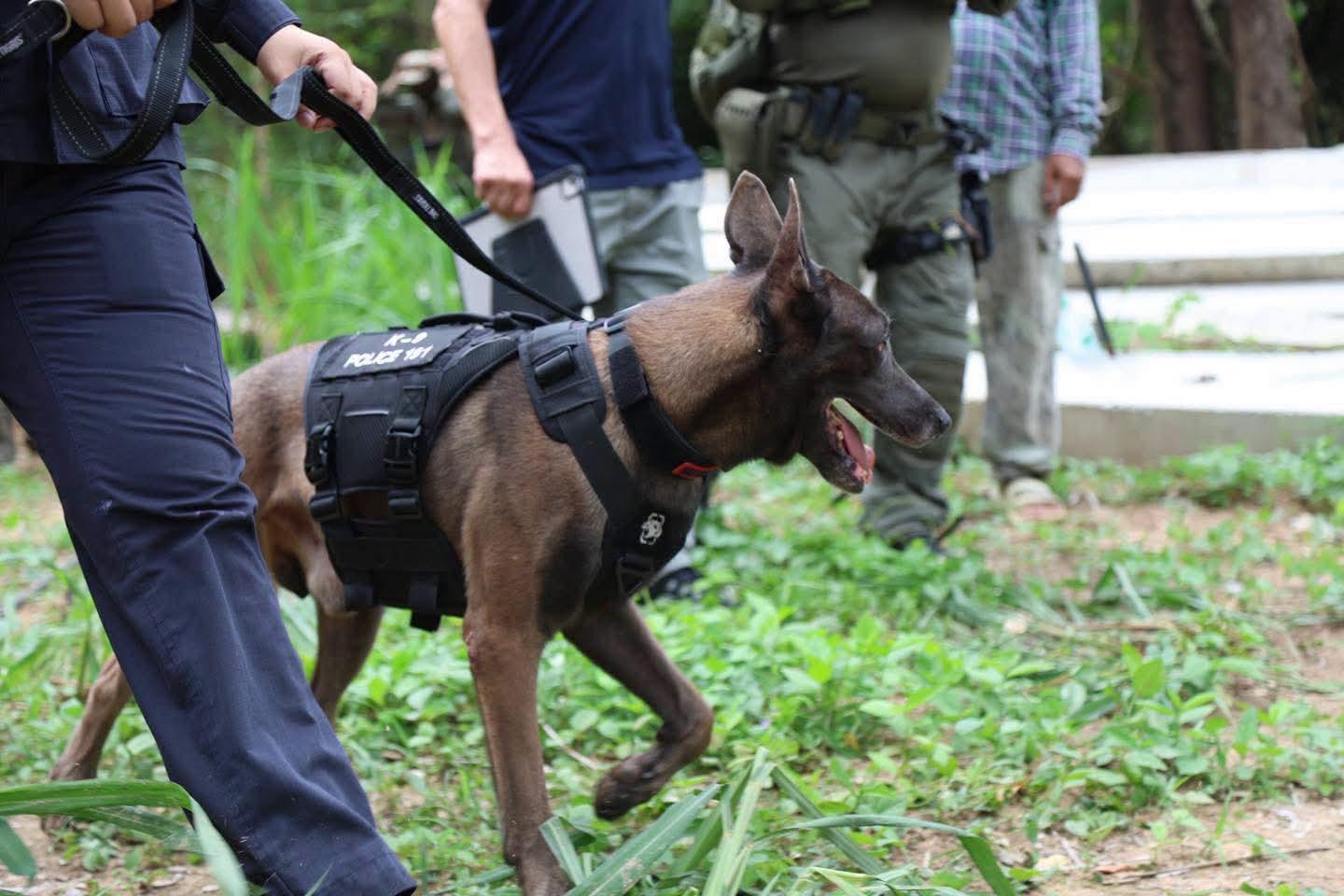
Thai authorities have intensified the search for two missing young Russian siblings by deploying police sniffer dogs near Pattaya, officials said Thursday afternoon, July 30th.

Miss Diana Nazimova, 22, and her brother Mr. Roman Nazimova, 17, disappeared along with their Honda ADV 150 motorcycle early on the morning of July 26th, 2026. The black-and-gray scooter, registered under plate number 4กษ 6379 Chonburi, was later recovered and found dismantled and buried in pits in Huai Yai, but the pair remain missing.

At 10 a.m. on July 30th, Police Major General Kiatisak Srathong-oy, commander of the Investigation Division of Police Region 2, led a planning meeting in front of the Khao Chi Chan Elephant Garden. The gathering included police officers, local administrative officials from Banglamung district, and two police dogs, Senior Police Dog Yanya and Senior Police Dog Hunter.

Teams then spread out across multiple locations in the Na Jomtien subdistrict of Sattahip district and Huai Yai subdistrict of Banglamung district. Officers used scenario simulations and analysis of possible suspect behavior to identify areas where evidence or might have been concealed before conducting detailed searches of target sites.

Investigators also presented clothing belonging to the missing siblings to the sniffer dogs, which then examined wells and abandoned buildings in Na Jomtien, an area believed to be linked to the disappearance, in hopes of uncovering additional traces or evidence.

Reports that the pair may have traveled to Chanthaburi province have been checked by investigators, who said no information has confirmed that the siblings left the local area.

The search continues as authorities work to resolve the mysterious disappearance.

Similar Posts

  • German Tourist Reunited With Family With Help of Chonburi Immigration After Getting Lost in Pattaya

    Pattaya, Thailand Immigration officers assisted a lost German national in Pattaya on the evening of August 7th, 2026, after he was unable to contact his relatives. At 9:30 p.m., a team led by Police Sub-Lieutenant Pramote Fueangfung, Deputy Inspector of Chonburi Immigration, along with Police Corporal Piyanat Nganiam and Sergeant Thanakan Srikhaththanam, both squad leaders […]

  • | |

    Transport crisis threatens to disrupt economic act…

    The economists and business experts have warned that the nationwide suspension of goods and oil transportation could create serious disruptions across Pakistan’s supply chains if the dispute is not resolved quickly, adding that prolonged interruption in cargo movement would increase operating costs, disrupt industrial production and put further pressure on exports. Experts said the ongoing situation should not be viewed merely as a dispute between transporters and the government, as the uninterrupted movement of goods is essential for manufacturing, agriculture, wholesale and retail trade, imports, exports and the distribution of essential commodities. They said the suspension of a large portion of the country’s freight fleet could create a chain reaction across the economy. Factories dependent on regular supplies of imported and locally produced raw materials could face interruptions, while manufacturers with completed consignments could experience difficulties in moving goods to ports, warehouses and domestic markets. According to economic experts, any prolonged disruption in freight movement could raise costs at multiple stages of the supply chain, ultimately increasing prices for businesses and consumers. They urged the government to give immediate priority to negotiations with transport representatives and ensure restoration of normal cargo movement, while simultaneously addressing the structural issues that have contributed to growing tensions in the transport sector. Experts said the introduction of daily petroleum price adjustments had added another layer of uncertainty to an already difficult operating environment. Fuel represents a major component of freight costs, and daily changes make it difficult for transport operators to determine charges for journeys that may take several days. The resulting uncertainty also affects manufacturers and traders because businesses cannot accurately forecast the cost of moving raw materials and finished products. For exporters, the issue is particularly significant as freight costs are often incorporated into orders and contracts agreed weeks or months before shipment. Economists said Pakistan needed a petroleum pricing framework that reflected international market movements while providing sufficient predictability for businesses. They noted that frequent changes in fuel prices could complicate production planning, inventory management and commercial contracting. They further cautioned that heavy reliance on petroleum taxes and levies could become counterproductive if it substantially increased transportation and production costs. Higher fuel prices raise the delivered cost of raw materials, machinery, food products and finished goods and also increase the cost of moving agricultural inputs and crops between production areas and markets. According to experts, the current disruption has also exposed weaknesses in Pakistan’s logistics infrastructure. The country needs better freight facilities, rationalised toll charges, adequate parking for heavy vehicles around ports and industrial zones, streamlined licensing procedures and a taxation framework that does not place excessive pressure on formal transport operators. They stressed that logistics costs should be considered an integral part of Pakistan’s export strategy. Export competitiveness depends not only on the cost of manufacturing a product but also on the expense and reliability of moving raw materials to factories and finished goods to ports. Experts said Pakistani exporters already face intense competition from regional economies where supply chains are becoming more efficient and predictable. Any additional increase in domestic transportation costs could further reduce the price competitiveness of Pakistani products in international markets. They recommended establishing a permanent consultation mechanism involving transporters, chambers of commerce, manufacturers, exporters, oil-sector representatives and relevant government agencies. Such a platform could identify emerging problems and develop solutions before individual disputes escalate into economy-wide disruptions. Economists also called for a review of withholding tax arrangements affecting goods transporters, saying the taxation system should encourage formalisation, investment and expansion of the logistics sector rather than create additional working-capital pressures. They said all transport-related taxes, tolls, fees and regulatory charges should be reviewed collectively to determine their overall impact on freight costs.

  • | |

    Sihala Police Chief calls for sensitive rape case …

    RAWALPINDI: Commandant Sihala Police College Ashfaq Ahmad Khan has called upon police officers to adopt a compassionate, respectful and impartial attitude towards victims of rape and sexual violence. He was addressing sub-inspectors who successfully completed the one-month SSIOU course at Sihala Police College, Rawalpindi. Speaking at the concluding ceremony, Ashfaq Ahmad Khan said that rape victims, particularly women, children and girls, are already in a highly vulnerable situation, and it is the responsibility of police officers to protect their dignity and self-respect throughout the investigation process. He stressed that investigations into rape cases must be conducted professionally, sensitively and impartially. The identity and personal information of victims must be kept strictly confidential so that their dignity and reputation in society are not compromised. The Commandant urged the newly trained officers to ensure that every stage of an investigation is carried out while respecting the privacy and dignity of victims. At the same time, he said, investigations must be thorough, transparent and evidence-based so that perpetrators can be brought to justice and face the consequences of their crimes under the law. Ashfaq Ahmad Khan said the police have a crucial responsibility to provide victims with justice, protection and confidence. He added that a compassionate approach, combined with professional investigation, would help ensure that victims are treated with dignity while criminals are brought to justice. make it proper title

  • | |

    Punjab CNF seizes 24.7 tonnes of narcotics worth R…

      Lahore, August 4, 2026: The Punjab Counter Narcotics Force (CNF) has intensified its crackdown on drug trafficking across the province, achieving significant success in recent intelligence-led operations. The campaign is being carried out under the special directives of Punjab Chief Minister Maryam Nawaz Sharif as part of the government’s commitment to building a “Drug-Free, Healthy and Safe Punjab.” Over the past two weeks, the CNF conducted 85 intelligence-based operations across the divisions of Lahore, Dera Ghazi Khan, Rawalpindi, Gujranwala, Faisalabad, Bahawalpur and Sargodha. These coordinated raids targeted major drug trafficking networks operating in different parts of the province. The operations resulted in the arrest of 93 suspected drug traffickers, while authorities recovered approximately 296 kilograms of narcotics with an estimated market value of more than Rs. 53.4 million. Officials described the operations as a major step toward curbing the illegal drug trade and improving public safety. The seized narcotics included a wide range of illegal substances such as hashish, opium, cannabis (weed), crystal meth (Ice), poppy straw, cocaine, heroin and five litres of illicit liquor. In addition to narcotics, the CNF recovered a significant cache of weapons from the suspects. These included 13 pistols, two sub-machine guns (SMGs), four rifles and seven drones that investigators believe were being used to facilitate criminal activities and drug distribution. Director General of the Punjab Counter Narcotics Force, Commander Brigadier Mazhar Iqbal, said the Force’s success should not only be measured by the quantity of drugs confiscated but also by its ability to dismantle organised drug trafficking networks across Punjab. He noted that the CNF continues to rely on modern intelligence gathering, professional expertise and coordinated operational planning to identify and eliminate criminal groups involved in the narcotics trade. He further highlighted the Force’s overall performance since it became operational in August 2025. According to the Director General, the Punjab CNF has recovered a cumulative 24.7 tonnes of narcotics valued at more than Rs. 2.23 billion. He described these achievements as evidence of the provincial government’s zero-tolerance policy against narcotics and the effectiveness of its law enforcement strategy. Commander Brigadier Mazhar Iqbal also credited the Force’s progress to close coordination among various law enforcement agencies, which has strengthened efforts to combat drug trafficking and disrupt criminal organisations operating throughout the province. Reaffirming the CNF’s commitment, the Director General said the Force will continue to launch vigorous and indiscriminate operations against drug dealers and traffickers. He stressed that intelligence-driven policing, enhanced operational capabilities and sustained enforcement efforts will remain central to achieving the government’s vision of a province free from the menace of narcotics. Punjab authorities have reiterated that the fight against drugs remains a top priority, emphasizing that continued action against traffickers is essential to protecting communities, safeguarding young people and ensuring a healthier and safer future for the province.

  • | |

    Swabi Tobacco growers burn crop over disputed pric…

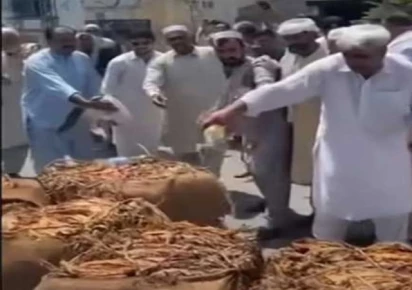
    SWABI: Tobacco growers in Swabi took to the streets on Monday, protesting against what they described as unfairly low purchase prices for their crop and demanding enforcement of the official rate announced by the Pakistan Tobacco Board. The protest was held outside the Swabi Press Club, where farmers were joined by political and social activists as well as members of the local community. Growers said they were being offered as little as Rs350 per kilogram, despite the official rate of Rs750 per kilogram. During the demonstration, tobacco grower and former ANP district general secretary Haji Tameez Khan burned around 500 kilograms of his tobacco crop to highlight the financial pressure facing farmers. Speaking at the protest, Khan said the cost of producing tobacco had reached nearly Rs750 per kilogram, making offers of Rs350 to Rs400 per kilogram unsustainable for growers. He said farmers had already suffered substantial losses in the previous season and were now struggling to clear debts owed to labourers and suppliers. Khan said tobacco was a major cash crop and generated significant revenue for the cigarette industry, yet farmers remained uncertain about receiving a price that covered their production costs. He warned that continued failure to address the issue could lead more growers to adopt similar forms of protest. The protesters also criticised the Pakistan Tobacco Board and tobacco companies for failing to resolve the pricing dispute. They called on the authorities to ensure that tobacco-buying companies adhere to the officially approved rate and protect farmers from losses. National Awami Party district chairman Masood Jabbar said tobacco was a key source of income for Swabi’s farming community. He warned that failure to address growers’ grievances could lead to wider protests across the district, with more farmers expected to join future demonstrations.

  • |

    Pattaya Mayor Outlines Disease Surveillance Policy and Motivates Disease Response Team at Workshop

    PATTAYA, Thailand – On July 24th, 2026 at 10:00 a.m., Pattaya City Mayor Poramese Ngamphichet chaired a policy briefing for motivating members of the city’s Surveillance and Rapid Response Team (SRRT) in their work on disease surveillance, prevention and control. The session formed part of a practical workshop for knowledge exchange on preventing and controlling […]

Leave a Reply

Your email address will not be published. Required fields are marked *