hlun solo8217s death
| | | | |

Hlun Solo’s Death Devastates Fans, We Explain Why He Was The Exact Opposite of Most Influencers and YouTubers and Why He Was So Beloved by Thais

Thailand/Georgia

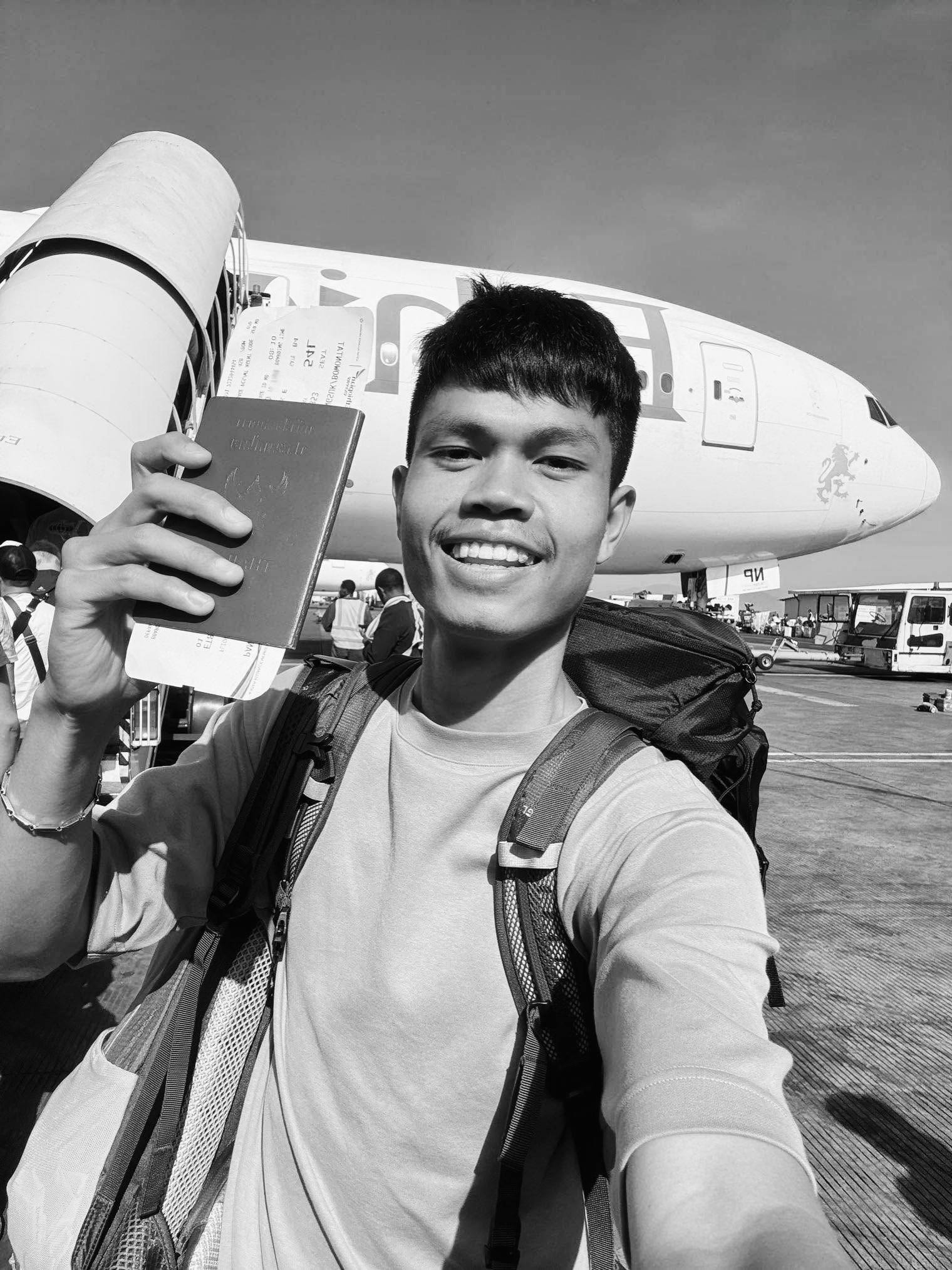
His real name was Bowornthat Pengsuk, born in 1999 in Kalasin province in northeastern Thailand, he grew up in modest circumstances. After his father died, he was raised primarily by his grandmother, who focused on education and practical values. He attended local schools that offered scholarships and support, then worked factory jobs in Bangkok, earning around 300 baht (roughly $8–10) a day for long shifts, while applying for further opportunities. He secured a full scholarship to study political science at Chulalongkorn University, one of Thailand’s top institutions, and graduated around age 24. Throughout university he held multiple side jobs (tutoring, handing out flyers, online sales, campus gigs) specifically to save for travel.

With roughly 300,000 baht in savings, he began serious solo backpacking. He focused on budget travel, often averaging under 1,000 baht (about $30) a day, favoring longer stays in lower-cost countries and shorter ones in expensive ones. Over several years he visited more than 50 countries, including destinations that are rarely featured in mainstream travel media or that carry higher perceived risks: Somalia, Afghanistan, Iran, Pakistan, Burundi, Madagascar, and others. His style was practical and observational: documenting daily realities, local interactions, transport, food, and the logistics of moving independently rather than curated luxury experiences.
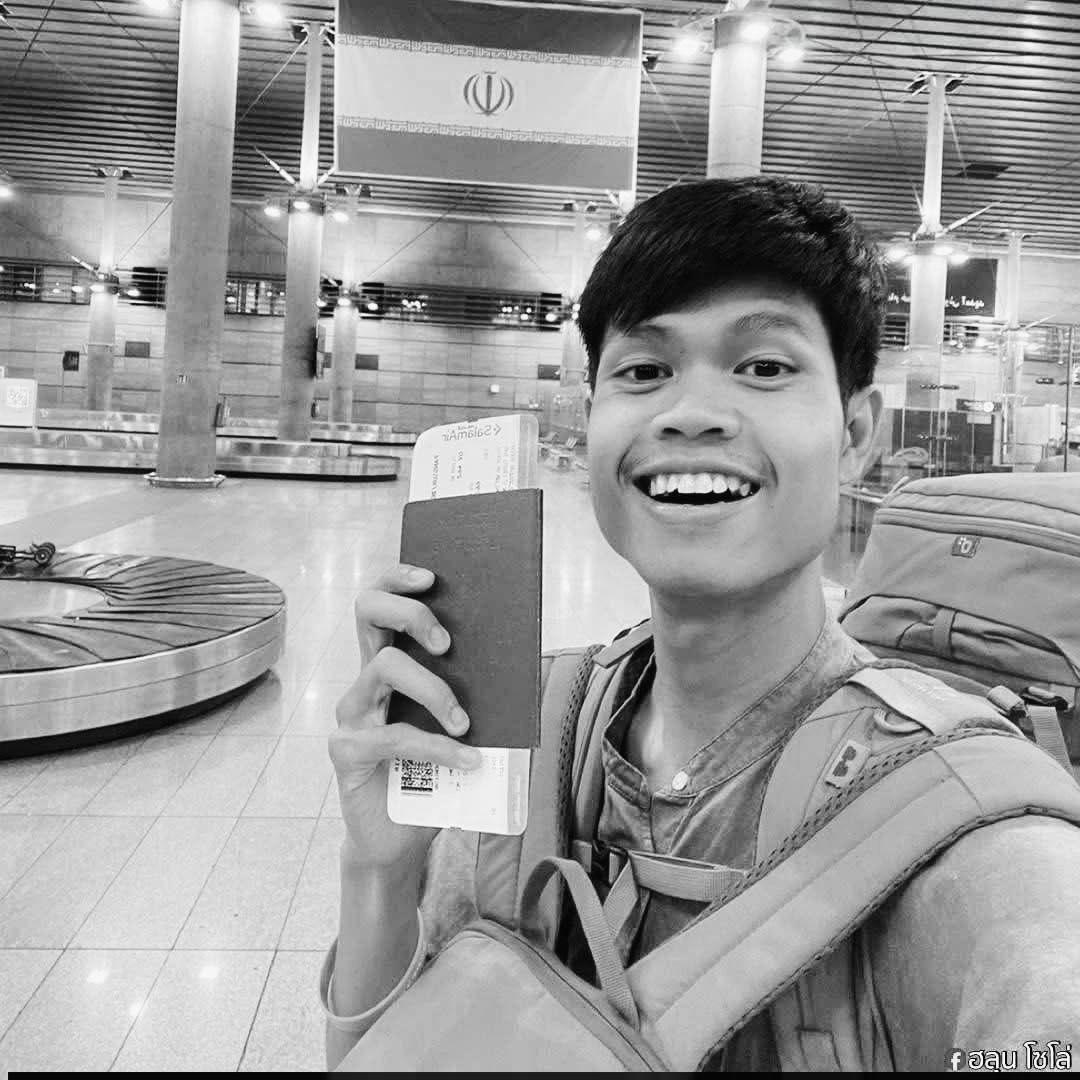
He shared this on Facebook (around 2.5 million followers), YouTube (roughly 900,000–950,000 subscribers), and TikTok. The content was straightforward, vlogs of him navigating unfamiliar places alone, offering tips grounded in actual experience, and focusing on the discipline required to make the lifestyle possible. He started the channels hoping the material would be useful to others; the audience response showed it was.

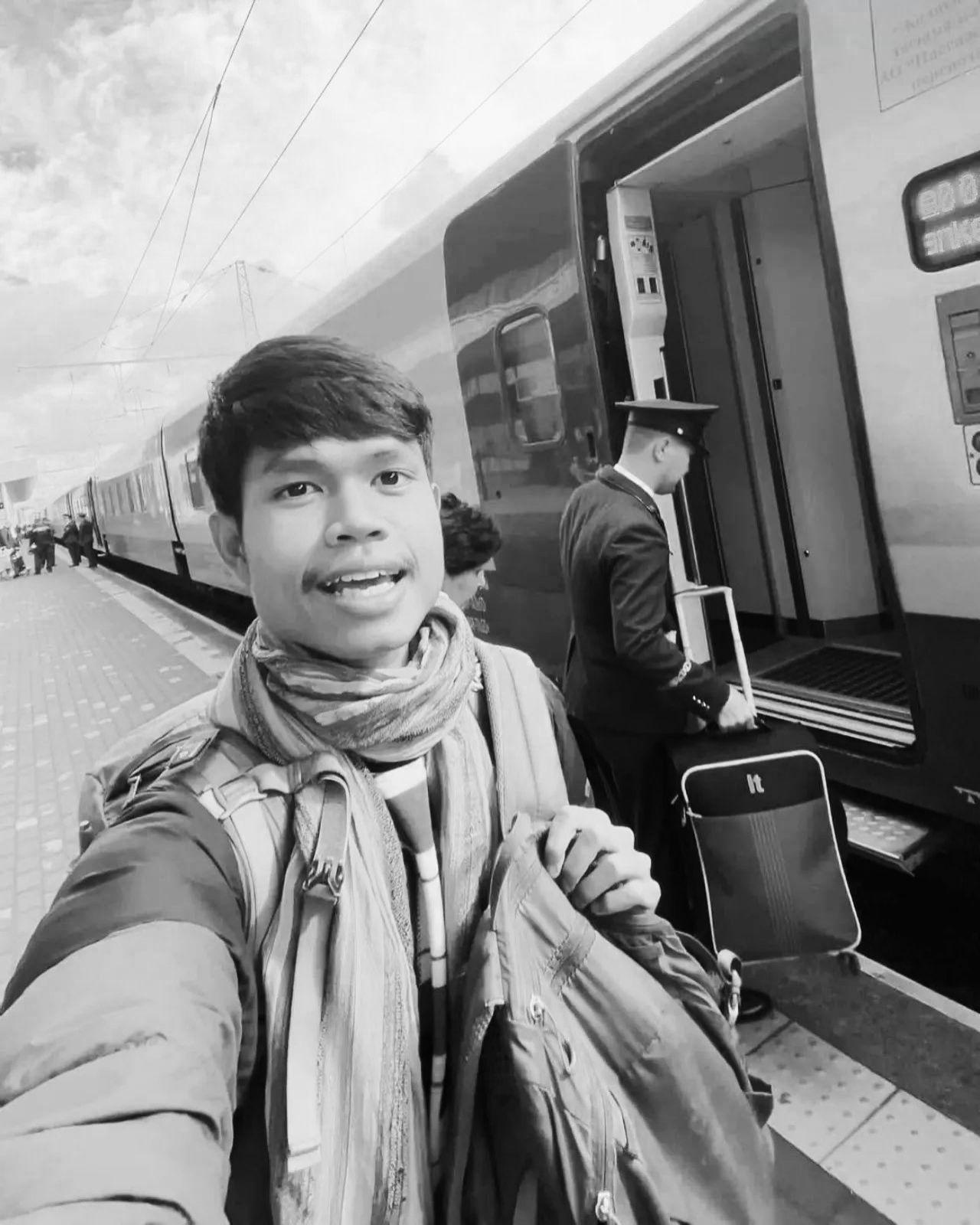
In early July 2026 he traveled to Georgia to film more material. His family last heard from him on July 13th. After more than two weeks of silence, his brother publicly appealed for information. On July 29th, Georgian authorities confirmed he had been found dead in a hotel room in Tbilisi. Police opened an investigation into the circumstances, which were described as unclear; the cause of death had not been publicly detailed at the time of reporting. Thai officials coordinated with local authorities on the search and subsequent arrangements.
Many people outside Thailand, and plenty inside it, approach YouTubers and streamers with skepticism, and for good reason. The ecosystem is full of creators who manufacture conflict, chase trends for algorithm hits, stage “challenges” that waste resources or endanger others, or turn their platforms into continuous displays of wealth, status symbols, and consumption. Some specialize in flexing cash, cars, hotels, or curated perfection that feels disconnected from ordinary life. Others generate irritation through noise, entitlement, or content that prioritizes shock over substance.

Hlun Solo operated differently. His appeal rested on the opposite qualities. He came from a background of real constraint, factory wages, scholarship dependence, careful saving, and treated travel as something achievable through discipline rather than inherited advantage or sponsorship spectacle. The videos showed the unglamorous parts: basic lodging, local transport, the effort of navigating language and logistics alone. He went to places where the story was not “look how exclusive this is” but “here is what daily life looks like and how one person can move through it on limited means.” The tone was generally practical and low-key rather than performative or self-aggrandizing.

Viewers responded to the combination of genuine difficulty overcome and useful information shared. His story illustrated that a relatively ordinary starting point in rural Thailand, combined with persistence, could lead to extensive independent travel. That resonated with people who found luxury travel content alienating or unattainable. He was not selling an aspirational fantasy of endless leisure funded by invisible money; he was showing a method and a mindset. The destinations themselves, often outside the usual tourist circuits, added a sense of curiosity and quiet courage without descending into reckless thrill-seeking for views.

In short, he occupied a space closer to documentary-style personal travel reporting than to the influencer archetype that prioritizes brand deals, drama, or conspicuous consumption. For an audience wary of the latter, that distinction matters. His following grew because the material felt grounded and transferable rather than designed primarily to provoke envy or engagement farming.

His death, still under investigation, cut short a career that many Thai viewers regarded as inspirational precisely because it avoided the excesses that make other online figures easy to dismiss. For English-speaking readers encountering him for the first time, Hlun Solo represents a reminder that not every large online audience is built on the same formula. Some are built on consistent, low-key demonstration of what is possible when someone treats exploration as a craft rather than a performance.

Similar Posts

  • |

    Israel accused of AI influence campaign

    Israel allegedly spent tens of millions of dollars on a digital campaign aimed at shaping how artificial intelligence systems respond to questions about the war in Gaza. The report claims that Brad Parscale, a former campaign manager for US President Donald Trump, and his company, Clock Tower X, secured a $46.5 million contract from the Israeli government to create an online network promoting Israeli viewpoints. The campaign reportedly sought to influence AI platforms such as ChatGPT, Claude, Gemini and Perplexity. According to documents cited in the report, Clock Tower X created hundreds of articles on websites covering the Gaza war, Israel’s military operations and US-Israel relations. The strategy focused on producing large amounts of online content that search engines could index and AI systems could later use when generating answers. The report described the approach as a form of “LLM poisoning,” in which coordinated online content attempts to shape the information that large language models encounter during web searches, data collection or training. Websites reportedly linked to the campaign, including Allyvia.org, FactSignal.org and Paxpoint.org, published material supporting stronger US-Israel military cooperation, defending Israel’s actions in Gaza and disputing allegations against the Israeli military. Drop Site News also reported that some AI-powered services have already referenced content from the network. In one test, Perplexity reportedly cited Allyvia.org in response to a question about US military cooperation with Israel, while Microsoft’s Copilot also referenced websites associated with Clock Tower X. The report further claimed that content from the network entered Common Crawl, a widely used archive of web pages that developers and researchers rely on to build and train AI systems. The 10 websites allegedly connected to Clock Tower X appeared in Common Crawl records hundreds of times between January and June, potentially increasing their visibility to AI systems and influencing future AI-generated responses.

  • | |

    55-year-old security guard missing in Lahore, Kidn…

    A private company security guard has reportedly gone missing from Lahore’s Nasirabad area, after which police registered a case of alleged abduction. Authorities have started an investigation to trace the missing man and determine the circumstances surrounding his disappearance. According to police officials, the case was registered on the complaint of the missing security guard’s daughter. The missing person has been identified as 55-year-old Ijaz Hussain, who was working as a security guard at a private company. In her statement to police, the guard’s daughter said that her father was unwell and had gone to Gulab Devi Hospital to get medicine and have tea. However, despite efforts to locate him, the family was unable to find any information about his whereabouts. Following the complaint, police registered a case and began collecting details as part of the investigation. Officials said that efforts are underway to trace the missing security guard and identify any possible suspects involved in the incident. Police teams are reportedly reviewing available information and taking necessary steps to find clues regarding the disappearance. Authorities have assured the family that the matter is being investigated and all possible measures are being taken to locate the missing man. Cases involving missing persons require immediate action, as early investigation and evidence collection can play an important role in determining the facts. Police officials have encouraged anyone with relevant information about the incident to cooperate with investigators. The investigation into the alleged abduction remains ongoing, and further developments are expected as police continue their efforts to recover the missing security guard and establish what happened.

  • | |

    Iran rejects Hormuz plan as US intercepts missiles

    WASHINGTON: Regional tensions intensified on Wednesday after Iran rejected Oman’s proposal for jointly managed shipping routes in the Strait of Hormuz, while the United States said it intercepted multiple Iranian ballistic missiles allegedly launched towards American forces in the Middle East. Iranian Deputy Foreign Minister Kazem Gharibabadi said Muscat had proposed dividing the Strait of Hormuz transit route equally between Iranian and Omani territorial waters. However, Tehran instead suggested that shipping passing through Iranian waters should remain under its control, while Oman would oversee only part of the route on its side. He warned that if Oman declined the proposal, the strategic waterway would remain closed. The Strait of Hormuz is one of the world’s busiest maritime corridors and a vital route for global energy exports, making any disruption a significant concern for international trade and regional security. Meanwhile, the US Central Command announced that its forces had intercepted several ballistic missiles launched by Iran in what Washington described as an attempted surprise attack on US military personnel stationed in the Middle East. Although the exact target was not disclosed, Iranian state media reported that the Islamic Revolutionary Guard Corps (IRGC) had fired missiles at a US military base and a Central Command facility in Jordan, claiming the strikes were retaliation for recent American actions against Iranian interests. US President Donald Trump said diplomatic contacts with Tehran had shown positive signs but warned that military action could resume if negotiations failed to produce results. Iran, however, denied reports suggesting it was preparing to restart direct talks with Washington. The conflict has also spilled into neighbouring countries. Jordan confirmed that its air defence systems intercepted five missiles entering its airspace early Wednesday, marking the third consecutive day of aerial threats against the kingdom. No casualties or property damage were reported. In response to the escalating crisis, Gulf nations intensified diplomatic coordination. Saudi Foreign Minister Prince Faisal bin Farhan held separate discussions with his counterparts from Qatar, Kuwait and Bahrain, with all sides stressing the importance of reducing regional tensions and ensuring freedom of navigation through the Strait of Hormuz and the Bab al-Mandeb Strait. The ministers also condemned attacks attributed to Iran and its allied armed groups. The Gulf Cooperation Council (GCC) strongly criticised repeated attacks on Saudi Arabia, describing them as a serious violation of the kingdom’s sovereignty and a threat to regional stability. GCC Secretary-General Jasem Mohamed AlBudaiwi reaffirmed the bloc’s full support for Saudi Arabia and urged stronger regional cooperation to prevent further escalation. The European Union also expressed concern over the deteriorating security situation. EU foreign policy chief Kaja Kallas discussed Gulf tensions with Iranian Foreign Minister Abbas Araghchi, calling for renewed diplomacy while also raising concerns over Iran’s military support for Russia and the temporary detention of two French diplomats in Tehran. China appealed for restraint, urging all parties to resolve disputes through dialogue while safeguarding freedom of navigation in international waterways. Beijing reiterated its support for peaceful solutions and respect for the sovereignty of regional states. Separately, Iran’s IRGC Navy announced that it had intercepted and halted three oil tankers in the Strait of Hormuz after the vessels allegedly ignored official warnings. Iranian authorities did not disclose the ships’ identities or provide further details regarding the alleged violations. Iran also rejected accusations linking it to projectiles fired at targets inside Saudi Arabia from other countries, insisting that attributing every attack on US interests in the region to Tehran was a serious miscalculation. The latest developments highlight growing instability across the Gulf, with military confrontations, diplomatic efforts and concerns over maritime security continuing to shape one of the world’s most sensitive geopolitical flashpoints.

  • | |

    JI threatens nationwide shutdown over petroleum le…

    Jamaat-i-Islami (JI) Emir Hafiz Naeemur Rehman has warned the government that his party could expand its ongoing protests into a nationwide wheel-jam and shutter-down strike if the petroleum levy is not abolished. Speaking at a press conference in Islamabad on Thursday, Rehman said the nationwide strike could begin after August 26, following 12th Rabiul Awwal. He said the party would also establish protest camps in different parts of the country as part of its campaign. If the government failed to respond to its demands, he warned that JI could consider marching towards Islamabad on foot. The JI chief said he would address the party’s sit-in in Lahore, while a public gathering was scheduled at its Karachi protest site on Friday. Rehman said rising inflation had placed a heavy burden on ordinary citizens. He criticised the petroleum levy, describing it as an unfair additional charge on consumers. According to him, consumers were paying around Rs80 per litre under the levy. He claimed the charge was originally introduced to support the modernisation of Pakistan’s oil refineries but that the government had collected more than Rs8 trillion through it while spending less than Rs100 billion on refinery upgrades. He called for the immediate abolition of the levy and urged Prime Minister Shehbaz Sharif to reduce petrol and diesel prices by Rs130 per litre. The government recently revised fuel prices, reducing the price of high-speed diesel while increasing the price of petrol. Rehman said the JI’s protests in Lahore, Karachi and Peshawar were gaining support from traders, religious scholars, young people and members of civil society. He said the demonstrations had grown beyond the petroleum levy issue and were now highlighting broader public concerns. He said JI would not attend government briefings as part of negotiations. Instead, he demanded that government representatives visit the protesters and engage with them directly. The JI leader also referred to the party’s previous campaign against independent power producers. He claimed that negotiations following that protest resulted in the closure of several power projects and new agreements that saved the national exchequer Rs3.36 trillion. He called for a review of the remaining independent power producers, arguing that negotiations could help bring down electricity costs within 12 to 18 months. Rehman also criticised the government over the country’s growing debt, taxes and electricity prices. He claimed Pakistan’s total debt had reached Rs98 trillion and urged authorities to reduce reliance on interest-based financing. He called for greater austerity in government spending and suggested limiting official vehicles to engines of up to 1,300cc. The JI emir also criticised what he described as excessive privileges for the political elite while ordinary citizens continued to face rising living costs and taxes. On provincial matters, Rehman accused successive governments in Sindh and Punjab of failing to resolve major economic and social problems. He also criticised Punjab’s education policy and raised concerns over the outsourcing of thousands of schools.

  • | | |

    Nine terrorists killed in Balochistan intelligence…

    More than nine terrorists have been killed in intelligence-based operations in different areas of Balochistan, according to security sources. The operations were conducted under Operation Radd-ul-Fitna 3. Security forces carried out targeted actions after receiving intelligence about the presence and movement of terrorists. A major intelligence-based operation was conducted in the mountainous area between Ziarat and Harnai. Security forces surrounded a suspected terrorist hideout after receiving credible intelligence. The operation resulted in the killing of eight terrorists. Their hideout was also destroyed during the action. Security forces also conducted an operation in Hajika village in Surab district. One terrorist was killed in the operation. According to security sources, the movement of terrorists between Dasht-e-Katai and Hajika had been detected before the operation. Security forces tracked their movement and launched the action after confirming their presence. Weapons and other equipment were recovered from the possession of the killed terrorists. The recovered items included ammunition, magazines, hand grenades, a walkie-talkie, a motorcycle and other material. Security sources said operations against terrorist groups would continue across Balochistan. They said security forces remained determined to eliminate terrorism and establish lasting peace in the province. The latest operations are part of continued efforts to prevent terrorist activities and disrupt militant networks. Security forces have intensified intelligence-based actions to target terrorist hideouts and movements. Federal Interior Minister Mohsin Naqvi praised the security forces for the successful operations. He said the personnel who foiled the terrorists’ plans deserved the nation’s appreciation. Naqvi said the operations reflected the security forces’ commitment to protecting national security. He added that the nation stood firmly with the security forces in the fight against terrorism. The interior minister said operations against Fitna al-Hindustan and Fitna al-Khawarij were continuing. He made it clear that such actions would continue until the threat of terrorism was eliminated.

Leave a Reply

Your email address will not be published. Required fields are marked *