over 200 police
| |

Over 200 Police Officers and Locals Comb Area Near Pattaya in Search for Missing Russian Siblings After Disassembled Motorcycle Found Buried

CHONBURI, Thailand – Authorities have mobilized more than 200 personnel in an intensive search for two missing young Russian siblings after their motorcycle was discovered dismantled and buried near an old cemetery in Banglamung near Pattaya.

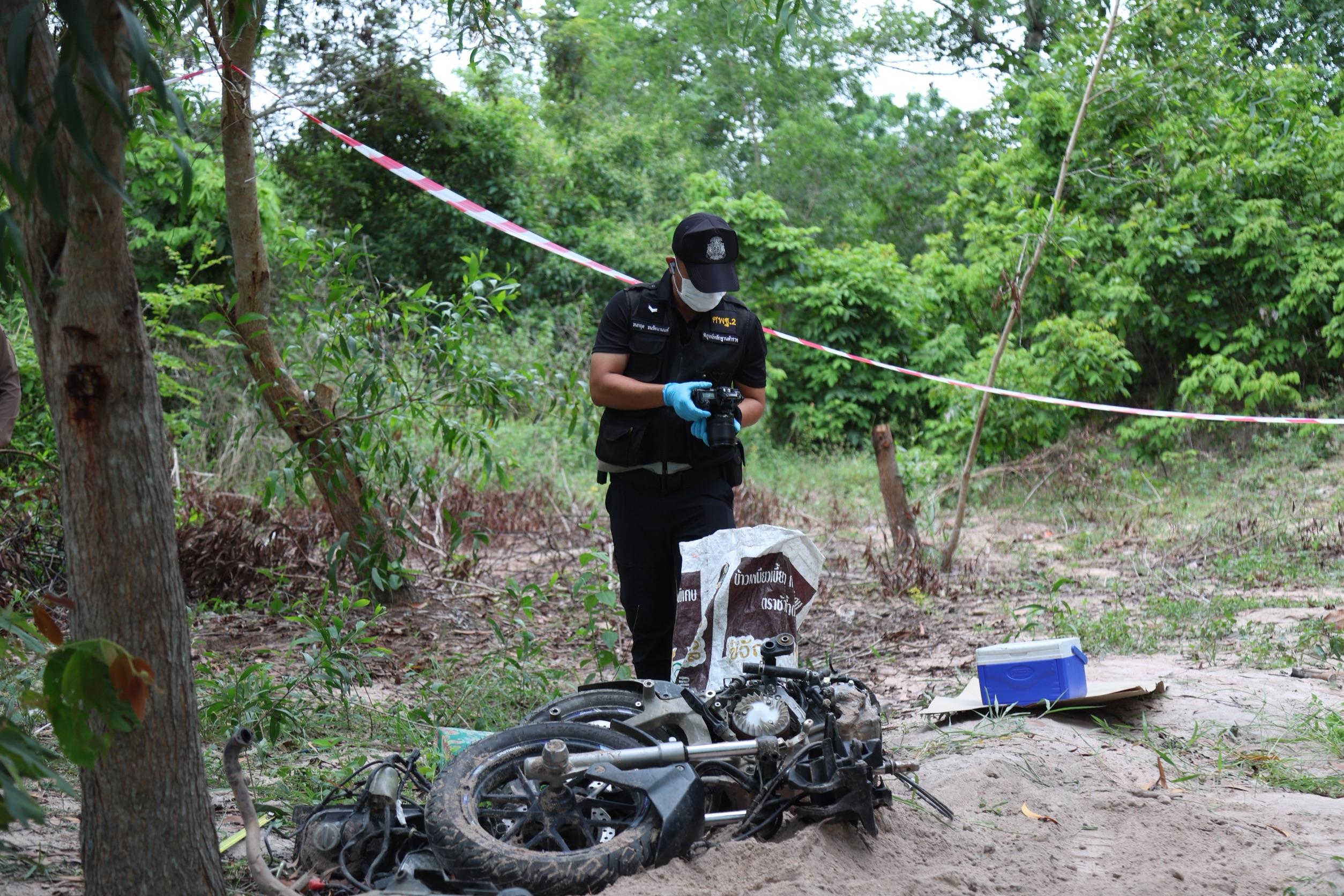
Miss Diana Nazimova, 22, and her brother Mr. Roman Nazimova, 17, were last seen in the early hours of July 26th. Their black-and-gray Honda ADV 150 motorcycle, license plate 4กษ 6379 Chonburi, was found disassembled and buried in two separate pits in the area of the old Thung Luang cemetery near Chak Taeng intersection in Moo 9 in the Huai Yai subdistrict. The site is approximately 200 meters from the Na Jomtien–Map Ta Phut motorway.

Pol. Col. Warawut Nittayawan, superintendent of Huai Yai police station, and Anusak Phiriyamon, district chief of Banglamung, led a large joint operation involving police, administrative officials, village headmen, rescue teams, and local residents. The search focused on the vicinity where the motorcycle parts were recovered.

Investigators from the Chonburi Forensic Science Division examined the scene carefully. In the first pit, officers recovered the front shock absorbers, front and rear wheels, engine, and body panels. About 100 meters away, a second pit contained the frame, seat, handlebars, and additional parts.

Local assistant village headman Niphon Chatsri identified a key person of interest as a man known as “Pong,” who was recently released from prison about two months ago. Residents have expressed fear of Pong, describing him as dangerous and frequently armed. Officials believe he may be connected to the case.

Villagers reported seeing Pong’s close associate, a man known as “Thong,” digging in the area from about 5 p.m. until 11 p.m. the previous day (July 28th). Early the next morning, both men were spotted together at the site before fleeing in different directions upon noticing authorities.

A 24-year-old local resident, who asked to be identified only as “Lek,” told reporters that on one or two recent nights he heard multiple gunshots roughly 500 meters from the burial site. It remains unclear whether the gunfire is related to the disappearance.

Search operations for the siblings continue without success so far. Officials said they will provide further updates as the investigation progresses.

At approximately 4 p.m., Huai Yai police, tourist police, and Bang Lamung district officials surrounded a house in Moo 11, Huai Yai subdistrict, following reports that Pong and Thong were hiding there. Neither man was found. The homeowner stated that the two men arrived at the house around 10 a.m. on July 26th, the same day the siblings went missing, appearing dirty and covered in soil. They stayed for only about an hour before leaving, and no further questions were asked of them at the time.

The search for Diana and Roman Nazimova remains ongoing.

Similar Posts

  • | | |

    AJK PML-N chief rejects PPP rigging allegations, c…

    Pakistan Muslim League-Nawaz (PML-N) Azad Jammu and Kashmir (AJK) President Shah Ghulam Qadir has strongly rejected the Pakistan Peoples Party’s (PPP) allegations of election rigging, describing the claims as “baseless” and insisting that the election results genuinely reflect the will of the people. Addressing party office-bearers and workers from across Azad Jammu and Kashmir, as well as representatives of Kashmiri refugees from Indian Illegally Occupied Jammu and Kashmir (IIOJK) residing in Pakistan, Qadir congratulated supporters on what he described as a decisive electoral victory for the PML-N. He said the party was preparing to establish a stable government in AJK under the leadership of former Prime Minister Nawaz Sharif, Prime Minister Shehbaz Sharif, and Punjab Chief Minister Maryam Nawaz. According to Qadir, the upcoming government will focus on accelerating development projects and improving public welfare across the region. Highlighting the party’s previous tenure, Qadir said that infrastructure and development initiatives undertaken by the PML-N in AJK demonstrate its commitment to serving the people. He added that the party remains determined to address public concerns and deliver essential services at the grassroots level. With the final phase of polling in Rawalakot Division scheduled for August 10, Qadir appealed to party workers to maintain peace, cooperate with election authorities, and help ensure a smooth electoral process. He expressed confidence that voters in Rawalakot would extend their support to the PML-N, predicting a strong electoral performance in the division. Responding to criticism from opposition parties, Qadir reiterated that the elections in Mirpur Division, Muzaffarabad Division, and the 12 refugee constituencies reserved for Kashmiris from IIOJK settled in Pakistan were conducted in a free, fair, and transparent manner. He argued that the election results clearly demonstrated public confidence in the PML-N. Qadir also criticised the PPP, suggesting that the party should focus on addressing governance challenges in Sindh rather than questioning the electoral process in AJK. The meeting was attended by several senior PML-N leaders, including AJK Legislative Assembly member Raja Muhammad Riasat Khan, former minister Sardar Farooq Sikandar, Kashmir Council member Malik Muhammad Hanif, and other party officials, who congratulated Qadir on the party’s performance in the recently concluded phases of the AJK elections.

  • Swedish Fugitive Arrested in Jomtien Under Interpol Warrant

    CHONBURI, Thailand — A 26-year-old Swedish national has been arrested at a condominium in Jomtien and is being prepared for deportation to Sweden after authorities confirmed he is the subject of an Interpol Red Notice for drug possession. The apprehension marks the latest success in a broader crackdown on transnational fugitives seeking refuge in the […]

  • | |

    Tanweer Ahmed urges AI skills, MicroCerts for yout…

    On International Youth Day 2026, American-Pakistani businessman and analyst Tanweer Ahmed called for greater investment in young people and highlighted ACT AI and MicroCerts as key initiatives for preparing Pakistan’s youth for an artificial intelligence-driven global economy. Addressing a Youth and AI Summit at the United Nations, Ahmed said artificial intelligence was transforming education, employment, entrepreneurship, healthcare, public services and almost every aspect of modern economies. He stressed that young people should not be treated merely as beneficiaries of development but as innovators, decision-makers, entrepreneurs and leaders capable of shaping the future. “Talent is everywhere. Opportunity is not,” Ahmed said, emphasising the need to close the gap between young people who have access to advanced technology and those who remain excluded from the digital economy. ACT AI initiative Ahmed placed particular emphasis on ACT AI — Awareness, Competency and Tools Training for Artificial Intelligence — describing it as an important effort to expand practical AI capabilities among Pakistani youth. He said the initiative, associated with the state-owned enterprise AXI, focuses on areas including generative AI, agentic AI systems, AI-powered productivity tools, automation and sector-specific applications. According to Ahmed, one of the initiative’s major strengths is accessibility. Young people from different academic backgrounds can develop AI-related capabilities without necessarily having prior programming or artificial intelligence experience. He said making AI education accessible and free of cost could help ensure that Pakistani students and young professionals are not left behind as the global economy rapidly adopts AI. Ahmed argued that young people should acquire the ability not only to use artificial intelligence but also to understand, question, develop and responsibly apply the technology. MicroCerts to strengthen youth credentials Ahmed also placed strong emphasis on MicroCerts, describing micro-certifications as an important complement to traditional university degrees. He said rapidly changing technology means education can no longer end when a student completes a conventional degree. Young people need flexible opportunities to continuously acquire and demonstrate new, market-relevant skills. According to Ahmed, MicroCerts can provide focused credentials that demonstrate specific competencies and potentially create pathways into employment, freelancing, entrepreneurship, higher education and lifelong learning. He highlighted the importance of making such credentials accessible to young people facing financial or geographical barriers. “The future should not belong only to those who can afford opportunity,” Ahmed said, stressing that skills and credentials should be available to talented young people regardless of where they live or their economic circumstances. From AI users to AI creators Ahmed called for a shift from preparing young people simply to consume AI tools toward enabling them to become AI creators, innovators and responsible leaders. He said technology must be combined with human judgment, ethics and responsibility, warning that artificial intelligence cannot replace compassion, character or the human responsibility to determine the kind of society people want to build. He also called for stronger international cooperation between governments, universities, businesses, technology companies and international organisations to expand AI education and establish credible skills and certification systems. Ahmed said Pakistan could contribute to this global effort through initiatives such as ACT AI and MicroCerts, which he described as mechanisms for developing practical AI capabilities and recognised skills among the country’s youth. He further stressed that the expansion of AI infrastructure must be accompanied by environmental responsibility because data centres, cloud computing and AI systems require significant energy and resources. Addressing young people around the world, Ahmed urged them to learn and question emerging technologies, use AI to solve real-world problems and build businesses and communities with a clear sense of purpose.

  • | | |

    Heavy rains trigger flash floods in Gilgit-Baltist…

    Torrential rainfall has caused widespread destruction across Gilgit-Baltistan, disrupting transportation networks as flash floods and landslides washed away roads, bridges, and vital infrastructure in several districts. The extreme weather conditions have left thousands of people, including tourists, stranded as major routes connecting different parts of the mountainous region were blocked. Authorities have advised travelers to avoid unnecessary journeys due to ongoing risks from floods and landslides. According to officials, several important roads, including the Karakoram Highway, Babusar Road, Baltistan Road, Naltar Highway, Ghizer-Shandur Road, and Astore Valley Road, have been affected by flooding and landslides. The Gilgit-Baltistan Disaster Management Authority (GBDMA) reported that the Karakoram Highway was blocked at multiple locations between Dassu and the Hunza-Nagar areas, creating difficulties for commuters and relief teams. In Skardu’s Rondu subdivision, severe flooding in the Tormak Nallah area damaged important communication bridges, including the Malan Bridge. Several roads, agricultural lands, crops, and other infrastructure were also affected in Kharmang, Ghanche, and Shigar districts. Flooding also disrupted electricity and water supply systems in areas including Astore, Tangir, and Thore in Diamer district. Communication services were affected, while irrigation channels, drinking water schemes, and protective structures suffered damage. Several villages were cut off, and dozens of families were forced to leave their homes due to floods and landslides. Authorities moved vulnerable residents to safer locations and started relief operations in affected areas. The situation also affected Ghizer district, where temporary road closures, localized flooding, and damage to houses were reported. Rising water levels in the Hunza-Nagar River increased risks for residents in Gilgit’s Jutal area. The Pakistan Meteorological Department has forecast further rainfall in the region and warned about the possibility of glacial lake outburst floods (GLOFs) until July 26. The Gilgit-Baltistan Disaster Management Authority, district administrations, Rescue 1122, and other departments are working together to provide emergency assistance. Officials said affected families are being provided with tents, food supplies, medicines, and clean drinking water. Heavy machinery has also been deployed to restore damaged roads, bridges, and other infrastructure. Gilgit-Baltistan Chief Minister Amjad Hussain has directed authorities to speed up relief and rehabilitation activities and remain alert around the clock to protect lives and property. The chief minister also emphasized the need for stronger disaster preparedness, saying that climate change has increased the risks of flash floods, landslides, and glacial lake outburst floods in the region. Authorities are coordinating with the National Disaster Management Authority (NDMA) to improve emergency response measures and monitor glacier-related risks through scientific and technological systems. The ongoing situation highlights the growing impact of climate-related disasters in Gilgit-Baltistan, where communities continue to face increasing threats from extreme weather events.

  • Daring Heist in Phuket Mall: Thief Escapes with 600,000 Baht

    Phuket – Police in Phuket are hunting for a daring thief who staged a late-night robbery inside a well-known shopping mall in the city center, making off with approximately 600,000 baht in cash. The Wichit Police told the Phuket Express that the suspect entered a retail store around 9:00 p.m. on Monday (July 20th) and […]

  • | | | |

    Gen Aamer Raza honoured with Nishan-i-Imtiaz

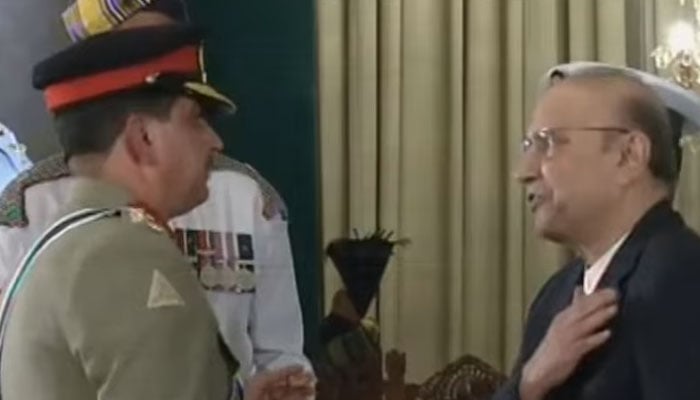
    Commander National Strategic Command General Syed Aamer Raza has been conferred the Nishan-i-Imtiaz (Military), one of Pakistan’s highest military honours. President Asif Ali Zardari conferred the prestigious award on General Syed Aamer Raza during a ceremony held at Aiwan-e-Sadr in Islamabad. President Zardari, Prime Minister Shehbaz Sharif, Field Marshal Syed Asim Munir and the chiefs of the armed services attended the ceremony. Deputy Prime Minister and Foreign Minister Ishaq Dar, the chairman of the Senate, federal ministers and other senior government officials were also present. The ceremony was held to recognise General Aamer Raza’s services and contributions in his capacity as Commander National Strategic Command. General Raza has previously received two major military honours, the Hilal-i-Imtiaz (Military) and the Sitara-i-Basalat. Before his latest appointment, he was serving as Chief of General Staff. The position is considered one of the Pakistan Army’s key operational assignments. During his tenure, he was involved in implementing organisational changes following the 27th Constitutional Amendment. He also oversaw restructuring within the military after last year’s conflict with India. The changes included the creation of the Army Rocket Force Command, as part of efforts to strengthen the army’s organisational and operational capabilities. General Raza began his military career as a cavalry officer. He trained at the Officers Training School and was commissioned into the 6th Lancers in 1988. Over the course of his career, he held several important command positions. These included command of an armoured regiment and an armoured brigade. He also commanded an infantry brigade in South Waziristan. Later, he served as the commander of an infantry division. His senior field appointments included command of Lahore-based IV Corps, one of the Pakistan Army’s major corps formations. General Raza has also held a number of important institutional and staff positions. He headed Heavy Industries Taxila, a major defence production organisation. He also served as Director General of Weapons and Equipment. In another senior assignment, he worked as Chief of Staff at II Corps. His professional background has largely focused on conventional military operations, command responsibilities and force development. Unlike some senior officers associated with Pakistan’s strategic institutions, General Raza has not served in the Strategic Plans Division or the Army Strategic Forces Command. He has also not held an appointment directly linked to the country’s strategic missile programme.

Leave a Reply

Your email address will not be published. Required fields are marked *