abrar hussain tanoli

Abrar Hussain Tanoli honoured with Tamgha-e-Imtiaz for Hajj services

RIYADH: Abrar Hussain Tanoli, a Pakistani financial professional based in Saudi Arabia and a native of Mansehra district in Khyber Pakhtunkhwa, has been honoured with the prestigious Tamgha-e-Imtiaz in recognition of his decade-long services to Pakistani pilgrims and the wider Pakistani community in the Kingdom.

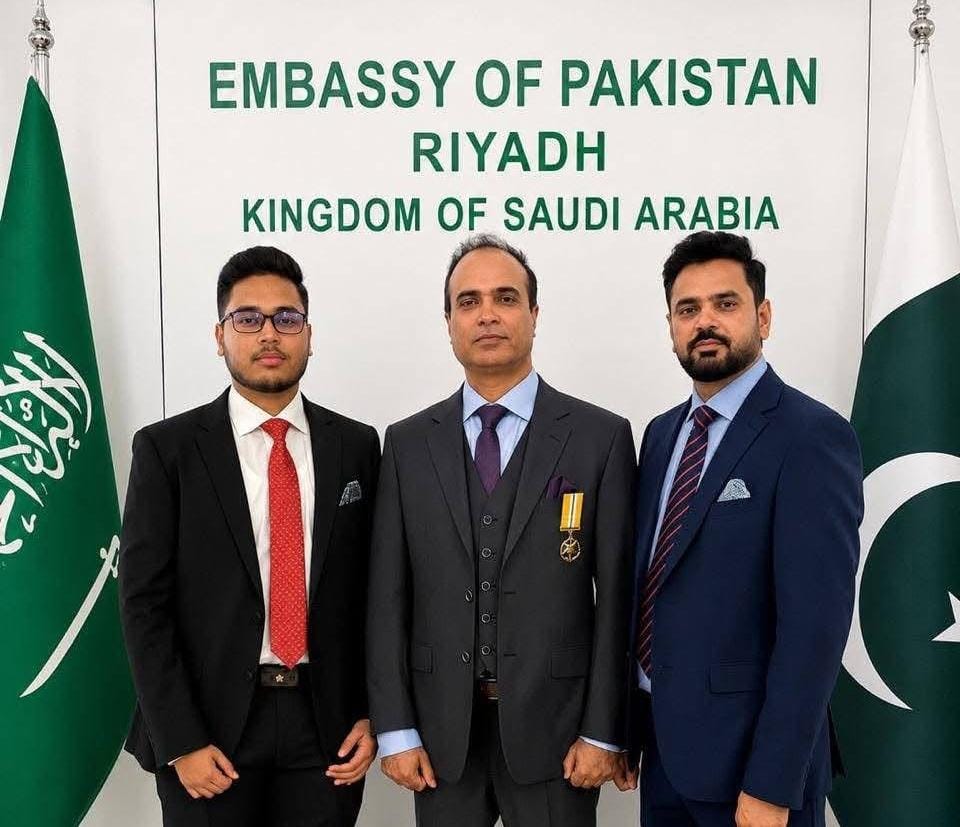
Tanoli was among the Pakistani nationals honoured with the prestigious civil award for outstanding social and community services in Saudi Arabia. The award was presented at a special ceremony organised by the Embassy of Pakistan in Riyadh.

Pakistan’s Ambassador to Saudi Arabia, Ahmed Farooq, presented the award on behalf of President Asif Ali Zardari, recognising Tanoli’s sustained contribution to Hajj volunteerism, community welfare, healthcare initiatives and emergency assistance.

Tanoli is a founding member and Riyadh Coordinator of the Pakistan Hajj Volunteers Group (PHVG), an organisation that has been assisting pilgrims during Hajj since 2011. Over the years, he has played a key role in mobilising, coordinating and training Pakistani volunteers from different parts of Saudi Arabia to facilitate pilgrims during the annual pilgrimage.

The volunteers provide assistance to pilgrims in a range of situations, including guiding them to their designated tents, helping wheelchair users, facilitating movement around Hajj facilities and assisting sick and injured pilgrims in performing Tawaaf-e-Ziyarah while receiving treatment at Pakistan Medical Mission facilities.

PHVG works in coordination with the Pakistani Hajj Mission, Embassy of Pakistan and relevant Saudi authorities. In 2024, the organisation mobilised and trained more than 1,500 volunteers to serve pilgrims, with their services also receiving recognition from Saudi authorities.

Speaking at the ceremony, Ambassador Ahmed Farooq highlighted the demanding nature of the volunteers’ responsibilities during Hajj. He said the volunteers remain engaged around the clock during the five days of Hajj and continue serving pilgrims despite the challenging weather and extreme heat.

He said volunteers assist pilgrims who require medical attention, become separated from their groups or need wheelchairs and other support. Their services, he noted, are not limited to Pakistani pilgrims and are available to anyone who requires assistance.

The ambassador said the Saudi Ministry of Hajj and Umrah also facilitates the volunteers by providing information about pilgrims requiring assistance, reflecting the importance attached to their services during Hajj.

“We are very proud of all three of you for the work that you have done and for the good way that you have carried out these services,” Ambassador Farooq said.

For Abrar Tanoli, the Tamgha-e-Imtiaz represents recognition not only of his Hajj volunteerism but also of a broader record of community service spanning more than a decade.

Alongside his Hajj-related activities, Tanoli has been involved in organising free medical camps for the Pakistani community in Saudi Arabia in collaboration with the Pakistan Doctors Group and the Embassy of Pakistan. These initiatives have helped provide healthcare services to members of the community, particularly those requiring support.

He is also a founding member of the Al-Bir Group, which provides assistance to Pakistanis facing financial difficulties and other social challenges.

Tanoli’s community welfare activities became particularly significant during the COVID-19 pandemic. Through PHVG, he participated in efforts to support Pakistani families stranded or facing difficulties during the crisis. Volunteers helped arrange and distribute food, medicines and other essential supplies to families struggling to meet their basic needs.

His welfare work has also extended to Pakistan, where he continues to support underprivileged families, deserving individuals and communities facing financial hardship.

The recognition has been warmly welcomed by members of the Pakistani community, who described the award as an honour for Tanoli, his family and his native area in Mansehra. Messages of congratulations have highlighted his services to Pakistani pilgrims and the wider community in Saudi Arabia.

The award is also being seen as recognition of the spirit of volunteerism among overseas Pakistanis who devote their time and resources to serving fellow citizens and pilgrims.

Tanoli’s journey reflects a sustained commitment to public service alongside his professional career in the financial sector. From assisting Hajj pilgrims and supporting medical camps to providing emergency relief and helping families facing financial difficulties, his community work has remained an important part of his contribution to Pakistanis in Saudi Arabia and at home.

The Tamgha-e-Imtiaz therefore marks a significant national recognition of Abrar Hussain Tanoli’s long-standing services to pilgrims, community welfare and humanitarian assistance.
Similar Posts

  • | |

    GB to auction hunting permits for Markhor, blue Sh…

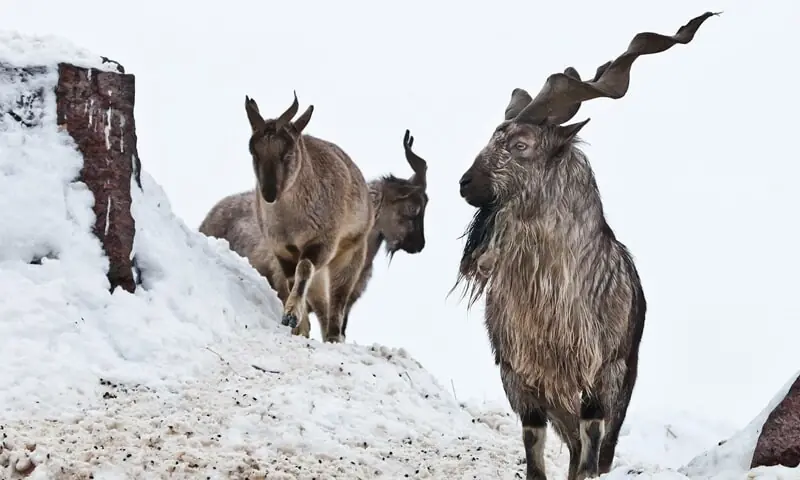
    GILGIT: The Parks and Wildlife Department of Gilgit-Baltistan is set to auction hunting permits for three Astore markhors, 14 blue sheep and 100 Himalayan ibexes under the region’s Trophy Hunting Programme for the 2026-27 season. The base price for an Astore markhor permit has been fixed at $200,000, making it the most expensive permit on offer. The minimum price for a blue sheep permit has been set at $25,000, while permits for Himalayan ibex will start at $11,000. According to the auction notice, four Astore markhors are included in the exportable quota. However, one permit from the previous hunting season has been carried forward, leaving three fresh permits to be auctioned this year. The open auction will take place on September 10 at the Forest Complex in Jutial, Gilgit. The trophy hunting season will begin on October 15, 2026, and continue until April 10, 2027, in accordance with the GB Trophy Hunting Guidelines 2019. Hunting will be permitted only within officially designated conservation areas. The department said the annual hunting quota has been determined following wildlife population surveys conducted by experts. GB Chief Conservator Parks and Wildlife Zakir Hussain said that the department collected approximately Rs350 million through permit auctions last year against a target of Rs550 million. He said several permits remained unused during the 2025-26 season, including those for two Astore markhors, five blue sheep and 10 exportable Himalayan ibexes. The unused permits resulted in an estimated revenue loss of around Rs200 million. According to officials, the cancellation of hunting plans by American and other international hunters was linked to the law-and-order situation following violent protests in Gilgit and Skardu. Local business owners and tourism operators have expressed concern over repeated increases in trophy hunting permit prices. They argue that higher baseline rates have discouraged foreign hunters and negatively affected businesses connected with hunting tourism. Ikram Beg, a local business owner who sells hunting equipment, said the trophy hunting programme was facing significant challenges. He claimed that the Wildlife Department had increased baseline prices by more than 300 per cent over the past two years without adequately incorporating recommendations from major stakeholders. According to Beg, excessive price increases could make Gilgit-Baltistan less competitive in the international trophy hunting market. He warned that declining international participation could reduce government and community revenues while weakening incentives for local residents to participate in wildlife conservation. Beg stressed that trophy hunting should primarily serve as a conservation mechanism rather than simply becoming a source of increased government revenue. He said the programme’s long-term success depends on reasonable pricing, international participation, transparent administration and meaningful financial benefits for local communities. Local stakeholders have called for a review of the permit rates and greater consultation with communities, conservation specialists and industry representatives. They have also demanded transparency and strict adherence to applicable rules and regulations. Although trophy hunting remains controversial internationally, its supporters argue that regulated hunting can generate funds for conservation, discourage illegal hunting and provide financial benefits to communities living near wildlife habitats. In Gilgit-Baltistan, the programme began with community participation in Bar Valley, Nagar, in 1990. Under the existing revenue-sharing model, approximately 80 per cent of licence revenue goes to local communitiesfor wildlife protection and conservation activities. The region’s challenging terrain and harsh weather also make trophy hunting highly demanding. Hunters must navigate steep and rugged mountain slopes while dealing with extremely cold conditions. Gilgit-Baltistan is home to diverse wildlife because of its varied ecosystems and climate. Species found in the region include Marco Polo sheep, ibex, markhor, urial, blue sheep, lynx, snow leopards, brown and black bears, wolves, foxes and golden eagles. However, wildlife experts and conservationists continue to face concerns over illegal hunting, inadequate wildlife management and the effects of climate change, all of which pose long-term threats to the region’s biodiversity.

  • | | |

    ‘Imran could face Morsi’s fate,’ sister warn…

    Pakistan Tehreek-e-Insaf (PTI) founder Imran Khan has expressed fears about his safety and allegedly told his sister that he could face a fate similar to that of former Egyptian president Mohamed Morsi, according to Dr Uzma Khan. Speaking at a press conference in Islamabad, Uzma said she was deeply concerned about her brother’s physical and mental condition following his prolonged confinement in Adiala Jail. She claimed Imran had repeatedly complained about being kept in solitary confinement and said he believed he was being treated inhumanely. According to Uzma, Imran told her that his concerns were not being properly heard by jail authorities. She said he had complained about the lack of human contact and believed that the isolation was affecting his health. Uzma further claimed that a doctor who examined Imran on August 10 attributed his anxiety and high blood pressure to his prolonged solitary confinement. She also said newspapers and television access had only been provided to him for a limited period. The PTI founder’s sister said she attempted to reassure him during their meeting, telling him that people across the country stood with him and that he should remain hopeful. Dispute over hospital transfer Uzma also provided details of the events surrounding Imran’s proposed transfer to Shifa International Hospital. She said she reached Adiala Jail between 8pm and 8:30pm after being contacted by authorities. She waited there with Imran’s physician, Dr Faisal Sultan. According to Uzma, they were later informed that Imran had been taken away, but she was not initially told where he had been taken. She said she was subsequently taken in a vehicle accompanied by a security convoy. After travelling for some time, she was informed that they had reached the Pakistan Institute of Medical Sciences (PIMS). Uzma said she reminded officials that the Supreme Court had ordered Imran’s transfer to Shifa International Hospital. She was reportedly told that he had instead been taken to PIMS for an eye examination. When she eventually met her brother, Uzma said Imran appeared surprised to see her. She told him that he was expected to undergo a comprehensive medical examination at Shifa. She said doctors at PIMS checked his blood pressure and examined his eyes. Dr Faisal Sultan separately said he had been summoned and taken to Shifa International Hospital but was repeatedly given unclear responses when he asked when Imran would arrive. He said he eventually concluded that the PTI founder would not be brought to the hospital. Government seeks review of Supreme Court order The dispute intensified after the federal government approached the Supreme Court seeking a review of its August 18 order concerning Imran’s medical examination and proposed transfer to Shifa International Hospital. The government had earlier filed a review petition, but it was returned after objections were raised by the Supreme Court registrar’s office. The government subsequently refiled the petition after addressing those objections. In its revised plea, the government argued that the August 18 order had been issued beyond the court’s jurisdiction and contained errors of law that warranted reconsideration. The government also relied on the Pakistan Prison Rules, 1978, arguing that the transfer of a convicted prisoner to a hospital is governed by a prescribed legal procedure. It referred specifically to Rule 197, which deals with the mechanism for transferring prisoners for medical treatment. The government further invoked Article 10-A of the Constitution, which guarantees the right to a fair trial and due process. It argued that adequate notice and an opportunity of hearing should be provided to both sides. The government therefore asked the apex court to review and recall its earlier order. Government rejects allegations of non-compliance Information Minister Attaullah Tarar defended the government’s position and rejected claims that the Supreme Court’s directive had been ignored. In a statement posted on X, Tarar said Imran had been taken for a medical examination during the early hours of August 21 under appropriate security arrangements. He said a team of doctors, including specialists in ophthalmology, cardiology and general medicine, examined Imran and declared him medically fit. Tarar said Uzma remained present during the medical examination and treatment process. According to the minister, Imran was subsequently returned to Adiala Jail at around 5am. In another statement, Tarar clarified that the examination was conducted at PIMS and that doctors from Shifa International Hospital were also present. He attributed the decision to use PIMS to security concerns surrounding the route to and area around Shifa International Hospital, which he said had been created by PTI workers. The minister maintained that the government had provided medical facilities to Imran in the past and would continue to do so whenever required. Opposition accuses government of contempt Opposition parties, however, strongly criticised the government’s handling of the matter. Opposition leaders alleged that the Supreme Court’s order had not been implemented in the manner directed and questioned the circumstances under which Imran was separated from his sister and physician. National Assembly Opposition Leader Mehmood Khan Achakzai and Senate Opposition Leader Allama Raja Nasir Abbas criticised the government’s decision and said those responsible should be held accountable. Achakzai questioned the circumstances surrounding the events during the night and described the episode as evidence of wider political problems in the country. Raja Nasir Abbas alleged that the government had effectively disregarded the Supreme Court’s decision by not transferring Imran to Shifa International Hospital as expected. He said the opposition would continue its legal and political struggle over the matter. The opposition leaders also expressed concern about Imran’s health and called for his medical treatment to be conducted transparently. Opposition alliance plans Supreme Court action The opposition’s joint parliamentary party, operating under the Tehreek Tahaffuz Aiyeen-e-Pakistan (TTAP) platform, also held a meeting at Parliament House. The meeting was chaired by Achakzai and attended by Raja Nasir Abbas, PTI Chairman Barrister Gohar Ali Khan, PTI Secretary General Salman Akram Raja, Khyber Pakhtunkhwa Chief Minister Sohail Afridi and other opposition lawmakers. The participants discussed Imran’s health, the Supreme Court order, the country’s political

  • | |

    PTI can’t escape Mall Road attack: Talal

    Minister of State for Interior Talal Chaudhry has said that the Pakistan Tehreek-e-Insaf (PTI) leadership cannot distance itself from the recent shooting incident on Rawalpindi’s Mall Road. Addressing a press conference in Islamabad, Chaudhry said the incident was deeply regrettable and alleged that the man involved had links with the PTI and had remained in contact with the party’s leadership. According to the minister, the suspect had previously stayed at the Khyber Pakhtunkhwa House and had met members of the PTI leadership. He also allegedly carried the party’s flag and appeared in social media videos showing attacks on security forces. Chaudhry said a security personnel was injured when the attacker opened direct fire on Mall Road. He argued that the PTI leadership could not simply deny responsibility by claiming that the individual had no connection with the party or suffered from mental health problems. “If his mental condition was not stable, why did he attack a security official instead of his own family or a party leader?” Chaudhry asked. He questioned why the individual had allegedly been placed at the frontline of protests if the party had no association with him. The minister accused the PTI of promoting a political culture based on confrontation, violence and hatred. He said the government had repeatedly urged the party to avoid spreading hostility and unrest among young people. Chaudhry linked such politics to previous violent incidents, including the events of May 9 and November 26, and warned that continuing to promote hatred could lead to further incidents. He also criticised what he described as vandalism and arson carried out in the name of politics. He questioned what the PTI had achieved for the people of Khyber Pakhtunkhwa during its long period in power in the province. “Setting things on fire and creating disorder is not politics,” he said, adding that such actions neither served the party nor the province. Referring to future political activities, Chaudhry warned that similar incidents could occur again if party workers continued to be exposed to what he described as hateful and inflammatory rhetoric. He also criticised PTI founder Imran Khan’s statements and speeches, alleging that they had contributed to political polarisation and unrest. Chaudhry further accused PTI supporters of disrespecting security personnel and national heroes, including through social media posts targeting the country’s fallen soldiers. The minister said investigations into the Rawalpindi incident were progressing and that authorities were conducting a transparent inquiry. He assured that the findings would be made public once the investigation was completed. Chaudhry said the government would not allow Pakistan to be pushed into further political instability and warned that those involved in attacks would face legal consequences.

  • | | |

    Naqvi’s remarks backed administrative reforms, s…

    ISLAMABAD: Interior Minister Mohsin Naqvi’s recent remarks about Pakistan’s governance system reflected ongoing discussions on improving administrative efficiency through the creation of new provinces or administrative units, according to informed sources. Naqvi made the comments while addressing the Pakistan Economic Summit 2026 on Thursday. During his speech, he described the country’s governance system as “broken” and urged political parties to develop a consensus on the issue of creating new provinces. His remarks triggered widespread debate among political leaders, analysts and journalists, with many questioning the message behind his statement. According to sources familiar with the matter, the minister’s comments should not be viewed as criticism of the federal government or as a sign of differences within the state institutions. Instead, they said the remarks were aimed at highlighting the need for administrative reforms to improve governance and ensure better delivery of public services. Speaking at the summit, Naqvi said the existing governance structure was no longer capable of addressing Pakistan’s growing challenges. He warned that unless major reforms were introduced, the country would continue discussing the same problems even after another 10 years. The interior minister stressed that Pakistan needed a long-term solution rather than temporary measures. He said the issue of creating new administrative units should be placed before the people so that a national consensus could be developed through public debate. Naqvi also referred to the prime minister’s reported long working hours, saying that working 18 to 20 hours a day reflected commitment but could not permanently solve structural governance problems. He said such efforts were similar to dealing with emergencies instead of addressing the root causes of the country’s administrative challenges. His remarks immediately sparked political speculation in Islamabad. Some observers interpreted the statement as an acknowledgment that the current governance model was not delivering the desired results. Others suggested the comments reflected dissatisfaction with the existing administrative structure. Some political analysts also linked the statement to speculation about differences between the civil government and the military establishment. However, informed sources firmly rejected that interpretation. A source with knowledge of the matter said there was no disagreement between Islamabad and Rawalpindi regarding the issue. The source emphasized that Naqvi’s speech was focused solely on promoting the idea of administrative reforms through the establishment of additional administrative units. According to the source, the purpose of the remarks was to encourage discussion among policymakers, political parties and the public about whether Pakistan should adopt a new administrative framework to improve governance across the country. Observers believe supporters of the proposal argue that Pakistan’s existing provincial structure has become too large and complex to effectively manage the country’s administrative and development needs. They maintain that smaller provinces or administrative units could bring government institutions closer to the people, improve service delivery, strengthen local administration and make governance more efficient.

  • | |

    Pakistan completes 3-0 clean sweep against South K…

    Pakistan’s national hockey team secured an impressive 4-3 victory over South Korea in the third Test match to complete a dominant 3-0 clean sweep in the Pakistan-South Korea Hockey Test Series. The thrilling encounter was played at the Naseer Bunda Hockey Stadium in Islamabad under the supervision of the Pakistan Hockey Federation (PHF). The final match of the series showcased Pakistan’s determination and fighting spirit. South Korea started the game aggressively and took an early lead through Kim Hyung Jin in the 10th minute. The visitors maintained their advantage throughout the first half, going into the break with a 1-0 lead. Pakistan responded brilliantly in the second half with an outstanding comeback. Hayat Zakaria leveled the score in the 32nd minute, giving the home side much-needed momentum. However, South Korea quickly regained the lead when Yang Ji Hoon scored in the 33rd minute. The contest remained highly competitive as Pakistan continued to attack. Rana Waheed Ashraf equalized in the 45th minute before Kim Yong Bok restored South Korea’s advantage in the 50th minute. Refusing to give up, Pakistan displayed remarkable resilience as Abdul Rehman scored in the 55th minute to make it 3-3. Just two minutes later, Shahid Hanan netted the winning field goal in the 57th minute, completing an unforgettable comeback and sealing a 4-3 victory. The win marked Pakistan’s third consecutive success against South Korea in the Test series, highlighting the team’s growing confidence and improved performances. The clean sweep is expected to boost the morale of the national squad as it prepares for upcoming international competitions. Federal Ombudsman Naveed Kamran Baloch attended the match as the chief guest and appreciated the exciting contest as well as the commitment shown by both teams. At the closing ceremony, Pakistan Hockey Federation President Mohiuddin Ahmad Wani presented a commemorative shield to the chief guest. Several prominent hockey personalities, including PHF Development Committee Chairman Olympian Hassan Sardar, Selection Committee Chairman Olympian Samiullah Khan, and Pakistan Sports Board Director General Yawar Hussain, were also present at the event. Pakistan’s impressive performance throughout the series reflects the team’s positive progress and offers renewed hope for the revival of the country’s rich hockey tradition. The comprehensive 3-0 series victory serves as an encouraging sign for Pakistan hockey and demonstrates the squad’s ability to compete at a high international level.

  • | |

    Dar, Araghchi discuss region, plan Pakistan visit

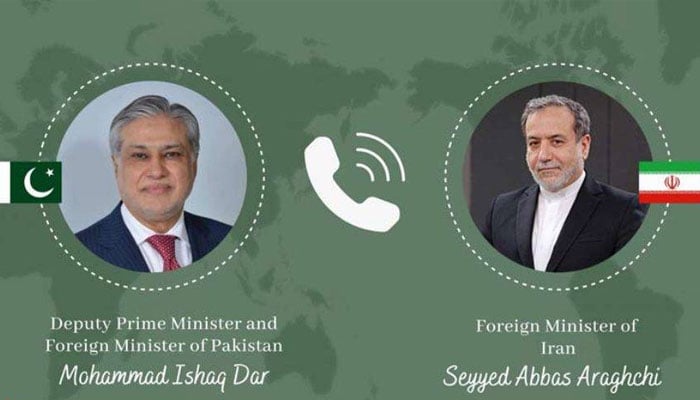
    Deputy Prime Minister and Foreign Minister Ishaq Dar has invited Iranian Foreign Minister Abbas Araghchi to visit Pakistan at the earliest during a telephone conversation focused on strengthening bilateral ties and discussing the evolving regional situation. According to the Foreign Office, the two foreign ministers held detailed discussions on a wide range of issues of mutual interest. They reviewed the current state of Pakistan-Iran relations and reaffirmed their commitment to maintaining close diplomatic engagement and cooperation. During the conversation, Dar extended a formal invitation to his Iranian counterpart to undertake an early visit to Pakistan. The proposed visit is expected to provide an opportunity for both countries to further enhance political dialogue and expand cooperation in areas of mutual interest. The two leaders also exchanged views on recent regional and international developments. Their discussions covered issues affecting peace, security and stability in the region, as both countries continue to coordinate on important diplomatic matters. Special attention was given to the deteriorating situation in occupied East Jerusalem. The foreign ministers expressed concern over the rising tensions and discussed the latest developments in the occupied Palestinian territories. They emphasized the need for continued diplomatic efforts to reduce tensions and promote regional stability. The telephone contact reflects the regular high-level engagement between Islamabad and Tehran as both governments continue consultations on regional affairs and bilateral cooperation. Pakistan and Iran share close historical, cultural and economic ties, and both countries have maintained regular diplomatic contacts to strengthen cooperation in political, economic and security sectors. Officials said the two sides agreed to remain in close contact on matters of mutual concern and continue consultations on regional and international issues. They also reaffirmed their commitment to promoting stronger bilateral relations through sustained dialogue and high-level exchanges.

Leave a Reply

Your email address will not be published. Required fields are marked *