ali gul pir
| |

Ali Gul Pir pushes back against parenting advice

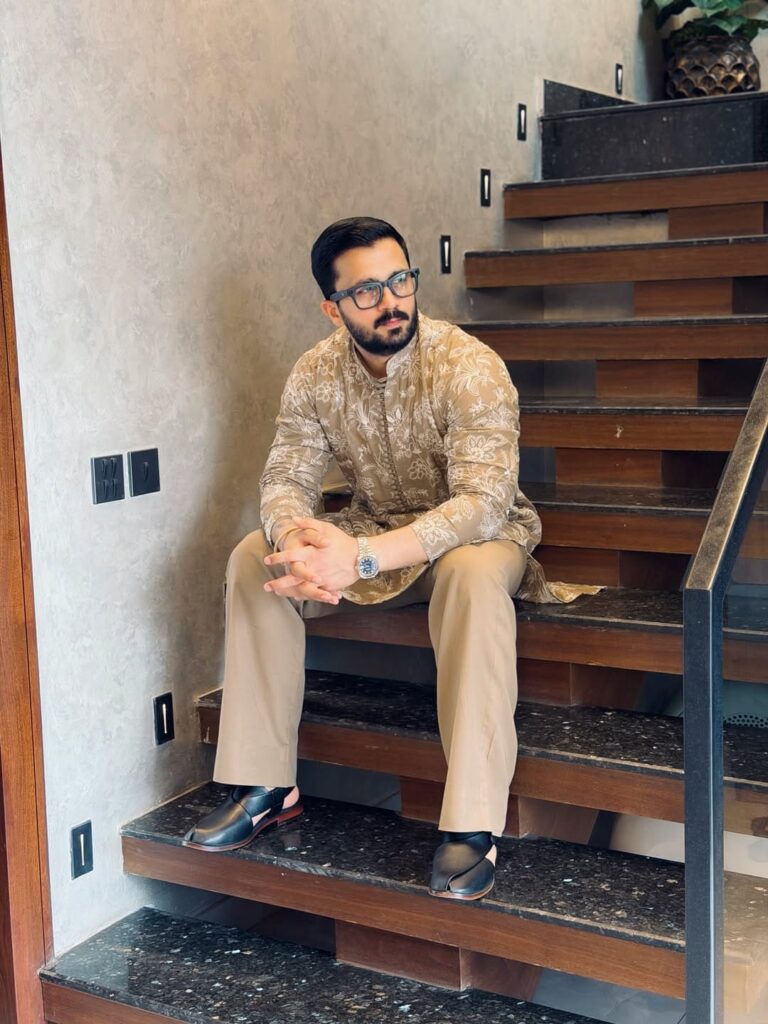
Comedian Ali Gul Pir has spoken about the unsolicited advice new parents often receive in Pakistani society, using his trademark humour to challenge some of the common warnings directed at mothers and fathers.

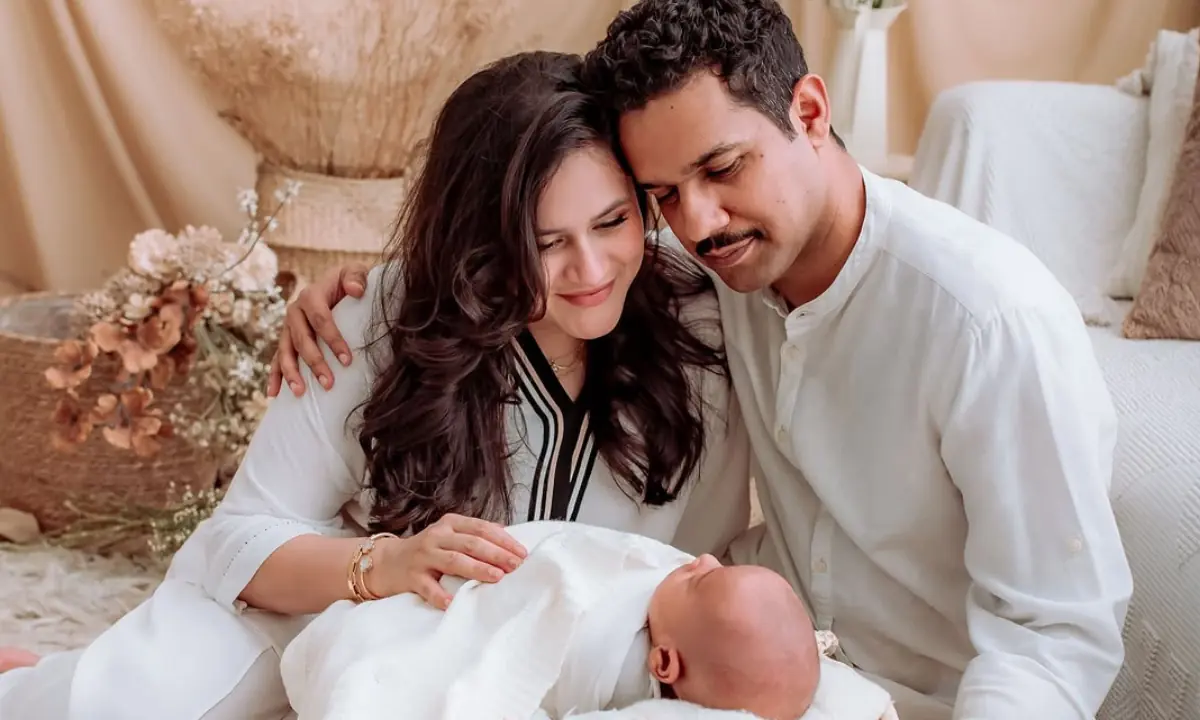
Gul Pir recently became a father to a baby boy, Salar, with his wife, Dr Azeemah Nakhoda. He used a social media reel to share his thoughts on the comments and expectations that often surround first-time parents.

One of the first issues he addressed was the common warning that having a baby means saying goodbye to a good night’s sleep forever. Gul Pir questioned the idea, saying babies eventually settle into routines and begin sleeping for longer periods.

He also rejected the belief that becoming parents means their personal lives are effectively over. According to the comedian, every family has a different experience and the difficulties faced by one set of parents should not automatically be presented as the future of every new parent.

Gul Pir also spoke about another common belief — that children and pets should not live together. As a dog owner, he disagreed with the idea and referred to research suggesting that children who grow up around pets may develop fewer allergies and greater compassion.

The comedian then turned his attention to questions about having a second child. He joked that people who constantly ask about expanding their family should not expect to receive personal updates.

His response also highlighted how intrusive questions can become overwhelming for new parents. Gul Pir suggested that couples should be allowed to make decisions about their families without constant outside commentary.

He also criticised people who comment on women’s bodies shortly after childbirth. Gul Pir questioned why women are often expected to quickly return to their pre-pregnancy appearance.

His broader message was about the pressure Pakistani society can place on people whenever they enter a major new phase of life.

Gul Pir said big life changes naturally involve sacrifices. However, he argued that people should focus on the positive experiences that come with those changes instead of constantly warning others about what they might lose.

The comedian welcomed his first child, Salar, last month. He publicly announced the arrival of his son on Father’s Day by sharing family photographs and pictures of the gifts he received for the occasion.

Similar Posts

  • | |

    Khuzdar triple murder rocks Balochistan Assembly

    The alleged murder of a young woman’s fiancé, uncle and father in Balochistan’s Khuzdar district over a marriage dispute echoed in the Balochistan Assembly, where lawmakers demanded the immediate arrest of the main suspect. During the assembly session chaired by Speaker Abdul Khaliq Achakzai, Provincial Minister Ali Madad Jatak informed the house that the suspect allegedly killed the woman’s fiancé after his marriage proposal was rejected. He said the victim’s uncle was also murdered, while the woman was allegedly abducted before being recovered by police. According to the minister, the woman’s father was later shot dead after her video statement highlighting security threats surfaced on social media. Jatak told the assembly that despite two days having passed since the father’s killing, a first information report (FIR) had not yet been registered. He expressed concern over the delay in legal proceedings and called for immediate action against the accused. Opposition Leader Younis Zehri warned that if the suspect was not arrested, the provincial chief minister and the home minister would be held responsible. In protest over the lack of progress, both Zehri and Provincial Minister Ali Madad Jatak staged a walkout from the assembly. Member of the Provincial Assembly Maulana Hidayatur Rehman also voiced serious concern over the incident and demanded the resignation of the provincial home minister. He claimed that those responsible for the crime were widely known and criticised the prevailing law and order situation in the province. Responding to the criticism, Home Minister Zia Langove assured lawmakers that the government was in contact with the affected family and that police had been directed to arrest the suspect without delay. The speaker instructed the Inspector General of Police, the Deputy Inspector General and the Khuzdar district police chief to ensure the suspect’s arrest within two days. He also sought daily progress reports on the investigation before adjourning the assembly session until August 28.

  • | |

    Pakistan, Jordan express deep concern over escalat…

    Deputy Prime Minister and Foreign Minister Senator Ishaq Dar and Jordanian Foreign Minister Ayman Safadi held a telephone conversation on Tuesday to discuss the worsening humanitarian and security situation in the Palestinian territories, expressing deep concern over the continued escalation of violence in Gaza and the occupied West Bank. According to Pakistan’s Foreign Office, the two leaders reviewed the latest developments, focusing on the ongoing Israeli military operations, intensified airstrikes, ground offensives, and the deteriorating conditions faced by Palestinian civilians. They emphasized the urgent need for international efforts to reduce tensions and prevent further loss of life. During the discussion, both foreign ministers strongly condemned repeated incursions by Israeli settlers and far-right groups into the Al-Aqsa Mosque compound in occupied East Jerusalem. They also criticized restrictions imposed on Palestinian worshippers, describing such measures as a violation of the sanctity and religious significance of one of Islam’s holiest sites. Dar and Safadi agreed that actions affecting the Al-Aqsa Mosque compound not only inflame tensions on the ground but also undermine regional stability and diminish prospects for a peaceful resolution to the long-standing conflict. They stressed the importance of respecting the historical and legal status of the holy site and ensuring freedom of worship for Palestinians. The conversation also focused on diplomatic efforts aimed at addressing the crisis. The Jordanian foreign minister briefed Ishaq Dar on Jordan’s proposal to convene a meeting of Arab and Islamic countries to review the rapidly evolving situation and coordinate a collective diplomatic response. The proposed gathering is expected to explore ways to strengthen international engagement, promote humanitarian assistance, and support efforts to achieve a peaceful settlement. Both leaders agreed that close coordination among Muslim and Arab countries remains essential in responding to the ongoing crisis. They emphasized the importance of maintaining diplomatic momentum to encourage dialogue and prevent further escalation in the region. Foreign Minister Ayman Safadi acknowledged Pakistan’s consistent role in advocating for regional peace and stability. He appreciated Islamabad’s diplomatic efforts and expressed hope that ongoing international initiatives would contribute to reducing tensions and creating conditions conducive to lasting peace. During the call, Ishaq Dar reaffirmed Pakistan’s unwavering support for the legitimate rights of the Palestinian people. He reiterated Pakistan’s long-standing position that a just, comprehensive, and durable peace can only be achieved through a negotiated political solution based on international law and relevant United Nations resolutions. Dar once again emphasized Pakistan’s support for the two-state solution, calling for the establishment of an independent, sovereign, contiguous, and viable Palestinian state based on the pre-1967 borders. He said East Jerusalem, referred to by Muslims as Al-Quds Al-Sharif, should serve as the capital of the future Palestinian state. The deputy prime minister also stressed the need for the international community to intensify diplomatic efforts to end the violence, protect civilians, and facilitate humanitarian assistance for those affected by the conflict. He underscored that meaningful dialogue and respect for international law remain essential for achieving lasting peace and stability in the Middle East. The telephone conversation reflected the close cooperation between Pakistan and Jordan on issues concerning Palestine and highlighted their shared commitment to supporting diplomatic initiatives aimed at ending the conflict. Both countries reaffirmed their determination to continue working with regional and international partners to promote peace, safeguard holy sites, and uphold the rights and aspirations of the Palestinian people.

  • | | | |

    Makkah pact cements Pakistan-Türkiye-Saudi defenc…

    The newly signed defence agreement between Pakistan, Saudi Arabia and Türkiye marks a significant step towards formalising their longstanding security and strategic cooperation, while establishing a framework focused on collective defence and regional stability. The trilateral partnership brings together three countries with strong historical, political, economic and defence ties. Their cooperation has grown over decades and is now being shaped into a more structured security framework amid a rapidly changing regional environment. The agreement comes as conflicts, emerging security threats and evolving forms of warfare continue to reshape the strategic landscape. Supporters of the pact say closer coordination among the three countries can contribute to regional stability and strengthen their ability to respond collectively to security challenges. Focus on defence and deterrence The agreement has been described as defensive rather than offensive. Its central principle is collective security, under which an armed attack against one member is considered a threat to all three. The arrangement is aimed at strengthening deterrence and reducing the possibility of conflict by demonstrating that aggression against one country could trigger a coordinated response from the other two. The framework is not intended to target any particular country, according to the explanation of the agreement. Instead, it seeks to promote peace, stability and security through stronger defence cooperation. Complementary strengths Pakistan, Saudi Arabia and Türkiye bring different strategic capabilities to the partnership. Pakistan contributes extensive military experience and defence expertise, including experience in managing complex security challenges. Saudi Arabia brings its strategic position in the region, economic strength and political influence. Türkiye contributes advanced defence technology, a growing defence industry and substantial industrial capabilities. Together, these capabilities could provide the three countries with a broader platform for strategic coordination and defence preparedness. The partnership could also encourage greater cooperation in areas such as military coordination, intelligence sharing, defence technology and strategic planning. Pakistan’s regional role The agreement also highlights Pakistan’s expanding engagement with different regional and global actors. Islamabad maintains strategic and diplomatic relations with Saudi Arabia and Türkiye while also engaging Iran, China, the United States and other international partners. This network of relationships could allow Pakistan to play a constructive role in regional diplomacy and help facilitate communication among countries with differing interests. The effectiveness of the trilateral framework, however, will depend on how consistently the three countries translate the agreement into practical cooperation. Not a NATO-style alliance The partnership has also been described as not a Muslim NATO and not a mechanism for providing nuclear protection to its members. Instead, it is presented as a defensive arrangement designed to strengthen collective deterrence and security cooperation while supporting regional peace. The agreement effectively formalises much of the strategic cooperation that Pakistan, Saudi Arabia and Türkiye have developed over the years.

  • |

    Ayeza Khan and Hiba Bukhari dazzle on Independence Day

    Pakistani stars Ayeza Khan and Hiba Bukhari added glamour to Independence Day celebrations with their stunning looks and patriotic spirit. The two popular actresses once again captured the attention of fans as they embraced the national occasion in their own elegant styles. Ayeza Khan, known for her graceful fashion choices and polished appearance, shared her Independence Day spirit with a look that reflected both elegance and love for Pakistan. Her style quickly became a talking point among fans, who praised her for keeping the celebration festive while maintaining her signature sophistication. Hiba Bukhari also joined the celebrations and looked equally radiant. The actress, who has built a strong fan following through her performances in popular Pakistani dramas, brought her own charm to the occasion. Her Independence Day appearance was widely appreciated by admirers, with many taking to social media to celebrate her patriotic look. Independence Day is an important occasion for Pakistanis around the world, and celebrities often mark the day by sharing special photographs, messages and patriotic moments with their followers. Ayeza and Hiba were among the stars who made the occasion even more memorable through their stylish appearances. Both actresses have remained prominent names in Pakistan’s entertainment industry, admired not only for their acting abilities but also for their fashion sense and strong connection with their audiences. Their Independence Day celebrations once again showed how Pakistani celebrities use special occasions to connect with fans. As Pakistan celebrates another year of independence, Ayeza Khan and Hiba Bukhari’s beautiful appearances have added a touch of glamour to the festivities, while their patriotic spirit continues to receive love from fans across the country.

  • |

    Pakistan women announce squads for Asia Cup and Asian Games

    ISLAMABAD: Pakistan have announced their women’s cricket squads for the upcoming Women’s Asia Cup and Asian Games, with Fatima Sana set to lead the national side in both competitions as the team targets success on two major stages. The squads share a core group of players, including Muneeba Ali, Shawal Zulfiqar, Ayesha Zafar, Gul Feroza, Syra Jabeen, Eman Fatima, Eman Nasir, Umme Hani, Tuba Hassan, Nashra Sandhu and Momina Riaz. For the Women’s Asia Cup, Pakistan have added Najiha Alvi, Waheeda Akhtar and Sadia Yousuf to the squad. The Asian Games squad, meanwhile, includes Alia Riaz, Tasmia Rubab and Hamna Bilal. The national team will hold a training camp at the National Cricket Academy from August 16 to 25 as preparations intensify ahead of the two tournaments. The DP World Women’s Asia Cup will be played in Dubai from August 28 to September 13, with all 15 matches scheduled at the Dubai International Cricket Stadium. Matches will begin at 7:30pm Pakistan Standard Time. Pakistan have been placed in Group A alongside arch-rivals India, Thailand and China. Group B features Bangladesh, Indonesia, Sri Lanka and the United Arab Emirates. Pakistan will begin their Asia Cup campaign against Thailand on September 1, before facing India in a highly anticipated contest on September 5 in Dubai. The semi-finals are scheduled for September 10 and 11, while the final will take place on September 13. The team will then turn its attention to the 20th Asian Games, where the women’s cricket tournament will be held in Japan from September 17 to 22. Pakistan are seeded alongside Thailand and will play their quarter-final against Thailand on September 17. All women’s cricket matches will be staged at the Kurogiy Athletic Park in Aichi. If Pakistan advance, they will play the semi-final on September 20 against either Sri Lanka or Malaysia. The bronze and gold medal matches are scheduled for September 22. Pakistan enter the Asian Games with a proud record, having won women’s cricket gold medals at the 2010 Guangzhou and 2014 Incheon Asian Games. With a settled core, emerging talent and Fatima Sana leading both campaigns, Pakistan will hope to turn their preparation into another memorable chapter in women’s cricket. Pakistan women’s squad for ACC women’s Asia Cup  Fatima Sana (captain), Ayesha Zafar, Eman Naseer, Eyman Fatima, Gull Feroza, Momina Riasat, Muneeba Ali Siddiqui (wk), Najiha Alvi, Nashra Sundhu, Sadia Iqbal, Saira Jabeen, Shawaal Zulfiqar, Tuba Hassan, Umm-e-Hani, Waheeda Akhtar. Reserves – Tasmia Rubab, Humna Bilal, Maham Anees, Sadaf Shamas Support Staff Wahab Riaz (coach/mentor), Ayesha Ashar (team manager), Abdur Rehman (spin bowling coach), Umaid Asif (fast bowling coach), Abdul Majeed (fielding coach), Imran Farhat (batting coach), Waleed Ahmed (performance analyst), Moeen (strength & conditioning coach), Dur Samand (Physiotherapist) and Raza Rashid Kitchlew (media manager) Pakistan women’s squad for Asian Games  Fatima Sana (captain), Aliya Riaz, Ayesha Zafar, Eman Naseer, Eyman Fatima, Gull Feroza, Humna Bilal, Momina Riasat, Muneeba Ali Siddiqui (wk), Nashra Sundhu, Saira Jabeen, Shawaal Zulfiqar, Tasmia Rubab, Tuba Hassan and Umm-e-Hani. Reserves – Natalia Parvaiz, Waheeda Akhtar, Sadia Iqbal, Syeda Aroob Shah, Rameen Shamim Support Staff Wahab Riaz (coach/mentor), Ayesha Ashar (team manager), Abdur Rehman (spin bowling coach), Umaid Asif (fast bowling coach), Abdul Majeed (fielding coach), Imran Farhat (batting coach), Waleed Ahmed (performance analyst) and Tehreem Sumbal (physiotherapist) Schedule of Pakistan’s matches at the ACC women’s Asia Cup: (All matches at Dubai International Cricket Stadium; all matches to begin at 7.30pm PKT) 1 September – Pakistan v Thailand 5 September – Pakistan v India 7 September – Pakistan v Hong Kong, China 10 September – semi-final 1 11 September – semi-final 2 13 September – final Pakistan women at Asian Games (All matches at Korogi Athletic Park in Aichi prefecture) 17 September – Quarter-final 4 – Pakistan v Thailand 20 September – Semi-final 1 & 2 22 September – Bronze and Gold Medal matches

  • |

    Pakistan batting woes deepen ahead of crucial second Test

    Pakistan’s batting frailties remain a major concern after a disappointing display in the opening Test against the West Indies, where the visitors failed to chase a modest target and suffered a heavy defeat. Set 211 runs for victory, Pakistan’s batting lineup crumbled under pressure and was dismissed for just 120, raising fresh questions about the team’s ability to perform in challenging conditions. The collapse exposed familiar weaknesses against disciplined fast bowling, with only former captain Babar Azam showing resistance. Remaining unbeaten on 58, Babar stood firm while wickets continued to tumble around him, but his lone effort was not enough to keep Pakistan in the contest. The batting unit struggled to build partnerships from the outset as the West Indies bowlers exploited the conditions brilliantly. The pace attack maintained consistent line and length, making the most of the bowler-friendly surface to keep the Pakistani batters under constant pressure. Regular breakthroughs prevented Pakistan from gaining any momentum during the chase. Apart from Babar’s fighting knock, no batter managed to make a meaningful contribution. Several players got starts but failed to convert them into significant scores, allowing the West Indies to dominate throughout the innings. Poor shot selection and an inability to adapt to the conditions further compounded Pakistan’s problems. The defeat also highlighted the struggles of Pakistan’s middle order. Captain Salman Ali Agha endured a disappointing outing, failing to make an impact in either innings of the Test. His inability to anchor the innings or guide the lower order placed additional pressure on the rest of the batting lineup. Experienced wicketkeeper-batter Mohammad Rizwan also had a forgettable match. Known for his resilience and ability to perform under pressure, Rizwan was unable to deliver in both innings, leaving Pakistan without the stability they often rely on in difficult situations. His lack of runs was a significant setback for the visitors. With the series now moving to Port of Spain, Pakistan will need a much-improved batting performance if they hope to level the contest. The top and middle order must take greater responsibility, particularly against a confident West Indies bowling attack that has already shown its ability to exploit weaknesses. Babar Azam’s unbeaten half-century remains one of the few positives from the defeat, demonstrating that success is possible even in demanding conditions with the right approach. However, Pakistan cannot depend on one batter alone. Greater contributions are needed from senior players, especially Salman Ali Agha and Mohammad Rizwan, if the team is to bounce back. As the second Test approaches, Pakistan face a crucial opportunity to respond. A stronger batting display will be essential if they are to challenge the West Indies, keep the series alive, and restore confidence after a disappointing start.

Leave a Reply

Your email address will not be published. Required fields are marked *