asma abbas faces
|

Asma Abbas faces criticism over boutique promotion outfit

Veteran Pakistani actress Asma Abbas has found herself at the center of social media discussion after a promotional video for her clothing boutique drew criticism over her fashion choice.

Known for her successful acting career, Asma Abbas has long been admired for her versatility and ability to portray a wide range of characters on television. Beyond acting, she has also explored singing and fashion design, keeping herself actively involved in creative pursuits throughout her career. In recent years, she has turned her attention to designing clothing and has been promoting her boutique through social media.

In a recently shared promotional video, Asma Abbas appeared wearing a striped co-ord outfit from her own fashion collection while introducing designs available at her boutique. Although the video was intended to highlight her latest clothing line, much of the online conversation quickly shifted toward her personal styling instead of the collection itself.

The outfit sparked a wave of mixed reactions across social media platforms. While some viewers appreciated her confidence and willingness to wear her own creations, many others expressed disappointment with the overall look. Several users commented that they did not find the design appealing, while others suggested the outfit did not suit her personality or appearance.

Among the many comments circulating online, one user remarked that the outfit looked like something from a second-hand clothing market. Another suggested that people should dress in a way that complements their age and personality. A different commenter criticized the look by saying it did not present the actress in the best possible way.

As is often the case with celebrity fashion, opinions remained divided. Supporters argued that fashion is subjective and that every designer has a unique creative vision. They also pointed out that public figures frequently face harsh criticism regardless of what they wear, especially on social media where opinions spread rapidly.

Celebrity outfits have increasingly become a topic of discussion online, with fans and critics alike closely examining every public appearance. While some fashion choices receive widespread praise, others can quickly become the subject of debate, generating thousands of comments and reactions.

Despite the criticism, Asma Abbas has not publicly responded to the comments surrounding her outfit. She continues to remain active on social media, where she regularly shares updates about her professional projects, television appearances, and fashion venture.

Over the years, Asma Abbas has earned respect for her contributions to Pakistan’s entertainment industry and has built a loyal fan base through memorable performances in numerous television dramas. Her decision to expand into fashion reflects her passion for creativity beyond acting.

The latest online debate once again highlights how celebrity fashion choices often become a talking point on social media, with audiences offering both praise and criticism. Whether admired or questioned, such moments continue to generate engagement and keep public figures in the spotlight.

Similar Posts

  • |

    Congo Ebola outbreak surpasses 1,000 deaths at record pace

    Data from the Ministry of Health in the Democratic Republic of the Congo reveals that the ongoing Ebola outbreak declared on 15 May has killed over 1,000 people in just over two months. This marks the fastest-spreading outbreak of the virus on record, reaching 1,000 fatalities nearly three times quicker than the 2014–2016 West Africa epidemic. As of Tuesday, the country has recorded 2,536 confirmed cases and 1,033 deaths, with the case fatality rate standing at 40 per cent. Unlike the 2014–2016 epidemic driven by the more common Ebola virus, the current surge is caused by the rare Bundibugyo virus, for which there are no approved vaccines or targeted therapeutic treatments. The outbreak remains largely concentrated across five eastern provinces near the Ugandan border. Health officials warn that the peak may still lie ahead due to late patient presentations, initial delays in identifying the strain, and a high proportion of new cases emerging outside monitored contact lists.

  • |

    Houthi attacks kill 38 Yemeni troops, dozens injured

    Houthi missile and drone strikes killed at least 38 Yemeni government soldiers and injured 29 others on Thursday in one of the deadliest attacks in recent years, according to medical sources. The assaults targeted military camps in Marib and Hadramawt provinces, including positions near the Saudi Arabian border. Security officials said one of the missiles struck troops during their morning assembly at a military camp in Marib, causing heavy casualties. Military sources said the attacks hit camps in the Al-Ruwaik area of Marib as well as Al-Abr and Al-Wadiah in Hadramawt. The strikes left dozens of soldiers dead or wounded, with officials warning that the casualty toll could rise as some of the injured remain in critical condition. The latest violence comes as Yemen’s long-running conflict has intensified following recent regional tensions. Last month, the Iran-backed Houthi movement expanded its military actions after renewed hostilities involving Iran and the United States. The group resumed attacks after a period of relative calm, including strikes on government forces and maritime targets. In a separate incident last month, Houthi fighters killed 16 government-aligned soldiers during an attack south of the strategic port city of Hodeidah. Yemen has been devastated by conflict since 2014, when the Houthis seized the capital, Sanaa, forcing the internationally recognised government to relocate. The rebels continue to control much of northern Yemen, while government forces hold large parts of the south. Although a UN-brokered truce reached in 2022 significantly reduced large-scale fighting, the agreement eventually expired, and sporadic clashes have continued. The latest attacks highlight the fragile security situation and raise fears of further escalation in a war that has already claimed hundreds of thousands of lives and created one of the world’s worst humanitarian crises.

  • |

    Shaheen stars as Pakistan Gold storm into Champions Cup final

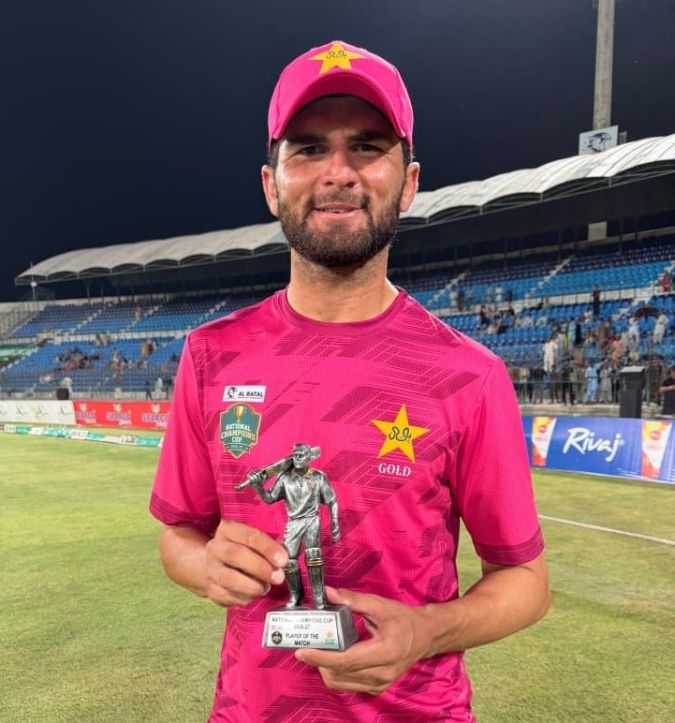
    MULTAN: Shaheen Shah Afridi produced a match-winning bowling performance as Pakistan Gold defeated Pakistan Whites by five wickets to book their place in the National Champions Cup 2026 final at Multan Cricket Stadium. Chasing 173, Gold reached their target in just 28 overs, although they lost five wickets along the way. Haider Ali led the chase with an impressive 69 off 48 balls, smashing seven fours and three sixes in an aggressive innings. The victory was particularly striking because Gold had entered the match after suffering two defeats and sitting at the bottom of the table. Their superior net run rate, however, kept their qualification hopes alive, and they capitalised when it mattered most. Gold faced early trouble during the chase, slipping to 61-3 after 10 overs. Haider then steadied the innings alongside Kamran Ghulam, who contributed 30 from 26 deliveries, including four boundaries. Saad Khan also played a valuable supporting role, scoring a patient 33 off 55 balls as Gold moved steadily towards victory. Mohammad Wasim claimed two wickets for Whites, but his efforts were not enough to stop the chase. Earlier, Whites were bowled out for 172 in 41.4 overs after choosing to bat first. Gold’s bowlers immediately put their opponents under pressure, reducing Whites to 26-2 inside the opening 10 overs. Shahzaib Khan fell for two while Haseebullah Khan managed only three. The situation worsened as Usman Khan was dismissed for three and Saim Ayub departed after scoring 30, leaving Whites struggling at 45-4 in 14.5 overs. Hasan Nawaz provided some resistance, scoring a determined 55 off 74 balls with three fours and two sixes. His efforts helped Whites cross the 150-run mark, but the lower order could not carry the innings further. Shaheen led Gold’s attack with three wickets, while Faisal Akram claimed two. The National Champions Cup is being staged in Multan from August 11 to 18 as part of Pakistan’s 2026-27 domestic season and preparations for the 2027 ODI World Cup. Match 6 – Sparco Paints Pakistan Gold beat UOL Pakistan Whites by five wickets at Multan Cricket Stadium Pakistan Whites 172 all out, 41.4 overs (Hasan Nawaz 55, Saim Ayub 28, Saad Masood 20; Shaheen Shah Afridi 3-26, Mubasir Khan 2-29, Faisal Akram 2-48) Pakistan Gold 173-5, 28 overs (Haider Ali 69 not out, Saad Khan 33, Kamran Ghulam 30; Mohammad Wasim Jnr) Player of the match – Shaheen Shah Afridi (Pakistan Gold) Tournament schedule: (All matches at Multan Cricket Stadium; All matches to begin at 3pm) 11 August – Pakistan Greens beat Pakistan Whites by five wickets 12 August – Pakistan Blues beat Pakistan Gold by six wickets 13 August –Pakistan Whites beat Pakistan Blues by six runs 14 August – Pakistan Greens beat Pakistan Gold by 128 runs 15 August – Pakistan Greens beat Pakistan Blues by 192 runs 16 August – Pakistan Gold beat Pakistan Whites by five wickets 18 August – Final (Pakistan Greens v Pakistan Gold)

  • | | |

    Jamaat-e-Islami storms streets over petrol levy

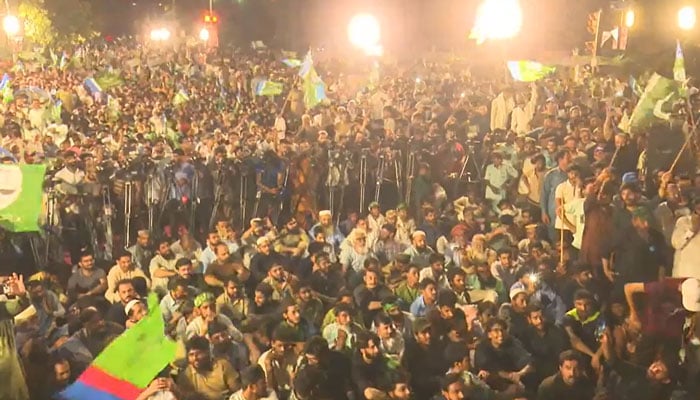
    Jamaat-e-Islami (JI) has staged sit-ins in Karachi, Lahore and Peshawar against the petroleum levy, rising fuel prices and inflation. In Karachi, a JI rally led by Karachi chief Munim Zafar reached Fawara Chowk. The party had announced a sit-in outside the Governor House to protest the petroleum levy. JI workers are moving towards the Governor House from the Sindh High Court. Party activists have been raising concerns over the impact of the petroleum levy and rising fuel prices on the public. Following the sit-in at Fawara Chowk, the road leading towards the Press Club and Arts Council remains open for traffic. Police personnel have also been deployed near the Governor House to maintain security and manage the situation. In Lahore, JI workers staged a sit-in at Faisal Chowk on Mall Road, near the Chief Minister’s House. JI Pakistan chief Hafiz Naeemur Rehman also reached the protest site and joined the demonstrators. The protest in Lahore was led by JI Punjab chief Javed Kasuri and other party leaders. The protesters are demanding relief from rising petroleum prices and the petroleum levy. The party has also criticised the increasing burden of inflation on ordinary citizens. JI leaders have called for measures to reduce the financial pressure faced by the public. In Peshawar, JI workers staged a sit-in outside the Governor House. The protest has resulted in the closure of the road up to the Sadar Khyber Pakhtunkhwa Assembly Chowk. JI Deputy Emir Liaquat Baloch is scheduled to address the protesters in Peshawar. Party leaders are expected to highlight their demands regarding petroleum prices, the levy and inflation. The demonstrations are part of JI’s wider campaign against the petroleum levy and rising prices. The party has announced protests in different cities to pressure the government to provide relief to consumers. JI leaders have argued that increases in petroleum prices affect the prices of transport, food and other essential goods. They have demanded that the government reconsider the petroleum levy and take steps to control inflation.

  • | |

    Arsalan Butt addresses impact of Mamya Shajaffar’s allegations

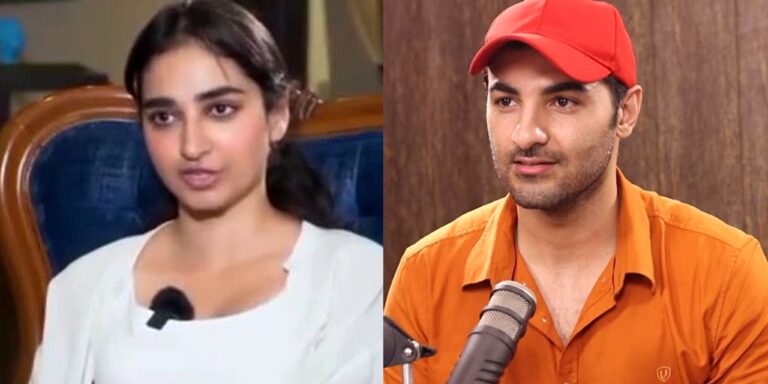
    Pakistani actor Arsalan Butt has spoken out regarding the severe emotional, professional, and personal toll he experienced following serious workplace harassment allegations made against him by fellow actress and model Mamya Shajaffar. ​The controversy originally erupted when Shajaffar appeared as a guest on host Iffat Omar’s digital talk show, Say It All, where she detailed a series of uncomfortable experiences with a co-star identified simply as “Arsalan”. During the interview, Shajaffar described instances where her co-star allegedly made unsolicited remarks regarding her physical appearance, exhibited aggressive behavior during an argument, and attempted physical contact despite her explicit objections. While the initial vague naming prompted social media speculation that pointed toward actor Arsalan Khan, Shajaffar quickly clarified online that her allegations were directed at Arsalan Butt, her co-star from the television drama Meesni. ​Following the viral interview, Butt categorically denied all charges, characterizing the allegations as entirely false, malicious, and damaging to his character. Speaking on the fallout, the actor shared how the immediate public backlash and relentless online commentary deeply impacted his mental well-being, disrupted his professional commitments, and caused distress to his family. Butt expressed disappointment over what he described as a growing culture of bringing sensitive workplace grievances to public talk shows and social media platforms rather than filing formal complaints through proper administrative or legal channels at the time of occurrence. He noted that unproven public claims carry devastating consequences for an artist’s livelihood and reputation. ​Seeking legal recourse, Butt initiated formal proceedings by sending Shajaffar a legal notice demanding an immediate retraction of the statements, the removal of online video clips, and an unconditional public apology. Shajaffar responded by serving a Rs 1 billion counter-notice, asserting that Butt’s legal action was an effort to silence and intimidate her after alleged workplace misconduct. ​After weeks of public and legal hostility, both performers eventually opted to end the dispute through an out-of-court settlement. Facilitated by project director Meer Sikandar alongside industry elders and mutual mediators, the actors signed a joint agreement withdrawing all notices, complaints, and past allegations. The document specified that the resolution did not signify an admission of guilt, misconduct, or liability from either party. ​Reflecting on the ordeal, Butt emphasized the necessity of due process and constructive communication in resolving industry conflicts, acknowledging that while the matter is legally closed, the experience highlighted the extreme volatility of social media narratives in shaping public perception. ​This video is relevant because it provides an in-depth news coverage detailing Arsalan Butt breaking his silence regarding Mamya Shajaffar’s allegations and the subsequent legal notice.

  • | |

    Austria opens police station at house where Hitler…

    Austria has opened a police station inside the house in Braunau am Inn where Adolf Hitler was born, closing out years of debate over how to handle the building’s dark history. The 17th century structure once operated as an inn and served as the birthplace of the Nazi dictator in April 1889. Authorities have now completed a substantial renovation that changed the building’s facade, though managing the site has posed a persistent challenge for Austrian officials determined to prevent it from turning into a destination for neo Nazi pilgrimage. Hitler lived in the building, located at Salzburger Vorstadt 15, for only a few weeks before his family relocated to another address in Braunau. The family left the town permanently when Hitler was three years old. He briefly returned to Braunau in 1938 while traveling to Vienna after annexing Austria into Nazi Germany. Interior Minister Gerhard Karner attended the opening ceremony alongside other local officials, which featured police musicians performing on tuba and other brass instruments. Karner said Austria is taking responsibility for what he called the terrible legacy of the past, adding that although deciding the building’s fate proved difficult, he believes the new police station represents a fresh chapter for the site. He said the building will now stand as a place representing democracy, the rule of law, security, freedom and human dignity. A Catholic police chaplain then blessed two crosses that will hang inside the new station. For decades, Austria’s interior ministry rented the building from its former owner, a local woman named Gerlinde Pommer, paying her generous rent in an effort to keep the property from becoming a site for far right tourism. A local charity used the building for years as a day center and workshop for people with special needs, but the organization had to vacate in 2011 after Pommer blocked planned renovations. She also repeatedly declined to sell the property to the government, leaving the building empty for several years while she and authorities disputed terms. In 2016, Austria’s parliament passed legislation allowing the government to seize the property from Pommer, paying her compensation of 812,000 euros. She later challenged the amount in court, arguing it was too low, but ultimately lost the case. Wolfgang Sobotka, who served as interior minister at the time, suggested the building should be demolished and replaced with a new structure altogether, echoing an earlier proposal from a Russian lawmaker who had offered to purchase the house and destroy it. Both ideas drew significant criticism, with opponents arguing that tearing down the building would amount to denying Austria’s Nazi era history. In 2019, the government unveiled plans to convert the building into a police station and launched an EU wide competition inviting architects to submit design proposals. Officials subsequently spent millions of euros renovating the structure, transforming its appearance dramatically from its earlier state. The building, now painted white both inside and out, features extensive oak woodwork throughout, while an original winding staircase and arched entrance hall have been preserved from the earlier structure. The transformation marks a stark contrast to the building’s condition decades ago, when the Lebenshilfe charity operated a small shop in one of its front rooms. Police Chief Inspector Ludwig Heise said he feels fortunate to work in such a modern facility, noting the additional space compared to previous quarters, though he added that beyond its size, the station functions just like any other police facility in Austria. The reopening marks the culmination of a long and often contentious effort by Austrian authorities to neutralize the symbolic weight of Hitler’s birthplace, transforming a site once feared as a potential magnet for extremist sympathizers into a functioning symbol of the democratic institutions Austria has built in the decades since the Second World War.

Leave a Reply

Your email address will not be published. Required fields are marked *