saif ali khan
|

Saif Ali Khan shares behind-the-scenes details from Aap Ki Izzat

Pakistani actor Saif Ali Khan, who gained recognition after appearing in the reality show Tamasha 4, is gradually making his mark in the television industry. A software engineer by profession, Saif has successfully balanced his career with his passion for acting and singing. He has also built a strong fan following on social media, where more than 466,000 people follow his updates. After making his acting debut in Aap Ki Izzat, the emerging star is now preparing for two more television projects.

In a recent television interview, Saif Ali Khan spoke about his experience of playing a vegetable vendor in Aap Ki Izzat and revealed interesting details about filming one of the drama’s most talked-about train sequences alongside Urwa Hocane.

Although his character appears to be an ordinary vegetable seller at first glance, Saif explained that the role carries much greater importance within the storyline. He said that the drama mainly revolves around four central characters, including Beena, Tabish, the character played by Sania Saeed, and his own role. According to the actor, he immediately understood the significance of the character after reading the script and believed it was much more than what audiences would initially assume.

Saif added that viewers will gradually discover the true impact of his character as the story unfolds. He expressed confidence that every appearance of his character serves a meaningful purpose and contributes directly to the development of the plot.

The actor also discussed his on-screen chemistry with Urwa Hocane, whose character Beena shares an important connection with his role. While fans have been curious about the direction of their relationship in the drama, Saif chose not to reveal any major details.

He said he wanted audiences to experience the story without spoilers, adding that revealing too much in advance would take away the excitement. According to Saif, the relationship between Beena and Behram has several unexpected twists, and viewers will have to continue watching the drama to see how their journey unfolds.

Speaking about one of the drama’s visually striking moments, Saif shared behind-the-scenes details about the train sequence that has attracted viewers’ attention. He revealed that the sequence was filmed during January under extremely cold weather conditions, making it one of the more challenging shoots for the cast and crew.

The actor explained that although a real train and an actual railway station were used for filming, the train itself was stationary during production. Some portions of the sequence were later enhanced using chroma technology to create the illusion of movement and make the scenes appear more realistic on screen.

Saif also praised the production team for their professionalism and dedication throughout the filming process. He credited the crew for carefully executing the technically demanding sequence and ensuring that the final result looked convincing despite the challenges involved.

With Aap Ki Izzat introducing him to television audiences and more projects already in the pipeline, Saif Ali Khan continues to establish himself as one of Pakistan’s promising emerging actors. His latest comments have given fans an interesting glimpse into the hard work that goes into bringing dramatic scenes to life while also increasing anticipation for the upcoming episodes of the drama.
Similar Posts

  • |

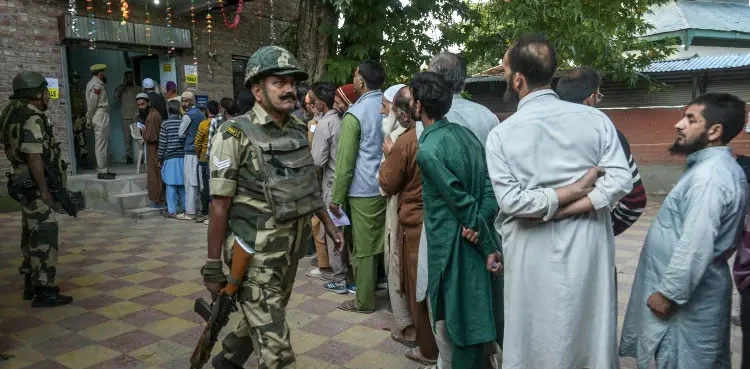
    Kashmir activist and journalist released on bail after years in custody

    Indian authorities have released Kashmiri human rights activist Khurram Parvez and journalist Irfan Mehraj on bail after they spent years in custody under terrorism related charges. Their families confirmed that both men were released from a prison in New Delhi late on Wednesday following a court order, although strict bail conditions will keep them in the capital while their trial continues. Parvez, a well known human rights defender and programme coordinator of the Jammu Kashmir Coalition of Civil Society, was arrested by India’s National Investigation Agency in November 2021 from his home in Srinagar. Mehraj, a freelance journalist who also worked with the same rights organisation, was arrested in 2023. Both men have been charged under India’s anti terrorism laws with allegedly financing terrorism and promoting separatist activities. The legislation allows authorities to detain suspects for long periods without trial and has frequently been criticised by rights organisations for its broad powers. Although they have now been granted bail, their freedom remains limited. Court conditions require both Parvez and Mehraj to stay in New Delhi during the legal proceedings. They are not permitted to return to Kashmir and must arrange their own accommodation in the capital while attending court hearings. Indian investigators had challenged the decision to grant bail, but a higher court upheld the order. The Jammu Kashmir Coalition of Civil Society has spent many years documenting alleged human rights violations in the region. The organisation has published reports on cases involving torture, unlawful killings, enforced disappearances, and unmarked graves in areas affected by the long running conflict. Its work has often drawn international attention and placed it at the centre of debates over human rights in Kashmir. Parvez has received support from several international human rights organisations that have repeatedly called for his release. In 2023, the United Nations Working Group on Arbitrary Detention described his arrest as retaliation for his human rights activities. The UN experts said the detention appeared intended to silence both Parvez and wider civil society efforts in Kashmir. The case has also renewed attention on press freedom in the region. Journalists working in Indian administered Kashmir have reported increasing restrictions, surveillance, and legal action since the Indian government revoked the region’s special constitutional status in 2019. Several media workers and activists say they have faced questioning, arrests, or pressure while reporting on political and security issues. The Indian government maintains that its actions are necessary to combat terrorism and protect national security. Officials argue that the anti terrorism laws are an essential tool in dealing with militant groups operating in the region. However, critics say the legislation has increasingly been used against journalists, activists, and civil society members who peacefully document human rights concerns. Government figures show that more than 3,600 people were arrested under anti terrorism laws in Kashmir between 2019 and 2023. More than half of those detained remain in prison while awaiting legal proceedings, highlighting concerns over lengthy pre trial detention. The release of Parvez and Mehraj has been welcomed by rights advocates, but legal proceedings against both men continue. They will remain in New Delhi under the conditions set by the court until their trial reaches its conclusion. Their cases are expected to remain closely watched by international human rights organisations and press freedom groups as they continue to raise concerns about civil liberties and legal protections in Indian administered Kashmir.

  • | |

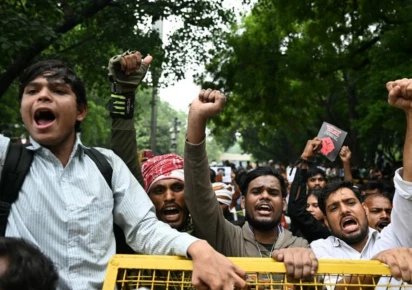
    Pakistani celebrities voice support for India’s student protesters

    A student movement in India demanding accountability and reform in the country’s education system has drawn a wave of public support from celebrities on both sides of the border, with Pakistani and Indian stars alike using their platforms to stand alongside the protesters. The Cockroach Janta Party movement began after allegations emerged of widespread examination paper leaks, and has since grown into a nationwide campaign calling for greater transparency and systemic reform in India’s education sector. While the protests started peacefully, clashes with authorities have since been reported in some areas, drawing even wider attention to the students’ cause. Pakistani actors were among the first from across the border to express solidarity. Azfar Rehman shared a video showing alleged police brutality against the protesters, writing: “Shame on the Indian police and government for such insensitive and inhumane behaviour towards students. It’s really sad how these kids are being insulted and beaten up.” Television host Maya Khan praised the students’ awareness and sense of purpose, describing today’s youth as well-informed and saying she stood with them regardless of nationality. Actor Bilal Qureshi expressed empathy, writing simply: “I can feel the pain of this generation, here and there.” Rapper Talha Anjum addressed the protesters directly in an Instagram Story, telling them he had great respect for their resilience and understood their frustration, urging them to stay strong. From within India’s own entertainment industry, the response has been equally vocal. Salman Khan shared a childhood photograph of himself in a school uniform on Instagram, describing the protests as a peaceful movement for educational reform and expressing sadness at the violent turn some demonstrations had taken. He called the issue of paper leaks a very serious one and urged that the movement stay focused on education rather than be pulled into political territory. Alia Bhatt praised the students’ determination in a heartfelt post, describing them as the generation that will shape India’s future and calling their persistence both heartbreaking and hopeful in equal measure. Preity Zinta also voiced support for the students’ demands while cautioning that peaceful demonstrations should not be taken over by what she described as anti-national elements. She additionally called on the Indian government to begin meaningful dialogue with activist Sonam Wangchuk, who has been on an indefinite hunger strike since the protests began. Rakhi Sawant expressed support and questioned the treatment students had faced during the demonstrations. Other Bollywood names who had already lent their voices to the movement included Diljit Dosanjh, Sonakshi Sinha, Aditi Rao Hydari, Shabana Azmi, Pooja Bhatt, Arijit Singh, actor Imran Khan and Zeenat Aman. Not all celebrities have spoken out, and the silence of some has drawn its own kind of scrutiny. A fan page dedicated to Katrina Kaif reportedly shut down, citing disappointment over her decision not to comment on the protests, a reminder that on certain issues, staying quiet is itself read as a statement by an audience that is watching closely.

  • | | |

    Trump administration plans to revoke visas of fore…

    The Trump administration plans to revoke certain non-immigrant visas held by foreign nationals who have applied for asylum or are currently seeking asylum in the United States. The State Department said Monday that it is working with the Department of Homeland Security to identify people who entered the country as temporary visitors but later filed asylum applications. Officials said the goal is to revoke their visitor visas. The department did not provide an estimate of how many visas could be affected. However, the Associated Press reported that the number could reach 200,000, based on State Department documents and information from two U.S. officials. If carried out at that scale it could become the largest mass visa revocation in U.S. history. The reported policy would affect B1 and B2 visas issued between 2016 and 2026 to people who have sought asylum. B1 visas are generally used for business travel while B2 visas cover tourism and other temporary visits. Visa cancellation would not automatically mean immediate deportation. According to the AP report many people with pending asylum cases could remain in the United States while their cases are processed but they would no longer hold their previous business or tourism visitor status. Deputy Secretary of State Christopher Landau said Monday that the U.S. immigration system has been overwhelmed by what he described as frivolous asylum claims. The State Department previously announced that more than 175,000 visas had been revoked under the Trump administration. The planned visa action is part of President Donald Trump’s broader immigration enforcement campaign which includes visa and green-card cancellations and an expanded deportation effort. The administration says these measures are intended to strengthen national security and enforce U.S. immigration laws. Civil rights and immigrant advocacy groups have criticized the broader crackdown arguing that some government actions threaten due process and free-speech protections. They have also raised concerns about racial profiling and the treatment of minority communities. Trump campaigned in 2024 on promises to reduce illegal immigration. Since returning to office, his administration has also introduced measures affecting legal immigration, including higher costs for some employment-based visa programs. Several immigration policies have faced legal challenges in U.S. courts.

  • | |

    Citizen named Quaid-e-Azam told to appear before N…

    PESHAWAR: The Peshawar High Court has directed a citizen named Quaid-e-Azam to appear before the National Database and Registration Authority (NADRA) Board after his Computerised National Identity Card (CNIC) was blocked. The matter came before the court after the citizen challenged the blocking of his CNIC through a petition. A division bench comprising Justice Waqar Ahmed and Justice Inamullah Khan heard the case. During the proceedings, the petitioner’s lawyer told the court that his client was a businessman. He said the citizen’s CNIC had been blocked and requested the court to intervene in the matter. The lawyer sought relief against the action taken against his client. He maintained that the blocking of the identity card had affected the citizen and required judicial consideration. A NADRA representative also appeared before the court. The Director Legal of NADRA informed the bench that the CNIC had not been blocked without reason. He said the authority had found the petitioner’s identity record suspicious. According to NADRA, the issue required further verification of the citizen’s record and identity documents. After hearing both sides, the court did not immediately order the restoration of the CNIC. Instead, the bench directed the petitioner to appear before the NADRA Board. The court’s direction means that the petitioner will have an opportunity to present his position before the relevant authority. NADRA will then examine the matter in accordance with its verification process. The case highlights the importance of accurate identity records and the procedures followed when questions arise over a citizen’s documentation. The court’s order also provides a formal channel for the petitioner to address the concerns raised by NADRA

  • | |

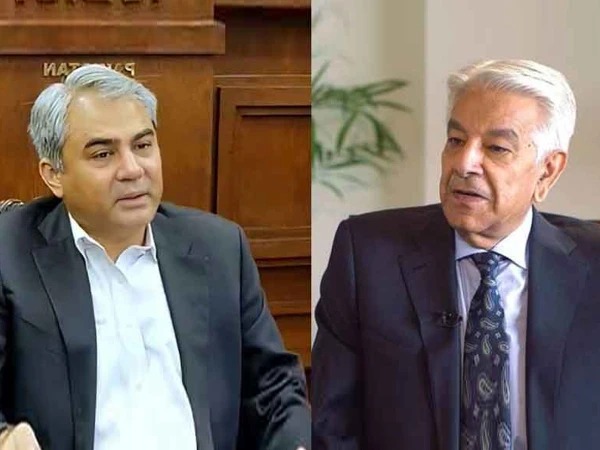
    Khawaja Asif urges Mohsin Naqvi to start system re…

    Defence Minister Khawaja Asif has advised Interior Minister Mohsin Naqvi to begin efforts for changing the system by ensuring the implementation of the National Action Plan and improving performance within his own ministry. Reacting to Mohsin Naqvi’s recent remarks about weaknesses in the existing system, Khawaja Asif said he personally agrees to a large extent with the concerns raised by the interior minister. However, he emphasized that meaningful reforms should be pursued through constitutional and legal platforms, particularly Parliament and the cabinet. In a statement shared on social media, Khawaja Asif said that discussions about major reforms would produce better results if they were presented on parliamentary forums. He added that Parliament provides the appropriate platform for strengthening institutions and bringing sustainable changes through a constitutional process. The defence minister described Mohsin Naqvi as a powerful figure within the government and said that he should use his position to initiate practical reforms. He suggested that the process of system improvement should begin from the Interior Ministry and through the implementation of the National Action Plan. Khawaja Asif said that the evolution of the current system has been influenced by group and personal interests over several decades, and there is now a need to make institutions stronger and more independent. He stressed that reforms should not remain limited to statements but should be translated into practical measures. He further stated that important national issues should be discussed in constitutional forums such as Parliament and cabinet meetings. According to him, involving these institutions would strengthen the system, while discussions outside constitutional platforms may not have the same impact or acceptance. The defence minister also referred to the National Action Plan and said that out of the 13 points highlighted by the military leadership, the points related to the armed forces are being implemented through significant sacrifices. However, he claimed that several points under the responsibility of the Interior Ministry still require progress. Khawaja Asif urged Mohsin Naqvi to take the first step toward system reform by focusing on responsibilities already assigned to his ministry. He said that not only the business community but the entire nation would support genuine efforts aimed at improving governance and strengthening national institutions. He concluded that while discussions on reform are important, real change requires consistent action, institutional cooperation, and progress through established constitutional mechanisms.

  • | |

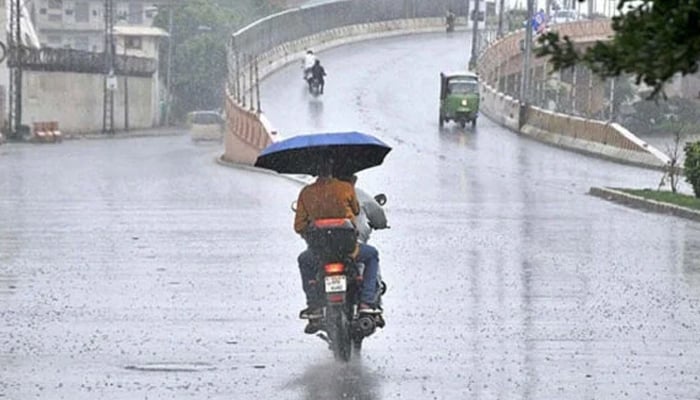
    Where did Karachi get the heaviest rainfall?

    Light rain and drizzle continued in different parts of Karachi during the past 24 hours, bringing pleasant weather to the city. The Pakistan Meteorological Department (PMD) has released fresh rainfall figures, showing that Gulshan-e-Hadeed received the highest rainfall during the latest spell. According to the PMD, Gulshan-e-Hadeed recorded 4.5 millimetres of rainfall, making it the wettest area in the city. Surjani Town received 4 millimetres of rain, while Gulshan-e-Maymar recorded 3.4 millimetres. The M-9 Motorway also experienced rainfall, with 2.3 millimetres recorded during the period. Keamari received 1 millimetre of rain, while light drizzle was reported in several other areas of Karachi. Officials said drizzle was observed in Jinnah Terminal, the Old Airport area, Korangi, North Karachi and several surrounding localities. The rainfall helped reduce daytime temperatures but also increased humidity across the city. The Meteorological Department has forecast more rain and thunderstorms in Karachi during the next 24 hours. Weather officials said light to moderate rainfall is expected in different parts of the city as the current monsoon system continues to influence southern Sindh. Residents have been advised to remain cautious during periods of heavy rainfall, particularly in low-lying areas where water may accumulate. Motorists have also been urged to drive carefully on wet roads and avoid unnecessary travel during thunderstorms. According to the weather forecast, Karachi’s maximum temperature is expected to remain between 33 and 35 degrees Celsius today. During the previous 24 hours, the minimum temperature was recorded at 28.8 degrees Celsius. The PMD said southwesterly sea winds are currently blowing at a speed of 11 kilometres per hour. Humidity in the city has reached 78 percent, creating warm and humid conditions despite intermittent rainfall.

Leave a Reply

Your email address will not be published. Required fields are marked *