bilawal vows fight
| |

Bilawal vows to fight alleged poll rigging in AJK

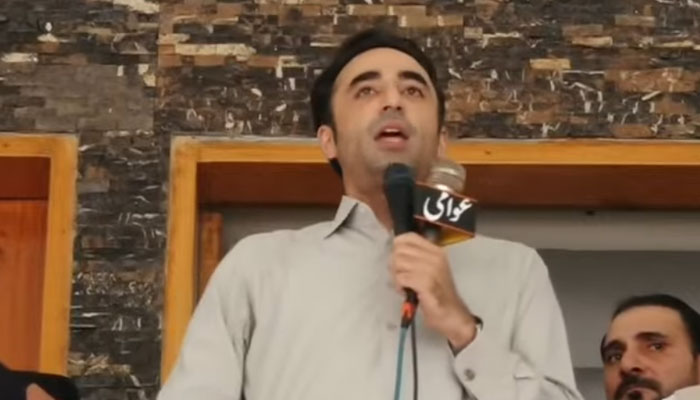
Pakistan Peoples Party (PPP) Chairman Bilawal Bhutto Zardari has accused the Pakistan Muslim League-Nawaz (PML-N), without naming the party directly, of relying on electoral manipulation to gain power and warned that his party would resist any attempt to rig the upcoming elections in Azad Jammu and Kashmir (AJK).

Addressing a PPP workers’ convention in Muzaffarabad, Bilawal said the large turnout at the gathering showed that his party was heading towards victory in the August 2 elections. He urged party workers to remain active and mobilise voters, expressing confidence that the “arrow” — the PPP’s electoral symbol — would emerge victorious.

Bilawal alleged that certain political groups had historically benefited from manipulated elections and now believed they could use the same tactics in AJK. He said the people of Kashmir would not allow such efforts to succeed and that PPP workers and voters would stand against any attempt to undermine the electoral process.

Referring to his party’s political rivals, Bilawal claimed that their rise to power had often followed controversial election processes. He said the PPP had repeatedly faced electoral challenges but continued to win public support despite what he described as unfair political practices.

The PPP chairman also raised allegations of rigging in the constituency of senior party leader Chaudhry Yasin. He claimed that polling agents and workers had reported irregularities at around 30 polling stations, alleging that the stations were occupied and votes were unlawfully cast.

Bilawal said he had evidence regarding the alleged irregularities and called on the Election Commission to order immediate re-polling at the affected polling stations if it had no involvement in the alleged misconduct.

He maintained that the PPP would accept defeat if voters rejected the party through a transparent and fair election. However, he said the party would not accept what he called a “stolen election” and would continue to challenge any result that emerged through alleged manipulation.

Bilawal also pledged to fight for the restoration of what he described as the “stolen seats” of Kashmir and promised to pursue the rights of the people through democratic and constitutional means.

He said the PPP wanted to secure ownership and political rights for the people of AJK through the power of the ballot rather than through armed struggle. He urged voters to support the party’s electoral campaign and vowed that the PPP would continue its efforts to raise the Kashmir issue at the international level.

Bilawal said the Bhutto family and the PPP had worked for three generations to highlight the Kashmir cause globally, adding that his party would continue to advocate for the rights and aspirations of the people of the region through political and diplomatic channels.

Similar Posts

  • | |

    Met Gala 2027 theme sparks backlash after John Gal…

    The Met Gala 2027 is already generating heated debate months before the event, following the announcement that legendary fashion designer John Galliano will be the focus of next year’s Costume Institute exhibition. The Metropolitan Museum of Art and Vogue revealed that the 2027 exhibition will be titled “John Galliano: Horizon,” a decision that has drawn both praise for Galliano’s creative legacy and criticism over his controversial past. (vogue.com⁠) The annual Costume Institute exhibition serves as the inspiration for the Met Gala dress code, making the announcement one of the fashion industry’s biggest events. Organizers described John Galliano: Horizon as a celebration of the designer’s extraordinary impact on fashion, highlighting his groundbreaking work at fashion houses including Givenchy, Dior and Maison Margiela. The exhibition is expected to showcase his most influential collections and explore his decades-long contribution to haute couture. (metmuseum.org⁠) However, the announcement quickly sparked criticism online. Many social media users questioned the decision to honor Galliano because of his highly publicized antisemitic remarks made in 2011. At the time, the British designer was dismissed from Christian Dior after a video emerged showing him making offensive comments. He was later convicted by a French court for public insults based on religion and ethnicity. (bbc.com⁠) Supporters of the exhibition argue that Galliano has spent years rebuilding his career and taking responsibility for his actions. Following the scandal, he publicly apologized, sought treatment for addiction and gradually returned to the fashion industry. His creative revival at Maison Margiela has been widely praised, with many critics describing his recent couture collections as some of the finest work of his career. (vogue.com⁠) Critics, however, believe that celebrating Galliano with one of fashion’s highest-profile exhibitions sends the wrong message. Some argue that his past should not be separated from his artistic achievements, while others say the exhibition should provide broader context rather than simply celebrating his influence. The debate has quickly spread across social media, with fashion enthusiasts, journalists and cultural commentators expressing differing views. (theguardian.com⁠) Despite the controversy, the Metropolitan Museum of Art and Vogue have defended their decision by emphasizing Galliano’s lasting impact on fashion history. They say the exhibition aims to examine his artistic vision and transformative role in modern design rather than overlook the complexities of his career. (vogue.com⁠) As anticipation builds for the 2027 Met Gala, discussions surrounding John Galliano: Horizon are likely to continue. While some view the exhibition as a celebration of one of fashion’s most imaginative designers, others believe it raises important questions about accountability, redemption and the legacy of influential public figures. The conversation has ensured that next year’s Met Gala will be about more than glamorous red-carpet looks—it will also be a reflection of the ongoing debate over art, history and responsibility.

  • | |

    Zardari, Shehbaz hail Prophet’s birth as divine …

    President Asif Ali Zardari and Prime Minister Shehbaz Sharif have extended greetings to the nation and the Muslim Ummah on the occasion of 12 Rabi-ul-Awwal. In their separate messages, they said the day of 12 Rabi-ul-Awwal provides an opportunity to remember the great blessing of Allah Almighty and renew the commitment to the guidance brought by the Holy Prophet Muhammad (PBUH). President Zardari said the birth of the Holy Prophet (PBUH) marked the beginning of a bright era based on faith, knowledge, justice and fairness. He said the Prophet’s exemplary life provides a complete path towards success and salvation. The president said a righteous and stable society can only be built on the principles of justice, piety and strong moral values. He added that true love for the Holy Prophet (PBUH) requires Muslims to make his Seerah and Sunnah an integral part of their practical lives. He urged people to reflect the Prophet’s teachings through their character, conduct and dealings with others. Prime Minister Shehbaz Sharif said the life and teachings of the Holy Prophet Muhammad (PBUH) remain an eternal source of guidance for humanity. He said the Prophet’s teachings promote compassion, justice, tolerance, unity and service to others. These values, he added, provide a strong foundation for building a peaceful and prosperous society. The prime minister urged the nation to renew its commitment to shaping individual character and collective behaviour in accordance with the teachings of Seerat-un-Nabi (PBUH). He called for a collective resolve to work for a peaceful, stable and prosperous Pakistan while promoting unity, brotherhood and mutual respect among citizens. Both leaders stressed the importance of following the teachings of the Holy Prophet (PBUH) and making them part of everyday life.

  • | |

    Beyond faith and defense

    The historical partnership between Pakistan and the Kingdom of Saudi Arabia stands as one of the most enduring bilateral relationships in the contemporary Muslim world. This history is anchored in shared Islamic values and a profound spiritual connection to the holy sanctuaries of Makkah and Medina. This alliance predates the modern era of Saudi oil wealth. The bond was formalized through the landmark Treaty of Friendship in 1951. It established an early blueprint for solidarity, ideological alignment and mutual support during crisis. Over the past seven decades, this connection has expanded from religious affinity into strategic collaboration. The Art of Strategic Neutrality Defense cooperation forms a central pivot of the bilateral relationship. Since the 1960s, the Pakistani military has played an instrumental role in advising, training, and building the infrastructure of the Saudi armed forces. Contingents of Pakistani troops have historically been deployed inside the Kingdom for defensive purposes, notably safeguarding the Holy Mosques during regional upheavals such as Operation Desert Storm. Moreover, thousands of Saudi defense personnel have undergone advanced training in Pakistani military institutions over the decades. However, the military relationship has also required careful navigation.  When conflict erupted in Yemen (2015), Pakistan’s parliament adopted a stance of strict neutrality to avoid inter-state Middle Eastern disputes, particularly while its domestic forces were actively engaged in counter-terrorism campaigns like Operation Zarb-e-Azb. Despite initial friction, Riyadh acknowledged Islamabad’s geopolitical constraints. This mature understanding was demonstrated when former Pakistani Army Chief General Raheel Sharif was appointed to lead the Islamic Military Counter Terrorism Coalition (IMCTC), focusing strictly on combating global extremism rather than taking sides in regional power struggles. Economic Interdependence and Human Capital Beyond defense, economic cooperation has provided crucial stability to Pakistan’s financial landscape. Saudi Arabia has repeatedly acted as a financial cushion. The country delivered multi-billion-dollar bailout packages, balance-of-payment assistance and deferred-payment oil supplies during economic hardship. Historically, this financial dynamic was complemented by administrative leadership. Pakistani economist Anwar Ali served as the Governor of the Saudi Arabian Monetary Agency from 1958 to 1974. He played a pivotal role in organizing the Kingdom’s modern financial infrastructure. Human capital remains another essential driver of this relationship. Over 2.7 million Pakistani expatriates reside and work within Saudi Arabia. Spanning critical sectors such as healthcare, engineering, construction, and information technology, these workers contribute directly to Saudi Arabia’s physical and economic development while generating vital remittance flows that sustain Pakistan’s domestic economy. Furthermore, administrative initiatives like the “Road to Makkah” project and reductions in visa fees have significantly streamlined pilgrimage procedures for millions of Pakistani citizens traveling for Hajj and Umrah. Geo-Economics, Vision 2030, and the Future of CPEC As both nations adjust to global realities, the bilateral partnership is changing into modern geo-economic framework. Saudi Crown Prince Mohammed bin Salman’s Vision 2030. The Kingdom aims to diversify its economy away from oil dependency by investing in global supply chains. A key element of this transformation includes multi-billion-dollar investment commitments in Pakistan. Furthermore, a proposed mega-oil refinery at the deep-sea port of Gwadar.   Ultimately, geopolitical challenges occasionally test bilateral diplomatic alignment. However, the strategic, economic and institutional ties between Islamabad and Riyadh continue to adapt. After all, it’s a dynamic future built on mutual survival and shared prosperity.

  • | |

    New petrol and diesel prices announced for August …

    The federal government has announced a slight reduction in the prices of petrol and high-speed diesel, issuing a fresh notification through the Ministry of Energy (Petroleum Division). The revised fuel prices will come into effect from August 1, 2026, and will remain applicable until August 3, 2026. According to the official notification, the Oil and Gas Regulatory Authority (OGRA) determined the new petroleum product prices under the pricing mechanism approved by the federal government. The latest revision provides modest relief to consumers amid fluctuating international oil prices. Under the new rates, the price of petrol has been reduced by 12 paisa per litre, bringing the new price to Rs. 336.03 per litre. Previously, petrol was being sold at Rs. 336.15 per litre. Similarly, the price of high-speed diesel (HSD) has been cut by 66 paisa per litre. The revised price has been set at Rs. 392.38 per litre, compared with the previous rate of Rs. 393.04 per litre. Although the reductions are relatively small, they reflect the government’s periodic review of petroleum prices based on recommendations from OGRA and prevailing market conditions. Fuel prices in Pakistan are reviewed regularly, taking into account changes in international crude oil prices, exchange rate fluctuations, and applicable taxes and levies. Petrol is widely used by private vehicles, motorcycles, and small transport operators, while high-speed diesel is the primary fuel for heavy transport, agriculture, and industrial machinery. Any change in fuel prices can have a direct impact on transportation costs, inflation, and the prices of essential goods. The Ministry of Energy stated that the revised prices have been implemented in accordance with the government’s petroleum pricing policy. Consumers across the country will pay the new rates at fuel stations from August 1. The latest price adjustment comes as authorities continue to monitor global energy markets and domestic economic conditions. Future revisions will depend on international oil price trends, currency movements, and recommendations made by OGRA under the government’s approved pricing mechanism.

  • | |

    SC seeks lawyers’ appearance for 49 suspects in …

    The Supreme Court of Pakistan has resumed hearing a case seeking the cancellation of bail granted to 49 suspects allegedly linked to the suicide attack on Chinese engineers in Bisham. A prosecution appeal has been filed before the top court. It seeks the cancellation of bail granted to the suspects in the case. During the hearing, Justice Naeem Akhtar asked whether the suspects were regularly appearing before the trial court. The judge also asked whether the suspects wanted to engage lawyers to represent them in the proceedings. The court directed the suspects to appear at the next hearing with their lawyers. It made it clear that failure to comply with the order could result in the cancellation of their bail. The court did not cancel the bail at the latest hearing. Instead, it gave the suspects an opportunity to ensure their appearance and legal representation. The Supreme Court then adjourned the proceedings until August 20. The case relates to the suicide attack in Bisham, where Chinese engineers were targeted. The incident had raised serious security concerns and prompted investigations into those allegedly involved in the attack. The prosecution has challenged the bail granted to 49 suspects and wants the Supreme Court to overturn the relief provided to them.

  • | | |

    PTI lawmakers clash over Imran Khan’s release

    The Pakistan Tehreek-e-Insaf (PTI) Khyber Pakhtunkhwa parliamentary party meeting reportedly turned tense as several dissatisfied lawmakers openly raised concerns about the party’s strategy for securing the release of PTI founder Imran Khan. The meeting was convened to discuss the political campaign for Khan’s release, but the session became disorderly following remarks by Chief Minister Sohail Afridi and members of the disgruntled group. According to details emerging from the meeting, the atmosphere became tense after the chief minister addressed the lawmakers. Members of the dissatisfied group reportedly delivered strong speeches and criticised the existing approach towards the campaign for Khan’s release. Their remarks upset Afridi, leading to a heated exchange during the session. The chief minister assured the disgruntled lawmakers that their reservations would be addressed. However, the assurance did not immediately resolve the differences. Some of the dissatisfied members reportedly left the meeting before it concluded. PTI lawmaker Fazal Elahi said all members of the parliamentary party had attended the meeting. He said the disgruntled lawmakers had demanded that the party organise a convention to formally administer an oath to its members. According to Elahi, a similar commitment should be sought from lawmakers for the campaign demanding Khan’s release, as was done during the Senate elections. Elahi stressed that the movement for Khan’s release should involve practical steps rather than remain limited to statements and discussions. He said the party’s founder could not be released through words alone and that members needed to demonstrate their commitment through action. He added that the remarks made by the dissatisfied lawmakers had caused displeasure during the meeting. The developments point to differences within the PTI parliamentary party in Khyber Pakhtunkhwa over how the campaign for Khan’s release should be pursued. Some lawmakers appear to be seeking stronger coordination and a more organised political strategy, while the party leadership continues to discuss its future course of action. The meeting is significant because PTI holds a strong political presence in Khyber Pakhtunkhwa. Any disagreement among its parliamentary members could affect the party’s political strategy and coordination in the province. The demand for a formal oath also indicates that some lawmakers want greater commitment from party members before launching further political activities.

Leave a Reply

Your email address will not be published. Required fields are marked *