|

Brasilia reduces diplomatic presence in Buenos Aires following verbal attacks by Argentine leadership

Brazil has formally downgraded its diplomatic representation in Argentina to the level of chargé d’affaires following renewed verbal insults directed by Argentine President Javier Milei toward Brazilian President Luiz Inácio Lula da Silva.

The Ministry of Foreign Affairs confirmed that Brazilian Ambassador Julio Bitelli will not be returning to his post in Buenos Aires.

The decision was triggered after Milei referred to the Brazilian head of state using derogatory terms, including calling him corrupt and an ex-convict, during a television interview with Argentine broadcaster LN+.

Bitelli had initially been recalled late last month after Milei openly criticized Lula while appearing in São Paulo alongside opposition candidate Flavio Bolsonaro during the formal launch of his presidential campaign.

Argentine Ambassador Daniel Raimondi was officially notified of the administrative downgrade in Brasília. The move marks a formal escalation in the deteriorating relations between South America’s two largest economies, whose leaders have not held a formal bilateral summit since Milei assumed office.

Similar Posts

  • | |

    ISPR extends Independence Day greetings to nation

    ISLAMABAD: Pakistan’s Armed Forces have extended warm greetings to the nation on the country’s 79th Independence Day, paying tribute to the founders of Pakistan, martyrs, veterans and all citizens who have contributed to the country’s progress and security. According to a statement issued by the Inter-Services Public Relations (ISPR), Chief of Army Staff and Chief of Defence Forces Field Marshal Syed Asim Munir, along with the Chief of Naval Staff and Chief of Air Staff, conveyed their Independence Day wishes to the Pakistani nation. The military leadership paid homage to Quaid-e-Azam Muhammad Ali Jinnah and the countless individuals who made sacrifices for the creation and protection of Pakistan. The statement highlighted that the vision, courage and determination of the country’s founders continue to guide the nation and inspire people to uphold Pakistan’s core values. The Armed Forces also honoured the sacrifices of martyrs and acknowledged the contributions of veterans and former service personnel who served the country with dedication. ISPR further recognized the efforts of law-enforcement personnel and citizens serving the nation in different capacities. It said the sacrifices of martyrs, the courage of ghazis, the commitment of law-enforcement agencies and the collective efforts of Pakistanis have played a vital role in strengthening the country’s resilience. The Armed Forces reaffirmed their commitment to the ideals on which Pakistan was founded and called for continued national unity, dedication and service to the country on this historic Independence Day.

  • | |

    Pakistan unveils four-year Hajj policy

    The government has introduced a four-year Hajj policy covering arrangements from 2027 to 2030. Federal Minister for Religious Affairs Sardar Muhammad Yousaf presented the policy on Wednesday. He described it as a major step toward improving and modernising Hajj arrangements in Pakistan. Speaking at a briefing, the minister said this was the first time the government had introduced a four-year Hajj policy. He said the initiative would provide a long-term framework for organising the pilgrimage. Yousaf said the policy had been prepared under the guidance of Prime Minister Shehbaz Sharif. It focuses on technology, transparency and improved services for pilgrims. According to the minister, the new framework aims to bring Pakistan’s Hajj arrangements closer to international standards. It will also introduce several new facilities for pilgrims. For the first time, applicants will have access to a registration and waiting-list system. The government expects the system to make the process more organised and transparent. The minister said the government and private Hajj schemes would retain their existing quota division. Sixty per cent of the quota will remain with the government scheme, while private operators will receive 40 per cent. The Ministry of Religious Affairs will continue to oversee and regulate Hajj arrangements. It will also monitor the performance of private Hajj companies. Under the new policy, applicants will be able to enter the pilgrims’ list after paying 10 per cent of the required amount. The government has also planned greater transparency in procurement. Purchases made in Pakistan and Saudi Arabia will be carried out through transparent procedures. Yousaf said any money remaining after meeting the required expenses would be returned to the pilgrims. The measure is aimed at improving financial transparency and protecting the interests of Hajj applicants. The government also plans to change the way private Hajj companies are monitored. Their registration and oversight will not depend only on the quota allocated to them. Instead, their performance will be an important factor in determining their registration and continued participation in the Hajj programme. A digital complaint-resolution system is also being introduced. Pilgrims will be able to submit complaints and seek quick action through the new system. An appeal mechanism will also be established. This will provide pilgrims with another channel to challenge decisions or seek resolution of their complaints. The minister said the government would also improve training programmes for Hajj pilgrims. The aim is to prepare pilgrims more effectively before their departure for Saudi Arabia. The Hajj Muhafiz Scheme will continue under the new policy. The government considers the scheme an important part of its arrangements for pilgrims. Yousaf said the new policy had been developed in line with Saudi Arabia’s Vision 2030. The framework is intended to improve coordination and service delivery during the pilgrimage. The minister said the government’s objective was not limited to managing logistical arrangements. It also wanted to ensure that Pakistani pilgrims received a dignified and comfortable Hajj experience. The estimated cost of the government Hajj package is expected to remain between Rs1.2 million and Rs1.3 million. However, the final cost may depend on various arrangements and expenses associated with the pilgrimage. Yousaf also clarified that any increase or decrease in Pakistan’s Hajj quota would require a decision from the federal cabinet. He said Pakistan had received recognition and awards for its Hajj arrangements in the past. The government now wants to further improve the system through long-term planning and greater use of technology. The four-year policy is expected to provide greater continuity in Hajj preparations. Officials believe the long-term framework will also make planning easier for both the government and pilgrims.

  • | |

    Trump reportedly eyes Infantino for UN Secretary-General

    US President Donald Trump is reportedly considering FIFA President Gianni Infantino for the post of United Nations secretary-general, according to media reports. The reported move comes shortly after the successful conclusion of the 2026 FIFA World Cup, which ended on July 19. Reports suggest Trump believes Infantino has gained international recognition for his leadership of world football and his ability to bring countries together through sport. The US president is said to view the FIFA chief as a respected global figure capable of promoting dialogue and cooperation among nations. Trump and Infantino developed a closer working relationship during preparations for the 2026 FIFA World Cup. Throughout the tournament, the FIFA president maintained regular contact with US officials and played a key role in coordinating one of the world’s biggest sporting events. Media reports claim Trump was impressed by Infantino’s management of the tournament and believes his international experience could make him a suitable candidate to lead the United Nations. However, neither the White House nor FIFA has officially confirmed the reports. There has also been no indication that Infantino has accepted or is interested in seeking the UN’s top position. It remains unclear whether the matter has been formally discussed between the two sides. The process of selecting the next UN secretary-general is highly competitive. Any candidate must first receive the support of the 15-member United Nations Security Council. The five permanent members of the council each hold veto power, meaning a single objection can block a nomination. The successful candidate must then be approved by the UN General Assembly. The reported development comes as the United Nations prepares for a leadership transition later this year. Current Secretary-General António Guterres is scheduled to leave office at the end of December after completing his second term. Political analysts say the position traditionally goes to experienced diplomats or senior political leaders with broad international support. If Infantino’s name is formally proposed, it would represent an unusual choice because of his background in global sports administration rather than diplomacy.

  • | |

    JI Chief Hafiz Naeem ur Rehman urges government to…

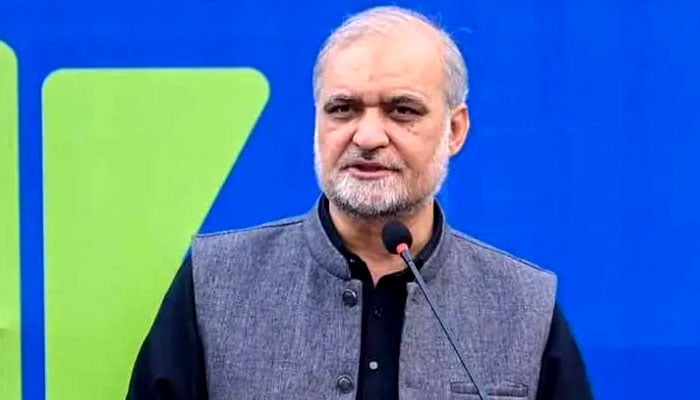
      Islamabad: Jamaat-e-Islami (JI) chief Hafiz Naeem ur Rehman has called on the government to focus on resolving the problems faced by the people instead of relying solely on the use of force to establish the writ of the state. He made these remarks in a statement criticizing the government’s economic policies and its handling of public affairs. According to Hafiz Naeem ur Rehman, a state’s authority cannot be maintained through coercive measures alone. He argued that the government should prioritize addressing the everyday concerns of citizens, including rising inflation, unemployment, and the increasing cost of essential services. He said that public trust is strengthened when governments respond to people’s needs rather than depending on administrative pressure or strict enforcement. The Jamaat-e-Islami leader strongly criticized the government’s electricity policies, alleging that the ruling authorities are placing an unbearable financial burden on the public through high electricity charges. He stated that ordinary citizens are struggling to pay their utility bills at a time when the cost of living continues to rise. According to him, households and businesses alike are being severely affected by expensive electricity tariffs, making it increasingly difficult for many families to manage their monthly expenses. Hafiz Naeem ur Rehman also criticized the government’s fuel taxation policy. Referring to the petroleum levy, he alleged that the government is effectively collecting money from the public in the form of what he described as “extortion.” He argued that increasing fuel-related taxes has a direct impact on transportation costs, which in turn raises the prices of food, consumer goods, and other essential commodities. As a result, he claimed, inflation continues to place additional pressure on the country’s middle- and lower-income groups. In his statement, the Jamaat-e-Islami chief further alleged that both the Pakistan Muslim League (Nawaz) and the Pakistan Peoples Party (PPP) came to power through what he referred to as “Form 47” This phrase has been used by some political parties in Pakistan to allege irregularities in the electoral process. His remarks reflect his party’s political stance regarding the legitimacy of the current governing coalition. Hafiz Naeem ur Rehman maintained that the country’s leadership should focus on providing relief to the public by reducing electricity prices, reviewing taxation policies, and introducing measures that improve the economic conditions of ordinary citizens. He emphasized that sustainable governance depends on public confidence, transparency, and policies that directly benefit the people. The government has previously defended its economic decisions by stating that measures such as electricity pricing and petroleum levies are necessary to meet fiscal requirements and maintain economic stability. However, opposition parties, including Jamaat-e-Islami, continue to argue that these policies have placed excessive financial pressure on the public. The latest remarks by Hafiz Naeem ur Rehman come amid ongoing political debate over Pakistan’s economic challenges, rising inflation, and governance. His statement highlights Jamaat-e-Islami’s continued criticism of the government’s economic policies and its call for greater public relief, while also reiterating the party’s political objections regarding the current administration’s mandate.

  • | |

    Spider-Man film breaks records despite major leak

    LOS ANGELES: Marvel’s highly anticipated film “Spider-Man: Brand New Day” has continued its strong box office performance despite facing a major online leak shortly before its release. A high-quality pirated copy of the film reportedly appeared on the social media platform X, creating concerns for the movie’s commercial success. The leaked version was later removed, but it had already attracted millions of views during the time it remained online. According to reports, the leaked footage was available for several hours and received widespread engagement, including thousands of likes and reposts. The incident added to growing concerns in Hollywood over digital piracy and the protection of major film releases. Despite the setback, the latest Spider-Man instalment has shown strong audience demand. The film recorded an impressive performance during preview screenings, earning around $72 million and surpassing the preview record previously held by “Avengers: Endgame,” which earned $60 million. The strong early response has increased expectations for the film’s opening weekend. Industry analysts are predicting a possible domestic opening of up to $300 million, although Sony Pictures has maintained a more cautious estimate of around $195 million. “Spider-Man: Brand New Day” is the fourth major Spider-Man film in the current series and follows Peter Parker as he faces a new reality after being forgotten by the world. The story explores his struggle to continue fighting crime while dealing with personal challenges and a powerful new threat. The film has generated significant attention due to its connection with the wider Marvel universe and high expectations from fans worldwide. Entertainment analysts say the strong box office performance despite the leak highlights the continued popularity of the Spider-Man franchise. They added that fans’ interest in watching the film on the big screen appears to have outweighed the impact of the piracy incident.

  • | | |

    Constitutional provisions fuel referendum debate

    Debate over the possibility of holding a national referendum has resurfaced in Pakistan, prompting discussions among political observers and constitutional experts about the legal framework governing such a move. Although the government has made no official announcement regarding a referendum, speculation in political circles has raised questions about when and how a nationwide vote can be conducted under the Constitution. Constitutional experts say Articles 48(6) and 48(7) of the Constitution empower the prime minister to propose a referendum on a matter of national importance. Under Article 48(6), the prime minister may refer such a proposal to a joint sitting of Parliament. If approved by the joint session, the matter can be presented to the public through a referendum in the form of a “Yes” or “No” question. Article 48(7) further provides that Parliament may legislate the procedure for conducting a referendum and determining its results. Legal experts note that, unlike a constitutional amendment, such legislation does not require a two-thirds majority and can be passed through a simple majority of members present, provided the quorum is complete. The renewed debate has also revived interest in the history of referendums in Pakistan. The concept first gained prominence during the political crisis that followed the March 7, 1977 general elections. Opposition parties, united under the Pakistan National Alliance (PNA), rejected the election results, alleging widespread rigging. They later boycotted provincial assembly elections and launched a nationwide protest movement demanding fresh elections, dissolution of assemblies and the resignation of then-prime minister Zulfikar Ali Bhutto. Despite mediation efforts by Saudi Arabia, negotiations between the government and the opposition failed, and the political deadlock culminated in the imposition of martial law by General Muhammad Zia-ul-Haq on July 5, 1977. Following these developments, constitutional provisions allowing referendums were introduced through the Seventh Constitutional Amendment. Pakistan’s first referendum was held on December 19, 1984, during General Zia-ul-Haq’s rule. While the public was asked to vote on the continuation of the Islamization process, a “Yes” vote effectively extended Zia’s presidency for another five years. Official results declared overwhelming support for the proposal, though opposition parties questioned both the process and the outcome. A second nationwide referendum was held in April 2002 under General Pervez Musharraf. The exercise enabled him to secure another five-year presidential term before the general elections later that year. After the 2002 elections, Musharraf was formally elected president by an electoral college comprising Parliament and the four provincial assemblies under the framework established through the Seventeenth Constitutional Amendment. Political analysts say recent discussions intensified after comments made during a media briefing by the Director General of Inter-Services Public Relations (ISPR), whose carefully worded responses to questions on constitutional matters drew public attention.

Leave a Reply

Your email address will not be published. Required fields are marked *