بلاگز

  • Tommy cherry sets new cube World record

    American speed cuber Tommy Cherry has reclaimed the Guinness World Record for solving a Rubik’s Cube while blindfolded. The 21year old set the new record on June 28, 2026 during the Mid-Atlantic Quiet Championship 2026 in Branchburg, New Jersey. He solved a 3×3×3 Rubik’s Cube in just 11.56 seconds, setting a new world record. Tommy first earned this record in 2021 with a time of 15.27 seconds. Since then he has continued to improve breaking his own records several times over the years. He also shares the world record for the fastest average blindfolded solve of a 3×3×3 Rubik’s Cube with Charlie Eggins. Both speedcubers recorded an average time of 14.05 seconds. https://www.facebook.com/share/r/1EMYY7bxdd/ After his latest achievement Tommy said he was very happy because it was his first world record since 2024. He added that he hopes to keep improving and hold the record for a long time.

  • |

    A portrait of the artist as a young man

    James Joyce published A Portrait of the Artist as a Young Man in 1916. He did far more than tell the story of a boy growing up in Dublin. He revolutionized the modern novel. As Joyce’s first published novel, Portrait serves as a crucial bridge between classical nineteenth-century storytelling and the radical experimentation of twentieth-century modernism. Over a century after its release, this intimate novel remains a timeless exploration of identity, intellectual rebellion and terrifying price of personal freedom. Sensory Stream of Consciousness The novel follows Stephen Dedalus who’s a thinly veiled avatar for Joyce himself from early childhood through his late adolescence and college years. The book opens not with traditional exposition, but with a sensory stream of consciousness. The baby talk, the texture of a bedsheet, the smell of oilcloth, and songs sung by his family. As Stephen grows, so too does the language of the book. Joyce evolves his prose style alongside his protagonist. He transforms the narrative voice from simple baby phrases into highly philosophical and poetic language as Stephen matures into a young scholar. Extreme Religious Devotion At its core, Portrait is a profound meditation on the heavy burdens of tradition. Growing up in a strictly Catholic, politically fractured Ireland at the turn of the twentieth century, Stephen finds himself trapped between competing pressures. He witnesses fierce family debates over Irish nationalism. He also suffers harsh physical punishments at strict Jesuit boarding schools. Ultimately, he struggles with agonizing guilt over his emerging teenage desires. A central turning point of the novel occurs during a harrowing religious retreat, where a priest delivers a vividly detailed sermon on the eternal torment of Hell. Paralyzed by fear, Stephen briefly attempts a life of extreme religious devotion, only to realize that spiritual conformity destroys his true self. Creative Freedom Over Compliance Stephen’s ultimate breakthrough doesn’t come from religiously pious self . It’s from art. In one of the most famous passages in modern literature, Stephen walks along the shore and catches sight of a young woman wading in the water. Stephen doesn’t see her through a lens of sinful desire or religious symbolism. Rather, he sees her simply as an embodiment of pure, mortal beauty. This aesthetic epiphany awakens his true calling. Now, he must break free from the traditional network of family, church, and nation that seek to hold him back. To become an artist, Stephen realizes he must embrace exile. Thus, he must chose solitude and creative freedom over compliance. Joyce’s genius lies in his ability to make Stephen’s internal struggles feel deeply universal. Anyone who has ever questioned the beliefs they were raised with, felt out of place in their own community. They strived to forge an independent identity will find a powerful reflection in Stephen’s journey. His famous declaration near the end of the book to forge in the smithy of my soul the uncreated conscience of my race is a bold rallying cry for personal independence. A Portrait of the Artist as a Young Man is not just the story of one young man’s transformation in turn-of-the-century Ireland, but a brilliant testament to the courage required to think for oneself and forge a truly unique voice in the world.  

  • |

    Jean Rhys’s “Good Morning, Midnight” whispers in the dark

    When Jean Rhys published Good Morning, Midnight in 1939, it was met with a chorus of discomfort and bewilderment. Critics at the time found its tone too bleak, its protagonist too unvarnished, and its atmosphere too heavy with melancholy. Yet decades later, this tragic, brilliant novel stands out as one of the most hauntingly modern studies of isolation, vulnerability, and resilience ever written. It is a work that does not simply invite readers into a story; it pulls them directly into the fractures of a wounded mind. The novel centers on Sasha Jansen, an aging Englishwoman returning to Paris after a long absence. Having scraped together a modest sum of money, she hopes to use the trip as a desperate attempt to patch over her fraying life. But the Paris Sasha steps back into is not a romantic city of artists and cafes; it is a claustrophobic landscape of cheap, dimly lit hotel rooms, cold streets, and judgemental eyes. Traumatized by a past filled with poverty, loss, and abusive relationships, Sasha moves through the city like a ghost in her own life, attempting to dull her emotional pain with alcohol while simultaneously craving a human connection she fears will ultimately destroy her. What makes Rhys’s narrative so compelling is her incredible command of internal voice. Written in a tight, stream-of-consciousness style, the novel obliterates the boundary between Sasha’s thoughts and the world around her. Rhys captures the quiet humiliation of financial insecurity. The constant calculation of tips, the fear of being judged by hotel staff, the defensive impulse to buy cheap clothes just to look respectable. Through Sasha’s eyes, even everyday interactions carry a terrifying weight. When she encounters a young Russian man who mistakes her for someone wealthier, or when she interacts with an eccentric gigolo, the tension is palpable. The reader is trapped right alongside Sasha. They navigate the razor-thin line between her deep yearning for intimacy and her absolute terror of being hurt. Beyond its psychological depth, Good Morning, Midnight is a social critique. Published on the cusp of World War II, the novel subtly mirrors the anxiety and dislocation of late-1930s Europe. Sasha’s struggle highlights how unforgiving society can be to women who fall outside traditional expectations of youth, wealth, and domestic stability. She is a woman adrift in an urban landscape that demands self-sufficiency while offering no safety net, making her experience feel astonishingly contemporary to modern readers facing their own eras of isolation and uncertainty. Rhys’s prose is razor-sharp, sparse, and poetic, delivering emotional blows with remarkable economy. The book’s final passage remains one of the most famous, devastating, and deeply ambiguous endings in twentieth-century literature. It is neither a story of neat redemption nor one of complete surrender, but rather a quiet, defiant acceptance of life’s painful complexities. Good Morning, Midnight demands that we look directly at the aspects of human suffering we often try to ignore; loneliness, aging, and  poverty. Jean Rhys offers a masterpiece of modernism that feels as vital, raw, and resonant today as it did nearly a century ago.  

  • 40,000-Year-Old ivory birds discovered in a German cave

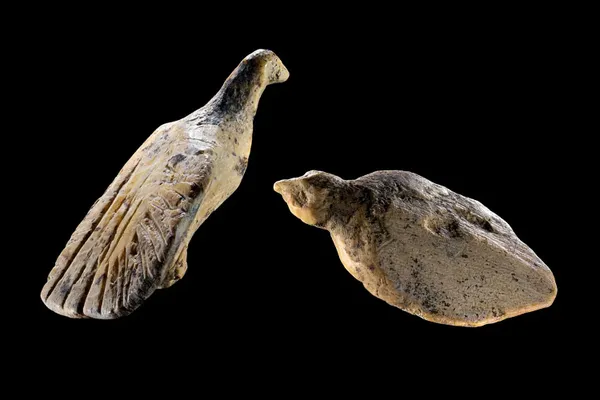
    Archaeologists have recently uncovered two thumbnail-sized sculptures of birds carved from mammoth ivory approximately 40,000 years ago. These delicate figurines, which have spent dozens of millennia buried in sediment, offer an intimate glimpse into the minds, environments, and creative capacities of our ancient ancestors during the Ice Age. The astonishing discoveries were made in the Hohle Fels Cave, a site deeply embedded in the Swabian Jura region of Germany. This location has long been celebrated as one of the most critical archaeological sites in the world for understanding early modern human culture in Europe. The newly found sculptures are extraordinarily small. Each measures less than a single inch in length and weighs merely a fraction of an ounce. It makes them roughly the size of an average human thumbnail. Despite their diminutive scale, the level of detail the prehistoric artist managed to achieve is nothing short of masterful. Rather than relying on abstract or highly stylized representations, the Ice Age carver recorded specific, anatomical observations. The figurines feature carefully incised markings that clearly delineate feathers, as well as distinctively carved eyes. One of the miniature sculptures portrays a bird with its wings fully spread, capturing a moment of dynamic movement, although a few fragments of its body have unfortunately been lost to time. Remarkably, this particular piece now holds the record as the smallest Ice Age artwork ever found in the region. The second figurine, which survived completely intact, depicts a bird in a resting posture. It appears to be lying down, a pose that researchers speculate might represent the animal tending to its eggs. Experts analyzing the avian features believe that at least one of the sculptures represents a ptarmigan, a robust bird belonging to the grouse family that would have been familiar to inhabitants of the harsh Ice Age landscape. While the identity of the second bird remains slightly less certain, it too could be a ptarmigan, or possibly a small bird of prey. Because the two ivory pieces were found just about five feet apart during the 2025 excavation season and share stylistic similarities, archaeologists strongly suspect they were crafted around the exact same time, quite possibly by the very same artist. The excavation was led by Nicholas Conard and a dedicated team from the University of Tübingen, who have been meticulously studying the Hohle Fels site for nearly three decades. The process of unearthing such fragile artifacts requires incredible patience. Researchers painstakingly remove layers of earth before washing and sifting the prehistoric sediment through extremely fine mesh screens. It was during this rigorous process that Elisa Luzi, a paleontologist at the university, first spotted one of the tiny birds. She described the profound emotional weight of the moment, emphasizing the sheer privilege of being the first human being to lay eyes on the carving in 40,000 years, and feeling an instant connection to the humanity of its maker. The Hohle Fels Cave These findings belong to the Aurignacian period, an epoch that coincides with the early settlement of Homo sapiens in Europe. The Hohle Fels Cave which is protected as a UNESCO World Heritage site has previously yielded some of the oldest known figurative art and musical instruments on the planet. The collection includes early bone flutes and the famous Venus of Hohle Fels. Exactly why these early humans took the time to carve such intricate, tiny birds remains a mystery. Researchers have proposed various theories, wondering if they were utilized as personal talismans meant to bring good fortune, or as cultural symbols associated with the specific identity of their owner. While we may never have a definitive answer regarding their prehistoric purpose, these thumbnail-sized masterpieces firmly remind us that the human desire to observe, create, and capture beauty is as ancient as humanity itself.  

  • |

    How canvas and color rescued Winston Churchill

    When history pictures Sir Winston Churchill, it summons the same iconic image of the stoic wartime leader. This typical leader with a bulldog scowl possesses cigar clamped between his teeth and a V-for-victory sign raised to a resilient nation. Yet behind the fierce political maneuvers lay a deeply sensitive man fighting severe emotional exhaustion. There’s a major landmark exhibition in London, titled Winston Churchill: The Painter. It has kept Britain’s titan grounded: his lifelong, intense passion for oil painting. The 1915 Catalyst Churchill did not pick up a paintbrush as a youth or a rested pensioner. He was forty years old and engulfed in the darkest catastrophe of his career. Following the disastrous Gallipoli campaign in 1915 during the First World War, Churchill was stripped of his post at the Admiralty. He got abruptly casted into political exile. So, he felt his mind consumed by overwhelming anxiety and listlessness. He had described himself as a deep-sea creature suddenly hauled to the surface. He suffered from a terrifying drop in pressure. In desperation, he picked up a set of children’s paints belonging to his young family members. What began as a tentative experiment to stave off despair quickly blossomed into an obsession. As Churchill would later recall, The Muse of Painting came to my rescue. The canvas provided something his turbulent political career rarely allowed: a realm where he held absolute command over every stroke, texture, and hue. From Cautious Strokes to Bold Expressionism The exhibition traces Churchill’s artistic maturation across five decades and more than fifty rare works, many loaned from private collections where they have remained hidden from public view for generations. Initially guided by artistic mentors such as Sir John Lavery and Sir William Nicholson, Churchill’s early works were cautious and subdued, capturing war-torn landscapes on the Western Front during his subsequent military service in France. However, as his confidence grew, so too did his appetite for vibrant color and energetic compositions. Influenced by French Post-Impressionism, Churchill developed an eye for brilliant light and rich pigment. He famously declared his disdain for muted palettes, writing that he felt genuine pity for poor, timid browns in favor of unapologetic cobalt blues, emerald greens, and fiery terracottas. Whether rendering the lush water garden at Chartwell or capturing the sun-drenched architectural marvels of Marrakech, Churchill painted with the same he brought to the House of Commons. Morocco, in particular, held a magical appeal for him. He returned there six times, captivated by the dramatic contrast between the snow-capped Atlas Mountains and the luminous desert plains. Art as Solace and Soft Diplomacy For Churchill, painting was never a mere hobby to kill time; it was a psychological anchor and a companion through severe personal tragedies. When his three-year-old daughter Marigold tragically died of sepsis in 1921, or when political fortunes ebbed during his wilderness years in the 1930s, Churchill retreated to his studio at Chartwell. Surrounded by paint tubes housed in old cigar humidors, he labored for hours at his easel, finding peace in the disciplined focus required to translate nature onto canvas. Beyond personal healing, his artwork doubled as subtle political allegory and warm diplomacy. Paintings like The Beach at Walmer (1938) depicted a historical cannon watching over innocent swimmers. This artwork hinted at his growing anxiety over looming European conflict long before others acknowledged the threat. Later in life, he frequently gifted canvases to world leaders, bodyguards, and trusted confidants, using his art as a bridge of personal warmth.  A Portrait of the Man Ultimately, exploring Churchill’s canvases fundamentally reframes our understanding of one of history’s most formidable figures. The bold brushstrokes reveal an individual far more vulnerable, contemplative, and joyful than the uncompromising statesman of public memory. By stepping behind his easel, we discover that the stubborn courage that helped save the free world was nurtured, in no small part, by the quiet sanctuary of color and light.  

  • |

    Han Kang transforms trauma into human connection

    In an era often dominated by literary posturing and self-absorbed memoirs, South Korean author Han Kang offers a profound counterweight. Her collection, Light and Thread, serves as an intimate look into the ethical consciousness of a writer shaped by the long shadow of national tragedy. Rather than using her platform to project certainty or celebrate her global acclaim, Han Kang turns writing into a delicate act of witness. An attempt to span the distance between isolated souls using language as a fragile bridge. The Weight of Historical Memory Beneath the intimate and domestic moments captured in Light and Thread lies an undercurrent of history. For readers familiar with Han Kang’s literary canon, the ghostly presence of unresolved national trauma is a constant motif. History is not presented here as a series of dead facts. Instead, it breathes through silence, leaving behind a persistent political and moral residue. A decisive turning point in her artistic journey occurred when she encountered archival photographs of the 1980 Gwangju massacre. She found herself forced to abandon her previous literary trajectory while confronted by the reality of historical violence. The weight of what she witnessed demanded an entirely new vocabulary of remembrance. This epiphany reflects an overarching ethical seriousness. Literature is not viewed as a vehicle for self-promotion or intellectual display. Creation is treated as a solemn, almost spiritual responsibility toward those who have been sisilenced. Her work continually battles with how language can articulate grief without reducing its magnitude. How it can preserve human dignity against historical erasure and honor the memory of the dead. Even in her Nobel Lecture, Han Kang rejects self-congratulation. She transforms the moment into a vulnerable meditation on a writer’s moral duties, choosing quiet reflection over triumph. An Invisible Connection Between Hearts The central motif of the collection traces back to a poem Han Kang wrote as an eight-year-old child. In it, she envisioned an invisible golden thread linking human hearts across space. Decades later, that simple childhood metaphor provides the framework for Light and Thread. For Han Kang, storytelling operates as that very filament: delicate, easily broken, yet surprisingly resilient. It holds the power to link separated lives across loss, time, and geography. Reading and writing become acts of deep empathy. They’re active ways of reaching into another person’s experience without seeking control or mastery. Dissolving the Self to Preserve Humanity Unlike conventional memoirs focused on self-dramatization, Light and Thread presents a porous sense of self. The author’s first-person perspective regularly fades into descriptions of weather, ambient sound, plant life, and lingering pain. Han Kang shifts the focus away from herself and onto the fragile conditions that allow human consciousness to endure. Her fundamental skepticism toward absolute answers becomes her greatest strength. Her writing creates a quiet space where grief can exist without being distorted.  

  • |

    China’s Chongqing East becomes world’s largest railway station

    Almost everyone has travelled by train at some point and has seen railway stations. But do you know which country is home to the world’s largest railway station? If you do not, here is the answer: the world’s largest railway station is located in China and is nothing short of an architectural marvel. China is already known for numerous engineering wonders ranging from remarkable bridges to the world’s largest high-speed railway network. Chongqing East Railway Station Chongqing East Railway Station located in southwestern China is the world’s largest railway station in terms of area. It was opened to the public in June 2025. The railway station covers an area of approximately 13 million square feet equivalent to around 170 football fields. It is also about five times larger than New York’s Grand Central Terminal. The station has 15 platforms and 29 railway tracks and during peak hours, it can accommodate around 16,000 passengers per hour. Around 16,500 tonnes of steel were used for its roof. However, the most remarkable feature of the station is the speed at which it was constructed and it was built on top of a mountain. The Chongqing region is mountainous which has traditionally made the development of transportation infrastructure particularly challenging. The station was constructed in just 38 months with the help of around 40,000 workers and a fleet of robotic machinery. Although 38 months may seem like a long period, in many countries, simply obtaining approval for projects of this scale can take longer than that.

  • |

    Experts reveal how ancient Egyptians built pyramids?

    The centuries-old Egyptian pyramids have long remained a major focus of interest for people and scientists. For years, scientists have been trying to solve the mystery of how such massive pyramids were constructed in ancient Egypt thousands of years ago. Now, a possible answer has emerged. Earlier, it was believed that ropes and sledging systems were used to transport stones to the upper sections of the pyramids. However, evidence discovered near the Nile River suggests that experts of that era had already mastered advanced construction techniques centuries before the construction of the Great Pyramid of Giza in the desert. Archaeologists have excavated a 5,000-year-old cemetery-like site near the eastern bank of the Nile River. Two tombs discovered there have construction styles remarkably similar to those of the Egyptian pyramids built centuries later. The walls of these tombs were thicker at the bottom and gradually became narrower toward the top. This design provided greater stability to the structures. Similar techniques were later used in the construction of step pyramids and other large pyramids. Researchers also discovered evidence of ancient methods used to cut stones and wood which were employed in the construction of the tombs. The tombs were discovered in Egypt’s Jabal al-Tayr region where people have been buried for thousands of years. The style of these tombs resembles the tombs of kings in Abydos, one of Egypt’s oldest cities. This suggests that advanced construction techniques may have been widely known across Egypt even before the construction of the pyramids. Researchers said the tombs provide a glimpse into experimental construction methods that may have eventually led to the construction of the Egyptian pyramids. Experts said preliminary analysis indicates that the construction style of these tombs was quite similar to that of the pyramids associated with Egypt’s First Dynasty. Egypt’s First Dynasty ruled the country around 3100 BC. According to Egypt’s Tourism Minister, Sherif Fathy, the new discovery will help researchers understand how these construction techniques evolved throughout ancient Egyptian history. Earlier, in May 2024, researchers discovered a buried branch of the Nile River beneath the desert that once flowed around more than 30 pyramids thousands of years ago. This discovery helped solve the mystery of how ancient Egyptians transported extremely heavy stones to the pyramid construction sites. The 40-mile-long branch of the river once flowed around the Great Pyramid of Giza and other pyramids. Thousands of years ago, it gradually became buried beneath desert sand and agricultural land. According to the research, the presence of this ancient river explains how 31 pyramids were constructed between approximately 4,700 and 3,700 years ago in a valley that has now become a deserted strip of desert. The valley is located near Memphis, the ancient capital of Egypt and is home to the Great Pyramid of Giza, the only surviving wonder of the ancient Seven Wonders of the World. A study published in the journal Nature Communications reported the discovery of this ancient branch of the river. The research team used radar satellite technology to identify the hidden river channel. Surveys of the area and analysis of samples confirmed the presence of the ancient river. According to researchers, the river was once very powerful but may have gradually become buried under sand because of drought around 4,200 years ago. The Great Pyramid of Giza is located just one kilometer from the bank of this buried river. Around 2.3 million stone blocks were used to build the pyramid with each block weighing between 2.5 and 15 tons. Researchers said the ancient river also provides clues about why pyramids were built at different locations. They explained that the river’s course and flow changed over time which may have led Egyptian rulers to construct pyramids at different locations.

  • Which plane seat is safest?

    Many people choose to travel by air because it is fast comfortable and one of the safest ways to get from one place to another.  However when an airplane accident happens many passengers wonder. Is there a seat that offers a better chance of survival? The good news is that air travel remains far safer than traveling by road or rail. Although plane crashes often receive worldwide attention because they are rare and serious the number of deaths from aviation accidents is much lower than from road accidents. According to global aviation safety data flying has one of the lowest accident and death rates of any form of transportation. Is there a safest seat? There is no seat that can guarantee survival in every accident.  Aviation experts say the outcome depends on many factors including the type of crash the speed of the aircraft and where the impact occurs. However studies of past accidents suggest that some seats may provide a slightly better chance of survival in certain situations. What research shows A review of airplane crashes over 35 years found that middle seats in the rear section of the aircraft had the lowest death rate, around 28%.  By comparison seats in the middle section of the plane had a higher death rate. Another study by Popular Mechanics which examined crashes between 1971 and 2005 found that passengers sitting in the back of the plane were up to 40% more likely to survive than those sitting closer to the front. Why the back may be safer Aviation experts explain that the front of the aircraft often absorbs the first impact during some types of crashes.  Because of this passengers seated in the rear may have a better chance of surviving in certain accidents. The back of the aircraft is also closer to the rear emergency exits which may help passengers leave the plane more quickly if an evacuation is needed. But every crash is different Experts also warn that there is no “perfect” seat. Some crashes affect the rear of the aircraft first while others damage the front or middle section. In accidents involving mountains the ocean or explosions survival may depend more on the nature of the crash than on where a passenger is sitting. For example if a plane crashes into a mountain or falls into the sea the chances of survival are often very low regardless of seat location. Emergency exit seats can help Passengers sitting near emergency exits may be able to leave the aircraft faster after a crash provided the exits remain usable.  Quick evacuation is often an important factor in survival. What Aviation Authorities Say The US Federal Aviation Administration (FAA) says no part of an airplane is officially considered safer than another. Survival depends on many factors, including the type of accident the force of the impact fire and how quickly passengers can evacuate. Research suggests that seats near the back of the aircraft especially the middle seats in the rear section may offer a slightly better chance of survival in some crashes. However no seat can guarantee safety. The most important thing passengers can do is wear their seat belt listen to the safety briefing and follow the cabin crew’s instructions.  These simple steps can make a big difference in an emergency.

  • High sugar intake in early life may raise dementia risk

    A new study has found that children who consume high amounts of sugar at an early age may face a higher risk of developing dementia later in life. The study suggests that pregnant women who avoid sweets, chocolates and other sugary foods may help reduce their child’s risk of developing the disease by up to 20 percent. The research published in the medical journal Neurology also found that consuming very small amounts of sugar during early life may provide protection against dementia. The study’s lead author, Professor Jiazheng Zheng said the findings suggest that limiting sugar intake during the early stages of life could have long-term benefits for brain health. He further said the findings highlight the potential importance of early-life nutrition in reducing the risk of dementia decades later. Researchers from the Hong Kong University of Science and Technology compared the health of 64,737 people who were born before and after sugar rationing was introduced in Britain during World War II. The participants were divided into groups based on the timing of sugar rationing: those who experienced limited access to sugar before birth and during their first year of life, those who experienced it before birth and until the age of two and those who were not exposed to sugar rationing. When the participants reached an average age of 55, the research team began analyzing their medical records to determine which individuals were diagnosed with dementia during the following 15 years. Among the 15,256 people who had limited access to sugar before birth and during their first two years of life, only 2 percent were later diagnosed with dementia. Although researchers say the findings do not conclusively prove that eating less sugar directly prevents dementia, experts believe the results are consistent with growing evidence that sugar can affect brain function. Experts also say that the brain is highly sensitive to fluctuations in blood sugar levels. Other research has found that people with high blood sugar levels may face up to a 69 percent higher risk of Alzheimer’s disease.