بلاگز

  • Easy tips for dark circles

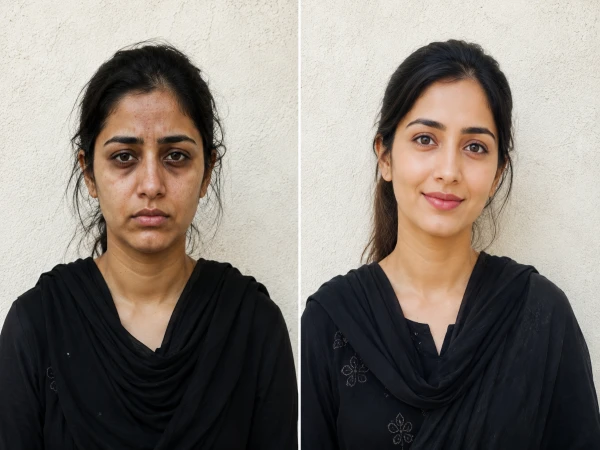
    Dark circles under the eyes are common and can appear for many reasons including lack of sleep and tiredness. They can make the face look dull but they are not always caused by poor sleep. Lifestyle habits aging allergies and genetics can also play a role. Getting enough sleep every night is one of the most important steps.  Resting well may help reduce the appearance of dark circles especially if they are caused by fatigue. If dark circles remain even after getting enough sleep you can try a few simple home remedies. Cucumber slices Place chilled cucumber slices over your closed eyes for a few minutes.  The cool feeling may help soothe tired eyes and reduce puffiness for a short time. Some people also use potato slices for dark circles. While they are a popular home remedy there is limited scientific evidence that they provide long term results. Eat healthy fruits A balanced diet is important for healthy skin.  Fruits such as bananas papaya and guava provide vitamins and nutrients that support overall skin health. However eating these fruits alone cannot guarantee that dark circles will disappear. Lemon juice and Oil Some home remedies suggest mixing lemon juice with jasmine oil and applying it around the eyes. However you should be very careful because lemon juice can irritate the delicate skin around the eyes and should never get into the eyes. Dark circles can have different causes in different people including genetics aging allergies skin tone and lack of sleep. If they continue for a long time or are accompanied by swelling or other unusual symptoms it is best to consult a dermatologist.

  • |

    Mill’s “On Liberty” in the era of censorship

    In his 1859 political treatise On Liberty, Victorian philosopher John Stuart Mill issued this timeless warning. The greatest threat to humanity is not monarchical despotism, but the tyranny of the majority enforced through state power. The Harm Principle At the heart of Mill’s philosophy lies the Harm Principle. The radical assertion that authority can only be legitimately exercised over a member of a civilized community against their will to prevent harm to others. Beyond this minimal threshold, individual autonomy over mind, body, and speech must remain absolute. Re-reading Mill today reveals a truth. His warnings are no longer abstract political theory. They provide a precise mirror for contemporary state overreach. This overreach is illustrated by the erosion of civil liberties in Indian-administered Kashmir and the systemic suppression of media outlets like Al Jazeera. The Harm Principle and the Disfranchisement of Kashmir Mill argued that suppressing individual self-determination degrades both the citizen and the state. In Kashmir, the unilateral revocation of constitutional autonomy, prolonged blackouts, and detentions of political leaders represent a case of majoritarian coercion. A state strips millions of their basic political rights under the justification of order or national integration. So, it violates the core of Millian liberty: consent and self-governance. Mill cautioned against treating entire populations as passive subjects incapable of directing their own political destiny. By denying Kashmiris the freedom to assembly, political self-expression, and uninhibited digital communication, state machinery replaces organic democratic engagement with enforced compliance. In Mill’s framework, a government that fears the peaceful political expression of its people reveals the fragility of its own moral authority. Ban on Al Jazeera Mill’s second chapter, dedicated to freedom of thought provides the intellectual critique of state censorship. He argued that silencing an opinion is a unique crime against humanity because it presumes the state possesses infallibility. Even if an perspective is deemed antagonistic, banning it deprives the public of testing truth against error. This principle directly challenges the recent enforcement of the Al Jazeera Law, under which the Israeli government shut down the Qatari broadcaster’s local operations, confiscated equipment, and blocked access to its platforms. Citing national security threats, state authorities effectively declared themselves the sole arbiters of acceptable news coverage. Mill would argue that invoking national security to silence reporting—especially during conflicts where independent oversight is most vital—is a classic instrument of state self-protection, not public safety. When a state decides which facts citizens and the international community are allowed to hear, it undermines the very foundation of a free society. Why Mill Matters Today   On Liberty remains an indispensable framework because it demonstrates that liberty is not a luxury granted by governments, but an essential condition for truth and justice. Whether in the militarized silence enforced upon Kashmir or the legislative bans silencing journalists, the modern state increasingly employs legal mechanisms to enforce conformity. Mill reminds us that a society that trades fundamental liberties for state-defined security ultimately preserves neither.

  • Why Airplane seats must stay upright

    Anyone who has traveled by plane has heard the announcement. “Please return your seat to the full upright position.” Many passengers think it is just a routine instruction but it is actually one of the most important safety rules in aviation. Behind this simple request are years of scientific research safety testing and efforts to save lives. Air travel is one of the safest ways to travel.  However aviation experts say that takeoff and landing are the most critical parts of any flight. Most aircraft accidents happen during these two stages because the plane is close to the ground giving pilots very little time to react if something goes wrong. That is why airlines strictly enforce safety rules during these moments including asking passengers to keep their seats fully upright. Although an airplane seat may look simple it is an important part of the aircraft’s safety system. According to aviation safety standards seats go through tough crash tests before they are approved for use. Engineers place crash test dummies in the seats and simulate accidents to make sure the seats can protect passengers during a strong impact. These safety tests are performed only when the seat is in the upright position. In this position the seat frame locking system and floor attachments work together to provide the best protection. A reclined seat has not been tested to the same safety standard. Seat belts are also designed to work best when passengers are sitting upright. Airplanes use a lap belt that is meant to rest across the strong hip bones. In a sudden stop or impact the force is directed to these bones helping reduce the risk of serious internal injuries. If the seat is reclined the body moves into a different position.  During a crash or heavy turbulence a passenger may slide under the seat belt. This is known as “submarining.” When this happens the belt can press against the stomach instead of the hips increasing the risk of injuries to the abdomen and spine. There is another simple reason as well. When a seat is reclined, the passenger’s head and upper body travel a greater distance before stopping during a sudden impact. This extra movement can increase the force of the collision and lead to more serious injuries. Safety is not only about surviving an accident. It is also about getting everyone out of the aircraft as quickly as possible. International aviation rules require an airplane to be evacuated within 90 seconds even if some emergency exits cannot be used. A reclined seat can block the person sitting behind from leaving quickly. In an emergency even a few seconds of delay can make a big difference. That is why cabin crew always check that every seat is upright before takeoff and landing. Many people wonder why airlines allow passengers to recline their seats during the flight if it is considered a safety issue. The answer is simple. Once the aircraft reaches cruising altitude the risk of an accident becomes much lower. At that stage airlines allow passengers to recline their seats for comfort. However as soon as the plane begins its descent or prepares for takeoff the safety rules come into effect again. Most flights end safely and many passengers may never realize why this rule is so important.  But aviation safety is based on being prepared for unexpected situations. Even small precautions can help save lives. So the next time a flight attendant asks you to return your seat to the upright position remember that it is not just a routine announcement. It is a safety measure backed by years of research testing and real world experience.

  • | |

    Finding Macbeth among the cul-de-sacs

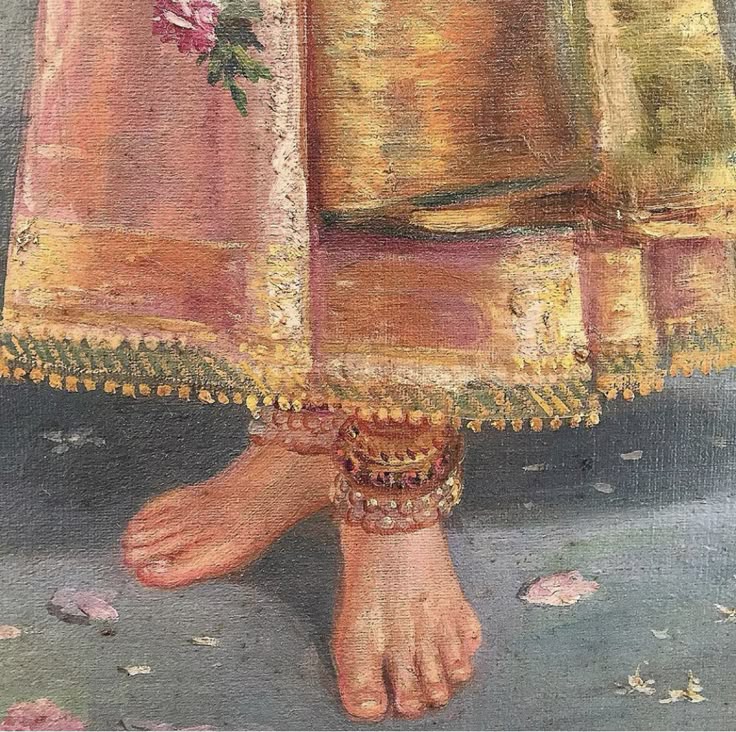
    There is a persistent cultural myth that high art requires crumbling castles, stormed heaths, or the frantic pulse of a metropolitan center. Suburbia, by contrast, is frequently dismissed as a landscape of cultural vacuum. The locality is defined instead by the hypnotic hum of lawnmowers, identical mailboxes, and the predictable choreography of the morning commute. Yet, to truly understand the works of William Shakespeare, one might argue that the quiet cul-de-sac is precisely where his characters feel most alive. Far from being an ivory-tower exercise, reading the Elizabethan canon against the backdrop of modern suburban life reveals a shocking truth. The human heart remains unchanged. It battles with the exact same ambitions, fears, and frailties that obsessed the playwright over four centuries ago. Shakespeare’s Macbeth Consider the iconic image of Macbeth encountering the three witches on a desolate heath. It’s a scene immortalized in classical art where armored men on horseback reel back in shock from supernatural prophets. On the surface, this imagery feels light-years away from a suburban subdivision. And yet, the psychological anatomy of Macbeth’s descent is intensely domestic. The internal dialogue of unchecked ambition, the quiet rationalization of moral compromise, and the creeping dread of consequences do not require a Scottish throne room. They can happen just as easily across a kitchen island or inside a quiet home office late at night. The weird sisters whispering prophecies of greatness are mirrored in modern life by the relentless cultural pressures to achieve. King Lear’s Misjudgment of His Children When we open a volume of Shakespeare, the distance between the sixteenth-century stage and the twenty-first-century lawn collapses. The suburban environment with its heavy emphasis on conformity and respectability provides a testing ground for tragedy. Iago’s subtle manipulations and toxic envy find their modern equivalents in politics, gossip, and the quiet resentments behind closed doors. King Lear’s tragic misjudgment of his children echoes in the universal anxieties of aging, and the desperate search for legacy. The stakes may appear smaller. They’re measured in property values and school districts rather than kingdoms and crowns but the emotional resonance is identical. Reading Shakespeare in Suburbia Furthermore, reading Shakespeare in suburbia changes how we interact with our immediate surroundings. It strips away the sterile academic intimidation that often turns classical literature into a chore to be checked off a syllabus. Instead, the verse becomes a lens through which the mundane details of daily existence are rendered extraordinary. The polite wave to a neighbor takes on a layer of complex subtext; the solitary evening walk under streetlights feels heavy with introspection. We begin to recognize that our neighbors are not merely background characters in a quiet life, but complex individuals harboring their own private comedies and tragedies.    Immutable Patterns of Human Behavior Ultimately, literature serves as a mirror. The suburban landscape offers a surface polished to a clear, sometimes uncomfortable reflection. Shakespeare did not write merely about royalty or historical epochs. He wrote about the immutable patterns of human behavior. By bringing his texts into the quiet corners of modern domestic life, we bridge the gap between antiquity and the everyday. We discover that drama is not something reserved for history books or theatrical stages, but an inescapable part of being human, waiting to be noticed right outside our front doors.

  • | | | |

    Pakistani folklore

    Pakistani folklore is a vibrant web regional oral traditions, Sufi mystical allegories, and tribal epics across Punjab, Sindh, Balochistan, Khyber Pakhtunkhwa, and the northern mountain valleys. Punjab: Sufi Metaphors & Tragic Romances Punjabi folklore is dominated by tragic love stories (Kissa) that doubled as spiritual allegories for divine love (Ishq-e-Haqiqi). Heer Ranjha is immortalized by the poet Waris Shah. This narrative details the doomed union between Heer, a noblewoman, and Ranjha, an outcast flute player turned jogi. In case of Sohni Mahiwal, Sohni crosses the volatile Chenab River nightly using an baked earthenware pot (gharra) to meet her lover Mahiwal. One night, her sister-in-law replaces the vessel with unbaked clay. This  dissolves mid-stream, leading to Sohni’s tragic drowning. Mirza Sahiban is tale of romance, familial duty, and betrayal. The story culminated in Sahiban breaking Mirza’s arrows to protect her brothers. This act leads to Mirza’s demise. Sindh: The Seven Queens (Satt Surmyun) Sindhi lore centers around seven heroic women celebrated in Shah Abdul Latif Bhittai’s monumental Sufi compendium, the Shah Jo Risalo. Sassi (Sassi Punhun) searches the Makran desert for her abducted lover, Punhun, until the earth swallows her. Marui (Umar Marui) was abducted by King Umar. She refuses wealth and palace luxuries to remain faithful to her desert village. Moomal (Moomal Rano) operates the enchanted palace of Kak Mahal, tests suitors with magical illusions, and loses Rano to misunderstanding. Balochistan: Tribal Epics & Renunciation Baloch folklore prioritizes chivalry, tribal honor, and ascetic devotion. Hani and Sheh Mureed: The legendary hero Mureed sacrifices his marriage to Hani due to a bound oath given to Mir Chakar Rind. Mureed becomes a wandering dervish, becoming an archetype of ultimate devotion. Lulla and Granaz: Tales celebrating battlefield bravery, hospitality, and tribal allegiance. Khyber Pakhtunkhwa & Northern Valleys: Pashtun & Mountain Legends Adam Khan and Durkhanai: A Pashto romance where music plays a central role. Adam Khan’s soulful mastery of the Rabab brings the lovers together against social friction. Prince Saiful Muluk & Badri-ul-Jamal: Set in the high-altitude Kaghan Valley, a Persian prince falls in love with a fairy princess at Lake Saiful Muluk, giving the actual alpine lake its legendary name.

  • |

    The limits and depth of human consciousness

    For millions of years, the survival of living species depended almost entirely on practical adaptations. The core of living was finding food, securing shelter, avoiding predators, and reproducing. Yet, at a crucial juncture in evolutionary history, Homo sapiens began engaging in a behavior that offered no immediate physical utility like making art. From red ocher hand stencils on cave walls in Sulawesi and Western Europe to intricate bone flutes and sculpted figurines, early humans devoted valuable time and energy to symbolic creation. Today, neuroscientists, cognitive psychologists, and evolutionary anthropologists increasingly view art not as a secondary cultural luxury, but as a foundational hallmark of human consciousness. The Evolutionary Emergence of Symbolic Thought The birth of artistic expression marks a profound cognitive transition. While many animals exhibit complex behaviors, these actions are largely instinctual and functional. Human art, by contrast, relies on abstract symbolic thinking. The capacity to let one object, shape, or sound represent an idea, emotion, or absent reality. When an early human carved a figure or painted a thundering herd of bison onto rock, they were not merely copying their surroundings. They were projecting an internal mental world onto an external physical canvas. This ability to externalize subjective experience required a sophisticated architecture of consciousness, including robust working memory, metacognition (thinking about one’s own thinking), and a developed theory of mind. It’s the understanding that others possess distinct mental states and can interpret shared symbols. The Neurobiology of Aesthetic Experience Modern neuroimaging reveals that creating and contemplating art engages large-scale, interconnected brain networks. When a person immerses themselves in a painting, music, or literature, the Default Mode Network (DMN) works with sensory and emotional circuits. Artistic engagement triggers a dynamic dialogue between the visual or auditory cortex, the limbic system (which processes emotion), and executive regions in the prefrontal cortex. This complex cross-talk allows humans to experience qualia. The subjective, qualitative feel of conscious experiences. A visual composition does not simply register as light wavelengths in the brain; it evokes nostalgia, awe, melancholy, or inspiration. This capacity to synthesize raw sensory inputs with deep emotional resonance and reflective thought is a unique feature of high-level conscious awareness. Lived Experience versus Machine Patterning In an era dominated by artificial intelligence algorithms capable of generating hyper-realistic images and musical compositions in seconds, the relationship between art and consciousness has taken on renewed urgency. While generative models analyze billions of data points to predict and replicate aesthetic patterns, they operate entirely without subjective awareness, intent, or emotional feeling. Human art originates from a grounded biological reality: the lived experience of mortality, joy, heartbreak, bodily sensation, and social existence. The power of a masterpiece lies not merely in its formal technique, but in the implicit bridge it constructs between the inner world of the artist and that of the observer. Art is fundamentally a dialogue of consciousnesses. It is a mechanism through which one conscious entity communicates what it feels like to exist. A Mirror to Human Identity Ultimately, art serves as both a product and a mirror of conscious awareness. It enables individuals to simulate hypothetical scenarios, process complex social dynamics, and navigate existential questions about purpose and mortality. By translating internal emotional states into tangible forms, humans construct shared cultural meaning and foster deep social cohesion.   As science continues to explore the mystery of how physical brain matter generates subjective experience, art remains our most visible and enduring cognitive fingerprint. It stands as compelling proof that human consciousness is defined not just by how we perceive the objective world, but by our infinite capacity to imagine and construct new ones.

  • |

    Pashtun identity in modern South Asia

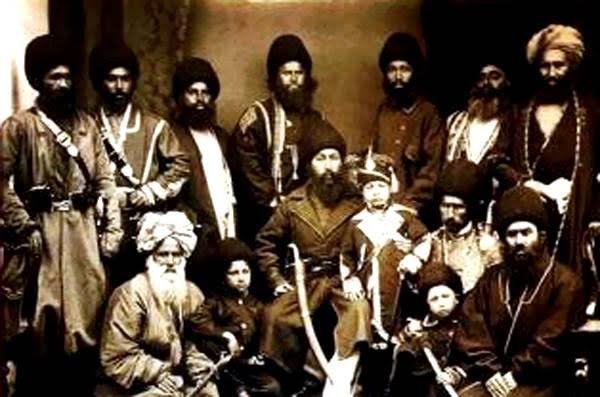
    The Pashtuns represent one of the most populous indigenous groups across South and Central Asia, predominantly in Afghanistan and Pakistan. Their social backbone relies on interconnected lineages, extended families, clans, and tribal alliances rather than a centralized political authority. From major confederations like the Durrani and Ghilzai to influential communities such as the Yusufzai, Afridi, Mohmand, Khattak, Wazir, and Mahsud, Pashtun society is a rich tapestry of overlapping regional, religious, and civic loyalties. At the core of their culture is Pashtunwali, an ancient honor code governing daily life through principles of hospitality, courage, asylum, and restorative justice. Historically, community issues and disputes were negotiated collectively through jirgas, or assemblies of local elders, maintaining order through consensus. Empire Builders and Cultural Crossroads Beyond tribal structure, Pashtuns have repeatedly reshaped the political landscape of the Indian subcontinent and Central Asia. Sultanate Dynasties: The Lodi dynasty established its rule over the Delhi Sultanate, paving the way for intricate South Asian governance structures. Administrative Reforms: Imperial leader Sher Shah Suri founded the Sur Empire in North India, pioneering sweeping reforms in taxation, infrastructure development, and currency. Empire Founding: In the 18th century, Mirwais Hotak challenged Safavid Persian dominance, while Ahmad Shah Durrani established the Durrani Empire in 1747, laying the groundwork for modern Afghanistan. This history is far more than military conquest. Pashtun territories served as vital crossroads where Persian, Turkic, Indian, and Islamic traditions converged. Consequently, their heritage spans beyond warrior traditions. It thrives in rich oral poetry, musical compositions, complex embroidery, craftsmanship, and trade networks. The Borderlands and Modern Challenges The 19th century brought prolonged conflict with British imperial forces along the northwestern frontier. A pivotal turning point arrived with the demarcation of the Durand Line in 1893. By drawing an artificial boundary between Afghanistan and British India (now Pakistan), the British divided ancestral Pashtun communities, establishing a geopolitically sensitive frontier that continues to spark debate and shape regional politics today.   In recent weeks, administrative re-alignments and border disputes in provinces like Balochistan and Khyber Pakhtunkhwa have reignited local debate. Prominent political and tribal leaders have voiced strong resistance to state restructuring, asserting that top-down administrative decisions risk erasing historical identities. Through renewed calls for broad political dialogue rather than bureaucratic divisions, modern Pashtun communities continue to rely on unified assemblies to safeguard their cultural heritage, self-determination, and historical voice in a changing region.

  • The jaded gender talks

     By Saman Aftab We are so habitual of listening to the gender inequality, women empowerment, and ever growing population talks that now these topics have become an essential subject for the matter of discussing societal issues. But what we people have lacked to unravel is the very essence of these debates. Why gender inequality exists? Why we are still lagging behind in terms of employing more women? Why we are unable to control the growing rate of population in our country? Before addressing the ‘absolutely unavoidable’ questions, let me take the readers down an irksome memory lane of my life. Last year when our maid broke the news of her pregnancy to us, our most obvious question was why now? Considering her age which was 42 years that time and her financial grim along with unsupportive role of her husband in bearing the burden of their five children, this question clicked in every mind. And her answer though not surprising was quite gloomy for the existence of every female in this world; “baji, larka chahye humen” (we need a boy). She had four daughters and a deaf son. Her statement broke my heart because it questioned the capabilities of her daughters who were all physically and mentally sound. This memory was not worth forgetting because as a female it made me feel inferior. But this Babygirl vs Babyboy thing is not new, in fact it is one of the most deeply rooted concerns of our society. The normalcy of demanding the birth of a boy from a married woman is consolidating with the passage of time. The worst part of this matter – it’s getting acceptance. Ironically, majority of mothers in law showcase such demands to the newly married couple, as if it is in their hands to ‘design’ the genetic make-up of their offspring. The heart wrenching memory got afresh, when Tabassum shared her so called good news with us. Tabassum, 35 years old woman who works as a maid in three houses, a mother of four girls is expecting again for the sake of receiving a son this time. Her good news reminded me of her last fourth delivery when she gave birth to a girl in government hospital and she was made to give her daughter to a rich family on the persuasion of her drug addict husband. Whether they got money in return was dubious but chances of such happening were bright. I really hope and pray that this time she gets a son, otherwise the couple will continue to bring unwanted girls in this world and ruin their lives. For all the existing daughters of this couple are living a dark and disowned life. This brutal reality of life is not constrained to lower class people and it has crossed the demarcation of social groupings based on all classes, religions and races. Let us take an example of my sister’s friend, who is married to a well-established businessman and living in a posh locality. The poor lady who has a rich family, is a mother of two cute little girls. Although the little girls born to riches are living a good life, their mother is undergoing severe mental anxiety and pressure for not having a son. And of course, she for the sake of getting rid of such pressure is planning to have another baby neglecting her present deteriorating health condition. Unfortunately, the instances are innumerable and the rate of their occurrences is increasing day by day. Why boy child is mostly preferred over girl child? The answer lies in the heart of several burdens tied with bringing up a girl till her marriage. Among so many liabilities, the extra protection needed by the girls in our society and the curse of dowry have aggravated the scenario to such an extent that today girls are seen as “misfortune”. Of course exceptions are always there. Let us shift the focus from this melancholy to addressing those “absolutely unavoidable” questions raised earlier. 1: Gender inequality; Homo sapiens (humans) are generally categorized into three groups namely man, woman and transgender. Men are always ranked superior for enormous reasons but if we see things more pragmatically, it becomes evident that parents are left with sons in their old age while their daughters somehow abandon them and serve in laws for the rest of their lives. Call it our family system, it is the way it is. Then how can girls be loved or demanded? For voicing rights for equality, women should also bear the responsibilities equally. If a woman is capable of doing an employment being educated or skilled, she must pursue it for sake of giving all the best of resources to her parents that are expected of a son. The root cause of inequality among genders is the leverage given to men of being more useful and thus more needed. As long as the share of women in the society is constrained only to domestic chores and family caretaking, this inequality will never fade away. More women should be encouraged to become financially sufficient and independent. But how? This leads to our second question. 2: Women empowerment; there should be more campaigning with regards to educating girls and investing in their skill building. More powerful the educational background of a woman is, more will be the chances of her getting a good job for the sake of financial security. Thus, the number of women working for the betterment of society and raising capital will rise exponentially. And finally once these two milestones are achieved, the third ordeal of our country will evade automatically. 3: Overpopulation: as discussed in the start, demand and desire for the birth of a son has contributed a lot more towards overpopulation. Men are expected to take care of their parents but the same goes for women also. And in this age of compatibility, women should come forward and play a vital part in developing this society. Instead of placing all the

  • HEC new weighted policy: putting weight on research credibility

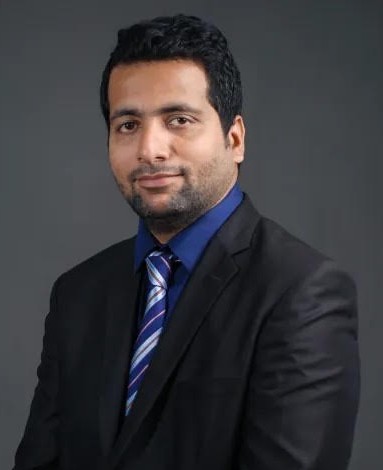
    By Ali Abbas Pakistan’s Higher Education Commission (HEC) new weighted research policy has surely raised an eyebrow among a few academics nationwide. Before further dissecting the policy and its implications, it is pertinent to understand the role of HEC as a regulatory authority, which can help clear the air to a greater extent. As stated, “Regulatory”, it is important to accept that the Higher Education Commission of Pakistan is there to implement quality checks irrespective of the decision being popular or unpopular. So, with this lens, it is easy to understand why HEC is weighing this bold step of assigning weights to authorship and what must have been the shortcomings in the previous policy, despite the earlier policy’s apparent benefits. The new policy values first authors and corresponding authors more, acknowledging a reward for the initiators and potential stakeholders in the event that there are more than 3 authors. While HEC is not stopping co-authorship, it aims to credit researchers who have genuine contributions and are adding value as a lead or major contributor. It is entirely up to contributors to choose the number of other co-authors and their desired contribution and commitment in the research article. In fact, this should rather be seen as a measure of transparency that researchers who are expecting to get fewer marks for co-authorship will be doing less work in contrast to the first author. That can actually act as a yardstick for them to allocate their time to multiple projects to get their respective share/ count. However, not to undermine the researchers whose genuine intent surrounds a higher number of publications in less time with real contribution, it is a welcoming sign for authors who stay away from relationship-based and aided research. So, HEC, being a quality custodian of education and research practices for HEIs, has come up with a stance to curb research mills, fraudulent research, and fake authorship, where publications in friends’ journals and contributions following quid pro quo are compensated. And one never knows when these researchers who have worked as co-authors or fall last in the author list make it to the classes; their share of knowledge and impact may be a concern at times as well. The problem is even bigger, as not only papers with 20+ authors can be found, but researchers are co-authoring in different fields that may be beyond cross-domain collaboration. This is where HEC might have to respond and find this weighted policy as damage control.  Well, this research’s credibility is not Pakistan’s dilemma only, but something that is a world issue in a higher education setting. And when HEC addresses these concerns, it might act as a benchmark for other nations’ education systems, especially for the education and accreditation councils of similar demographics. Whether one favors or opposes it, HEC has devised something that raises major concerns, and that is to curb the need to distinguish between real and fake contributors. Now comes the point of demotivating international contributions from this weighted system, as raised by the affected prospective contributors. Well, though not every policy can avoid its collateral, the overall gain may be exploited as well. It is to be remembered that international collaborators are not to be linked with those weights; they can continue to collaborate at any number in the author list as they used to be, i.e., first or second or third, etc. In this case, the logic for local authors will remain the same as stated above about their respective contributions and rewards. The time and effort can then help in identifying multiple avenues as well. Again, there are always two sides to a coin, and in the current dynamics, where co-authorship has appeared to be a business deal, the side with the assigned weights policy bears more weight. Also, on the other hand, the offset can be made by allocating funds and instructing HEIs to devote funding to Gold open access, thus accelerating the pace of the first-author research. All in all, the new policy hints at increasing competitiveness and research credibility while leaving it to the test of time to see if it turns out to be a value addition for researchers by choice or by chance. About the author: Ali Abbas, PhD, works at Beaconhouse National University. He can be reached at aabbas724@gmail.com

  • Faculty development: beyond classrooms 

    By Prof. Engr. Dr. Khuram Pervez Amber The persistent weaker linkage between industries and universities in Pakistan requires strategic interventions from all stakeholders. Pakistan cannot expect systemic industrial growth while its higher education institutions and industrial sectors operate in silos. Number of universities in Pakistan has dramatically increased over the past two decades. At current, there are nearly 280 universities in Pakistan which are producing thousands of graduates every year. But the concerns of industries remain valid that the graduates lack the necessary technical knowledge and skills which are required in the industries. These concerns of industries are particularly reported in disciplines such as engineering, computer science and the applied sciences, where employers frequently report a mismatch between academic preparation and industrial requirements. Although there are some valuable initiatives by the HEC, PEC, and NTC which include mandatory industrial internships of six to eight weeks for the engineering and technology students, the impact of such initiatives is limited due to multiple factors. Another initiative of HEC to strengthen university academia linkage is the establishment of the Office of Research, Innovation, and Commercialization (ORICs) in universities. However, the effectiveness of this initiative has not been successful at the desired level as in many universities, ORICs operate with limited staff and resources, while directors of ORICs are usually on additional charges. Expecting a small office alone to build industrial linkages for an entire university is unrealistic. Currently, out of nearly 260 universities, only 95 universities have established ORICs. In the recent ORIC ranking of HEC, only seven of 95 universities achieved the top category, i.e. “W” category. One of the major unexplored reasons behind this fragile linkage between industry and academia is the limited or no industrial exposure of university teachers. Most university teachers move directly from their bachelor’s degrees into master’s and PhD programs. Through this route, such individuals may become academically qualified teachers, but this route does not make them professionals having knowledge of industrial practices, industrial standards, and industry-oriented innovations. In many cases, a teacher teaches an industrial system which he/she has never experienced. This approach may clear theoretical concepts of students, but such students will certainly struggle when they would face real- life industrial problems after their induction in industry. So why do our university teachers require industrial exposure in their field of research? The answer is simple. A teacher with industrial exposure brings his industrial experience into the classrooms, laboratories, projects, and discussions on daily basis. Industrial experience of such teachers would not only improve the technical understanding of students about various industrial systems but also enhance students’ problem-solving skills. It would further help students to understand industrial expectations. So how could universities help their faculty members to get industrial experience? This could be achieved through implementation of structured industrial placement/professional development programs under ORICs for university teachers particularly working in engineering, technology and applied sciences faculties. Under this program, university teachers can spend six months to twelve months in an industry related to their field of interest/research on a turn-by-turn basis. During this period, such faculty members will keep receiving their monthly salaries as usual. So, what will be the major benefits of this model? There will be significant improvement in the pedagogical skills of faculty members as they will be teaching with practical examples, industrial case studies and real-world problem-solving approaches. During their placement in the industry, faculty members would make connections with the industrial experts/managers/engineers which would help them in future to supervise industry-relevant research, secure collaborative projects and contribute to technology transfer. They would identify operational challenges requiring research-based solutions. Upon returning to universities, they can transform these challenges into student projects, postgraduate research topics and consultancy opportunities. This would help create a healthier research culture focused on solving local industrial problems. University graduates will have problem solving skills that are required by industry. Over time, this model would help bridge the trust deficit that exists between academia and industry. Admittedly, implementing such a policy would not be easy. Challenges such as shortage of faculty, and increased teaching workloads are genuine challenges. There are also cultural barriers within academia, where industrial experience is often valued less than traditional academic achievements. However, these barriers are manageable. HEC and professional bodies such as PEC, and universities can jointly develop and implement structured industrial placement programs for faculty members. The industrial experience can be recognized within promotion criteria of faculty members, accreditation frameworks and quality assurance standards. In the nutshell, to produce industry ready graduates, the industrial exposure of university faculty members is indispensable. Their industrial experience will result in a stronger academia-industry linkage which is essential for economic growth, innovation and technological progress. Until universities and industries begin working together more meaningfully, Pakistan will continue producing degrees faster than opportunities. Prof. Engr. Dr. Khuram Pervez Amber (CEng, MEI, PE, FHEA) The writer is serving as Director QEC at Mirpur University of Science and Technology, AJ&K.