कारोबार

  • |

    Pakistan’s auto tax policy sparks industry divide over EV incentives

    LAHORE: Pakistan’s automobile industry is witnessing growing divisions over the government’s taxation policy for vehicles, with local manufacturers warning that the current framework unfairly benefits expensive imported and premium new energy vehicles (NEVs) while placing a heavier tax burden on affordable cars purchased by middle-income families. The controversy has intensified following the government’s decision to introduce a range of fiscal incentives for new energy vehicles, including battery electric vehicles (BEVs), plug-in hybrid electric vehicles (PHEVs) and range-extended electric vehicles (REEVs). While the policy is designed to accelerate Pakistan’s transition towards cleaner transportation and reduce reliance on fossil fuels, established local assemblers argue that the incentives are skewed in favour of luxury vehicle buyers instead of promoting affordable green mobility. Industry representatives say the taxation gap between conventional locally assembled vehicles and premium electric vehicles has widened considerably, raising concerns over fairness, competitiveness and the long-term sustainability of Pakistan’s domestic automobile manufacturing sector. According to industry estimates, a locally assembled Suzuki Alto—one of the country’s most affordable passenger vehicles priced at around Rs3 million—bears nearly Rs550,000 in taxes, including sales tax, federal excise duty (FED) and the recently introduced New Energy Vehicle (NEV) levy. In contrast, a premium REEV costing close to Rs10 million reportedly attracts sales tax of only around Rs100,000 while remaining exempt from both the federal excise duty and the NEV levy. The tax disparity has triggered criticism from domestic manufacturers, who argue that the current structure effectively penalises middle-income consumers while offering generous incentives to buyers of high-end imported vehicles. Local Assemblers Raise Concerns Pak Suzuki Motor Company spokesperson Ikhlaq Virk said the taxation framework has created an uneven competitive environment that disadvantages affordable vehicles widely used by Pakistani families. He said entry-level models such as the Alto and Cultus serve as essential transportation for the country’s middle class but receive no meaningful tax relief despite their affordability. Virk further noted that premium hybrid and electric vehicles, valued at nearly Rs10 million or more, continue to enjoy substantial concessions under the government’s clean mobility policy. He also pointed to reports suggesting that the sales tax on certain plug-in hybrid and hybrid electric vehicles could be reduced from 25 percent to 18 percent after changes introduced through the Finance Bill, arguing that such relief would primarily benefit affluent consumers rather than encouraging mass-market adoption. IMF Programme Adds Complexity The debate comes at a time when Pakistan remains under an International Monetary Fund (IMF) programme, which has required the government to increase tax revenues, rationalise subsidies and implement fiscal reforms to stabilise the economy. Against this backdrop, industry stakeholders argue that taxation policies should strike a balance between environmental objectives and economic realities, ensuring that clean energy initiatives do not disproportionately favour a small segment of wealthy consumers. The discussion has also reopened a broader policy debate over whether Pakistan’s green mobility strategy should focus solely on reducing emissions or also safeguard domestic manufacturing, employment and industrial investment. Analysts Call for Balanced Incentives Automobile industry experts believe Pakistan’s transition towards cleaner transportation is necessary, but they stress that government incentives should encourage widespread adoption instead of being concentrated in the luxury vehicle segment. Yousuf M. Farooq, Director Research at Chase Securities, said environmental goals should be pursued alongside industrial development and economic sustainability. He noted that while encouraging cleaner transportation is an important national objective, incentive programmes should also consider vehicle affordability, localisation, environmental benefits and the contribution of manufacturers to Pakistan’s economy. Farooq emphasised the need for a consistent taxation framework across all vehicle categories, including conventional internal combustion engine vehicles, hybrids, plug-in hybrids and range-extended electric vehicles, while maintaining adequate protection for local assembly operations and the domestic auto parts industry. He added that environmental incentives should not undermine the competitiveness of local manufacturers or threaten employment generated by Pakistan’s automotive sector. Local Industry Fears Investment Slowdown Pakistan’s automobile industry has invested billions of rupees over the past three decades in assembly plants, localisation programmes and vendor development. The sector supports hundreds of component manufacturers and provides employment to thousands of skilled workers across the country. Industry stakeholders warn that if imported premium electric vehicles continue to enjoy significantly lower taxation than locally assembled conventional vehicles, future investment in domestic manufacturing could slow, weakening Pakistan’s automotive supply chain and localisation efforts. Manufacturers believe a prolonged imbalance may discourage further expansion by existing assemblers while affecting the viability of local parts suppliers that have developed alongside the country’s automobile industry. Government’s Green Mobility Vision Supporters of the government’s policy argue that Pakistan cannot afford to lag behind the global transition towards electric mobility. Many countries are offering tax incentives, subsidies and policy support to encourage electric vehicle adoption, reduce dependence on imported petroleum products and lower carbon emissions. Pakistan, which spends billions of dollars annually on fuel imports, could also benefit from increased electrification of its transport sector by reducing its import bill and improving environmental sustainability over the long term. However, industry observers believe the core issue is not whether electric vehicles deserve policy support but how those incentives should be structured.

  • |

    Trinasolar eyes Pakistan’s battery storage boom

    Pakistan has built one of the world’s fastest-growing distributed solar markets. According to recent research by Ember and Renewables First, it is estimated that Pakistan has approximately 38GW of distributed solar capacity across residential, commercial, industrial and agricultural sectors. As this installed solar base grows, the next challenge is making that energy more flexible and available when businesses need it most. Trina Storage, Trinasolar’s global battery energy storage business, says Pakistan’s expanding solar base is increasing interest in solar-plus-storage, particularly for utility-scale and microgrids for commercial & industrial (C&I). A Renewables First report estimates that Pakistan imported 4.6 GWh of BESS in 2025, representing 220% year-on-year growth. Rather than replacing existing solar assets, well-designed solar-plus-storage systems can help businesses optimize renewable energy use, improve operational flexibility and support more resilient energy management strategies, depending on each site’s design and operating requirements. However, adding BESS to an existing solar installation is not a simple plug-and-play exercise. Projects require careful assessment of the site’s electrical architecture, inverter configuration, demand profile, equipment compatibility, energy management system, safety requirements and commercial objectives. For many retrofit projects, an AC-coupled approach provides a practical solution by allowing battery storage to operate alongside an existing PV system through its own Power Conversion System (PCS), helping retain much of the original solar infrastructure. Compatibility must still be assessed at system level, including electrical interfaces, communications, controls and compliance with the applicable IEC and UL standards. Designed for utility-scale and C&I applications, Trina Storage’s Elementa Series is compatible and is designed for integration within solar-plus-storage systems using Trina or third-party equipment, with compatibility assessed according to the project architecture. Beyond supplying technology, Trinasolar can work with customers and EPC partners to assess system compatibility, determine the most suitable BESS configuration and develop an operating strategy aligned with each site’s technical and commercial requirements. Trinasolar’s energy storage expertise builds on its long-established presence in Pakistan’s solar market, where the company has supplied more than 500MW of 700W+ modules across commercial, industrial and residential applications and recently introduced the Vertex N G3 760W series. Globally, Trina Storage, established in 2015, has achieved BloombergNEF Tier 1 Energy Storage Manufacturer status for 10 consecutive quarters and is expected to surpass 30 GWh of cumulative shipments by the first half of 2026. Its latest 6.25MWh Elementa 3 platform combines advanced battery technology, intelligent thermal management and integrated safety features for large-scale energy storage applications. “Pakistan has already built a strong solar foundation. The next phase is to consider how battery storage can be integrated with those assets to make renewable electricity available across a wider range of operating conditions. That requires careful assessment of the existing equipment, the site’s load profile and the role the battery is expected to perform. Trinasolar’s PV experience and Trina Storage’s global BESS capabilities give us a useful perspective across both sides of that system,” said Edison Zhou, Head of Pakistan, Trinasolar.

  • |

    CDA launches Rs5.07bn Six-Lane Road project from Faizabad to Koral Chowk

    The Capital Development Authority (CDA) has accelerated plans to construct a new six-lane carriageway along Service Road East, approving a project worth Rs5.072 billion aimed at easing chronic traffic congestion on the Islamabad Expressway and improving connectivity between Faizabad and Koral Chowk. The 9.25-kilometre road will run parallel to the Islamabad Expressway, extending from Faizabad to Koral Chowk near Gulberg Housing Society. Once completed, the new corridor is expected to provide motorists with an alternative route, reducing travel time on one of the capital’s busiest transport arteries while facilitating smoother traffic movement for commuters travelling to Islamabad and Rawalpindi. Officials said the project forms part of the CDA’s broader strategy to upgrade the capital’s road infrastructure in response to increasing traffic volumes and rapid urban expansion in surrounding residential and commercial areas. According to official sources, the new carriageway is expected to improve access to several housing societies and neighbourhoods located along the eastern side of the Islamabad Expressway. Authorities believe the project will not only ease traffic bottlenecks but also stimulate commercial development by increasing the value of properties and attracting new businesses along the corridor. To facilitate construction, the CDA has earmarked approximately Rs500 million for the relocation of critical utility infrastructure. This includes fibre-optic networks operated by the Islamabad Police Safe City Project, the Strategic Plans Division (SPD), Sui Northern Gas Pipelines Limited (SNGPL), and the Islamabad Electric Supply Company (IESCO). Sources said extensive utility shifting will be required before the main construction work can proceed at full pace. The project involves relocating 11kV electricity distribution lines, shifting 242 electricity poles, and relocating 248 graves that fall within the road alignment. Earthwork activities have already begun at selected locations. The road project also incorporates environmental protection measures. Officials said engineers have planned the preservation of 22 underground water channels, natural streams, and stormwater drains located along the proposed route to minimise environmental disruption and maintain the area’s natural drainage system. A breakdown of utility relocation costs shows that around Rs406 million has been allocated for IESCO infrastructure, Rs87.3 million for shifting Safe City fibre-optic networks, and approximately Rs6 million for relocating SPD facilities. Work on these utility relocation components is expected to commence after the completion of technical and administrative formalities. A senior CDA official said the authority has revised the project’s completion timeline, reducing the original target of 12 months to between six and eight months. However, the official acknowledged that the timely relocation of utilities remains the biggest hurdle and will largely determine whether the revised deadline can be achieved.

  • |

    Pakistan, Japan agree to expand development cooperation

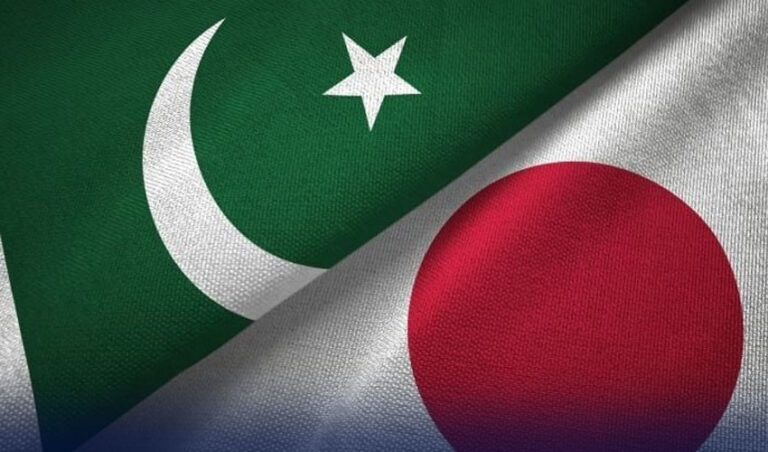
    Pakistan and Japan have reaffirmed their commitment to strengthening long-standing development cooperation, with both sides agreeing to expand collaboration in economic reforms, mineral development, technical training, and human resource development during a high-level meeting in Islamabad. The understanding was reached during a meeting between Prime Minister Shehbaz Sharif and a nine-member delegation led by Japan International Cooperation Agency (JICA) President Dr. Tanaka Akihiko. Welcoming the delegation, Prime Minister Shehbaz Sharif described the seven-decade partnership between Pakistan and Japan as a cornerstone of bilateral relations, expressing confidence that the JICA president’s visit would inject fresh momentum into cooperation between the two countries. The prime minister highlighted the government’s ongoing economic reform agenda, stating that Pakistan had successfully navigated a challenging economic period through coordinated efforts and was now focused on achieving sustainable and inclusive economic growth. He said the government’s reform programme had produced encouraging results, noting that national revenues had doubled over the past three years. According to the prime minister, these improvements were creating greater fiscal space for investment in development priorities and public welfare. Shehbaz Sharif emphasized that equipping young people with modern skills and technical education remains one of the government’s foremost priorities. He said the administration is also committed to creating quality employment opportunities and promoting the economic empowerment of women as part of its broader development strategy. During the meeting, the prime minister welcomed JICA’s technical assistance in Pakistan’s minerals sector, describing the cooperation as timely given the country’s vast untapped mineral resources. He also appreciated JICA’s collaboration with the Small and Medium Industrial Development Authority (SMIDA), saying such partnerships would help strengthen industrial capacity, improve productivity, and boost Pakistan’s exports. The discussions also covered ways to broaden bilateral cooperation in areas including infrastructure development, capacity building, vocational training, and investment promotion. Both sides acknowledged the importance of expanding technical collaboration to support Pakistan’s long-term economic transformation. JICA President Dr. Tanaka Akihiko thanked Prime Minister Shehbaz Sharif for his warm welcome and appreciation, reaffirming Japan’s commitment to supporting Pakistan’s development journey. He noted that JICA and Pakistan share a long-standing partnership built on mutual trust and cooperation, adding that the agency remains ready to further expand its engagement across multiple sectors, including economic development, human resource development, and technical cooperation.

  • | | |

    PM seeks broader JICA partnership in skills, miner…

    Prime Minister Shehbaz Sharif on Wednesday called for expanding Pakistan’s cooperation with the Japan International Cooperation Agency (JICA), identifying skills development, mineral exploration and support for small and medium-sized enterprises (SMEs) as key areas for future collaboration. The prime minister made the remarks during a meeting in Islamabad with a nine-member JICA delegation led by its President, Dr Tanaka Akihiko. He said Pakistan deeply values its decades-long partnership with Japan and expressed confidence that the latest engagement would further strengthen bilateral development ties. Highlighting the government’s economic agenda, Shehbaz said Pakistan had emerged from a challenging economic period through coordinated reforms and was now focused on achieving sustainable and inclusive growth. He noted that fiscal reforms had significantly improved revenue collection over the past three years, creating greater capacity for national development. The premier stressed that equipping young people with modern skills, expanding technical and vocational education, creating employment opportunities and empowering women remain among the government’s highest priorities. He said Pakistan is keen to benefit from JICA’s expertise in these sectors. Shehbaz also identified the country’s vast mineral resources as a major area of economic potential and invited JICA to provide technical assistance to help develop the sector and attract greater investment. Discussing support for businesses, the prime minister said reforms at the Small and Medium Enterprises Development Authority (SMEDA) had strengthened the institution. He expressed hope that enhanced cooperation with JICA would help improve SME productivity, encourage entrepreneurship and boost Pakistan’s exports. During the meeting, Shehbaz also conveyed condolences over the recent earthquake in Japan. Dr Tanaka thanked the prime minister for his message of sympathy and appreciated the warm hospitality extended to the Japanese delegation during its visit. The JICA president reaffirmed the agency’s commitment to expanding cooperation with Pakistan in healthcare, education, urban and rural development, industrial growth and technical training. He said future projects would be designed in line with the development priorities of both the federal and provincial governments. Dr Tanaka also acknowledged Pakistan’s efforts to promote peace and stability in the Middle East. Separately, Federal Minister for Economic Affairs Ahad Cheema met the JICA delegation to discuss future development initiatives. He invited the agency to participate in financing the Main Line-1 (ML-1) railway project alongside the Asian Development Bank and other development partners, describing the railway upgrade as vital for improving trade, transportation and industrial connectivity across the country. Cheema also sought JICA’s support for expanding internet connectivity in rural areas to promote freelancing and digital commerce. He requested technical assistance for feasibility studies of major infrastructure projects, an area in which JICA expressed readiness to cooperate.

  • | | |

    Punjab fixes wheat release price at Rs3,800 per ma…

    The Punjab government has fixed the new wheat release price at Rs3,800 per maund following approval from the provincial cabinet. According to a spokesperson for the Punjab Food Safety and Consumer Protection Department, a formal notification has been issued to implement the decision. The spokesperson said the federal government has directed Punjab to immediately procure wheat from the Pakistan Agricultural Storage and Services Corporation (PASSCO). The province has been approved to receive 300,000 metric tons of wheat under the arrangement. The department has already received 200,000 metric tons of wheat, while PASSCO has set its wheat price at Rs4,150 per maund. Officials said the move aims to ensure an uninterrupted supply of wheat and flour across the province while maintaining price stability in the market. The Punjab government also reiterated its commitment to ensuring that bread (roti) remains available to the public at Rs15 per piece. According to the spokesperson, Punjab had requested 800,000 metric tons of wheat, but only 533,440 metric tons have been allocated. Meanwhile, the Ministry of National Food Security has instructed the Punjab government to promptly submit its wheat procurement schedule along with the required advance payment to complete the purchase process.

  • | | |

    PM orders fast-track strategy for Discos privatisa…

    Prime Minister Shehbaz Sharif has directed the relevant authorities to adopt a comprehensive strategy to attract local and international investors for the privatisation of state-owned electricity distribution companies (Discos). He also ordered the restructuring of the Privatisation Commission within one month to strengthen its role in the reform process. Chairing a high-level meeting in Islamabad, the prime minister said the privatisation programme must move forward according to the approved timelines. He stressed that every stage should be completed transparently and in line with international standards and legal requirements. He added that the process should deliver positive financial results while protecting the interests of electricity consumers. The prime minister instructed officials to ensure that reputable investors participate in the bidding process. He said investor confidence should be increased through effective planning, transparency and a clear policy framework. At the same time, he emphasised that consumer rights should remain a top priority during the transfer of power distribution companies to the private sector. Officials informed the meeting that investor roadshows for the first phase of the privatisation programme had been completed successfully. These campaigns focused on Gujranwala Electric Power Company (Gepco), Faisalabad Electric Supply Company (Fesco) and Islamabad Electric Supply Company (Iesco). Similar investment outreach activities held in Türkiye, Saudi Arabia and China also received encouraging responses from potential investors. The meeting reviewed progress on institutional reforms within the Privatisation Commission. The prime minister directed the commission to recruit experienced professionals in finance, law and information technology. He said hiring qualified experts would improve the commission’s capacity to manage large-scale transactions and strengthen investor confidence. He also instructed officials to incorporate recommendations from professional consultants into the privatisation process. All legal, financial and regulatory requirements should be completed without delay to ensure smooth implementation, he added. The prime minister further ordered the establishment of an effective grievance redress mechanism to address complaints from consumers after the companies are privatised. He said public confidence would depend on uninterrupted services, transparency and accountability. The government is offering investors the opportunity to acquire majority or full ownership of Fesco, Gepco and Iesco, along with management control. These companies are considered among the strongest electricity distribution companies in the country and together provide power to more than 14 million consumers across Punjab, the Islamabad region and parts of Azad Jammu and Kashmir. The privatisation plan is part of the government’s broader economic reform programme. The initiative aims to improve operational efficiency, reduce financial losses, attract domestic and foreign investment, strengthen service delivery and modernise Pakistan’s power sector through greater private-sector participation.