orders fasttrack strategy
| | |

PM orders fast-track strategy for Discos privatisa…

Prime Minister Shehbaz Sharif has directed the relevant authorities to adopt a comprehensive strategy to attract local and international investors for the privatisation of state-owned electricity distribution companies (Discos). He also ordered the restructuring of the Privatisation Commission within one month to strengthen its role in the reform process.

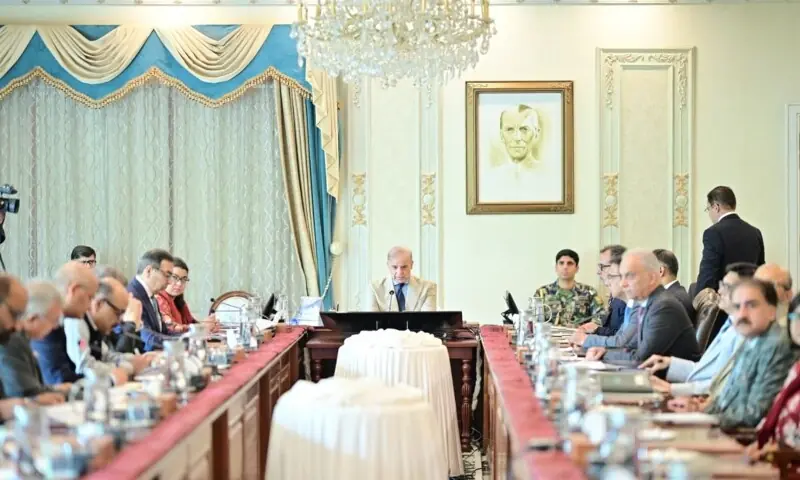
Chairing a high-level meeting in Islamabad, the prime minister said the privatisation programme must move forward according to the approved timelines. He stressed that every stage should be completed transparently and in line with international standards and legal requirements. He added that the process should deliver positive financial results while protecting the interests of electricity consumers.

The prime minister instructed officials to ensure that reputable investors participate in the bidding process. He said investor confidence should be increased through effective planning, transparency and a clear policy framework. At the same time, he emphasised that consumer rights should remain a top priority during the transfer of power distribution companies to the private sector.

Officials informed the meeting that investor roadshows for the first phase of the privatisation programme had been completed successfully. These campaigns focused on Gujranwala Electric Power Company (Gepco), Faisalabad Electric Supply Company (Fesco) and Islamabad Electric Supply Company (Iesco). Similar investment outreach activities held in Türkiye, Saudi Arabia and China also received encouraging responses from potential investors.

The meeting reviewed progress on institutional reforms within the Privatisation Commission. The prime minister directed the commission to recruit experienced professionals in finance, law and information technology. He said hiring qualified experts would improve the commission’s capacity to manage large-scale transactions and strengthen investor confidence.

He also instructed officials to incorporate recommendations from professional consultants into the privatisation process. All legal, financial and regulatory requirements should be completed without delay to ensure smooth implementation, he added.

The prime minister further ordered the establishment of an effective grievance redress mechanism to address complaints from consumers after the companies are privatised. He said public confidence would depend on uninterrupted services, transparency and accountability.

The government is offering investors the opportunity to acquire majority or full ownership of Fesco, Gepco and Iesco, along with management control. These companies are considered among the strongest electricity distribution companies in the country and together provide power to more than 14 million consumers across Punjab, the Islamabad region and parts of Azad Jammu and Kashmir.

The privatisation plan is part of the government’s broader economic reform programme. The initiative aims to improve operational efficiency, reduce financial losses, attract domestic and foreign investment, strengthen service delivery and modernise Pakistan’s power sector through greater private-sector participation.

Similar Posts

  • | |

    Monsoon rains continue across Pakistan

      Monsoon rains continue to affect different parts of Pakistan, bringing relief from the intense summer heat but also causing deadly accidents, flooding, and damage to infrastructure. At least six people, including children, have lost their lives in rain-related incidents across the country, while rescue teams remain on high alert as heavy downpours continue. In Gujranwala, a tragic incident occurred when a child drowned in rainwater that had accumulated in an underpass. The flooding turned the underpass into a dangerous pool, highlighting the risks posed by poor drainage systems during the monsoon season. In another heartbreaking incident in Bahawalnagar, a child drowned while bathing in a canal. Rescue officials have launched a search operation to recover the child’s body, which was still ongoing at the time of reporting. The monsoon showers have significantly reduced temperatures across Punjab, providing welcome relief from the scorching heat. However, the heavy rainfall has also created serious urban flooding in several cities. Torrential rain in Gujranwala and Gujrat submerged low-lying areas, leaving roads inundated and disrupting traffic flow. Water entered several homes, causing inconvenience and property damage to residents. Authorities are working to drain the accumulated rainwater and restore normal conditions. In Sialkot, Toba Tek Singh, and Jhang, rainfall brought cooler weather and pleasant conditions after days of extreme heat. Meanwhile, in Mandi Bahauddin, heavy rain caused roofs and walls of several buildings to collapse, leaving multiple people injured. Emergency services responded promptly, providing medical assistance to the injured and assessing the damage. In Shakargarh, rising water levels in the Ravi River left 42 farmers stranded. Rescue teams successfully carried out an operation to evacuate all of them safely, preventing what could have become a major tragedy. Rescue authorities continue to monitor river levels closely as rainfall persists in nearby regions. Heavy rainfall also wreaked havoc near Dadocha Dam on the outskirts of Rawalpindi. A seasonal stream overflowed and entered nearby residential areas, flooding the villages of Barwala and Khanpur. Residents faced significant challenges as floodwaters inundated homes, streets, and agricultural land, forcing many families to move to safer locations. In Khyber Pakhtunkhwa, flash floods in the Siran Valley of Mansehra swept away a bridge, cutting off road access to 12 villages. Local authorities are assessing the situation and exploring temporary arrangements to restore connectivity. Elsewhere in the province, including Abbottabad, Nowshera, Swabi, Mingora, and Bajaur, intermittent light and heavy rainfall continued, bringing cooler temperatures but raising concerns about possible flooding and landslides. In Azad Jammu and Kashmir, rainfall triggered surging water levels in streams and rivers in Samahni, Bagh, and the Neelum Valley. A landslide at the Dwariyan area blocked the main highway, disrupting transportation and delaying travel between affected regions. Officials have begun efforts to clear the road and restore traffic. Meanwhile, rainfall also reached Khuzdar in Balochistan and Astore in Gilgit-Baltistan, where cool winds and lower temperatures created pleasant weather conditions. However, authorities have urged citizens across the country to remain cautious, avoid unnecessary travel in flood-prone areas, and follow official weather advisories as the monsoon spell continues.

  • | |

    Experts call for gender-responsive water policies …

    LAHORE: The growing impact of water insecurity and climate change on women took center stage at a dialogue titled “Women and Water,” jointly organized by Women in Struggle for Empowerment (WISE) and the University of Home Economics, Lahore. The event brought together academics, development professionals, and civil society representatives to advocate for inclusive and gender-responsive water governance in Pakistan. Addressing the gathering, Vice Chancellor of the University of Home Economics, Prof. Dr. Zaib-un-Nisa, underscored the urgent need to tackle water pollution, plastic waste, and inadequate water treatment systems. She stressed that sustainable solutions require greater investment in scientific water management, wider adoption of rainwater harvesting, improved household water storage, advanced recycling technologies, and university-led awareness campaigns to encourage responsible water use. Executive Director of WISE, Bushra Khaliq, said that Pakistan’s water challenges cannot be effectively addressed without recognizing their disproportionate impact on women and girls, who often bear the greatest burden of water scarcity. She emphasized the importance of drawing lessons from organizations working directly in urban water management and called for stronger collaboration among government institutions, academia, civil society, and local communities. She also urged policymakers to ensure women’s voices, experiences, and leadership are fully integrated into water governance at every level. Speaking on the occasion, Dr. Iram Rubab, Head of the Sociology Department at the University of Home Economics, described water as a multidimensional issue linked to health, agriculture, family welfare, livelihoods, sociology, and environmental sustainability. She encouraged interdisciplinary dialogue and collaborative research, noting that adopting a gender perspective in water management leads to more effective identification of challenges and practical solutions, particularly as women remain the primary managers of household water resources. The participants agreed that addressing Pakistan’s growing water crisis requires policies that not only strengthen water management but also recognize the vital role of women in ensuring sustainable and equitable access to this essential resource.

  • | | | |

    Fitness Influencer Connor Murphy Dies at 32 in Thailand Lake Drowning; Prior 2024 Pattaya Assault Allegations Resurface

    Bangkok, July 8th, 2026 American fitness YouTuber and influencer Connor Michael Murphy, aged 32, was found dead on July 7th, 2026, after drowning in a lake at a luxury residential complex in the Bang Phli district in Samut Prakan province, Thailand, according to Thai authorities and local media reports. Rescue teams recovered his body approximately […]

  • | | |

    SBP to study daily fuel price impact on inflation

    ISLAMABAD: The federal government has directed the State Bank of Pakistan (SBP) to conduct a comprehensive study on how the daily revision of petroleum prices affects inflation, as authorities seek new measures to protect consumers from rising living costs and volatile global energy markets. The decision was taken during a meeting of the National Price Monitoring Committee (NPMC), which reviewed the country’s inflation outlook and discussed ways to minimise the impact of fluctuating fuel prices on households and businesses. According to officials, the SBP has been asked to prepare a detailed action plan within 15 days to evaluate the inflationary effects of daily adjustments in petrol and high-speed diesel (HSD) prices, following international best practices. The central bank is expected to recommend policy options that could help maintain price stability while supporting economic growth. The committee was informed that the SBP’s primary responsibility is to ensure price stability through effective monetary policy, including the use of interest rates to manage inflation expectations and regulate money supply. Alongside the SBP study, the NPMC instructed provincial governments, Azad Jammu and Kashmir, Gilgit-Baltistan and the Islamabad Capital Territory to strengthen market monitoring and prevent unjustified increases in the prices of essential commodities whenever fuel prices are revised. The committee also expressed concern over excessive pricing of liquefied petroleum gas (LPG), noting that consumers in many areas were paying significantly more than the official rates notified by the Oil and Gas Regulatory Authority (OGRA). Authorities have been directed to intensify monitoring and narrow the gap between notified and market prices. Officials said the recent regional conflict involving Iran had disrupted energy markets, contributing to higher LPG prices despite regulatory efforts. The meeting also focused on the prices of key food items, including tomatoes, chicken, wheat flour and edible oil. Representatives from the Ministry of National Food Security attributed the surge in tomato prices to seasonal shortages, explaining that Pakistan was importing tomatoes from Iran and Afghanistan to meet domestic demand. However, following the closure of the Afghanistan border, officials said additional tomato imports would now be sourced from Romania to prevent supply shortages and stabilise prices. To improve food quality and consumer protection, the Ministry of Science and Technology will work with the Pakistan Bureau of Statistics (PBS) and provincial authorities to develop testing standards for loose milk, dairy products, edible oil and ghee. Accredited laboratories will conduct regular testing, with quarterly reports submitted to the NPMC. The committee also urged authorities to reduce wholesale and retail price disparities across different cities, improve the supply chain for essential goods and work more closely with the private sector to arrange timely imports before seasonal shortages trigger sharp price increases. Officials expressed hope that stronger coordination, tighter market oversight and evidence-based policymaking would help ease inflationary pressures and provide greater stability for consumers in the coming months.

  • | |

    Christopher Nolan shares why romantic comedies ‘…

    Christopher Nolan has built a career on pushing cinematic boundaries with thought-provoking blockbusters such as Inception, Interstellar, The Dark Knight trilogy and the Oscar-winning Oppenheimer. But despite his success across multiple genres, the acclaimed filmmaker says there is one type of movie he has no desire to direct anytime soon—a romantic comedy.  While promoting his latest epic, The Odyssey, during an appearance on The Tonight Show Starring Jimmy Fallon, Nolan was asked whether fans could ever expect him to make a romantic comedy. Although the question was posed jokingly, the director gave a surprisingly thoughtful answer, admitting that the idea genuinely intimidates him.  “I think doing a rom-com would be incredibly difficult,” Nolan said. “I love watching those movies.” However, he explained that making audiences laugh consistently is one of the toughest challenges in filmmaking, giving immense credit to directors and actors who specialize in comedy.  The two-time Academy Award winner went on to explain why comedy demands a unique level of precision. According to Nolan, filmmakers working in dramatic or suspenseful genres have more room for interpretation if a particular scene doesn’t resonate with viewers. Comedy, on the other hand, leaves little room for error because jokes either land—or they don’t. That pressure, he admitted, is enough to make him “terrified” of attempting the genre himself.  Nolan’s comments have quickly sparked discussion among movie lovers, many of whom praised his honesty. Fans pointed out that although the filmmaker has mastered science fiction, historical drama, superhero films, psychological thrillers and war epics, his willingness to acknowledge the difficulty of comedy reflects his respect for fellow filmmakers.  Interestingly, while Nolan appears reluctant to direct a romantic comedy, he recently revealed that The Odyssey has increased his interest in another genre—horror. The filmmaker said working on the mythological adventure, which features several frightening sequences, has left him eager to explore horror further, provided he finds the right story.  The Odyssey, starring Matt Damon, Tom Holland and Anne Hathaway, marks another ambitious project for Nolan. Shot entirely using IMAX cameras, the film has received praise for its scale, practical effects and emotional storytelling, continuing the director’s tradition of delivering visually spectacular cinematic experiences.  Although fans may never see Christopher Nolan helm a lighthearted romantic comedy, his candid remarks highlight the immense respect he has for the genre. For now, the celebrated filmmaker remains committed to telling bold, ambitious stories—while happily leaving romantic laughs to directors who have mastered the art of comedy. 

Leave a Reply

Your email address will not be published. Required fields are marked *