suspended asi gets
| |

Suspended ASI gets four-day police remand

A Lahore court on Wednesday handed a four-day physical remand of a suspended assistant sub-inspector (ASI) to police for further investigation into the alleged rape of a mentally challenged young woman inside Ghaziabad Police Station.

The suspect, identified as suspended ASI Imran, was presented before Judicial Magistrate Iram Yousaf by the investigating team. Police requested a 14-day physical remand, stating that further custody was necessary to collect evidence and complete the investigation into the alleged sexual assault.

After hearing the arguments, the court approved a four-day physical remand instead of the two-week period sought by investigators. The suspect will remain in police custody while investigators continue gathering evidence and recording statements.

The case has sparked widespread concern after authorities alleged that the incident occurred within the premises of a police station. Following the allegations, Lahore police suspended the entire staff of Ghaziabad Police Station, citing administrative failures, negligence and poor supervision.

According to the first information report (FIR), the case was registered on August 3 under Section 376 of the Pakistan Penal Code, which deals with rape, along with Section 155C of the Police Order 2002 concerning misconduct by police officials. The complaint was filed by the victim’s father.

Police officials said senior officers immediately took notice of the incident after the FIR was registered. The accused officer was arrested, while departmental action was initiated against police personnel responsible for supervising the station.

In a separate disciplinary move, authorities suspended 78 police officials posted at the station, holding them accountable for negligence and failure to ensure proper oversight.

According to the complainant, his mentally challenged daughter, believed to be around 19 or 20 years old, left home on the afternoon of August 3 and did not return for several hours. During the search, a local resident allegedly informed the family that a policeman in plain clothes had taken the young woman away.

The victim’s father said he rushed to the police station, where he was told that his daughter had already gone home. When the family returned, they found her distressed and crying.

He alleged that his daughter told them she had been taken to the police station by a police officer and sexually assaulted. Following her statement, the family approached authorities and sought legal action against the accused officer.

Similar Posts

  • | |

    Ishaq Dar, Kuwait FM discuss Middle East tensions

    Deputy Prime Minister and Foreign Minister Ishaq Dar met Kuwait’s Foreign Minister Sheikh Jarrah Jaber Al-Ahmad Al-Sabah in Islamabad on Wednesday. The two officials discussed the evolving situation in the Middle East. They also reviewed Pakistan-Kuwait relations and ways to strengthen bilateral cooperation. The Kuwaiti foreign minister is visiting Pakistan on an official trip. He arrived in Islamabad on Tuesday at the invitation of Ishaq Dar. According to Pakistan’s Foreign Office, Dar and Sheikh Jarrah held a warm and productive meeting at the Ministry of Foreign Affairs. The two sides reviewed the full range of bilateral relations between Pakistan and Kuwait. They reaffirmed their commitment to further strengthening the longstanding ties between the two countries. The officials described Pakistan and Kuwait as brotherly nations. Their relations are based on shared history, mutual trust and close cooperation. The meeting also focused on regional and international developments. The Middle East situation was a major part of the discussions. The two officials exchanged views on the rapidly changing regional environment. The visit comes at a time of heightened tensions in the Middle East. Pakistan has continued to engage with regional countries on developments affecting peace and stability. The Kuwaiti minister’s visit is also expected to provide an opportunity for both countries to deepen diplomatic coordination. The Foreign Office said the visit reflects the close and longstanding relationship between Islamabad and Kuwait. The visiting minister was received at Islamabad International Airport after arriving in the capital on Tuesday. Zahid Hussain, an additional secretary at the Foreign Office, welcomed him. The Kuwaiti foreign minister is also expected to meet Pakistan’s senior leadership during his stay. The visit comes amid discussions between Pakistan and Kuwait on expanding cooperation in several areas. Pakistan has reportedly been negotiating a broader defence arrangement with Kuwait. Energy cooperation and investment are also part of the discussions. The proposed cooperation could further expand the strategic and economic relationship between the two countries. Both sides have maintained close ties for decades. Kuwait has also remained an important partner for Pakistan in the Gulf region. The latest meeting between Dar and his Kuwaiti counterpart highlights the importance Islamabad attaches to its relations with Kuwait. It also signals continued diplomatic engagement between the two countries on regional and international issues.

  • | |

    Government cuts petrol price by Rs3.19, diesel by …

    The federal government has announced a reduction in petrol and high-speed diesel (HSD) prices for August 7, providing limited relief to consumers amid continued fluctuations in international oil markets. According to a notification issued by the Ministry of Petroleum, petrol prices have been reduced by Rs3.19 per litre, bringing the new price to Rs329.82 per litre. Meanwhile, the price of high-speed diesel has been lowered by Rs1.50 per litre and will now be available at Rs382.36 per litre. The latest adjustment comes just one day after the government increased petrol prices by Rs4.45 per litre while reducing HSD prices by Rs2 per litre for August 6. The frequent revisions reflect the country’s newly introduced fuel pricing mechanism, which allows daily adjustments based on international market movements. The government introduced the daily fuel price review system on July 17 in response to volatility in global oil prices following renewed tensions in the Middle East. Under the new mechanism, domestic fuel prices are calculated using a seven-day average of international petroleum rates in line with global pricing practices. Pakistan remains highly dependent on imported petroleum products, making domestic fuel prices vulnerable to changes in international crude oil markets. According to the Pakistan Economic Survey 2024-25, petroleum products represent one of the country’s largest import categories. Any rise in global oil prices increases Pakistan’s import bill, puts pressure on foreign exchange reserves, and contributes to inflation. In previous years, fuel prices were managed through government subsidies and administrative controls. While such measures provided short-term relief for consumers, they also increased financial pressure on the national budget, oil marketing companies, and refineries. Higher subsidies contributed to fiscal challenges and increased public borrowing. Global factors continue to influence oil prices, including decisions by oil-producing nations, conflicts in energy-producing regions, sanctions, and disruptions in major shipping routes such as the Strait of Hormuz and the Red Sea. International crude prices recently moved higher after reports that an Iranian parliamentary committee was considering measures affecting shipping through the Strait of Hormuz. Brent crude futures increased by more than $3 per barrel, while US West Texas Intermediate (WTI) futures also recorded gains. Market analysts said traders remain focused on geopolitical developments and negotiations involving major oil-producing countries. Since a significant portion of global energy supplies previously moved through the Strait of Hormuz, any disruption in the route could immediately affect crude prices and fuel costs worldwide. The latest reduction in Pakistan’s fuel prices is expected to offer temporary relief to motorists and businesses, although future adjustments will continue to depend on international oil market trends.

  • |

    Thousands Sahiwal villagers demand steel bridge at…

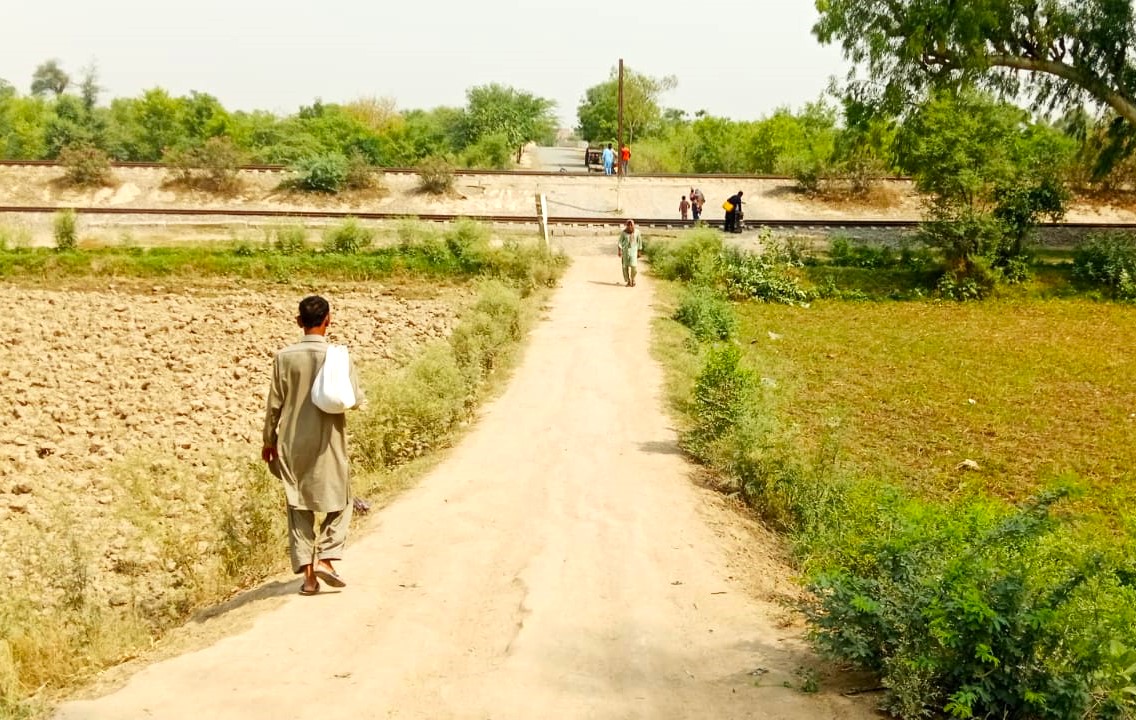
    SAHIWAL: Residents of villages 76/5-R, 77/5-R and 74/5-R have renewed their demand for a steel overhead bridge at 77 Wali Pully. They saying the long-standing absence of a safe railway crossing has turned a routine journey into a daily hazard for thousands of people. The three villages are home to an estimated 20,000 to 23,000 people. Residents say the proposed bridge would provide a safe route for pedestrians, cyclists, motorcyclists and rickshaws to cross the Lower Bari Doab Canal (LBDC) and the double-track Lahore-Khanewal railway line. They also demand improving access to the Lahore-Multan National Highway and markets in Yousafwala, Qadirabad and Sahiwal. The demand has been raised repeatedly with the district administration, Pakistan Railways, Punjab government and local PML-N parliamentarians since the 1,320MW Sahiwal coal-fired power plant became operational in 2017. Official records confirm that the plant is located near Qadirabad and that its commercial operations began in October 2017. Before the power plant was built, villagers had two traditional routes to Yousafwala and Qadirabad markets. One was through the railway crossing near Yousafwala Railway Station, which allowed light and heavy traffic to pass. The other, locally known as “77 Wali Pully”, involved crossing the LBDC by wire-boat before walking across the railway tracks. Tehzeeb, an LHV from village 76/5-R, said the second route had been used for three to four decades, particularly by women and pedestrians. Rickshaws operated on both sides of the canal and railway line, helping commuters reach nearby villages and markets. However, following the power plant’s development, the railway crossing was closed for public use and traffic was diverted to a new route several kilometres away. A concrete bridge was constructed over the LBDC, but no corresponding crossing was provided over the double railway track. “This challenge of crossing the railway line remains unresolved,” said Sadique, a resident of 76/5-R. Villagers say more than 1,000 people, including students, women, elderly residents, traders and labourers, cross the area on foot every day, often facing the danger of fast-moving trains. Pir Imran Shah, a former four-time MNA, said he had twice forwarded the villagers’ proposal to Pakistan Railways, but it did not progress to the PC-I stage. Residents working through the Model Village Welfare Committee have now renewed their appeal. Najam Lumberdar of 77/5-R said the bridge would eliminate a lengthy detour and provide safer access to markets and Sahiwal city. A local civil society representative also described the demand as genuine, noting that similar pedestrian and motorcycle bridges have been constructed elsewhere. Dawn has learnt that Pir Imran Shah has again forwarded the committee’s application to Pakistan Railways, seeking preparation of a PC-I and construction of the proposed steel bridge. For residents, the demand is simple: a safe crossing that restores the connectivity they say was lost nearly a decade ago.

  • | |

    18 terrorists killed in Balochistan operation: ISP…

    Eighteen suspected terrorists were killed in Balochistan’s Surab district after an explosives-laden vehicle detonated prematurely, followed by a security operation against fleeing militants, the military’s media wing said on Wednesday. According to the Inter-Services Public Relations (ISPR), the incident occurred on the morning of August 12 while the militants were preparing a vehicle-borne improvised explosive device (VBIED). The premature explosion killed eight militants at the site, while several others were reportedly injured. ISPR said additional explosives stored by the militants also detonated. The blast reportedly caused the deaths of three civilians living or working near the area. Following the explosion, security forces and Balochistan Police launched a joint clearance operation. The objective was to identify those involved in the incident and locate other militants and their facilitators. During the operation, security personnel detected several militants attempting to flee the area. Ten more militants were subsequently killed in an exchange of fire, according to ISPR. The military said the combined death toll among the militants involved in the incident had reached 18. Two security personnel were also injured during the operation. Security forces have continued sanitisation activities in the area to search for any remaining militants and clear possible threats. The military said counter-terrorism operations would continue under the government’s broader Azm-e-Istehkam framework. It said security and law-enforcement agencies remained committed to preventing terrorist groups from establishing a foothold in the country. The latest operation comes a day after security forces reported killing five militants during an intelligence-based operation in Balochistan’s Panjgur district. Balochistan has remained one of Pakistan’s key security challenges, with militant groups repeatedly targeting security personnel, civilians and government installations. The province has witnessed several major attacks in recent months, prompting increased coordination between the Pakistan Army, Frontier Corps and Balochistan Police. Security officials say operations are being conducted to disrupt militant networks, identify facilitators and prevent further attacks. The authorities have also repeatedly warned that militant groups operating in Balochistan pose a threat to both civilian life and national security.

  • |

    Iran appoints former revolutionary guards chief Mohsen Rezaei to National Security Council

    TEHRAN: Iran has appointed veteran military and political figure Mohsen Rezaei to a senior position within the country’s Supreme National Security Council (SNSC), replacing Mohammad Baqer Zolqadr and bringing one of the Islamic Republic’s most prominent former Revolutionary Guards commanders back into a central security role. The appointment was announced late Sunday by the office of Iranian President Masoud Pezeshkian’s deputy director of communications. No official explanation was immediately provided for the change, and it remains unclear whether Rezaei’s appointment will result in any significant shift in Iran’s security or foreign policy. Rezaei, 71, has extensive experience in Iran’s military, security and political institutions. He served as commander of the Islamic Revolutionary Guard Corps (IRGC) from 1981 until 1997, a period that included most of the Iran-Iraq war. His return to a prominent security position comes at a particularly sensitive time for Iran, amid continuing tensions with the United States and Israel, as well as uncertainty surrounding the security of the strategically important Strait of Hormuz. The SNSC is one of Iran’s most important institutions for coordinating national security and foreign policy. Although the council is formally chaired by the elected president, it brings together senior military, intelligence and government officials, along with representatives of Supreme Leader Mojtaba Khamenei. Major strategic decisions ultimately remain subject to the authority of the supreme leader. Zolqadr’s short tenure ends Zolqadr had been appointed secretary of the SNSC only in late March. He took over the position following the death of his predecessor, Ali Larijani, who was killed in an air strike during the conflict involving Iran, the United States and Israel. Unlike Zolqadr, Rezaei has maintained a considerably higher public profile over the course of his political career and has frequently spoken on major domestic, economic and foreign-policy issues. In a separate decree issued Sunday, Supreme Leader Mojtaba Khamenei appointed Rezaei as his representative to the SNSC. The decree referred to Rezaei’s extensive experience, including his service during the 1980-1988 Iran-Iraq war. Hardline politician Saeed Jalili also serves as the supreme leader’s representative on the council. The same decree appointed Zolqadr as Khamenei’s political adviser, suggesting that his departure from the SNSC leadership does not represent a complete withdrawal from the country’s senior political establishment. Rezaei’s long political career Rezaei’s career has extended well beyond the military. After leaving his post as IRGC commander, he served for more than two decades as secretary of Iran’s Expediency Discernment Council, an influential body involved in resolving disputes between state institutions and advising the supreme leadership. He later entered the executive branch, serving as vice president for economic affairs from 2021 to 2023 during the administration of former President Ebrahim Raisi. Rezaei also holds a doctorate in economics from the University of Tehran. Despite his academic background, much of his professional life has been spent within Iran’s military, security and political establishment. His appointment therefore places an experienced figure with a long history in Iran’s national security apparatus at the center of a council responsible for coordinating some of the country’s most consequential strategic decisions. Strait of Hormuz remains key issue The leadership change comes as Tehran continues discussions over the future of shipping through the Strait of Hormuz, a critical international energy route. Iranian Foreign Minister Abbas Araqchi said Saturday that Tehran and Oman were nearing an understanding on a possible new shipping route through the strait. The waterway has faced severe disruption during months of conflict and escalating regional tensions. However, Iranian officials have indicated that reopening the route would depend on broader conditions being met. These reportedly include demands related to US compensation for Iran and an end to what Tehran describes as American threats and aggression. Zolqadr had previously outlined several demands, including an end to US threats against Iran, the cessation of military action against Iran and its regional allies, the lifting of sanctions and blockade measures, and the release of Iranian assets. The demands highlight the wider diplomatic and security challenges facing Tehran as it attempts to manage relations with Washington while dealing with continuing regional instability. Policy direction remains uncertain The replacement of Zolqadr by Rezaei does not necessarily indicate an immediate change in Iran’s foreign-policy direction. The SNSC operates within a broader political system in which the supreme leader has ultimate authority over major matters of national security and international affairs. However, Rezaei’s extensive military background and long involvement in Iran’s senior political institutions could make his appointment significant, particularly as Tehran navigates negotiations, military tensions and economic pressure.

  • | |

    Pakkay dost season 4: Bilal Maqsood brings educati…

    Singer and songwriter Bilal Maqsood has announced the fourth season of his popular children’s programme Pakkay Dost, promising a fresh mix of educational songs, entertainment and Urdu-language learning for young audiences. The new season of Pakkay Dost is set to premiere on YouTube on August 22. Maqsood shared the announcement on Instagram, expressing excitement about bringing the programme back with more engaging content for children and families. Maqsood explained that the main idea behind Pakkay Dost is to create healthy and wholesome entertainment in Urdu while making the language feel fun, modern and relevant to children. The upcoming season will continue using music as a way to teach children about different subjects. The programme will explore topics including Urdu, physical fitness, kindness towards animals, vegetables and the human body. One of the performances features actor Syra Yousuf, who can be seen dancing to a song about the history of the Urdu language. The performance introduces children to vocabulary influenced by languages such as Arabic and Turkish while making language learning entertaining. The new educational songs will also teach children about exercise and healthy habits. Other songs will introduce the names of vegetables as well as bones and joints in the human body. According to Maqsood, Pakkay Dost now has more than 50 songs covering a wide variety of subjects and facts. He has encouraged parents to watch the programme with their children, emphasizing that the show has been created to entertain adults as well as young viewers. The singer also said that enjoying the music himself is an important part of his creative process. His approach combines catchy songs with educational themes, allowing children to learn without making lessons feel like traditional classroom activities. With Pakkay Dost Season 4 arriving on YouTube on August 22, Bilal Maqsood is continuing his effort to introduce children to Urdu through music, humour and wholesome entertainment. The new season is expected to appeal to families looking for educational content that can keep children entertained while helping them learn about language, health, nature and their own bodies.

Leave a Reply

Your email address will not be published. Required fields are marked *