فیچرڈ

  • | |

    Ishaq Dar, Turkish foreign minister discuss region…

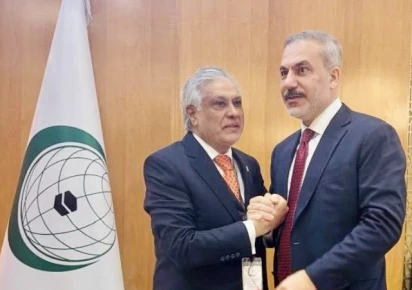
      ISLAMABAD: Deputy Prime Minister and Foreign Minister Ishaq Dar held a telephone conversation with Turkish Foreign Minister Hakan Fidan on Sunday night, during which the two sides discussed recent developments in the region and reaffirmed their commitment to strengthening cooperation on issues of mutual interest. According to Pakistan’s Ministry of Foreign Affairs, the two foreign ministers agreed that dialogue and diplomacy remained the most effective means of addressing regional challenges and promoting peace and stability. The conversation took place as Pakistan continues its diplomatic engagement with regional and international partners amid the ongoing conflict involving the United States, Israel and Iran. Islamabad has increasingly emerged as an important diplomatic channel in efforts aimed at reducing tensions and encouraging negotiations between the parties. Dar has recently held discussions with several senior diplomats regarding the rapidly changing regional situation. Last week, he met US Chargé d’Affaires Natalie Baker, British High Commissioner to Pakistan Jane Marriott, Chinese Ambassador Jiang Zaidong and Pakistan’s Ambassador-designate to Sweden Ahmed Amjad Ali. During these meetings, the foreign minister exchanged views with the diplomats on regional developments and Pakistan’s efforts to contribute to peace and stability. Dar emphasized that the Islamabad Memorandum of Understanding must be implemented in both letter and spirit, describing this as the most appropriate way forward. He also reiterated Pakistan’s commitment to regional peace, security and diplomatic engagement. Dar recently held a joint press conference with Norwegian Foreign Minister Espen Barth Eide, who praised Pakistan’s role during the US-Iran conflict. Eide particularly acknowledged the efforts of Prime Minister Shehbaz Sharif, Ishaq Dar and Chief of Defence Forces Field Marshal Asim Munir during delegation-level discussions held in Islamabad. The Norwegian foreign minister said Pakistan had taken on a significant responsibility by offering Islamabad not only as a venue for negotiations but also as a facilitator between Washington and Tehran. Eide described Pakistan’s diplomatic efforts as a service to the international community and expressed strong support for the role Islamabad had assumed since the conflict began on February 28. The latest diplomatic contacts also come against the backdrop of a major regional security development: the signing of the Makkah Joint Defence Agreement by Pakistan, Saudi Arabia and Turkiye on August 7. The trilateral agreement has been described as a defensive security framework designed to strengthen collective deterrence, expand military cooperation and contribute to regional stability. The agreement has attracted considerable attention because of the growing security challenges in the region and the evolving strategic relationships among Pakistan, Saudi Arabia and Turkiye. The Makkah agreement follows the Strategic Mutual Defence Agreement signed between Pakistan and Saudi Arabia last year. That pact established a stronger bilateral security relationship and stated that aggression against either country would be regarded as aggression against both. The latest developments indicate that Pakistan is seeking to strengthen diplomatic and security partnerships while maintaining its stated preference for dialogue and peaceful resolution of regional disputes. Dar’s conversation with Fidan further reflects the close relationship between Islamabad and Ankara, particularly on regional security and diplomatic matters. Both countries have consistently emphasized the importance of cooperation, consultation and peaceful negotiations in addressing regional crises. Their latest discussion is expected to contribute to continued coordination as tensions across the region remain high.

  • | |

    Federal Cabinet Interference in CCI matters violat…

      Islamabad: The federal cabinet has no constitutional authority to decide matters reserved for the Council of Common Interests, a Senate sub committee has declared, warning that continued cabinet interference in electricity, petroleum, gas, railways, ports and regulatory bodies is damaging provincial rights and weakening constitutional protection for smaller provinces. The Senate Sub Committee on Devolution, chaired by Senator Barrister Zamir Hussain Ghumro, directed that matters falling under the CCI must not be taken to the federal cabinet. The committee said the Prime Minister should place such issues before the CCI and call its meetings frequently. According to the committee, Article 154 of the Constitution gives the CCI responsibility over subjects listed in Part II of the Federal Legislative List. The committee argued that these powers belong to the CCI rather than the federal cabinet. It said this constitutional arrangement was created to protect provinces from decisions dominated by the federal government. The committee particularly highlighted the position of smaller provinces. It noted that Punjab has 141 seats in the National Assembly while the other three provinces together have 122 seats. According to the committee, putting important provincial matters under the CCI provides protection against decisions based only on the strength of the majority in the National Assembly. The committee said the CCI should be reconstituted in a way that ensures equality among provinces. It also called for more frequent CCI meetings so important disputes between the federation and provinces are not left unresolved. The committee said the prices of electricity, petroleum, gas and medicines should be supervised and controlled through the CCI rather than the federal cabinet. It argued that federal executive authority must operate within the Constitution and that Article 154 gives the CCI authority over relevant subjects. The committee also said major national organisations and sectors connected with Part II of the Federal Legislative List should come under the CCI. These include Railways, Petroleum, Electricity, Ports and several regulatory bodies. The committee specifically named OGRA, NEPRA, PEMRA and PTA among institutions whose matters, in its view, should fall under the CCI framework. It said Planning and Development authorities and other bodies working in fields covered by Part II should also operate under CCI authority instead of federal cabinet control. The committee strongly objected to federal cabinet involvement in these areas. It said interference by the federal cabinet in CCI subjects was contrary to Article 97 read with Article 154 of the Constitution. One of the most serious issues discussed was the planned privatization of electricity distribution companies. The committee stated that the privatization of companies including IESCO, FESCO, LESCO, GESCO, SEPCO and HESCO cannot proceed without CCI approval from the Power Division or Privatization Commission. It argued that taking such decisions without the CCI would violate Articles 154 and 157 of the Constitution. The committee directed that the privatization of electricity distribution companies must be placed before the CCI. It also referred to the Supreme Court judgement in the Mian Nawaz Sharif case and said the CCI should be involved before such major decisions are taken. The committee rejected the federal government’s reliance on the Gadoon Amazai ruling regarding CCI meetings. It said Parliament had already addressed the issue of meeting frequency by requiring the CCI to meet at least once every three months or earlier when urgent matters arise. The committee therefore called on the Prime Minister to convene CCI meetings regularly. According to members, failure to use the CCI weakens the constitutional voice of provinces and allows issues affecting the entire federation to be decided through the federal cabinet. The panel also questioned several ministries, divisions and state owned bodies dealing with subjects it believes belong either to the provinces or the CCI. It said federal structures created around provincial or CCI subjects should be devolved or closed where required, without harming employees. Among the institutions and sectors the committee mentioned included Water Resources, Railways, Industries, Statistics, Petroleum, Inter-Provincial Coordination, Planning and Development and WAPDA. The committee also referred to regulatory bodies and other organisations whose functions, it said, should be examined according to the constitutional division of powers. Members said the purpose of the CCI was not simply to hold occasional meetings. They described it as a constitutional mechanism designed to allow the federation and provinces to jointly decide major national matters. The committee warned that bypassing the CCI could create mistrust between the provinces and the federal government. It said smaller provinces need the CCI to ensure they have a meaningful voice in decisions involving national resources, energy, infrastructure and regulation. The committee directed the federal government to amend its Rules of Business within 15 days so that matters falling under the CCI are handled according to the Constitution. It asked the government to submit a report explaining the changes made. The message from the committee was clear. Major decisions involving electricity, petroleum, gas, railways, ports, regulators and other CCI subjects should not be decided by the federal cabinet alone. The committee wants these matters taken back to the Council of Common Interests, with the Prime Minister required to use the constitutional forum regularly to protect provincial rights and build agreement between the federation and all four provinces.

  • | |

    47 killed in 7.7-magnitude Indonesia earthquake

    JAKARTA: At least 47 people were killed after a powerful magnitude 7.7 earthquake struck eastern Indonesia on Saturday, triggering dozens of aftershocks, landslides and a brief tsunami warning, authorities said. The National Disaster Mitigation Agency (BNPB) reported widespread damage across the affected region, while rescue operations were hampered by blocked roads and disrupted communications. Teams were still unable to reach Nagekeo, the area closest to the epicentre, because landslides had cut off road access. In the port town of Maumere, rescuers recovered 20 bodies and found six injured people, while two others remained trapped beneath rubble. Officials said residents were also trapped in damaged buildings in other parts of the region. Tsunami waves measuring less than one metre were recorded in several coastal areas following the early-morning quake. Authorities lifted the tsunami warning around three hours later. Around 2,000 people in Nagekeo were evacuated as homes, warehouses and government buildings suffered damage. Power outages and severe traffic disruptions were also reported. Rescue teams were attempting to reach isolated communities by alternative routes, including ferry services, as authorities continued assessing the full scale of the disaster.

  • | |

    Iran claims Trump’s Press Secretary quit over di…

    The Iranian embassy in South Africa has claimed that White House Press Secretary Karoline Leavitt resigned because she had become frustrated and disillusioned with US President Donald Trump, rather than stepping down to spend more time with her family. According to foreign media reports, the Iranian embassy shared a photograph of Leavitt appearing displeased and accompanied it with a strongly worded message accusing Trump of betraying those around him. The embassy alleged that Trump had sent others into danger while avoiding the situation himself, adding that such conduct left little room for trust or friendship. Trump has confirmed Leavitt’s resignation, while the White House rejected the Iranian embassy’s account as false. Officials also disputed the embassy’s claim that Leavitt had been with Trump during his visit to Turkey, further challenging the basis of Tehran’s allegations.

  • | |

    Israeli strikes persist in Lebanon, white phosphor…

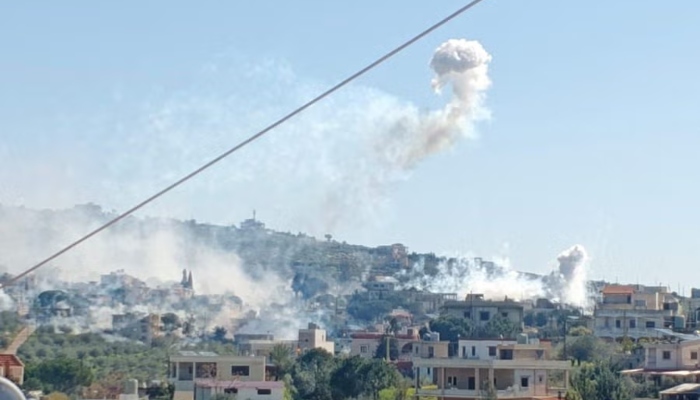
    Israeli forces have continued carrying out strikes in southern Lebanon despite an existing ceasefire, with Arab media reports alleging that white phosphorus was used in the mountainous area of Ali al-Tahir. The latest reported attacks come a day after an Israeli strike killed 11 people, including seven members of the same family, according to local and foreign media reports. The continued bombardment has intensified concerns over the fragile ceasefire and the humanitarian situation in southern Lebanon. Iran has strongly condemned the Israeli military action, describing the ongoing attacks as aggression against Lebanon. Tensions escalated earlier this year after Hezbollah launched an attack on Israel, two days after the United States and Israel began military action against Iran. Israel subsequently expanded its operations in Lebanon and took control of parts of the country’s southern region. Israeli authorities have said their forces will remain in the area to prevent further attacks against communities in northern Israel. Foreign news reports say that at least 4,300 people have been killed in Lebanon since March 2 amid the continuing escalation.

  • | |

    Egypt could join expanding Mecca Agreement, says E…

    Turkish President Recep Tayyip Erdogan has said Egypt could become part of the Mecca Agreement in the future, describing the framework as open to participation by additional countries. Speaking to Arab media, Erdogan said the agreement provides for collective action if any participating member comes under external attack. He suggested that the inclusion of Egypt could further broaden the scope of the regional arrangement. Erdogan also said Turkey’s immediate priority is not the European Union, arguing that Europe is currently facing serious shortcomings. He further stressed the need to reopen the Strait of Hormuz, warning that keeping the strategic waterway closed for an extended period would serve no country’s interests.

  • |

    Baked with Pride, Sung with Love

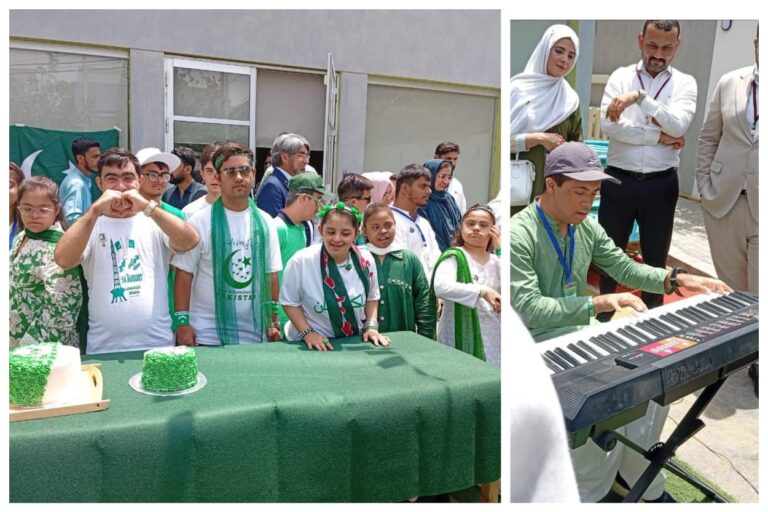
    Karachi: As journalists, we’ve attended countless 14th August celebrations — most of them lost in long speeches, endless queues of guests of honour and chief guests, or simply mismanaged and overcrowded. You leave unable to focus on even a single stage performance, let alone the sequence of events. This year was different. I attended a ceremony that was not only full of joy, but also remarkably well-managed and disciplined — a gathering where everyone truly felt part of the celebration. It was held at KDSP, a centre of excellence for children with Down syndrome. A Lesson in Discipline and Dignity And isn’t it surprising? In a country where we can’t even manage discipline at regular school functions, it took a centre for differently-abled children to show us how it’s done. With sharing. With togetherness. With dignity. I saw real joy and happiness on those children’s faces — and my daughter, Bibi Marium, was among them. The event was full of surprises.   In most gatherings, adults push and shove to get to the main head table and into group photos. Here, the children were gently accommodating each other in the queue for cake cutting. There was no chief guest to distract, no protocol to irritate the kids and parents. Even the CEO and Chairman stood to the side, watching joyfully as their children celebrated. A Family Festival, Not Just a Ceremony The next surprise was this: it wasn’t just a celebration. It was a family festival. Children and parents both came dressed in green and white — shalwar kameez, t-shirts, trousers, mostly in flag colours. They weren’t sitting on the sidelines. They were part of it — they were guests and chief guests both. The entire KDSP management — CEO, Directors, Managers, teachers, staff and mentors — made a point to be present too. But they chose to stand from the sidelines, letting the children take center stage. One of the most moving moments was when Abdullah Haris, a student of KDSP’s EFL program, played the National Anthem on the piano. The entire venue erupted in thunderous applause. And you could see the proudest smile on the face of CEO Tabish Shahzad as she watched her children shine. Baked with Love After the anthem came the cake-cutting ceremony — and again, no pushing, no crowding. Children, staff, and parents all enjoyed the refreshments together. There was enough for everyone. The cake was so soft, yummy and delicious that I assumed it came from some high-profile bakery. But to my surprise, it was prepared in-house — by the children of the cooking class, guided by their young yet expert instructor, Head Chef Zainab Durrani. A COTHM graduate and pursuing her special education degree, Chef Zainab has a rare gift: children instantly connect with her. For years she has been associated with KDSP, putting in all her effort to teach them the skill of cooking on every available platform. Under her guidance, these children aren’t just baking — they’re gaining confidence, independence, and pride. While talking to me, a parent of a child with Down syndrome, Mr. Karim Navroz Ali from the Finance Department said, “KDSP makes every effort to motivate our children, to inspire them, and to build a more inclusive society. These children must be treated equally — and normally.” He nodded, head held high. And again to my surprise, after the ceremony, everyone was back to work and into the class, no day of skill development of a child is wasted, that development means here. “1947. Pakistan. Independence.” I also spoke with Ms. Sadia Navaid, a skills facilitator at KDSP, who teaches and empowers students with fine motor skills and hand-eye coordination. She is among the teachers loved by all. When I asked her whether these children feel patriotism and love for the country, her answer left me speechless. She shared that when she asked the children to make a quilling flag, they instantly said: “1947. Pakistan. Independence.” Ms. Sadia emphasized that these children are often more sensitive than others, and they carry a deeper feeling of ownership for their country. The managers of the Skill Development Program — Ms. Mahzaib Faheem, Ms. Umme Farwa, and Ms. Sania Siddiqui, Ms Mehak — also dressed in green and white, were glowing with pride. They shared that although the event was short and sweet, it took days of decorating the entire center and making arrangements for this precious day. “For us, it’s not just about a celebration,” they said. “It motivates the children, and it also binds us all together in joyful times.” What Independence Is Meant to Be As I walked out of KDSP that day, my heart was full. What I saw wasn’t just an Independence Day celebration. I saw courage, I saw dignity, I saw belonging. These children taught me that patriotism isn’t about grand speeches — it’s about standing together, singing together, baking together, and believing together. KDSP isn’t just building skills. It’s building a Pakistan where every child, regardless of ability, is seen, heard, and celebrated. And in that hall, dressed in green and white, I truly felt it: this is what independence is meant to be. “Independence is not a day on the calendar. It is the day a child feels they belong to.”   Meet the author: The writer is a senior journalist and columnist covering crime, law, social issues, governance, energy, health, literature, and women and children’s rights across Pakistan’s leading English media houses. Feedback: mediawomen2014@gmail.com

  • | | |

    MQM-P pushes for grand national dialogue on new pr…

    KARACHI: The Muttahida Qaumi Movement-Pakistan (MQM-P) has announced plans to approach political parties across the country to launch a “grand national dialogue” on the creation of new provinces and administrative units. Speaking at a press conference on Sunday, MQM-P Chairman Dr Khalid Maqbool Siddiqui said Pakistan needed a serious national discussion on restructuring its administrative system, arguing that the country’s growing population had increased the need for additional provinces. Siddiqui said MQM-P had been advocating the creation of more provinces for decades, maintaining that Pakistan’s existing provincial structure was largely shaped by linguistic considerations rather than purely administrative requirements. He stressed that the party’s demand was not limited to Sindh and that it would support calls for new provinces wherever there was public and political backing. The MQM-P leader urged political parties to sit together and discuss their proposals and reservations instead of treating the issue as a source of political confrontation. He said his party was prepared to take the lead in initiating such a dialogue. Siddiqui also linked the debate over new provinces with the need to strengthen local governments. Referring to Article 140-A of the Constitution, he said provinces were constitutionally required to devolve political, administrative and financial powers to elected local representatives. He criticised the failure to fully implement the provision and recalled that MQM-P had previously approached the Supreme Court over the issue. He argued that creating additional provinces was not unconstitutional and said Parliament could debate the appropriate mechanism for establishing them. He also questioned whether existing provinces should have the sole authority to decide on their own division. MQM-P leader and Health Minister Mustafa Kamal said the party’s proposal was aimed at administrative restructuring rather than dividing communities or territories. He argued that people should have greater control over local leadership and governance, particularly when their cities face serious problems in living standards and public services. The MQM-P campaign follows recent remarks by Interior Minister Syed Mohsin Naqvi, who called for political parties to address major national issues, including the creation of new provinces. His proposal has since generated debate among government figures, lawyers and political circles, giving fresh momentum to the long-running discussion over Pakistan’s provincial structure. The MQM-P leadership said it would also engage legal experts and explore further legal avenues regarding the implementation of constitutional provisions related to local governance.

  • | | |

    Quaid-i-Azam’s statue unveiled at Pakistan Embas…

    WASHINGTON: A statue of Pakistan’s founder, Quaid-i-Azam Mohammad Ali Jinnah, has been unveiled at the Pakistan Embassy in Washington as part of the country’s Independence Day celebrations. Pakistan’s Ambassador to the United States Rizwan Saeed Sheikh inaugurated the statue during a ceremony attended by members of the Pakistani-American community, diplomats and media representatives. The statue was donated by the Quaid-i-Azam Foundation of Houston and will remain permanently installed at the embassy. The unveiling comes as Pakistan prepares to commemorate Jinnah’s 150th birth anniversary later this year, adding historical significance to the Independence Day event. Addressing the gathering, Ambassador Sheikh paid tribute to Jinnah’s constitutional struggle and leadership, saying his efforts transformed the vision of Pakistan into reality. He urged Pakistanis, particularly those living abroad, to follow the founder’s guiding principles of “Unity, Faith and Discipline.” The ceremony opened with the hoisting of Pakistan’s national flag and the national anthem, followed by Quranic recitation and the reading of messages from Pakistan’s president, prime minister and deputy prime minister. The ambassador also highlighted Pakistan’s growing importance in its relationship with the United States. His remarks came alongside a message from US Secretary of State Marco Rubio, who noted cooperation between the two countries in areas including regional mediation, critical minerals, energy, counterterrorism, cultural heritage, trade and investment. Pakistan’s role in regional diplomacy has gained particular attention amid efforts to ease tensions between the United States and Iran, with Islamabad seeking to use its ties with both countries to encourage dialogue. The event also featured an investiture ceremony for Waqar Ali Khan, who received the President’s Award for Pride of Performance in recognition of his long-standing contribution as a community leader and cultural ambassador in the United States.

  • | |

    Content creator killed in broad-daylight shooting …

    TAXILA: A female TikTok content creator was shot dead and her teenage sister critically wounded in a broad-daylight attack near the Taxila bypass on GT Road, police said. According to police sources, the sisters were travelling in their car when a motorcyclist intercepted them near the bypass and opened fire. Both sustained multiple bullet wounds, while their vehicle lost control and crashed into a dumper. The content creator died at the scene, while her critically injured sister was initially taken to Tehsil Headquarters Hospital, Taxila, before being shifted to Islamabad for further treatment. The victim’s brother told police that he had nominated two suspects in the case, alleging that a financial dispute between the woman and the accused had led to the targeted attack. Police registered a case and launched an investigation into the shooting. In a separate incident in Attock, police registered a target-killing case following the shooting deaths of two brothers in Malho village, within the jurisdiction of Rango Police Station in Hazro. Meanwhile, a 13-year-old boy drowned while swimming in a village pond in the Chappri area of Jand. Rescue 1122 officials recovered the boy’s body and shifted it to Tehsil Headquarters Hospital. Police registered a case and began an investigation into the incident.