content creator killed
| |

Content creator killed in broad-daylight shooting …

TAXILA: A female TikTok content creator was shot dead and her teenage sister critically wounded in a broad-daylight attack near the Taxila bypass on GT Road, police said.

According to police sources, the sisters were travelling in their car when a motorcyclist intercepted them near the bypass and opened fire. Both sustained multiple bullet wounds, while their vehicle lost control and crashed into a dumper.

The content creator died at the scene, while her critically injured sister was initially taken to Tehsil Headquarters Hospital, Taxila, before being shifted to Islamabad for further treatment.

The victim’s brother told police that he had nominated two suspects in the case, alleging that a financial dispute between the woman and the accused had led to the targeted attack. Police registered a case and launched an investigation into the shooting.

In a separate incident in Attock, police registered a target-killing case following the shooting deaths of two brothers in Malho village, within the jurisdiction of Rango Police Station in Hazro.

Meanwhile, a 13-year-old boy drowned while swimming in a village pond in the Chappri area of Jand. Rescue 1122 officials recovered the boy’s body and shifted it to Tehsil Headquarters Hospital. Police registered a case and began an investigation into the incident.

Similar Posts

  • | |

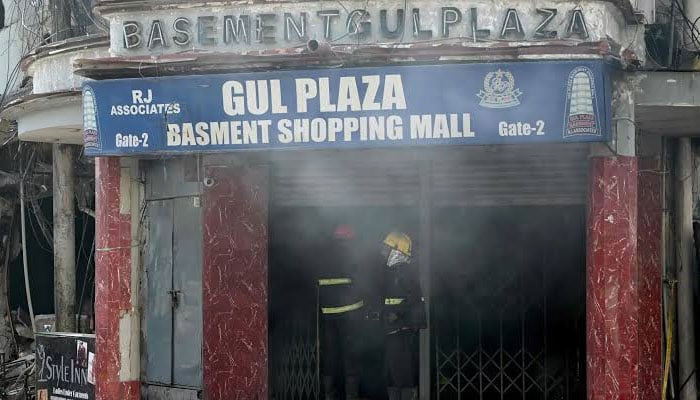
    Court extends Gul Plaza probe till Aug 9

    KARACHI: A judicial magistrate in Karachi has granted investigators additional time to complete the investigation into the Gul Plaza tragedy case. The court extended the deadline until August 9 and directed the investigating officer to submit a complete report at the next hearing. During the proceedings, the investigating officer informed the court that the inquiry was still in progress and requested more time to finalize the investigation. He said responses from several government departments had been collected, but information from some key institutions was still awaited. The court was told that six government departments had already submitted their replies to investigators. However, responses from the Sindh Building Control Authority (SBCA) and the Water Corporation had not yet been received, preventing the investigation from being completed. The investigating officer requested that the court allow additional time so that all pending replies could be included in the final investigation report. The court accepted the request and granted an extension until August 9. The magistrate directed the investigating officer to complete all remaining inquiries before the next hearing and submit a comprehensive report covering all aspects of the case. The court stressed the importance of ensuring that the investigation is thorough and based on complete information from all relevant departments. The Gul Plaza tragedy case has remained under investigation as authorities continue collecting evidence and official records from various institutions. Investigators are examining the role of different departments and reviewing all available documents before reaching their final conclusions.

  • Senate seeks 16-year oil and gas profit record

    Islamabad: A Senate committee has raised serious questions over the distribution of billions of rupees generated from Pakistan’s oil and gas resources, demanding a complete financial breakdown of profits earned by oil and gas companies over the last 16 years. The Sub Committee of the Senate Functional Committee on Devolution directed authorities to provide a clear record of revenues and prepare a plan to ensure provinces receive their constitutional share from natural resources. The committee reviewed the implementation of Article 38(g) of the Constitution and examined whether provinces were receiving proper representation in federal institutions and a fair share from national resources. During the discussion on oil and gas revenues, the committee sought details of profits earned by oil and gas companies during the past 16 years. Officials were directed to verify and finalize the figures and prepare a proposal for the distribution of funds. Officials from the Petroleum Division informed the committee about the existing 50:50 revenue sharing system between the federal government and provinces. They explained that revenues generated from natural resources contribute to the national treasury through non tax income. However, the committee stressed that natural resources belong to the people and called for stronger transparency mechanisms to ensure that provinces receive their rightful share without unnecessary delays. Chairman Senator Zamir Hussain Ghumro directed authorities to introduce necessary legal and administrative improvements to strengthen the system of revenue distribution and prevent unequal treatment of provinces. The committee also focused on provincial employment representation in federal ministries and government linked corporate boards. The chairman expressed concern that constitutional provincial quotas were not being implemented effectively in some areas. He directed the Establishment Division to remove gaps in recruitment procedures and ensure that people from less developed and rural areas receive their due opportunities. The committee ordered officials to identify provinces facing representation shortages and take immediate steps to correct the imbalance. Officials were directed to submit a detailed compliance report in the next meeting, showing progress on both employment representation and natural resource revenue distribution.

  • | |

    IHC reserves decision on Imaan Mazari, Hadi Chatth…

    The Islamabad High Court on Friday reserved its decision on whether petitions seeking the suspension of prison sentences awarded to lawyers and human rights activists Imaan Zainab Mazari-Hazir and Hadi Ali Chattha can proceed. The petitions relate to the couple’s convictions in a case involving alleged controversial social media posts under the Prevention of Electronic Crimes Act (PECA). The hearing was conducted by Justice Muhammad Azam Khan, who considered preliminary arguments from both the prosecution and the defence before reserving his ruling on the maintainability of the petitions. During the proceedings, lawyers representing the National Cyber Crime Investigation Agency (NCCIA) argued that the requests for suspension of sentence had been filed too early. They maintained that the court should first decide the prosecution’s objection challenging the admissibility of the petitions before considering any request for relief. The prosecution submitted that hearing the suspension petitions before deciding its objection would make its legal challenge ineffective. It therefore requested the court to first determine whether the petitions were legally maintainable. Counsel for Imaan Mazari and Hadi Chattha opposed the objection and said he was ready to argue the prosecution’s application immediately. He suggested that both the objection and the suspension requests should be heard together to avoid unnecessary delays in the proceedings. The judge advised the defence to fully prepare its arguments, observing that doing so would better protect the legal rights of the convicted lawyers. However, the defence maintained that it was prepared to proceed without delay and formally waived any request for additional preparation time. After hearing submissions from both sides, Justice Azam Khan stated that the court would first determine whether the petitions seeking suspension of sentence were legally maintainable. Only after resolving that issue would the court consider the merits of the requests for suspension of the sentences. At the end of the hearing, the Islamabad High Court reserved its decision on the prosecution’s objection. The ruling will determine whether the petitions can move forward for further consideration. Imaan Mazari and Hadi Ali Chattha were convicted by a sessions court earlier this year and received a combined sentence of 17 years’ imprisonment on multiple charges under PECA

  • | | |

    New committee to review Mir Raza case today

    A new investigation committee will hold an important meeting today to review the Mir Raza Ali murder case. The meeting will be chaired by DIG Aamir Farooqi. The committee will conduct a fresh and impartial investigation into the case. It will examine all aspects of the incident. Investigators will identify and collect any new evidence linked to the case. The evidence will be properly preserved and examined. Physical, technical, circumstantial and forensic evidence will also be reviewed. The committee will closely examine the victim’s injuries and clothes. It will also compare the two conflicting post-mortem reports. Investigators have been directed to take all possible steps to reach a conclusion. The team will submit its findings to the relevant court within the given timeframe. Daily progress reports will also be prepared. Additional officers may be included in the investigation if required. The committee will also record statements from members of the medical board involved in the first post-mortem. Doctors and experts who conducted the first post-mortem are expected to be questioned. They may also be given a detailed questionnaire. Investigators will try to determine the evidence behind the first post-mortem findings. The report had stated that the bullet entered through the chest and exited through the back. The team will also examine how forensic evidence was documented and preserved during the initial investigation. The second post-mortem report gave a different assessment of the bullet’s direction. Investigators will therefore compare both reports in detail. They will also examine the injuries, clothing and other forensic material. Meanwhile, investigators have obtained details about Mir Raza Ali’s movements on the night of July 28. Details of his final phone calls and messages have also been collected. According to the investigation, Mir Raza spoke to two people through three phone calls that night. He reportedly spoke to a person named Ali at 2:13am and again at 2:16am. His final call was answered by his friend Abdullah. The two spoke for more than three minutes.

  • | |

    Pakistan’s military tightens grip on Islamis…

    Munir’s family background feeds into this shift as well. He is the son of an imam and considers himself a devout, conservative Muslim, and religious identity remains deeply woven into Pakistan’s state institutions. Even so, he has pushed the country toward international engagement through cryptocurrency partnerships, foreign investment deals, a mediating role in the conflict between the United States and Iran, and a mutual defence pact with Saudi Arabia. Data shared with a foreign news agency by the Armed Conflict Location and Event Data Project, a group that tracks conflict incidents worldwide, shows the scale of the shift. Pakistan averaged more than seven blasphemy related riots or attacks annually between 2021 and 2024, but recorded only one such incident over the past twelve months. Economic pressure appears to have played a significant role in prompting the crackdown. Two Pakistani government sources said officials grew alarmed during the summer of 2025 that rising hostility from fundamentalist groups toward France and other European countries threatened to jeopardize a European Union duty waiver covering Pakistani exports. Nearly a third of Pakistan’s total exports go to the EU, and losing that preferential access could have dealt a severe blow to the national economy. Neither the European Commission nor Pakistan’s commerce ministry responded to requests for comment on the matter. Washington has added its own pressure over religious freedom concerns. The US Commission on International Religious Freedom, a government watchdog, recommended last year that Pakistan be placed back on a list of countries of particular concern due to its blasphemy laws, a designation Islamabad has firmly rejected. Analyst Abdul Basit of Singapore’s S. Rajaratnam School of International Studies said worsening insurgent violence in Balochistan and Khyber Pakhtunkhwa, Pakistan’s two most mineral rich provinces, likely added urgency to Munir’s campaign, particularly since he has pitched foreign investment in the country’s mining sector to American officials over the past year. Basit noted that religious groups have lost favor within the state’s priorities, though he cautioned that the militias driving these regional insurgencies are not formally tied to the newly banned Islamist organizations, even if both draw recruits from the same pool of young, radicalized men. Elizabeth Threlkeld, who directs the Stimson Center’s South Asia program, said the open question going forward is whether Pakistan can sustain this level of focus over time. Crackdown targets country’s largest fundamentalist movement The largest of the groups swept up in the crackdown, Tehreek e Labbaik Pakistan, built its identity around the slogan “Death to blasphemers” before authorities banned it late last year. Many of its leaders now sit in jail, its mosques have been sealed shut and its financial accounts frozen. A previously undisclosed government document that laid the groundwork for the ban argued the organization had become a serious threat to Pakistan by damaging both domestic stability and the country’s standing internationally. A spokesperson for the group pointed to a statement it issued last year describing the ban as illegal and unconstitutional. The move against Tehreek e Labbaik follows earlier crackdowns on groups such as Lashkar e Taiba and Jaish e Muhammad, which Pakistan pursued under pressure from the Financial Action Task Force, the international body that monitors terrorism financing. Basit linked the newest crackdown to a period of internal reflection within Pakistan over its historical backing of the Afghan Taliban, whom Islamabad now blames for stoking Islamist insurgencies against the Pakistani state from across the border. The Taliban government in Kabul has dismissed that accusation as baseless, and a spokesperson for its foreign ministry declined to comment further, describing Pakistan’s crackdown as an internal matter. For Pakistan’s Christian, Shia and Ahmadi communities, the change in atmosphere has been dramatic. In the past, suspects in blasphemy related killings, including police officers, were sometimes greeted with rose petals or celebratory receptions, and individuals accused of burning churches or minority mosques often received public praise. Blasphemy remains a capital offense under Pakistani law, and even a rumor of an accusation has historically been enough to spark riots or lynchings. Human rights organizations say victims’ families have rarely obtained justice, since judges and lawyers have often been too frightened to take on such cases. Officer Malik said everyone who confronted the crowd during last month’s incident in Karachi felt genuine fear. The Christian family targeted that day was eventually moved to safety, and an initial investigation has since found the accusations against them to be false. Group’s military links trace back a decade Tehreek e Labbaik formed in 2015 while its founder was imprisoned for shooting and killing a Pakistani provincial governor in 2011 over his support for a Christian woman accused of blasphemy. That gunman, a former police bodyguard, was later convicted and executed months after the group’s founding. Analysts have long suspected the group’s creation received at least tacit support from Pakistan’s military establishment, including its intelligence services, as a tool to keep civilian governments and mainstream political parties in check. Following violent riots led by the group in 2017, then army chief General Qamar Javed Bajwa referred to its protesters as the country’s own people. Pakistan’s Supreme Court later ordered the military and intelligence agencies to stay out of politics but stopped short of directly tying them to the organization. Analysts and former officials say the effects of years of tolerance for the group will not disappear simply because of a ban, and that the shock felt by its supporters could still trigger backlash. Ihsan Ghani, who served as Pakistan’s counter terrorism chief during the 2017 riots, said he worries the group could resurface at full strength if its usefulness to the state changes again. He compared decades of state backed nurturing of the movement to something that cannot simply be switched on and off at will. Within Pakistan’s minority communities, the sudden shift still feels fragile. One of the Christian women rescued during last month’s incident in Karachi said she and her family are now physically safe, but admitted the fear has not fully faded.

  • |

    Tourist plane crash in Peru kills 13

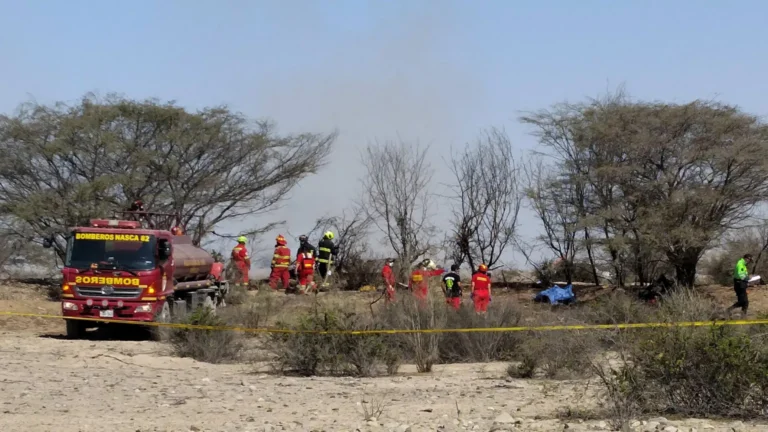
    LIMA: A tourist aircraft crashed in southern Peru on Saturday, killing all 13 people on board during a sightseeing flight over the world-famous Nazca Lines, authorities confirmed. The aircraft, identified as a Cessna Caravan C-208, was carrying 11 foreign tourists and two pilots when it went down near the Nazca archaeological site shortly after taking off from Pisco Airport. According to officials, the passengers included seven Italian nationals, two Germans and two Spaniards. Emergency responders rushed to the crash site, but there were no survivors. Police and rescue teams launched recovery operations immediately after the accident. Authorities said the impact completely destroyed the aircraft, making rescue efforts impossible. Investigators have begun examining the wreckage to determine what caused the crash. The Nazca Lines, a UNESCO World Heritage Site, attract thousands of visitors every year. The enormous ancient geoglyphs, etched into the desert more than 1,500 years ago, are best viewed from the air, making sightseeing flights a popular tourist activity. Local authorities expressed deep sorrow over the tragedy and extended condolences to the victims’ families. The airline operating the flight said it would cooperate fully with investigators and review its flight operations in line with directives from aviation authorities. The accident is the latest in a series of aviation incidents involving sightseeing flights over the Nazca Lines. Similar crashes in previous years have raised concerns about the safety of tourist flights in the region. Officials said a full investigation is underway to establish the exact circumstances behind the fatal crash.

Leave a Reply

Your email address will not be published. Required fields are marked *