تازہ ترین

  • |

    Deepika Padukone was never truly in the running for ‘Spirit’

    Deepika Padukone is back in the headlines as old reports of her 2025 exit from Sandeep Reddy Vanga’s “Spirit” resurface. The story has drawn fresh attention despite happening more than a year ago. At the time, the actress reportedly left the project after feeling she had not been properly briefed. Producer Pranay Reddy Vanga had also claimed she had asked for a share of the film’s profits. Now, sources close to the actress say she was never seriously considering the role in the first place. According to an insider, Padukone has only met Vanga once in her entire career, and the filmmaker reportedly showed up an hour late to that meeting. Despite the delay, the source said Padukone handled the rest of the interaction professionally throughout. According to a Hindustan Times report, she was never given a full narration for the project, receiving only a brief, one-line pitch instead. Sources explained that this approach simply does not match how Padukone typically works. According to the insider, she never commits to a project without hearing a complete narration first, meaning “Spirit” was reportedly never genuinely on her radar to begin with. The source went further, suggesting Padukone would be unlikely to work with Vanga under any circumstances. They pointed to his reputation, describing his approach as reflecting deeply misogynistic undertones, both in his public persona and in the content of his films. Following her exit, “Spirit” has since moved forward with a new cast, now featuring Prabhas and Tripti Dimri in the lead roles. Vanga remains widely known for directing dark, intense films including “Animal,” “Arjun Reddy” and “Kabir Singh.” His work has often sparked debate over its treatment of gender dynamics and on-screen violence. With the story resurfacing now, it’s reignited public discussion around both Padukone’s selective approach to choosing projects and the broader criticism Vanga’s filmmaking style continues to attract within the industry.

  • |

    Infantino urged to skip youth event as FIFA pressure mounts

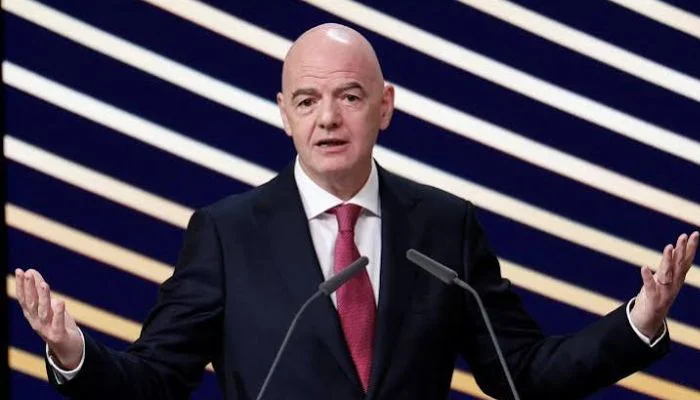
    FIFA president Gianni Infantino is facing growing pressure to stay away from an under-14s youth tournament in the Dominican Republic. The request comes amid escalating anger over his handling of World Cup-related commercial plans. According to reports, Infantino received a letter on Friday from a regional football executive warning that his presence could disrupt the tournament entirely. The concern centres on how his attendance might overshadow what’s meant to be a purely technical, development-focused youth event. While Infantino received warm greetings from local politicians ahead of the trip, the head of football’s governing body for North America and the Caribbean firmly opposed his attendance at the Caribbean Football Union event. In the letter, the CONCACAF president reportedly asked Infantino directly to reconsider showing up, warning that his presence could end up undermining the tournament’s youth development goals. The request adds to a broader wave of criticism currently surrounding Infantino’s leadership. FIFA continues to provide substantial financial support to countries through revenue generated by the World Cup, giving the organisation considerable regional influence. Despite that, CONCACAF has reportedly joined forces with European and Asian football confederations, co-signing a letter pushing for Infantino’s resignation. The coordinated pressure marks a significant escalation in tensions surrounding his leadership. While Infantino may still retain some support within CONCACAF, particularly from Mexico, other co-hosts of the 2026 World Cup, including Canada, have openly criticised his leadership. That growing divide has placed him under an increasingly difficult spotlight. Adding further pressure, a FIFA presidential election is scheduled for next year. Football associations in England, Wales and Scotland have already withdrawn their prior endorsements of Infantino, signalling weakening support even among traditionally aligned nations. With mounting criticism from multiple continents, an upcoming leadership election, and now formal requests to stay away from grassroots football events, Infantino’s position atop world football appears increasingly precarious heading into the coming year.

  • |

    Kate Middleton reportedly steps in amid alleged royal will dispute

    Kate Middleton is reportedly refusing to remain on the sidelines as tensions surrounding the British Royal Family continue to attract attention. New claims suggest that the Princess of Wales has become involved in an alleged dispute over King Charles’ financial arrangements and the future inheritance of Prince William. According to reports circulating about the royal family, King Charles has allegedly made changes to his will that could leave William without the fortune he was reportedly expected to inherit. The claims come at a time when tensions between the monarch and his eldest son are said to be heightened by disagreements over several family matters, including Prince Harry’s expected return to the United Kingdom. Sources cited in the reports claim that Charles’ decision was influenced partly by what has been described as William’s strong-willed personality. Royal biographer Hugo Vickers has previously characterized the future king as someone who believes he knows what is best, a description that has been used in discussions about the alleged differences between father and son. One particularly dramatic claim suggests that William has been removed from Charles’ will, with the fortune allegedly being redirected toward Prince Harry. The reported inheritance has been estimated at around $2 billion, although there has been no official confirmation from Buckingham Palace or the royal family regarding the contents of the King’s will. The alleged disagreement has also been linked to tensions between Kate and Queen Camilla. According to the reports, William and Kate were involved in an awkward moment at a recent royal event after they allegedly passed Camilla without performing the expected curtsy. The incident reportedly fueled speculation about disagreements behind closed doors. Claims surrounding the alleged inheritance dispute further suggest that Kate has sought legal advice from palace lawyers. The Princess of Wales is reportedly taking the matter seriously and is said to be seeking clarification over any financial arrangements that could affect her husband and their family. However, the claims remain unverified, and there has been no public statement from the Palace confirming that William has been removed from Charles’ will or that Harry has been named as the recipient of a multibillion-dollar inheritance. The alleged dispute comes as attention also turns toward Prince Harry and Meghan Markle. The couple are reportedly expected to return to the UK with their children, Prince Archie and Princess Lilibet, before the end of August. Harry’s potential return with his family could place renewed attention on the complicated relationships within the royal household. His relationship with William has remained strained since the Duke and Duchess of Sussex stepped away from royal duties and relocated to the United States. With Harry potentially returning to Britain alongside Meghan and their children, speculation surrounding the brothers, their wives and the wider royal family is likely to continue. For now, however, the claims about Charles’ alleged will remain unconfirmed, leaving questions over whether there is any truth behind the reported financial dispute.

  • |

    Bunny Levine dies at 97 after Hollywood career

    Bunny Levine, the beloved character actress known for her memorable appearances in popular television shows and films, has died at the age of 97. Levine’s death was announced on Thursday, August 20, with news of her passing bringing an end to a remarkable life and entertainment career that began much later than most actors. She reportedly died peacefully at her home in Tarzana, California, while she was asleep. According to reports, authorities received a call on Thursday regarding an unresponsive person at a residence in Tarzana. Responding officials later identified the woman as Levine. Her death marked the loss of an actress who spent several decades quietly building an impressive list of television and film credits. Before entering Hollywood, Levine had a very different professional life. She worked as a school librarian and teacher in Teaneck, New Jersey, for approximately 25 years. Acting eventually became her second career, with Levine taking her first steps into the entertainment industry when she was around 60 years old. Despite beginning her acting journey later in life, Levine quickly established herself as a reliable character actress. She appeared in numerous well-known television productions, often playing warm, humorous or memorable supporting characters. Among her notable credits was the hit series Gilmore Girls, where she appeared as Mrs. Thompson. She also featured in Everybody Loves Raymond, portraying a friend of Ray’s mother, Marie. Her character became memorable for repeatedly dropping things while admiring Ray’s appearance, creating one of the show’s lighter comic moments. Extensive Hollywood career Throughout her long acting career, Levine appeared in an impressive range of television shows. Her credits included Law & Order, Ugly Betty, Private Practice, Criminal Minds, 2 Broke Girls, Raising Hope, Southland, New Girl, The Mindy Project, Fuller House and Shameless. She also appeared alongside actor James Van Der Beek in an episode of Friends with Better Lives. The project became another notable entry in a career that allowed Levine to work across different genres and alongside numerous established performers. One of her most recognizable movie appearances came in the Oscar-winning musical La La Land. Released in 2016 and starring Ryan Gosling and Emma Stone, the film featured Levine as a movie theatre cashier. Although many viewers may not have known her name, Levine’s ability to bring authenticity and personality to smaller roles made her a familiar face across television and film. Bunny Levine reflected on acting In a past interview, Levine opened up about her decision to pursue acting later in life. She suggested that the desire to perform could be difficult to explain, describing it as something that simply exists within a person. Levine also explained that she continued working on her craft rather than waiting for a single defining moment to transform her career. She studied, practiced and continued trying to improve, eventually developing a successful career that lasted for decades. Her journey was particularly remarkable because she entered the entertainment world at an age when many people are already considering retirement. Instead, Levine began a new chapter and went on to appear in dozens of productions. Family remembers late actress Levine is survived by five immediate family members. Her surviving loved ones include her three children, Marty, Francie and Joe, as well as her two grandchildren. Her death marks the end of an extraordinary journey from educator and librarian to a familiar face on Hollywood screens. Bunny Levine’s career serves as a reminder that it is never too late to pursue a passion, and her memorable supporting roles will continue to be part of the television and film projects she helped bring to life.

  • |

    Pakistan’s trade deficit widens 26% in July as imports surge

    ISLAMABAD: Pakistan’s trade deficit increased by 26% during the first month of the fiscal year 2026-27, mainly driven by a sharp rise in imports, according to the latest data released by the Pakistan Bureau of Statistics (PBS). The widening gap between imports and exports highlights growing pressure on the country’s external trade position at the beginning of the new fiscal year. Imports increased by around 19% in July, with higher purchases recorded across several major categories, including food products, machinery, transport equipment, textiles, agricultural inputs and metals. According to the PBS data, the country’s food import bill reached $805.4 million in July 2026, equivalent to more than Rs224 billion. The increase reflects continued reliance on imported food products and essential raw materials to meet domestic demand. Among food items, imports of milk, cream and food products prepared for infants rose by 25% to $18.7 million. Pakistan also imported significant quantities of spices, soybeans, palm oil and pulses during the month. Sugar imports were also recorded during July, with the country importing around 112 metric tonnes, adding to the overall food import bill. Machinery imports rise sharply Machinery emerged as one of the major contributors to the increase in the import bill. Machinery imports jumped by 41% to $1.31 billion during July compared with the corresponding period. The increase covered a wide range of equipment used in key sectors of the economy. Imports included machinery for power generation, offices, textile manufacturing, agriculture, construction and telecommunications. The rise in machinery imports could indicate increased demand for equipment and investment-related goods across different industries, although it also contributed significantly to the expansion of the overall trade gap. Vehicle imports register strong growth Imports of transport equipment, including vehicles, also witnessed substantial growth during the month. The import bill for the category increased by 40% to $420 million. The increase in vehicle and transport-related imports added further pressure to the country’s import expenditure, particularly as several other major import categories also recorded double-digit growth. Textile-related imports increase Pakistan’s textile sector also recorded higher imports during July. Imports of textile-related products, including raw cotton, increased by 15% to $680 million. The rise in raw cotton and other textile inputs indicates continued demand from the country’s large textile manufacturing and export industry. Since the textile sector remains a major contributor to Pakistan’s exports, higher imports of production inputs can also be linked to industrial activity. Agricultural inputs and chemicals Imports of agricultural machinery, equipment and chemicals increased by 23%, taking the combined import bill for the category to more than $1 billion. The increase comes as demand remains high for inputs and equipment required by the agriculture sector. Higher imports of such goods can support domestic production but simultaneously add to the country’s foreign exchange requirements. Metals import bill also rises The country also witnessed a significant increase in imports of metals, including gold, iron and steel. Imports under the category increased by around 23%, while the import bill for precious metals alone crossed $730 million. The broad-based rise across food, machinery, transport, textiles, agricultural inputs and metals suggests that the increase in imports was not confined to a single sector. The latest figures indicate that controlling the trade gap will remain an important challenge for policymakers during the new fiscal year. While higher imports of machinery, industrial inputs and agricultural equipment may support economic activity, a sustained increase in imports without a corresponding rise in exports could place additional pressure on Pakistan’s external account.

  • |

    Harry and Meghan’s brand faces a crossroads with UK return

    In late July, Meghan’s lifestyle range, As Ever, launched a new blackberry spread alongside a softly lit video of her picking the fruit. A month later, she and Prince Harry announced plans to return and live in the UK, just as blackberry season winds down. Whether another such video follows remains unclear, especially since experts say the couple’s wider brand is now at a turning point. Since their departure from royal duties in 2020, most of the Sussexes’ California-based ventures, from streaming deals to fragrance lines, have struggled to draw large audiences. Experts say it’s genuinely unclear what direction they’ll take next. Their UK return has surprised many, and although they will not resume royal duties, questions remain about what comes instead. Oxford marketing professor Andrew Stephen says the couple excelled early at capturing attention and monetising it, but have struggled to turn that into a lasting brand identity. He describes their current portfolio as fragmented, spanning social impact, entertainment and lifestyle, making it hard to define exactly what their brand represents. Their $100 million Netflix deal and $25 million Spotify agreement, both signed in 2020, have delivered underwhelming results by most measures. The Netflix arrangement produced just five shows over five years before being replaced with a lower-commitment, first-look agreement last year. Spotify, meanwhile, parted ways with the couple back in 2023. Branding expert Susan Fournier warns that the couple’s repeated pivots, from royal insiders to critics to media producers to lifestyle influencers, carry real risk. She argues that once a brand shifts direction dramatically, reversing course becomes difficult, and a UK return could look like yet another turn rather than a resolution. Stephen suggests the solution lies in building a focused, coherent set of ventures and credible causes, rather than continuing to diversify. One possibility involves Meghan returning to acting, with reports suggesting talks over a role in Netflix’s “The Gentlemen.” Her lifestyle brand, As Ever, is also expected to continue regardless of the move. A potential relocation to the Cotswolds has also sparked interest, with stylist Laura Stoloff suggesting genuine synergy between Meghan’s brand and English country life. Still, Stephen cautions that a new postcode alone won’t reposition a brand, only consistent action will.

  • |

    Punjab boards to fill long-pending vacancies through PPSC

    LAHORE: The Punjab government has initiated the process of recruiting staff against a number of vacant positions in educational boards across the province, aiming to strengthen administrative capacity and address long-standing shortages. The vacancies have been identified in several categories, including Computer Programmer, Assistant, Senior Computer Operator, Deputy Secretary, Assistant Secretary and Estate Officer. The recruitment drive will cover educational boards in different parts of Punjab, including the Lahore and Faisalabad boards. The Board of Intermediate and Secondary Education (BISE) Lahore has been allocated 33 positions in BS-16 and BS-17. The appointments will be made through the Punjab Public Service Commission (PPSC), providing a formal and merit-based mechanism for the selection of candidates. Officials said the recruitment is intended to improve the functioning of educational boards, many of which have been operating with vacant posts for extended periods. The shortage of staff has reportedly placed additional pressure on existing employees and affected the efficiency of various administrative operations. Some educational boards have been waiting for fresh recruitment for nearly 15 years, according to officials familiar with the situation. The prolonged vacancies have created gaps in administrative and technical staffing, making it difficult for boards to efficiently manage their growing workload. The latest recruitment initiative is therefore being viewed as an important step toward strengthening the institutional structure of the boards and improving the delivery of services to students, teachers and educational institutions. The Education Department has emphasized that the appointments will be conducted through a transparent recruitment process. Candidates will be considered according to the prescribed eligibility requirements, qualifications and selection criteria. Officials maintained that merit would remain the central principle throughout the recruitment process, with the PPSC responsible for conducting the appointments in accordance with established rules and procedures. The recruitment is expected to provide educational boards with additional technical, administrative and managerial support, enabling them to handle examination-related activities and other responsibilities more efficiently.

  • | |

    Pakistan exports rise 13.1% to $3.94 billion in Ju…

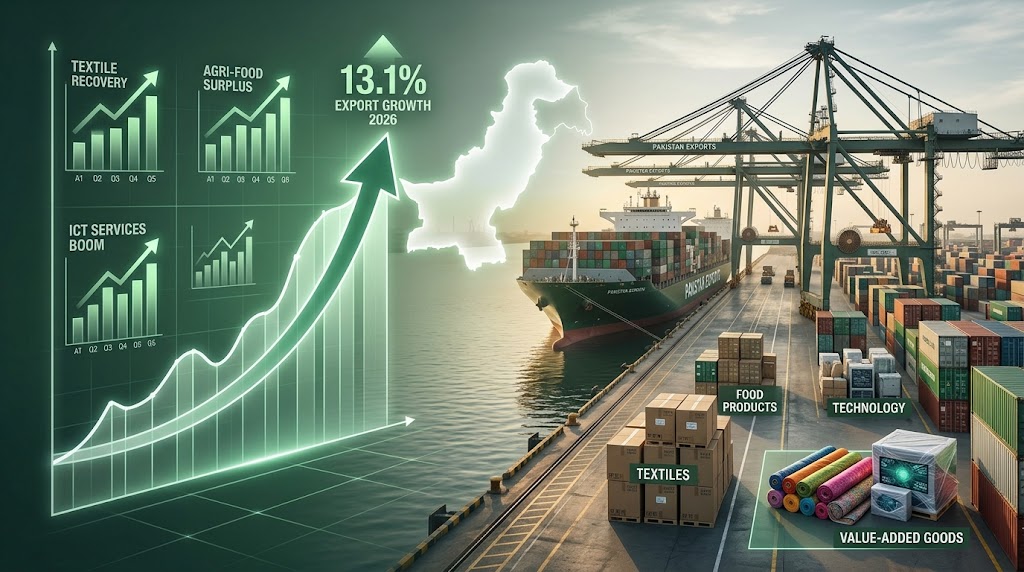
    ISLAMABAD: Pakistan’s exports of goods and services rose by 13.1 percent year-on-year to $3.94 billion in July 2026, providing an encouraging start to the new fiscal year and signalling continued improvement in the country’s external sector. Federal Minister for Planning, Development and Special Initiatives Ahsan Iqbal shared the figures on Saturday while presenting the Monthly Development Update for August 2026. He said exports stood at $3.48 billion in July 2025, meaning the latest increase reflects stronger performance across several major export categories. According to the minister, merchandise exports increased by 9.4 percent to around $3 billion in July 2026 from $2.8 billion a year earlier. When services exports are included, the combined figure reached approximately $3.9 billion, compared with $3.5 billion in July last year. Key export sectors show growth Ahsan Iqbal said the improvement in exports was supported by higher shipments across several important sectors. Surgical goods recorded the strongest growth among the highlighted export groups, increasing by 16.3 percent. Food exports rose by 8 percent, while leather goods registered growth of 7.8 percent. Textile exports, one of Pakistan’s largest sources of foreign exchange, also increased by 3.9 percent during the month. The minister said the figures indicated that Pakistan’s external sector had started the new fiscal year on a positive trajectory, although maintaining this momentum would require continued reforms, improved competitiveness and greater diversification of export products and markets. Manufacturing sector stages strong recovery The positive external-sector performance coincided with a broad-based recovery in domestic industrial activity. According to Ahsan, Large-Scale Manufacturing (LSM) expanded by 5 percent during fiscal year 2025-26, reversing a 0.74 percent contraction recorded in the preceding fiscal year. He said the recovery was spread across the industrial sector, with 16 of the 22 LSM sectors registering positive growth. The automobile sector posted the highest increase at 57.8 percent, followed by transport equipment at 42.4 percent. Electrical equipment production grew by 14.3 percent, tobacco by 12.6 percent and food manufacturing by 7 percent. The figures, he said, reflected an improvement in industrial activity and could provide support to investment, employment and overall economic growth if the recovery remains sustained. FBR collection, remittances improve The government also reported improvement in tax revenues at the beginning of FY2026-27. Federal Board of Revenue tax collection increased by 8.4 percent to Rs820.9 billion in July 2026, according to the minister. He said stronger revenue mobilisation, together with fiscal discipline, was helping improve the country’s overall financial position. Workers’ remittances also remained a major source of support for Pakistan’s external account. Remittance inflows reached $3.63 billion in July 2026, up 13 percent from approximately $3.2 billion in the same month of 2025. Ahsan said the latest increase followed record remittances of $41.6 billion received during the previous fiscal year. He noted that remittances not only strengthened Pakistan’s foreign exchange position but also provided direct financial support to millions of households across the country. Current account deficit remains contained Despite continued pressure on the external account, the current account deficit remained relatively contained. The deficit stood at $328 million in July 2026, compared with $529 million during the same month of the previous year. The minister described the development as another indication of improved external-sector stability. He also highlighted the growing contribution of Pakistan’s technology sector. Information and Communication Technology exports reached $417 million in July 2026, underlining the increasing role of digital services in generating foreign exchange. The government has been seeking to expand technology exports as part of a broader strategy to diversify Pakistan’s sources of external earnings beyond traditional sectors such as textiles and agricultural products. Inflation moderates Ahsan Iqbal also pointed to a moderation in consumer price pressures at the start of the new fiscal year. Consumer Price Index inflation eased to 9.2 percent in July 2026, compared with 11.7 percent in May 2026. The minister said the decline suggested that inflationary pressures were beginning to moderate. He added that changes in the year-on-year inflation rate were also influenced by base effects as well as the impact of international food and energy prices. The government is aiming to maintain price stability while supporting economic activity and protecting the purchasing power of households. Fiscal position strengthens The planning minister said Pakistan’s fiscal position had also improved significantly during FY2025-26. The fiscal deficit narrowed to 2.6 percent of GDP from 5.4 percent in FY2024-25. According to Ahsan, this represented the lowest fiscal deficit recorded in two decades. He said stronger fiscal management would remain essential during FY2026-27 as the government seeks to maintain macroeconomic stability while creating room for development spending and economic expansion. Development spending and job creation Public investment is another major component of the government’s economic strategy. Projects approved during July 2026 are expected to create around 7,851 direct jobs and 14,053 indirect employment opportunities across different sectors. The minister said employment generation would remain an important objective of development planning, particularly as the country seeks to create greater opportunities for its young population. He said Pakistan had undergone a difficult period of economic adjustment and that the stability achieved in recent years had required significant effort. Under the government’s URAAN Pakistan initiative, the next phase would focus on converting macroeconomic stability into long-term economic transformation, with exports positioned as a key driver of growth. According to Ahsan, higher exports could help generate employment, increase household incomes, expand opportunities for young people and improve living standards. Rs211.3 billion authorised for development projects The Ministry of Planning authorised Rs211.327 billion, equivalent to 21.1 percent of the relevant allocation, during July 2026 to facilitate timely financing for priority development projects. The minister said the move was aimed at ensuring that strategically important schemes received funding without unnecessary delays. During July, the Central Development Working Party (CDWP) also reviewed a number of development proposals. It approved nine projects, three position papers and one concept clearance proposal, while nine projects were recommended for consideration by the Executive Committee of the National Economic Council (ECNEC). Three projects were deferred, while


  • |

    Pakistan, Malaysia agree to strengthen counter-terrorism and security cooperation

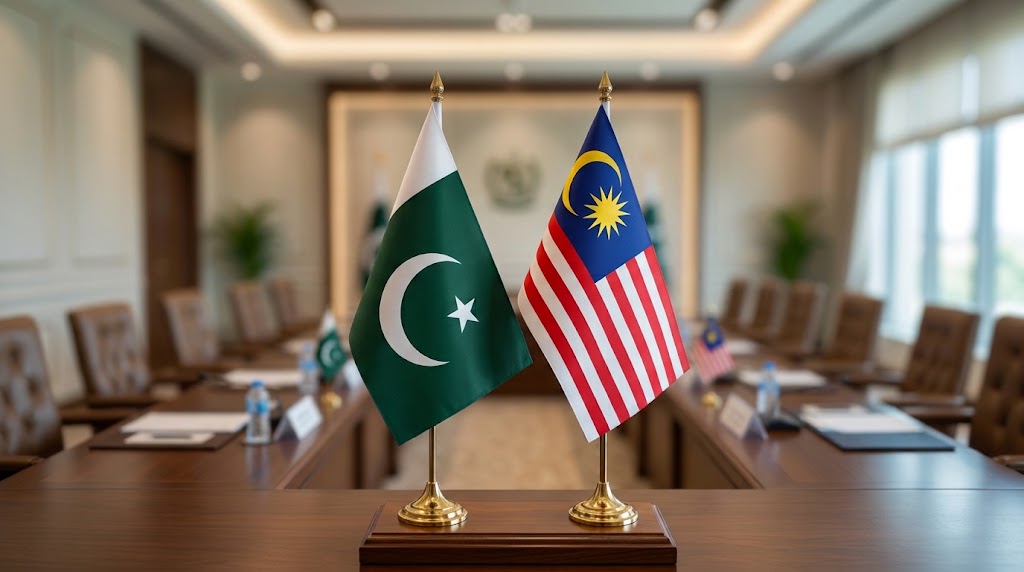
    ISLAMABAD: Pakistan and Malaysia have agreed to deepen cooperation in security and law enforcement, with particular emphasis on intelligence sharing, counter-terrorism, drug trafficking, human smuggling and other transnational crimes. The understanding was reached during a meeting between Federal Interior Minister Mohsin Naqvi and Malaysian Minister of Home Affairs Saifuddin Nasution Ismail in Islamabad on Saturday. The two sides reviewed a range of issues related to bilateral security cooperation and agreed to strengthen institutional coordination between the relevant agencies of both countries. During the meeting, the ministers discussed ways to develop more effective mechanisms for exchanging intelligence and coordinating efforts against terrorist networks, narcotics trafficking and human trafficking. They also agreed to enhance cooperation aimed at preventing illegal immigration and tackling cybercrime, which has emerged as a growing challenge for law enforcement agencies worldwide. The two countries also discussed expanding collaboration in the fields of coast guard operations and professional training. Pakistan expressed interest in learning from Malaysia’s experience in strengthening maritime security and developing the capabilities of its coast guard institutions. A key outcome of the meeting was an agreement to improve cooperation between Pakistan’s National Police Academy and the Royal Malaysia Police College. The initiative is expected to facilitate the exchange of expertise, training programmes and professional experiences between law enforcement personnel from the two countries. The ministers also agreed that a high-level Pakistani delegation would visit Malaysia in the near future. The proposed visit is expected to provide an opportunity to advance discussions on bilateral security cooperation and explore new areas of collaboration between the two countries. Naqvi said Pakistan attached great importance to its relations with Malaysia and was keen to further expand cooperation in areas of mutual interest. He said Malaysia’s experience in the Coast Guard sector could provide valuable lessons for Pakistan and expressed confidence that the Malaysian minister’s visit would help take bilateral relations to a new level. The interior minister also highlighted the potential for increasing people-to-people contacts between Pakistan and Malaysia. He described Malaysia as one of the rapidly developing Muslim-majority countries and an attractive destination for Pakistani tourists. Naqvi stressed the importance of facilitating legitimate travel between the two countries, saying that an increase in employment opportunities and work quotas for Pakistanis in Malaysia could encourage more people to use legal channels for travelling and working abroad. Tourism promotion and the facilitation of visa procedures also formed part of the discussions. Both sides emphasized the need to make travel easier while ensuring that immigration systems remain secure and effective. The meeting comes as Pakistan and Malaysia seek to broaden cooperation beyond traditional diplomatic and economic ties, particularly in dealing with security challenges that increasingly cross national borders. Officials from Pakistan’s Interior Ministry and law enforcement institutions also attended the meeting. Participants included State Minister for Interior Talal Chaudhry, the Interior Secretary, Director General of the Federal Investigation Agency (FIA), Inspector General of the Federal Constabulary (FC), the National Coordinator of the National Counter Terrorism Authority (NACTA), and other senior officials. The two countries are expected to continue consultations through their respective institutions, with the planned Pakistani delegation’s visit to Malaysia likely to provide further momentum to cooperation in counter-terrorism, law enforcement, immigration and maritime security.

  • | |

    Canada announces retaliatory tariffs as trade talks with US collapse

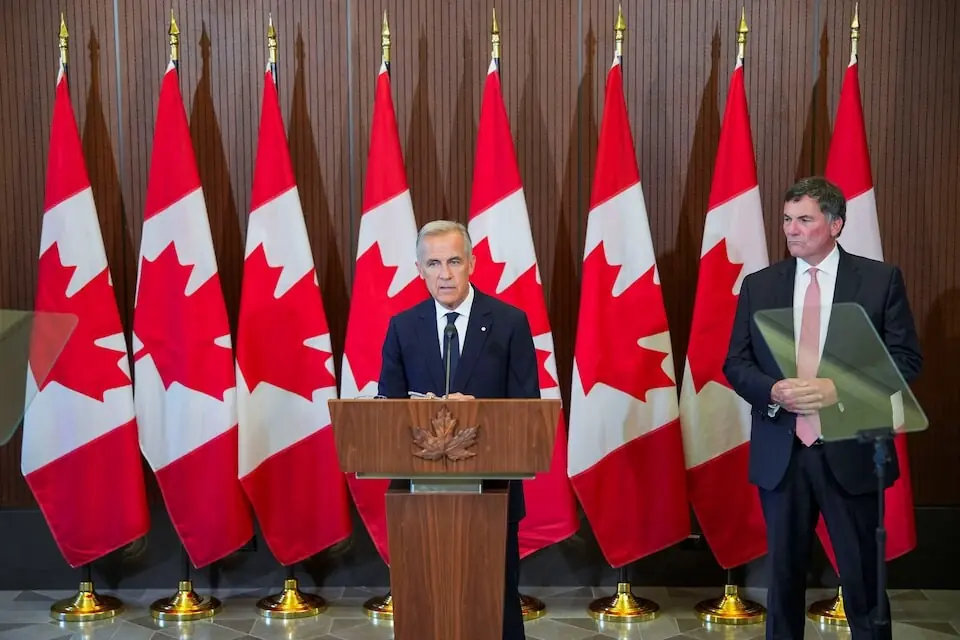
    OTTAWA: Canada has announced plans to impose new tariffs on a range of American products in response to steep duties introduced by US President Donald Trump on Canadian goods, marking another sharp deterioration in trade relations between the two North American neighbours. Prime Minister Mark Carney said on Saturday that Canada would adopt a “dollar-for-dollar” approach to Washington’s latest tariffs. The retaliatory measures are scheduled to take effect on September 8 and will cover products including US steel, electronics, appliances, agricultural equipment, pulp and paper and other goods. The announcement came after three days of intensive negotiations between Canadian and US officials ended without a trade agreement. Both sides blamed the other for the failure to reach a breakthrough, raising fresh uncertainty over the future of the United States-Mexico-Canada trade framework. Carney vows to defend Canadian economy Speaking at a press conference in Ottawa, Carney said Canada would respond to the US measures in an effort to shield workers, farmers, businesses and families from the economic impact of the new duties. “Canada will match Washington’s new tariffs dollar for dollar,” Carney said, stressing that Ottawa could not accept the conditions put forward by the US administration. Asked whether the dispute had effectively developed into a trade war, Carney responded in stark terms, saying Canada had been attacked and therefore had to defend its economic interests. The Canadian government said its countermeasures would target a broad selection of US products. Further details, including the specific goods affected and the tariff rates, are expected to be announced in the coming days. Carney also indicated that Ottawa would introduce support programmes for Canadian industries affected by the American duties. The assistance could remain in place for several years depending on the impact of the trade measures. US-Canada negotiations break down The latest dispute follows the collapse of negotiations that had been viewed as an opportunity to prevent a further escalation in tariffs. US Trade Representative Jamieson Greer described the failed talks as a missed opportunity for Canada and said Washington would proceed with measures responding to Canadian retaliation. He also suggested that no fresh negotiations were immediately planned. The White House and offices representing the US commerce secretary and trade representative did not immediately issue a detailed response to Canada’s announcement. The breakdown has created additional uncertainty for businesses operating across the US-Canada border, particularly industries that depend heavily on integrated North American supply chains. New US duties affect key Canadian exports The latest US tariffs apply to a range of Canadian exports, including wine, furniture, dairy products, cement, clothing, fishing equipment and hockey-related products. According to the Canadian government, the new duties affect approximately $20 billion worth of Canadian exports to the United States. Unlike some previous measures, the latest tariffs do not fully exempt products traded under the existing North American trade agreement. The new duties represent a relatively small share of Canada’s overall exports to the US, but officials and industry representatives warn that individual sectors could face significant pressure. Industries such as softwood lumber, wine, manufacturing and other export-oriented businesses could experience weaker demand, higher costs and potential employment losses if the dispute continues. Candace Laing, chief executive of the Canadian Chamber of Commerce, urged companies across the country to prepare for a prolonged period of uncertainty. Dispute over vehicles and trade conditions One of the most difficult issues during the negotiations involved the treatment of larger vehicles. Canadian negotiators reportedly sought to extend preferential tariff arrangements for light-duty vehicles to medium- and heavy-duty trucks. Washington opposed the proposal, according to people familiar with the negotiations. Carney said the US position could have placed Canadian-made models at a competitive disadvantage. He specifically pointed to vehicles produced in Canada, including Ford’s F-350, F-450 and F-550 trucks and General Motors’ Silverado. The Canadian prime minister also said some US proposals touched on issues involving Canadian culture, language and sovereignty, although he did not provide further details. Ontario backs Ottawa’s position Ontario Premier Doug Ford, a prominent critic of US tariffs, welcomed Carney’s decision to reject what he described as an unfavourable agreement. Ford said the proposed terms would have harmed Ontario’s automotive, steel and manufacturing industries, adding that he supported Ottawa’s decision to retaliate rather than accept a deal that he considered damaging to the province. Ontario is particularly exposed to disruptions in US-Canada trade because of its large manufacturing and automotive sectors and its close integration with American supply chains. Canada seeks new international partnerships The escalating dispute also comes as Canada seeks to reduce its economic dependence on the United States. Nearly 70% of Canadian exports are destined for the US market, making the country particularly vulnerable to changes in American trade policy. Carney has nevertheless pledged to strengthen Canada’s relationships with other countries and explore new trade and security partnerships. The prime minister was elected on a platform that included a tougher negotiating stance toward the Trump administration. His government has maintained that Canada should defend its economic interests while looking for opportunities to expand trade beyond its southern neighbour. Public opinion has also strengthened Ottawa’s position, with polling indicating that many Canadians oppose making major concessions to Washington. Conservative Party leader Pierre Poilievre, who leads the federal opposition, also called for national unity in response to the US tariffs.