تازہ ترین

  • | |

    Medical colleges lower passing marks as seats rema…

    ISLAMABAD: A proposal to reduce the passing threshold for medical college admissions to 50 percent has emerged amid concerns over vacant seats despite efforts to lower merit requirements. The matter was discussed during a meeting of the National Assembly’s Standing Committee on National Health Services, chaired by MNA Mahesh Kumar. The committee also examined complaints alleging that some medical colleges were charging fees above the permitted limit. Committee Chairman Mahesh Kumar said medical colleges are allowed to charge annual fees of up to Rs1.8 million. He directed officials to provide details of institutions allegedly collecting higher fees from students. The chairman also questioned why seats were still remaining vacant after merit requirements had already been relaxed. He suggested that the passing marks could be set at 50 percent and that the proportion of difficult questions in the Pakistan Medical and Dental Council’s entrance examination could also be reviewed. Federal Health Minister said 61 medical colleges had applied for permission to increase their fees. However, he clarified that colleges cannot raise fees independently and that only 35 of the 61 institutions had fulfilled the required conditions for a fee increase. Colleges failing to meet the prescribed criteria would not be permitted to charge higher fees. The President of the PMDC informed the committee that notices had been issued to medical colleges against which complaints of excessive fee collection had been received. Committee member Mustafa Kamal said vacant seats were also a concern for the authorities, but argued that high fees alone could not explain the situation. He pointed out that colleges charging around Rs3.5 million had not faced vacant seats, suggesting that other factors may also be contributing to the problem. The PMDC president further informed the committee that 468 additional seats had been approved for government medical colleges in Punjab, while 315 seats had been added for students from the former FATA region. When the committee chairman asked about an increase in medical seats in Sindh, the PMDC president said no additional seats had been allocated because the province had not submitted an application for an increase.

  • |

    Japan marks 81 years since Nagasaki bombing amid nuclear debate

    Japan commemorated the 81st anniversary of the atomic bombing of Nagasaki on August 9, 2026. The ceremony was held as the country faces renewed debate over its nuclear policy and security strategy. Thousands gathered at Nagasaki Peace Park to remember the victims of the 1945 attack. Participants observed a moment of silence at 11:02am. It marked the exact time when the United States dropped the atomic bomb on the city. The bombing killed an estimated 74,000 people. The attack came three days after the atomic bombing of Hiroshima, where about 140,000 people were estimated to have died. Japan surrendered on August 15, 1945. The surrender brought World War II to an end and marked a major turning point in Japan’s history. The anniversary has also become a focus of debate over Japan’s long-standing pacifist and non-nuclear policies. Prime Minister Sanae Takaichi attended the Nagasaki ceremony. She has opened discussion on Japan’s postwar non-nuclear principles at a time of growing security concerns in East Asia. The debate has intensified as China expands its military capabilities in the region. Questions have also emerged over the long-term reliability of the US security commitment to Japan. Takaichi has maintained that Japan should pursue a realistic and practical approach toward achieving a world without nuclear weapons. However, her position on all three of Japan’s non-nuclear principles remains unclear. Japan’s three principles have traditionally called for the country not to possess, produce or permit the introduction of nuclear weapons into its territory. Takaichi supports the principles against possessing and developing nuclear weapons. She has not given the same clear commitment regarding the third principle. Her position has sparked concern among pacifists and atomic bomb survivors. Critics fear that any change in Japan’s nuclear stance could weaken the country’s postwar commitment to nuclear disarmament. Nagasaki Mayor Shiro Suzuki strongly defended the city’s anti-nuclear position during the ceremony. Suzuki described nuclear weapons as an absolute evil. He rejected the argument that nuclear weapons could be considered a necessary evil for national security. He also urged the central government to uphold Japan’s war-renouncing Constitution. He called on Tokyo to maintain its non-nuclear principles and participate in the upcoming review conference of the Treaty on the Prohibition of Nuclear Weapons. The mayor’s remarks came as Japan considers changes to its defence policy. The government is seeking stronger military capabilities in response to growing regional security threats. The anniversary also highlighted concerns about atomic bomb survivors who have not been officially recognised as hibakusha. Some people exposed to radiation during the Nagasaki bombing remain outside the government’s official recognition criteria. Their exclusion is linked to their location at the time of the attack and the areas officially designated as part of the blast zone. Shigemitsu Tanaka, head of the Nagasaki Atomic Bomb Survivors Council, raised the issue directly with Takaichi. Tanaka urged the government to provide support to both officially recognised survivors and those who remain unrecognised. He said the survivors are aging and that time is running out for them. Takaichi responded that the government already provides medical expense subsidies to unrecognised survivors on a level comparable to assistance given to officially recognised hibakusha. She said the government would continue implementing such support. The Nagasaki anniversary therefore carried both historical and political significance this year. Survivors and peace advocates continue to call for stronger commitments to nuclear disarmament. At the same time, Japan’s government is balancing its pacifist traditions with growing concerns over regional military threats.

  • |

    Wasim Akram’s 1992 heroics inspire Rabada ahead of 2027 World Cup

    JOHANNESBURG: South Africa fast bowler Kagiso Rabada has revealed that one of Wasim Akram’s greatest World Cup performances is motivating him as the Proteas prepare for the 2027 ICC Cricket World Cup on home soil. Rabada, speaking at the official World Cup 2027 venue and brand announcement event in Johannesburg, acknowledged that hosting cricket’s biggest tournament brings an added sense of responsibility. However, the experienced pacer said he prefers to view home advantage as an opportunity rather than a burden. “I think there’s a lot more to it at the moment with us hosting it,” Rabada said. Rather than feeling pressured to deliver a title in front of home supporters, the 31-year-old wants South Africa to embrace the occasion and protect what he described as their “fortress”. “For me, it’s about representing the badge,” Rabada said, stressing the pride that comes with playing a World Cup in front of South African fans. The fast bowler also looked back at the 1992 World Cup final, identifying Pakistan great Wasim Akram’s devastating spell against England as one of the tournament moments he remembers most vividly. Akram changed the final with two remarkable deliveries that removed Allan Lamb and Chris Lewis in successive balls, helping Pakistan seize control before eventually lifting the trophy. For Rabada, the performance represented everything he admires about fast bowling: pace, skill, intensity and the ability to rise to the biggest occasion. “He was fast, had so much skill, and just had this presence, this heightened energy about him,” Rabada recalled. The South African pacer hopes his team can create a similarly memorable moment in 2027. South Africa have repeatedly shown the ability to reach the latter stages of major ICC tournaments but have struggled to convert those appearances into a world title. Rabada believes that barrier is no longer psychological. “We’ve shown that we can go and play in finals and in the semi-finals,” he said. The remaining challenge, he added, is taking that final step. With the 2027 World Cup set to be staged across South Africa, Zimbabwe and Namibia, Rabada and his teammates will have a major opportunity to write their own chapter in cricket history. And if Rabada can channel even a little of Akram’s 1992 magic, South African fans may have plenty to celebrate.

  • | |

    IHC seeks answers over delay in judicial appointme…

    ISLAMABAD: The Islamabad High Court (IHC) has asked the federal government to explain the constitutional implications of keeping Prime Minister Shehbaz Sharif’s advice on judicial appointments pending with President Asif Ali Zardari. Justice Arbab Muhammad Tahir issued notices to the president, the federal government and the attorney general on Monday while hearing a petition challenging the delay in approving appointments to the superior courts. The court also directed the respondents to submit separate concise reports detailing when the prime minister’s advice was sent to the president and what action had been taken on it. The case has been fixed for hearing on August 11. The petition was filed by lawyer Luqman Zafar through his counsel Zahid Asif Chaudhry, who questioned the prolonged delay in completing the constitutional process for judicial appointments. The Judicial Commission of Pakistan, headed by Chief Justice Yahya Afridi, had recommended 19 additional judges and the confirmation of five judges for the high courts during meetings held on July 20 and 21. The recommendations were subsequently forwarded by the prime minister to President Zardari for approval under Article 48 of the Constitution. During Monday’s proceedings, the petitioner’s lawyer argued that the use of the word “shall” in Article 48(1) placed a constitutional duty on the president to act on the prime minister’s advice. He maintained that although the president could return the advice for reconsideration within the prescribed period, the Constitution did not permit an indefinite delay. The counsel further argued that the delay was affecting the administration of justice at a time when the superior courts were already struggling with a growing backlog of cases. According to the petitioner, prolonged vacancies could also undermine the public’s constitutional right to timely access to justice. Justice Tahir directed that notices be served through all available modes. Additional Attorney General Rashid Hafeez was also asked to ensure that the respondents provide the court with clear timelines regarding the submission and handling of the judicial appointments summary. The presidential delay has already had consequences for the high courts. Four additional judges of the Peshawar High Court whose confirmation had been recommended by the Judicial Commission ceased to hold office on August 4 after their terms expired without formal notifications. A similar situation arose in the Sindh High Court, where an additional judge left office after his extended tenure ended on July 29. The oath-taking ceremony for the newly recommended judges had originally been scheduled for July 27 but was postponed indefinitely after the president neither approved the summary nor returned it for reconsideration. With the matter now coming under judicial scrutiny, the Islamabad High Court is set to examine whether the continued delay in acting on the prime minister’s advice is constitutionally permissible.

  • |

    Pakistan clinch seventh World Youth Scrabble Crown

    Pakistan has once again stamped its authority on the international youth Scrabble scene, winning the World Youth Scrabble Championship team title for a record seventh time after an impressive campaign. The 21st edition of the championship featured 183 players from 11 countries, with Pakistani youngsters producing a series of standout performances across different age categories. Pakistan finished first in the team competition, while Australia’s Dineth Fernando claimed the overall individual world title. Three Pakistani players also secured places among the top 10 in the individual standings. The country’s success extended across several age groups. Ahmed Salman captured the Under-16 world title, while Ahad Sault Fatimi emerged champion in the Under-14 category. Pakistan also celebrated success in the Under-12 competition, where Mustafa Farhan finished as runner-up. One of the most remarkable performances came from Pakistan’s youngest competitor, Taimur Wasim, who won the Under-10 world title. Taimur’s latest triumph adds another chapter to his rapidly growing Scrabble record. The young player had already impressed last year by winning the Under-8 world championship, and he has now moved up an age group while continuing his winning run. The results underline the depth of young Scrabble talent in Pakistan, with players competing successfully against strong international opposition. Winning the team championship for the seventh time is particularly significant, reinforcing Pakistan’s reputation as one of the leading nations in youth Scrabble. The strong showing across multiple age categories also suggests a promising future for the country’s Scrabble programme, as a new generation of players continues to make its mark on the global stage.

  • | | |

    Acid traces found in Mir Raza Ali’s body, police…

    KARACHI: Fresh forensic findings in the death of businessman Mir Raza Ali have raised further questions over the circumstances surrounding his death, with sources saying acid traces were detected in his stomach, lungs and on parts of his body. According to sources familiar with the investigation, severe acid-related damage was found in Ali’s lungs, while traces were also detected on his hands and feet. His clothing reportedly contained acid traces as well as sweat believed to belong to another person. The investigation took another turn after police sealed a guesthouse near the location where Ali’s body was discovered. Six people working at the guesthouse were taken into custody for questioning, bringing the total number of detained individuals in the case to 21. Their statements have also been recorded as investigators attempt to establish what happened before Ali’s death. The latest developments came a day after Ali’s body was exhumed and examined by a medical board before being reburied. The second post-mortem reportedly found a gunshot wound entering from the back, along with multiple signs of physical violence. The medical examination also revealed fractured ribs and several injuries to Ali’s head and face, adding to concerns surrounding the circumstances of his death. Ali, an IBA graduate and businessman, was found dead in Karachi’s Gulistan-e-Jauhar area last month after he went missing on July 28. His father rejected suggestions that his son had died by suicide and maintained that he had been murdered. Meanwhile, Ali’s parents have opposed the proposed formation of a judicial commission, saying the police should be allowed to continue their investigation. Family lawyer Jibran Nasir said the parents had conveyed their decision in writing to the Karachi mayor, Sindh interior minister and additional inspector general. Nasir said the family currently saw no need for a judicial commission and wanted the police investigation to proceed according to law. The Sindh government had earlier announced plans to establish a judicial commission headed by high court judges. Sindh Home Minister Zia Lanjar said the decision was taken following consultations with Chief Minister Murad Ali Shah, describing the commission as necessary to investigate the case. Separately, Sindh Senior Minister Sharjeel Inam Memon has approached the National Cyber Crime Investigation Agency over social media allegations linking him and his son, Rawal Memon, to Ali’s death. Through his lawyer, Memon submitted a complaint to the NCCIA Karachi Zone, accusing certain social media accounts of spreading what he termed false, fabricated and malicious claims. The complaint alleges that social media posts linked a guesthouse near the crime scene to Memon and claimed that his son travelled to London shortly after the incident. Rawal Memon, who is currently in London, rejected the allegations and described them as an organised smear campaign. The complaint further alleged that online posts questioned the medical investigation and accused Memon and his political party of shielding individuals allegedly connected to Ali’s death. With forensic findings, multiple detentions and competing calls for a judicial inquiry now surrounding the case, investigators face mounting pressure to determine how Mir Raza Ali died and identify those responsible.

  • |

    Iran appoints former revolutionary guards chief Mohsen Rezaei to National Security Council

    TEHRAN: Iran has appointed veteran military and political figure Mohsen Rezaei to a senior position within the country’s Supreme National Security Council (SNSC), replacing Mohammad Baqer Zolqadr and bringing one of the Islamic Republic’s most prominent former Revolutionary Guards commanders back into a central security role. The appointment was announced late Sunday by the office of Iranian President Masoud Pezeshkian’s deputy director of communications. No official explanation was immediately provided for the change, and it remains unclear whether Rezaei’s appointment will result in any significant shift in Iran’s security or foreign policy. Rezaei, 71, has extensive experience in Iran’s military, security and political institutions. He served as commander of the Islamic Revolutionary Guard Corps (IRGC) from 1981 until 1997, a period that included most of the Iran-Iraq war. His return to a prominent security position comes at a particularly sensitive time for Iran, amid continuing tensions with the United States and Israel, as well as uncertainty surrounding the security of the strategically important Strait of Hormuz. The SNSC is one of Iran’s most important institutions for coordinating national security and foreign policy. Although the council is formally chaired by the elected president, it brings together senior military, intelligence and government officials, along with representatives of Supreme Leader Mojtaba Khamenei. Major strategic decisions ultimately remain subject to the authority of the supreme leader. Zolqadr’s short tenure ends Zolqadr had been appointed secretary of the SNSC only in late March. He took over the position following the death of his predecessor, Ali Larijani, who was killed in an air strike during the conflict involving Iran, the United States and Israel. Unlike Zolqadr, Rezaei has maintained a considerably higher public profile over the course of his political career and has frequently spoken on major domestic, economic and foreign-policy issues. In a separate decree issued Sunday, Supreme Leader Mojtaba Khamenei appointed Rezaei as his representative to the SNSC. The decree referred to Rezaei’s extensive experience, including his service during the 1980-1988 Iran-Iraq war. Hardline politician Saeed Jalili also serves as the supreme leader’s representative on the council. The same decree appointed Zolqadr as Khamenei’s political adviser, suggesting that his departure from the SNSC leadership does not represent a complete withdrawal from the country’s senior political establishment. Rezaei’s long political career Rezaei’s career has extended well beyond the military. After leaving his post as IRGC commander, he served for more than two decades as secretary of Iran’s Expediency Discernment Council, an influential body involved in resolving disputes between state institutions and advising the supreme leadership. He later entered the executive branch, serving as vice president for economic affairs from 2021 to 2023 during the administration of former President Ebrahim Raisi. Rezaei also holds a doctorate in economics from the University of Tehran. Despite his academic background, much of his professional life has been spent within Iran’s military, security and political establishment. His appointment therefore places an experienced figure with a long history in Iran’s national security apparatus at the center of a council responsible for coordinating some of the country’s most consequential strategic decisions. Strait of Hormuz remains key issue The leadership change comes as Tehran continues discussions over the future of shipping through the Strait of Hormuz, a critical international energy route. Iranian Foreign Minister Abbas Araqchi said Saturday that Tehran and Oman were nearing an understanding on a possible new shipping route through the strait. The waterway has faced severe disruption during months of conflict and escalating regional tensions. However, Iranian officials have indicated that reopening the route would depend on broader conditions being met. These reportedly include demands related to US compensation for Iran and an end to what Tehran describes as American threats and aggression. Zolqadr had previously outlined several demands, including an end to US threats against Iran, the cessation of military action against Iran and its regional allies, the lifting of sanctions and blockade measures, and the release of Iranian assets. The demands highlight the wider diplomatic and security challenges facing Tehran as it attempts to manage relations with Washington while dealing with continuing regional instability. Policy direction remains uncertain The replacement of Zolqadr by Rezaei does not necessarily indicate an immediate change in Iran’s foreign-policy direction. The SNSC operates within a broader political system in which the supreme leader has ultimate authority over major matters of national security and international affairs. However, Rezaei’s extensive military background and long involvement in Iran’s senior political institutions could make his appointment significant, particularly as Tehran navigates negotiations, military tensions and economic pressure.

  • | | | |

    President Masoud Pezeshkian meets Supreme Leader M…

    TEHRAN: Iranian President Masoud Pezeshkian has held an important meeting with Supreme Leader Ayatollah Mojtaba Khamenei as speculation over the president’s future continues to attract attention amid heightened tensions with the United States and Israel. The meeting reportedly came as Pezeshkian entered the third year of his presidency. It also followed reports suggesting that the Iranian president was considering stepping down, claims he has rejected. Iranian authorities have previously dismissed resignation reports as unfounded, while Pezeshkian has publicly indicated that he intends to continue serving. According to statements attributed to Mojtaba Khamenei on social media, the discussions covered a wide range of economic, military and strategic issues facing Iran. Among the topics were the economic needs of ordinary Iranians, the country’s military situation, access to resources and management of the Iranian rial, foreign currency and energy costs. The two leaders also discussed economic relations with foreign partners and the wider implications of the confrontation with Washington and Israel. The meeting comes at a particularly sensitive moment for Tehran. Iran remains under pressure from the continuing regional conflict and economic difficulties, while efforts to engage Washington have faced repeated obstacles. The reported contact is also notable because Pezeshkian recently said that reaching Mojtaba Khamenei had been difficult, prompting speculation about the supreme leader’s health and whereabouts. Reports in recent days have offered conflicting accounts about how and where senior Iranian officials have been able to meet him. Meanwhile, Iran’s diplomatic efforts with the United States remain uncertain. According to the material cited by Iranian officials, negotiations have been reduced largely to messages exchanged through intermediaries after earlier attempts failed to produce a lasting agreement. The political backdrop has also been complicated by reported tensions between the presidency and powerful military-security institutions. Some reports have suggested disagreements over decision-making and the conduct of Iran’s response to the conflict, although details remain contested. Pezeshkian’s political position has therefore become a subject of renewed attention. He was elected president in July 2024 following the death of former President Ebrahim Raisi in a helicopter crash. Mojtaba Khamenei, meanwhile, became Iran’s supreme leader in March 2026 following the death of his father, Ayatollah Ali Khamenei, during the conflict. Against this backdrop, the latest meeting between the president and supreme leader carries significance beyond routine government business, particularly as Iran confronts economic pressures, military uncertainty and difficult relations with Washington. For now, however, Pezeshkian remains in office, while reports of his resignation have been publicly rejected.

  • | |

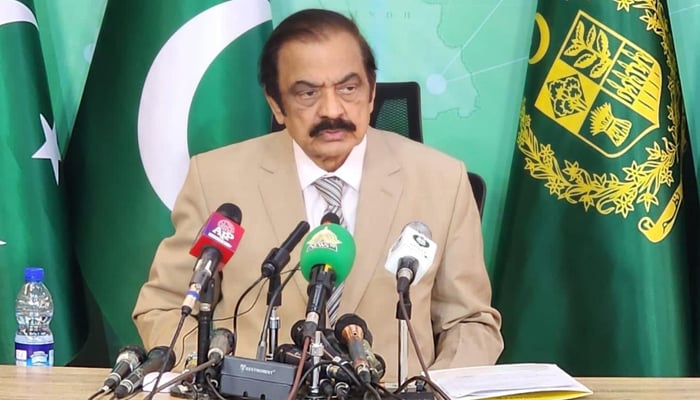
    Rana Sanaullah says sit-in protesters failed to st…

    Prime Minister’s Adviser on Political Affairs Rana Sanaullah has said that the groups holding sit-ins had attempted to disrupt the Azad Jammu and Kashmir elections but failed to achieve their objective. Speaking to the media in Islamabad, Rana Sanaullah said the people of Azad Kashmir had exercised their right to vote and given a mandate to their chosen representatives. He said the process of government formation in Azad Kashmir would begin after the completion of the third phase of the elections. Rana Sanaullah expressed hope that the groups staging protests would now recognise the situation and end their sit-ins. He said the government was willing to review the legitimate demands of the protesters. However, he warned that individuals who take up arms or act against the state would have to face legal action. The adviser also rejected allegations of widespread election rigging. He said those making such claims had so far failed to present evidence to support their allegations. Rana Sanaullah accused the Pakistan Peoples Party of using allegations of rigging to cover up what he described as its electoral defeat. He said the PPP was still raising concerns about alleged rigging, but the intensity of its claims had decreased compared with earlier stages of the election. He expressed hope that PPP leaders would eventually accept the results and congratulate the Pakistan Muslim League-Nawaz on its performance. Polling in the third phase of the Azad Kashmir elections was continuing, while authorities reported that the overall voting process remained peaceful. Rana Sanaullah said elements that had attempted to prevent people from casting their votes had failed in their efforts. He maintained that voters were freely exercising their democratic right and choosing their representatives through the ballot. The prime minister’s adviser also expressed confidence about the formation of the next government in Azad Kashmir. He claimed that the results available so far indicated that the PML-N was on course to form the government with a two-thirds majority. Rana Sanaullah described the elections as free, fair and transparent. He said the democratic process had allowed the people of Azad Kashmir to give a clear mandate to their representatives. He added that the government would focus on addressing public issues after the elections. According to Rana Sanaullah, the completion of the third phase will pave the way for the formal process of government formation in Azad Kashmir. The remarks came amid political tensions surrounding the elections and protests. The government has repeatedly called for the continuation of the democratic process, while opposition groups have raised concerns over the conduct of the polls.

  • | |

    Sindh Colleges ban Ajrak, caps and gifts for visit…

    KARACHI: The Sindh College Education Department has directed government colleges across the province to stop presenting traditional gifts and souvenirs to the Secretary College Education during official visits. The directive, issued on August 6, instructs the Director General Colleges and regional directors in Karachi, Hyderabad, Mirpurkhas, Shaheed Benazirabad, Sukkur and Larkana, along with principals of government colleges, to ensure that no gifts are presented to the secretary during his visits. The department has specifically prohibited the presentation of Ajrak, Sindhi caps and bouquets. It has also made clear that commemorative shields, souvenirs and other ceremonial items should not be offered. Officials have been asked to strictly follow the instructions and ensure that the directive is implemented in both letter and spirit. The department has warned that any failure to comply with the orders will be taken seriously, signalling a move away from the customary practice of presenting traditional gifts to senior officials during official visits.