تازہ ترین

  • | |

    2 arrested at Multan Airport over Umrah visa traff…

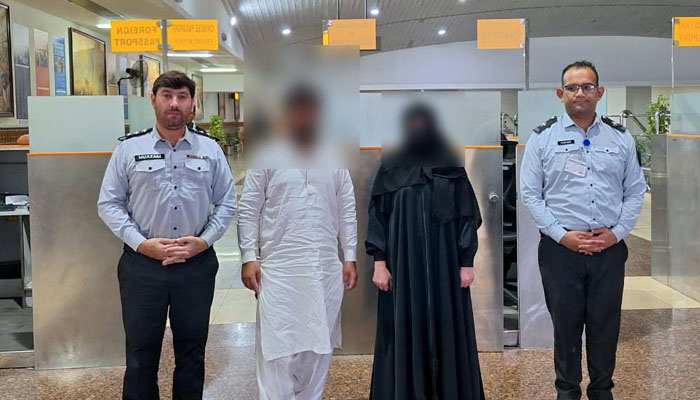
    MULTAN: The Federal Investigation Agency (FIA) has arrested two passengers, including a woman, at Multan International Airport for their alleged involvement in a human trafficking network linked to sexual exploitation in Saudi Arabia. According to an FIA spokesperson, the passengers were intercepted during immigration clearance after officials noticed suspicious behavior. Both had reportedly travelled to Saudi Arabia on Umrah visas. During the subsequent examination of their mobile phones and digital communications, investigators allegedly found material indicating their possible involvement in a scheme involving commercial sexual exploitation. The FIA said its preliminary investigation revealed that an agent had arranged the passengers’ travel to Saudi Arabia under the pretext of performing Umrah. Investigators suspect that the actual purpose was to subject them to commercial sexual exploitation after their arrival in the country. The agency seized the passengers’ mobile phones and other relevant material for further investigation. The two suspects, along with the recovered evidence, were subsequently transferred to the FIA Anti-Human Trafficking Circle in Multan. The FIA has expanded its investigation to trace the alleged agent and identify other individuals connected to the suspected trafficking network. Officials said legal action would be taken against all those found involved in the organized operation.

  • | | |

    ‘We will all take to the streets’ says Mahira …

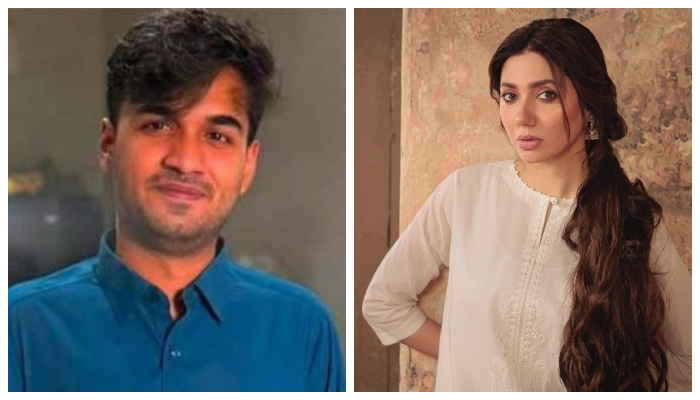
    KARACHI: Pakistani actress Mahira Khan has publicly voiced her concern over the death of Karachi businessman Mir Raza, expressing support for lawyer and activist Jibran Nasir, who has been speaking about the case. Mahira reacted to a recent statement by Nasir circulating on social media, praising his efforts and calling for an end to what she described as injustice. In her comment, the actress said, “Jibran Nasir, you are doing an excellent job. We will all take to the streets against this injustice.” She further urged that the situation should not be allowed to continue, writing, “All this nonsense should end now.” The case has attracted widespread public attention following the exhumation of Mir Raza. An initial medical report reportedly stated that he had sustained a gunshot wound to the back, while signs of alleged torture were also found on his body. The report further mentioned suspected fractures to his right thigh and jaw, along with blood stains on tissues in the lower part of his body. Meanwhile, investigators have reportedly found additional evidence during the probe. According to details emerging from the investigation, forensic examination of Raza’s shirt indicated that acid may have been thrown on his hands and face, allegedly in an attempt to conceal his identity. Nasir has also stated that Mir Raza’s family did not agree to the formation of a judicial commission and has called for the matter to be investigated through the appropriate legal process. The case continues to generate concern on social media, with calls for a transparent investigation and accountability for those responsible.

  • | |

    Court orders Azma Bukhari to appear in person over…

    LAHORE: The Lahore Sessions Court has directed Punjab Information Minister Azma Bukhari to appear in person and record her statement in a case involving the alleged circulation of a fake video on social media. The matter was heard by Additional Sessions Judge Nusrat Ali Siddiqui, who rejected Bukhari’s request to record her statement through video link. The court ordered her to personally appear at the next hearing to record her statement. Bukhari had challenged an earlier order issued by a judicial magistrate requiring her to appear before the court in person. The case relates to allegations surrounding the circulation of a fabricated video attributed to the provincial minister. Bukhari had approached the authorities against the alleged dissemination of the video and lodged a complaint with the National Cyber Crime Investigation Agency (NCCIA) against Falak Javed. The court’s latest order means Bukhari will have to appear before the Sessions Court at the upcoming hearing as proceedings in the case continue.

  • | |

    Terrorist killed in joint operation in Bannu

    A terrorist was killed during a joint intelligence-based operation in Bannu, Khyber Pakhtunkhwa, police said on Monday. The operation was carried out by district police, the Counter-Terrorism Department, the Quick Response Force and security forces. The operation took place in the Miryan area after intelligence reports indicated the presence of suspected terrorists. Security personnel conducted searches in Khani Kalay, Barakzai and nearby areas. The areas fall within the jurisdiction of Miryan police station. An exchange of fire took place during the operation. One unidentified terrorist was killed. Police said the identity of the deceased was being established. A Kalashnikov was recovered from the scene. Three magazines and a bandolier were also found in the possession of the killed terrorist. Security personnel later conducted search operations in surrounding areas. Several suspected individuals were detained for questioning. Bannu District Police Officer Captain (retd) Muhammad Furqan Bilal praised the personnel who participated in the operation. He described the security and police personnel fighting terrorism as the country’s real heroes. The DPO said intelligence-based operations would continue across Bannu. He said the objective was to eliminate terrorism and crime from the district. He also urged local residents to cooperate with law-enforcement agencies. Citizens were asked to report suspicious individuals and activities to police. The latest operation is part of intensified security efforts in Bannu. The district has witnessed several terrorist incidents and counterterrorism operations in recent months. On July 20, another joint intelligence-based operation was conducted in Bannu. Police said one suspected terrorist was killed and eight others were detained during that operation. The operation involved district police, the Elite Force, CTD personnel and Pakistan Army troops. Security forces had also established checkpoints and cordoned off the area during the operation. Police said the killed suspect was allegedly attempting to plant an improvised explosive device. A Kalashnikov, magazines and ammunition were recovered. Security concerns in Bannu have increased following several attacks targeting police and security installations. On July 15, terrorists attacked the Miryan police station using an explosives-laden vehicle. A prolonged exchange of fire followed the attack. Six police officers and four civilians were injured in the incident. The attackers also damaged a bridge leading to the police station. Authorities believed the move was intended to slow the arrival of reinforcements. The wider security situation in Khyber Pakhtunkhwa has remained challenging. Balochistan has also witnessed an increase in militant activity. Security forces have responded with intelligence-based operations against suspected militant networks. Authorities have repeatedly stressed the need for public cooperation to counter terrorism. Officials have also raised concerns about militant groups operating from across the Afghan border. The latest operation in Bannu reflects the continued efforts of law-enforcement and security agencies to prevent further attacks.

  • | |

    Mir Raza’s father raises new questions over son?…

    The father of businessman Mir Raza Ali has raised fresh concerns about the investigation into his son’s death. Speaking to the media on Monday, Mir Hassan claimed that his son’s business partner went missing after being questioned by police. He said police had questioned the business partner once. The man was allegedly not seen again after the questioning. Hassan said the family had not been informed about the investigation involving employees of the guest house in Gulistan-e-Johar. Mir Raza’s body was found near the guest house. “We have not been told what investigations were conducted with the employees,” he said. The victim’s father also questioned why CCTV footage from the guest house had not been made public. The latest concerns have emerged as investigators continue to review the circumstances surrounding Mir Raza’s death. The case took a new turn after the businessman’s body was exhumed for a second post-mortem examination. The second medical examination found a firearm injury and several wounds that had occurred before death. It also reported signs of internal bleeding. According to the findings, a bullet entered the upper right side of Mir Raza’s back and exited through the left side of his chest. The bullet fractured his sixth rib and caused internal bleeding. The report also documented injuries to different parts of his head, face, neck and chest. Following the medical findings, police added Section 302 of the Pakistan Penal Code to the case. The section relates to murder. The original FIR had been registered under Section 365, which concerns kidnapping. Mir Raza, 25, was allegedly abducted from the PECHS area. His body was later found in bushes near a wedding hall in Gulistan-e-Johar. Police had earlier suspected that he may have been tortured before being shot. The case initially faced uncertainty over whether Mir Raza had been murdered or had died by suicide. His family, however, consistently rejected the suicide theory. The second post-mortem has strengthened the family’s claim that Mir Raza was killed. Questions had also been raised about the first post-mortem report. Karachi Police Surgeon Dr Summaiya Syed had pointed out several issues in the initial examination. She had questioned why the body was not X-rayed and why hand swabs were not collected for gunshot residue testing. She had also raised concerns over the scientific measurement and photography of firearm injuries. Questions were further raised about the documentation of the bullet’s path and the examination of the entry and exit wounds. Following these developments, police dissolved the previous investigation team. A new team was formed under the leadership of DIG Crime and Investigation Amir Farooqi. The new team was tasked with conducting a fresh investigation based on the latest medical findings. Investigators were also expected to revisit the crime scene. They were directed to re-question the victim’s family and other relevant individuals. The team was also expected to examine forensic, technical, physical and circumstantial evidence. Mir Raza’s family has repeatedly criticised the handling of the case. They have maintained that he was murdered and demanded that those responsible be identified and brought to justice. The family’s lawyer, Jibran Nasir, had also alleged that investigators pressured the family to accept a suicide theory. He called for an independent and impartial investigation. The Sindh government has meanwhile decided to establish a judicial commission headed by a Sindh High Court judge. The commission is intended to oversee a transparent and impartial investigation into Mir Raza’s death.

  • | |

    HEC Chief calls for education, research to become …

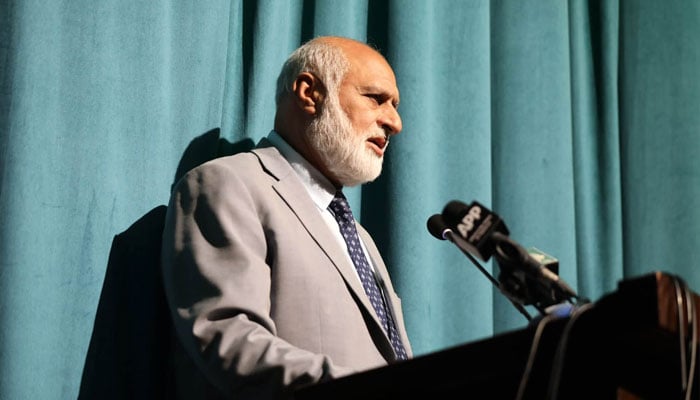
    ISLAMABAD: Higher Education Commission (HEC) Chairman Dr Niaz Ahmed has called for a major shift in Pakistan’s approach to higher education and research, saying universities must become central to the country’s economic, technological and social development. Speaking about his recent nearly two-week visit to China, Dr Niaz Ahmed said Pakistan could learn valuable lessons from China’s development model, particularly its close cooperation among universities, industry, research institutions and the government. The HEC chairman visited China with a delegation of senior vice chancellors from leading Pakistani universities on the instructions of the prime minister and at the invitation of Chinese education authorities and academic institutions. During the visit, Pakistani and Chinese universities discussed joint and dual-degree programmes, faculty and student exchanges, collaborative research and greater opportunities for Pakistani students to pursue higher education in China. He said efforts were also underway to strengthen the CPEC Consortium of Universities and establish 10 Sinology Centres in Pakistan. The Higher Education Commission has been asked to nominate 10 Pakistani universities for the initiative. Dr Niaz said his meetings with Chinese universities and research organisations showed that universities there function as more than degree-awarding institutions. They are closely connected with industry and government, helping develop new technologies, solve industrial problems, support startups and prepare skilled workers for emerging economic needs. He noted that research in China is increasingly focused on turning knowledge into practical solutions, new products and economic opportunities rather than simply increasing the number of research publications. The HEC chairman said China’s rapid progress in artificial intelligence, robotics, automation and digital technology was particularly striking. These technologies, he observed, have moved beyond laboratories and are now being used in factories, transportation, hotels and urban services. He also highlighted China’s rapidly expanding electric vehicle industry, saying the transformation demonstrated the importance of developing technology rather than simply consuming it. According to him, countries that build their own technological capabilities will be better positioned to compete in the future. Dr Niaz attributed China’s progress not only to investment and technology but also to discipline, punctuality, hard work and a clear national vision. He said the country’s experience demonstrated how coordinated efforts by government institutions, universities, industries and citizens could produce lasting national development. Reflecting on Pakistan’s traditional focus on Western academic models, he said his visit had strengthened his belief that China offers an important Asian development experience that Pakistan should study carefully. He stressed, however, that Pakistan should adapt successful practices to its own circumstances rather than simply copy the Chinese system. The HEC chairman said Pakistani universities now needed to examine whether they were merely producing degree holders or actually developing human capital capable of contributing to the national economy. He called for curricula to be aligned with future employment needs, with greater emphasis on artificial intelligence, data science, automation and other emerging fields. Universities, he said, must also strengthen faculty capabilities and build closer relationships with industry. Dr Niaz further stressed that research should focus on solving national and industrial problems, developing technologies and creating business opportunities rather than remaining limited to academic publications. After returning from China, he said, he shared his observations with university leaders across Punjab, Sindh, Balochistan, Azad Jammu and Kashmir, Gilgit-Baltistan and the federal capital. The objective was to encourage universities to reconsider their approaches to curriculum development, research, faculty training and industry partnerships. He said Pakistan already possesses a large network of universities, talented researchers and a young population, but these strengths need to be supported by a clear national strategy and sustained investment. “The real strength of a nation lies not only in roads, buildings and factories, but also in knowledge and human capital,” Dr Niaz said, stressing that Pakistan’s journey towards developed-country status must begin in university classrooms and research laboratories and eventually translate into stronger industries, a more productive economy and greater national prosperity.

  • |

    Trial begins in Tupac Shakur murder case after 30 years

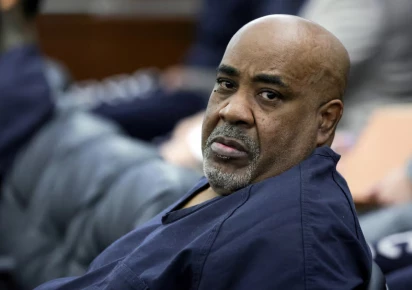
    The long-running investigation into the 1996 killing of rapper Tupac Shakur has reached a major stage, with the trial of former gang leader Duane “Keffe D” Davis beginning in Las Vegas. Jury selection is scheduled to start Monday in Clark County, Nevada. Davis, 63, faces one charge of murder with the use of a deadly weapon. He has pleaded not guilty. Prosecutors accuse Davis of playing a leading role in the drive-by shooting that killed Shakur nearly three decades ago. Shakur was 25 when he was shot near the Las Vegas Strip on September 7, 1996. He was riding in a car with Marion “Suge” Knight, the co-founder of Death Row Records. The shooting became one of the most famous unsolved cases in music history. It also became closely linked to the violent rivalry between East Coast and West Coast rap artists during the 1990s. According to authorities, the incident followed a fight at the MGM Grand casino. The confrontation allegedly involved Shakur and members of his entourage and a man connected to Davis. Investigators believe the shooting was carried out as an act of retaliation. Police have described Davis as a key figure in the alleged plan. Authorities say he helped obtain the weapon and was travelling in a white Cadillac with three other men when the shooting occurred. The Cadillac reportedly followed the vehicle carrying Shakur and Knight. Gunfire was exchanged when the two cars came close to each other. Shakur was struck four times. He was taken to hospital but died six days later from his injuries. Knight, who was driving the vehicle, suffered a minor injury after a bullet fragment grazed his head. The investigation remained unresolved for almost 30 years. Authorities say the case gained new momentum after Davis made a series of public statements about the shooting. His comments reportedly included details about his presence in the Cadillac and his alleged role in obtaining the weapon. Davis also discussed the incident in his 2019 memoir, “Compton Street Legend”. According to police, Davis said he was sitting in the front passenger seat and passed the firearm to one of the men in the back of the vehicle. However, the identity of the person who actually fired the shots remains a central issue in the case. The other three men who were reportedly inside the Cadillac have since died. Under Nevada law, a person can face a murder charge for participating in a killing even if they did not personally fire the weapon. The trial is being heard by Judge Carli Kierny at a courthouse in downtown Las Vegas. Proceedings could continue for as long as six weeks. One potential witness is Knight, who was with Shakur on the night of the shooting. Knight is currently serving a 28-year prison sentence in an unrelated voluntary manslaughter case. The prosecution’s case is expected to examine the events leading up to the shooting and Davis’s alleged role in the plot. The case has remained a major subject of public interest because of Shakur’s influence on hip-hop. His death occurred during a period of intense rivalry between artists and record labels associated with the East and West coasts of the United States. The killing was followed by the death of another major rapper, Christopher Wallace, better known as The Notorious B.I.G., who was shot dead in Los Angeles in March 1997. Wallace’s murder also remains officially unsolved. For years, theories have linked the two killings, with speculation that Wallace’s death was connected to the violence surrounding Shakur’s murder. Davis’s trial now offers prosecutors an opportunity to present their evidence in court after decades of uncertainty surrounding Shakur’s death.

  • |

    Indian youth protest alleged exam irregularities in Jharkhand

    Thousands of students and unemployed young people marched toward the state legislature in India’s eastern Jharkhand state on Monday. The protesters were demanding action over alleged irregularities in civil services recruitment examinations. Police used water cannons to disperse the demonstrators as they moved toward the state assembly in the state capital, Ranchi. The protesters accused authorities of failing to ensure transparency in government recruitment exams. They also raised concerns over alleged question paper leaks. The demonstrations began on July 25 and have grown in size in recent days. Thousands of young people had earlier gathered at a stadium in Ranchi as the campaign gained momentum. The protesters are demanding major changes to the state’s examination system. They have also called for the cancellation of certain examinations and a federal investigation into the alleged irregularities. On Monday, demonstrators moved toward the legislature despite heavy security arrangements. Some protesters climbed over police barricades while carrying placards and Indian flags. They chanted slogans and called for action against those responsible for the alleged examination problems. The protests reflect growing frustration among students and unemployed youth in Jharkhand, one of India’s less economically developed states. The state government has held talks with representatives of the protesters. Officials have said that many of their demands have already been accepted. The government has also indicated that it is willing to continue discussions to address the remaining concerns. The demonstrations in Jharkhand come amid wider anger among Indian youth over alleged corruption in recruitment examinations. Similar protests were held in New Delhi in recent weeks. Those demonstrations focused on alleged irregularities and paper leaks involving national-level examinations. The protests eventually contributed to the resignation of India’s Education Minister Dharmendra Pradhan last month, following controversy surrounding alleged leaks in a national medical entrance examination. The growing demonstrations have highlighted concerns over unemployment and limited job opportunities for young people. Students and job seekers argue that examination irregularities can damage their career prospects after years of preparation. The protests also reflect broader concerns about transparency in public recruitment and the credibility of competitive examinations.

  • |

    Textile industry urges govt to end transport strike, warns of export disruptions

    ISLAMABAD: Pakistan’s textile industry has called on the government to take immediate measures to resolve the ongoing goods transporters’ strike, warning that a prolonged suspension of freight services could disrupt export shipments, restrict the supply of cotton and affect the operations of textile mills across the country. The All Pakistan Textile Mills Association (APTMA) has formally approached Federal Minister for Communications Abdul Aleem Khan, seeking urgent government intervention to restore the movement of goods and industrial cargo. According to the association, the All Pakistan Goods Transport Ittehad began an indefinite strike on August 8, creating significant logistical challenges for export-oriented industries, particularly the textile sector. APTMA Chairman Kamran Arshad said the strike had severely affected the availability of vehicles and containers required for transporting textile-related cargo. Export consignments awaiting shipment, imported cotton arriving through ports and locally purchased cotton being transported from markets to textile mills have all been affected by the disruption. The association said the lack of transportation was creating difficulties at multiple stages of the textile supply chain. Export containers cannot be moved efficiently, while imported raw materials face delays in reaching manufacturing facilities. At the same time, locally sourced cotton is also experiencing transportation constraints. APTMA cautioned that the timing of the strike was particularly concerning because cotton inventories at textile mills were already at relatively low levels following the end of the cotton season. Any prolonged interruption in the movement of cotton, it said, could eventually affect manufacturing activity as mills depend on a steady supply of raw materials to maintain production. The association warned that a slowdown in textile production could have broader economic consequences, including delays in export orders, disruption to employment and reduced foreign exchange earnings. Pakistan’s textile sector remains one of the country’s most important export-oriented industries, generating a significant share of the country’s foreign exchange through shipments of garments, textiles, yarn, fabrics and other related products. Industry-wide logistical problems could therefore have repercussions beyond individual mills and exporters. APTMA noted that the textile industry had faced similar transportation disruptions in the past, resulting in delays in export consignments, additional financial costs and interruptions to factory operations. The association stressed that cargo movement is an essential component of export activity and that any prolonged blockage could make it more difficult for exporters to meet delivery schedules agreed with international buyers. It urged the Communications Ministry to facilitate the immediate movement of essential industrial cargo while efforts continue to settle the dispute between transporters and the government. APTMA specifically called for priority arrangements for export containers, imported cotton and other raw materials, as well as locally procured cotton destined for textile mills. The association maintained that ensuring uninterrupted logistics was essential not only for the textile industry but also for protecting Pakistan’s export commitments and broader economic activity. APTMA has consequently appealed to the government to intervene on an urgent basis and establish arrangements that would allow the movement of critical industrial and export cargo until the transporters’ strike is brought to an end.

  • |

    US says it will deepen security role in Asia

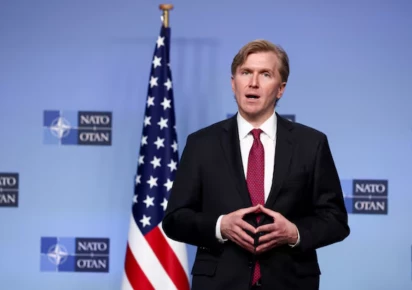
    The United States has rejected suggestions that it is reducing its involvement in Asia. A senior Pentagon official said Washington plans to strengthen its position in the Indo-Pacific and maintain what it considers a favourable balance of power in the region. US Undersecretary of Defense for Policy Elbridge Colby made the remarks during a speech in Manila on Monday. He said the United States was not leaving Asia. Instead, Washington was increasing its focus on the region. Colby also called on US allies and partners to take greater responsibility for their own defence. He said Washington wanted stronger partnerships rather than relationships based on dependence. According to Colby, the United States expects its regional allies to increase defence spending and strengthen their own military capabilities. He said greater responsibility from partner countries should not be interpreted as a sign that Washington is abandoning the region. Colby argued that stronger allies would contribute to stronger deterrence and help maintain regional stability. The Pentagon official said the US strategy includes maintaining a credible military presence along the First Island Chain. The strategic area stretches from Japan through Taiwan and the Philippines toward Borneo. It is considered important to US efforts to deter potential military threats in the Indo-Pacific. Colby said the United States was committed to maintaining a balance of power in the region. He also emphasised the need for allies to contribute more to regional security. His comments come amid continuing questions about the long-term US security commitment to Asia. Some regional governments and analysts have expressed concerns about whether Washington will remain as deeply involved in the Indo-Pacific as it has been in previous years. Colby sought to address those concerns by stressing that the United States intends to remain engaged. The Philippines is the first stop on Colby’s Southeast Asian tour. He is also scheduled to visit Indonesia, Thailand and Cambodia. The Philippines is a longstanding US treaty ally and has strengthened defence cooperation with Washington in recent years. The Pentagon official’s remarks are likely to be closely watched by US partners across the region. Washington is seeking to strengthen cooperation with allies while encouraging them to invest more heavily in their own defence. The approach reflects a broader US strategy of sharing the security burden with regional partners while maintaining a strong American military presence. Colby said the goal was to build capable partners rather than create countries that depend entirely on US protection. He maintained that stronger regional partners would make the overall US deterrence strategy more effective.