تازہ ترین

  • |

    Egypt may join Pakistan, Türkiye, Saudi defence pact

    Egypt could become the next country to join the Makkah Joint Defence Agreement signed by Pakistan, Türkiye and Saudi Arabia, Turkish Foreign Minister Hakan Fidan has said. Fidan said the defence pact is broadly comparable to NATO’s mutual defence principle. He stressed that the agreement is not aimed at Iran or any other country. According to the Turkish foreign minister, the pact is designed to provide a framework for the three countries to support each other’s security. He said the member states would consult each other in the event of an attack. They would then determine the nature and level of assistance required. Fidan said Türkiye’s President Recep Tayyip Erdogan wants the alliance to expand beyond its three founding members. Egypt is among the countries being considered for possible membership. He said some technical issues would need to be resolved before Egypt could join the arrangement. Fidan explained that the alliance would begin with Pakistan, Türkiye and Saudi Arabia. He said the members intended to take gradual but practical steps to build the new security framework. A ministerial committee similar to structures used within NATO is also expected to be established. The alliance will also have a general secretariat based in Saudi Arabia. Further operational details are expected to be discussed during the first meeting of the proposed committee. Fidan said the agreement was the result of negotiations that had continued for more than two years. He also stressed that the new arrangement would not replace existing military alliances. The Turkish minister said the pact was intended to strengthen regional cooperation. He said it could eventually bring more countries together under a common security framework. Meanwhile, the Organisation of Islamic Cooperation welcomed the signing of the agreement. OIC Secretary General Hissein Brahim Taha expressed strong support for the pact. He described it as an important strategic development for regional and international cooperation. Taha said the agreement could contribute to security and stability across the region and the wider Muslim world. He also praised the leadership of Pakistan, Türkiye and Saudi Arabia. He said their efforts had resulted in what he described as a historic agreement. The pact was signed on Friday during a trilateral summit in Makkah. Turkish President Recep Tayyip Erdogan, Saudi Crown Prince Mohammed bin Salman and Prime Minister Shehbaz Sharif signed the agreement at Al-Safa Palace. Under the agreement, the three countries have committed to strengthening defence cooperation and collective security. The pact also seeks to promote peace, stability and prosperity. Officials said the agreement is not directed against any country. They said it is based on a shared approach to security and burden-sharing. The agreement also establishes a collective deterrence principle. An armed attack against any one of the three member states will be treated as an attack against all three.

  • | |

    Customs seize cameras and electronics worth Rs5.5m…

    Customs officials at Jinnah International Airport in Karachi have seized a large quantity of electronic goods from a passenger arriving from Dubai. According to customs sources, the passenger was intercepted during a routine check at the airport. Officials recovered 29 cameras from the passenger. The seized items also included five camera lenses. The consignment contained 19 digital cameras. Customs officials also found 10 fitness bands among the electronic goods. Other electronic items were also recovered during the inspection. The total value of the seized goods has been estimated at around Rs5.5 million. Customs officials are examining the recovered items as part of the ongoing investigation. The authorities are also checking the passenger’s travel and import details. The action was carried out at Jinnah International Airport, one of the country’s busiest entry points for international passengers. Officials regularly conduct inspections of incoming passengers to prevent the illegal movement of commercial goods and other undeclared items. The latest seizure highlights the continued monitoring of international arrivals at Karachi airport. Customs authorities are taking action when passengers are found carrying goods that require declaration or clearance under applicable rules.

  • |

    Abdullah Ejaz reveals painful reason behind leaving modelling

    Abdullah Ejaz, one of Pakistan’s well-known former male models and actors, has opened up about the difficult circumstances that forced him to step away from modelling. The former model, who once dominated the fashion industry, revealed that severe sciatica pain had a major impact on his career and eventually led him to pursue a different professional path. Abdullah Ejaz rose to prominence as one of Pakistan’s leading male models and received a Lux Style Award in 2006 in recognition of his work. After establishing himself in the modelling world, he successfully transitioned into acting and became part of several popular television projects. Over the years, Abdullah appeared in dramas and shows including Piya Mann Bhaye, Nail Polish, Tera Mera Rishta, Silsilay, and Hum Sab Umeed Se Hain. He later introduced himself to a new generation of viewers through his appearance in Tamasha Season 3, where audiences got the opportunity to see more of his personality beyond his earlier modelling and acting career. Abdullah is now working as a commercial director. He is also married to his university fellow from business school, Rabia, and the couple has two children. During a recent appearance on Wasim Shah’s talk show Zabardast with Wasi Shah, Abdullah spoke candidly about the health struggle that changed the direction of his career. Reflecting on the difficult period, he explained that he began experiencing severe sciatica around one and a half years ago. According to Abdullah, the pain became so intense that even sitting was extremely difficult for him. His condition eventually affected even the most basic aspects of his daily routine. Abdullah recalled that his back pain was so severe that he sometimes had to eat while lying down. He described the period as extremely challenging, not only for himself but also for his family, particularly his wife, who stood by him throughout the ordeal. The former model admitted that he still does not know exactly what caused the problem. However, he speculated that years of intense training and overtraining may have contributed to it. He said the pain appeared suddenly but continued for a prolonged period, making the experience particularly difficult. While discussing his wife’s role during that challenging time, Abdullah praised Rabia for the strength and support she showed. He described her as an “iron lady” and said her army background had made her exceptionally strong and resilient. Abdullah’s revelation gives fans a glimpse into the personal struggle behind his decision to move away from modelling. Although his career has taken a different direction, he continues to remain connected to the entertainment industry through commercial direction. His journey from a celebrated model to an actor and now a commercial director reflects the different phases of his career, while his recent candid revelation highlights the personal challenges that can sometimes remain hidden behind a successful public image.

  • |

    Sahir Ali Bagga reveals why two singers rejected Pakistan Zindabad

    Pakistani musician and singer Sahir Ali Bagga has made a surprising revelation about one of his most notable patriotic projects, Pakistan Zindabad. The acclaimed composer recently disclosed that two prominent Pakistani singers were initially approached to perform the song but refused to sing it. Sahir Ali Bagga is one of the well-known names in Pakistan’s music industry. Over the years, he has established himself as a singer, composer and music producer, contributing to numerous popular songs and drama soundtracks. He has also composed successful tracks for leading artists, including Rahat Fateh Ali Khan. Known for his deep vocals and ability to hit powerful high notes, Bagga has delivered several memorable songs throughout his career. His popular compositions include Baazi, Mast Malang, Ehd-e-Wafa and Bharosa Pyar Tera. He also enjoys a massive following on Instagram, where more than 1.8 million people follow him. In recent months, his song Mastani has also attracted considerable attention, crossing 5.5 million views on YouTube. Bagga recently appeared on Ahmed Ali Butt’s podcast, Excuse Me, where he spoke openly about the making of Pakistan Zindabad. During the conversation, he revealed that the song was originally composed with two major Pakistani singers in mind. According to Bagga, both singers were expected to lend their voices to the patriotic track. However, neither agreed to perform it. He explained that one of the singers did not even listen to the composition and specifically refused to sing the song because Bagga had created it. The musician said that although he was disappointed by their response, he remained confident in his composition. Since the song had already received approval from the Inter-Services Public Relations (ISPR), Bagga ultimately decided to perform it himself. He further revealed that singing Pakistan Zindabad was particularly challenging because the composition required extremely high notes. Bagga admitted that he does not consider himself a high-note singer and had to put in significant effort to prepare for the performance. The singer explained that reaching such demanding notes required extensive practice. He worked hard on his vocals and rehearsed repeatedly before recording the song, eventually taking on the challenge himself. Pakistan Zindabad went on to become a major patriotic hit. The song was released on March 23, several years ago, and quickly gained widespread popularity among Pakistani audiences. Its energetic composition, patriotic lyrics and powerful vocal performance helped it become one of the memorable ISPR songs. The song has continued to attract viewers on YouTube and has reportedly accumulated around 249 million views. Bagga’s revelation about the singers who turned down the project has now added another interesting chapter to the story behind the hugely popular patriotic anthem. While he did not disclose the names of the two singers during the portion of the conversation shared, his comments have sparked curiosity among fans about which major artists originally declined the opportunity to perform Pakistan Zindabad.

  • |

    Ali Raza mourns the sudden death of his father

    Popular Pakistani actor Ali Raza is grieving the heartbreaking loss of his father. The actor recently shared the devastating news with his fans and followers on social media, revealing that his father passed away suddenly and unexpectedly. Ali Raza has established himself as one of the promising young stars of the Pakistani television industry. He made his acting debut with HUM TV’s popular drama Muhabbat Gumshuda Meri, which helped him gain recognition among viewers. Since then, he has continued to strengthen his position in the industry with a series of notable performances. The actor later appeared in several successful television projects, including Noor Jahan, Iqtidar, and Duniyapur. His performances in these dramas earned him a growing fan base and established him as a talented performer to watch. At present, Ali Raza is appearing in two prime-time dramas, Leader and Mirza Ki Heer, where audiences have been appreciating his performances. Amid his professional commitments, the actor is now facing a deeply painful personal loss following the death of his father. Ali Raza took to Instagram to announce the sad news. Sharing the heartbreaking update with his followers, he wrote, “Inna lillahi wa inna ilayhi raji’un,” a prayer commonly recited upon hearing about someone’s death. He further revealed that his father had passed away suddenly and described the death as untimely. The actor also turned to his fans during this difficult moment and requested them to remember his late father in their prayers. In his message, Ali Raza asked his followers to pray for his father’s maghfirat and forgiveness. His emotional announcement quickly drew attention from fans, colleagues, and followers, many of whom expressed their condolences and offered prayers for the departed soul. The news has left Ali Raza’s fans deeply saddened. Many followers took to social media to send messages of support to the actor and his family during this difficult period. Fans also prayed for the forgiveness and eternal peace of his father and asked Allah to grant patience and strength to the bereaved family. The actor, who is currently enjoying significant popularity because of his television projects, has chosen to share this difficult personal moment with the people who have supported him throughout his career. The sudden loss of a parent is an incredibly painful experience, and Ali Raza’s heartfelt request has prompted an outpouring of sympathy from his supporters. His fans are standing by him during this challenging time and joining him in prayers for his late father. May Allah grant his father maghfirat, elevate his ranks in the hereafter, and give Ali Raza and his family strength and patience to cope with this heartbreaking loss.

  • | |

    Goods transporters announce indefinite strike

    The All Pakistan Goods Transporters Alliance has announced an indefinite nationwide strike after talks with the federal and Sindh governments failed to resolve their demands. Alliance President Malik Shehzad Awan made the announcement at a press conference at the Karachi Press Club, saying transporters would keep their vehicles off the roads from August 8 until the government formally accepted their demands through official notifications. Awan said a meeting held on Friday included senior officials from both the federal and Sindh governments, including the communications minister, communications secretary, National Highway Authority chairman, inspector general of motorways, Karachi commissioner, transport secretary, excise secretary and senior traffic officials. However, the talks failed to produce an agreement. He said the alliance would observe a peaceful wheel-jam strike by parking trucks and trailers instead of blocking roads. However, he warned that transporters could move their vehicles onto roads if authorities tried to intimidate or arrest their leaders during the protest. According to Awan, vehicles carrying import and export containers will continue operating until August 10 to allow cargo already in transit to reach its destinations. The transporters have also formed a committee to negotiate with the government. Awan warned that if their demands were not accepted within two days, the protesters would march towards the governor houses in all provinces. He said the committee would not negotiate with officials who had previously made commitments to transporters but failed to fulfil them. Awan also called for the resignation of the federal petroleum minister, Punjab’s transport and mass transit minister and the Punjab senior minister. Highlighting the financial pressure on the transport sector, he claimed that a single trailer pays around Rs2.4 million in annual toll taxes while transporters also face e-challans, adding to their difficulties. He warned that the ongoing dispute could negatively affect the national economy and urged the government to take immediate steps to resolve the crisis. Other transport leaders, including Malik Sher Khan, Ghulam Yasin and Nadeem Akhtar Arain, also attended the press conference. Meanwhile, the All Pakistan Petrol Pumps Owners Association urged the Ministry of Petroleum to review the mechanism used to determine fuel prices. In a letter sent to the petroleum minister on August 7, the association’s vice chairman expressed concern over delays in implementing agreements reached between the government and petrol pump owners.

  • |

    Nepra approves Rs21.4bn investment plan for SEPCO, sets loss targets

    The National Electric Power Regulatory Authority (Nepra) has approved a Rs21.436 billion Distribution Investment Plan (DIP) for Sukkur Electric Power Company Limited (SEPCO), covering its transmission and distribution operations for the five-year Multi-Year Tariff (MYT) period from fiscal year 2025-26 through FY2029-30. Along with the investment plan, the regulator has also set provisional targets for transmission and distribution (T&D) losses, while directing SEPCO to improve project execution, digitalise operational data and strengthen its planning and monitoring mechanisms. SEPCO had originally requested approval for an investment programme worth Rs90.563 billion. However, after Nepra raised several questions regarding the proposed projects, costs, utilisation of existing assets and investment requirements, the power utility submitted revised details. Following the revisions, SEPCO reduced its proposed investment to Rs40.191 billion in information submitted to Nepra on June 19, 2026. The revised proposal included changes in investment priorities and network development requirements based on updated demand projections. The company also revised project costs in light of the latest Purchase Orders (POs). Nepra, however, found substantial weaknesses in SEPCO’s original investment submission. According to the regulator, the initial proposal did not adequately reflect actual field conditions and lacked a comprehensive assessment of the utility’s requirements. It also contained gaps in cost calculations and information concerning the utilisation of existing assets. The regulator stressed that future investment planning should be based on reliable data, realistic demand assessments and proper evaluation of existing infrastructure rather than relying solely on projected requirements. Low utilisation of previous investments raises concerns Nepra also raised concerns over SEPCO’s ability to execute projects and utilise approved investment funds effectively. During the previous control period, SEPCO had been allowed investment of Rs39.509 billion. However, the company utilised only Rs14.231 billion, representing around 36% of the approved amount. The regulator said the low utilisation rate raised questions about SEPCO’s project implementation capacity and the efficiency with which approved investments were being converted into infrastructure and operational improvements. Delays were particularly noted in projects falling under the STG head. Nepra attributed the slow progress to difficulties in acquiring land, procurement-related problems and inadequate coordination between relevant departments. The regulator indicated that these issues point towards weaknesses in project planning, monitoring of milestones and implementation. SEPCO asked to improve network performance Nepra has also expressed concern over SEPCO’s technical and operational performance, particularly its transmission and distribution losses and reliability indicators, including the System Average Interruption Frequency Index (SAIFI) and System Average Interruption Duration Index (SAIDI). The authority directed the company to strengthen preventive maintenance programmes, improve energy accounting and introduce stronger system controls. These measures, Nepra said, are necessary to reduce losses, improve reliability and ensure consumers receive a more stable electricity supply. SEPCO’s approved investment priorities include expansion and strengthening of its 132-kilovolt network, augmentation of the existing system to accommodate future electricity demand and the deployment of modern technologies. The proposed technological improvements include Advanced Metering Infrastructure (AMI), Supervisory Control and Data Acquisition (SCADA) systems and Geographic Information System (GIS)-based mapping. These technologies are expected to support better monitoring of the electricity network, improve operational efficiency and enhance safety and service quality. Independent consultant made mandatory In a significant condition attached to the investment approval, Nepra has required SEPCO to engage an independent third-party consultant to review and validate its future investment plans before they are submitted to the regulator. SEPCO has also been instructed to prepare detailed Terms of Reference (ToRs) for the consultant and obtain Nepra’s approval before beginning the procurement process. The regulator said independent validation would help ensure that future investment proposals are based on actual requirements and that proposed projects are properly justified. Nepra pushes digitalisation of SEPCO operations Nepra has further directed SEPCO to move away from manual data-management practices and establish a comprehensive digital system for its operational information. The authority noted that dependence on manual systems can result in errors, delays and inefficient decision-making. A fully integrated digital platform, according to Nepra, would allow the company to monitor its network in real time, improve demand forecasting and make investment decisions based on reliable data. The regulator has also adopted a dynamic approach to the approved investment programme, allowing adjustments on an annual basis as well as a mid-term review. SEPCO has been directed to submit its mid-term review by December 2027. The review will include updated electricity demand forecasts, progress on approved projects and the company’s financial performance. Provisional T&D loss target set at 16.31% For FY2025-26 and FY2026-27, Nepra has approved a provisional T&D loss target of 16.31% for SEPCO. The target includes a 1% allowance related to law-and-order conditions. The regulator has also ordered SEPCO to commission an independent third-party assessment of its T&D losses through an international consultant or consortium. The study is required to be completed within nine months, with the timeline taking effect from January 7, 2026, in accordance with the tariff rebasing decision. Nepra warned that failure to submit the required independent study within the prescribed period could result in the regulator applying benchmark loss levels. Under the benchmark framework, the applicable levels would include 5.32% high-tension (HT) losses and 1.85% low-tension (LT) losses, resulting in total distribution losses of 7.17%. Transmission losses would be set at 1%, while the overall technical loss ceiling would remain within the range of 8% to 10%.


  • |

    Pakistan, New Zealand seek stronger trade, investment and education ties

    WELLINGTON: Pakistan and New Zealand have agreed to intensify bilateral economic and commercial cooperation, with agriculture, livestock, information technology, education and services identified as key areas offering greater potential for collaboration. The understanding was reached during a series of high-level meetings held in Wellington on August 6, where officials from both countries reviewed the state of bilateral relations and discussed measures to expand trade and investment ties. According to a statement issued by Pakistan’s Foreign Office on Saturday, the discussions placed particular emphasis on improving market access and developing practical avenues for cooperation in sustainable agriculture. The two sides also explored the possibility of technical collaboration in areas such as wool production and plant protection. The meetings included the 5th round of Pakistan-New Zealand Political Consultations and the 3rd meeting of the Pakistan-New Zealand Joint Trade Committee (JTC). The talks provided both sides with an opportunity to assess existing cooperation and identify new sectors for mutually beneficial economic engagement. The Pakistani delegation at the Joint Trade Committee meeting was headed by Commerce Secretary Jawad Paul Khawaja, while the New Zealand side was led by Grahame Morton. Officials also examined ways to strengthen institutional arrangements that could facilitate closer economic cooperation between the two countries. Improving trade relations and creating a stronger framework for investment were among the areas discussed during the engagement. The political consultations were co-chaired by Ambassador Dr Syed Ali Asad Gillani, Additional Foreign Secretary for Asia Pacific at Pakistan’s Ministry of Foreign Affairs, and Grahame Morton, Deputy Secretary of the Americas and Asia Group at New Zealand’s Ministry of Foreign Affairs and Trade. During the consultations, the two delegations conducted a broad review of Pakistan-New Zealand relations and discussed opportunities to expand cooperation in several fields. These included economic development, science and technology, education, counterterrorism, efforts against transnational crime, high-level exchanges and people-to-people contacts. The officials also discussed regional and global developments and agreed on the importance of maintaining closer coordination at multilateral forums. Pakistan briefed New Zealand on its position regarding developments in the Middle East, including Islamabad’s efforts to help reduce tensions and promote peace. The Pakistani delegation also shared its assessment of the regional situation in South Asia, including developments concerning Indian Illegally Occupied Jammu and Kashmir (IIOJK) and Pakistan’s concerns over India’s actions relating to the Indus Waters Treaty. According to the Foreign Office, Morton acknowledged Pakistan’s constructive contribution to efforts aimed at promoting peace in the Middle East. Education cooperation gains momentum One of the major outcomes of the engagement was the signing of an Education Cooperation Arrangement between Pakistan and New Zealand. The agreement is expected to provide a foundation for closer cooperation in education and create opportunities for greater institutional engagement between the two countries. Education was also discussed as an important component of broader people-to-people relations, alongside science, technology and skills development. The latest consultations come as both countries seek to build on existing bilateral ties and diversify areas of cooperation. Agriculture and livestock, in particular, offer opportunities for technical exchanges and knowledge sharing, while the growing importance of information technology and services could provide additional avenues for economic collaboration. The two sides also stressed the need to translate discussions into practical initiatives that can improve bilateral trade and investment flows. Officials described the meetings as an opportunity to take stock of progress in Pakistan-New Zealand relations, explore emerging areas of cooperation and strengthen institutional mechanisms for future engagement. The discussions concluded with a reaffirmation of the two countries’ commitment to developing a broader, forward-looking partnership based on mutual economic interests, diplomatic coordination and stronger people-to-people connections.

  • | | | |

    PM Shehbaz takes tough steps to drive growth: mini…

    Federal Petroleum Minister Ali Pervaiz Malik has said Prime Minister Shehbaz Sharif has taken difficult decisions to put Pakistan on the path of development. In a statement, Malik said the government had focused on practical politics and decisions aimed at strengthening the country. He said the Pakistan Muslim League-Nawaz believes in practical political work. He also praised former prime minister Nawaz Sharif for making Pakistan a nuclear power. According to Malik, Pakistan’s nuclear capability has strengthened its position and security in the region. The minister also welcomed the Makkah Joint Defence Agreement between Pakistan, Saudi Arabia and Türkiye. He said the agreement was a source of pride for the nation. Malik said Pakistan’s next major target should be economic progress. He stressed the need to achieve stronger results in the economic sector. The petroleum minister also indicated that there could be positive news regarding petroleum product prices. He said a reduction in prices could provide relief to consumers. Malik further said Pakistan had emerged as an important country for regional peace and security. He praised the capabilities and professionalism of the country’s armed forces. He said the world had witnessed the skills and operational capabilities of Pakistan’s military. He added that these capabilities had strengthened Pakistan’s role in promoting regional stability. The minister also acknowledged the economic difficulties faced by Pakistan during the Iran-US conflict. He said the situation created challenges for the country at the economic level. Malik maintained that Pakistan must now focus on economic achievements. He said stronger economic performance would be an important step towards securing long-term national progress.

  • |

    Umerkot flour millers reject Rs128/kg official rate, seek fresh price review

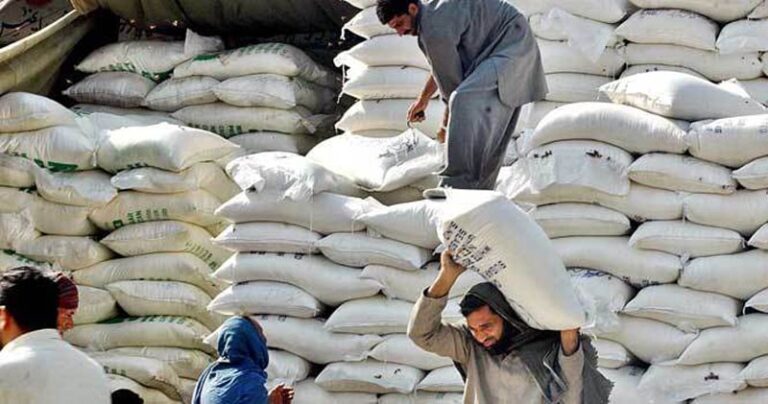
    UMERKOT: Flour mill owners in Umerkot district have rejected the government-fixed price of Rs128 per kilogram, arguing that the sharp increase in wheat prices has pushed their production costs far above the officially notified rate. The millers said the prevailing wheat price in the open market had climbed to around Rs125 per kilogram, while additional expenses related to milling, labour, electricity, transportation and other operations had increased the overall cost of producing flour to nearly Rs140 per kilogram. They maintained that selling flour at Rs128 per kilogram was therefore commercially unsustainable and would force mill owners to operate at a loss. In this regard, representatives of the flour milling industry have submitted written applications to the Mirpurkhas commissioner and the Umerkot deputy commissioner, requesting authorities to reconsider the existing flour price and determine a new rate based on prevailing market conditions and production costs. The mill owners also raised objections to what they described as excessive administrative action against flour mills across the district. They specifically complained about raids and wheat seizures allegedly carried out by assistant commissioners in Umerkot, Kunri, Samaro and Pithoro. According to the millers, government policy allows flour mill owners to maintain wheat stocks of up to 850 bags per stone at their mills or designated warehouses. They alleged that despite the provision, local administrative officials had conducted raids on mills and storage facilities and seized wheat stocks. The mill owners termed the alleged seizures unjustified and said such actions were creating additional difficulties for an already financially pressured industry. They urged the authorities to ensure that enforcement measures were carried out strictly in accordance with the relevant government policy. The millers further called for an investigation into alleged irregularities involving food department inspectors. They demanded that senior provincial officials examine the complaints and take appropriate action if any wrongdoing is established. They appealed to the Sindh chief minister, provincial food secretary, Mirpurkhas commissioner, Umerkot deputy commissioner and other concerned authorities to intervene in the matter and review the officially fixed flour price. The mill owners argued that the price should be determined after taking into account the current cost of wheat as well as electricity, labour, transportation, maintenance and other expenses associated with flour production. They warned that continued enforcement of a price they consider economically unviable could increase financial losses for flour mills and put further pressure on the district’s milling industry. The millers said they were willing to cooperate with the administration in maintaining the availability of flour and preventing unjustified price increases, but stressed that any official pricing mechanism must reflect actual market and production costs. They also urged the provincial government to establish a transparent mechanism for monitoring wheat stocks and flour prices so that disputes between millers and local administrations could be resolved through clear rules rather than repeated raids and seizures.