تازہ ترین

  • |

    Child’s refusal to buckle up leads to flight cancellation in Canada

    A Porter Airlines flight from Victoria to Toronto was cancelled after a young child refused to sit in the assigned seat and fasten the seat belt. The incident happened on flight PD444 at Victoria International Airport in British Columbia. The aircraft had already left the terminal. It was preparing for takeoff when crew members noticed the child standing on the seat. Flight attendants tried to resolve the situation. The child’s parents also attempted to convince the youngster to sit down. However, the child continued to resist. The crew could not proceed with the flight while the safety issue remained unresolved. Aviation safety rules require passengers to remain seated and use seat belts when instructed. The aircraft therefore had to return to the terminal. The family was removed from the plane. Their baggage also had to be taken off the aircraft. Airport and airline staff then had to complete the required travel and security procedures. The process took considerable time. The procedures continued beyond 12:30am. Victoria International Airport closes its main runway at 12:30am every night. Because the runway had already closed, the aircraft could not take off again that night. The cancellation caused further inconvenience for the other passengers. They were forced to spend the night in Victoria. Porter Airlines apologised to the affected passengers for the disruption. The airline arranged alternative flights for them the following day. The incident highlights how even a seemingly minor safety issue can cause major delays when an aircraft is preparing for departure. Airlines are required to ensure that all passengers follow safety instructions before takeoff

  • |

    Goods transport strike threatens Pakistan’s industry

    KARACHI: A nationwide strike by goods transporters has triggered growing concern among industrialists, who fear that a prolonged disruption in cargo movement could disrupt factory operations, delay export shipments and add further pressure to Pakistan’s already fragile economy. Business leaders have warned that the continued suspension of freight services could create serious bottlenecks in the supply chain, particularly for industries that rely on the regular movement of raw materials and intermediate goods. Any prolonged shortage of essential inputs could force factories to slow down production or temporarily shut operations. The industrial sector is also facing the risk of delays in the delivery of finished products to domestic markets and international buyers. Export-oriented industries, in particular, could suffer if consignments fail to reach ports or overseas customers within agreed timelines. President of the SITE Association of Industry (SAI) Abdul Rehman Fudda said the transporters’ strike had created a critical situation for the manufacturing sector, as industries could not maintain uninterrupted production without a reliable logistics network. He said factories depended on the timely arrival of raw materials and the smooth transportation of finished goods. Any disruption in freight movement, he added, could interrupt production schedules and increase costs for manufacturers. Fudda warned that the impact of the strike could extend beyond factories, affecting workers, suppliers, exporters, retailers and other businesses linked to the industrial supply chain. He pointed out that Pakistan’s export sector was already operating under significant pressure because of high production costs and other economic challenges. A disruption in transportation, he said, would further increase the difficulties faced by exporters. The SAI president cautioned that delays in export shipments could have financial as well as reputational consequences. International buyers may impose penalties, demand price reductions or seek compensation when shipments fail to arrive within agreed deadlines. According to him, exporters operate under strict delivery schedules, and even a temporary disruption in logistics can affect production planning, container bookings and shipment arrangements. Fudda stressed that the consequences of the strike should be assessed from a broader economic perspective rather than being viewed solely as a dispute between transporters and other stakeholders. He said an interruption in the movement of goods could affect the entire supply chain, from the procurement of raw materials to the manufacturing process and eventual delivery of products to customers. The industrialist further warned that repeated delays in fulfilling export orders could undermine the confidence of foreign buyers and make it more difficult for Pakistani businesses to retain existing international contracts or secure new orders. Industrialists have therefore urged the relevant authorities and representatives of goods transporters to resolve their differences at the earliest and restore the movement of cargo across the country. They maintained that an uninterrupted logistics system was essential for keeping factories operational, protecting jobs, meeting export commitments and supporting economic activity. Business leaders also called for a sustainable resolution to the issues behind the transporters’ strike so that similar disruptions could be avoided in the future. They said uncertainty in the movement of goods not only affects individual industries but can also have wider implications for investment, exports, government revenue and overall economic growth. With industries already facing a challenging business environment, manufacturers fear that a prolonged transport shutdown could further increase operational costs and compound supply-chain problems. They urged the authorities to prioritise negotiations and ensure the resumption of freight services without further delay.

  • | |

    Alanna Panday announces second pregnancy with Ivor McCray

    Indian influencer and content creator Alanna Panday is expecting her second child with husband Ivor McCray. The 30-year-old shared the happy news with her followers on Instagram on Saturday, August 8. Alanna posted a video featuring herself, Ivor and their young son, River. The family was seen posing together in Sicily, Italy. In the video, Alanna proudly showed her growing baby bump. She wore a floral outfit and appeared to be enjoying the special family moment. She captioned the post, “One more to love,” marking the beginning of another chapter for the family. Ivor also celebrated the news in the comments. He wrote that River had been “upgraded to big bro.” The announcement quickly attracted attention from fans and celebrities. Many followers congratulated the couple and sent messages filled with love and good wishes. Aaliyah Kashyap, daughter of filmmaker Anurag Kashyap, also congratulated the couple. Some fans began guessing the baby’s gender. One follower said they believed the couple would welcome a girl this time. Others recalled Alanna’s first pregnancy and said they were happy to follow the family’s journey again. Alanna Panday is known for her work as a social media influencer, model and digital content creator. She regularly shares content related to fashion, beauty, travel and lifestyle. She is the daughter of businessman Chikki Panday and wellness expert Deanne Panday. She is also the sister of actor Ahaan Panday. Alanna is the niece of actor Chunky Panday and the cousin of actress Ananya Panday. She married photographer and filmmaker Ivor McCray in March 2023. The couple had been in a relationship for several years before getting married. The couple welcomed their first child, a son named River, in 2024. With their second baby on the way, Alanna and Ivor are preparing to expand their family once again. The pregnancy announcement has been warmly received by their online followers and celebrity friends.

  • |

    Pakistan’s Muhammad Zubair stuns Tekken 8 world championship in Paris

    PARIS: Pakistan’s Muhammad Zubair has pulled off a remarkable victory at the Esports World Cup in Paris, defeating South Korea’s LowHigh to claim the Tekken 8 world championship and put Pakistan firmly in the global esports spotlight. Zubair completed a dominant run at the tournament, held from August 5 to 8, despite narrowly surviving the early stages. His breakthrough came when the competition entered its decisive phase, where he produced one impressive performance after another. In the second group stage on Friday, Zubair defeated fellow Pakistani star Arslan “Ash” Siddique, one of the biggest names in the international Tekken scene. The two met again in Saturday’s semifinal, producing a tense battle that went down to the wire. Zubair eventually edged Ash 5-4, earning his place in the grand final. But the final proved to be a completely different story. Facing LowHigh, Zubair showed little sign of nerves and delivered a commanding 5-0 sweep to secure the championship. The emphatic victory transformed what had initially looked like an unlikely run into a memorable world title. The Esports World Cup celebrated the upset on social media, posting: “He came out of nowhere and took the crown!” Zubair’s victory also came with a substantial financial reward. The newly crowned world champion received $250,000 in prize money. For Arslan Ash, the tournament ended with a fourth-place finish after he lost the third-place decider against Australia’s Yagami. Despite the disappointment, Ash remains one of Pakistan’s most celebrated esports players. The Lahore-born star had entered the EWC after winning the 2026 Evo championship in Las Vegas in June. The victory marked his fourth consecutive Evo title, further cementing his status as one of the world’s leading Tekken competitors. Zubair’s triumph now adds another major chapter to Pakistan’s growing esports story. His victory against two established international names — and particularly his semifinal win over Ash — demonstrates the depth of Pakistan’s talent in competitive fighting games. The Esports World Cup features some of the biggest titles in competitive gaming, including Call of Duty: Black Ops 7, Counter-Strike 2, Dota 2, League of Legends, Street Fighter and Valorant. For Pakistan, however, the biggest moment in Paris belonged to Zubair. After surviving the early rounds, overcoming his country’s biggest Tekken star and then sweeping a world-class South Korean opponent, Muhammad Zubair left the tournament not merely as a contender — but as the new Tekken 8 world champion.

  • | |

    Princess Leonor, Sofia dazzle in elegant Mallorca outing

    Princess Leonor and Infanta Sofia captured attention with their elegant appearances during a family outing in Mallorca. The Spanish royal sisters joined King Felipe VI and Queen Letizia for a family dinner in Palma on Friday evening, August 7. The family gathered at Mia restaurant as part of their annual summer stay in Mallorca. The outing gave the young royals another opportunity to showcase their distinctive styles. Princess Leonor, the heir to the Spanish throne, made a particularly striking appearance. The 20-year-old royal wore a sleeveless, ankle-length dress with a colourful floral pattern. Her dress featured shades of blue, teal and pink. It also had a fitted waist and a flowing skirt that gave the outfit a sophisticated look. Leonor completed her appearance with navy blue and beige wedge sandals. She also carried a bright pink clutch that added a bold touch to her ensemble. The princess wore her long dark hair in loose waves. Her understated styling complemented the colourful dress. Infanta Sofia also opted for a summery outfit. She wore a white off-the-shoulder maxi dress decorated with blue floral and abstract patterns. The dress featured short sleeves, a defined waist and a flowing floor-length skirt. Sofia paired it with white flat shoes. She left her glossy brown hair loose over her shoulders. Her simple styling added to the relaxed summer look. The sisters were joined by their parents for the dinner. Queen Sofia, the mother of King Felipe VI, also attended the family gathering. Princess Leonor has increasingly attracted public attention as she prepares for her future role as Spain’s monarch. Born on October 31, 2005, she is the elder daughter of King Felipe VI and Queen Letizia. She holds the title Princess of Asturias and is first in line to the Spanish throne. Leonor recently completed three years of military training. During her training, she served across Spain’s Army, Navy and Air and Space Force. Following her military education, she is enjoying an extended summer break. She is then expected to begin a new academic chapter. The young royal is set to study Political Science at Carlos III University in Madrid.

  • | | |

    Fake Iranian statements allegedly used to push nuc…

    TEL AVIV: An Israeli journalist has alleged that a fabricated statement attributed to an Iranian official was circulated as part of an effort to portray Tehran as actively seeking to develop nuclear weapons. According to Israeli journalist Ronen Bergman, a false statement was allegedly created and attributed to Ahmad Vahidi, a senior commander of Iran’s Islamic Revolutionary Guard Corps. The fabricated remarks purportedly claimed that Iran was developing nuclear weapons. Bergman said the alleged fake statement was initially circulated through the social media account of a Hindu extremist in India before being amplified by a number of prominent Israeli and US-linked accounts and figures. He alleged that the material was subsequently shared by accounts associated with Israel’s Mossad, an Israeli television channel, Israeli Prime Minister Benjamin Netanyahu and the US ambassador to the United Nations. The claims have raised questions about the role of disinformation in the highly sensitive debate surrounding Iran’s nuclear programme, particularly amid continuing tensions between Tehran and Israel. The allegation is significant because claims about Iran’s nuclear ambitions have repeatedly featured in political and security debates in the region. Any fabricated statement presented as an authentic admission could potentially influence public opinion and international perceptions. However, the reported allegations concern the authenticity and circulation of the statement rather than independently establishing the broader question of Iran’s nuclear intentions. The development highlights how rapidly unverified material can spread across social media and be amplified by influential accounts, especially during periods of heightened geopolitical tension. The claims attributed to Bergman are likely to fuel further debate over information warfare, source verification and the use of alleged intelligence-related material in the ongoing Iran-Israel confrontation.

  • |

    IMF-backed move to End EPZ local sales Quota sparks concerns over textile recycling, jobs

    KARACHI: A proposed move to withdraw the permission allowing factories operating in Pakistan’s Export Processing Zones (EPZs) to sell up to 20% of their output in the domestic market has triggered concerns among exporters, investors and international textile-recycling organisations, who fear the policy could disrupt investment, employment and a wider global circular-economy supply chain. The controversy has emerged after Pakistan committed to the International Monetary Fund (IMF) that it would amend the existing rules governing EPZs and prohibit sales from these zones into the domestic tariff area. According to the IMF’s latest programme review, Pakistan has committed to introduce amendments aimed at ending domestic sales by EPZ-based manufacturers. The report states that the amendments were to be placed before the federal cabinet for approval by September 2026. However, exporters and industry representatives have challenged the move, arguing that the existing 80:20 arrangement was part of the investment and regulatory framework under which many businesses established operations in the zones. Under the existing system, EPZ manufacturers can export 80% of their production while selling up to 20% in Pakistan after payment of applicable duties and taxes. Industry stakeholders say the domestic-sale provision is particularly important for products that have limited commercial demand in overseas markets. The proposed abolition has also attracted attention in the United States because American companies supply raw materials and used textiles to Pakistani businesses operating in the EPZs. The US-based Secondary Materials and Recycled Textiles Association (SMART) has approached IMF Mission Chief to Pakistan Iva Petrova, warning that eliminating the domestic-sales provision could have consequences extending beyond Pakistan’s industrial sector. The association has argued that Pakistan occupies an important position in the global textile circular economy, particularly in the sorting, grading, reuse and recycling of used textiles collected in North America and Europe. According to SMART, used clothing and textile materials collected in the United States, Canada and European countries are sent to Pakistan, where they are sorted and graded before being channelled into reuse, recycling, manufacturing and affordable consumer markets. The association has warned that ending the 80:20 mechanism could reduce demand for recovered textiles and place downward pressure on their prices. Such a development, it said, could weaken textile-collection programmes in North America and reduce the income generated by charitable organisations from donated clothing. Organisations including Goodwill, the Salvation Army and St Vincent de Paul depend partly on revenues generated from donated goods to finance a range of social programmes, including workforce training, employment assistance, food support, recovery services, youth programmes and housing assistance. SMART has therefore cautioned that a major disruption in Pakistan’s used-textile market could have financial consequences for charitable organisations in North America, with potential losses running into tens of millions of dollars. The association also warned that reduced demand for used textiles could ultimately result in a greater volume of reusable material being sent to landfills or incinerators rather than being recycled or reused. US exporters raise objections US exporters have also expressed concern over the proposed withdrawal of the 20% domestic-sale allowance. Their concerns are significant because American suppliers form part of the upstream supply chain that feeds Pakistani recycling and manufacturing units located in EPZs. Abid Iqbal, representing Nashmia Industries, said during Express News programme The Review that US exporters had communicated their concerns to Pakistani counterparts. According to Iqbal, US exporters had also been told informally that the IMF itself had not initiated the proposal to remove the 20% quota. The development has consequently raised questions within the industry about how the condition was incorporated into Pakistan’s commitments under the IMF programme and whether sufficient consultation took place with affected stakeholders. Industry representatives have also warned of possible legal and contractual disputes, maintaining that the 20% domestic-sales provision was part of the regulatory and investment framework under which businesses made their investment decisions. They argue that companies entered the zones with an understanding that they would be able to export the bulk of their production while disposing of a limited portion in the domestic market after meeting applicable tax and customs obligations. EPZ rules and proposed amendment The Export Processing Zones Authority (EPZA) operates under the legal framework established through the EPZ Act of 1980. The law enables the establishment of export processing zones with approval from the federal government. Under Rule 228(5) of the Customs Rules, EPZ-based factories have historically been allowed to sell up to 20% of their production in the domestic tariff area, subject to applicable duties and taxes. A higher limit of 30% had been applicable to the Resalpur area. EPZA has reportedly forwarded a proposal to the Federal Board of Revenue (FBR) to eliminate the 20% quota from October 1 in line with the IMF-related commitment. The proposal, however, has exposed differences within the government over the scope and interpretation of the IMF condition. Proceedings of the Senate Standing Committee on Industries held last month indicate that the Ministry of Industries and Production maintained that abolition of the 20% domestic-sales quota was not included in the original IMF agreement. According to the ministry’s position, the initial IMF requirement was restricted to preventing the introduction of new fiscal incentives, including tax concessions and subsidies, rather than immediately eliminating the existing domestic-sales mechanism. The ministry has reportedly argued that the later addition of the quota-related condition requires further clarification. Assessment of EPZs The issue is also linked to an assessment of Special Economic Zones (SEZs) and EPZs that Pakistan was required to undertake under the IMF programme. The government engaged consultancy firm AT Kearney to assess the zones and determine whether their operations were creating distortions in the domestic market. According to records presented before the Senate Standing Committee on Industries, the assessment completed last year concluded that EPZs were not creating significant market distortions. The report, according to the parliamentary proceedings, did not recommend withdrawing existing fiscal incentives. The issue has therefore become a point of discussion between government officials and the IMF as authorities seek to reconcile the lender’s programme requirements with


  • |

    Punjab cotton crop in satisfactory shape as rice cultivation surpasses target

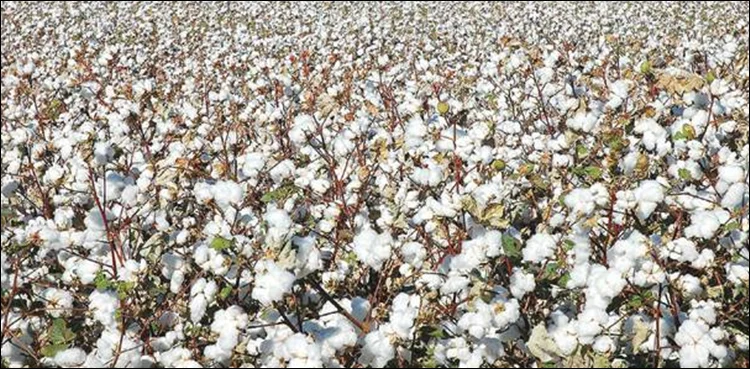
    LAHORE: The cotton crop in Punjab is currently showing a generally satisfactory condition, while rice cultivation in the province has exceeded the government’s target by a significant margin, with growers sowing the crop over more than six million acres against the planned five million acres. The latest assessment was shared at a high-level meeting held in Multan on Saturday to review the progress of major standing crops, agricultural extension services and measures aimed at strengthening farming activity across Punjab. The meeting was chaired by Additional Chief Secretary Punjab Iftikhar Ali Sahoo and brought together senior officials from the Agriculture and Irrigation departments, representatives of the farming community and experts from the agricultural sector. Among those attending were Muhammad Nawaz Sharif University of Agriculture Vice Chancellor Professor Dr Asif Ali, Special Secretary Agriculture South Punjab Sarfraz Hussain Magsi, Agriculture Department Directors General Abdul Hameed, Naveed Asmat Kahloon, Dr Aamir Rasool and Dr Sajid-ur-Rehman, as well as Kissan Ittehad President Khalid Mahmood Khokhar, Syed Hassan Raza and Dr Muhammad Iqbal Bandesha. Additional Secretary Task Force Shabbir Ahmed Khan, Director General Crop Reporting Dr Abdul Qayyum and Agriculture Department Consultant Dr Muhammad Anjum Ali participated in the meeting through a video link. Officials briefed the meeting on the condition of major crops and the progress of field-level initiatives designed to assist farmers. Cotton remained a major focus of the discussion because of its importance to Pakistan’s textile-based economy and its contribution to agricultural incomes. The participants were informed that the cotton crop across Punjab was in a satisfactory condition. However, officials stressed the need for continued field monitoring and timely technical support to protect the crop from potential threats during its critical growth stages. Cotton is considered one of Pakistan’s most important cash crops and serves as a major source of raw material for the country’s textile industry. Its performance has a direct bearing on farmers, ginners, textile manufacturers and export-oriented businesses. In recent years, cotton production has faced challenges from changing weather patterns, pest attacks, input costs and competition from alternative crops. Sahoo emphasised that the government was giving priority to agricultural development and the economic well-being of farmers. He directed agriculture officials and field formations to maintain regular contact with growers and ensure that technical advice reached farmers in a timely manner. He said the strategy prepared for the revival and strengthening of cotton cultivation should be implemented in letter and spirit. Officials were also asked to remain active in the field and assist growers in dealing with crop-related issues. Highlighting cotton’s wider economic significance, the additional chief secretary said the country’s economy and textile sector could not be viewed separately from the performance of the cotton crop. He stressed the need for coordinated efforts to improve productivity and strengthen the position of cotton growers. The meeting also reviewed the progress of rice cultivation. According to the officials, rice had already been planted over more than six million acres in Punjab, exceeding the season’s target of five million acres. Sahoo directed agricultural authorities to intensify technical guidance for rice growers, particularly to help them improve productivity, maintain crop quality and adopt better farming practices. He called for greater involvement of regional agricultural forums and professional experts in addressing issues faced by farmers at the local level. Such platforms, he said, should use their technical expertise to help improve agricultural performance and provide practical solutions to growers. The additional chief secretary also appreciated the efforts of Agriculture Department field teams for their role in supporting farmers and monitoring crop conditions across the province. Later, Sahoo visited the Model Agriculture Mall in Multan to inspect arrangements for the provision of agricultural inputs to farmers. During the visit, he reviewed the availability of fertilisers and other essential inputs and sought information from officials regarding stocks and farmer demand. He directed the relevant authorities to ensure uninterrupted availability of fertiliser at the facility so that farmers did not face shortages during the ongoing crop season. Officials said crop conditions would continue to be monitored closely in the coming weeks. With rice cultivation entering the final stages of the transplantation period and cotton moving into an important phase of its growth cycle, timely field intervention and availability of agricultural inputs would remain crucial to determining overall crop performance. The government is expected to maintain its focus on farmer guidance, crop monitoring and input availability as the province moves further into the agricultural season.

  • |

    Rain forecast for several parts of Pakistan as flood risk rises

    LAHORE: Rain is expected in several parts of Punjab, Balochistan, upper Khyber Pakhtunkhwa, Gilgit-Baltistan and Kashmir on Sunday, with authorities warning of possible flooding in urban centres and watercourses following increased rainfall. According to the latest weather forecast, scattered showers are likely to affect different areas of the country, while parts of Punjab may experience intermittent rain during the day. The weather in Lahore turned pleasant on Sunday morning after rainfall was reported in various parts of the provincial capital. The early-morning showers brought temporary relief from the prevailing heat and humidity, with residents experiencing relatively cooler conditions. Rain was reported in several localities, adding to the likelihood of water accumulation on roads and low-lying areas if the spell continues. Meanwhile, the National Emergency Operation Center has warned that rainfall could lead to a rise in water levels and flows in major rivers across the country. The situation has prompted authorities to remain vigilant and closely monitor river channels, drains and vulnerable urban areas. Officials have also highlighted the possibility of low to moderate-level urban flooding in several Punjab cities, including Rawalpindi, Gujranwala, Sialkot, Narowal, Faisalabad, Okara and Lahore. Heavy or persistent rainfall in these areas could result in water accumulating on roads, underpasses and other low-lying locations, potentially disrupting traffic and routine activities. Relevant departments have been advised to remain prepared to respond to any emergency arising from the weather system. The risk is not limited to Punjab. In Khyber Pakhtunkhwa, low to moderate flooding has also been forecast in rivers, streams and rain-fed waterways in Chitral, Upper Dir, Abbottabad, Shangla, Khyber, Orakzai, Kohat, Tank and North and South Waziristan. Authorities have urged local administrations and disaster-management agencies in vulnerable districts to maintain close coordination and monitor developments, particularly in areas located near rivers, streams and seasonal rain drains. Residents in low-lying and flood-prone areas have been advised to exercise caution, avoid unnecessary travel during heavy rainfall and stay informed about weather and flood alerts issued by the relevant authorities. The latest warnings come as the country continues to monitor the impact of the ongoing monsoon activity, which can cause sudden increases in river flows and urban flooding in areas receiving intense or prolonged rainfall.

  • |

    Sophie Cunningham hits back after DiJonai Carrington’s ‘White Privilege’ post

    CHICAGO: A heated Indiana Fever-Chicago Sky matchup has sparked a fresh controversy in the WNBA after Sky guard DiJonai Carrington was ejected for a Flagrant 2 foul on Sophie Cunningham and later posted “WHITE PRIVILEGE” on social media. The incident happened during Saturday’s game in Chicago when Cunningham was driving toward the basket on a fast break. Carrington chased her down and struck Cunningham high around the head and neck, sending the Fever guard to the floor. After a video review, officials upgraded the foul to a Flagrant 2, which carries an automatic ejection. Cunningham immediately confronted Carrington before teammates stepped in to separate the players. Carrington later posted the words “WHITE PRIVILEGE” on Threads while tagging the Indiana Fever, bringing a racial dimension to an already tense incident. Cunningham strongly rejected that interpretation after the game. “I think the league is taking care of that. This has nothing to do with race,” Cunningham said, pointing out that she had previously been ejected for a similar incident and accepted the punishment at the time. She also described Carrington’s foul as unnecessary and said she believed there was intent behind the contact. “I’ve never really spoken to her and have no beef with her,” Cunningham said, adding that she believed Carrington had some pent-up frustration. Despite the confrontation, the Fever guard’s coach offered a more measured assessment of the incident. Indiana coach Stephanie White agreed that the Flagrant 2 call was appropriate but said she did not believe Carrington deliberately targeted Cunningham’s neck. White previously coached Carrington during their time with the Connecticut Sun. Carrington’s own coach, Tyler Marsh, also said he initially believed the play was a legitimate attempt to make a defensive play and had not immediately considered it a Flagrant 2. He said the team would address Carrington’s social media post internally. The controversy comes as Cunningham has already attracted considerable attention away from the basketball court because of her public comments about transgender athletes in women’s sports. Her views have prompted both supporters and protesters to appear around Fever games in recent weeks. The game itself ended in a 90-86 victory for Indiana, while Carrington’s early exit dramatically changed the contest. She had scored eight points in only four minutes before being ejected. Cunningham finished with three points in 17 minutes, with all three points coming from the free throws awarded after the flagrant foul. The latest clash adds another chapter to the increasingly intense rivalry surrounding the Fever, which has attracted enormous national attention. For now, the basketball incident has moved beyond the court, with questions about the foul, Carrington’s social media post and the wider debate surrounding Cunningham continuing to generate discussion across the WNBA.