تازہ ترین

  • | |

    Sindh to launch EV taxi service in September

    Sindh’s Senior Minister Sharjeel Inam Memon chaired a meeting of the Transport and Mass Transit Department, where officials approved the launch of an electric vehicle (EV) taxi service in September and the induction of 50 double-decker buses in October as part of efforts to modernize public transport across the province. According to a spokesperson for the Transport Department, the meeting also decided to introduce 1,000 electric buses in phases by the end of the current year. The initiative aims to expand environmentally friendly public transport and improve commuting facilities for residents. The meeting further approved new routes for the Peoples Bus Service, connecting Larkana to Qambar and Qambar to Shahdadkot, to improve transport links in northern Sindh. Officials briefed the provincial minister on the progress of various transport and mass transit projects during the meeting. Sharjeel Memon directed authorities to complete the construction of all depots for the Red Line Bus Rapid Transit (BRT) project within the scheduled timeline. He also instructed officials to ensure the early operational launch of the new Peoples Bus Service routes between Larkana, Qambar and Shahdadkot. The minister confirmed that the Sindh government’s EV taxi service will begin operations in September. He added that the planned fleet of 1,000 electric buses will be introduced gradually to strengthen the province’s public transport network. He also announced that 50 new double-decker buses are expected to arrive in Karachi in October, providing commuters with improved and modern travel facilities.

  • |

    France tightens borders after deadly Ceuta migrant crisis

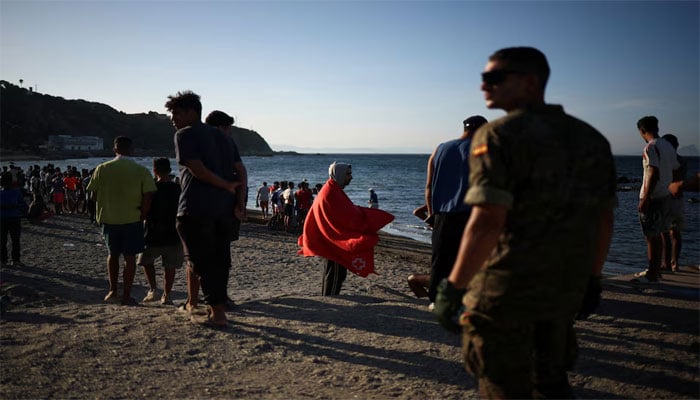
    France has strengthened security checks along its border with Spain following the recent migrant influx into the Spanish enclave of Ceuta, French Interior Minister Laurent Nunez announced on Tuesday. The enhanced border measures were introduced over the weekend on the instructions of French President Emmanuel Macron after tens of thousands of migrants crossed into Ceuta from Morocco over two days, triggering one of the region’s largest migration emergencies in recent years. Spanish authorities said the vast majority of migrants who entered the enclave had already been returned to Morocco. Officials also confirmed that at least 75 people died while attempting the dangerous crossing, highlighting the human cost of the crisis. Speaking after an emergency video conference with European interior ministers, Laurent Nunez said European Union member states had unanimously expressed solidarity with Spain and pledged support in managing the situation. He said France remained ready to provide additional assistance through Frontex, the EU’s border management agency, if required. The French minister noted that Ceuta operates under special rules within the Schengen Area and stressed that strict border controls had prevented the migration crisis from spreading to mainland Europe. Nunez also praised the cooperation between Spain and Morocco in responding to the situation, saying close coordination between the two countries had been vital in managing the large-scale arrivals. Rejecting calls from some political groups in France to suspend Spain from the Schengen free-movement zone, he said EU member states agreed that the Schengen system remained part of the solution rather than the cause of the crisis. He emphasized that the Schengen Area had not been threatened despite the surge in migration and reaffirmed France’s commitment to coordinated European efforts to address irregular migration.

  • | |

    Errors found in Mir Raza Ali’s initial post-…

    Fresh discrepancies have emerged in the initial post-mortem report of young businessman Mir Raza Ali, raising concerns that the investigation into his death could be compromised. According to medico-legal sources, several inconsistencies were identified after examining photographs of the body, prompting questions about the accuracy of the preliminary findings. Sources said the images showed a small gunshot wound on the lower back and a larger wound on the chest. They added that the injuries appeared inconsistent with the details recorded in the initial post-mortem report. The photographs also reportedly showed the fingers of the victim’s left hand tightly clenched around broken grass, while suspicious marks were observed on the right hand. Medico-legal officials said these details could be significant for the ongoing investigation. According to the sources, another visible injury was found beneath the victim’s chin, which was also not adequately addressed in the preliminary examination. The report further suggested that the body was approximately 24 to 36 hours old at the time it was examined. Sources familiar with the findings said the gunshot entry wound appeared larger than the exit wound in the report, while the photographs indicated the bullet had entered from the back and exited through the front. They stressed that these contradictions require further forensic review. Officials also noted that the body appeared swollen in the photographs and the face was severely disfigured. They said a detailed examination of the head could have helped determine the exact cause of the facial injuries and provided additional forensic evidence. The discrepancies have raised concerns that flaws in the initial post-mortem documentation may affect the direction and credibility of the investigation.

  • | |

    Punjab CNF seizes 24.7 tonnes of narcotics worth R…

      Lahore, August 4, 2026: The Punjab Counter Narcotics Force (CNF) has intensified its crackdown on drug trafficking across the province, achieving significant success in recent intelligence-led operations. The campaign is being carried out under the special directives of Punjab Chief Minister Maryam Nawaz Sharif as part of the government’s commitment to building a “Drug-Free, Healthy and Safe Punjab.” Over the past two weeks, the CNF conducted 85 intelligence-based operations across the divisions of Lahore, Dera Ghazi Khan, Rawalpindi, Gujranwala, Faisalabad, Bahawalpur and Sargodha. These coordinated raids targeted major drug trafficking networks operating in different parts of the province. The operations resulted in the arrest of 93 suspected drug traffickers, while authorities recovered approximately 296 kilograms of narcotics with an estimated market value of more than Rs. 53.4 million. Officials described the operations as a major step toward curbing the illegal drug trade and improving public safety. The seized narcotics included a wide range of illegal substances such as hashish, opium, cannabis (weed), crystal meth (Ice), poppy straw, cocaine, heroin and five litres of illicit liquor. In addition to narcotics, the CNF recovered a significant cache of weapons from the suspects. These included 13 pistols, two sub-machine guns (SMGs), four rifles and seven drones that investigators believe were being used to facilitate criminal activities and drug distribution. Director General of the Punjab Counter Narcotics Force, Commander Brigadier Mazhar Iqbal, said the Force’s success should not only be measured by the quantity of drugs confiscated but also by its ability to dismantle organised drug trafficking networks across Punjab. He noted that the CNF continues to rely on modern intelligence gathering, professional expertise and coordinated operational planning to identify and eliminate criminal groups involved in the narcotics trade. He further highlighted the Force’s overall performance since it became operational in August 2025. According to the Director General, the Punjab CNF has recovered a cumulative 24.7 tonnes of narcotics valued at more than Rs. 2.23 billion. He described these achievements as evidence of the provincial government’s zero-tolerance policy against narcotics and the effectiveness of its law enforcement strategy. Commander Brigadier Mazhar Iqbal also credited the Force’s progress to close coordination among various law enforcement agencies, which has strengthened efforts to combat drug trafficking and disrupt criminal organisations operating throughout the province. Reaffirming the CNF’s commitment, the Director General said the Force will continue to launch vigorous and indiscriminate operations against drug dealers and traffickers. He stressed that intelligence-driven policing, enhanced operational capabilities and sustained enforcement efforts will remain central to achieving the government’s vision of a province free from the menace of narcotics. Punjab authorities have reiterated that the fight against drugs remains a top priority, emphasizing that continued action against traffickers is essential to protecting communities, safeguarding young people and ensuring a healthier and safer future for the province.

  • | |

    Gaza funeral held for 112 bodies retrieved from ru…

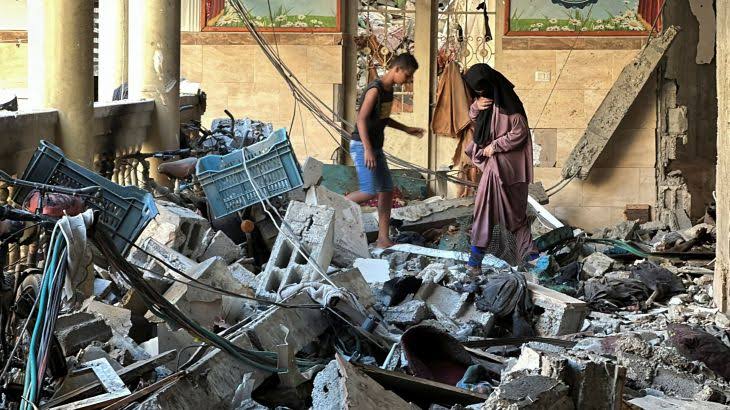
    Palestinians in Gaza held funeral prayers on Tuesday for 112 people whose remains were recovered from the rubble of homes destroyed during the war between Israel and Hamas. Thousands of mourners gathered for the funeral in Gaza City’s Sabra neighborhood, where the bodies, draped in Palestinian flags, were laid out near the ruins of the destroyed homes before the procession began. The victims are set to be buried afterward at the Baptist Cemetery in the Zeitoun neighborhood, south of Gaza City. The dead belonged to the Al Hasayneh and Abu Sharia families, who were killed when their homes were bombed while they were sheltering inside on November 23, 2023. Given the scale of the casualties, the funeral ranks among the largest recorded in Palestinian history. Civil defense teams recovered the bodies from the rubble on Saturday. A Civil Defence statement said the victims included 40 children, 38 women and seven people with disabilities. Civil Defence official Mohammad Abu Dan said search teams have so far been unable to locate 157 additional bodies still believed to be buried under the rubble. More than 73,000 people have been killed and over 174,000 injured in Gaza since the war began in October 2023, according to local health authorities. Despite a ceasefire agreement that took effect on October 10, 2025, Israeli forces have continued carrying out attacks across the territory, killing 1,250 Palestinians and injuring 4,110 others since the truce began, Gaza’s Health Ministry said. Palestinian authorities estimate that around 9,500 people remain missing under the rubble of buildings destroyed across the territory. A day earlier, at least 19 Palestinians were killed by Israeli fire over a 24 hour period, pushing the overall death toll since October 2023 to 73,375, according to the Health Ministry. Officials said the toll included 18 people killed directly by Israeli forces and one person who died from wounds sustained in an earlier attack. The ministry reported that 35 additional injured people were taken to hospitals during the same period, bringing the total number of injuries to 174,220. The ministry said Saturday that 152 people were killed in Gaza during July, the highest monthly death toll recorded since the start of the year, despite the ceasefire that took effect in October 2025. The truce followed nearly two years of war that began on October 8, 2023, and caused widespread destruction across the territory, affecting an estimated 90 percent of civilian infrastructure. The United Nations has put the cost of reconstruction at approximately 70 billion dollars, underscoring the scale of rebuilding that lies ahead even as sporadic violence continues despite the formal end of large scale hostilities.

  • |

    Sharmeen Ali, Sunita Marshall, Saima Qureshi urge parents to raise self-sufficient kids

    Sharmeen Ali, Sunita Marshall and Saima Qureshi have spoken up about raising self-reliant children. They believe both sons and daughters should learn practical life skills from a young age. The three actors shared their thoughts on Nida Yasir’s morning show. They agreed that independence has nothing to do with gender. Every child should be able to take care of themselves. Every child should also help around the house. Sunita brought up safety concerns in cities like Karachi. She said these often limit how freely kids can move outdoors. Even so, she believes parents can still teach independence at home. Simple habits matter, she said. Making the bed. Cooking a basic meal. These small tasks add up over time. She also spoke about extracurricular activities. Her son manages rowing and tuition on his own schedule. That balance, she said, teaches real time management. Saima, who is raising three sons, shared a similar approach. She has her children handle their own chores. Washing dishes. Making tea. Ironing clothes. If the house needs dusting and help isn’t around, they step in too. Without early discipline, she said, kids won’t develop that habit later. Sunita added that chores are shared across her household. She takes a turn. Her husband, Hassan, takes a turn. The kids take their own turns too. Sharmeen agreed with both actors. She said chores should never be split by gender. Working mothers can’t always be present, she pointed out. That means kids need to solve problems on their own. She then reflected on her own journey. Learning to drive after her separation gave her real independence. Now, she wants to pass that same skill on to her 17-year-old daughter. The conversation also touched on how children are growing up today. The internet, they agreed, has made kids more informed than before. Saima recalled moments when her children corrected her after learning something new online. Sunita shared how her son taught himself detailed history facts from YouTube, long before school covered the same topics. Even with all this exposure, the actors were clear about one thing. Academics still come first. Screen time and hobbies, they said, should work more like rewards. Boundaries matter, and so does staying involved in a child’s daily life.

  • | |

    Ishaq Dar to attend Jerusalem ministerial meeting …

    Deputy Prime Minister and Foreign Minister Ishaq Dar will travel to Jordan to participate in a ministerial meeting focused on the worsening situation in occupied Jerusalem, reaffirming Pakistan’s diplomatic support for the Palestinian cause. According to the Foreign Office, the meeting, scheduled for August 5, will bring together foreign ministers from Arab League member states and several Islamic countries to discuss recent developments in Jerusalem and coordinate a unified response to the evolving situation. The Foreign Office said Dar is attending the meeting at the invitation of Jordan’s Deputy Prime Minister and Foreign Minister Ayman Safadi. During the visit, participating foreign ministers are also expected to meet Abdullah II to discuss regional developments and ongoing efforts aimed at addressing the challenges facing the Palestinian people. On the sidelines of the conference, Ishaq Dar is expected to hold bilateral meetings with several foreign ministers to exchange views on regional issues, including the humanitarian situation in Palestine and broader Middle East developments. The Foreign Office described Pakistan’s participation as a reflection of its longstanding and principled support for the Palestinian people. It reiterated Pakistan’s position in favor of an independent, sovereign and contiguous State of Palestine based on the pre-1967 borders, with East Jerusalem (Al-Quds Al-Sharif) as its capital. Pakistan has consistently condemned actions that it says threaten the historical and legal status of Islamic and Christian holy sites in Jerusalem, including repeated incursions into the Al-Aqsa Mosque compound.

  • | |

    Gen Z group behind India’s cockroach protest…

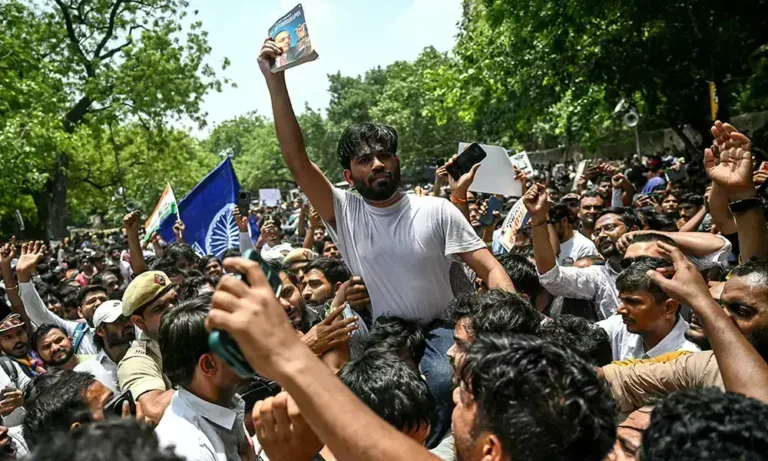
    The Cockroach Janta Party, the youth movement that forced a top Indian minister to quit, says it has no plans yet to contest elections despite its growing influence among young voters. Abhijeet Dipke, the founder of the group, told a foreign news agency on Tuesday that the organization intends to stay focused on grassroots mobilization rather than rush into formal politics. The statement comes weeks after protests led by Dipke swept through Delhi and spread to other parts of the country, ultimately pressuring Prime Minister Narendra Modi’s education minister to step down. Speaking from his family home in Maharashtra, Dipke said the group wants to first understand what young Indians actually want before deciding its next move. He announced that supporters would gather for a two day meeting starting Wednesday to map out priorities for the movement going forward. “The purpose will be to form the agenda for the Cockroach Janta Party and discuss how we can take this social movement forward,” Dipke said, as well wishers arrived at his home carrying flowers and gifts. Dipke made clear that entering electoral politics is not on the table for now, though he left the door open for the future. He said he would only consider building a formal party if a clear majority of supporters pushed for it, and that any decision to contest elections would come later, guided by public sentiment rather than a fixed timeline. He argued that Indian politics does not currently need another party competing for power. Instead, he said, the country requires a broader public campaign aimed at restoring faith in institutions that have lost credibility among ordinary citizens. Dipke said the group’s immediate priority is to give voice to the frustrations of India’s youth, many of whom, in his view, no longer trust the country’s political class, judiciary or press. He emphasized the importance of listening directly to young people before setting any formal agenda, saying it was necessary to understand their actual concerns rather than assume them. Dipke made these comments while still recovering from typhoid, which he contracted during the weeks he spent camped out during the Delhi demonstrations. A hero’s welcome at home Following the 36 day protest, Dipke traveled back to his hometown of Chhatrapati Sambhajinagar, where hundreds of supporters lined up outside his home to greet him, many carrying flowers in celebration of the movement’s success. Dipke’s rise to prominence has been rapid. After returning to India in June from his studies in the United States, he became a household name almost overnight when his call to protest against leaked medical entrance exam papers pulled tens of thousands of young demonstrators onto the streets of the capital. The pressure campaign achieved a significant result on July 25, when Education Minister Dharmendra Pradhan resigned from his post. Authorities had attempted to disperse the crowds using tear gas and baton charges, but the demonstrations continued regardless. In the aftermath, the government announced tougher legal penalties for those involved in leaking exam papers and formed a committee to reassess the broader examination system. The stakes attached to these entrance exams are enormous for India’s youth. Millions of students spend years preparing for them, viewing a strong result as their surest route to stable, well paying careers and financial security for their families. Wary of political traps Dipke explained that he is avoiding a formal political launch partly out of concern that the government could use investigations or legal pressure to undermine the party’s leadership if it formalized too quickly. He also said he has no intention of aligning the movement with any existing political party, even as opposition figures in India have tried to capitalize on the rare momentum the protests created against Modi’s government. Some of that caution appears to draw on regional experience. In neighboring Bangladesh, a youth led party that emerged after mass protests ousted long time leader Sheikh Hasina in 2024 went on to perform poorly in this year’s elections, a result that may be shaping how Dipke approaches the question of formal politics in India. Political observers say the true test of whether young Indians’ frustration translates into votes will come in elections scheduled for next year in Uttar Pradesh, India’s most populous state, along with Punjab and Modi’s home state of Gujarat. A bigger risk for the ruling Bharatiya Janata Party could emerge in the 2029 general election if the Cockroach Janta Party evolves into a formal political force by then. Political analyst Amitabh Tiwari said the movement is unlikely to cause major damage to the BJP in upcoming state elections but could grow into a more serious factor by the time of the next general election. He added that if the group builds a party structure, continues championing youth causes and sustains its current momentum, it stands a real chance of attracting broader support. Security concerns following the protests remain high. More than a dozen police officers have been stationed outside Dipke’s family home after he received threats on social media once his profile surged following the initial call to protest in May, a period in which the Cockroach Janta Party’s Instagram following grew to 22 million within days. Dipke said his greatest worry is not for his own safety but for that of his parents. He expressed relief at being back home and said he trusts that government provided security will keep his family safe in the coming weeks. The episode adds to a growing pattern across South Asia, where youth led movements have increasingly forced political concessions from long entrenched governments, even when those movements stop short of transforming into electoral parties themselves.

  • |

    Sanya Malhotra says desi ‘acts of service’ hurt women

    Sanya Malhotra has spoken about breaking old patterns in her own family. She admitted she “forced” her mother to step back from the kitchen and focus on herself instead. According to her, the habit of women expressing love through nonstop service is not healthy. In many South Asian homes, she said, women spend their days caring for others while their own goals get set aside. She brought this up in a recent interview. Her own house followed the same pattern growing up. Women stayed in the kitchen. Men waited around for things to be handed to them. She said she didn’t fully see how much pressure her mother was under until she moved away to Mumbai. One memory stood out for her. Her mother once cried simply because she felt too sick to cook. Sanya told her that food had nothing to do with love. She explained that cooking is just one way people show care, not the only way it can be shown. That moment shifted things at home. Sanya started nudging her parents away from old habits. Her mother now listens when Sanya tells her to skip the kitchen for a day. She said it makes her proud watching her mother take time for herself in the mornings instead of rushing straight to chores. Her father was not left out either. Sanya said she often pushed him to do small things, like getting his own glass of water or making a simple meal. She admitted the change has not fully stuck yet, but she keeps reminding him. She connected all of this to her character in Mrs. In the film, she plays a newlywed whose entire identity gets swallowed by household duties. Sanya said many women tell her the story feels personal to them. That response, she said, leaves her both upset and hopeful, since even a small shift in mindset feels worth it to her. She also called out how sacrifice tends to get romanticised, especially when it comes to mothers. Women, she said, are often expected to give up their own dreams the moment they become parents. Talking about her mother’s past, Sanya revealed she once wanted to become a fashion designer. It took her years to understand her mother had dreams of her own beyond raising a family. As for the criticism Mrs received, Sanya said none of it bothered her. She said she has no interest in defending her views to people who never even watched the film. She last appeared in Netflix’s Toaster and is currently working on Bandar and Sundar Poonam.

  • | |

    US military depletes long-range missile stockpile …

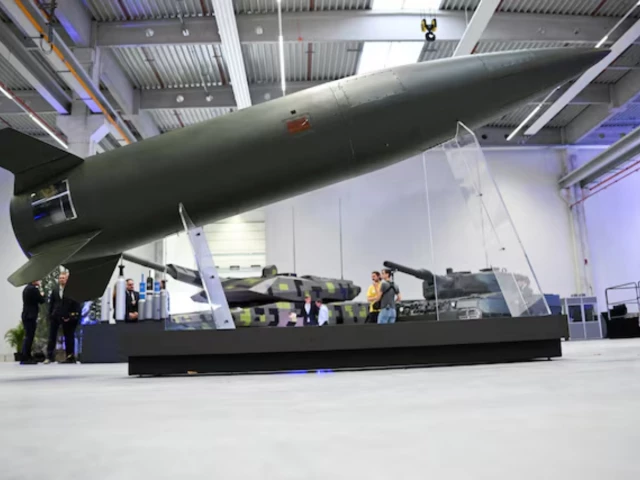
    The United States has burned through nearly all of its long-range precision missiles during five months of fighting in Iran, according to three people familiar with internal defense data, fueling concern inside Washington about military readiness for future crises. The weapons in question are primarily the Army’s ground launched systems, the Army Tactical Missile System and the newer Precision Strike Missile. Two of the sources said the military has expended virtually its entire supply of both. These munitions let forces strike targets accurately from a safe distance and have already proven vital in Ukraine, where American supplied versions allowed Ukrainian troops to hit targets deep inside Russian territory. The Precision Strike Missile represents a more advanced generation designed to eventually replace the shorter range ATACMS. Defense analysts note that such long-range munitions, each costing more than a million dollars, would also play a central role in any future confrontation with China. The sources declined to specify exact remaining quantities of either weapon. President Donald Trump launched the joint offensive against Iran alongside Israel in February, initially predicting a brief campaign. Instead, the conflict has stretched on for months, and the three sources said they worry that shrinking missile reserves could weaken the country’s ability to deter rivals such as Russia and China going forward. A fourth person familiar with the matter said Central Command, which oversees American forces across the Middle East, has nearly exhausted the land based missiles it held before the war started, though it has managed to replenish supplies by drawing from military stockpiles based elsewhere around the world. All four sources spoke on condition of anonymity. Asked to respond to the stockpile figures, the White House shared a statement from Trump asserting the country holds “far more munitions than anyone in the world” and more than it currently requires. He added that American defense manufacturers are producing at record volumes while also expanding factory capacity. Analysts largely agree that certain categories of weapons, including artillery shells and select missile types, are rolling off production lines at historic rates. Still, they caution that overall output may fall well short of what a prolonged conflict would demand. Lockheed Martin, which manufactures both the ATACMS and the Precision Strike Missile along with the THAAD missile defense system, did not respond to questions about the stockpile figures or the president’s remarks. Raytheon, maker of the Tomahawk cruise missile and the Patriot interceptor, also did not respond to inquiries. Chief Pentagon spokesperson Sean Parnell defended the state of American readiness, saying the military maintains a deep arsenal capable of protecting national interests and has carried out multiple successful operations across combatant commands. Internal debate over munitions The stockpile figures have circulated through federal government channels over the past week amid tense internal discussions about how much longer American forces can keep striking Iranian targets without depleting reserves needed to respond to crises elsewhere in the world. One source said the drawdown in ATACMS and Precision Strike Missile inventories reflects a deliberate choice by the administration to avoid riskier tactics, such as sending piloted aircraft to drop bombs directly over Iranian territory. Because these missiles allow strikes from a distance, analysts consider them especially valuable against an adversary with sophisticated air defenses, a category that includes China. A March assessment from the Center for Strategic and International Studies noted that these weapons have already been used against targets inside Iran. That same assessment found that Precision Strike Missile stocks started the conflict relatively low, since the weapon is still new to the arsenal, though the Army has placed large orders set for delivery in 2027. Military officials have said ATACMS production is winding down as manufacturing shifts toward the newer missile system. Military leaders have spent weeks warning the president that stocks of defensive weapons, including the Patriot interceptor system effective against ballistic missiles, are running low, according to two of the sources. Several news outlets reported last week that Trump opted against launching another large scale offensive inside Iran partly because military advisers raised concerns about dwindling supplies. A separate US official disputed that account, saying the president held off due to pressure from Gulf states rather than munitions concerns. The extended campaign has also reignited debate over the scope of presidential war powers, since no formal declaration of war or authorization for the use of military force has gone before Congress. Defensive systems also strained A separate assessment published last week by the Center for Strategic and International Studies estimated that the military used roughly 65 percent of its Patriot interceptor stock between February and July, while THAAD interceptor supplies fell by at least 38 percent compared with pre war levels. Two of the sources said those figures align with internal government data, though the underlying numbers could not be independently verified. The military has also used up close to half of its worldwide Tomahawk cruise missile inventory since fighting began, according to one source, a figure that likewise could not be independently confirmed. The Tomahawk, typically launched from Navy destroyers, cruisers and submarines, has long served as the primary tool for striking heavily defended targets without exposing pilots to risk. Raytheon, now part of RTX, has reached a preliminary multi year deal with the Pentagon to expand Tomahawk output alongside other munitions as officials work to rebuild depleted stockpiles amid the ongoing conflict.