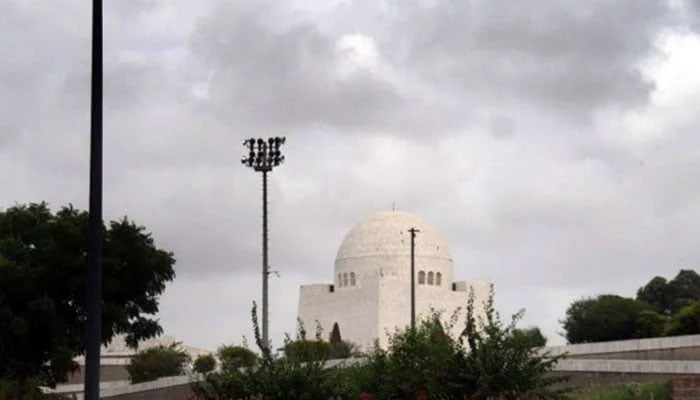
sindh launch taxi
| |

Sindh to launch EV taxi service in September

Sindh’s Senior Minister Sharjeel Inam Memon chaired a meeting of the Transport and Mass Transit Department, where officials approved the launch of an electric vehicle (EV) taxi service in September and the induction of 50 double-decker buses in October as part of efforts to modernize public transport across the province.

According to a spokesperson for the Transport Department, the meeting also decided to introduce 1,000 electric buses in phases by the end of the current year. The initiative aims to expand environmentally friendly public transport and improve commuting facilities for residents.

The meeting further approved new routes for the Peoples Bus Service, connecting Larkana to Qambar and Qambar to Shahdadkot, to improve transport links in northern Sindh.

Officials briefed the provincial minister on the progress of various transport and mass transit projects during the meeting.

Sharjeel Memon directed authorities to complete the construction of all depots for the Red Line Bus Rapid Transit (BRT) project within the scheduled timeline. He also instructed officials to ensure the early operational launch of the new Peoples Bus Service routes between Larkana, Qambar and Shahdadkot.

The minister confirmed that the Sindh government’s EV taxi service will begin operations in September. He added that the planned fleet of 1,000 electric buses will be introduced gradually to strengthen the province’s public transport network.

He also announced that 50 new double-decker buses are expected to arrive in Karachi in October, providing commuters with improved and modern travel facilities.

Similar Posts

  • |

    Trump’s generic drug tariff plan puts US-India pharma ties to test

    A newly announced tariff schedule introduced by President Donald Trump targeting generic pharmaceutical imports is expected to significantly affect the deep trade relationship between the United States and India, which serves as the principal supplier of generic medicines to the American market. Indian drug manufacturers currently supply roughly half of all generic pharmaceuticals consumed in the United States, with the American market generating close to a third of India’s overall pharmaceutical export earnings. The scale of this commercial exposure means the newly outlined tariff timeline, despite featuring a two-year grace period, has immediately drawn close scrutiny from Indian pharmaceutical firms and market analysts due to the critical role US sales play in corporate revenues. The policy introduces additional uncertainty to a bilateral trade dynamic already strained by recent tariff disputes, raising the stakes for Indian manufacturers as they decide whether to commit capital toward expanding domestic manufacturing inside the United States or absorb steep import duties in the future. Trump outlined a phased tariff framework for generic medications entering the United States. Under this timeline, generic drug imports will continue to enter duty-free under a zero per cent tariff until August 1, 2028, marking a two-year transition window from the policy’s effective date. Following this grace period, a 100 per cent tariff will apply for one year, after which the import levy will rise to 200 per cent. Trump framed the escalated duties as a penal mechanism designed to compel foreign pharmaceutical companies to construct manufacturing facilities on American soil within the allotted timeframe, rather than remaining reliant on overseas production plants. He explicitly distinguished this new generic drug framework from the administration’s policy on branded and patented pharmaceuticals, stating that existing regulations for branded drugs would remain unchanged due to their ongoing success. Reports citing White House details indicate that the new generic tariffs will be executed under Section 232 trade authority, matching the legal foundation used for the administration’s earlier tariffs placed on branded pharmaceuticals in April. Trump also highlighted what he described as an unprecedented surge in new domestic pharmaceutical plant construction currently underway across the United States, presenting the new tariff schedule as a measure to reinforce an existing shift toward onshore manufacturing. The policy holds major implications for the broader American healthcare system and global exporters because generic medications account for nearly 90 per cent of all prescriptions filled in the United States. This action follows previous interventions in the pharmaceutical sector, including the 100 per cent tariff placed on branded drugs starting in October 2025, alongside a most-favoured-nation pricing push. That pricing policy led more than a dozen major pharmaceutical corporations, including Pfizer, Eli Lilly, and Novo Nordisk, to conclude agreements to reduce US drug prices in exchange for multi-year exemptions from import duties. For Indian drugmakers, the two-year transition window provides initial breathing room but lacks long-term security. Indian generic manufacturers now face the choice of allocating capital to construct or expand production facilities within the United States before the 2028 deadline, or facing severe cost disadvantages once the punitive tariffs take effect. Industry analysts expect to monitor whether major Indian drug companies will announce accelerated manufacturing investments in the United States over the coming months as the sector formulates its response.

  • | |

    Adrianne Palicki shares disappointment over Friday…

    Adrianne Palicki is opening up about her honest feelings regarding the upcoming Friday Night Lights reboot, and while she is excited that a new generation will experience the beloved franchise, she admits she has mixed emotions about revisiting what she considers a “perfect” television series.  Palicki, who portrayed fan-favorite Tyra Collette for three seasons of the acclaimed sports drama, recently reflected on the show’s legacy during an interview with TV Insider. Looking back, the actress described the original series as “timeless,” explaining that its themes of family, community, hope, and personal growth remain just as relevant today as they were when the show first premiered in 2006.  “Aside from a cell phone here and there, everything is still happening today,” Palicki said, emphasizing that the series explored the complexities of real people living in a small Texas town. She noted that every character existed in a moral gray area, which helped make the show feel authentic and relatable rather than overly dramatic.  Although Peacock is developing a fresh adaptation of Friday Night Lights, Palicki admitted she is “torn” about the project. She explained that the original series holds a special place in her heart and questioned whether such an iconic story truly needs to be reimagined. According to the actress, the original was “a perfect show,” making the idea of a reboot difficult to embrace.  That said, Palicki clarified that her hesitation does not come from negativity toward the new creative team. Instead, it stems from her deep respect for the original cast, writers, and creators who built the series into one of television’s most beloved dramas. She even suggested she would be open to returning if the original creative team and cast were meaningfully involved, though she remains uncertain about a complete reinvention featuring entirely new characters.  The actress also reflected on the lasting impact of Tyra Collette, a character who evolved from a misunderstood teenager into a determined young woman chasing higher education and a better future. Palicki revealed that fans still approach her years later to share how Tyra’s journey inspired them to pursue college or overcome personal challenges. Those heartfelt stories, she said, are a reminder of why Friday Night Lights continues to resonate decades after its debut.  Based on H.G. Bissinger’s 1990 nonfiction book, Friday Night Lights became a cultural phenomenon thanks to its emotionally rich storytelling and memorable characters. While the reboot promises a fresh cast and a new direction, Palicki believes the original’s emotional depth is what made it truly unforgettable.  As excitement builds for the reboot, Adrianne Palicki’s candid remarks reflect the feelings of many longtime fans. For her, Friday Night Lights was more than just a television series—it was a story that continues to inspire audiences, making its legacy difficult to replicate. 

  • | |

    Salman Akram Raja denies PTI link to man killed in…

    Pakistan Tehreek-e-Insaf (PTI) Secretary General Salman Akram Raja has denied any known connection between the party and the man who was killed during a security incident in Rawalpindi, saying the party does not know which group the deceased belonged to or what actions he may have been involved in. Speaking about the incident, Raja said PTI was a peaceful political party and strongly opposed terrorism. He stressed that the party had never had any connection with terrorist activity and was pursuing its political struggle within the framework of the Constitution and law. “We do not know which group the man who was killed in Rawalpindi belonged to or what his actions were,” Raja said, according to reports. His comments came after a man was killed following an incident involving gunfire at security personnel on Mall Road in Rawalpindi. Police said a suspect opened fire on security forces, injuring a member of a patrol team before the suspect was killed. The incident has sparked a political dispute over the identity and political affiliation of the deceased. PTI leader Shafi Jan separately claimed that the man killed on Mall Road was a PTI worker. The claim contrasts with Raja’s statement that he did not know which group the deceased belonged to. The differing statements have added to questions surrounding the man’s identity and alleged activities. Raja also rejected any suggestion that PTI was involved in violent activity, saying the party was committed to pursuing its political objectives through constitutional and legal means. On the possibility of negotiations with the government, the PTI secretary general said there was currently no government offer on the table. However, he maintained that the party had never rejected negotiations on principle. Raja was also questioned about PTI Senator Shumail Yousafzai. He explained that she had not been removed from the party because the leadership did not want to create further divisions within PTI. He claimed that Yousafzai was not acting alone and had a group of people supporting her. Meanwhile, the Rawalpindi incident has become part of a broader political debate over security, terrorism and the role of political parties in Pakistan. Government officials and opposition figures have offered sharply different interpretations of PTI’s political conduct. The conflicting claims regarding the deceased man’s affiliation are likely to keep the issue in the spotlight as authorities investigate the circumstances surrounding the Rawalpindi shooting and determine the identity and background of the person who was killed.

  • | | | |

    10 People Injured in Bangkok Bus Crash on Lat Phrao Road, Bus Driver Blames Brake Failure

    Bangkok, Thailand — An air-conditioned public bus driver lost control early Saturday morning, July 11th, 2026, mounting the sidewalk and crashing into a traffic signal control box and a roadside tree on Lat Phrao Road in Bangkok’s Wang Thonglang district, injuring at least 10 people. The accident occurred around 7:13 a.m. near Lat Phrao Soi […]

  • | |

    GCU goes fully paperless, embracing digital govern…

    LAHORE: Government College University (GCU) Lahore has become fully paperless after shifting its administrative operations to a cloud-based digital system, marking a major step towards modern and technology-driven governance. The transformation has been achieved through the successful implementation of the Punjab Information Technology Board’s (PITB) e-Filing and Office Automation System. The platform has been provided to the university free of cost on the special directives of the Punjab government. Under the new digital framework, administrative activities across all university departments will now be managed online through a single platform. Faculty and staff can submit leave applications, travel requests and annual performance reports, while official orders and administrative correspondence will also be processed digitally. The system will also replace conventional paperwork for departmental digital notes, approval of visiting faculty payments, purchase requests and meeting agendas. As a result, the traditional practice of physically moving files from one office to another will be eliminated. Vice Chancellor Professor Muhammad Umar Chaudhry described the move as an important milestone in the university’s digital transformation. He said paperless administration was not merely an environmental initiative but represented a structural shift towards greater transparency, efficiency and accountability. He added that eliminating administrative delays and manual file tracking would allow faculty members and heads of departments to devote more time and attention to teaching and research. He said the initiative could position GCU as a leading example of digital transformation among public-sector universities in Punjab. According to a university spokesperson, the paperless system is part of a broader digitalisation programme launched under the vice chancellor’s leadership during the previous academic year. The university had already introduced online approval mechanisms for student society events and digital billing for payments to visiting faculty. GCU is also preparing to launch a comprehensive e-Services Portal aimed at improving campus facilities. The upcoming platform will enable staff to submit maintenance requests and seek other support services digitally, helping resolve infrastructure-related issues more efficiently without disrupting academic activities. The university’s digital transformation is also extending beyond the campus. Work is underway to digitise the records of its alumni, further expanding the institution’s efforts to establish a modern, technology-based administrative system.

  • | | | |

    Roman-Era masterpiece found hidden beneath fields …

    Archaeologists have uncovered a stunning 4th-century Roman mosaic beneath farmland in England, offering new insight into life during the period when Britain was part of the Roman Empire. The remarkable mosaic was discovered at the remains of an ancient Roman villa in Devon. Made from thousands of colorful stones arranged into intricate floral patterns, the artwork is believed to date back to the fourth century AD. The discovery provides fresh evidence of the wealth, architecture and cultural influence that existed in Roman Britain. The Roman Empire controlled much of Britain from around AD 43 until around AD 410, leaving behind numerous settlements, villas, roads and other archaeological remains. Alongside the mosaic, archaeologists discovered a large and sophisticated Roman bathhouse near the site. The complex reportedly contained several small pools, walls decorated with colorful plaster and a range of other ancient artifacts. The excavation was carried out over a two-month period by archaeologists from the University of Exeter and Cotswold Archaeology. Volunteers also participated in the work, helping researchers investigate the agricultural land located between the Devon villages of Hill Barton and Sampford Peverell. The archaeological team already knew that the Roman villa and surrounding working areas were potentially important for understanding the spread of Roman culture across Devon. However, the latest findings have revealed that the site was considerably larger and more significant than previously understood. Project leader Dr Susan Greaney said the discoveries could help researchers better understand Roman cultural influence and its interaction with local communities in the region. The detailed mosaic is particularly significant because such decorative artwork can provide clues about the status and lifestyle of people who lived at Roman villas. Its elaborate design and the presence of a substantial bathhouse suggest that the site was an important settlement rather than a simple rural dwelling. Archaeologists will now continue studying the discoveries and artifacts recovered from the site. Researchers hope the evidence will shed more light on how people lived, worked and adopted Roman customs in southwest England nearly 2,000 years ago. The Roman mosaic discovered in Devon is another reminder of how much of Britain’s ancient history remains hidden beneath modern farmland. Further archaeological investigation could reveal even more about the communities that lived in the region during the final centuries of Roman rule.

Leave a Reply

Your email address will not be published. Required fields are marked *