تازہ ترین

  • | |

    Ronaldo, Georgina plan grand wedding after intimat…

    Football superstar Cristiano Ronaldo and his longtime partner Georgina Rodriguez are planning a lavish wedding celebration after quietly getting married in an intimate ceremony at their home in Portugal. The couple reportedly tied the knot on August 11, marking the 10th anniversary of the day they first met at a store in Madrid in 2016. Their private ceremony was attended only by their children, reflecting their decision to keep the occasion away from the public spotlight. Georgina recently opened up about the marriage in an interview with British fashion magazine Vogue, explaining that their demanding schedules led them to choose a simple ceremony at home. She revealed that the couple intends to organise a much larger celebration in the future, allowing their relatives and close friends to share the special occasion with them. Georgina also recalled that she once dreamed of a fairytale wedding featuring a grand palace, a royal carriage, a long wedding dress and a diamond-studded crown. However, she said her priorities have changed with time, and she now values a peaceful and private celebration with Ronaldo and their children. Following their wedding, Ronaldo and Georgina reportedly travelled for about an hour to the Shrine of Our Lady of Fatima in Portugal, where they paid their respects. The couple’s low-key wedding has attracted widespread attention, while their plans for a larger celebration are expected to generate further excitement among fans around the world. Moreover, Cristiano Ronaldo and Georgina Rodriguez have given fans an intimate glimpse into their long-awaited wedding, with the first photograph from their private ceremony quickly attracting attention online. The Portuguese football superstar and his longtime partner reportedly tied the knot on Aug 11 in a civil ceremony at their home in Cascais, Portugal. Rather than organising a lavish celebrity wedding, the couple chose a quiet family gathering surrounded by their five children and a small circle of loved ones. The setting was reportedly their living room, adding an unusually personal touch to an event that could easily have become one of the world’s most extravagant celebrity weddings. A meaningful Gucci choice Ronaldo and Georgina also made a fashion statement with their wedding outfits, both choosing the luxury Italian brand Gucci. Georgina opted for an elegant white silk skirt suit instead of a traditional bridal gown, while Ronaldo wore a light khaki-coloured suit. Their children were dressed in soft, coordinated shades, giving the family portrait a simple yet polished appearance. The Gucci connection carries special meaning for the couple. Ronaldo and Georgina first met in 2016 at a Gucci store in Madrid, where Georgina was working as a sales assistant. What began as an encounter at a fashion store eventually developed into one of the most closely followed relationships in international sport and entertainment. Why the couple chose simplicity Despite their glamorous lifestyle, Georgina has previously spoken about wanting a more personal family celebration rather than an elaborate wedding. She explained that as a child she had imagined a grand wedding involving a palace, a large procession and a long bridal dress. Her priorities changed over time, however, and she came to value a quiet celebration with her partner and children more than luxury or spectacle. The intimate ceremony appears to have reflected that wish, keeping the focus firmly on family. Is Ronaldo nearing retirement? The wedding news also coincides with renewed attention surrounding Ronaldo’s football future. At 41, the five-time Ballon d’Or winner has indicated that the 2026-27 season could potentially be the final campaign of his remarkable career. Ronaldo has said he wants to leave football with a strong legacy, although he has not formally announced his retirement.

  • |

    Pakistan eyes PNSC ships to boost GCC trade amid shipping crisis

    ISLAMABAD: The government is considering a range of emergency measures, including the deployment of Pakistan National Shipping Corporation (PNSC) vessels, to keep Pakistan’s trade links with Gulf Cooperation Council (GCC) countries operational amid severe disruption to maritime traffic. The move comes as Pakistan’s exports to the GCC region declined significantly in July 2026, while imports also recorded a sharp fall compared with the same month last year, according to data shared by the Ministry of Commerce. The ministry’s figures show that exports to GCC countries dropped by around 12% year-on-year in July, reflecting the impact of heightened maritime security concerns and disruptions to established shipping routes. Exports to major Gulf markets decline Pakistan’s exports to the United Arab Emirates (UAE), its largest GCC trading partner, fell 9.5% in July 2026, reaching $144.6 million compared with $159.8 million recorded in July 2025. Exports to Saudi Arabia witnessed a steeper decline of 20.5%, falling to $42 million from $52.8 million a year earlier. Shipments to Oman decreased 3.7% to $15.8 million from $16.4 million. Pakistan’s exports to Bahrain suffered the sharpest percentage decline among the GCC markets, dropping 50.8% to $2.3 million from $4.2 million. Exports to Kuwait declined 7.4% to $7.4 million, while shipments to Qatar fell 4.2% to $8.7 million from $9 million in the corresponding month of 2025. The decline has raised concerns over the ability of Pakistani exporters to maintain regular deliveries to Gulf markets, particularly for goods that depend heavily on maritime transportation. GCC imports also fall sharply Pakistan’s imports from GCC countries also recorded a substantial decline during July. The Commerce Ministry reported that imports fell 32.5% year-on-year to $1.0009 billion from $1.4825 billion in July 2025. Imports from the UAE decreased 34.2%, falling to $380.7 million from $576.5 million. Imports from Saudi Arabia declined 4.7% to $295.3 million from $310 million, while purchases from Bahrain dropped 44.4% to $15.1 million from $27.2 million. The most significant declines were recorded in imports from Kuwait and Qatar. Imports from Kuwait plunged 92.8% to $9.5 million from $132.1 million, while those from Qatar fell 96.1% to $10.2 million from $261.8 million. Oman was the exception, with Pakistani imports from the country increasing 67.7% to $290.2 million from $173 million a year earlier. Month-on-month trade also weakens The trade slowdown was also visible on a month-on-month basis. Pakistan’s exports in July were 2.7% lower than in June 2026. However, the performance varied considerably across GCC destinations. Exports to the UAE increased 15.7%, while shipments to Kuwait and Qatar rose 19.4% and 88%, respectively. In contrast, exports to Saudi Arabia declined 34.5% during the month. Shipments to Oman fell 34.6%, while exports to Bahrain decreased 18.2%. Imports recorded an even sharper monthly decline, falling 32.5% in July compared with June. Imports from the UAE decreased 17.9%, while those from Saudi Arabia fell 41.4%. Imports from Oman declined 49.9%, and purchases from Qatar plunged 93.2%. Imports from Bahrain and Kuwait, however, increased during the month, rising 295.8% and 72%, respectively. Maritime security disrupts Gulf trade The Commerce Ministry linked the deterioration in trade flows to the worsening maritime security situation following the breakdown of an interim truce between the United States and Iran in July 2026. According to the ministry, the resulting security concerns severely affected international shipping movements through key maritime routes and created uncertainty for commercial vessels operating in and around the Gulf. The ministry said the waterway normally accommodates between 70 and 80 commercial vessel crossings each day. However, traffic reportedly dropped to as few as six vessels a day during the disruption, leaving hundreds of ships waiting outside the Strait of Hormuz. The ministry also referred to statements attributed to Iran’s Islamic Revolutionary Guard Corps (IRGC), according to which vessels were required to obtain permission to pass through the strategic waterway. Such developments, coupled with threats against shipping, significantly increased the risks and costs associated with maritime trade. Red Sea tensions add to shipping risks The Commerce Ministry also highlighted the impact of attacks attributed to Houthi militants on Saudi oil facilities and areas along the Red Sea coast. The resulting security threats to Saudi-linked vessels have increased concerns surrounding shipping through the Bab al-Mandab Strait, another critical maritime gateway connecting the Red Sea with the Gulf of Aden. With shipping operators facing heightened security risks, commercial maritime movement between Pakistan and GCC markets has been severely disrupted. The ministry said some Pakistani exports had consequently been shifted to air freight to ensure the delivery of goods to Gulf customers. However, air transport is considerably more expensive than sea freight, creating additional pressure on exporters and potentially reducing the competitiveness of Pakistani products in GCC markets. Government considers alternative shipping routes To reduce the impact of the disruption, the Commerce Ministry has proposed establishing dedicated feeder links between Karachi and safer maritime nodes outside the immediate Hormuz chokepoint. The proposed connections include Fujairah and Khor Fakkan in the UAE, as well as suitable Omani ports located outside the affected maritime corridor. Such routes could provide Pakistani exporters with alternative channels for moving cargo to the Gulf while reducing their exposure to disruptions around the Strait of Hormuz. The ministry has also recommended accelerating the operationalisation of multi-purpose passenger and cargo ferry services between Gwadar and GCC ports. The proposed ferry network is intended to provide another avenue for transporting commercial goods and passengers while strengthening Gwadar’s role as an alternative regional logistics hub. PNSC vessels under consideration Another option being examined by the government is the use of vessels operated by the Pakistan National Shipping Corporation to maintain trade connectivity with GCC destinations. The deployment of national-flag shipping capacity could provide greater control over cargo movement at a time when private commercial operators are facing security and logistical constraints. Officials believe that maintaining reliable access to Gulf markets is important because GCC countries remain a major destination for Pakistani exports and a key source of energy and other imported commodities. The proposed measures are therefore aimed

  • | |

    Trees today, healthier Pakistan tomorrow: Presiden…

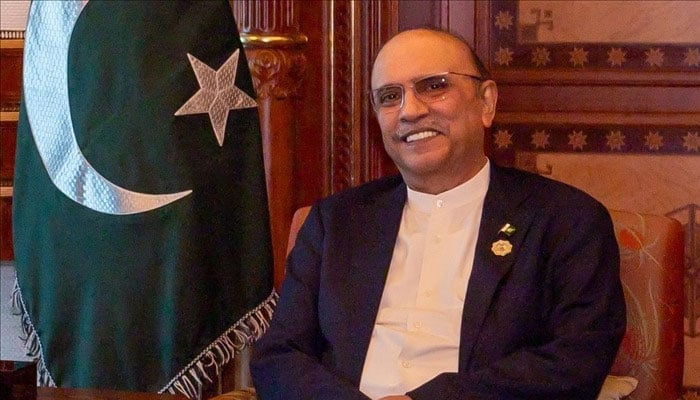
    President Asif Ali Zardari has stressed the need to protect trees and promote plantation across Pakistan. He said tree plantation is not only an environmental priority but also a national responsibility. In a message issued at the launch of the Monsoon Tree Plantation Campaign 2026, the president said the campaign aims to plant 20 million saplings across the country. He urged people and relevant institutions to actively participate in the plantation drive. He said increasing the country’s tree cover is essential for protecting the environment and improving the quality of life. President Zardari said forests play an important role in preserving biodiversity, water resources and the natural environment. Forests also help reduce the harmful effects of climate change. He stressed that Pakistan needs greater efforts to protect existing forests and increase the number of trees across the country. According to him, a stronger and healthier forest cover can help the country deal with rising environmental challenges. The president called for collective efforts to build a green, clean and climate-resilient Pakistan. He said government institutions, communities and citizens all have a role to play in protecting the environment. He also highlighted the importance of planting trees for future generations. He said the trees planted today will help provide a healthier and better environment for coming generations. The president’s message comes as Pakistan continues to face environmental challenges linked to climate change, changing weather patterns and pressure on natural resources. He said tree plantation should not be limited to seasonal campaigns. Continuous efforts are needed to protect trees, expand forests and ensure the survival of newly planted saplings. President Zardari said protecting the environment is a shared responsibility. He called for greater public awareness and participation in plantation activities to make Pakistan greener and more sustainable.

  • |

    Australia drop Weatherald, recall Renshaw for Bangladesh Test

    MELBOURNE: Australia have made a change to their squad for the second Test against Bangladesh, dropping opener Jake Weatherald and recalling Matt Renshaw after a shock nine-wicket defeat in Darwin. Weatherald’s removal is the only change to Australia’s 13-man squad, but it could have wider implications for the team’s batting order. The 30-year-old struggled in the opening Test, scoring 23 in the first innings before being dismissed for a duck in the second. His difficult start has added to concerns over his Test credentials. Weatherald has now played six Tests and has managed 224 runs at an average of 20.36, leaving selectors with little choice but to make a change as Australia look to level the two-match series. Renshaw, meanwhile, returns to the Test setup after an absence of more than three years. The left-hander last played a Test for Australia in 2023 and has earned his recall after an impressive Sheffield Shield campaign. The Queensland batter scored 499 runs in six Sheffield Shield matches last season at an average of 49.90, including three centuries. His domestic form had already put him firmly in contention for a return to the national red-ball side, and the latest selection gives him another chance to revive his Test career. Renshaw’s return could also add experience and stability to an Australian batting line-up that was exposed by Bangladesh in Darwin. Australia were beaten by nine wickets in the first Test, suffering a result that put Bangladesh 1-0 ahead in the series. Travis Head is expected to continue opening the innings, while Renshaw is in line to partner him at the top of the order. The combination will be closely watched as Australia attempt to respond to their unexpected home defeat. Attention will also remain on Marnus Labuschagne, who is under pressure to produce a substantial score. Labuschagne managed only 32 runs across the first Test, and his place is increasingly being discussed amid competition for batting positions. Australia will need a much stronger collective performance in the second Test. Bangladesh demonstrated in Darwin that they can challenge the hosts in their own conditions, making the upcoming contest an important test of Australia’s ability to recover quickly. The second Test is scheduled to begin in Mackay on Saturday, with Australia aiming to draw the series and Bangladesh seeking another historic result. The changes ensure the second Test will carry significant pressure for Australia’s top order. Australia squad: Pat Cummins (c), Scott Boland, Alex Carey, Cameron Green, Josh Hazlewood, Travis Head, Josh Inglis, Marnus Labuschagne, Nathan Lyon, Matthew Renshaw, Steve Smith, Mitchell Starc, Beau Webster

  • |

    Gold prices rise for third consecutive session amid softer US economic data

    Gold prices advanced for a third consecutive session on Tuesday as expectations of a US interest rate hike in the coming months weakened, while investors turned their attention to the minutes of the Federal Reserve’s latest policy meeting for indications about the future direction of monetary policy. Spot gold gained 0.2% to $4,424.28 per ounce by 0130 GMT. US gold futures for December delivery also increased 0.2%, reaching $4,480.90 per ounce. The precious metal has received support from growing expectations that the US Federal Reserve may maintain its current interest-rate stance following a series of weaker-than-expected economic indicators. The US dollar remained close to multi-month lows against a basket of major currencies, providing additional support to gold and other dollar-denominated commodities. A weaker greenback generally makes gold more affordable for buyers holding other currencies, potentially boosting demand in international markets. IG market analyst Tony Sycamore said gold’s recent advance was being supported by softer US economic data released last week. The data has strengthened expectations that the Federal Reserve could leave borrowing costs unchanged rather than move towards another rate increase. Gold typically benefits from lower interest rates because the metal does not generate interest or dividends. When yields on interest-bearing assets decline, the opportunity cost of holding bullion becomes comparatively lower, making gold more attractive to investors. According to a recent Reuters poll of economists, most analysts expect the US central bank to keep its benchmark interest rate unchanged at its next meeting and maintain the rate through the end of the year. Market expectations have also shifted significantly. The probability of a quarter-point rate increase in September has fallen sharply, with traders now assigning nearly a 65% probability that the Federal Reserve will keep rates unchanged. The change followed unexpected job losses in July, softer-than-anticipated consumer price inflation and weaker retail sales data. Investors are now closely watching the release of the Federal Reserve’s meeting minutes, scheduled for Wednesday. The minutes could provide further insight into policymakers’ views on inflation, employment and the timing of any potential future rate adjustments. Geopolitical developments are also contributing to demand for gold as a traditional safe-haven asset. Sycamore said bullion appeared to be regaining some of its safe-haven appeal despite higher bond yields, particularly amid renewed tensions surrounding Iran and the United States. A senior Iranian official told Reuters that Tehran would move towards a “fully offensive” military posture after efforts to negotiate a permanent end to the conflict with Washington stalled. The development came as the United States ruled out extending a temporary ceasefire arrangement, adding to uncertainty in financial markets. Higher geopolitical risks can encourage investors to increase exposure to traditionally defensive assets such as gold, particularly when uncertainty surrounding economic and monetary policy is already elevated. Other precious metals also recorded mixed movements during Tuesday’s session. Spot silver climbed 0.9% to $66.40 per ounce, extending gains in the broader precious-metals market. Platinum edged 0.2% higher to $1,772.75 per ounce, while palladium moved in the opposite direction, declining 0.3% to $1,330.05 per ounce.

  • | | |

    PARCO, Cnergyico lead $1bn refinery exports

    Pakistan’s oil refining sector has achieved a major milestone. The country’s five major refineries exported petroleum products worth around $1.046 billion during the fiscal year 2025-26. This is the first time that the refinery sector has crossed the $1 billion export mark. The development has also strengthened the sector’s role as a source of foreign exchange for Pakistan. The achievement comes as the country continues to face pressure from a large trade deficit. Pakistan’s trade deficit is estimated at around $40 billion, increasing the importance of exports and import savings. The five major refineries made a significant contribution to the overall export earnings. Pakistan Arab Refinery Company (PARCO) recorded exports of around $277 million. Cnergyico Pakistan Limited exported petroleum products worth approximately $258 million. National Refinery Limited (NRL) recorded exports of around $238 million. Pakistan Refinery Limited (PRL) exported products worth approximately $200 million. Meanwhile, Attock Refinery Limited (ARL) exported petroleum products worth nearly $73 million. PARCO and Cnergyico remained the biggest contributors. Their combined exports reached approximately $535 million. This accounts for more than half of the total exports recorded by the five refineries. The development is particularly significant because the refining sector has traditionally been viewed mainly as a means of reducing Pakistan’s dependence on imported petroleum products. The latest figures show that the industry is increasingly contributing to both sides of the equation. It is helping reduce the import burden while also generating foreign exchange through exports. Cnergyico has also entered the global marine fuel market. The move could provide the company with new export opportunities and help expand Pakistan’s presence in the international fuel market. Industry modernization is expected to further improve the sector’s performance. Upgraded refinery facilities can increase production efficiency and enable companies to produce products that meet international market requirements. Further investment in refinery upgrades could therefore lead to higher exports in the coming years. It could also increase savings on petroleum imports. The latest performance highlights the growing importance of Pakistan’s refining industry. With continued modernization, better efficiency and access to international markets, the sector could become an increasingly important source of foreign exchange for the country. The development also comes at a critical time for Pakistan’s economy. Higher exports and lower import dependence are essential for reducing pressure on the country’s external account.

  • |

    Bokshi set to hit Indian theatres on October 9, 2026

    The makers of Bokshi have unveiled a striking new poster for the upcoming folk-horror film, offering audiences another glimpse into the mysterious and unsettling world created by filmmaker Bhargav Saikia. The film, which has already attracted attention on the international festival circuit, is now preparing for its theatrical release in India on October 9, 2026. Produced independently by Lorien Motion Pictures, Bokshi marks Saikia’s debut as a feature-film director. The project combines elements of folklore, mythology, psychological horror and coming-of-age drama, creating an atmosphere that explores the blurred boundaries between ancient beliefs and reality. Before heading to Indian cinemas, Bokshi travelled through several prestigious international film festivals. The film premiered at the International Film Festival Rotterdam in 2025, marking an important first step in its global festival journey. It was later screened at a number of genre-focused events, gaining further recognition for its distinctive approach to horror and storytelling. The film also achieved the distinction of being the only Indian feature selected forther 2025 editions of the Sitges International Fantastic Film Festival in Spain, the Neuchâtel International Fantastic Film Festival in Switzerland and SXSW Sydney in Australia. Its presence at these internationally recognised festivals helped build anticipation among audiences interested in Indian genre cinema. Speaking about the film’s upcoming release, director and producer Bhargav Saikia expressed his excitement about finally presenting Bokshi to Indian viewers. He said the team was delighted to bring the film home after an eventful festival run that included appearances at major international festivals such as Rotterdam and Sitges. Saikia also described Bokshi as a horror film created with young audiences in mind and said it was designed to be experienced on the big screen. The theatrical setting is expected to complement the film’s atmospheric visuals, unsettling themes and supernatural elements. The story centres on Anahita, a troubled teenager who joins a school trek to a remote prehistoric site. What initially appears to be an ordinary educational journey soon takes a frightening turn when Anahita discovers a connection between the mysterious location and an ancient legend. As the story progresses, Anahita finds herself caught between folklore and reality. The experience forces her to question what is real and what may be connected to the myths surrounding the site, setting the stage for a psychological and supernatural mystery. Written by debutant Harsh Vaibhav, the film features Prasanna Bisht, Mansi Multani and Siddharth Shaw in key roles. Veteran actress Shernaz Patel lends her voice to the titular character, adding another layer to the film’s mysterious narrative. Adding to its distinctive identity, Bokshi is a multilingual production featuring Hindi, English and Nepali. It also introduces Boksirit, a fictional language developed specifically for the film’s world. With its festival journey now behind it, Bokshi is gearing up to meet Indian audiences on October 9, 2026. The new poster further heightens curiosity around a film that promises to combine traditional folklore with psychological tension and contemporary horror.

  • |

    GIDC Amendment Bill to unlock Rs400bn stuck dues

    ISLAMABAD: The National Assembly is expected to consider the Gas Infrastructure Development Cess (Amendment) Bill, 2026, a proposed legal change aimed at resolving more than Rs400 billion in disputed and outstanding Gas Infrastructure Development Cess (GIDC) payments currently tied up in litigation. The proposed legislation seeks to amend the Gas Infrastructure Development Cess Act, 2015, and comes after years of legal disputes between the government and major gas consumers, including industrial, fertiliser and CNG sectors. The Cabinet Committee for Disposal of Legislative Cases (CCLC) approved the proposed amendments in principle earlier this year, paving the way for the government to move forward with the legislative process. The GIDC was originally introduced to generate funds for major gas infrastructure projects, including the Iran-Pakistan (IP) gas pipeline, the Turkmenistan-Afghanistan-Pakistan-India (TAPI) pipeline, LNG-related projects and other associated infrastructure. However, progress on several of these projects has remained slow, while the collection and utilisation of the cess became the subject of prolonged litigation. Legal history of GIDC According to a briefing provided by the Petroleum Division to the CCLC, the original Gas Infrastructure Development Cess Act, 2011, and the GIDC Ordinance, 2014 were struck down by the Supreme Court in 2014. The government subsequently enacted the GIDC Act, 2015, in May that year. The new legislation also provided retrospective legal cover to the cess that had been charged and collected under the 2011 Act and the 2014 ordinance. Section 4(1) of the 2015 law specifies that the cess is to be utilised by the federal government for infrastructure development related to the IP pipeline, TAPI pipeline, LNG projects and other ancillary schemes. The constitutional validity of the 2015 legislation was subsequently challenged by consumers from the industrial, fertiliser and CNG sectors before different high courts. The disputes eventually reached the Supreme Court. In its judgment of August 13, 2020, the Supreme Court dismissed the civil appeals and connected petitions and upheld the constitutionality of the GIDC Act, 2015, including its retrospective application. The court, however, did not permit the government to impose a fresh cess under the disputed arrangements. Instead, it allowed recovery of outstanding arrears through instalments. Supreme Court links cess to infrastructure projects A significant aspect of the Supreme Court’s ruling was its observation that GIDC constituted a fee rather than a conventional tax. As a fee, the court noted, there must be a corresponding benefit or service associated with the amount collected. The infrastructure projects identified under Section 4 of the Act therefore formed an important basis for the continuation and utilisation of the cess. The court also observed that failure to pursue the specified gas infrastructure projects could undermine the purpose for which the cess had been imposed. Despite the Supreme Court judgment, the dispute did not come to an immediate end, as consumers continued pursuing related matters before the high courts. This resulted in a substantial amount of GIDC remaining locked in prolonged litigation. Government forms high-powered committee In an attempt to find a solution, Prime Minister Shehbaz Sharif constituted a high-powered GIDC Committee on November 8, 2022, to examine the issue of outstanding amounts exceeding Rs400 billion. The committee held several meetings following its formation, but progress remained limited because of continuing litigation in different high courts. The matter was again taken up on March 19, 2025, when the committee met under the chairmanship of the federal Minister for Finance and Revenue. The meeting was attended by the Minister for Petroleum Division, the Attorney General for Pakistan and senior officials from the Petroleum, Finance and Law divisions. During the meeting, participants agreed in principle that Section 4 of the GIDC Act, 2015 should be amended to help address the long-running legal disputes. Following the committee’s recommendations, the Petroleum Division prepared a proposal for amendments and submitted a summary seeking approval of the draft GIDC (Amendment) Act, 2025. First amendment proposal rejected The initial proposal, however, was not approved by the CCLC at its meeting on September 3, 2025. The committee directed the Petroleum Division to revisit the draft and ensure that the proposed changes remained within the original scope and objectives of the GIDC Act, 2015. The Petroleum Division subsequently revised the draft after consultations with the relevant government departments. The amended draft was sent to the Law and Justice Division for legal scrutiny, which gave its concurrence on December 15, 2025. The Petroleum Division then sought formal approval of the revised GIDC amendment bill under the relevant provisions of the Rules of Business, 1973. The Finance Division had also been consulted during the process and conveyed that it had no objection to the proposal contained in the summary submitted to the CCLC. CCLC gives approval to revised proposal The CCLC considered a Petroleum Division summary dated January 1, 2026 concerning amendments to the GIDC Act, 2015. The committee approved the proposal, subject to the incorporation of amendments recommended by the CCLC into the draft legislation by the Law and Justice Division before the bill was submitted to the federal Cabinet. The approval represents another attempt by the government to break the deadlock surrounding billions of rupees in GIDC dues and bring a degree of finality to disputes that have continued for more than a decade. TAPI project remains slow The government’s original justification for GIDC included financing major regional gas infrastructure projects. However, the implementation of these projects has remained challenging. The TAPI pipeline, envisioned to transport natural gas from Turkmenistan through Afghanistan and Pakistan to India, has faced repeated delays because of financial, security and geopolitical challenges. Although work has reportedly begun on an initial 153-kilometre section extending from Serhetabat on the Turkmenistan-Afghanistan border towards Herat in western Afghanistan, the broader project remains far from completion. The slow progress of the pipeline and other proposed infrastructure projects has also remained relevant to the broader debate over the purpose and utilisation of GIDC collections. The proposed amendment is therefore being viewed as an effort to address both the legal complications surrounding outstanding dues and the government’s

  • | |

    PTI leaders back JI sit-in, seek release of politi…

    Pakistan Tehreek-e-Insaf (PTI) leaders detained at Kot Lakhpat Jail have expressed support for Jamaat-e-Islami’s ongoing sit-in. A letter from the imprisoned PTI leaders was read out during the Jamaat-e-Islami protest. The letter was signed by senior PTI leaders Shah Mahmood Qureshi, Sarfraz Cheema, Dr Yasmin Rashid, Ijaz Chaudhry and Mahmood-ur-Rasheed. In their letter, the detained leaders appealed to the public to participate in the Jamaat-e-Islami sit-in. They urged citizens to support the protest and raise their voices on political and public issues. The support from the imprisoned PTI leaders comes as Jamaat-e-Islami continues its protest and demands action on issues highlighted by the party. The letter was presented to participants at the sit-in, conveying the PTI leaders’ position despite their detention at Kot Lakhpat Jail. Meanwhile, Jamaat-e-Islami Lahore has called for the release of all political prisoners. The party has also specifically demanded the release of PTI founder Imran Khan. Jamaat-e-Islami Lahore maintained that political prisoners should be released and called for political issues to be addressed through democratic and legal means.

  • |

    FBR demonstrates digital tax return features to Karachi tax bar

    ISLAMABAD: The Federal Board of Revenue (FBR) has demonstrated several features of its digital income tax return system to the Karachi Tax Bar Association (KTBA), including mechanisms for reporting investments in immovable property, declaring multiple business capital accounts, recording inheritance assets and calculating tax under relevant provisions of the law. The demonstration was held during an online consultation between the FBR Domain Team and representatives of the KTBA as part of the tax authority’s efforts to obtain feedback from taxpayers and tax practitioners on the design and functionality of the income tax return system. The meeting focused on improving the digital filing experience and identifying areas where the online return could be made simpler, more efficient and easier for taxpayers and professionals to use. KTBA President Mehmood Bikiya welcomed the FBR’s prompt response in arranging the session and appreciated the efforts made by the Domain Team to develop a responsive and user-friendly return system. According to the participants, the existing system is operating satisfactorily, with no major technical problems or significant glitches reported during the discussion. Instead, the meeting primarily focused on clarifications, suggestions for improvement and practical issues faced by tax practitioners while completing returns. The FBR officials addressed a number of queries through live demonstrations, allowing participants to better understand the available options and procedures within the digital system. During the session, the Domain Team demonstrated how taxpayers can report investments in immovable property, enter details of more than one business capital, declare tax under applicable sections and include inherited property in their tax records. Officials also clarified that certain information fields are optional. In particular, the chassis number required in the vehicle-related section does not have to be entered where it is not applicable or available. The consultation also covered several policy-related matters raised by the KTBA. These included the timing of refund applications, deemed assessment orders and procedures for revising income tax returns. The FBR Domain Team explained that such matters are governed by existing policy provisions, including the 15-day rule relating to deemed assessments. The concerns and proposals raised by the tax bar were also forwarded to the FBR’s Policy Wing for examination. Both sides agreed that continued consultations between tax officials and tax practitioners could help address implementation-related concerns and improve taxpayers’ understanding of the digital filing process. The KTBA also submitted several proposals for future versions of the income tax return system. One of the key suggestions was to introduce an option for uploading data through Excel files, which could reduce the time required to manually enter large volumes of information. Other proposals included reconsidering the requirement to enter certain financial information in subsequent years and introducing a system-generated PDF explaining the relevant legal provisions concerning residence status. The FBR Domain Team recorded the suggestions and indicated that they would be considered for possible incorporation into future versions of the return system. Most of the technical and operational questions raised during the meeting were resolved through on-screen demonstrations and explanations by the FBR team. The exercise also provided practitioners with a clearer understanding of the functions already available on the digital platform. KTBA Vice President Saud ul Hasan appreciated the FBR’s willingness to engage directly with representatives of the tax community. He said continued interaction between tax practitioners and the revenue authorities could promote greater understanding of taxpayers’ concerns and strengthen confidence in the digital filing mechanism. The FBR, meanwhile, reiterated its commitment to maintaining regular consultations with the business community, tax practitioners and their representative organisations. The tax authority said feedback received through such engagements would remain important in improving the income tax return system and making the filing process more transparent, straightforward and taxpayer-friendly.