National

  • | |

    Sindh records 76% drop in terrorism incidents in 2…

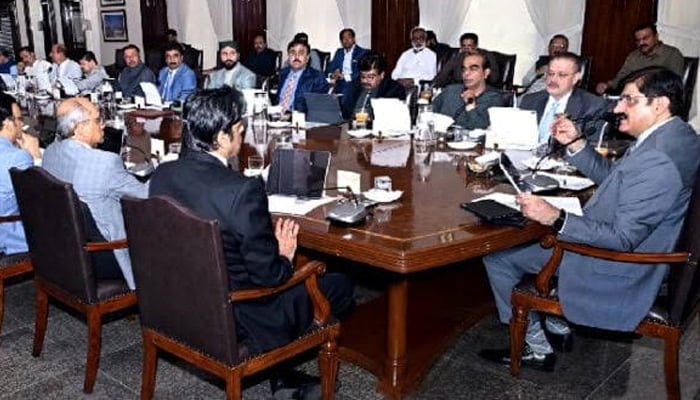
    KARACHI: Sindh Chief Minister Murad Ali Shah chaired a high-level meeting on the Counter Terrorism Department (CTD), where officials reviewed the province’s security situation, operational performance, investigations, infrastructure and future requirements. Sindh Home Minister Zia-ul-Hassan Lanjar, Chief Secretary Asif Hyder Shah, Home Secretary, Inspector General of Police Javed Alam Odho, Additional IG CTD Zulfiqar Larik and other senior officials attended the meeting. The meeting was informed that banned militant and insurgent organisations continue to pose a security challenge to Sindh. However, officials said terrorist incidents in the province had declined significantly during 2026. According to Home Minister Zia-ul-Hassan Lanjar, Sindh reported 37 terrorism incidents in 2025. The number fell to nine in 2026, representing a decline of around 76 per cent. The Sindh police chief told the meeting that seven of the nine terrorism cases reported this year had been traced and their investigations completed. Officials said the CTD conducted 918 intelligence-based operations across the province during 2026. These operations resulted in the arrest of 87 suspected terrorists, while four militants were killed in separate encounters. The briefing said the CTD had dismantled several militant networks allegedly involved in attacks on police personnel and sensitive installations. During a follow-up operation in Karachi, the department arrested a key suspect and an associate. Weapons and explosive material were also recovered from their possession. The suspects are allegedly wanted in several cases involving the targeted killing of police officers. According to the IG Sindh, more than 2,000 kilograms of explosive material were recovered during operations against militant networks. Four militants affiliated with banned insurgent organisations were also killed in encounters. The home minister said several planned attacks on law enforcement agencies and important installations had been foiled. He added that the CTD had also dismantled a network allegedly involved in attacks on railway tracks in northern Sindh. The operation helped prevent planned acts of sabotage, officials said. The meeting also reviewed progress in the investigation into the Karachi Training Centre attack. The police chief told the chief minister that nine suspects had so far been arrested in the case. A Joint Investigation Team has also been formed to conduct a detailed probe. Officials said several investigative sessions had been held during the inquiry and a number of alleged facilitators had been identified. The investigation is still under way. The meeting was also briefed on the performance of the CTD Fusion Centre. Officials said the centre had significantly improved the collection and analysis of intelligence as well as digital investigations. Hundreds of social media accounts allegedly linked to extremist activities have also been blocked or reported, according to the briefing. The Sindh home minister proposed additional resources for modern intelligence software and digital forensic tools. He also called for strengthening crime analytics platforms and systems equipped with artificial intelligence to improve the department’s ability to identify and respond to emerging security threats. The meeting was further informed that major projects for the development of CTD infrastructure across Sindh were under way. Officials said construction of a separate CTD complex in Sukkur had also begun under the province’s Annual Development Programme.

  • “Azadi Kay Rang” painting competition held in Rawalpindi

    RAWALPINDI: The Punjab Council of the Arts, Rawalpindi held the prize distribution ceremony of its Independence Day painting competition, “Azadi Kay Rang,” today. Mr. Rizwan Khalil Shamsi, Chief Manager, State Bank, and Ms. Shazia Rizwan, Parliamentary Secretary for Information and Culture, Government of the Punjab, attended the ceremony as Chief Guests. The competition provided young artists with a creative platform to express their vision of independence, patriotism, and love for Pakistan through art. Addressing the gathering, Mr. Rizwan Khalil Shamsi, Chief Manager, State Bank, appreciated the enthusiasm and artistic talent displayed by the young participants. He said that creative activities of this nature provide an effective platform for young people to express their ideas and strengthen their connection with the country. He also appreciated the Punjab Council of the Arts, Rawalpindi for providing opportunities for emerging artists. Shazia Rizwan, Parliamentary Secretary for Information and Culture, Government of the Punjab, appreciated the participants for portraying the spirit of independence through their artwork. She emphasized that art and cultural activities play an important role in nurturing creativity, national awareness, and a positive outlook among the younger generation. She distributed prizes and certificates among the winning participants and congratulated all the artists. Muhammad Shakoor, Director, Punjab Council of the Arts, Rawalpindi, thanked both Chief Guests, the judges, participating artists, and guests for their presence and support. He particularly appreciated the efforts of Senior Artist Azeem Iqbal, who played a key role in organising and coordinating the painting competition. He acknowledged his dedication and valuable contribution in making the event successful and said that such efforts are essential for providing young artists with meaningful opportunities to showcase their talent. He reaffirmed the Council’s commitment to encouraging emerging artists and promoting art and cultural activities in the region.

  • Abrar Hussain Tanoli honoured with Tamgha-e-Imtiaz for Hajj services

    RIYADH: Abrar Hussain Tanoli, a Pakistani financial professional based in Saudi Arabia and a native of Mansehra district in Khyber Pakhtunkhwa, has been honoured with the prestigious Tamgha-e-Imtiaz in recognition of his decade-long services to Pakistani pilgrims and the wider Pakistani community in the Kingdom. Tanoli was among the Pakistani nationals honoured with the prestigious civil award for outstanding social and community services in Saudi Arabia. The award was presented at a special ceremony organised by the Embassy of Pakistan in Riyadh. Pakistan’s Ambassador to Saudi Arabia, Ahmed Farooq, presented the award on behalf of President Asif Ali Zardari, recognising Tanoli’s sustained contribution to Hajj volunteerism, community welfare, healthcare initiatives and emergency assistance. Tanoli is a founding member and Riyadh Coordinator of the Pakistan Hajj Volunteers Group (PHVG), an organisation that has been assisting pilgrims during Hajj since 2011. Over the years, he has played a key role in mobilising, coordinating and training Pakistani volunteers from different parts of Saudi Arabia to facilitate pilgrims during the annual pilgrimage. The volunteers provide assistance to pilgrims in a range of situations, including guiding them to their designated tents, helping wheelchair users, facilitating movement around Hajj facilities and assisting sick and injured pilgrims in performing Tawaaf-e-Ziyarah while receiving treatment at Pakistan Medical Mission facilities. PHVG works in coordination with the Pakistani Hajj Mission, Embassy of Pakistan and relevant Saudi authorities. In 2024, the organisation mobilised and trained more than 1,500 volunteers to serve pilgrims, with their services also receiving recognition from Saudi authorities. Speaking at the ceremony, Ambassador Ahmed Farooq highlighted the demanding nature of the volunteers’ responsibilities during Hajj. He said the volunteers remain engaged around the clock during the five days of Hajj and continue serving pilgrims despite the challenging weather and extreme heat. He said volunteers assist pilgrims who require medical attention, become separated from their groups or need wheelchairs and other support. Their services, he noted, are not limited to Pakistani pilgrims and are available to anyone who requires assistance. The ambassador said the Saudi Ministry of Hajj and Umrah also facilitates the volunteers by providing information about pilgrims requiring assistance, reflecting the importance attached to their services during Hajj. “We are very proud of all three of you for the work that you have done and for the good way that you have carried out these services,” Ambassador Farooq said. For Abrar Tanoli, the Tamgha-e-Imtiaz represents recognition not only of his Hajj volunteerism but also of a broader record of community service spanning more than a decade. Alongside his Hajj-related activities, Tanoli has been involved in organising free medical camps for the Pakistani community in Saudi Arabia in collaboration with the Pakistan Doctors Group and the Embassy of Pakistan. These initiatives have helped provide healthcare services to members of the community, particularly those requiring support. He is also a founding member of the Al-Bir Group, which provides assistance to Pakistanis facing financial difficulties and other social challenges. Tanoli’s community welfare activities became particularly significant during the COVID-19 pandemic. Through PHVG, he participated in efforts to support Pakistani families stranded or facing difficulties during the crisis. Volunteers helped arrange and distribute food, medicines and other essential supplies to families struggling to meet their basic needs. His welfare work has also extended to Pakistan, where he continues to support underprivileged families, deserving individuals and communities facing financial hardship. The recognition has been warmly welcomed by members of the Pakistani community, who described the award as an honour for Tanoli, his family and his native area in Mansehra. Messages of congratulations have highlighted his services to Pakistani pilgrims and the wider community in Saudi Arabia. The award is also being seen as recognition of the spirit of volunteerism among overseas Pakistanis who devote their time and resources to serving fellow citizens and pilgrims. Tanoli’s journey reflects a sustained commitment to public service alongside his professional career in the financial sector. From assisting Hajj pilgrims and supporting medical camps to providing emergency relief and helping families facing financial difficulties, his community work has remained an important part of his contribution to Pakistanis in Saudi Arabia and at home. The Tamgha-e-Imtiaz therefore marks a significant national recognition of Abrar Hussain Tanoli’s long-standing services to pilgrims, community welfare and humanitarian assistance.

  • | |

    33 Pakistanis win fully funded UK scholarships

    Thirty-three Pakistani scholars are set to pursue fully funded postgraduate studies at universities across the United Kingdom under the prestigious Chevening and Commonwealth scholarship programmes. The scholars were selected for their academic performance, leadership abilities and commitment to contributing to society. They will enrol in master’s and other postgraduate programmes in fields considered important for Pakistan’s development. Their areas of study include global health, education, governance, human rights, media and development, climate action, development economics, business, diplomacy, innovation and entrepreneurship, and biological robotics. The scholars will study at universities in several UK cities, including London, Bristol, Sheffield, Edinburgh and Glasgow. The British High Commission in Islamabad hosted a pre-departure reception for the selected scholars. During the event, they were briefed on academic life, living arrangements and other aspects of studying in the UK. British High Commissioner to Pakistan Jane Marriott said the scholarship programmes were a strong example of cooperation between Pakistan and the United Kingdom. She said the programmes support talented individuals with leadership potential and a desire to contribute to positive change. Marriott expressed hope that the scholars would return to Pakistan with new knowledge, professional networks and ideas that could contribute to the country’s development. The British High Commission said the latest group represents the diversity of Pakistan’s talent. The scholars come from different regions and professional backgrounds. The commission also highlighted the growing participation of Pakistani women in the scholarship programmes. After completing their studies, the scholars will join an expanding alumni community in Pakistan. According to the High Commission, the country has nearly 2,000 Chevening alumni and more than 1,500 Commonwealth alumni. The alumni are working in a wide range of sectors, including education, health, governance, business, climate action and civil society. The British High Commission said it was working with Pakistani partners to create additional scholarship opportunities in areas linked to national priorities. Previous collaborations have helped increase access to UK education in fields such as heritage, climate studies, sports and business.

  • River encroachments raise flood risks across Pakistan

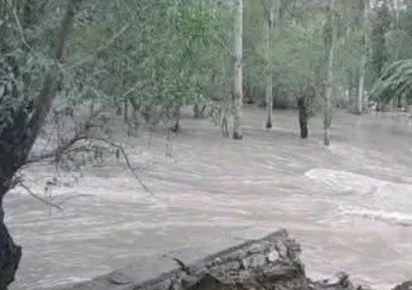
    Islamabad: Encroachments on rivers, nullahs and other natural waterways are increasing flood risks across Pakistan, a parliamentary committee warned, calling for strict action to clear blocked water channels. The committee also expressed displeasure over the absence of the Sindh Irrigation Secretary and warned that the matter could be sent to the Privileges Committee. The Senate Standing Committee on Water Resources, chaired by Senator Jam Saifullah Khan, reviewed the flood situation, disaster preparedness, water storage and coordination between federal and provincial authorities. The meeting was held at the National Disaster Management Authority headquarters. Members expressed serious concern over illegal construction and other encroachments along natural waterways, including the Ravi River and nullahs in different parts of the country. The committee said natural water channels must remain open so floodwater can move safely during heavy rainfall and monsoon emergencies. It called for strict measures to remove encroachments and prevent further occupation of rivers, drains and other water bodies. The Secretary of the Ministry of Water Resources informed members that a draft Flood Plain Regulations Act had already been shared with provincial governments. Chairman Jam Saifullah Khan directed the ministry to follow up with the provinces and strengthen joint efforts for flood prevention and management. The committee also expressed displeasure over the absence of the Secretary Irrigation of the Sindh government. Members indicated that continued non-attendance could lead to referring the matter to the Privileges Committee. The chairman directed the Sindh Irrigation Secretary to personally attend the next meeting. Another sensitive issue discussed was water distribution between provinces. The committee said any solution must be based on consensus, particularly because lower riparian provinces have concerns about water sharing. Members called for a wider national debate on water security and Pakistan’s long term water problems. The chairman said water security was directly connected with food security and the future of coming generations. He said all stakeholders should be part of an open national discussion so disagreements could be addressed through broader agreement. The committee was also briefed on the current monsoon situation and the government’s emergency response arrangements. Members were informed that the Prime Minister had formed an Emergency Response Committee headed by a senior federal minister. The committee is responsible for coordinating with all concerned authorities, including district administrations, during the monsoon emergency. Senator Jam Saifullah Khan said such coordination should not remain active only during floods or disasters. He said the system should operate throughout the year so institutions remain prepared before emergencies begin. The parliamentary delegation was received by the Chairman of NDMA at the National Emergencies Operations Centre. Members received a briefing on the technology used for disaster monitoring and decision making. NDMA officials explained the use of Global and National Portals, Hydro Analytics and the Water Equation system. The committee was also briefed on Disaster Lens 2026. Officials described it as an integrated technology based system designed to improve disaster risk assessment, preparedness and government decision making. The committee appreciated NDMA’s use of advanced technology, data analysis and risk information for disaster management and water planning. Water storage was another major subject discussed during the meeting. Members said Pakistan needed stronger water storage capacity to manage both shortages and excess floodwater. The committee discussed better water monitoring, planning based on reliable data and more efficient use of available water resources. It also discussed technology based solutions to improve national water security and reduce risks linked to climate change. Members were briefed on the possible use of smaller local water storage facilities. The committee was told that such facilities could be used alongside large dams to store extra floodwater. This could help reduce flood damage while also saving water for future use. The growing pressure from population growth and climate change was also discussed. The committee said increasing demand for water made modern irrigation systems more important. It called for new irrigation technologies that could produce more crops while using less water. Members said such measures were important not only for water conservation but also for Pakistan’s food security. The Ministry of Water Resources told the committee that research had been conducted comparing high efficiency crop production methods with existing farming practices. The chairman directed officials to present the full findings at the committee’s next meeting. Mechanized agriculture was also discussed as a possible way to increase agricultural production. Members observed that tax incentives for higher horsepower tractors could help farmers modernize agricultural operations. The committee said better machinery, modern irrigation and improved water management could help increase farm production while reducing waste. The meeting also focused on stronger cooperation between the federal government, provinces, district administrations and disaster management authorities. Members stressed that floods and water shortages cannot be managed effectively if different institutions work separately. The committee said better data sharing, early warnings and clear responsibility among institutions were essential for protecting communities. After the meeting, committee members visited several NDMA facilities. These facilities included the Centre of Excellence, the Logistics and Humanitarian Hub, and the Disaster Resilient Infrastructure Models centre. Officials briefed the delegation on emergency preparations, logistics, disaster response and technology being used during crises. The committee said its visit helped improve coordination between Parliament and NDMA. It called for stronger early warning systems, better water management, modern technology and long term planning to protect Pakistan against floods, water shortages and climate related disasters. The committee made clear that Pakistan’s water challenge is no longer limited to building dams or distributing river water.

  • | |

    German envoy celebrates Pakistan’s Independence …

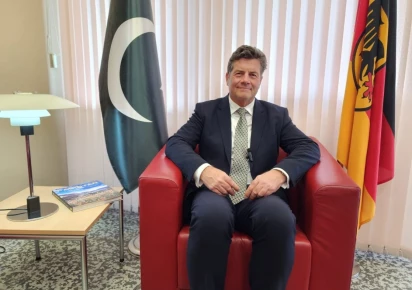
    German Consul General Thomas E Schultze has extended Independence Day greetings to the people of Pakistan, praising the long-standing friendship between Pakistan and Germany and calling for stronger bilateral relations. In his message marking Pakistan’s 79th Independence Day, Schultze said the occasion was a time to celebrate the country’s creation while recognising the resilience, diversity and ambitions of its people. He noted that Pakistan and Germany will complete 75 years of diplomatic relations on October 15. He described the anniversary as an important milestone in the history of relations between the two countries. Schultze said economic links between Pakistan and Germany predated the establishment of formal diplomatic relations. He recalled that Siemens opened its first office in Lahore in 1922. According to the German diplomat, the relationship between the two countries rests on reliability, trust and sustainability. He said these principles had helped create lasting cooperation and opportunities that benefit both sides. Schultze highlighted the importance of economic ties between the two countries. He said Germany is Pakistan’s largest trading partner and the biggest importer of Pakistani products within the European Union. He also pointed to the significance of the EU’s GSP+ trade arrangement for Pakistan. Around 90 per cent of Pakistan’s exports to the European Union benefit from the scheme and enter the bloc’s market without customs duties, he said. The German consul general also highlighted the role of Pakistani women in the country’s future. He said women across Pakistan were making contributions in leadership, education, entrepreneurship and community development. Their efforts, he added, were helping create opportunities and inspiring younger generations. Schultze also spoke warmly about his experience in Pakistan. Having served in the country since last year, he praised the hospitality and warmth of the Pakistani people. He said Pakistan had gained a special place in his heart and expressed his appreciation for the relationship between the two countries. The German diplomat said he looked forward to working toward further strengthening Pakistan-Germany relations in the years ahead.

  • | | |

    Japan backs stronger, deeper Pakistan partnership

    Japanese Ambassador to Pakistan Akamatsu Shuichi has reaffirmed Tokyo’s commitment to further strengthening its longstanding relationship with Pakistan. In a message ahead of Pakistan’s 79th Independence Day, the Japanese envoy conveyed greetings to the Pakistani government and people on behalf of Japan. Speaking in Urdu in a video message, Ambassador Shuichi highlighted the longstanding friendship between the two countries and expressed hope for deeper cooperation in the coming years. He noted that Pakistan and Japan will mark the 75th anniversary of their diplomatic relations in 2027. The ambassador said both countries would continue working as trusted partners to promote peace, development and stability. He also pledged to further strengthen friendly relations between Tokyo and Islamabad. Shuichi concluded his message by expressing confidence in the continued bond between the two nations and saying, “Japan-Pakistan Dosti Zindabad.” The ambassador’s message comes shortly after Pakistan and Japan signed a grant agreement worth 350 million Japanese yen, equivalent to around $2.2 million, to strengthen the Human Resources Development Scholarship Programme. The initiative, known as the JDS programme, will expand opportunities for Pakistani civil servants to receive postgraduate education and professional training in Japan. Under the agreement, 17 federal government officials will receive scholarships. Sixteen will pursue master’s degrees, while one official will undertake a PhD programme. Economic Affairs Secretary Muhammad Hameer Karim and Ambassador Akamatsu Shuichi signed the Record of Discussions for the programme. Senior Joint Secretary Miran Mohiuddin Soomro and JICA Chief Representative Yusuke Shinazaki signed the grant agreement. The scholarship programme is expected to contribute to human resource development and strengthen institutional links between Pakistan and Japan.

  • Nikahnama rules face review, registrars could face jail

    Islamabad: Pakistan’s marriage law could face a major review after a parliamentary committee questioned the existing legal provision dealing with second marriage, while a separate proposal seeks jail time and a fine for Nikah registrars who fail to complete a Nikahnama properly. The Council of Islamic Ideology also agreed that the second marriage issue required reconsideration and said it would work towards a new legal framework based on the Quran and Sunnah. The discussion took place during a meeting of the Senate Standing Committee on Religious Affairs and Interfaith Harmony. One main issue was a proposed amendment to the Muslim Family Laws Ordinance. The proposal seeks to make it compulsory for every Nikah registrar or Nikah Khawan to accurately fill all columns of the Nikahnama using information given by the bride and groom under oath. Under the proposed law, failure to properly complete the Nikahnama could lead to simple imprisonment of up to one month and a fine of Rs 25,001. The punishment has only been proposed and has not yet become law. The Council of Islamic Ideology supported the proposal requiring Nikah registrars to correctly complete the Nikahnama. However, the council raised objections to some other proposed changes in the Muslim Family Laws Ordinance, particularly amendments involving Sections 6 and 7. The CII said those proposed provisions were inconsistent with its understanding of Islamic injunctions. The discussion then moved to one of the most sensitive parts of Pakistan’s marriage law: the existing provision dealing with a second marriage. The committee chairman questioned whether the current legal requirement should continue in its present form and said the provision should be reconsidered according to Shariah principles. The Chairman of the Council of Islamic Ideology agreed that the matter required another review. He told the committee that the council would work towards proposing a new legal framework based on the Quran and Sunnah. No final change to the second marriage law was approved during the meeting. The issue will require further consideration before any new legal framework can become law. Another major part of the discussion concerned the Nikahnama itself. Senator Sarmad Ali proposed changes to make the Nikahnama easier for people to understand. The proposal aims to remove unclear wording from the headings of different columns so that brides, grooms and Nikah registrars are less likely to misunderstand what information is required. The committee was informed that the government had already discussed implementation of updated Nikahnama forms with the Ministry of Interior and the Islamabad administration. The concerned department was expected to print and circulate the revised Nikahnama forms in Islamabad and provide a report on implementation. However, the committee was told that a response from the concerned authorities was still awaited. The proposed reforms could make the Nikahnama more important than simply being a marriage registration document. If the proposed amendment is approved, Nikah registrars would carry a clear legal responsibility to ensure that every required column is filled correctly according to the information provided by both the bride and groom. The proposed punishment is intended to discourage incomplete forms and incorrect entries. Supporters of the change believe clearer Nikahnama forms could reduce confusion and disputes that may arise when important marriage conditions are left blank or written unclearly. At the same time, the debate over second marriage could become a much larger legal and religious issue. The committee has not recommended the removal or replacement of the existing provision at this stage. Instead, the matter is expected to be examined further with input from the Council of Islamic Ideology. The committee also decided that relevant provisions of the proposed marriage law amendments would be reconsidered after reviewing the CII recommendations. For now, the two major Nikah related developments are clear. Lawmakers are considering stronger responsibility and possible punishment for Nikah registrars who fail to properly complete marriage documents, while the existing law governing second marriage has also been opened for possible review under a new framework based on Islamic principles.

  • | |

    Sohail Afridi denied meeting Imran at Adiala Jail

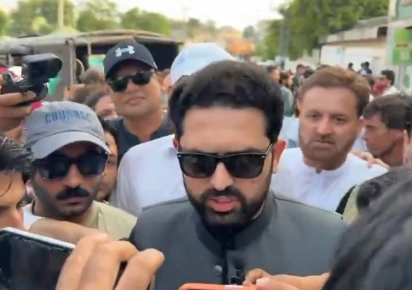
    RAWALPINDI: Khyber-Pakhtunkhwa Chief Minister Sohail Afridi was stopped from meeting Pakistan Tehreek-e-Insaf founder Imran Khan at Adiala Jail on Thursday. Afridi reached the Medicine Factory checkpoint on Adiala Road with several PTI leaders and lawmakers. Police stopped the delegation from moving towards the prison. The chief minister was accompanied by Mena Khan, Shafi Jan, Ahad Shah, Abdul Salam Afridi and Shahid Khattak. Police had earlier blocked Adiala Road from Gorakhpur towards the jail. Traffic was diverted to alternative routes. Afridi questioned the SHO Saddar Beroni about the restrictions. He also asked what instructions had been issued to the authorities. The chief minister remained at the checkpoint until the scheduled meeting time ended. He and the accompanying PTI leaders were not allowed to meet Imran. After the delegation left, police removed the barriers. Traffic on Adiala Road was restored. Speaking to the media, Afridi announced a protest call if he was not allowed to meet the PTI founder. He said PTI workers would come out across the country at 10pm. He urged them to gather at major intersections while carrying the national and party flags. Afridi also asked workers to stay focused on the party’s planned march towards Islamabad on September 27. He claimed that the PTI planned to bring two million people to Islamabad. He said the number could be even higher. The chief minister said the authorities should allow a meeting with Imran before September 28 if they wanted to reduce political tensions. Afridi also criticised the treatment of Imran and PTI since 2022. He accused the authorities of pushing the country towards instability because of political differences and stubbornness. He further criticised other political parties and questioned their role in the country’s political situation. The latest incident comes amid growing concern within PTI over Imran’s health and access to him. The party has repeatedly demanded that its founder be allowed to meet family members, lawyers and party leaders. Imran has remained incarcerated at Adiala Jail since 2023. His wife, Bushra Bibi, is also imprisoned. The PTI founder has faced several legal cases during his imprisonment. He and Bushra Bibi were sentenced to 17 years in prison in the Toshakhana-II case in December 2025. PTI has also raised concerns over Imran’s eyesight and medical treatment. Earlier this year, doctors from the Pakistan Institute of Medical Sciences examined him at the jail. PIMS later confirmed that he had received an anti-VEGF injection for a condition affecting his right eye. A later medical examination indicated improvement in his eyesight following treatment. Imran’s sisters and PTI supporters have also held regular gatherings outside Adiala Jail on designated meeting days. However, access to the former prime minister has remained restricted in recent months. Afridi’s unsuccessful visit on Thursday is likely to further intensify the political confrontation between PTI and the authorities.

  • 3,182 kanals of ETPB land still occupied despite invalid transfers

    Islamabad: More than 3,182 kanals of federally owned Evacuee Trust Property Board land in Attock still has not been restored in government ownership records even after the transfers were declared invalid. The Ministry of Religious Affairs told a parliamentary committee that local revenue authorities allegedly failed to cooperate despite repeated requests. The Senate Standing Committee on Religious Affairs and Interfaith Harmony reviewed the disputed transfer of ETPB land to private occupants under a Punjab provincial law. The issue was raised through a question by Senator Syed Waqar Mehdi, who sought details about how federally owned trust property was transferred and what action had been taken to restore ownership. The committee was informed that 1,907 kanals of ETPB land in Mouza Neeka had allegedly been transferred to occupants. Another 1,275 kanals and 12 marlas of ETPB land in Mouza Ameer Khan, Tehsil Fateh Jang, District Attock, had also allegedly been transferred. Together, the disputed properties amount to more than 3,182 kanals of land. According to the Ministry of Religious Affairs briefing, the transfers were unauthorised. The ministry alleged that the occupants obtained ownership rights through the connivance of local revenue officials. The briefing did not identify the individual revenue officials allegedly responsible in the material provided to the committee. The committee was also told that the ETPB Chairman had already declared the transfers invalid under the Evacuee Trust Property Management and Disposal Act. That decision was later upheld by the Additional Secretary of the Ministry of Religious Affairs and Interfaith Harmony. However, the land has still not been restored in the revenue record under the name of ETPB or the Federal Government. According to the briefing, ETPB field offices in Hassanabdal and Attock repeatedly contacted the concerned revenue authorities in an effort to restore federal ownership. Despite those written requests, the ownership record had not been corrected. The ministry blamed the delay on alleged non cooperation by local revenue authorities. The ministry also clarified that there was no evidence of internal involvement. It told the committee that no ETPB official was found involved in the disputed transfers. According to the official briefing, the occupants succeeded in obtaining ownership rights through the alleged connivance of local revenue staff rather than ETPB employees. The case has raised questions about how federally owned religious trust property could be transferred through a provincial law and why the land has not been restored even after the transfers were officially declared invalid. The disputed property belongs to the Evacuee Trust Property Board, which manages properties connected with religious trusts and heritage assets. The committee took serious note of the continuing problem and discussed the need to protect federal ownership of ETPB properties. Members were also concerned about the failure to update the official revenue record despite earlier administrative decisions against the transfers. The case now centres on restoration of legal ownership in government records and accountability for officials, if any, found responsible for facilitating the disputed transfers. The committee directed the concerned authorities to continue pursuing the ETPB land matter and bring further clarification before it in subsequent proceedings. The controversy is likely to remain under parliamentary scrutiny until the land is restored to ETPB or the Federal Government and responsibility for the allegedly unauthorised transfers is clearly determined.