National

  • | |

    Karachi Court acquits Anmol Alias Pinky in three d…

      A Karachi court has acquitted Anmol, alias Pinky, in three drug-related cases after accepting her applications seeking acquittal. The Additional District and Sessions Court South approved Anmol’s acquittal applications in all three cases. The cases against her had been registered at Guzri Police Station in 2020, 2021 and 2022. According to court proceedings, Anmol had remained a fugitive in connection with these cases. During the hearing, Anmol’s defence lawyer argued that two other accused persons nominated in the cases had already been acquitted by the court. The lawyer informed the court that co-accused Ali and Fahmida had been acquitted in 2024. The defence maintained that Anmol had been implicated in the cases primarily on the basis of statements given by her alleged co-accused. According to the lawyer, since the co-accused had already been acquitted, there was no reasonable possibility of securing a conviction against Anmol on the same evidence. The defence further argued that the prosecution’s case against Anmol was dependent on the statements of the co-accused. With those individuals having already been cleared by the court, the defence contended that there was insufficient evidence to establish Anmol’s involvement in the alleged offences. After hearing the arguments, the Additional District and Sessions Court South accepted the acquittal applications and acquitted Anmol alias Pinky in all three cases. The cases were registered at Guzri Police Station over a period of three years. The court’s decision brings an end to the proceedings against Anmol in these particular cases, although the order relates specifically to the three drug cases mentioned during the hearing.   Separately, Anmol alias Pinky had also been arrested by Garden Police in Karachi in May in connection with an alleged drug trafficking case. According to police officials, the woman was arrested during an operation in which law enforcement authorities claimed to have recovered a pistol, cocaine reportedly worth millions of rupees, chemicals and other narcotics from her possession. Following her arrest, Anmol was presented before a court without handcuffs, an aspect that had also drawn attention at the time. The latest court decision concerns the three cases registered against Anmol at Guzri Police Station in 2020, 2021 and 2022. The defence specifically relied on the acquittal of the co-accused in 2024, arguing that the same evidence could not reasonably be used to convict Anmol after those individuals had already been cleared. The court ultimately accepted the defence’s plea and granted Anmol relief in all three cases. The development marks a significant legal outcome for Anmol in the cases pending against her. However, the acquittal applies to the three cases before the Additional District and Sessions Court South and does not automatically determine the outcome of any separate case or investigation in which she may be involved. The ruling also highlights the importance of evidence in criminal proceedings, particularly when a prosecution case relies heavily on statements or allegations made by co-accused persons. In this instance, the defence successfully argued that the acquittal of the co-accused weakened the case against Anmol to the extent that her conviction was no longer considered likely. The court’s order followed arguments from both sides and brought the proceedings in the three specified cases to a close.


  • | |

    Award-winning ‘Ghost School’ denied cinema cer…

    British-Pakistani filmmaker Seemab Gul’s award-winning film Ghost School has been denied certification by the Sindh Board of Certification, preventing its theatrical release in the province where the film is set. The decision has sparked discussion about artistic expression, girls’ education and the portrayal of social issues through cinema. Gul has appealed to the Sindh Board to reconsider its decision. She said the film was made from a child’s perspective and aims to encourage audiences to think about education and the challenges faced by children. The filmmaker said she had asked the board to explain the reason for refusing certification but had not received an explanation. Despite the decision in Sindh, Ghost School has already gained recognition at several international film festivals. The film won the Best Director award at the UK Asian Film Festival. It also premiered at the Toronto International Film Festival, where it received a nomination in a major competition category. It was later screened at the Red Sea Film Festival in Jeddah. The film also received an honourable mention at the Indian Film Festival of Los Angeles and secured a special award at the Asian, African and Latin American Film Festival. The film follows 10-year-old Rabia, who tries to understand why the only school in her rural village has stopped operating. Through the young girl’s journey, the story examines barriers to girls’ education, resilience and problems within publicly funded schools. The film focuses on the issue of so-called “ghost schools”. These are schools that exist officially but are no longer functioning properly as educational institutions. Gul explained that some such schools were never fully completed. They may lack basic facilities such as doors, windows, water, electricity or gas. In other cases, she said, schools were completed and teachers initially worked there, but operations eventually stopped. The filmmaker described the issue as a serious challenge in Pakistan, where millions of children remain outside the formal education system. Gul said the film was not intended simply to highlight a problem. Instead, she wanted to tell the story through a child’s eyes and encourage discussion about access to education. The refusal to certify the film in Sindh has therefore raised broader questions about whether filmmakers should be able to explore sensitive social issues through cinema. Gul has urged the provincial certification authority to review its decision and allow audiences to watch the film.

  • | |

    Karachi court acquits Anmol alias Pinky in three d…

    KARACHI: An Additional District and Sessions Court in Karachi has acquitted Anmol alias Pinky in three drug cases registered at Gizri Police Station. The court announced the decision on Thursday after hearing arguments from the defence. Pinky was arrested by Karachi police in May during a joint operation with a civil agency at an apartment in the Garden area. Police had accused her of operating an organised narcotics supply network in Karachi. Investigators alleged that the network was involved in processing and distributing cocaine and had links with other major cities, including Lahore and Islamabad. According to police, the three cases against Pinky were registered at Gizri Police Station in 2020, 2021 and 2022. She had remained a fugitive in the cases before her arrest. During Thursday’s hearing, Pinky’s defence counsel argued that two other accused persons in the cases had already been acquitted. The lawyer told the court that co-accused Ali and Fehmida were acquitted in 2024. He argued that Pinky had subsequently been implicated on the basis of statements attributed to the acquitted co-accused. The defence maintained that after the acquittal of the two co-accused, there was insufficient legal basis to convict Pinky in the cases. The court accepted the defence arguments and acquitted her in all three cases. Before her acquittal, investigators had made several allegations about Pinky’s alleged role in the narcotics trade. Police claimed she supplied drugs to customers in affluent areas of Karachi, including DHA and Clifton. Investigators also alleged that she personally prepared cocaine and used female riders and online platforms to facilitate deliveries. Police further claimed that her alleged network extended beyond Karachi to cities including Lahore and Islamabad. During interrogation, investigators attributed statements to Pinky regarding the quality and sale of cocaine. Police alleged that two categories of cocaine were being sold through the network at different prices. Pinky, however, made separate allegations during interrogation. She claimed she was being pressured to name politicians and members of the entertainment industry. She also alleged that she had been subjected to physical mistreatment during questioning and accused an investigation officer of threatening her.

  • | |

    Justice Babar Sattar vacates government residence …

      Justice Babar Sattar, who has been transferred to the Peshawar High Court, has vacated his official government residence in Islamabad following a notice issued by the registrar of the Islamabad High Court. According to sources, Justice Babar Sattar vacated the government residence two days ago after returning from his judicial holidays. The development came after the relevant authorities formally cancelled the allotment of the residence and directed him to vacate the property within the specified period. The Estate Office had cancelled the allotment of the house on July 3. Subsequently, the registrar of the Islamabad High Court issued a notice instructing Justice Babar Sattar to vacate the official residence within 30 days. Sources said that Justice Babar Sattar complied with the notice and vacated the residence after completing his judicial holidays. The house has now been cleared following the cancellation of its allotment. Justice Babar Sattar had been serving at the Islamabad High Court before being transferred to the Peshawar High Court. His transfer meant that the official residence allotted to him in Islamabad was no longer required under the same arrangement. The cancellation of the residence was carried out by the Estate Office on July 3. The subsequent notice from the Islamabad High Court registrar formally communicated the requirement to vacate the property within 30 days. According to sources familiar with the matter, Justice Babar Sattar left the government residence after his return from judicial leave. He reportedly vacated the house two days before the latest development was reported. Government residences are allotted to public officials according to applicable rules and are generally linked to their official postings and responsibilities. When an officer or judge is transferred to another jurisdiction, the relevant authorities may review or cancel the allotment of the official residence in accordance with the applicable regulations. In this case, the cancellation by the Estate Office was followed by the registrar’s notice, giving Justice Babar Sattar a 30-day period to vacate the premises. The residence has now been vacated, bringing the matter concerning the Islamabad government house to a close. Justice Babar Sattar’s transfer to the Peshawar High Court forms part of the judicial changes involving judges of the superior courts. Following the transfer, his official responsibilities are now associated with the Peshawar High Court rather than the Islamabad High Court. The latest development is limited to the vacation of the government residence and follows the formal cancellation of its allotment. According to sources, Justice Babar Sattar complied with the directions and vacated the property without waiting for the full 30-day period to expire. The sequence of events began with the Estate Office cancelling the house allotment on July 3. The Islamabad High Court registrar subsequently issued a notice requiring the residence to be vacated within 30 days. Justice Babar Sattar then vacated the house shortly after returning from judicial holidays. The development highlights the administrative consequences that can follow the transfer of a judge from one high court to another, particularly regarding official facilities and government accommodations. With the residence now vacated, the government property can be dealt with by the relevant authorities according to the applicable rules and future allotment requirements.

  • Swat jirga rejects military operation, warns of Islamabad march

    SWAT: A grand jirga of all major political parties, traders’ organizations, lawyers and civil society was held in Mingora under the banner of the Swat Qaumi Jirga. The participants strongly rejected any new military operation in Swat and demanded that the government eliminate all terrorists from Swat and Malakand Division within one month and establish lasting peace. The jirga warned that if the government failed to meet the demand within the given time, a protest movement would be launched, followed by a long march towards Islamabad. Speakers said that Swat and Malakand Division have faced terrorism, military operations, natural disasters and floods since 2007. They said these crises have badly damaged the local economy and affected tourism in the region. They said the people could no longer afford another military operation, further unrest or new taxes. They urged the government to take immediate and practical steps to restore peace and support the local economy. The participants welcomed the Khyber Pakhtunkhwa government’s decision to withdraw the imposition of Khyber Pakhtunkhwa Revenue Authority (KPRA) and other provincial taxes. However, they demanded that the federal government also withdraw its decision to impose federal taxes in Malakand Division and the merged districts and restore the special status of Malakand Division. After the jirga, former Matta tehsil nazim, Abdul Jabbar Khan, issued a declaration. He said the people of Swat and Malakand Division wanted lasting peace, restoration of the special status of Malakand Division and withdrawal of all tax measures. The declaration strongly urged the state and relevant institutions to remove all terrorists from Swat and Malakand Division within one month. According to the declaration, if the demands were not accepted, the people of Swat would unite and hold a major public protest. If the government still failed to address the security situation and withdraw the tax decisions, local elders, political and non-political organizations and civil society would block major roads and stage an open-ended sit-in. The declaration said that if the government failed to accept the demands even after the sit-in, the jirga would announce a long march towards Islamabad. Those who addressed the jirga included MPA Fazal Hakeem Khan, MNA Dr Amjad Ali Khan, former MNA Dr Haider Ali Khan, ANP district president Sher Shah Khan, former provincial assembly candidate Zahir Shah Rorjan, Pakistan Peoples Party Malakand Division president Malik Akram Khan, Jamaat-e-Islami leaders Akhtar Ali Khanji and Muhammad Amin, JUI leader Ejaz Khan, Paktunkhwa National Party leaders Umar Ali Khan Yousafzai, Saleem Khan and Fazal Ahad Lalaji, Malakand Division Traders Federation president Abdul Rahim, Swat Qaumi Jirga spokesman Ahmad Shah, Irfan Khan Chattan, PML-N Malakand Division president Wajid Ali Khan, district president Qawi Khan Advocate, former district nazim Jamal Nasir Khan and former district nazim Muhammad Ali Shah, among others. The speakers said the people of Swat and Malakand Division had paid a heavy price during the past two decades because of terrorism and unrest. They said the time had come for the state to take effective and practical measures to protect the people, ensure lasting peace and support economic recovery in the region.

  • |

    NHM begins Independence Day celebrations in Lahore

    Lahore — The National History Museum (NHM) commenced its commemorative programmes for Pakistan’s 79th Independence Day with a series of curated events. The programme began with a multi-generational panel discussion, “Making of Home: Memory, Migration, and New Beginnings,” featuring renowned human rights activist and poet Harris Khalique, award-winning filmmaker Jawad Sharif, and educator and social development practitioner Dr Shireen Zafarullah. The discussion was moderated by academic and BNU Senior Lecturer Saadia Ahmad. The discussion reflected on the experiences of the first generation, who experienced displacement firsthand and grew up in its immediate aftermath; the second generation, who established families, careers, and communities in the cities shaped by Partition; and the third generation, which continues to shape Pakistan through emerging fields including technology, business, and culture. A high point of the celebrations was a dramatic reading of letters from the 1947 Partition exchanged between families, performed by artist Adeel Afzal. The performance brought the audience personal accounts and lived experiences from 1947 through the preserved correspondence of those who witnessed the events. The reading received houseful attendance of people from various walks of life. Speaking on the occasion, NHM Director Awais Malik stated, “1947 Partition and Independence continue to be defining factors of our national identity. Preserving and sharing personal memories from these events remains a core mission of the museum.” In accordance with its mandate to preserve and document Pakistan’s national history, NHM also established a Community Digitisation Station, providing visitors with an opportunity to learn digital preservation of family photographs, documents, and other historical materials. The initiative seeks to recognise personal and family archives as an important component of the country’s broader historical identity. The Independence Day commemorations will continue on 14 August, when NHM will remain open during extended hours and offer exclusive Night Tours in addition to its regular museum experience. The Community Digitisation Station and a range of educational and interactive activities will remain available for children and families.  

  • Librarians’ Day observed at UoG’s Quaid-e-Azam Central Library

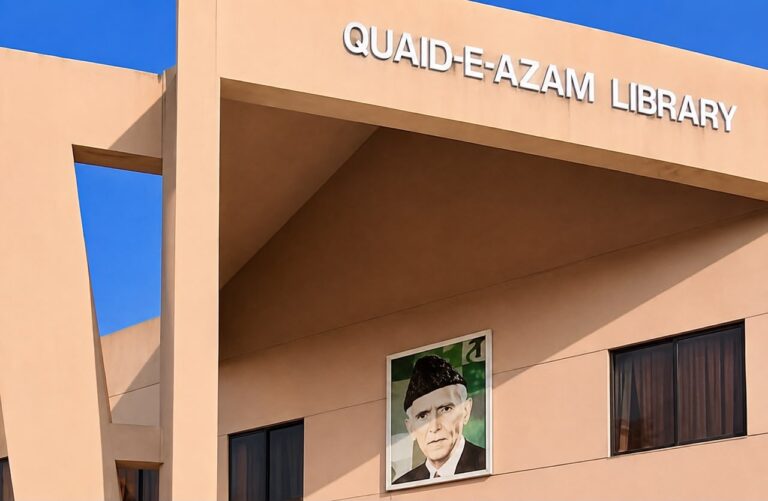
    GUJRAT: Librarians’ Day was observed at the Quaid-e-Azam Central Library of the University of Gujrat (UoG) with a seminar and panel discussion focusing on the evolving role of libraries, academic research and information professionals in the digital age. The event was organised to commemorate the birth anniversary of Dr S.R. Ranganathan, regarded as the father of library science in South Asia. August 12 is observed as Librarians’ Day in recognition of his contribution to the development of library science and his five laws of library science. Speaking during the panel discussion, Senior Librarian Rameeza Mushtaq said that a central library was the intellectual hub of any university and that the role of librarians had changed significantly with the expansion of digital resources. She said modern librarians were no longer limited to maintaining books and records but were increasingly helping students and researchers identify, access and use reliable academic material. Senior Librarian Liaquat Ali said the growing use of digital media had not reduced the importance of printed books and physical archives. He said libraries continued to provide researchers with access to authentic and preserved sources of knowledge. Librarian Khadija Munawar highlighted the impact of technology on library services and said librarians had increasingly become information navigators, helping students and researchers locate relevant digital resources in an increasingly complex information environment. In his presidential address, Chief Librarian A.R. Sheikh said academic libraries played a central role in strengthening research and intellectual development. “A library is neither a mere structure of bricks and mortar nor a repository of silent shelves; it is the fundamental engine of a nation’s intellectual sovereignty,” he said. Mr Sheikh said the rapid spread of unverified information through digital platforms had created new challenges for librarians and researchers. He said ensuring access to authentic and credible academic information was now among the key responsibilities of library professionals. He said the Quaid-e-Azam Central Library was providing students and researchers access to HEC digital resources, international peer-reviewed journals and the Online Public Access Catalogue (OPAC). The library also has dedicated research facilities for MPhil and PhD scholars and provides services related to academic research and similarity checking, he added. The speakers stressed the need for universities to further strengthen library infrastructure and equip libraries with modern digital resources to support research and higher education. The event concluded with a cake-cutting ceremony attended by Chief Librarian A.R. Sheikh and senior members of the library staff.

  • | | |

    Top National Thailand Stories From the Past Week: Death Toll in School Mass Shooting Reaches 9, Chinese Man Gets 46 Years for Military Weapons, and More

    Here is a look at the top NATIONAL Thailand stories, chosen by our Pattaya News/TPN National team, from last week, Monday, August 3rd to Sunday, August 9th. They are not in any particular level of importance but are listed in the order of date of publication. Nonthaburi’s Disaster Prevention and Mitigation Department has confirmed a […]

  • | | |

    Crackdown in Hua Hin Against Dozens of Foreigners Allegedly Using Thai Nominees to Hide Land Worth 300 Million Baht

    Hua Hin/Prachuap Khiri Khan – The Royal Thai Police have rolled out Phase 6 of their nationwide campaign against foreign nominee networks, targeting companies and property projects in Hua Hin suspected of using Thai nationals as proxy shareholders for foreign investors. Led by Deputy National Police Chief Pol. Gen. Samran Nualma, the operation brought together […]

  • | | | |

    Thai Education Minister Seeks Tougher School Safety Rules

    Thailand – Education Minister Prasert Chandraruangthong has said he plans to seek Cabinet approval for tougher school safety rules that would allow designated teachers to inspect for and confiscate weapons following the recent violence at a school in Nonthaburi. Prasert is expected to submit the proposed Ministry of Education rules to the Cabinet today (Aug […]