swat jirga rejects

Swat jirga rejects military operation, warns of Islamabad march

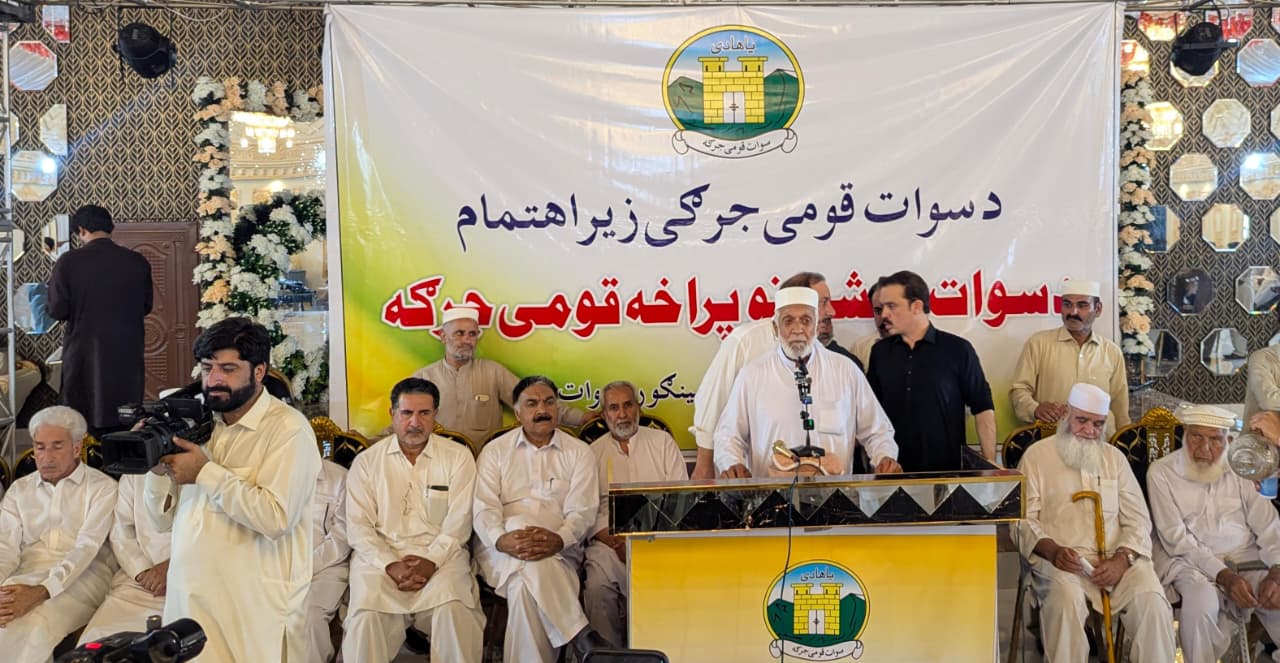
SWAT: A grand jirga of all major political parties, traders’ organizations, lawyers and civil society was held in Mingora under the banner of the Swat Qaumi Jirga. The participants strongly rejected any new military operation in Swat and demanded that the government eliminate all terrorists from Swat and Malakand Division within one month and establish lasting peace.

The jirga warned that if the government failed to meet the demand within the given time, a protest movement would be launched, followed by a long march towards Islamabad.

Speakers said that Swat and Malakand Division have faced terrorism, military operations, natural disasters and floods since 2007. They said these crises have badly damaged the local economy and affected tourism in the region.

They said the people could no longer afford another military operation, further unrest or new taxes. They urged the government to take immediate and practical steps to restore peace and support the local economy.

The participants welcomed the Khyber Pakhtunkhwa government’s decision to withdraw the imposition of Khyber Pakhtunkhwa Revenue Authority (KPRA) and other provincial taxes. However, they demanded that the federal government also withdraw its decision to impose federal taxes in Malakand Division and the merged districts and restore the special status of Malakand Division.

After the jirga, former Matta tehsil nazim, Abdul Jabbar Khan, issued a declaration. He said the people of Swat and Malakand Division wanted lasting peace, restoration of the special status of Malakand Division and withdrawal of all tax measures.

The declaration strongly urged the state and relevant institutions to remove all terrorists from Swat and Malakand Division within one month.

According to the declaration, if the demands were not accepted, the people of Swat would unite and hold a major public protest. If the government still failed to address the security situation and withdraw the tax decisions, local elders, political and non-political organizations and civil society would block major roads and stage an open-ended sit-in.

The declaration said that if the government failed to accept the demands even after the sit-in, the jirga would announce a long march towards Islamabad.

Those who addressed the jirga included MPA Fazal Hakeem Khan, MNA Dr Amjad Ali Khan, former MNA Dr Haider Ali Khan, ANP district president Sher Shah Khan, former provincial assembly candidate Zahir Shah Rorjan, Pakistan Peoples Party Malakand Division president Malik Akram Khan, Jamaat-e-Islami leaders Akhtar Ali Khanji and Muhammad Amin, JUI leader Ejaz Khan, Paktunkhwa National Party leaders Umar Ali Khan Yousafzai, Saleem Khan and Fazal Ahad Lalaji, Malakand Division Traders Federation president Abdul Rahim, Swat Qaumi Jirga spokesman Ahmad Shah, Irfan Khan Chattan, PML-N Malakand Division president Wajid Ali Khan, district president Qawi Khan Advocate, former district nazim Jamal Nasir Khan and former district nazim Muhammad Ali Shah, among others.

The speakers said the people of Swat and Malakand Division had paid a heavy price during the past two decades because of terrorism and unrest. They said the time had come for the state to take effective and practical measures to protect the people, ensure lasting peace and support economic recovery in the region.


Similar Posts

  • |

    Two tribal elders killed in South Waziristan

    Two tribal elders were shot dead by unidentified armed men in the Zarmilan area of Toi Khulla tehsil in Lower South Waziristan on Sunday, according to police District Police Officer (DPO) Shah Hassan identified the victims as Haji Gul and Malik Badshah, both members of the Suleman Khel tribe. Police said the two elders were travelling from Gul Kach towards Zarmilan when gunmen opened fire on their vehicle near Darozanda. Both men sustained multiple bullet wounds and died at the scene, while the attackers escaped. Police registered a preliminary case at Toi Khulla police station and launched an investigation. DPO Hassan said officers were examining all possible aspects of the incident and working to identify and arrest the suspects. The killings come amid growing concerns over the deteriorating security situation in Lower South Waziristan. The district has witnessed a rise in targeted killings, bomb attacks, kidnappings for ransom, extortion and attacks on police and security personnel over the past 18 months. Tribal elders and their relatives have increasingly become targets of violence. The trend has raised concerns about the safety of influential tribal figures, who have traditionally helped resolve disputes and maintain peace through jirgas and other local mechanisms. In May, prominent tribal elder and chief of the Ahmadzai Wazir tribe, Malik Tariq Wazir, was among three people killed in an IED blast near Gulshan Plaza in Wana’s busy Rustam Bazaar. Four others suffered injuries in the explosion. Police said explosives had allegedly been planted near the plaza overnight and detonated in the morning as Malik Tariq passed through the market in a vehicle. He was considered an influential figure who played an active role in tribal jirgas and local dispute resolution. He had also been abducted by armed men in December 2024 but was later released following efforts by tribal elders and local mediators. In another incident in June 2026, unidentified gunmen killed two sons of prominent tribal elder Malik Jamil Wazir near Kari Kot Bazaar in Wana tehsil. The brothers were identified as Naveed Wazir and Moeenuddin Wazir.

  • | |

    Pakistani Mountaineer Sohail Sakhi’s body shifte…

    The body of Pakistani mountaineer Sohail Sakhi, who lost his life in a tragic avalanche accident on Broad Peak, has been transported to Skardu by an Army Aviation helicopter. Sohail Sakhi was among the climbers caught in a devastating avalanche that struck Broad Peak in the early hours of July 31. The incident occurred during the night between July 30 and 31, when a massive avalanche swept across the mountain, leaving 10 mountaineers missing, including nine foreign climbers. Following the accident, rescue and recovery efforts were launched in the difficult and dangerous conditions of the Broad Peak region. The mountain, located in the Karakoram range of Gilgit-Baltistan, is one of the world’s highest peaks and is known for its challenging terrain, extreme weather and unpredictable climbing conditions. Sohail Sakhi was among the climbers who could not survive the disaster. His body was recovered from the mountain and later transported to Skardu, an important hub for mountaineering expeditions in the region. The use of an Army Aviation helicopter helped facilitate the transfer of the body from the remote mountainous area. The tragedy has caused grief among the mountaineering community in Pakistan and abroad. Broad Peak attracts climbers from different parts of the world every year, but the extreme environment can make rescue operations extremely challenging. Avalanches, sudden changes in weather, freezing temperatures and difficult terrain pose serious risks even to experienced mountaineers. The July 31 incident involved 10 missing climbers, nine of whom were foreign nationals. Rescue teams and authorities continued efforts to locate and recover those affected by the avalanche. The recovery operation was complicated by the harsh weather and the dangerous conditions at high altitude. The bodies of seven climbers who died in the accident had already been transported to their respective countries. Their repatriation was carried out after recovery operations and the completion of necessary procedures. The transfer of Sohail Sakhi’s body to Skardu marks an important step in the process of returning the deceased Pakistani climber to his family. Further arrangements will be made for the transportation of his body to his hometown, where his family and friends are expected to receive him. The incident once again highlights the risks associated with high-altitude mountaineering in the Karakoram. Despite advances in climbing equipment, communication systems and rescue technology, climbers continue to face life-threatening dangers when attempting some of the world’s highest and most difficult peaks. Sohail Sakhi’s death is a significant loss for Pakistan’s mountaineering community. His passing has drawn attention to the courage and determination of climbers who undertake expeditions in some of the most challenging environments on Earth. Authorities and rescue teams remain focused on recovery and repatriation efforts following the Broad Peak avalanche. The tragedy serves as a reminder of the unpredictable nature of high-altitude expeditions and the importance of safety, weather monitoring and coordinated rescue operations in mountainous regions.

  • Senate seeks PM intervention over Khairpur Dates Research Centre

    Islamabad: A major agriculture research project aimed at improving Pakistan’s date production has faced a setback after the proposed Dates Research Centre in Khairpur was excluded from the Public Sector Development Programme 2026 and 2027, prompting the National Assembly Standing Committee on National Food Security and Research to demand immediate reconsideration of the decision. The committee expressed concern that a project designed to improve date farming, develop disease-resistant varieties, increase exports and support farmers was left out due to financial limitations. The matter was discussed during the 29th meeting of the National Assembly Standing Committee on National Food Security and Research, chaired by Syed Hussain Tariq, MNA, at Parliament House Islamabad. Officials informed the committee that the joint project of the Pakistan Agricultural Research Council and Shah Abdul Latif University Khairpur for establishing the Dates Research Centre could not be included in the PSDP 2026 and 2027 because of limited financial resources. The Ministry of Planning, Development and Special Initiatives informed the committee that the Ministry of National Food Security and Research had prioritized only three new development schemes for inclusion in the national development programme, leaving several important projects outside the plan. The committee strongly disagreed with the decision and highlighted the importance of the dates sector for Pakistan’s agriculture and economy. Members noted that Pakistan is among the leading date producers, and a dedicated research centre could help farmers increase production, fight crop diseases, improve quality, develop new varieties and boost the country’s share in international markets. The committee directed the Ministry of National Food Security and Research to formally approach the Ministry of Planning and request a review of the decision. The committee also decided to seek a meeting with the Prime Minister to discuss establishing the Dates Research Centre through cooperation between the Pakistan Agricultural Research Council and Shah Abdul Latif University Khairpur. During the proposed meeting with the Prime Minister, the committee also plans to discuss other major agriculture challenges including wheat imports, setting a fair minimum support price for wheat, providing DAP fertilizer subsidies similar to regional countries and investigating reasons behind wheat shortages despite earlier reports of surplus stocks. The committee said agricultural development requires long term planning and research facilities to support farmers and improve food security. The meeting also reviewed concerns regarding artificial sweeteners and flavored drinks, especially their possible health effects on children, pregnant women and breastfeeding mothers. Officials informed the committee that earlier recommendations were made after findings from the National Institutes of Health highlighted possible health risks linked with excessive consumption of such products. The committee was informed that frequent consumption of artificial sweeteners and flavoured drinks may contribute to health problems, including an increased risk of diabetes and other serious diseases. The committee expressed dissatisfaction over delays in implementing earlier recommendations and directed the Pakistan Standards and Quality Control Authority to urgently review existing regulations. PSQCA was directed to hold a meeting in Islamabad involving committee members, health officials, NIH representatives, mango growers and other stakeholders. The committee instructed that revised standards should include clear product labels, prevention of misleading claims, visible health warnings, proper expiry date information, suitable fruit pulp requirements and regulations for plastic bottle usage. The National Institutes of Health was also directed to provide scientific evidence regarding health impacts and international guidelines to help improve the regulatory framework.

  • | | |

    Grand Yadgar-i-Fatah unveiled ahead of Independenc…

    The Yadgar-i-Fatah monument, built to honour Pakistan’s martyrs and commemorate the state-designated “Marka-i-Haq,” was inaugurated in Islamabad on Thursday night. President Asif Ali Zardari and Prime Minister Shehbaz Sharif jointly inaugurated the monument on the eve of Pakistan’s 80th Independence Day. Chief of Defence Forces and Chief of Army Staff Field Marshal Asim Munir, Chief of Air Staff Air Marshal Zaheer Ahmad Babar Sidhu and Chief of Naval Staff Admiral Naveed Ashraf attended the ceremony. The president and prime minister, along with the military leadership, stood respectfully as the national anthem was played by a military band. The ceremony began with the recitation of the Holy Quran. A video highlighting the concept, construction and development of the monument was also screened for the guests. A large contingent of personnel from the armed forces, paramilitary forces and police presented a guard of honour. The display was accompanied by a military band and reflected the participation of Pakistan’s security institutions in the national ceremony. The event was attended by senior military officers, federal ministers, political leaders, diplomats and other high-ranking officials. The Speaker of the National Assembly, Chairman Senate, Defence Minister, Foreign Minister and Punjab Chief Minister Maryam Nawaz were among those present. Governors of Punjab and Khyber Pakhtunkhwa also attended. Police contingents from Azad Jammu and Kashmir and Gilgit-Baltistan participated in the ceremony. Units representing Punjab, Sindh, Balochistan and Khyber Pakhtunkhwa were also part of the event. The monument commemorates Pakistan’s military confrontation with India in May. According to the Pakistani state narrative, the conflict began after the April 22 Pahalgam attack and culminated in Operation Bunyanum Marsoos before a ceasefire was reached between the two countries on May 10. Pakistan has referred to the episode as “Marka-i-Haq,” or the “Battle of Truth.” The inauguration brought together the country’s political and military leadership and carried a strong message of national unity and patriotism.

  • | |

    Mustafa Kamal calls for new provinces, questions p…

    ISLAMABAD: Federal Minister for Health Mustafa Kamal has renewed his call for the creation of new provinces in Pakistan, arguing that the country’s existing administrative structure is no longer adequate to serve its rapidly growing population. Speaking at the Pakistan Pharma Healthcare Expo, Kamal said debates over provincial boundaries were often framed as matters of honour and pride, but questioned why the same concern was not shown when children lost their lives after falling into open sewerage drains. He argued that Pakistan’s four provinces cover vast territories and that smaller administrative units could improve governance and ensure that public funds reach local communities more effectively. Kamal said the federal government distributes Rs8,884 billion annually among the provinces, but questioned the lack of an effective mechanism to ensure that funds reach union councils and communities at the grassroots level. He noted that Punjab and Khyber Pakhtunkhwa are larger in area than many countries, while Sindh and Balochistan also cover territories exceeding those of numerous states around the world. According to him, Pakistan’s population has grown dramatically since the country had only around 37 million people, yet the number of provinces has remained unchanged. The minister cited countries such as Sri Lanka, Iran and India as examples of states with more administrative units, arguing that the creation of additional provinces would not weaken Pakistan but could instead strengthen the federation. Kamal also linked administrative shortcomings to growing security challenges in Khyber Pakhtunkhwa and Balochistan, where security personnel continue to lose their lives. He said Pakistan needed fundamental reforms to address the causes behind instability and improve governance. Turning to the issue of public infrastructure, the minister questioned the political focus on provincial identity when basic safety measures such as covering open sewer lines remain neglected. He said Prime Minister Shehbaz Sharif works long hours and has extensive experience in provincial administration, but added that the federal government alone could not solve every local governance problem. The priority, he said, should be to strengthen the system rather than rely on individual interventions for issues such as sewer covers. Kamal urged all political parties to sit together and find a constitutional solution to the country’s administrative and governance challenges, saying meaningful reforms were needed to ensure public resources translated into better services and safer communities.

  • | |

    Swabi Tobacco growers burn crop over disputed pric…

    SWABI: Tobacco growers in Swabi took to the streets on Monday, protesting against what they described as unfairly low purchase prices for their crop and demanding enforcement of the official rate announced by the Pakistan Tobacco Board. The protest was held outside the Swabi Press Club, where farmers were joined by political and social activists as well as members of the local community. Growers said they were being offered as little as Rs350 per kilogram, despite the official rate of Rs750 per kilogram. During the demonstration, tobacco grower and former ANP district general secretary Haji Tameez Khan burned around 500 kilograms of his tobacco crop to highlight the financial pressure facing farmers. Speaking at the protest, Khan said the cost of producing tobacco had reached nearly Rs750 per kilogram, making offers of Rs350 to Rs400 per kilogram unsustainable for growers. He said farmers had already suffered substantial losses in the previous season and were now struggling to clear debts owed to labourers and suppliers. Khan said tobacco was a major cash crop and generated significant revenue for the cigarette industry, yet farmers remained uncertain about receiving a price that covered their production costs. He warned that continued failure to address the issue could lead more growers to adopt similar forms of protest. The protesters also criticised the Pakistan Tobacco Board and tobacco companies for failing to resolve the pricing dispute. They called on the authorities to ensure that tobacco-buying companies adhere to the officially approved rate and protect farmers from losses. National Awami Party district chairman Masood Jabbar said tobacco was a key source of income for Swabi’s farming community. He warned that failure to address growers’ grievances could lead to wider protests across the district, with more farmers expected to join future demonstrations.

Leave a Reply

Your email address will not be published. Required fields are marked *