nikahnama rules face

Nikahnama rules face review, registrars could face jail

Islamabad: Pakistan’s marriage law could face a major review after a parliamentary committee questioned the existing legal provision dealing with second marriage, while a separate proposal seeks jail time and a fine for Nikah registrars who fail to complete a Nikahnama properly. The Council of Islamic Ideology also agreed that the second marriage issue required reconsideration and said it would work towards a new legal framework based on the Quran and Sunnah.

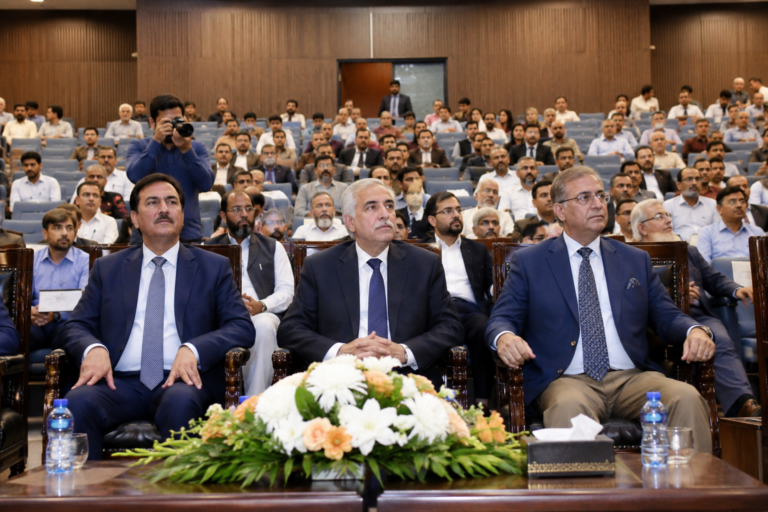
The discussion took place during a meeting of the Senate Standing Committee on Religious Affairs and Interfaith Harmony. One main issue was a proposed amendment to the Muslim Family Laws Ordinance.

The proposal seeks to make it compulsory for every Nikah registrar or Nikah Khawan to accurately fill all columns of the Nikahnama using information given by the bride and groom under oath. Under the proposed law, failure to properly complete the Nikahnama could lead to simple imprisonment of up to one month and a fine of Rs 25,001.

The punishment has only been proposed and has not yet become law. The Council of Islamic Ideology supported the proposal requiring Nikah registrars to correctly complete the Nikahnama.

However, the council raised objections to some other proposed changes in the Muslim Family Laws Ordinance, particularly amendments involving Sections 6 and 7. The CII said those proposed provisions were inconsistent with its understanding of Islamic injunctions.

The discussion then moved to one of the most sensitive parts of Pakistan’s marriage law: the existing provision dealing with a second marriage. The committee chairman questioned whether the current legal requirement should continue in its present form and said the provision should be reconsidered according to Shariah principles.

The Chairman of the Council of Islamic Ideology agreed that the matter required another review. He told the committee that the council would work towards proposing a new legal framework based on the Quran and Sunnah.

No final change to the second marriage law was approved during the meeting. The issue will require further consideration before any new legal framework can become law.

Another major part of the discussion concerned the Nikahnama itself. Senator Sarmad Ali proposed changes to make the Nikahnama easier for people to understand.

The proposal aims to remove unclear wording from the headings of different columns so that brides, grooms and Nikah registrars are less likely to misunderstand what information is required.

The committee was informed that the government had already discussed implementation of updated Nikahnama forms with the Ministry of Interior and the Islamabad administration.

The concerned department was expected to print and circulate the revised Nikahnama forms in Islamabad and provide a report on implementation. However, the committee was told that a response from the concerned authorities was still awaited.

The proposed reforms could make the Nikahnama more important than simply being a marriage registration document. If the proposed amendment is approved, Nikah registrars would carry a clear legal responsibility to ensure that every required column is filled correctly according to the information provided by both the bride and groom.

The proposed punishment is intended to discourage incomplete forms and incorrect entries. Supporters of the change believe clearer Nikahnama forms could reduce confusion and disputes that may arise when important marriage conditions are left blank or written unclearly.

At the same time, the debate over second marriage could become a much larger legal and religious issue. The committee has not recommended the removal or replacement of the existing provision at this stage. Instead, the matter is expected to be examined further with input from the Council of Islamic Ideology.

The committee also decided that relevant provisions of the proposed marriage law amendments would be reconsidered after reviewing the CII recommendations. For now, the two major Nikah related developments are clear.

Lawmakers are considering stronger responsibility and possible punishment for Nikah registrars who fail to properly complete marriage documents, while the existing law governing second marriage has also been opened for possible review under a new framework based on Islamic principles.

Similar Posts

  • Pak Datacom’s shift to foreign satellite raises security concerns

    Islamabad: Serious questions have been raised over Pak Datacom’s reported shift of satellite connectivity for sensitive government linked organisations from Pakistan’s PakSat network to UAE based Yahsat, with a former chief executive of the company has asked regulators to investigate whether required approvals were obtained and whether national data security safeguards were fully protected. Pak Datacom officials were contacted for their response to the allegations and questions raised in the complaint, but no reply had been received at the time of filing this story. The concerns were raised by retired Brigadier Syed Zulfiqar Ali, who described himself in the complaint as a former chief executive and shareholder of Pak Datacom. He sent a formal complaint to authorities including the Pakistan Space Activities Regulatory Board, the Pakistan Telecommunication Authority, the Director General Technical and PakSat International, with a copy also sent to the Ministry of Information Technology and Telecommunication. The complaint alleges that Pak Datacom moved VSAT services being provided to the National Bank of Pakistan and other government organisations from its local satellite arrangement to Yahsat’s YahClick service. According to the complaint, the earlier system used PakSat with network hubs located in Pakistan, while the new arrangement involves a UAE based satellite service. The complainant described the change as a possible security concern because the National Bank of Pakistan handles important government accounts. The main issue raised is whether the satellite change followed Pakistan’s regulatory requirements and if the necessary approvals were obtained. Pakistan’s Space Activities Rules state that government departments, armed forces and other government entities should use national satellite capacity and give the National Space Agency the first right of refusal. The same rules also provide an exception. If the required capacity is not available through a national satellite, services from a registered satellite operator may be used, subject to the regulatory process and an NOC from PSARB. The key unanswered questions are whether national satellite capacity was unavailable, whether Yahsat was being used as a registered satellite service under the relevant rules and whether the required approvals or NOC were obtained. The complaint asks the authorities to determine exactly these points. The complainant alleged that the move contradicted the Space Activities Rules and asked regulators to establish whether the formal procedure had been followed. The rules give PSARB powers to regulate satellite activities and ensure maximum use of national space assets. They also empower the regulator to issue an NOC to government organisations for using other registered satellites when national satellites cannot provide or arrange the required capacity. Pak Datacom is a listed company and, according to the documents supplied with the complaint, Telecom Foundation holds 55 percent of its shares while the remaining 45 percent is held by the general public. The complaint states that Pak Datacom has worked with defence and public sector organisations and has provided satellite communication and network support to organisations including the National Bank of Pakistan, NADRA, OGDCL, AGPR and NLC. According to the documents, Pak Datacom had been providing satellite backup connectivity to more than 400 National Bank branches. The complaint says this connectivity previously operated through PakSat, using hubs in Karachi and Islamabad before services shifted to Yahsat. The complainant argued that keeping government connectivity on an indigenous network would provide greater control, particularly for organisations handling sensitive information. Pak Datacom’s reported use of a virtual private network was also mentioned in the material. The complaint nevertheless argued that using a foreign satellite and overseas infrastructure required closer examination from a national security point of view. These concerns remain allegations that relevant regulators and the company must verify. Another issue raised in correspondence sent to the Ministry of Information Technology concerned the cost of the reported transition. The complainant alleged that approximately $97,000 was spent on imported equipment. He also alleged that around Rs 10 million was paid in Customs duties and taxes and around Rs 4 million in demurrage charges. The complaint linked the demurrage amount to alleged delay or negligence. The complainant requested an inquiry to determine whether the satellite shift was carried out according to the regulatory framework and whether the reported spending was justified. The Space Activities Rules give PSARB authority to investigate possible violations. Under the rules, PSARB may form a special committee to conduct a fact-finding inquiry if an act or omission may have violated the regulatory framework. The rules also state that satellite-based communication services in Pakistan must be provided through national satellites or registered satellites. Foreign satellite operators are also required to meet regulatory conditions for providing services in Pakistan. The documents therefore leave an important regulatory question open. If all required permissions, registration and NOCs were obtained and national satellite capacity was unavailable, the foreign satellite arrangement may fall within the exception provided by the rules. If those conditions were not met, regulators would need to determine whether any breach occurred and what action, if any, is required. The reporter contacted Pak Datacom Acting CEO Ali Saleem Rana and other company officials seeking clarification on why VSAT connectivity was reportedly shifted from PakSat to Yahsat. Questions were also sent asking whether the company had obtained the required approvals, how it responded to the security concerns and whether the reported expenditure figures were correct. No response had been received at the time the story was prepared. Pak Datacom’s position will be incorporated if the company responds. The matter now centres on whether the responsible regulatory authorities confirm that the required procedures were followed and whether the foreign satellite arrangement met Pakistan’s security and space regulation requirements. The central questions are whether the system was properly authorised, whether national capacity was considered first, whether government data remained protected and whether public and shareholder money was spent according to the rules.

  • | |

    PTI announces September 27 to Islamabad over key d…

    Pakistan Tehreek-e-Insaf (PTI) has announced plans to march to Islamabad on September 27 if its demands regarding party founder Imran Khan are not met, with senior party leaders calling for legal and constitutional relief. The announcement was made during a public gathering near the motorway in Peshawar, where PTI leaders said the planned demonstration would go ahead unless progress is made on several issues, including regular meetings with Imran Khan, access to his personal physician, and timely hearings of court cases involving the former prime minister. Addressing supporters, Khyber Pakhtunkhwa Chief Minister Ali Amin Gandapur said the party had pursued every available constitutional and legal avenue but had failed to achieve the desired outcomes. He argued that the party had little confidence in the judicial process and claimed that recent constitutional amendments had affected the functioning of the courts. Gandapur also alleged that PTI supporters had faced excessive force during previous demonstrations. He questioned the continued detention of Imran Khan and reiterated the party’s position that the former premier’s removal from office was the result of external interference. He further claimed that Pakistan’s economy had performed better during Imran Khan’s tenure and criticized the current government’s handling of economic and security challenges. The chief minister also expressed concern over inflation, unemployment, law and order, and the country’s overall economic situation. He accused the federal government of mismanagement and urged supporters to remain united ahead of the planned protest. Speaking at the same event, PTI leader Sohail Afridi said the party had exhausted all legal and constitutional options before deciding to launch another protest movement. He maintained that the planned march was intended to demand justice rather than political concessions. Afridi announced that PTI would proceed towards Islamabad on September 27 if its demands remained unaddressed. He told supporters that the party was seeking what it described as judicial justice and the restoration of legal rights for its leader. The planned demonstration is expected to become one of PTI’s major political mobilization efforts in the coming months. Party leaders have called on supporters from across the country to participate peacefully in the protest. The federal government has not yet issued a detailed response to PTI’s latest announcement. Political observers say the coming weeks will be important as both sides weigh their next steps amid Pakistan’s evolving political landscape.

  • | |

    15.91% spike exposes federal spending challenge

    Controlling the rise in federal government administrative expenses has become a major challenge. Despite repeated claims of reducing expenditure and implementing austerity measures, the cost of running federal government affairs has increased by 15.91 per cent. The rise has raised concerns over the government’s efforts to control its administrative spending. The increase comes despite measures announced by the government to reduce unnecessary expenditure and promote financial discipline. According to the available details, spending on running government affairs has exceeded both the official target and the revised estimates. This means that actual administrative expenditure has remained higher than the levels projected by the government. The increase in spending also highlights the difficulties faced by the federal government in keeping its administrative costs under control. The government has been under pressure to reduce non-development expenditure and improve the efficiency of public spending. Authorities have introduced various austerity measures in an attempt to limit government expenditure. These measures were aimed at reducing unnecessary costs and ensuring better management of public resources. However, the latest increase indicates that controlling administrative spending remains a significant challenge. The higher-than-target expenditure could also put additional pressure on the government’s overall fiscal position. The development comes at a time when the federal government is seeking to maintain fiscal discipline and reduce unnecessary spending. Higher administrative costs could make it more difficult to achieve these objectives. The government is expected to face continued pressure to review its spending patterns and identify areas where expenditure can be reduced

  • | |

    CDF Asim reinforces Pakistan’s defence partn…

    A high-level delegation from Somalia, led by Defence Minister Ahmed Moallim Fiqi, met Field Marshal Syed Asim Munir, Chief of Army Staff and Chief of Defence Forces, at the General Headquarters (GHQ) in Rawalpindi to discuss bilateral defence cooperation and regional security. According to the Inter-Services Public Relations (ISPR), the meeting focused on matters of mutual interest, the evolving regional security environment and ways to strengthen defence and military cooperation between Pakistan and Somalia. Both sides emphasised the importance of expanding military-to-military relations and enhancing cooperation in training and capacity-building initiatives to address shared security challenges. They also discussed the need for closer collaboration to promote peace and stability in the region. During the meeting, the Somali defence minister acknowledged Pakistan’s continued support for Somalia and praised the professionalism of the Pakistan Armed Forces in contributing to regional peace and security. Field Marshal Asim Munir reaffirmed Pakistan’s commitment to supporting Somalia in strengthening its security institutions and enhancing defence capabilities. He said Pakistan values its longstanding relationship with Somalia and remains committed to deepening bilateral cooperation in the defence sector. The meeting reflects the growing defence ties between the two countries and their shared commitment to enhancing security cooperation and addressing common regional challenges.

  • |

    UET hosts HEC meeting on AI-driven higher educatio…

    LAHORE: The University of Engineering and Technology (UET) Lahore hosted a high-level meeting of vice chancellors from more than 80 universities across Punjab under the auspices of the Higher Education Commission (HEC). HEC Chairman Professor Dr Niaz Ahmad Akhtar chaired the meeting, while UET Lahore Vice Chancellor Professor Dr Shahid Munir hosted the gathering. Punjab University Vice Chancellor Dr Muhammad Ali Shah also attended the meeting and joined the senior academic leadership on stage. The meeting focused on the rapid transformation of higher education in line with the changing demands of technology, industry and the global job market. Participants discussed the federal government’s initiative to modernize university curricula and degree programmes, with a particular emphasis on artificial intelligence and emerging technologies. Dr Niaz Ahmad Akhtar urged universities to take immediate steps to update their curricula, teaching methods and academic programmes. He stressed the need to equip students with modern knowledge and practical skills that can help them compete in an increasingly technology-driven economy. The HEC chairman highlighted the importance of incorporating fields such as artificial intelligence, data science, robotics, cybersecurity and biotechnology into university education. He also called on universities to align their academic programmes with the evolving needs of industry and the employment market so they can produce graduates with relevant and marketable skills. During the meeting, participants exchanged views on the role of artificial intelligence in higher education, research and innovation. They also discussed digital learning, technology-enabled teaching and opportunities to strengthen international collaboration among universities. UET Lahore Vice Chancellor Professor Dr Shahid Munir said the university was ready to share its AI-related curriculum and coursework with other higher education institutions. He emphasized the importance of cooperation among universities to accelerate the adoption of modern technologies and strengthen the quality of higher education across the country. The meeting also highlighted the growing importance of research and digital education in preparing universities for future challenges. Academic leaders discussed ways to promote innovation, improve learning opportunities and create stronger links between higher education institutions and industry. As part of a plantation campaign at UET Lahore, HEC Chairman Professor Dr Niaz Ahmad Akhtar also planted a sapling on the university campus, underscoring the institution’s commitment to environmental sustainability. The meeting concluded with UET Lahore Vice Chancellor Professor Dr Shahid Munir presenting a commemorative shield to the HEC chairman in recognition of his visit and participation in the important academic gathering.

  • | |

    Rain triggers flooding, power outages in twin citi…

    Heavy rain, strong winds and thunderstorms lashed Rawalpindi and Islamabad on Saturday. The downpour disrupted routine life in several parts of the two cities. Several areas of Islamabad faced waterlogging after the heavy rainfall. Underpasses in the G-6 sector were filled with rainwater. The accumulation of water caused difficulties for motorists and pedestrians. The situation was also reported to be severe in Chatta Bakhtawar. Roads and streets were submerged under rainwater. Several streets gave the appearance of ponds. Rainwater also entered residential houses in the area, creating problems for residents. The heavy rain also affected electricity supply in different parts of Rawalpindi and Islamabad. Several areas experienced power disruptions as the weather conditions deteriorated. Rawalpindi authorities declared a rain emergency following the heavy downpour. The Water and Sanitation Agency (WASA) activated its teams to deal with the situation. Staff members were deployed to affected areas. Heavy machinery was also moved to different locations. The equipment was being used to remove accumulated rainwater and keep major roads and routes clear. The Pakistan Meteorological Department has forecast more rain in several parts of the country. Islamabad, Punjab, Khyber Pakhtunkhwa, northeastern Balochistan, Gilgit-Baltistan and Kashmir are expected to receive rain. The Met Office has warned that some areas may receive heavy rainfall. The intense rain could increase the risk of flooding in streams and rain-fed waterways. Authorities have also been advised to remain alert in vulnerable areas. Urban flooding may cause further disruption if heavy rain continues. Meanwhile, the water situation in the Indus River has also become a concern. Medium-level flooding has been reported at Kalabagh. Water inflow at Kalabagh was recorded at around 397,000 cusecs. The rising water level has increased pressure on river management authorities. Low-level flooding has also been reported at several major water reservoirs and barrages. These include Tarbela Dam, Chashma Barrage, Taunsa, Guddu and Sukkur Barrage. Despite the flooding at these locations, the overall situation in the country’s other rivers remains normal. The Flood Forecasting Division in Lahore said there was no major flood situation in the remaining rivers.

Leave a Reply

Your email address will not be published. Required fields are marked *