National

  • | |

    Karachi Colleges impose immediate ban on Tobacco a…

      The Directorate of College Education Karachi has announced a comprehensive ban on the use of tobacco products and narcotics in all public colleges across the city. The decision aims to create a healthier, safer, and drug-free educational environment for students, teachers, and other staff members. According to an official notification issued by the Directorate of College Education Karachi, the prohibition covers a wide range of tobacco and nicotine products. These include cigarettes, electronic cigarettes (vapes), nicotine pouches, pan (betel quid), and gutka. The use, consumption, or possession of these products within college premises is now strictly prohibited. The notification states that the ban has come into effect immediately and must be implemented without delay. College administrations have been instructed to ensure full compliance with the new policy and take all necessary steps to maintain a tobacco-free and drug-free environment within their institutions. Under the new directives, principals of all colleges have been assigned the primary responsibility for enforcing the ban. They are required to ensure that students, faculty members, administrative staff, and visitors strictly adhere to the rules. Principals have also been instructed to monitor college premises regularly and adopt preventive measures to discourage the use of tobacco products and illegal substances. The Directorate emphasized that educational institutions should remain places that promote learning, discipline, and healthy lifestyles. The use of tobacco products and drugs not only affects the health of individuals but can also negatively influence the academic environment and the well-being of students. By implementing this ban, the department hopes to protect young people from developing harmful addictions and encourage healthier habits. In addition to restricting tobacco and drug use inside college campuses, the Directorate has also taken steps to address the issue beyond institutional boundaries. According to the notification, official letters have been sent to Deputy Commissioners across Karachi, requesting their cooperation in preventing the sale and use of tobacco products and narcotics in areas surrounding colleges. The involvement of district administrations is intended to strengthen enforcement efforts and reduce students’ access to tobacco and drug products near educational institutions. Local authorities are expected to work with law enforcement agencies and other relevant departments to monitor vendors operating close to colleges and ensure compliance with applicable laws  and regulations. The Directorate believes that collaboration between educational institutions and district authorities is essential for creating a secure and healthy environment for students. By limiting the availability of tobacco products and narcotics around colleges, officials hope to reduce the risk of substance abuse among young people and reinforce public health initiatives. The decision reflects growing concerns about the increasing use of smoking products, vaping devices, and other addictive substances among students. Educational authorities have reiterated their commitment to safeguarding students’ physical and mental well-being while fostering an atmosphere that supports academic excellence and personal development. With the immediate implementation of the ban, college principals are expected to take proactive measures to ensure compliance and raise awareness about the harmful effects of tobacco and drug use. The Directorate of College Education Karachi has made it clear that maintaining drug-free campuses is now a priority, and all stakeholders are expected to cooperate in achieving this objective for the benefit of students and the wider educational community.
  • | | |

    Pakistan-origin Saadia Zahidi makes jistory as fir…

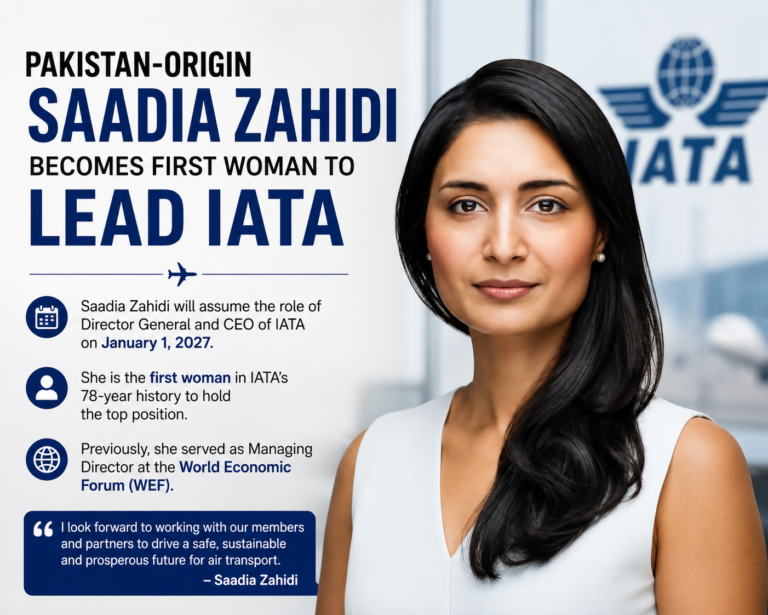
      Pakistan-origin business leader Saadia Zahidi has been appointed as the next Director General and Chief Executive Officer (CEO) of the International Air Transport Association (IATA), becoming the first woman in the organization’s history to hold the top position. Her appointment marks a significant milestone for the global aviation industry and highlights the growing role of women in leadership positions within international organizations. Zahidi is set to officially assume her new role on January 1, 2027, succeeding the current leadership after an extensive international selection process. She brings decades of experience in global economic policy, leadership development, and strategic planning, making her one of the most respected figures in international business and public policy. Before joining IATA, Zahidi served as Managing Director at the World Economic Forum (WEF), where she played a key role in shaping discussions on the future of work, economic competitiveness, gender equality, innovation, and sustainable development. During her tenure, she worked closely with governments, multinational corporations, academic institutions, and civil society organizations to develop policies aimed at promoting inclusive economic growth and preparing societies for emerging global challenges. Her appointment is being viewed as a landmark achievement, not only because she is the first woman to lead IATA but also because she is of Pakistani origin. Many have described the decision as an important step toward greater diversity and inclusion in global leadership. Zahidi’s professional journey has inspired many young professionals, particularly women from developing countries, demonstrating that talent, expertise, and dedication can open doors to leadership at the highest international level. The International Air Transport Association represents hundreds of airlines worldwide and plays a central role in shaping the global aviation industry. The organization is responsible for promoting safe, efficient, secure, and sustainable air transport while working closely with airlines, governments, regulators, and other stakeholders to address industry challenges. As Director General, Zahidi will oversee efforts to support airline operations, strengthen international cooperation, advance environmental sustainability, and guide the aviation sector through future technological and economic changes. Industry observers believe Zahidi’s extensive experience in global policy and economic strategy will bring a fresh perspective to IATA as the aviation sector continues to recover from recent global disruptions and adapts to evolving passenger expectations, digital transformation, and climate commitments. Her leadership is expected to focus on collaboration, innovation, and long-term resilience for the industry. Her appointment has been widely welcomed by professionals across the aviation and business communities. Many have congratulated her on achieving a historic milestone, describing her selection as recognition of her exceptional leadership and international experience. For Pakistanis around the world, Zahidi’s achievement is a source of pride and inspiration. Her rise to the highest position in one of the world’s most influential aviation organizations reflects the growing global impact of professionals of Pakistani origin and reinforces the importance of diversity in shaping the future of international industries.

  • | |

    Pakistan explores diplomatic efforts to revive US-…

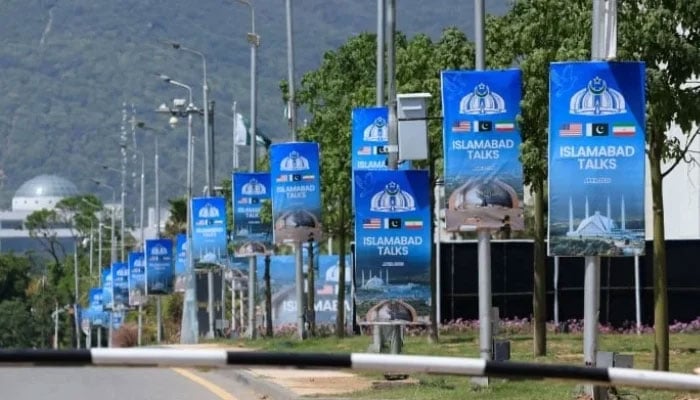
      ISLAMABAD: Pakistan is exploring the possibility of helping revive stalled negotiations between the United States and Iran in an effort to reduce tensions and move toward ending the conflict that has continued for nearly five months. According to informed Pakistani sources, the latest diplomatic initiative follows encouragement from China, which has expressed support for Islamabad’s mediation efforts in the region. The renewed diplomatic discussions reportedly gained momentum during the recent visit of Iran’s Interior Minister, Eskandar Momeni, to Islamabad. It was his second visit to Pakistan within ten days, highlighting the growing importance of diplomatic engagement between the two neighboring countries amid the ongoing regional crisis. During his visit, Momeni held meetings with senior Pakistani officials, including government leaders and Chief of Army Staff and Chief of Defence Forces Field Marshal Syed Asim Munir. While official statements confirmed the meetings, details of the discussions were not made public. However, sources familiar with the matter indicated that the possibility of restarting indirect negotiations between Washington and Tehran was among the issues discussed. Despite these efforts, officials acknowledged that significant challenges remain before meaningful dialogue can resume. Deep mistrust between the United States and Iran, combined with recent military escalations across the Middle East, continues to complicate prospects for renewed negotiations. Pakistan’s role as a potential mediator has become increasingly delicate due to rapidly evolving regional developments. Earlier this week, Yemen’s Iran-backed Houthi movement announced a naval blockade targeting Saudi Arabia, one of Pakistan’s closest regional allies. Islamabad has strongly condemned the recent Houthi attacks, reaffirming its support for Saudi Arabia, with which it signed a mutual defence treaty last year. According to the sources, Deputy Prime Minister and Foreign Minister Ishaq Dar also discussed the evolving Middle East situation with Chinese officials during his recent visit to Beijing. Although Pakistani authorities have not publicly commented on the discussions, China has confirmed its support for mediation efforts led by Pakistan and other regional partners. In an official statement, China’s Foreign Ministry said Beijing supports diplomatic initiatives aimed at restoring peace and stability in the Gulf region. The ministry also reaffirmed China’s commitment to playing an active role in encouraging dialogue and reducing tensions across the Middle East. China remains Iran’s largest trading partner and the primary buyer of Iranian crude oil despite international sanctions. Over the years, Beijing has also expanded cooperation with Tehran in areas such as technology, satellite navigation systems, and dual-use industrial components, although it has not publicly provided direct military assistance during the current conflict. Pakistan’s latest diplomatic initiative follows earlier mediation efforts undertaken jointly with Qatar. In June, the United States and Iran signed a memorandum of understanding designed to create a 60-day framework for negotiations aimed at reaching a long-term agreement. However, indirect talks failed to produce meaningful progress, with both sides accusing each other of violating the understanding, ultimately leading to renewed hostilities. The regional security situation has deteriorated further after the Houthis claimed responsibility for attacks on two Saudi oil tankers as part of their naval blockade. The development has raised concerns over global energy supplies and increased fears that another major shipping route could be disrupted alongside the already vulnerable Strait of Hormuz. Pakistani officials believe that ending attacks on Saudi Arabia and other Gulf countries is now essential before any negotiations between the United States and Iran can resume. According to one official, Islamabad has already conveyed this position to Iranian authorities, emphasizing that regional stability will be a necessary first step toward successful diplomatic engagement. As tensions continue to rise, Pakistan, supported by China, appears determined to pursue dialogue as a means of preventing further escalation and encouraging a peaceful resolution to one of the Middle East’s most pressing conflicts.

  • | |

    Hamza Shehbaz set for key coordination role at PM …

    Hamza Shehbaz, son of Prime Minister Shehbaz Sharif and a former chief minister of Punjab, is expected to assume a more active political role at the federal level, according to informed sources. Sources said an office has been allocated to Hamza Shehbaz at the Prime Minister’s Office. Although he has not yet been given any formal government position, he is likely to play an important role in coordinating between the prime minister and ruling party lawmakers. His main responsibility will be to engage with members of the National Assembly (MNAs) and address issues related to their constituencies. He will work to ensure that development projects, administrative matters and public concerns raised by lawmakers are communicated to the relevant authorities for timely resolution. Government legislators often seek meetings with the prime minister to discuss problems faced by their constituencies. However, due to Prime Minister Shehbaz Sharif’s busy official schedule, it is not always possible for him to meet every lawmaker. Hamza Shehbaz is expected to help manage this coordination process and facilitate communication between the government and parliamentary members. Sources said his office is located on the sixth floor of the Prime Minister’s Office. A meeting room has also been allocated alongside his office, where he is expected to hold meetings with lawmakers, party representatives and visiting delegations. Hamza Shehbaz is currently an MNA from Lahore’s NA-118 constituency. He has previous experience in coordinating with elected representatives, having performed a similar role during Shehbaz Sharif’s tenure as Punjab chief minister. Sources further said that office staff has also been assigned to assist him in carrying out his responsibilities. There is currently one vacant adviser position in the Prime Minister’s team. Under the Constitution, the prime minister can appoint up to five advisers. At present, four adviser positions are occupied. However, sources indicated that Hamza Shehbaz may not immediately receive the status of adviser or special assistant. Instead, the government is considering assigning him the title of coordinator to avoid political criticism over his appointment. If approved, he is expected to perform his responsibilities from behind the scenes while assisting the government in maintaining close coordination with lawmakers and resolving constituency-related matters.

  • | | |

    Tax ombudsman flags flaw in FBR refund system

    Pakistan’s Federal Tax Ombudsman has identified a major flaw in the Federal Board of Revenue’s (FBR) FASTER sales tax refund system and directed the tax authority to take immediate corrective measures. The ombudsman said the issue is affecting exporters and undermining the effectiveness of the automated sales tax refund mechanism, which was introduced to ensure quicker processing of refund claims. The observations were made in a ruling issued by Federal Tax Ombudsman Zafar Hijazi while deciding complaints filed by a company regarding delays and issues in the refund process. According to the decision, the FASTER system is unable to distinguish between commercial export goods declarations and non-commercial sample exports. As a result, exporters may face unnecessary delays or complications in obtaining legitimate sales tax refunds. The ombudsman directed the FBR to address the technical shortcomings in the system without delay to ensure that genuine exporters receive timely refunds and the automated mechanism functions efficiently. The ruling emphasized that improving the FASTER system is essential for protecting exporters’ interests and maintaining confidence in Pakistan’s tax refund process

  • | | |

    Pakistan, Kazakhstan vow to boost trade and invest…

    Pakistan and Kazakhstan have reaffirmed their commitment to expanding bilateral trade, investment and regional connectivity, as senior leaders from both countries held high-level talks on the sidelines of the Shanghai Cooperation Organisation (SCO) meeting. Pakistan’s Deputy Prime Minister and Foreign Minister Ishaq Dar met Kazakhstan’s Deputy Prime Minister and Foreign Minister Yermek Kosherbayev, where the two sides reviewed the steady progress in bilateral relations following the recent visit of Kazakh President Kassym-Jomart Tokayev to Pakistan. During the meeting, both leaders expressed satisfaction over the positive momentum in diplomatic and economic cooperation. They reiterated their commitment to implementing the understandings reached during President Tokayev’s visit, including the execution of 37 Memorandums of Understanding (MoUs) signed between the two countries. According to Pakistan’s Foreign Office, the discussions focused on enhancing cooperation across a wide range of sectors, including trade, investment, transport, regional connectivity, energy, people-to-people exchanges and collaboration in multilateral forums. The two ministers agreed that stronger economic ties and improved transport links would create new opportunities for businesses and investors while contributing to broader regional integration. Kazakhstan’s Foreign Minister also praised Pakistan’s efforts to promote peace, dialogue and diplomacy in the region. He reaffirmed his country’s desire to further strengthen cooperation with Islamabad and expand engagement in areas of mutual interest. The leaders also exchanged views on regional and international developments, emphasizing their shared commitment to promoting peace, stability and sustainable prosperity through closer cooperation. In another positive diplomatic development, Kosherbayev extended an invitation to Ishaq Dar to visit Kazakhstan, reflecting both countries’ intention to maintain regular high-level engagement. Pakistan and Kazakhstan have significantly accelerated their diplomatic and economic partnership in recent years, with both governments seeking to unlock new avenues for trade and investment. President Tokayev’s recent visit to Pakistan is widely viewed as a turning point in bilateral relations, laying the foundation for long-term collaboration in strategic sectors. The latest meeting underscores the growing partnership between the two countries as they work to transform political goodwill into tangible economic cooperation, strengthen regional connectivity and create new opportunities for sustainable growth across Central and South Asia.

  • | |

    Faisalabad unveils smart transport app

    The Faisalabad administration has announced a major initiative to improve public transport through digital technology and environmentally friendly solutions. The project includes a smart mobile application for public transport and a planned electric vehicle (EV) battery-swapping network. Officials say the initiative is aimed at making daily travel easier, safer and more efficient for thousands of commuters across the division. Commissioner Faisalabad and President of the Faisalabad Urban Transport Society (FUTS), Imran Hamid Sheikh, said the new Faisalabad Public Transport App will bring government and private transport services together on one digital platform. The system will cover all four districts of Faisalabad Division and allow passengers to access transport information from a single application. The mobile app will provide real-time tracking of public transport vehicles. Passengers will be able to see the live location of government buses, metro buses, electric buses and registered urban Hiace vehicles. The feature will help commuters know exactly when a vehicle is arriving, reducing long waiting times and making travel more convenient. Another important feature of the application is its smart route-planning system. Users will simply enter their destination, and the app will suggest the best travel route. It will also tell passengers which buses to board, where they need to change routes and the estimated arrival time of connecting services. Officials believe this feature will especially benefit students, office workers and first-time travellers who are unfamiliar with city routes. Authorities said the application has been developed for public convenience and will be available free of cost. Commuters will not have to pay any fee to use the service. However, transport operators will have to complete registration and comply with the required regulations before joining the digital platform. The administration also plans to introduce digital registration for public transport vehicles. The registration system will be linked with the Punjab Information Technology Board (PITB), allowing authorities to maintain accurate transport records and improve monitoring of public transport services. Officials expect the registration process for transport operators to begin within the next 15 days to one month, followed by the official launch of the application. In addition to the digital transport platform, the administration is working on establishing an electric vehicle battery-swapping network. The proposed system will allow EV users to replace discharged batteries with fully charged ones in a short time instead of waiting for vehicles to recharge. Officials believe this will encourage the adoption of electric vehicles and support cleaner, more sustainable transportation in the city.

  • | |

    50,000 cusecs surge through Ravi River

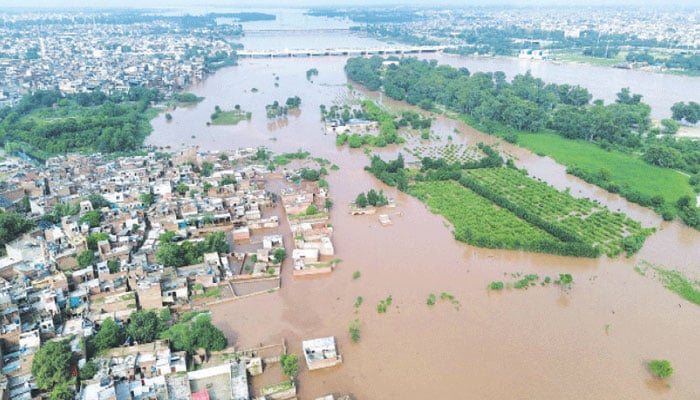
    A low-level flood has been recorded in the Ravi River near Kamalia after water levels increased at the Mil Fatyana point. Authorities have stepped up monitoring and emergency preparations as floodwater continues to move downstream. According to the Sub-Divisional Officer (SDO) Irrigation, around 50,000 cusecs of water is flowing through the Mil Fatyana section of the Ravi River. Officials are closely monitoring the river to assess any further rise in water levels and to ensure timely action if conditions worsen. The district administration has established flood relief camps in several vulnerable areas. The camps have been set up in Mil Fatyana, Kot Pathana, Adda Kalaira, Mauza Tara, Haveli Mai Safuran, Kot Karam Shah and Dedi. These facilities are intended to provide temporary shelter, food and emergency assistance to residents if evacuations become necessary. As part of efforts to improve disaster preparedness, Punjab has launched drone-based flood monitoring for the first time. The technology is being used to monitor river conditions, identify vulnerable locations and issue early warnings before floodwaters reach populated areas. Officials believe the system will help improve response times and reduce the impact of flooding. The rising water has already affected nearby agricultural land. Standing crops in Mil Fatyana, Khan Da Chak, Jhalar Sigla, Shahabal Shah, Basti Peepal Wala and Mauza Darsana have been submerged, raising concerns about crop losses and the financial impact on local farmers. The Irrigation Department has urged people living along the river belt to remain alert and cooperate with local authorities. Residents in low-lying areas have been advised to move to safer locations as a precaution against any further increase in water levels. Officials said surveillance of the Ravi River will continue around the clock. Rescue teams and local administration remain on standby to respond quickly if the flood situation intensifies. Authorities have also appealed to the public to follow official advisories and avoid unnecessary movement near the river until conditions become safe.

  • | |

    PDMA warns of heavy rain, landslide risk in KP

    PESHAWAR: The Provincial Disaster Management Authority (PDMA) has issued a weather alert forecasting rain across several parts of Khyber Pakhtunkhwa from July 24 to July 27, warning of possible landslides, strong winds and lightning. According to the PDMA, districts including Chitral, Upper and Lower Dir, Swat, Shangla, Battagram, Mansehra and Abbottabad are at risk of landslides due to the expected rainfall. Authorities have advised residents in mountainous areas to remain cautious and avoid unnecessary travel during the forecast period. The authority also warned that strong winds and lightning could damage standing crops and weak structures. Farmers have been urged to take precautionary measures to protect their crops, while residents have been advised to secure vulnerable buildings and outdoor installations. PDMA said electricity poles, signboards and solar panels may also be damaged by strong winds. Citizens have been urged to stay away from unstable structures and avoid taking shelter under trees or near electricity infrastructure during thunderstorms. The authority has directed all district administrations to implement precautionary measures in vulnerable areas before the expected weather system arrives. Emergency response teams have also been asked to remain on alert to deal with any weather-related incidents. In addition, district authorities have been instructed to maintain continuous monitoring of rivers, streams and seasonal waterways to ensure timely action in case of rising water levels or flash flooding. PDMA has advised the public to follow official weather updates, exercise caution during the rainy spell and immediately report any emergency situation to the relevant authorities.

  • | | | |

    Oil nears $110 as US-Iran tensions rise

    Global crude oil prices climbed sharply this week as rising tensions between the United States and Iran increased concerns over energy supplies. The escalation in geopolitical risks, combined with ongoing disruptions linked to the wars involving Iran and Ukraine, has pushed physical crude cargo prices to their highest levels in nearly two months. Crude oil cargoes traded across the Middle East, Europe and Africa have risen significantly in value, with some shipments approaching $110 per barrel. The increase reflects growing uncertainty in global energy markets, where buyers are rushing to secure supplies amid fears of further disruptions. Traders say concerns over supply have become the main driver of the latest price rally. Buyers are seeking immediate deliveries from alternative sources as uncertainty over future exports continues to grow. The stronger demand for prompt cargoes has added further pressure on international oil prices. The global benchmark Dated Brent, which is used to price more than 60 percent of physical crude oil cargoes worldwide, climbed to $105.70 per barrel on Thursday, according to market data. The benchmark reached its highest level since late May and moved above the $100 per barrel mark for the first time since early June. Market analysts believe geopolitical developments are having a direct impact on energy prices. Growing fears that conflicts could disrupt production or shipping routes have increased volatility in the oil market. Investors and traders are closely watching developments in the Middle East as they assess the risk of further supply shortages. Oil broker Tamas Varga said supply concerns have once again become the dominant factor influencing the market. He noted that uncertainty over production and exports is encouraging buyers to secure crude oil before prices rise even further. The market was also affected by developments in Kazakhstan. Authorities there announced that the country’s main export terminal for CPC Blend crude oil on the Black Sea had been forced to suspend operations following reported Ukrainian drone attacks. The disruption affected crude exports and reduced oil production. According to a source familiar with the situation, Kazakhstan’s crude oil output has fallen by nearly half, dropping to around 460,000 barrels per day. The decline has added to global supply concerns at a time when markets are already under pressure from geopolitical tensions.