National

  • |

    PMDC faces Senate heat over “misleading” MDCAT advertisement that created panic among overseas medical students

    Islamabad: A major controversy has erupted over a Pakistan Medical and Dental Council (PMDC) advertisement after a Senate committee accused the council of creating unnecessary fear among students planning to study medicine abroad by publishing unclear and misleading information about the MDCAT examination. During a meeting of the Sub Committee of the Senate Standing Committee on National Health Services, Regulations and Coordination, Senator Anusha Rahman questioned PMDC officials over a newspaper advertisement that appeared to suggest that every Pakistani student going abroad for medical education must first pass the MDCAT. The senator said the advertisement created confusion among thousands of students, including those planning to join top international universities in countries such as the United Kingdom, United States, Canada and Australia. She questioned why students who had already decided to study abroad were being pushed towards the MDCAT exam because of unclear wording in a public advertisement. “Through this advertisement, you told a student who wants to go to Harvard or Cambridge that they must also appear in MDCAT,” Senator Anusha Rahman said while questioning PMDC officials. She said such a major policy message could not be communicated incorrectly because it directly affects students’ futures. The controversy started after PMDC published a public alert for students planning to study medicine and dentistry abroad. The advertisement mentioned several requirements for Pakistani students going overseas, including academic qualifications, recognition of foreign institutions, PMDC registration and other conditions. However, the committee pointed out that the wording of the advertisement gave the impression that MDCAT was compulsory for all students going abroad, while PMDC officials later clarified that this was not the actual intention of the policy. PMDC President admitted during the meeting that the matter needed to be reviewed and said the requirement was actually meant for specific situations, including certain universities based on rankings or countries placed under special concerns. Senator Anusha Rahman questioned why the advertisement was not written clearly according to the approved policy. She demanded that PMDC present the original policy approved by the council and publish the correct version for public understanding. The senator also questioned accountability inside PMDC and asked whether any official was questioned for preparing and releasing the confusing advertisement. She asked officials why no one had been held responsible when everyone agreed that the newspaper advertisement contained an incorrect line. PMDC President admitted that no such inquiry had been conducted. The committee expressed concern that thousands of students may have suffered unnecessary stress because of the confusion. Senator Anusha Rahman said students preparing for overseas medical education were already under pressure and the unclear announcement pushed many of them towards MDCAT preparation and private coaching academies. She said the advertisement may explain why many A Level students were suddenly seen joining local academies for MDCAT preparation. The senator said she personally observed many A Level students in academies and believed the confusion created by the advertisement could be a main reason. She urged officials to visit academies and listen to students who were facing anxiety because of the uncertainty. The senator said students and parents were receiving late night calls filled with fear and frustration because they did not know whether their future plans would be affected. The committee directed PMDC to immediately issue a correction advertisement. Senator Anusha Rahman said a simple addendum would not suffice because the original notice was published prominently in newspapers. She directed PMDC to publish a proper clarification on the front page of newspapers, clearly explaining which students are required to take MDCAT and which students are not. She said the corrected advertisement should appear in newspapers so students preparing to travel abroad could get immediate clarity. PMDC officials suggested issuing an addendum, but the senator rejected the idea and said the correction must be given the same importance as the original announcement. She said students going to countries such as the UK, US, Canada and Australia must clearly know whether the MDCAT requirement applies to them. According to the PMDC public alert, students going abroad for medical and dental education were informed about requirements including minimum academic marks, foreign institution recognition, PMDC registration before departure, course duration requirements and passing the National Registration Examination after returning to Pakistan. The notice also stated that students who fail to meet required conditions may not be allowed to appear in the National Registration Examination. However, the Senate committee said unclear communication created unnecessary confusion among students and demanded that PMDC ensure future announcements are accurate and easy to understand. The committee warned that policy mistakes involving education can directly affect thousands of young people because admission timelines, travel plans and university opportunities depend on timely decisions.

  • | |

    Hamza Shehbaz takes charge at PM House

    Former Punjab Chief Minister Hamza Shehbaz has taken charge of his office at the Prime Minister’s House. His new office will be located on the sixth floor of the PM House. According to party sources, Hamza Shehbaz has already started engaging with federal ministers. He held meetings with several federal ministers a day before formally beginning his office work. The meetings focused on political and administrative matters. Hamza Shehbaz is expected to begin his regular office responsibilities from Monday. He will coordinate with government officials and oversee matters assigned to him. Party sources said Hamza Shehbaz will also look after affairs related to the Public Accounts Committee (PAC). The committee deals with matters involving government spending, public funds and financial oversight. He is also expected to establish a committee to address the concerns and problems of party workers. The committee will work on resolving issues raised by workers and improving coordination within the party. His appointment at the PM House is expected to increase his involvement in federal-level political and parliamentary affairs. It will also provide him with a formal platform to coordinate with ministers and other government officials. Hamza Shehbaz has previously served as Punjab chief minister and has remained active in the Pakistan Muslim League-Nawaz (PML-N). His new responsibilities are expected to further strengthen his role in the party’s political and organisational affairs. He will formally start handling his office matters from Monday, while meetings and consultations with government and party officials are expected to continue in the coming days.

  • | |

    MQM-P raises Sindh representation, census demands

    MQM-Pakistan Chairman Khalid Maqbool Siddiqui has accused the Pakistan Peoples Party (PPP) of creating an ethnic divide in Sindh. He said the province had not simply been divided into urban and rural areas. Instead, he claimed that a linguistic and ethnic division had been created. Speaking at a public gathering in Hyderabad, Siddiqui said Muhajirs were settled in 21 cities across Sindh. He said his party had always preferred political and peaceful struggle over confrontation. Siddiqui warned that if the people participating in the political movement were directed towards the Chief Minister’s House, the situation could reach a decisive point. However, he stressed that MQM-P had never called for fighting. He said the party wanted different communities to recognise and respect each other. The MQM-P chief said the cities of Sindh belonged to the descendants of people who had contributed to the creation of Pakistan. He said they had brought their share of Pakistan with them and had continued to remain committed to the country. Siddiqui also spoke about abandoned properties in Sindh. He claimed that the Muhajir community had not received even 10 per cent of what he described as its rightful share. He said the community’s love for Pakistan and desire for peace should not be considered a weakness. He said MQM-P would continue raising the rights of the people regardless of the number of votes it received. Siddiqui claimed that the party was bigger than the assemblies and said its presence represented Pakistan. The MQM-P chairman also urged the federal government to take the party’s demands seriously. He said one of the party’s major demands was the establishment and empowerment of effective local governments. Siddiqui argued that strong local governments were necessary to solve problems at the grassroots level. He said people should have greater control over decisions affecting their cities and communities. The MQM-P leader also demanded a fair and accurate population census in Sindh. He said every person must be properly counted to ensure fair political representation and distribution of resources. Siddiqui warned that those responsible for failing to count people accurately would eventually have to answer for it. He claimed that two sections of society were currently contributing to the state’s economy in Sindh but were not receiving proportionate representation. He argued that a transparent population count could resolve many of the grievances surrounding political representation. According to Siddiqui, if the people of Sindh were properly counted, the demand for a separate province would no longer remain necessary. His remarks come amid an ongoing political debate in Sindh over population figures, ethnic representation, local government powers and the distribution of resources. The MQM-P has repeatedly called for stronger local governments and greater representation for urban areas. The party maintains that accurate population data is essential for determining political representation and ensuring a fair share of development resources.

  • | |

    NDMA issues 48-hour flood alert as Chenab rises

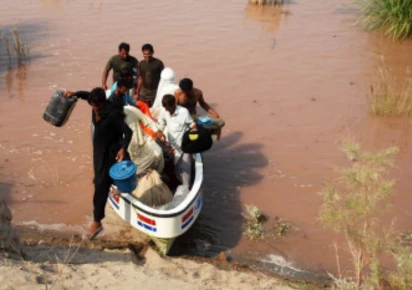
    The National Disaster Management Authority (NDMA) has warned of an elevated flood risk in several parts of Pakistan as heavy monsoon rains continue across the country. The authority has placed relevant departments on alert and warned that the next 24 to 48 hours could bring flooding in riverine, urban and mountainous areas. The NDMA said medium-level flooding has been recorded in the Chenab River at Khanki, Qadirabad and Chiniot Bridge. The Palkhu Nullah in Wazirabad is also experiencing medium-level flooding. Low-level flooding has been reported at several other locations. These include Kalabagh, Chashma and Taunsa on the Indus River. Marala and Trimmu on the Chenab are also experiencing low-level flooding. Similar conditions have been observed at Balloki and Sidhnai on the Ravi River and Nowshera on the Kabul River. The situation along the Chenab remains a major concern. The NDMA said water levels are expected to rise further over the next 24 hours at Marala, Khanki, Qadirabad and Chiniot Bridge. Water levels at Trimmu Barrage are also expected to reach medium flood levels during the same period. The authority has warned of possible flash floods in the hill torrents of Dera Ghazi Khan, seasonal streams in Khyber Pakhtunkhwa and parts of northern Balochistan over the next two days. Several cities are also facing the risk of urban flooding due to continued heavy rainfall. The areas at risk include Gujranwala, Mandi Bahauddin, Sialkot, Narowal, Faisalabad, Sargodha, Jhang, Multan, Hafizabad and Lahore. The NDMA has advised citizens to avoid unnecessary travel in flood-prone areas. Motorists have been urged to check weather forecasts and road conditions before travelling. The authority has directed provincial and district administrations to maintain round-the-clock monitoring of vulnerable locations. Emergency response teams have also been asked to remain ready for immediate deployment. Authorities have been instructed to restore roads quickly if flooding or other weather-related incidents cause closures. The NDMA also warned about landslides, debris flows and sudden flash floods in mountainous areas. People have been advised to stay away from riverbanks, steep slopes and narrow mountain passages where landslides or falling rocks could occur. Citizens have also been warned against attempting to cross flooded roads, streams or rapidly moving water. The authority stressed that even shallow floodwater can sweep away vehicles and people. The Pakistan Meteorological Department has issued similar warnings. It said most major rivers are currently flowing at normal or low flood levels, while the Chenab at Qadirabad and Chiniot remains at medium flood level. The weather department also warned that southeastern Sindh could face urban or rainwater flooding over the next 24 to 36 hours. Flash flooding is also possible in the hill torrents of Dera Ghazi Khan and northeastern Balochistan.

  • | |

    Naqvi vows full support for Balochistan security

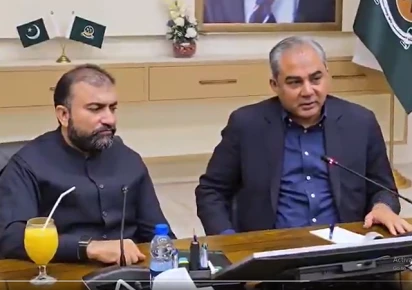
    Interior Minister Mohsin Naqvi has assured Balochistan of continued federal support to improve security and restore lasting peace in the province. Naqvi visited Quetta on Saturday. He met Balochistan Chief Minister Mir Sarfraz Bugti. The two leaders jointly chaired a high-level meeting on the province’s law and order situation. The meeting reviewed the latest security situation in Balochistan. Officials also discussed ongoing security operations and future plans to deal with terrorism. Chief Minister Bugti briefed the meeting on the challenges facing the province. He also explained the measures being taken to improve security and maintain peace. The meeting decided to further strengthen the Counter-Terrorism Force (CTF) and Balochistan Police. The participants agreed that the professional capabilities of both forces must be improved. The authorities also agreed to speed up decisions aimed at strengthening the provincial police force. The federal government assured Balochistan that it would provide the required resources and support. Naqvi said the federal government would continue to provide every possible assistance to Balochistan. He said restoring peace required immediate and effective implementation of a comprehensive security plan. The interior minister also called for greater use of the experience of former Balochistan police chiefs. He said their expertise could help authorities develop a stronger and more effective security strategy. Naqvi stressed the importance of modern technology in counterterrorism operations. He also highlighted the need for better intelligence and stronger coordination between security institutions. He said the federal and provincial governments were working together to address the security challenges. According to Naqvi, coordinated efforts are essential for establishing lasting peace in the province. Chief Minister Bugti also reaffirmed his government’s determination to fight terrorism. He said the provincial government would remain prepared to respond to threats on every front. Bugti made it clear that the government would not surrender to pressure from terrorists. He said the writ of the state would be established across Balochistan. The chief minister said no space would be allowed for terrorists to operate. He also stressed that security agencies would continue taking steps to protect citizens and public institutions. Bugti said the government’s strategy would not focus only on security operations. He said improving opportunities for young people was equally important. According to the chief minister, education, skills development, employment and positive activities could help young people build better futures. He said promoting merit would help restore the confidence of the province’s youth. He added that young people should receive equal opportunities to succeed. Bugti also highlighted the strong connection between peace and development. He said security, progress and prosperity must move forward together. He said the provincial government would continue working with the federal government to improve law and order. Development projects would also be accelerated across the province. The meeting came as Balochistan continues to face serious security challenges. Several attacks have occurred in the province in recent months. Security forces and law enforcement agencies have increased operations against militant groups. The Pakistan Army, Frontier Corps and Balochistan Police have also continued joint efforts in affected areas. Officials believe stronger intelligence sharing and better coordination can help prevent future attacks. Modern equipment and improved training are also being considered important parts of the security strategy. The federal and provincial governments have therefore agreed to combine security measures with development initiatives. They say improving employment, education and skills opportunities for young people is essential for long-term stability.

  • | |

    DG Khan victims await CM’s compensation

    By MIR HUNBAL BIRMANI A heartfelt public appeal has been made to Punjab Chief Minister Maryam Nawaz Sharif on social media , urging her to announce financial compensation for the families of the four children who were killed and sixteen injured in the Little Scholars School tragedy in Dera Ghazi Khan on May 7, similar to the relief package announced for victims of the recent Kahna, Lahore academy roof collapse. Parents of deceased children of little scholar school roof collapse incident expressed profound grief over the tragic incident in Kahna, Lahore, where the collapse of an academy roof claimed the lives of innocent children and left several others injured. They offerd prayers for the departed souls, strength for the bereaved families, and a speedy recovery for the injured. Referring to reports that the Punjab government has announced Rs2 million each for the families of the deceased and Rs500,000 each for the injured in the Kahna tragedy, the public appeal on social media describes the decision as commendable. However, it argues that the absence of a similar announcement for the victims of the Little Scholars School tragedy in Dera Ghazi Khan has created a perception of unequal treatment . The statement notes that both incidents involved the collapse of classroom roofs, resulting in the deaths and injuries of schoolchildren. It stresses that negligence and carelessness cannot be overlooked in either case and that the victims in Dera Ghazi Khan deserve the same compassion and support extended to those in Lahore. The appeal further points out that while the Chief Minister promptly announced relief for the Kahna victims, no compensation has yet been announced for the families affected by the Dera Ghazi Khan tragedy, nor did the Chief Minister visit the city to offer condolences. It says this has caused disappointment among the bereaved families and residents of Dera Ghazi Khan. Questioning the perceived disparity, the appeal states that if the Chief Minister considers herself a mother to all the children of Punjab, then the victims of both tragedies should receive equal treatment. The appeal concludes by urging Chief Minister Maryam Nawaz Sharif to announce a compensation package for the families of the deceased and injured children in the Little Scholars School tragedy. It emphasizes that while no amount of money can compensate for the loss of a child or heal the grief of the parents, such assistance would demonstrate that the government stands with all citizens equally. The statement also calls upon elected representatives from Dera Ghazi Khan and the district administration to formally recommend to the Punjab government that financial assistance be provided to the affected families.

  • | |

    10 electric buses arrive in Azad Kashmir

    Ten electric buses have been delivered to Azad Jammu and Kashmir (AJK) from Islamabad as part of a new public transport initiative for the region. The buses have been provided by Punjab Chief Minister Maryam Nawaz. The initiative follows an announcement made by Pakistan Muslim League-Nawaz (PML-N) leader Nawaz Sharif during a public gathering in Muzaffarabad. Nawaz Sharif had announced that electric buses would be provided to AJK to improve public transport facilities in the region. The arrival of the first 10 buses marks progress towards implementing that announcement. The new buses are expected to provide residents with a modern transport option. They are also aimed at improving the quality of public transportation and making daily travel more convenient for citizens. The electric buses were transported from Islamabad to Azad Kashmir. Their arrival is likely to support efforts to upgrade the region’s existing public transport system. The initiative is also significant because electric buses can help reduce dependence on conventional fuel-powered public transport. Their use can contribute to lower emissions and cleaner urban environments. The provision of the buses reflects cooperation between Punjab and the AJK administration in the transport sector. The initiative is expected to benefit commuters, particularly those who rely on public transport for work, education and other daily activities. The announcement was made during Nawaz Sharif’s address in Muzaffarabad, where he spoke about development and public welfare initiatives for Azad Kashmir. The arrival of the buses is expected to be followed by further steps to put them into service for the public. Authorities will determine their routes and operational arrangements. The initiative is being viewed as part of broader efforts to introduce modern and environmentally friendly transportation facilities in AJK.

  • | |

    FIA launches unit to hunt dark web criminals

    The Federal Investigation Agency (FIA) has established a dedicated unit to investigate criminals operating through the dark web. The move is aimed at strengthening Pakistan’s ability to deal with hidden online criminal networks. The new unit has been set up at the FIA’s National Command and Control Centre (NC3) in Islamabad. It will use advanced technology and digital investigation techniques to identify suspects who use encrypted platforms to conceal their identities. FIA Director General Dr Usman Anwar said the unit would focus on criminal networks involved in activities that fall under the agency’s jurisdiction. Investigators will also examine suspicious digital transactions, including those involving cryptocurrencies. A major focus will be networks involved in producing fake documents. Such documents can be used to facilitate human trafficking and illegal migrant smuggling. The unit will also investigate other forms of cyber-enabled crime linked to the dark web. The dark web is a hidden part of the internet. Its websites are not normally indexed by standard search engines. Access often requires specialised software and knowledge. Criminals can use these systems to hide their identities and locations. The technology has also been misused for illegal trade, cybercrime and other criminal activities. Authorities face additional challenges because many dark web networks operate across national borders. Criminals can also use cryptocurrency to make financial transactions more difficult to trace. The FIA plans to address these challenges through modern digital investigation tools and greater coordination between specialised teams. The new unit will work closely with the FIA’s cryptocurrency investigation unit. Both units will operate under the same facility and share technical expertise. Investigators will use blockchain forensic techniques to examine cryptocurrency transactions. These techniques can help authorities analyse transactions and potentially connect anonymous or pseudonymous digital addresses with real-world identities. Open-source intelligence will also be used to support investigations. Officials said digital evidence gathered from different sources could help strengthen criminal cases. Investigators will track aliases, usernames and pseudonyms used by suspected criminals across online marketplaces, forums and other hidden platforms. The information will be used to build detailed profiles of suspected offenders. Authorities can then use the evidence to identify suspects and pursue legal action. NC3 Director Dr Athar Waheed explained the basic structure of the internet. He said it is commonly divided into three broad layers: the surface web, deep web and dark web. The surface web includes websites that can be found through regular search engines. News websites, social media platforms, blogs and online shopping sites are examples. The deep web contains online material that search engines do not index. This includes private databases, email accounts, banking systems, academic resources and internal organisational networks. Much of the deep web is legitimate. Users normally need passwords, subscriptions or specific permissions to access such content. The dark web is a smaller and deliberately hidden section of the deep web. It uses technologies designed to provide greater anonymity. Tor is one of the technologies commonly associated with accessing dark web services. It routes internet traffic through multiple volunteer-operated relays, making it more difficult to identify the original source. The FIA’s new unit will seek to overcome these anonymity measures through digital forensics, intelligence gathering and technological investigation.

  • | |

    Lahore CTO cracks down on traffic corruption

    Lahore Chief Traffic Officer (CTO) Abdul Rahim Shirazi has issued a strict warning to traffic wardens against corruption and misuse of authority. Shirazi said no traffic official would be allowed to demand money from citizens or become involved in illegal activities. He warned that anyone found guilty would face strict legal action. The CTO said some traffic officials had been involved in taking money from members of the public. He added that officials accused of such practices were being arrested. Shirazi issued a particularly strong warning against extortion. He said if any traffic official demanded extortion from a citizen, he would ensure that a terrorism case was registered against the official. The traffic chief said he was deeply concerned over cases in which traffic personnel had faced extortion charges. He described such incidents as a source of embarrassment for the traffic department. He stressed that traffic wardens were responsible for enforcing traffic laws and facilitating citizens. They must not misuse their positions for personal gain. The CTO directed traffic personnel to perform their duties honestly and professionally. He made it clear that corruption, harassment and illegal demands would not be tolerated. He also warned officials that strict action would be taken against anyone found exploiting their authority. The department would continue monitoring the conduct of traffic personnel, he said. The warning comes as Lahore traffic authorities seek to improve public confidence in traffic enforcement. Officials are also under pressure to ensure that citizens are treated fairly during routine traffic checks and enforcement operations. Shirazi said the traffic department must maintain discipline and transparency. He stressed that officials involved in wrongdoing would be held accountable under the law.

  • | |

    Khanewal placed on flood alert as DC Hena Arshad o…

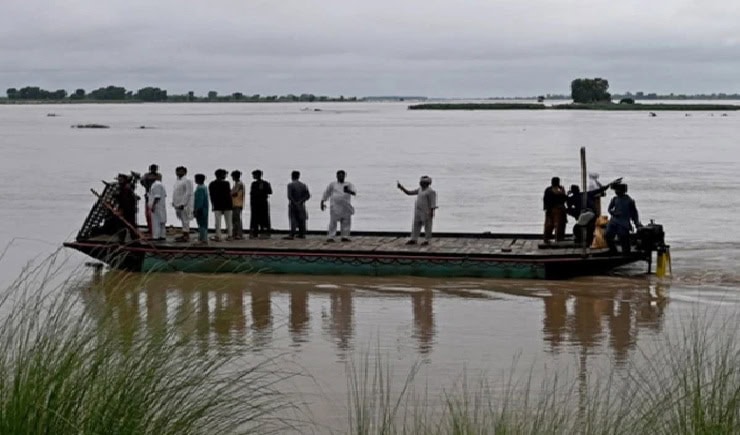
    Protective embankments inspected at Head Sidhnai, Mai Safura, Kund Sargana and Fazil Shah as Ravi and Chenab water levels remain under continuous surveillance Khanewal: Deputy Commissioner Khanewal Hena Arshad has issued a pre-emptive alert to all relevant departments, directing them to maintain complete operational preparedness for any possible flood emergency in the district. The alert comes as Punjab faces an evolving monsoon and river-flood situation. According to the latest official update, moderate flooding has been recorded in the River Chenab at Khanki, Qadirabad and Chiniot Bridge. Low-level flooding has also been reported at Trimmu on the Chenab and at Balloki and Sidhnai on the River Ravi. The Deputy Commissioner visited Head Sidhnai, the Mai Safura Bund Breaching Section, Kund Sargana and Fazil Shah Bund, where she inspected flood-protection infrastructure and reviewed emergency response arrangements. Officials of the Irrigation Department briefed her on the prevailing water situation in the Ravi and Chenab rivers, the structural strength of protective embankments, vulnerable riverine areas, evacuation planning and precautionary measures being taken to minimise possible losses. Additional Deputy Commissioner Revenue Fazal Abbas, Assistant Commissioner Kabirwala Muhammad Haroon and officers representing the Irrigation Department, Rescue 1122, Revenue Department and other concerned agencies accompanied the Deputy Commissioner during the inspection. At Head Sidhnai, Hena Arshad inspected the Mai Safura Bund Breaching Section, surrounding flood embankments and the railway bridge. She reviewed the condition of the protective infrastructure and the safety measures being implemented around vulnerable locations. The Deputy Commissioner directed the Irrigation Department, Kabirwala tehsil administration, Rescue 1122, Revenue Department and other agencies to remain fully alert and maintain uninterrupted coordination. She stressed that machinery, rescue boats, emergency equipment, personnel and transportation resources must remain available for immediate deployment. Any weakness detected in an embankment or protective structure should be repaired without delay, she added. Earlier, while chairing a flood-preparedness meeting at Head Sidhnai, the Deputy Commissioner said that the district administration had completed the necessary arrangements to respond effectively to a possible emergency. She ordered the immediate strengthening of flood embankments, removal of encroachments from waterways and vulnerable locations, and implementation of all remaining precautionary measures. During her visits to Kund Sargana and Fazil Shah Bund, Hena Arshad instructed officials to prepare for the timely and safe evacuation of residents from low-lying riverine settlements whenever water conditions require such action. She directed the administration to identify vulnerable populations in advance, maintain updated evacuation lists and ensure the availability of transport for families, livestock and essential belongings. The Deputy Commissioner also ordered that flood-relief camps and facilities established by the Health and Livestock departments remain fully operational. These camps must be prepared to provide shelter, medicines, drinking water, food, veterinary assistance and other essential services immediately after an emergency is declared. Punjab authorities have intensified flood monitoring across rivers, headworks and barrages. Drone surveillance has also been conducted at Head Sidhnai and other strategic locations to monitor water flows, riverbank erosion and possible incoming flood waves. The wider provincial situation remains sensitive. More than 4,300 residents have already been evacuated from vulnerable settlements along the Chenab in Chiniot district following an increase in water levels, illustrating the speed with which river conditions can affect downstream communities. The National Disaster Management Authority has also issued a weather advisory covering July 25 to July 30, warning of further monsoon activity and associated flooding hazards. Hena Arshad said water levels and river conditions across Khanewal district were being monitored continuously. She instructed all departments to remain vigilant and respond immediately to any rise in water levels, weakening of embankments or other emergency situation. “The protection of citizens’ lives, property and livestock is the district administration’s foremost priority,” the Deputy Commissioner said, reaffirming that negligence or delays in flood-preparedness measures would not be tolerated. Residents of low-lying areas near the Ravi, Head Sidhnai and adjoining riverine belts have been advised to remain attentive to official announcements, avoid approaching rivers and flood channels, and cooperate with the administration if precautionary evacuation becomes necessary. Citizens may contact Rescue 1122 during an immediate emergency or call the Provincial Disaster Management Authority’s disaster helpline 1129 to report flood-related risks and seek assistance.