chiang rai launches

Chiang Rai Launches East-Northern Industrial Fair 2026

Chiang Rai has announced the East-Northern Industrial Fair 2026, a five-day showcase featuring more than 100 businesses from four provinces in Upper Northern Thailand: Chiang Rai, Phayao, Phrae, and Nan.

The event will take place from August 12 to 16, 2026, at BCC Hall, Central Ladprao in Bangkok. Visitors can browse, taste, shop for, and use high-quality products while experiencing Lanna identity, local knowledge, art, and culture. The fair also creates opportunities for trade connections and business expansion.

Key Takeaways:

  • More than 100 businesses from Chiang Rai, Phayao, Phrae, and Nan will exhibit their products.
  • Product categories include food, beverages, herbal goods, textiles, clothing, household items, and home decor.
  • The event will include cultural performances, fashion shows, industrial innovation displays, marketing activities, and business matching sessions.

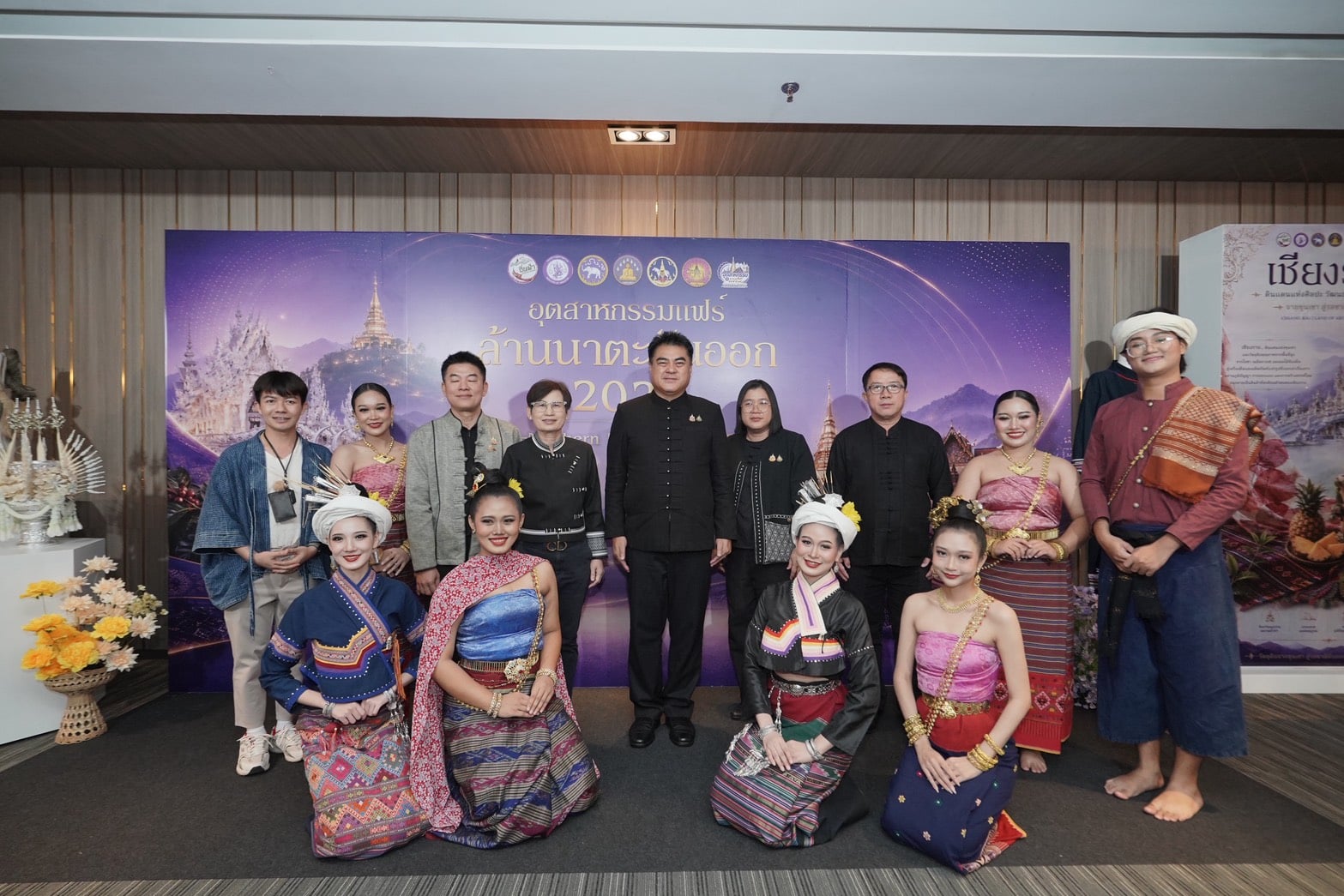
The official launch took place on Friday, July 10, 2026, at Chiang Rai Heritage Hotel. Chiang Rai Governor Chucheep Phongchai joined the provincial industry officials from Chiang Rai, Phayao, Phrae, and Nan for a press conference with media representatives and partner organizations.

The launch highlighted the strengths of businesses from the Upper Northern provinces through a contemporary cultural performance titled “The Spectacular Colors of Lanna Ethnic Groups.” The program also featured products from all four provinces and a mini fashion show presented by professional models.

The four provinces are known for their natural resources, cultural heritage, local knowledge, and agricultural processing industries. They also produce a wide range of creative products with strong connections to local communities. Through the fair, organizers want to help businesses reach new customers, improve their competitiveness, and build stronger trade networks at both regional and national levels.

Supporting Businesses Across Four Northern Provinces

The Upper Northern provinces have organized business development activities continuously. These programs have included product development training, support for turning local Soft Power into commercial opportunities, and networking activities for entrepreneurs.

More than 100 businesses from Chiang Rai, Phayao, Phrae, and Nan have taken part in these efforts. Their products combine local skills and materials with contemporary design, creating goods that appeal to modern consumers while retaining their northern identity.

The East-Northern Industrial Fair will bring these businesses directly to Bangkok consumers, buyers, investors, and trade partners. It will also give visitors a chance to discover products that can support the growth of regional industries and create new commercial connections.

Products and activities at the East-Northern Industrial Fair

Visitors to BCC Hall will find products with quality standards, distinctive designs, and strong connections to northern culture. Exhibitors will present and sell products in five main categories:

  • Food
  • Beverages
  • Herbal products
  • Textiles and clothing
  • Household goods and home decor

The products have been developed from local wisdom and adapted with contemporary ideas. Visitors can buy directly from participating businesses while learning more about the people, materials, and production methods behind each product.

The fair will also include an exhibition honoring Her Majesty Queen Sirikit, The Queen Mother. Other displays will introduce outstanding products from businesses in the four provinces, along with industrial technology and innovation from the region.

A factory outlet section will offer quality products at special prices. The program will also feature fashion shows, marketing activities, Lanna cultural performances, and mini concerts by well-known artists throughout the five-day event.

Business Matching for Buyers and Investors

Business matching sessions will connect participating entrepreneurs with buyers and investors from Thailand and other countries. These meetings will give businesses opportunities to discuss orders, partnerships, distribution channels, and future market expansion.

The sessions are designed to help northern entrepreneurs develop long-term commercial relationships. They also provide buyers and investors with direct access to products from businesses across Chiang Rai, Phayao, Phrae, and Nan.

The East-Northern Industrial Fair 2026 will be held from August 12 to 16, 2026, at BCC Hall, Central Ladprao, Bangkok. The event is open to consumers, tourists, entrepreneurs, business owners, investors, and anyone interested in products from northern Thailand.

Visitors can explore local food and drinks, herbal products, textiles, clothing, household goods, and decorative items at special prices. They can also enjoy cultural performances, fashion shows, concerts, exhibitions, and other promotional activities.

The organizers invite the public and business community to support Thai entrepreneurs and discover the character of eastern Lanna through the “See, Taste, Shop, Use” experience at the East-Northern Industrial Fair 2026.

Trending News:

Thailand’s 5.6 Trillion Baht High-Speed Digital Revolution

Inside Thailand’s $50 Billion Tourism Empire and the Hidden Economy

Similar Posts

  • |

    Goods transporters’ strike enters sixth day as talks With government fail

    The nationwide strike by goods transporters has entered its sixth consecutive day after negotiations with the federal and provincial governments failed to produce a breakthrough. President of the Goods Transporters Association Nabil Mahmood Tariq said the talks had reached a deadlock, with no agreement reached on the key demands of the transport sector. He warned that the strike would continue indefinitely unless the government addressed the concerns raised by transporters. Speaking to Geo News by telephone, Nabil Mahmood Tariq said the negotiations failed because of what he described as the government’s rigid stance. According to him, transporters are particularly concerned about frequent changes in diesel prices, which they say make it difficult to manage transportation costs and business operations. He said the government had also refused to reduce toll taxes or guarantee that existing toll rates would remain unchanged for at least one year. Transporters have maintained that rising operating expenses, including fuel and toll charges, are putting increasing pressure on the sector. The association president said the government had offered limited concessions on customs-related matters and axle-load restrictions, but the proposals were not sufficient to end the strike. He further alleged that authorities had not yet fully assessed the economic consequences of the ongoing shutdown. According to him, the impact would become more visible in the coming days if the dispute remained unresolved. The strike has already begun affecting the movement and supply of essential commodities in several parts of the country. Disruptions in the transportation of fruits and vegetables have raised concerns about shortages and further increases in prices. In Balochistan, the strike has reportedly contributed to higher prices of several food items. In Quetta, for instance, the price of chicken meat has increased from around Rs500 to Rs550 per kilogram amid supply disruptions. Meanwhile, efforts are continuing in Karachi to maintain the supply of vegetables through smaller vehicles. However, transport-sector representatives warn that such arrangements may not be sufficient to meet normal market demand if the strike continues for an extended period. The prolonged protest has raised concerns among traders, consumers and businesses that rely heavily on road transportation. Any further delay in resolving the dispute could increase pressure on supply chains and potentially push up the prices of essential goods.

  • |

    Goods transport strike threatens Pakistan’s industry

    KARACHI: A nationwide strike by goods transporters has triggered growing concern among industrialists, who fear that a prolonged disruption in cargo movement could disrupt factory operations, delay export shipments and add further pressure to Pakistan’s already fragile economy. Business leaders have warned that the continued suspension of freight services could create serious bottlenecks in the supply chain, particularly for industries that rely on the regular movement of raw materials and intermediate goods. Any prolonged shortage of essential inputs could force factories to slow down production or temporarily shut operations. The industrial sector is also facing the risk of delays in the delivery of finished products to domestic markets and international buyers. Export-oriented industries, in particular, could suffer if consignments fail to reach ports or overseas customers within agreed timelines. President of the SITE Association of Industry (SAI) Abdul Rehman Fudda said the transporters’ strike had created a critical situation for the manufacturing sector, as industries could not maintain uninterrupted production without a reliable logistics network. He said factories depended on the timely arrival of raw materials and the smooth transportation of finished goods. Any disruption in freight movement, he added, could interrupt production schedules and increase costs for manufacturers. Fudda warned that the impact of the strike could extend beyond factories, affecting workers, suppliers, exporters, retailers and other businesses linked to the industrial supply chain. He pointed out that Pakistan’s export sector was already operating under significant pressure because of high production costs and other economic challenges. A disruption in transportation, he said, would further increase the difficulties faced by exporters. The SAI president cautioned that delays in export shipments could have financial as well as reputational consequences. International buyers may impose penalties, demand price reductions or seek compensation when shipments fail to arrive within agreed deadlines. According to him, exporters operate under strict delivery schedules, and even a temporary disruption in logistics can affect production planning, container bookings and shipment arrangements. Fudda stressed that the consequences of the strike should be assessed from a broader economic perspective rather than being viewed solely as a dispute between transporters and other stakeholders. He said an interruption in the movement of goods could affect the entire supply chain, from the procurement of raw materials to the manufacturing process and eventual delivery of products to customers. The industrialist further warned that repeated delays in fulfilling export orders could undermine the confidence of foreign buyers and make it more difficult for Pakistani businesses to retain existing international contracts or secure new orders. Industrialists have therefore urged the relevant authorities and representatives of goods transporters to resolve their differences at the earliest and restore the movement of cargo across the country. They maintained that an uninterrupted logistics system was essential for keeping factories operational, protecting jobs, meeting export commitments and supporting economic activity. Business leaders also called for a sustainable resolution to the issues behind the transporters’ strike so that similar disruptions could be avoided in the future. They said uncertainty in the movement of goods not only affects individual industries but can also have wider implications for investment, exports, government revenue and overall economic growth. With industries already facing a challenging business environment, manufacturers fear that a prolonged transport shutdown could further increase operational costs and compound supply-chain problems. They urged the authorities to prioritise negotiations and ensure the resumption of freight services without further delay.

  • AWC Announced Two Landmark Projects to Transform Bangkok’s Riverside

    BANGKOK– Asset World Corporation (AWC), Thailand’s leading integrated lifestyle real estate group, is pleased to announce a landmark collaboration to develop a signature project at Asiatique The Riverfront Destination. This initiative is designed to drive Thailand toward becoming a premier global sustainable tourism destination through “The World’s First Sustainable Cross-river Themed Cable Car Bangkok” and […]

  • | | |

    Lab report finds 176 substandard samples of oil, g…

    ISLAMABAD: A laboratory assessment has found that 176 out of 491 samples of packaged edible oil, ghee and milk failed to meet national quality standards. According to a statement issued by the Ministry of Planning, a total of 491 samples of packaged cooking oil, ghee and milk products were tested. Of these, 315 samples were found to comply with national standards, while 176 were declared substandard. The ministry said approximately 36% of the tested samples failed to meet the required quality standards. The assessment showed significant variations across different products. Of the 204 samples of vanaspati ghee tested, 98 were found to be below the required standards. Similarly, 40 out of 146 samples of blended cooking oil failed the quality assessment, while 26 of 104 samples of packaged liquid milk were declared substandard. The report also found quality concerns in milk powder, refined palm oil and refined canola oil. Eight of the 18 milk powder samples failed to meet national standards, while three of four refined palm oil samples were found to be substandard. In the case of refined canola oil, one out of 13 tested samples did not meet the required standards. The findings have highlighted concerns over the quality of commonly consumed food products and the need for stronger monitoring and enforcement to ensure that packaged edible oils, ghee and dairy products available in the market comply with national quality requirements.

  • |

    Govt approves 16 pension fund managers for new pension scheme

    The federal government has taken a significant step towards implementing its newly introduced contributory pension system by approving 16 eligible Pension Fund Managers (PFMs) under the Defined Contribution Pension Fund Scheme-2024 for newly recruited federal employees. According to an official notification issued by the Ministry of Finance, the approved Pension Fund Managers have successfully completed all required legal and administrative agreements with the federal government. Following the completion of these formalities, they are now authorized to receive, manage, and invest pension contributions under the new pension framework. The move marks an important milestone in the government’s broader pension reform agenda, aimed at ensuring the long-term financial sustainability of the country’s pension system while reducing the growing fiscal burden associated with traditional pension payments. The Defined Contribution Pension Fund Scheme-2024 was introduced under the Federal Government Defined Contribution Pension Fund Scheme Rules, 2024, replacing the long-standing defined benefit pension model for newly appointed federal government employees. Under the previous system, retired employees received pensions funded entirely by the government. The new framework, however, shifts to a contributory model in which both employees and the government make regular monthly contributions toward retirement savings. As per the scheme, every newly recruited federal employee will contribute 10 percent of their pensionable salary each month to an individual pension account. In addition, the federal government will contribute 12 percent of the employee’s pensionable salary, creating a combined retirement fund that will be professionally managed by the approved Pension Fund Managers. The accumulated contributions will be invested in a diversified portfolio of financial instruments and investment opportunities with the objective of generating long-term returns. Upon retirement, employees will receive pension benefits based on the total value of their accumulated savings and the investment returns earned over the course of their service, rather than relying on a fixed government-funded pension. Officials believe the reform will help establish a financially sustainable pension system by encouraging long-term savings and reducing future pension liabilities on the national exchequer. The appointment of the 16 Pension Fund Managers is expected to facilitate the smooth rollout of the scheme and provide newly inducted federal employees with multiple professionally managed investment options for their retirement savings.

Leave a Reply

Your email address will not be published. Required fields are marked *