common moodstabilizing drug
|

Common mood-stabilizing drug may offer hope for Alzheimer’s disease


Medical researchers have suggested that lithium, a widely available and inexpensive medication commonly prescribed to treat bipolar disorder and major depressive disorder, may also hold promise as a potential treatment for Alzheimer’s disease. Although the findings are encouraging, scientists stress that much more research is required before lithium can be recommended as a treatment for patients with Alzheimer’s.

According to previous studies researchers found that people diagnosed with Alzheimer’s disease tend to have lower levels of lithium in their brains compared to healthy individuals. This observation led scientists to investigate whether restoring lithium levels could help protect the brain from the damage caused by the disease.

To explore this possibility, researchers conducted laboratory experiments using mice genetically modified to develop Alzheimer’s disease. The study found that administering very low doses of lithium significantly improved the animals’ memory performance. In addition, the treatment reduced the harmful effects of brain cell damage that are typically associated with Alzheimer’s. These findings suggest that even small amounts of lithium may have protective effects on brain function.

Scientists believe lithium works by helping to preserve the health of neurons, the specialized brain cells responsible for memory, learning, and thinking. The drug may also support communication between different regions of the brain by maintaining the connections between nerve cells. Since Alzheimer’s disease gradually destroys these connections, researchers believe lithium could potentially slow the progression of cognitive decline if administered during the early stages of the disease.

Further support for this idea comes from a research paper published in the medical journal Translational Psychiatry. In the article, experts emphasized the need for more comprehensive studies to investigate the safety and effectiveness of low-dose lithium therapy for people with early-stage Alzheimer’s disease. They argued that while the initial findings are promising, larger clinical trials involving human participants are essential before any firm conclusions can be drawn.

Experts from Alzheimer’s advocacy organizations have also responded cautiously to the research. Dr. Richard Oakley, Director of Research at the Alzheimer’s Society, said the findings contribute to the ongoing scientific discussion about lithium’s potential role in Alzheimer’s treatment. However, he warned that there is currently no conclusive evidence showing that lithium can prevent dementia or serve as a cure for Alzheimer’s disease.

Dr. Oakley further explained that the human clinical trials conducted so far have been limited in size and scope. As a result, the available evidence is not yet strong enough to support the routine use of lithium for Alzheimer’s patients. He emphasized that larger, well-designed clinical studies are needed to determine the drug’s long-term benefits, possible side effects, and the most effective dosage.

Alzheimer’s disease remains one of the world’s leading causes of dementia, affecting millions of people and placing a significant emotional and financial burden on families and healthcare systems. While current treatments can only help manage symptoms, researchers continue to search for therapies that can slow or stop the disease. If future studies confirm the benefits of low-dose lithium, this affordable and widely available medication could become an important addition to Alzheimer’s treatment. Until then, experts advise patients and caregivers not to use lithium for Alzheimer’s without medical supervision, as scientific evidence is still developing.

Similar Posts

  • | | |

    The rise of Gen Z activism in India: A digital era…

    India’s younger generation is increasingly shaping public debate through digital platforms, demonstrating how social media has become a powerful tool for civic engagement and political participation. Unlike previous generations that relied heavily on traditional media or established political organizations, many members of Generation Z use platforms such as X, Instagram, and YouTube to share information, organize campaigns, and amplify public concerns. The growing influence of digital activism reflects a broader global trend. Young people are more connected than ever before, enabling them to discuss social, educational, economic, and political issues in real time. Social media allows ideas to spread rapidly, encourages public participation, and provides a space where diverse opinions can be expressed. As a result, youth-led campaigns can attract national and even international attention within a short period. Peaceful civic participation remains one of the most effective ways for citizens to express their views. When protests and public campaigns remain non-violent and focused on dialogue, they can encourage discussions between governments, institutions, and the public. Digital platforms complement these efforts by helping organizers communicate with supporters, share updates, and raise awareness about issues that affect young people. At the same time, digital activism also presents challenges. Information shared online may not always be accurate, and misinformation can spread quickly if claims are not verified. For this reason, responsible use of social media is essential. Participants, journalists, and readers alike should rely on credible sources, verify facts, and encourage respectful discussion rather than polarization. The increasing involvement of Gen Z in public affairs highlights the importance of youth voices in a democratic society. Young citizens often bring fresh perspectives on education, employment, governance, and social justice. Their participation can contribute to meaningful conversations about policy and accountability while encouraging greater civic engagement among their peers. As digital technology continues to evolve, the relationship between social media and public participation is likely to become even stronger. Governments, civil society organizations, and educational institutions will need to adapt to this changing landscape by promoting digital literacy, transparency, and constructive dialogue. Regardless of political viewpoints, the rise of digitally connected youth demonstrates that technology is transforming how citizens engage with public issues, making informed participation and responsible communication more important than ever.

  • | |

    Tarar proposes mentors for young actors

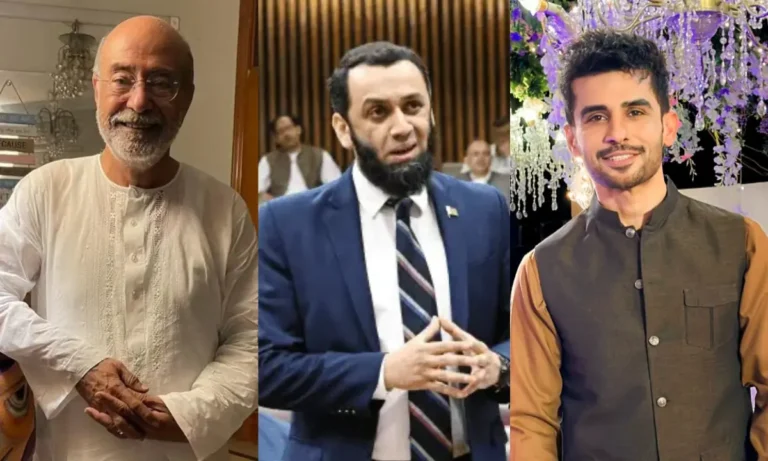
    Federal Minister for Information and Broadcasting Attaullah Tarar has proposed launching a mentorship programme for young actors following the controversy surrounding the alleged disrespectful treatment of veteran actor Mohammed Ahmed by fellow actor Fahad Sheikh. In a statement shared on X, Tarar described the reported incident as “highly deplorable” and said respect for senior artists must remain a core value of Pakistan’s entertainment industry. The minister said the proposed initiative would allow emerging actors to learn professional ethics, discipline and acting skills from experienced performers. He suggested that Mohammed Ahmed, given his decades-long contribution to television, would be well suited to lead the programme, or that a council of senior actors could oversee the initiative. Tarar also announced that he would soon convene a meeting of television artists and industry stakeholders to seek recommendations on establishing the mentorship programme. The controversy began after Mohammed Ahmed, during a recent podcast interview, recalled being mocked and humiliated by a younger lead actor while working on a television production. He described incidents in which the actor allegedly ridiculed him in front of colleagues and behaved disrespectfully during filming. Although Ahmed did not initially identify the individual, videos circulating on social media later linked actor Fahad Sheikh to the allegations. Responding to the criticism, Sheikh issued a public apology, saying that incomplete accounts of the incident had created a misleading narrative. He maintained that he had already apologised to Mohammed Ahmed privately before the issue gained widespread attention online. Sheikh also offered another public apology, acknowledging Mohammed Ahmed’s seniority and expressing hope that the veteran actor would accept his apology. He insisted that he had never intended to insult a senior colleague.

  • | |

    Mass HIV screening detects 141 positive cases afte…

    A large-scale HIV screening campaign launched after the emergence of cases at Karachi’s Kulsum Bai Valika Hospital has identified 141 HIV-positive individuals, prompting authorities to intensify investigations and strengthen preventive measures across Sindh. Speaking at a meeting of the Senate Standing Committee on National Health Regulation and Coordination, Sindh Labour and Human Resources Minister Saeed Ghani said more than 10,500 people were screened in and around Valika Hospital. Of them, 120 tested positive for HIV, including 81 children of registered Sindh Employees’ Social Security Institution (SESSI) workers, while the remaining 39 had no affiliation with the institution. Ghani said the provincial government has assumed responsibility for providing treatment to all affected children and is working to ensure they receive the best possible medical care. He added that a panel of leading healthcare experts and hospitals is being formed to oversee the treatment process. As part of precautionary measures, HIV screening was also expanded to Landhi Hospital and surrounding areas. More than 7,500 people were tested, with 21 additional HIV-positive cases confirmed. According to the minister, these individuals had no previous record of treatment at the hospital, suggesting that some infections may have originated from other sources. The minister also revealed that final show-cause notices had been issued to 37 doctors, paramedics and hospital officials following inquiry committee recommendations into the Valika Hospital incident. He warned that anyone found responsible for criminal negligence would face both departmental and legal action. To support affected families, Ghani announced that a Rs2 billion endowment fund has been established under SESSI. The fund will be managed by an independent body to ensure transparency and provide long-term assistance to those impacted by the outbreak.

  • | |

    Pakistan, US discuss bilateral cooperation and reg…

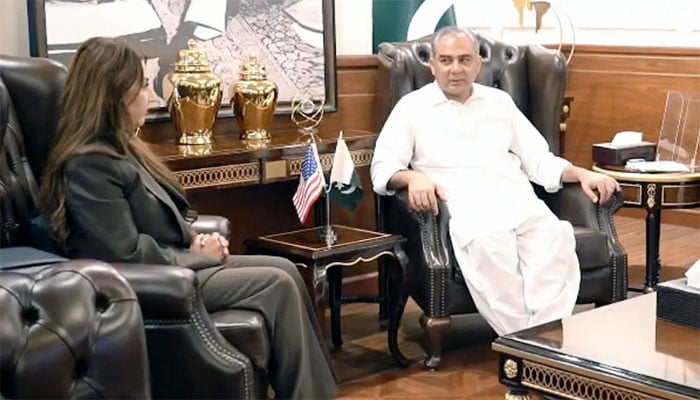
      Federal Interior Minister Syed Mohsin Naqvi held a meeting with US Chargé d’Affaires to Pakistan Natalie Baker in Islamabad, where the two sides discussed regional developments, security matters and ways to strengthen cooperation between Pakistan and the United States. The meeting focused on the overall situation in the region, with particular attention given to peace and stability. Both sides exchanged views on ongoing regional developments and discussed the importance of maintaining cooperation to address emerging security challenges. According to the details of the meeting, Pakistan and the United States also discussed their bilateral relationship and explored opportunities to expand cooperation across different areas. The two sides expressed interest in strengthening existing mechanisms of collaboration and developing further partnerships in areas of mutual interest. Law-enforcement cooperation was also an important part of the discussion. Naqvi and Baker exchanged views on joint programmes and training opportunities involving police officers from both countries. Such initiatives were discussed as a means of improving professional capabilities, sharing expertise and strengthening coordination between law-enforcement institutions. The officials also discussed the need for greater cooperation against organised crime, drug trafficking and human smuggling. Both sides agreed to enhance collaboration in these areas, recognising that such crimes often operate across national borders and require coordinated efforts between countries. The discussion highlighted the importance of information sharing, professional training and institutional cooperation in tackling transnational criminal networks. Strengthening law-enforcement coordination could help both countries improve their ability to respond to security threats and combat criminal activities that affect communities in Pakistan and beyond. During the meeting, US Chargé d’Affaires Natalie Baker also praised Field Marshal Syed Asim Munir for what she described as his positive diplomatic role in promoting peace and stability in the region. Her remarks came amid broader discussions on regional security and the importance of diplomatic engagement in addressing tensions and maintaining stability. The appreciation reflected the US side’s recognition of Pakistan’s role in contributing to regional peace efforts. The meeting between Naqvi and Baker comes as Pakistan and the United States continue to engage on a range of security and bilateral matters. Cooperation between the two countries has traditionally included areas such as counterterrorism, law enforcement, border security and efforts to combat transnational crime. The latest discussions indicate an effort to further strengthen practical cooperation, particularly in areas directly linked to public security and law enforcement. The proposed police training and exchange programmes could provide opportunities for officers from both countries to learn from each other’s experiences and improve their professional skills. Meanwhile, increased coordination against organised crime, drugs and human trafficking could contribute to more effective efforts against criminal networks. The meeting also underscored the broader importance of the Pakistan-US relationship at a time when regional developments continue to influence security and diplomatic priorities. Both countries have an interest in maintaining communication and cooperation on issues that affect regional peace and stability. Overall, the talks reflected a focus on strengthening bilateral ties through practical cooperation, particularly in law enforcement and security. The agreement to enhance joint efforts against organised crime, drug trafficking and human smuggling, along with discussions on police training programmes, demonstrates the two sides’ shared interest in addressing common challenges. The meeting also provided an opportunity for both officials to reaffirm the importance of continued engagement between Pakistan and the United States on regional peace, stability and security.

  • | |

    Imran Ashraf breaks silence on AI death hoax

    Pakistani actor Imran Ashraf has reassured his fans that he is alive and in good health after fake, AI-generated videos claiming that he had died began circulating on social media. Ashraf addressed the rumours through an Instagram story, making it clear that reports of his death were completely false. He said he was “absolutely fine” and remained alive, while also asking his followers to remember him in their prayers. The clarification came after several manipulated videos appeared online showing seemingly authentic clips of journalists and celebrities announcing that the actor had died. The fabricated reports reportedly claimed that Ashraf had suffered a heart attack. One TikTok account shared multiple AI-generated videos featuring digitally recreated versions of well-known personalities, including actor Bilal Abbas, former cricketer Shahid Afridi and journalist Mansoor Ali Khan. Another fabricated video even appeared to depict a funeral for the popular television host and actor. The incident has once again highlighted the growing problem of artificial intelligence being used to create convincing but completely false celebrity news. Such videos can quickly spread across social media before users have an opportunity to verify their authenticity. Ashraf is also not the first Pakistani celebrity to become the target of false death reports. Singer Tahira Syed faced a similar situation in June when rumours of her death circulated online. She later posted a video confirming that she was alive and well and urged people to verify information before sharing it. Actor Tauseeq Haider also became the subject of AI-generated misinformation when fabricated images circulated claiming that he had married actor Farah Saadia. The two actors jointly rejected the claim and humorously said they were still happily single, while asking the creators to send them wedding gifts if they were going to continue the story. The spread of such fabricated content has raised concerns about the misuse of AI tools to imitate real people and create misleading narratives. With digitally generated videos becoming increasingly realistic, celebrities and public figures are facing greater difficulty in controlling false information about themselves.

  • |

    PSX jumps 2,700 points on Trump-Iran talks news

    The first trading session of August brought renewed optimism to the Pakistan Stock Exchange (PSX), where investors returned with aggressive buying, driving the benchmark KSE-100 Index sharply higher. The bullish momentum followed US President Donald Trump’s announcement regarding the commencement of talks with Iran, a development that boosted investor confidence and eased concerns over escalating geopolitical tensions. During early trading, the KSE-100 Index surged by 2,708 points, climbing to 178,802 points as buying activity intensified across several major sectors. Market participants attributed the rally to improved global sentiment, with hopes that diplomatic engagement between Washington and Tehran could reduce regional tensions and support international financial markets. Analysts said investors responded positively to the possibility of a more stable geopolitical environment, which could help stabilize global energy prices and encourage foreign investment in emerging markets, including Pakistan. Strong buying interest was witnessed in leading banking, energy, cement, and fertilizer stocks, contributing to the market’s upward trajectory. Despite the robust performance of the PSX, Asian equity markets presented a mixed picture. Japan’s benchmark Nikkei Index declined by 1.5 percent amid continued investor caution, while South Korea’s Kospi recorded a steeper fall of 5.25 percent, reflecting selling pressure in major technology and export-oriented shares. In contrast, Hong Kong’s Hang Seng Index remained in positive territory, posting a modest gain of 0.1 percent as investors welcomed signs of easing geopolitical uncertainty.

Leave a Reply

Your email address will not be published. Required fields are marked *