mass hiv screening
| |

Mass HIV screening detects 141 positive cases afte…

A large-scale HIV screening campaign launched after the emergence of cases at Karachi’s Kulsum Bai Valika Hospital has identified 141 HIV-positive individuals, prompting authorities to intensify investigations and strengthen preventive measures across Sindh.

Speaking at a meeting of the Senate Standing Committee on National Health Regulation and Coordination, Sindh Labour and Human Resources Minister Saeed Ghani said more than 10,500 people were screened in and around Valika Hospital. Of them, 120 tested positive for HIV, including 81 children of registered Sindh Employees’ Social Security Institution (SESSI) workers, while the remaining 39 had no affiliation with the institution.

Ghani said the provincial government has assumed responsibility for providing treatment to all affected children and is working to ensure they receive the best possible medical care. He added that a panel of leading healthcare experts and hospitals is being formed to oversee the treatment process.

As part of precautionary measures, HIV screening was also expanded to Landhi Hospital and surrounding areas. More than 7,500 people were tested, with 21 additional HIV-positive cases confirmed. According to the minister, these individuals had no previous record of treatment at the hospital, suggesting that some infections may have originated from other sources.

The minister also revealed that final show-cause notices had been issued to 37 doctors, paramedics and hospital officials following inquiry committee recommendations into the Valika Hospital incident. He warned that anyone found responsible for criminal negligence would face both departmental and legal action.

To support affected families, Ghani announced that a Rs2 billion endowment fund has been established under SESSI. The fund will be managed by an independent body to ensure transparency and provide long-term assistance to those impacted by the outbreak.

Similar Posts

  • | |

    Mohsin Naqvi’s statement reflects personal o…

    Director General of Inter-Services Public Relations (ISPR) Lieutenant General Ahmed Sharif Chaudhry on Friday said Pakistan’s security depends on effective governance, stressing that terrorists must either surrender under the Constitution and the law or face continued military action. Speaking at a media briefing in Rawalpindi, the military spokesperson said Interior Minister Mohsin Naqvi’s recent remarks about the country’s governance system reflected his personal opinion and declined to comment further. However, he emphasized that good governance remained essential for ensuring national security and long-term stability. The DG ISPR said the National Action Plan continued to enjoy consensus among all major political parties and noted that most of its objectives, including countering extremism, disrupting terror financing and strengthening institutions, relied on strong governance. He added that Pakistan’s growing population made administrative efficiency more important than ever and said citizens had the right to effective governance. Over 40,000 Counterterrorism Operations Conducted Providing an update on security operations, Lt Gen Chaudhry said security forces had carried out 40,348 intelligence-based operations across Pakistan so far in 2026. He said 2,084 confirmed terrorists had been killed during these operations, averaging nearly 194 operations and 10 militant deaths every day. He added that the highest number of operations had been conducted in Balochistan, while 1,971 operations were carried out in Khyber Pakhtunkhwa. According to the military spokesperson, 819 people, including security personnel and civilians, embraced martyrdom during counterterrorism efforts this year, while 28 suicide attacks were recorded nationwide. He also alleged that Afghan nationals were involved in recent terrorist attacks in Tank and Karachi. No Negotiations With Armed Militants The DG ISPR made it clear that there would be no negotiations with armed militant groups. He said militants had only two options: surrender under the Constitution and the law or face continued action by security forces. Explaining the concept of a “hard state,” he said it did not refer to military rule but rather to a country where every individual is equal before the law and all matters are resolved through constitutional and legal mechanisms. Balochistan Facing Coordinated Propaganda Addressing the security situation in Balochistan, Lt Gen Chaudhry said a deliberate campaign was underway to create a false perception that the province was in crisis. He said the Constitution required every citizen to remain loyal to the state and argued that rights should always be accompanied by responsibilities. The DG ISPR alleged that certain elite groups and tribal leaders opposed social progress because they wanted to preserve the existing power structure. He said the state would continue engaging directly with the people of Balochistan instead of those seeking to obstruct development. Highlighting development initiatives, he said Gwadar now had modern healthcare facilities, educational institutions, industrial free zones and major infrastructure projects. He added that Balochistan’s per capita budget allocation exceeded Rs75,000, making it the highest among Pakistan’s provinces. He also said terrorists deliberately targeted labourers, teachers and development projects to slow the province’s progress. Missing Persons and Regional Security On the issue of missing persons, the military spokesperson said the Commission of Inquiry on Enforced Disappearances had received 10,901 cases, of which 9,372 had already been resolved. He stressed that every reported case required proper identification and verification. The DG ISPR further claimed that following what he described as Pakistan’s success during Operation Marka-e-Haq, hostile elements had shifted their focus toward destabilising Balochistan. He alleged that India and the Afghan Taliban regime shared an agenda of supporting terrorism against Pakistan.

  • |

    Pakistan weekly inflation rises as 20 essential items get costlier

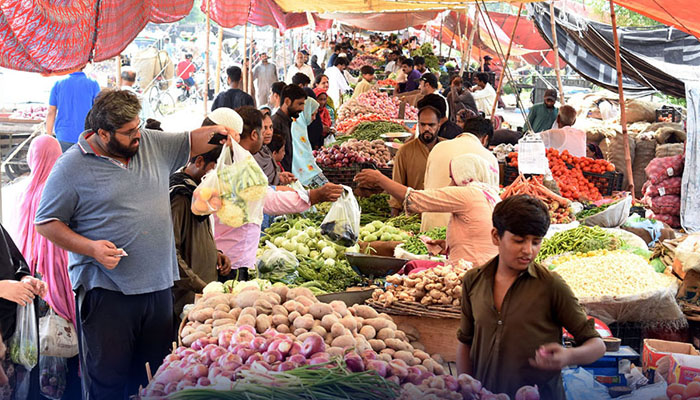
    Weekly inflation in the country has recorded a slight increase. According to the Pakistan Bureau of Statistics (PBS), weekly inflation increased by 0.28%. During the week, prices of 20 essential commodities increased while nine items became cheaper and the prices of 22 items remained stable. According to the PBS, onion prices increased by 10.1% and chicken by 9.19%. The prices of gram lentils rose by 2.4% while the prices of ghee, flour and several other commodities also increased. The PBS said that tomato prices decreased by 6.82%. LPG, sugar, eggs and potatoes also became cheaper. Meanwhile, the price of a 20-kilogram bag of flour increased by up to Rs100 in one week. According to the PBS, the maximum price of a 20kg flour bag in the country is Rs3,133. In Karachi, the price increased by up to Rs100 to reach Rs3,000. In Larkana, the price of a 20kg flour bag also increased by up to Rs100 during the week reaching Rs2,600 in Khuzdar and Larkana. In Sukkur, the price of a 20kg flour bag increased by Rs60 while in Bannu it increased by Rs50. Following the increase, the price of a 20kg flour bag reached Rs2,950 in Bannu and Rs2,560 in Sukkur. In Islamabad, the price of a 20kg flour bag reached Rs3,133 while it stood at Rs3,100 in Peshawar and Rs3,093 in Rawalpindi. According to the PBS, a 20kg flour bag was priced at Rs2,960 in Bahawalpur while it reached Rs2,800 in Hyderabad, Multan, Sialkot and Gujranwala. In Sargodha, the price of a 20kg flour bag reached Rs2,793. In Quetta, a 20kg flour bag was priced at Rs2,750 while the price stood at Rs2,300 in Lahore and Rs2,200 in Faisalabad.

  • |

    British funeral director sentenced to 20 years in prison for fraud and desecration of remains

    Former funeral director Robert Bush, 48, has been jailed for 20 years at Hull Crown Court after pleading guilty to 67 criminal charges. The charges include preventing a lawful and decent burial, fraud by false representation, fraudulent trading, and theft, spanning a period of nearly 12 years at Legacy Independent Funeral Directors in Hull, East Yorkshire. The police investigation, launched in March 2024 following a report from a casual worker, uncovered 35 decomposing bodies left uncovered and un-cremated at the business’s Hessle Road premises. Investigators revealed that Bush had repeatedly provided grieving relatives with ashes belonging to strangers, including delivering young adult remains to the parents of a stillborn baby whose body was discovered stored in a paper bag on site. Bush also stole thousands of pounds in charitable donations collected from mourners at memorial services. Presiding Judge Nicholas Hilliard described Bush’s actions as “heartless” and motivated by greed, noting that his crimes caused pain and anguish on an incomprehensible scale. Alongside the 20-year custodial sentence, Bush has been banned from acting as a company director for 14 years. The severe failure has prompted renewed demands across the United Kingdom for stricter statutory regulation of the funeral industry.

  • | |

    Father mourns son killed before wedding day

    The father of murdered Karachi resident Mir Raza Ali Khan has revealed that his son was eagerly preparing for his wedding, which was scheduled to take place on August 30, describing the tragedy as devastating for the family. Speaking to the media, the grieving father said Mir Raza left home on the morning of July 28 for work but never returned. When repeated attempts to contact him failed because his phone was switched off, the family filed a missing person’s report at the local police station the same day. He said the family later traced his last known location through an online ride-hailing service. Upon reaching the location, they found police officials from Gulistan-e-Jauhar already present. According to the father, police informed the family that an unidentified body had been recovered earlier that morning. Although the victim’s face was unrecognizable, the clothes matched those worn by his son, confirming his identity. The bereaved father said Mir Raza had never shared any concerns about business disputes or personal problems with the family, leaving them shocked and searching for answers behind the killing. Mir Raza Ali Khan, a resident of Karachi’s PECHS area, was found dead in Gulistan-e-Jauhar. Police are continuing their investigation to determine the circumstances surrounding his abduction and murder.

  • Punjab announces Rs60m scholarships for 500 students

    Lahore – Scholarships worth more than Rs60 million have been announced for 500 students with students from Sindh and Khyber Pakhtunkhwa also benefiting from the scholarship program. According to details, Punjab Education Minister Rana Sikandar Hayat has arrived in Skardu with a scholarship initiative from the Punjab government for students of Gilgit-Baltistan. The Punjab Education Minister will distribute scholarships worth more than Rs60 million among around 500 students from seven educational institutions in Gilgit-Baltistan at a ceremony tomorrow. Speaking to the media, Rana Sikandar Hayat said that the Punjab government does not believe in any kind of discrimination in education. He said Punjab Chief Minister Maryam Nawaz Sharif believes in providing equal educational opportunities to young people from all provinces. He said that under the Chief Minister Punjab’s Honhaar Scholarship Scheme, quotas have been allocated for students from all provinces and students from Sindh and Khyber Pakhtunkhwa are currently benefiting from the program. The provincial education minister announced that he would visit Azad Kashmir within the next few days to provide scholarships to its students as well. He said that every promise made by Punjab Chief Minister Maryam Nawaz to the youth of Azad Kashmir would be fulfilled.

  • | |

    US imposes tariffs on Pakistan and more than 60 trading partners

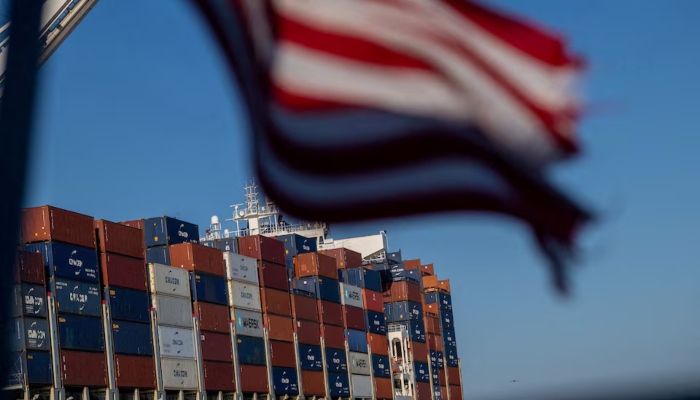
    The United States has introduced a new round of tariffs on imports from more than 60 trading partners, including Pakistan, as part of a broader effort to strengthen measures against goods allegedly linked to forced labour. The new duties officially came into effect on July 24 and are expected to affect trade between the United States and a large number of countries. Under the latest policy, Pakistan has been placed in the group of countries whose exports to the United States will face a 10% tariff. The same tariff rate has also been imposed on imports from countries including India, Bangladesh, the United Kingdom, Canada, Argentina, Cambodia, Ecuador, El Salvador, Guatemala, Honduras, Indonesia, Jordan, Malaysia, Mexico, Sri Lanka and Trinidad and Tobago. Another group of 38 countries will face a 12.5% tariff on goods exported to the US under the same policy. The US administration said the decision was taken because these countries had failed to effectively prevent the import or production of goods allegedly made through forced labour. According to American officials, stronger enforcement of labour laws and better monitoring of supply chains are needed to stop products made under forced labour conditions from entering international markets. The new measures are part of President Donald Trump’s trade agenda, which focuses on using tariffs to address trade and labour-related concerns. The administration has introduced the tariffs under Section 301 of the US Trade Act, a legal provision that allows the United States to take trade action against countries it believes are engaging in unfair trade practices. The latest action follows a major legal setback earlier this year. In February 2026, the US Supreme Court blocked the implementation of an earlier tariff package introduced by the Trump administration. That policy had proposed additional duties ranging from 10% to 50% on imports from several countries. Following the court’s decision, the administration adopted a different legal mechanism to introduce the current tariffs. The decision has drawn criticism from several US trading partners. Australia and Brazil have described the new tariffs as unfair and said they will continue diplomatic efforts to have the measures withdrawn. Norway also rejected the allegations behind the tariffs, saying the decision was based on unsubstantiated claims. Despite the broad scope of the new policy, several important products have been excluded. The tariffs do not apply to imports of crude oil, natural gas, selected agricultural commodities and fertilisers. Goods that are already subject to separate Section 232 national security tariffs, including steel, aluminium, automobiles and copper, are also exempt from the latest duties.

Leave a Reply

Your email address will not be published. Required fields are marked *