cop flop triggers
| | |

COP flop triggers backlash in Australia; Pacific nations express despair

The finger-pointing to assign blame for the collapse of UN climate talks in Turkey began on Monday, November 23, with calls for the resignation of the Australian minister leading them, while the Pacific island nations most at risk expressed their despair over the failure of countries to collectively address global warming.

For the first time since the 2009 meeting in Copenhagen, the COP climate conference could not reach a final agreement from its talks after the EU and others rejected a final deal that did not include any mention of fossil fuels’ role in global warming because of pressure from Saudi Arabia and other oil-producing nations.

This was the first meeting since the UN’s environmental body confirmed global temperatures were set to exceed the 1.5 degrees Celsius (2.7 degrees Fahrenheit) level scientists have said will cause extreme weather impacts to intensify, and the lack of collective action has increased a sense of impotence around the multilateral COP process.

Turkey hosted the latest talks, called COP31, in Antalya but shared leadership with Australia. Australian Energy Minister Chris Bowen was the COP31 president of negotiations, and opposition politicians in his home country blamed him for the failure.

“This energy minister’s got to go because he’s a complete and utter failure,” Angus Taylor, a member of the Australian parliament who leads the opposition, told reporters on Monday.

“Chris Bowen was responsible for it. He should go,” Taylor said.

Speaking after the COP31 talks, Bowen blamed the very strong red lines many parties had on climate change.

Inside the Australian parliament, other opposition members asked Prime Minister Anthony Albanese why he would not sack Bowen after the country had spent A$150 million ($99.23 million) on COP31. Albanese did not comment directly on whether he would ask Bowen to step down.

“We believe that climate change is real. We believe in the science,” Albanese said. “Whether it’s environmental security or national security, we act in Australia’s national interest.”

Multilateral process

The COP31 talks began on November 9, but the lack of a final agreement extended the summit to a record overtime on Sunday, November 22. There was already some contention before their start as Australia, which has been at the forefront of efforts to act against global warming, fought with Turkey over hosting duties.

More than 190 countries were represented, and more than 92,000 people had registered, making it provisionally the largest UN climate conference on record. The United States did not send a delegation.

Last year’s talks in Belém, Brazil, produced a deal but no commitment to phase out fossil fuels.

China is the world’s biggest emitter of carbon dioxide, the main cause of global warming, and a spokesman for the country’s foreign ministry, Guo Jiakun, expressed disappointment at the COP31 outcome during a news conference on Monday but said it “should not lead to a loss of confidence in multilateral process.”

Guo added that addressing climate change is a “shared undertaking for humanity” and the global trend toward low-carbon development is “irreversible.”

Bhupender Yadav, who led India’s delegation at COP31, said India engaged constructively and tirelessly with the presidencies and other parties.

“While concerns remain over certain elements of the cover decision, we remain committed to dialogue and constructive engagement until the very end to build consensus,” he said.

Most Pacific island nations, which are facing rising sea levels and other existential threats from climate change, expressed deep disappointment.

“We have been let down on all sides,” the delegation from the Marshall Islands at COP31 said in a statement.

Tuvalu, the Pacific island nation that hosted a pre-COP event in October highlighting its exposure to rising sea levels, called out the absence of engagement and transparency in trying to reach a decision on a final statement.

“Listening to parties who diminish the credibility of signs of climate change is disappointing,” said Maina Talia, Tuvalu’s climate minister, expressing concern about the lack of commitment to put the world back on track for the global temperature goal. – Rappler.com

$1 = 1.5117 Australian dollars

Similar Posts

  • |

    Guterres to make historic Syria visit after 17 years

    United Nations Secretary-General Antonio Guterres will visit Syria on Saturday. It will be the first visit by a serving UN secretary-general to the country since 2009. The visit comes at a major turning point for Syria. The country is trying to rebuild after years of war, political instability and international isolation. Syria’s conflict began in 2011. It continued for almost 14 years. The war killed hundreds of thousands of people. Millions more were forced to leave their homes. The conflict ended with the fall of former President Bashar al-Assad in late 2024. Syrian opposition forces removed Assad from power after a rapid offensive. The country is now being led through a transitional period under President Ahmed al-Sharaa. His administration is seeking to establish a new political system and restore Syria’s relations with the international community. Guterres is expected to meet Sharaa during his visit to Damascus. He will also hold talks with Foreign Minister Asaad al-Shaibani. The UN secretary-general is also expected to meet other Syrian officials. He will hold discussions with representatives of civil society as part of his visit. The United Nations says Guterres will focus on Syria’s future. He is expected to underline the importance of creating a stable, inclusive and prosperous country. The visit is also expected to highlight the need for national reconciliation. Syria faces major challenges after years of destruction and displacement. The country’s transition has not been without difficulties. Sectarian violence remains a serious concern. Large numbers of Alawites were killed in violence in Syria’s coastal region last year. The Alawite community was closely associated with the former Assad government. Violence later affected the Druze community in southern Syria. Hundreds of people were reportedly killed during clashes. Guterres has expressed concern over both episodes of violence. He has called for accountability and protection for Syria’s minority communities. The new Syrian government is also working to restore diplomatic relations. Damascus wants to move beyond the alliances that dominated the country during Assad’s rule. Syria had long relied heavily on Russia and Iran. The new leadership is now seeking broader international engagement. Sharaa has already taken steps towards rebuilding Syria’s global diplomatic presence. Last year, he became the first Syrian president since 1967 to attend the UN General Assembly in New York. Washington has also taken steps towards improving relations with Damascus. The United States has removed most of its broad sanctions on Syria. US President Donald Trump has also indicated that Washington intends to remove Syria from its list of state sponsors of terrorism. Guterres is expected to address Syria’s new parliament on Monday. The speech could focus on the country’s political transition and its future relationship with the international community. He will also visit a UN peacekeeping force operating near the Israeli-Syrian frontier. The force has maintained a buffer zone between Israeli and Syrian forces for decades. The situation in southern Syria remains sensitive. Israeli forces have occupied additional areas in the region since Assad’s removal. The Syrian government has demanded the withdrawal of Israeli troops. Damascus has also called for a return to the 1974 disengagement agreement. Guterres’ visit therefore carries significant diplomatic importance. It comes as Syria attempts to rebuild its institutions, economy and international relationships. For the United Nations, the visit also provides an opportunity to engage directly with Syria’s new leadership.

  • |

    Major US financial firms targeted in extensive phone-phishing campaign

    Ransom-seeking cybercriminals have launched a coordinated campaign targeting high-profile US financial institutions, including Blackstone, Apollo Global Management, KKR, Bain Capital, and CME Group. A technical report from Google’s Threat Intelligence Group revealed that hackers created 72 malicious websites designed to steal corporate login credentials. Operatives used social engineering tactics, reaching employees directly on personal mobile phones while spoofing corporate IT helpdesk numbers. Under the guise of urgent system updates, callers guided staff to fraudulent domains such as “passkeyhelpdesk” or “secure-passkey” to capture login credentials and multi-factor authentication passcodes in real time. According to threat intelligence analysis, the campaign represents a strategic pivot toward private equity firms, law practices, and financial rating agencies, driven by the assessment that these targets hold sensitive commercial data worth paying substantial ransoms to protect. While digital intelligence data identified fake portals created for over 200 organisations, including Uber, Levi Strauss, and several major law firms, it remains unconfirmed which specific financial targets experienced compromised systems. The threat actors operating under names such as Redact, Falcon, Helix, and Pink share common digital infrastructure. Analysts noted that despite advanced enterprise perimeter security, direct voice-phishing techniques exploiting human trust continue to rank among the most effective cyber-intrusion vectors.

  • |

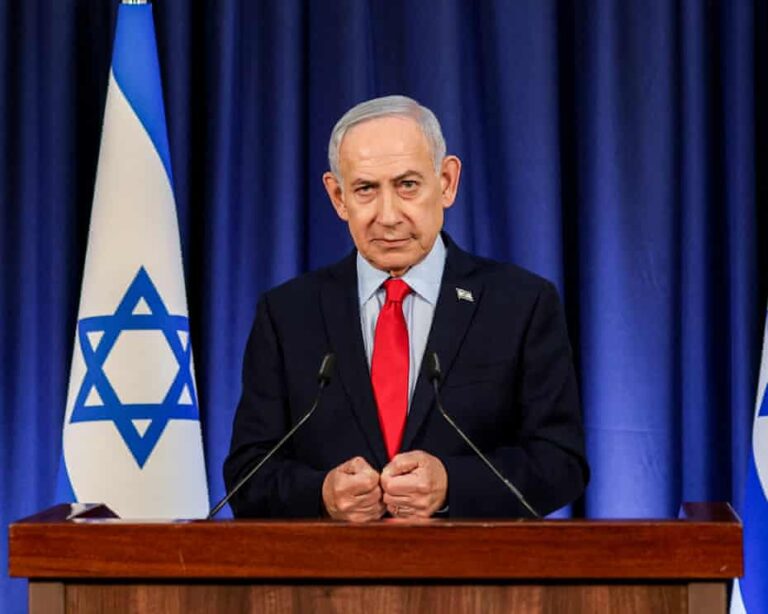
    Benjamin Netanyahu sparks diplomatic backlash after labelling UK an “Islamic republic”

    Israeli Prime Minister Benjamin Netanyahu has drawn widespread criticism following a radio interview in which he referred to the United Kingdom as the “Islamic republic of Britain” and suggested it could become the first Islamic republic with nuclear capabilities. The remarks, delivered during a broadcast on Israel’s Army Radio, have drawn condemnation for echoing far-right Islamophobic rhetoric. During the exchange, Netanyahu contrasted media coverage of the 1967 Arab-Israeli war with modern British politics, questioning whether contemporary UK figures would offer similar support. Pressed by the interviewer on whether such dynamics applied to Europe as a whole, Netanyahu doubled down, repeating the assertion regarding Britain’s nuclear status. His comments notably ignored the fact that Pakistan, officially an Islamic republic, has possessed a nuclear arsenal since the late 1990s. The incident has heightened existing diplomatic tensions between London and Jerusalem. The British Foreign, Commonwealth and Development Office described the statement as completely unacceptable and confirmed the matter had been raised directly with the Israeli government. Domestically, Israeli opposition figures criticized Netanyahu for alienating a strategic international partner amid mounting diplomatic isolation.

  • | |

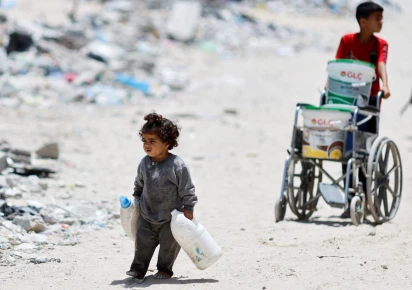
    Over 60,000 Gaza children lose parents amid ongoing war

    More than 60,000 children in Gaza have lost at least one parent since the conflict began in October 2023, according to figures released by the Palestinian health ministry on Wednesday. The ministry reported that 60,737 children had either been orphaned or left with only one surviving parent. Of these, 52,095 children lost their fathers, while 5,929 lost their mothers. Another 2,713 children lost both parents during the conflict. The figures highlight the devastating impact of prolonged violence on children across the Gaza Strip. The ministry also reported that thousands of families had been completely erased from Gaza’s civil registry. According to its figures, 2,276 families comprising 8,858 people have been wiped out during the conflict. The overall death toll in Gaza has also exceeded 73,000 since the start of the war, the ministry said. A ceasefire reached in October has failed to end all violence in the territory. Palestinian authorities say Israeli forces have continued carrying out strikes, with more than 1,100 people reportedly killed since the truce began. The latest figures have renewed concerns over the humanitarian consequences of the conflict. Thousands of children have been left without one or both parents, while many families have lost multiple members. The United Nations Independent International Commission of Inquiry has also documented serious violations involving Palestinian children. In a report released in June, the commission said Israeli authorities and security forces had deliberately targeted Palestinian children. It alleged that violations amounted to genocide, crimes against humanity and war crimes in Gaza, as well as war crimes in the occupied West Bank. The commission examined alleged violations against Palestinian children since the conflict began on October 7, 2023. It found that children accounted for around 30 per cent of those killed in the Gaza war. In an earlier report released in September, the commission concluded that Israel had committed genocide in Gaza and said senior Israeli officials, including Prime Minister Benjamin Netanyahu, had contributed to incitement. Israel has rejected the accusations, describing them as unfounded and deeply offensive. The latest Palestinian figures underline the long-term consequences of the conflict for Gaza’s youngest population. Beyond the immediate loss of life, thousands of children are now facing life without parents, while entire families have disappeared from official records.

Leave a Reply

Your email address will not be published. Required fields are marked *