iran war spreads
|

Iran war spreads to Red Sea and Caspian, Gulf quiet as US forgoes strikes

Signs of the Iran war’s spread emerged this weekend despite a pause in US strikes, as Yemen’s Iran-aligned Houthis attacked Saudi oil installations along the Red Sea coast and Iran accused Ukraine of targeting an Iranian vessel in the Caspian Sea.

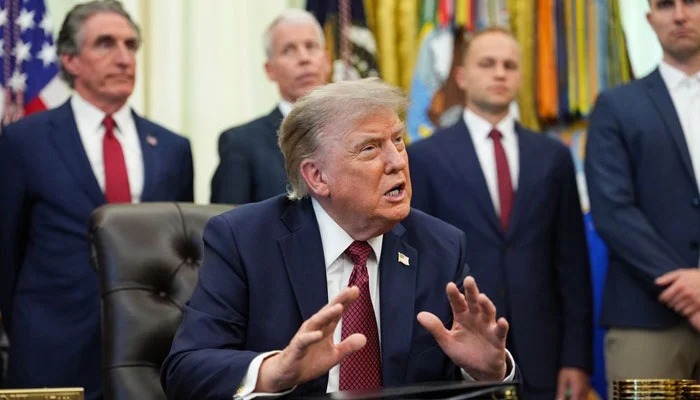
The US military said on Saturday, July 25, that its naval blockade against Iran “remains in full effect” but did not explain why it halted a streak of 13 nights of escalating strikes. Asked about the pause, a senior official in President Donald Trump’s administration said Trump “has always been clear that his preference is diplomacy, but he has shown Iran what will happen if they fail to come to the table in a serious way.”

There were also no reports on Saturday of attacks from Iran on neighboring countries, like those that have been taking place daily in response to the US attacks.

Trump has decided, for now, to back away from earlier plans to ramp up attacks on Iran, the New York Times reported on Saturday night, citing two people briefed on the discussion. The president and his advisers, according to the Times, have concerns about expanding the conflict, depleting defense stockpiles, alienating Persian Gulf allies and affecting energy supplies and the global economy.

Despite the lull in the Gulf, fighting between Iran’s Houthi allies and Saudi Arabia on Saturday indicated the war, which has already disrupted energy supplies through the Strait of Hormuz, could affect a second major shipping route and reignite Yemen’s civil war.

Separately, Iran’s Foreign Ministry accused Ukraine of attacking an Iranian commercial vessel in the ​Caspian Sea, saying it resulted in an explosion that killed ‌a sailor and injured another.

Earlier on Saturday, Ukrainian President Volodymyr Zelenskyy in a social media post praised the results of “long‑range strikes” in the Caspian Sea, alluding to vessels shipping military cargo, but did not identify the nationality of the targets.

Iran’s Foreign Ministry summoned ​Ukraine’s chargé d’affaires in Tehran to convey its protest over what it described as a “hostile and criminal” attack, Iran’s state news agency IRNA reported.

The Iranian denunciation coincided with comments ​by Zelenskiy that Kyiv had noted Russia was passing ​on its satellite observations in the Middle East to Iran to enable it to direct ‌strikes ⁠in the region.

War threatens to spread to Yemen

Houthi military spokesperson Yahya Saree said the group struck sites belonging to Saudi state oil company Aramco in Jizan and Yanbu. Video shared on social media and verified by Reuters showed a large column of smoke rising from the direction of the Aramco refinery in Jizan.

Two Asia-based trading sources said they had been informed of potential damage to fuel and oil storage sites at Jizan. Aramco did not respond to requests for comment.

In Yanbu, two ballistic missiles aimed at oil installations were intercepted by a US-made Patriot battery operated in Saudi Arabia by the Greek military under an agreement with Riyadh, Greek security sources said.

Yanbu, Saudi Arabia’s main Red Sea oil port, has become a key route for Saudi oil skirting the Strait of Hormuz, which Iran has blockaded. Up to 400,000 barrels can be processed daily at the oil refinery in Jizan, a city on the Red Sea close to the Yemeni border.

Saudi-led coalition strikes Hodeidah

In Yemen, the air force of the Saudi-backed, internationally recognized government, which has opposed the Houthis for more than a decade, struck Houthi launch sites and arms depots in the Marib and al-Jawf provinces, Yemeni officials said.

Earlier, the Saudi-led military alliance said it bombed Houthi military positions on Friday in the Red Sea coastal city of Hodeidah, although the coalition said it did not target the port facilities.

The Yemeni officials said both sides in Yemen’s civil war were mobilizing forces along the front.

Saudi Arabia has led an Arab coalition battling the Houthis for more than a decade since the Iran-aligned fighters captured Yemen’s capital, Sanaa.

The civil war, during which hundreds of thousands of people died from fighting and famine, has been paused under a ceasefire since 2022. But that truce broke down this month, with the Houthis effectively joining the wider war their Iranian allies have waged since being attacked by the U.S. and Israel five months ago.

The Houthis have declared a naval blockade of Saudi Arabia over the past week, and Houthi leader Abdul Malik al-Houthi said all Saudi oil facilities could be targets. On Thursday, the Houthis struck two Saudi tankers in the Red Sea.

American forces recently resumed their own blockade on Iranian ports. US Central Command, whose coverage area includes the Middle East, said it disabled a ship whose crew attempted to run the blockade despite “repeated warnings” on Friday in the Gulf of Oman. – Rappler.com

Similar Posts

  • | |

    Chilling details of Nancy Guthrie’s first ra…

    The investigation into the alleged kidnapping of Nancy Guthrie has taken a chilling turn as details of the first ransom note sent to her family have been revealed. The note, which authorities have described as both genuine and threatening, was addressed to Nancy’s daughter, Savannah, and contained warnings that have left investigators and the public on edge. Crime journalist Briana Whitney, speaking on the Crime Junkie podcast, revealed the terrifying message allegedly sent to Savannah. The most chilling line in the note read: “It is in the best interest of everyone to have this completed as soon as possible.” Whitney, reading from the ransom message, further detailed the captors’ demands: “You will not be able to contact me from here on out. There will be no negotiation. Do not play games. Law enforcement will not be able to help you.” The note, which was sent shortly after Nancy was last seen at home on January 31, has dominated the investigation. While some ransom notes were reportedly deemed to be hoaxes, authorities confirmed that others were genuine, adding to the complexity of the case. Investigators have yet to produce a suspect in the alleged kidnapping, leaving the family and the public seeking answers. The ransom notes have been central to the case, with authorities reportedly keeping many details under wraps to avoid compromising the investigation. However, the release of these chilling details has shed new light on the threats faced by the Guthrie family. The note’s warning that law enforcement would not be able to help and that there would be no negotiation suggests a calculated effort by the captors to isolate Savannah and exert maximum pressure on the family. Nancy Guthrie’s disappearance has sparked widespread concern, with her family making several public pleas for her safe return. The investigation remains ongoing, with authorities urging anyone with information to come forward. The release of the ransom note details has reignited public interest in the case, with many hoping that the new information will lead to a breakthrough. As the investigation continues, the Guthrie family remains in the spotlight, their ordeal serving as a stark reminder of the terror faced by families of kidnapping victims. The chilling words of the ransom note have left an indelible mark on the case, underscoring the urgency of finding Nancy and bringing her captors to justice. The public awaits further developments, hoping for a resolution that will bring closure to the family and accountability for those responsible.

  • | |

    Russia’s FSB charges Telegram founder Pavel Durov with facilitating terrorism

    The FSB says the charges are related to Telegram’s failure to remove material ‘used by Ukrainian special services and by terrorist and extremist organizations to prepare and coordinate acts of sabotage and terrorism… within the Russian Federation’

  • |

    China rejects US sanctions on research institutions

    China has strongly opposed a US decision to place several Chinese research institutions on a sanctions list. Beijing criticised the move on Wednesday. It accused Washington of using national security concerns to restrict scientific and technological cooperation between the two countries. A spokesperson for China’s Ministry of Commerce said Beijing would take necessary steps to protect the legitimate rights and interests of its research institutions. The spokesperson also said China wanted to maintain a stable environment for normal scientific exchanges and cooperation with international partners. Beijing accused the United States of repeatedly expanding the definition of national security. It said Washington had created discriminatory barriers against Chinese institutions. China also criticised what it described as the politicisation and weaponisation of scientific research. According to Beijing, such policies could damage cooperation between researchers and universities in both countries. The Chinese government said the US measures were against the broader global trend of international cooperation in science and technological innovation. Beijing urged Washington to withdraw what it called unjustified accusations against Chinese research institutions. China also called on the United States to correct its policies as soon as possible. It demanded fair, just and non-discriminatory treatment for Chinese research organisations. The dispute comes amid wider tensions between Washington and Beijing over technology, trade and national security. The United States has increasingly tightened restrictions on Chinese access to advanced technologies. Semiconductor manufacturing has become a major area of competition between the two countries. China is also working to expand its domestic semiconductor industry. Beijing aims to reduce its dependence on advanced foreign chips affected by US export restrictions. Last week, the US Department of Defence updated a list of foreign institutions it considers involved in “problematic activities”. The updated list included Chinese defence-related academies and several universities. Shanghai-based Fudan University was also among the institutions added to the list. The latest move is likely to add another point of tension to already strained US-China relations. Beijing has repeatedly opposed US measures targeting Chinese companies, universities and research organisations. Washington, meanwhile, has maintained that its restrictions are linked to national security and technology concerns.

Leave a Reply

Your email address will not be published. Required fields are marked *